
Last updated October 4, 2026
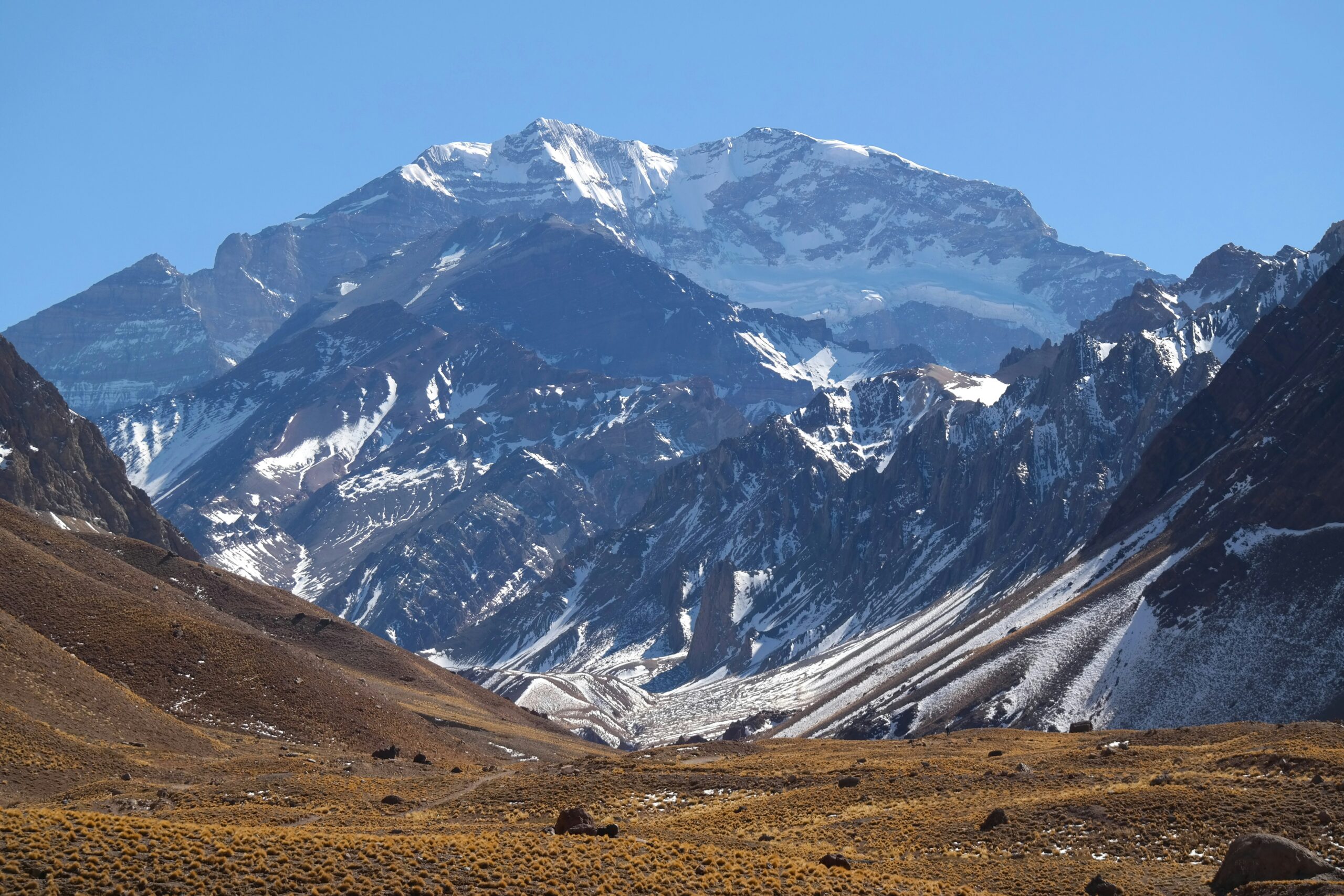
Aconcagua Normal Route Conditions: Current Season Status
The key fact right now: Aconcagua is still in the 2026–27 pre-season. The new advance permit sale is live, but there is not yet a responsible in-season snow, Canaleta or high-camp condition to report. This page separates what Mendoza has officially confirmed from what is only a normal seasonal pattern.
What Is Actually Current Today?
Permit sales are current. Route-surface reports are not. Mendoza has opened the promotional 2026–27 advance-sale window for ascent and long trekking, but September is too early to publish a truthful “current” snow line, crampon transition, Canaleta surface or staffed high-camp report for the coming summer season.
For planning, use the permit update now. For climbing decisions, wait for dated in-season observations from park staff, registered guides and climbers once teams are on the mountain. A conditions page should never turn last season’s snow or a generic month-by-month pattern into a claim about what the route looks like today.
The 2026–27 Permit Update Has Changed.
This is the most important current-season correction. Promotional permit pricing was officially announced this week and should replace the May planning assumptions.
| Activity / access | Mendoza resident | Argentina resident | Foreign visitor | Status |
|---|---|---|---|---|
| Ascent · Horcones | ARS 300,000 | ARS 450,000 | US$950 | Promotional advance sale |
| Long Trek · Horcones | ARS 85,000 | ARS 130,000 | US$450 | Promotional advance sale |
| Ascent · Vacas | ARS 340,000 | ARS 490,000 | US$1,290 | Promotional advance sale |
Through September 30
The current official promotional sale is available during September. Do not rely on the old “July–August early bird” language from the previous page.
Registered Service Providers
The current promotional process is tied to adjudicated service providers and includes nominated / unnominated permit workflows through Aconpass or the designated system.
Evacuation & Medical Coverage
Ascent and long-trek entrants must have insurance or an evacuation / medical-assistance service covering search, rescue and evacuation costs under the current rules.
Horcones to Plaza de Mulas to the Upper Mountain
The Normal Route approaches from the Horcones side and uses Plaza de Mulas as base camp before moving through one of several common high-camp combinations. This map is for orientation only.
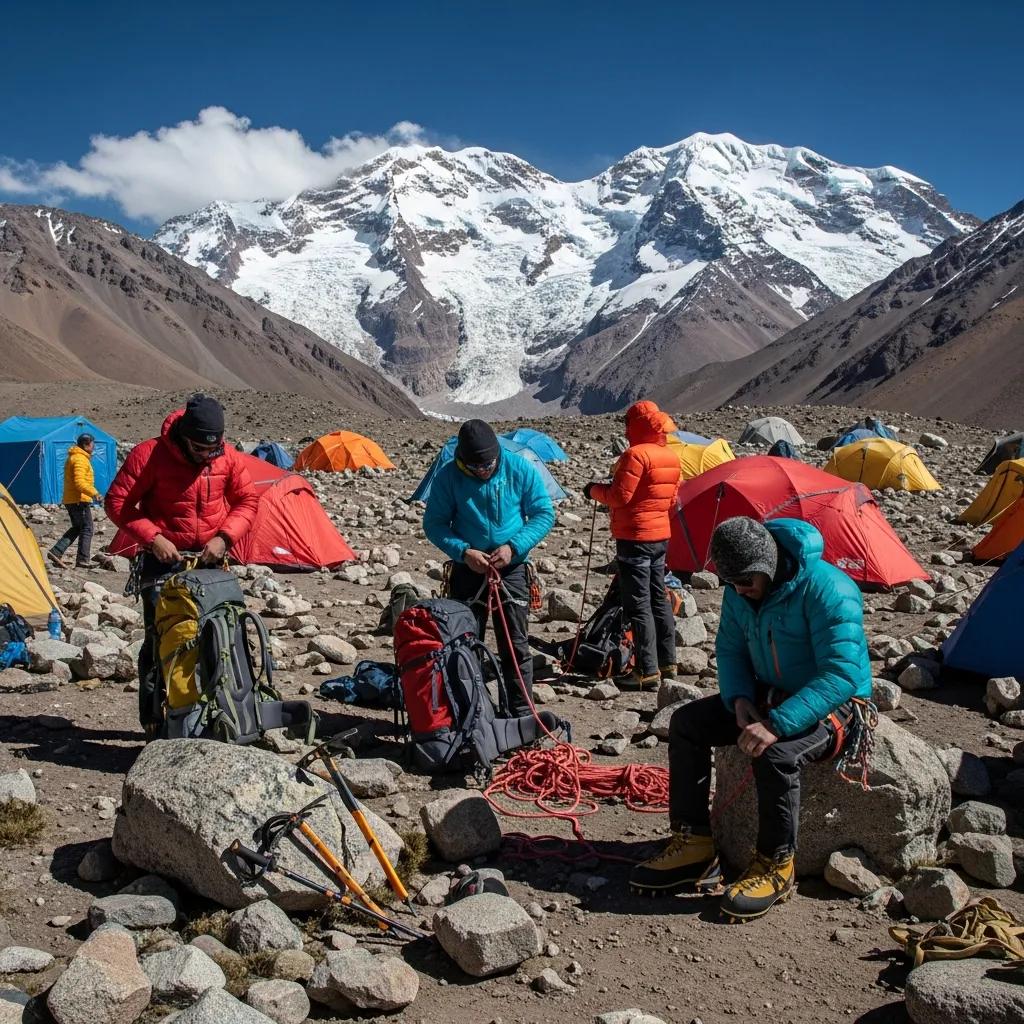
Plaza de Mulas Is a Seasonal Expedition Hub, Not a Year-Round Condition Report.
Before the summer climbing operation is established, do not label tents, medical services, mule logistics or upper camps “fully operational” simply because they normally exist during the season. Conditions pages should report what is verified on the date shown.
The Normal Route Does Not Have One Fixed Camp Ladder.
Different operators use slightly different camp positions and published elevations. Treat the numbers as approximate and follow your team’s actual itinerary.
Plaza de Mulas
Logistics, acclimatization and expedition staging on the Horcones side.
~4,250–4,300 mPlaza Canadá
Often the first sleeping camp above base, though some itineraries use other positions.
~4,900–5,000 mNido de Cóndores
A broad high camp used by most Normal Route itineraries. Published elevations vary by site and source.
~5,250–5,550 mCólera / Berlín
The final camp is itinerary-dependent. Cólera and Berlín are separate nearby high-camp choices.
~5,900–6,000 mCarry for the Condition You May Meet — Wear for the Condition You Actually Have.
Current commercial Normal Route gear lists include mountaineering crampons. That does not mean every step above Cólera is always on snow or ice.
Crampons Belong in the System
Alpine Ascents and other commercial Aconcagua programs list general mountaineering crampons. Fit them to your boots before travel and carry them according to your operator’s system.
Actual Use Changes
The upper Normal Route can alternate among hard snow, ice patches, wind-scoured ground and loose scree. The safe transition point is a field decision, not a date printed on a webpage.
2026–27 Canaleta Surface
In September there is no honest current-season answer for whether the Canaleta will be dry, snowy or icy during your summit week. Use dated reports immediately before and during the expedition.
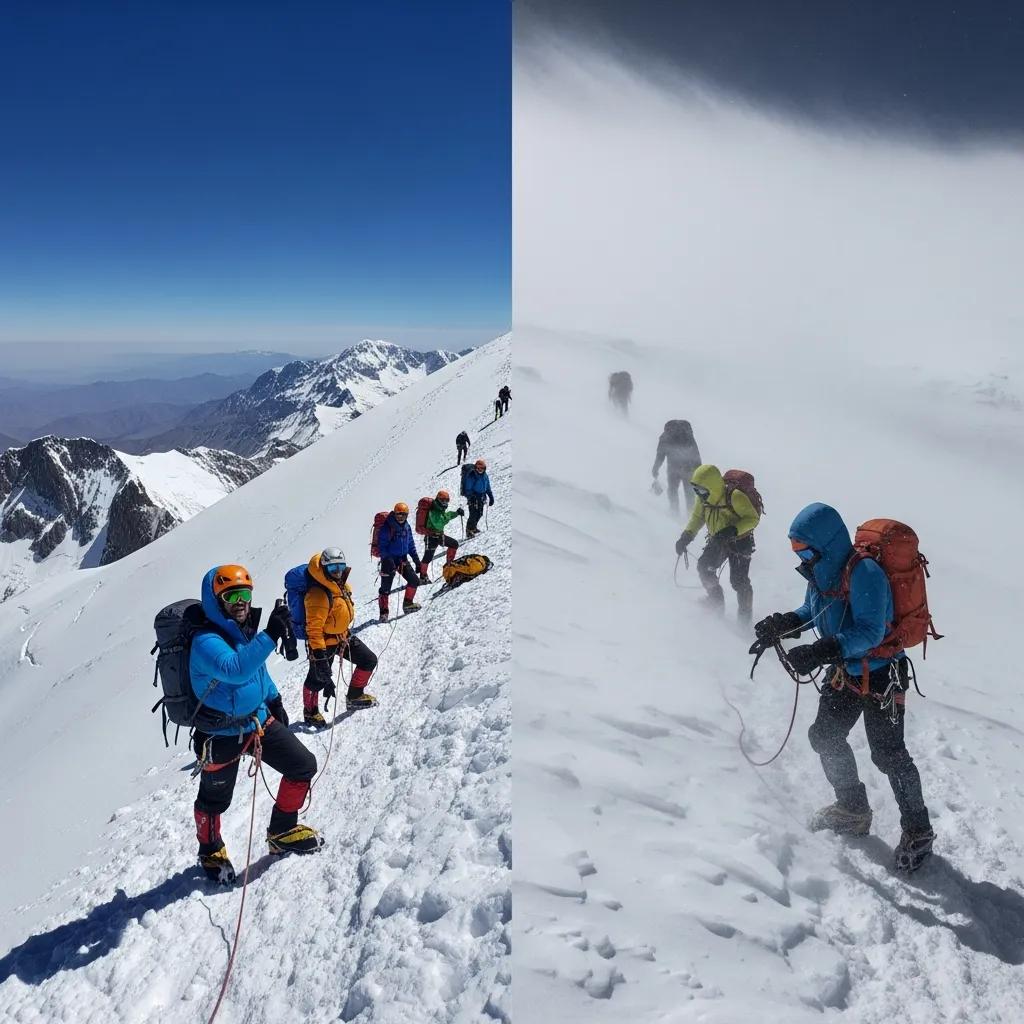
Aconcagua Can Turn a Walk-Up Route Into a Serious High-Altitude Decision.
The Normal Route is usually described as non-technical, but that description says very little about wind, cold, visibility, snow transport, tent security or the cost of waiting at nearly 6,000 metres. Conditions—not the route grade—often decide the summit window.
Use Short-Range Weather, Not a Month Label.
Seasonal patterns help choose a trip window. They do not tell you whether your actual summit day is safe.
Wind
Strong Andean winds can stop movement, damage tents, erase tracks and increase frostbite risk. Do not convert a generic “Viento Blanco” number into a fixed threshold; use the forecast plus guide/ranger judgment and what is happening on the mountain.
Snow & Visibility
Fresh snow changes traction, route-finding and avalanche or drift concerns. Blowing snow can make a technically straightforward line difficult to follow even when precipitation has ended.
Cold & Exposure
At high camp, temperature is only part of the problem. Wind, dehydration, poor sleep, altitude and long summit-day exposure compound one another. Preserve enough margin to turn around early.
What Usually Changes Through an Aconcagua Summer
This table describes planning tendencies only. A single storm cycle can make one week look nothing like the previous one.
| Phase | What can be more common | What not to assume | Planning implication |
|---|---|---|---|
| Early operation | More residual snow, colder ground, infrastructure still building toward full rhythm. | Do not assume the upper route will automatically require continuous crampon use. | Carry full systems and preserve weather flexibility. |
| Core summer | Largest expedition volume and strongest service availability. | Do not call it “stable weather.” Wind events and fresh snow still occur. | Book logistics early, but keep summit buffers. |
| Later operation | Potentially more exposed scree and declining traffic/infrastructure as season winds down. | Do not assume late season is dry; fresh snow can reset the mountain. | Confirm camp support and current park dates before committing. |
What to Verify Before You Leave Mendoza
A conditions page is most useful when it tells you exactly what must be rechecked after the article was published.
Official / administrative
- Permit category, route and payment status.
- Exact Horcones access and operating dates.
- Evacuation / medical coverage documentation.
- Any park closure, temporary restriction or weather-related access notice.
- Current rules for waste, camp operations and rescue responsibility.
Mountain / field conditions
- Recent snow line and fresh-snow depth.
- Canada, Nido and Cólera/Berlín camp condition and water/snow availability.
- Canaleta surface: scree, hard snow, ice or mixed transitions.
- Wind forecast at high camp and summit elevation.
- Recent turnaround points, delays and ranger / guide observations.
How This Conditions Page Is Verified
This page prioritizes official Mendoza notices for permits/restrictions and current operator material for route logistics and equipment. It does not manufacture a route report when no current-season field report exists.
Primary/current sources
Confidence by topic
- High: current promotional permit rates and September sale window.
- High: Normal Route corridor and commonly used camp system.
- High: crampons appear on current commercial equipment lists.
- Low / not yet available: 2026–27 Canaleta snow, current high-camp surface and in-season route track.
- Dynamic: weather, temporary closures, services and rescue operations.
Aconcagua Normal Route Conditions FAQ
These answers deliberately distinguish current verified information from normal route patterns.
What are the current Aconcagua Normal Route conditions?
As of September 17, 2026, the Normal Route is in pre-season. The verified current update is the opening of the 2026–27 advance permit sale, not an in-season snow or high-camp report. Current-season surface conditions at Canada, Nido, Cólera and the Canaleta cannot responsibly be stated until climbers and park staff are operating on the route.
How much is the current Aconcagua Normal Route permit?
Mendoza’s promotional advance-sale rate for a foreign climber ascending through Horcones is US$950. The sale runs through September 30, 2026 and is being handled through adjudicated service providers. Confirm the final category and post-promotion rate before payment.
Are Plaza de Mulas and the high camps open now?
Not as normal summer-season climbing infrastructure as of September 17. Treat Plaza de Mulas and the upper camps as seasonal operational sites whose services, staffing and actual conditions need to be verified when the season begins.
Do I need crampons on the Aconcagua Normal Route?
Current commercial gear lists commonly include steel mountaineering crampons. Whether you wear them on summit day depends on conditions; the upper route and Canaleta can range from dry scree to firm snow and ice.
What is the condition of the Canaleta right now?
There is no responsible current-season Canaleta condition to publish in September before the 2026–27 climbing season is operating. Later, use dated ranger, guide and climber reports plus the short-range forecast.
Which high camps are used on the Normal Route?
Common itineraries use Plaza Canadá around 4,900–5,000 m, Nido de Cóndores roughly 5,250–5,550 m depending on the referenced camp position, and Cólera or Berlín around 5,900–6,000 m before the summit attempt.
What is the biggest weather hazard on Aconcagua?
Wind is one of the defining hazards, especially when strong Andean wind combines with cold, blowing snow and poor visibility. Summit decisions should use the short-range forecast and local observations rather than a seasonal average.
Where should I verify conditions before climbing?
Use the Government of Mendoza and Aconcagua Provincial Park for permits and restrictions, your registered operator or guide for camp and route observations, and current mountain-weather forecasts for the summit window. Dated field reports are useful only when their date and route are clear.

Travis Ludlow · Global Summit Guide
This conditions page is research-based. It uses current government and operator sources rather than claiming a first-hand Aconcagua condition report. The page should be updated whenever Mendoza changes permit/access rules or when dated 2026–27 field reports materially change the snow, camp or upper-route picture.
Continue the Aconcagua Planning Path
This page owns the current Normal Route condition question. The parent and sibling guides own route choice, permit architecture, operators, cost, medicine, success data and progression.
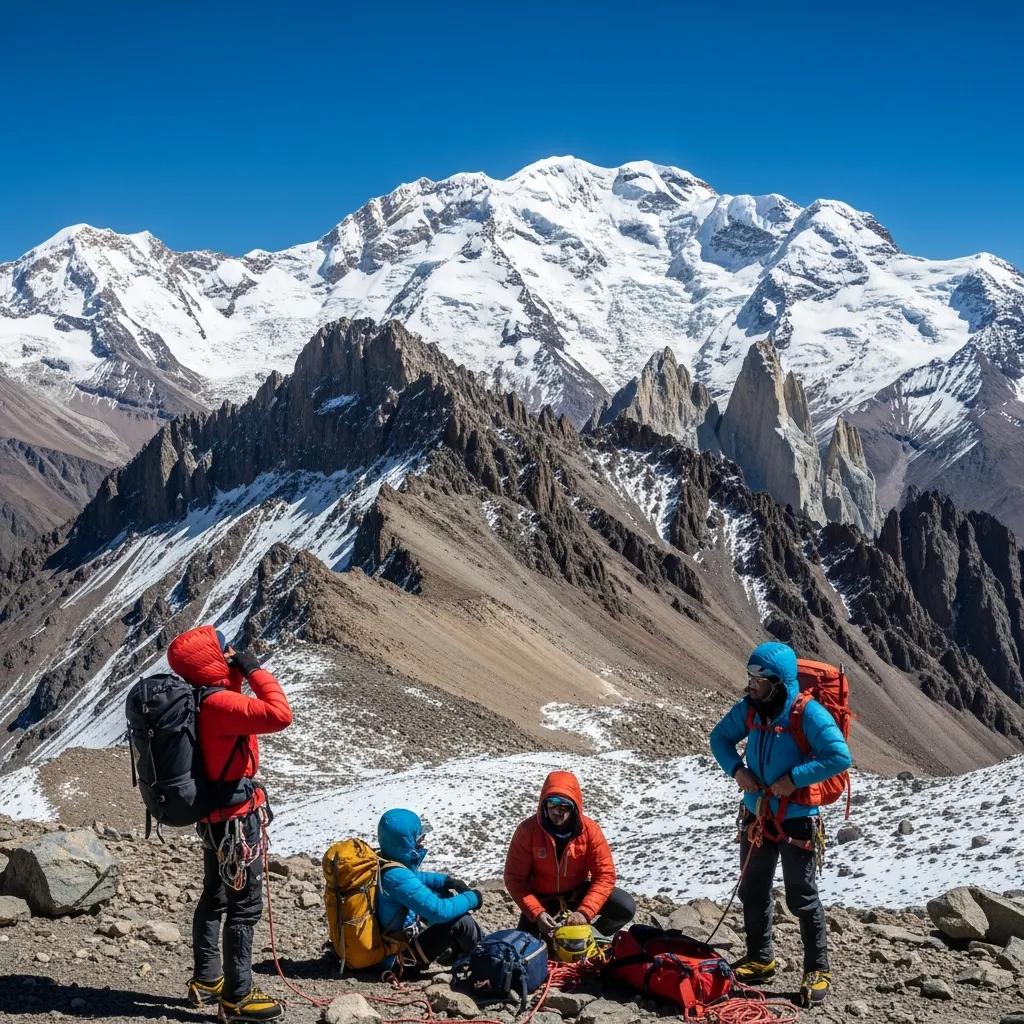
Use a Date With Every Route Claim.
Aconcagua changes with storms, wind, melt, camp operations and park decisions. The useful question is not “what is the Normal Route usually like?” It is “what was verified, on what date, by whom, and does it still apply to my summit window?”
Aconcagua Is Still Pre-Season—So There Is No Honest Live Canaleta Report Yet
The 2026–27 Aconcagua climbing season is approaching, but it is still too early to publish a credible summer Normal Route surface report. Climbers are not yet providing the regular sequence of dated field observations needed to describe Plaza Canada, Nido de Cóndores, Cólera, the Independencia traverse or the Canaleta as they will exist during the main climbing season.
That means the most useful information today is operational rather than observational: permit status, expedition start dates, required equipment and the exact information that must be rechecked once teams begin moving above Plaza de Mulas.
Do not convert last season’s snowpack, a long-range forecast or an early spring image into a claim about December or January route conditions.
The $950 Normal Route Advance-Sale Price Has Expired
The September promotional figure is useful historical context, but it should no longer be presented as the price a new applicant can obtain today.
| Permit item | October 4 status | Amount | How to use it |
|---|---|---|---|
| International · Normal Route / Horcones · advance sale | Expired | US$950 | Promotional 2026–27 advance-sale price that ended September 30. Do not present it as today’s available permit rate. |
| International · Normal Route / Horcones · season price | Operator-published | US$1,285 | Current 2026–27 season price published by registered Aconcagua providers. Confirm the final amount with your provider and current Mendoza permit process before payment. |
| International · 360 / Vacas · season price | Operator-published | US$1,585 | Useful route comparison only. This conditions page remains focused on the Horcones Normal Route. |
| Current route-surface report | Await in-season observations | — | Do not attach a snow or crampon claim to the permit update. They are separate datasets. |
What Can Be Verified Before the 2026–27 Teams Arrive?
A good conditions page should say “unknown” when the mountain has not yet produced the evidence required for a current answer.
Permit Phase
The September advance-sale window has closed. Climbers entering the season now need the current regular-season permit process rather than the expired promotional rate.
2026–27 Expeditions Are Scheduled
Major Mendoza operators are publishing Normal Route programs beginning in late November and early December, followed by regular departures through the core summer climbing season.
Crampons Should Still Be Packed
Current Normal Route equipment lists continue to include mountaineering crampons. Whether they are actually worn on the upper route will depend on the snow and ice present when your summit rotation occurs.
Canaleta Surface
We cannot yet responsibly describe it as dry scree, consolidated snow, ice or mixed terrain for the coming summer climbing season.
High-Camp Snow
Canada, Nido, Berlín and Cólera need dated in-season reports. A spring snowpack observation is not a December or January camp report.
Summit-Window Quality
Aconcagua summit decisions depend heavily on short-range wind, cold, precipitation and visibility. Seasonal forecasts cannot replace the 72-hour forecast used during an expedition.
The First Useful Normal Route Reports Should Answer These Six Questions
Once expedition teams are on the route, these are the observations that matter more than generic “good” or “bad” conditions language.
| Checkpoint | What the report should tell you | Why it matters |
|---|---|---|
| Plaza de Mulas | Camp operation, water, medical services, mule/logistics status and surrounding snow conditions. | Confirms whether normal base-camp systems are functioning. |
| Plaza Canada | Snow coverage, campsite condition and travel surface above base camp. | First useful indication of how much snow equipment may matter higher up. |
| Nido de Cóndores | Wind exposure, water availability, snow depth and camp usability. | Nido is a major acclimatization and high-camp decision point. |
| Cólera / Berlín | Camp condition, wind loading and surface for the final summit launch. | Directly affects summit-night logistics. |
| Independencia traverse | Firm snow, ice, wind exposure and whether traction is being used. | Surface conditions here can materially alter summit-day speed and risk. |
| Canaleta | Scree, snow, ice, mixed surface and the actual track climbers are using. | This is one of the most searched-for Normal Route condition questions. |
Conditions Change. Your Route and Expedition Plan Should Already Be Clear.
This page should own live and pre-season Normal Route conditions. Use the supporting guides for route selection, permits, operators, gear and total expedition planning.
Was this helpful?
🏔Related conditions
🧭Explore & compare
Global Summit Guide is an independent mountaineering resource founded in 2026. The team combines first-hand trekking and climbing experience with in-depth research and professional health and nutrition review to help climbers choose objectives, prepare properly, and stay safe.
Health, altitude, and nutrition content is reviewed by Taylor Ludlow (Registered Nurse) and Brigg Hoopes (Nutritionist).
What We Don't Know Yet
Mountain information changes quickly. This box explains the limits of what this page can responsibly promise.
- Weather, snowpack, avalanche risk, road access, and route conditions can change quickly and may be different on your climbing dates.
- Route conditions, trailhead access, crevasse exposure, stream crossings, and rescue access may vary from published planning guidance.
- Visa, passport, vaccination, border, insurance, and local transportation rules may change before your trip.
Verify current conditions with official land managers, guide services, local forecasts, and current route reports before booking or climbing.
Mountaineering, rock and ice climbing, glacier travel, and high-altitude activity are inherently dangerous and can result in serious injury or death. The information on Global Summit Guide is provided for general informational and educational purposes only and is not a substitute for professional instruction, qualified guiding, proper equipment, or your own judgment and experience.
Route conditions, weather, snowpack, permits, regulations, and hazards change constantly and may differ from what is described here. Details may be incomplete, out of date, or contain errors. Always verify current information with local authorities, certified guides, and official sources before making any decision in the mountains.
Nothing on this site is medical, legal, or financial advice. Our fitness, acclimatization, altitude, and nutrition content is general in nature; consult a qualified physician before beginning any strenuous exercise program or exposing yourself to high altitude.
You are solely responsible for your own safety and decisions. To the fullest extent permitted by law, Global Summit Guide and its team accept no liability for any loss, injury, damage, or expense arising from use of, or reliance on, this information. By using this site you acknowledge these risks and accept these terms.
Some links on this site may be affiliate links. If you buy through them we may earn a small commission at no extra cost to you; this never affects our recommendations.
Global Summit Guide recommendation path
Next Best Mountain to Research
Use these recommendations to continue the right planning path instead of stopping on one page.
Use current permit, weather, route, and operator information before booking or climbing.