
Last updated September 7, 2026
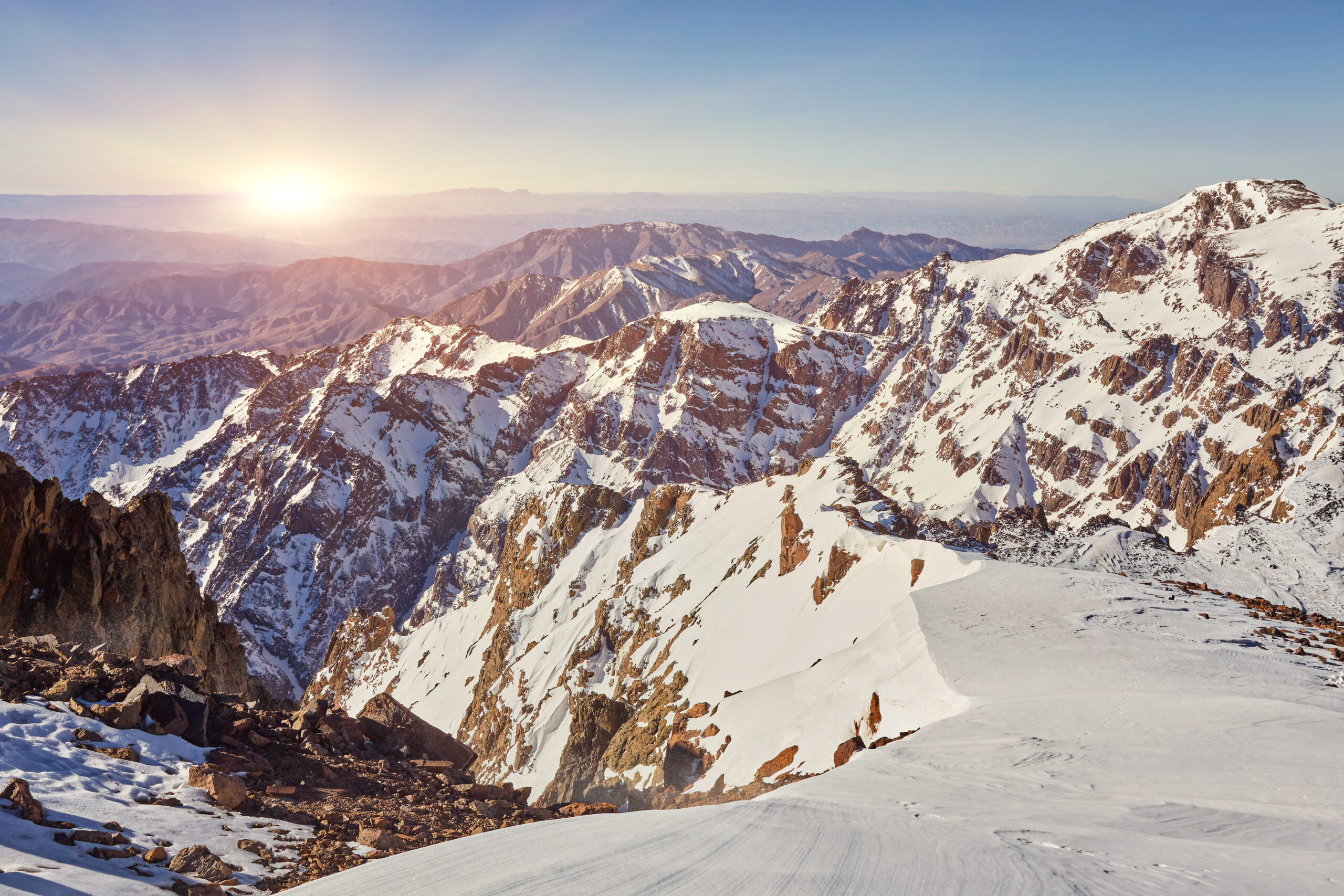
Toubkal vs Mount Kenya: Which African Peak Should You Climb?
One is a long weekend from Marrakech. The other is Africa’s second-highest mountain, with glaciers and rock spires. Both are guided, both are worth it — but only one of them is where you should start.
Toubkal is the gateway. Mount Kenya is the graduation. Toubkal (4,167 m) is North Africa’s highest peak — a non-technical 2–3 day trek from Imlil, reachable on a long weekend from Europe for a few hundred dollars. Mount Kenya (5,199 m) is Africa’s second-highest: 4–6 days, a trekking summit 800 m higher at Point Lenana (4,985 m), three route choices, equatorial glaciers, and genuine Grade IV–V rock climbing on Batian and Nelion. Climb Toubkal first. Climb Mount Kenya when you want a real mountain.
Toubkal vs Mount Kenya at a glance
Fourteen things that actually decide it.
| Toubkal 🇲🇦 | Mount Kenya 🇰🇪 | |
|---|---|---|
| Summit height | 4,167 m (13,671 ft) | 5,199 m (Batian) · trek summit Point Lenana 4,985 m |
| Claim to fame | Highest in North Africa | 2nd-highest in Africa |
| Country / range | Morocco · High Atlas | Kenya · Central Highlands |
| Typical days | 2–3 | 4–6 |
| Getting there | Imlil, ~1.5–2 hrs from Marrakech | ~4 hrs by road from Nairobi |
| Routes | One standard route via the refuge | Sirimon · Chogoria · Naro Moru |
| Technical climbing? | No (summer). Winter needs crampons & ice axe | Yes — Batian & Nelion are Grade IV–V rock |
| High camp | Toubkal (Neltner) Refuge, 3,207 m | Huts & camps to ~4,200 m |
| Guide | Legally mandatory — checkpoints verify it | Required |
| Altitude risk | Modest — but real above 3,000 m | Significant — Lenana is 800 m higher |
| Best months | Apr–Oct (winter = full alpine kit) | Jan–Feb · Jun–Oct |
| Typical cost | ~$200–500 | ~$1,000–1,400 |
| Wildlife | Barbary sheep, birds of prey | Moderate; forest zone below |
| Culture | Berber villages, Imlil valley | Kikuyu, Embu & Meru heartland; UNESCO site |
On this page
The case for Toubkal
The most accessible serious summit in Africa.
Toubkal’s advantage is arithmetic. At 4,167 m it’s the highest point in North Africa and the Arab world, yet the trailhead village of Imlil is only about ninety minutes from Marrakech — a three-to-four-hour flight from most of Europe. The standard trek walks up to the Toubkal (Neltner) Refuge at 3,207 m, sleeps, and summits at dawn. Two days, maybe three if you add an acclimatization hike. In summer it needs no ropes and no technical skill: just fitness, boots, and patience on long stretches of loose scree.
That combination — genuine altitude, a real summit, minimal time, and a cost measured in hundreds rather than thousands — makes it arguably the best first high mountain anywhere. You learn how your body handles 4,000 m, whether you get headaches, how you cope with an alpine start, all before committing to a mountain that would cost you a week and a thousand dollars to find out. The Berber villages of the Imlil valley and the walnut terraces below add a cultural texture the East African peaks don’t offer.
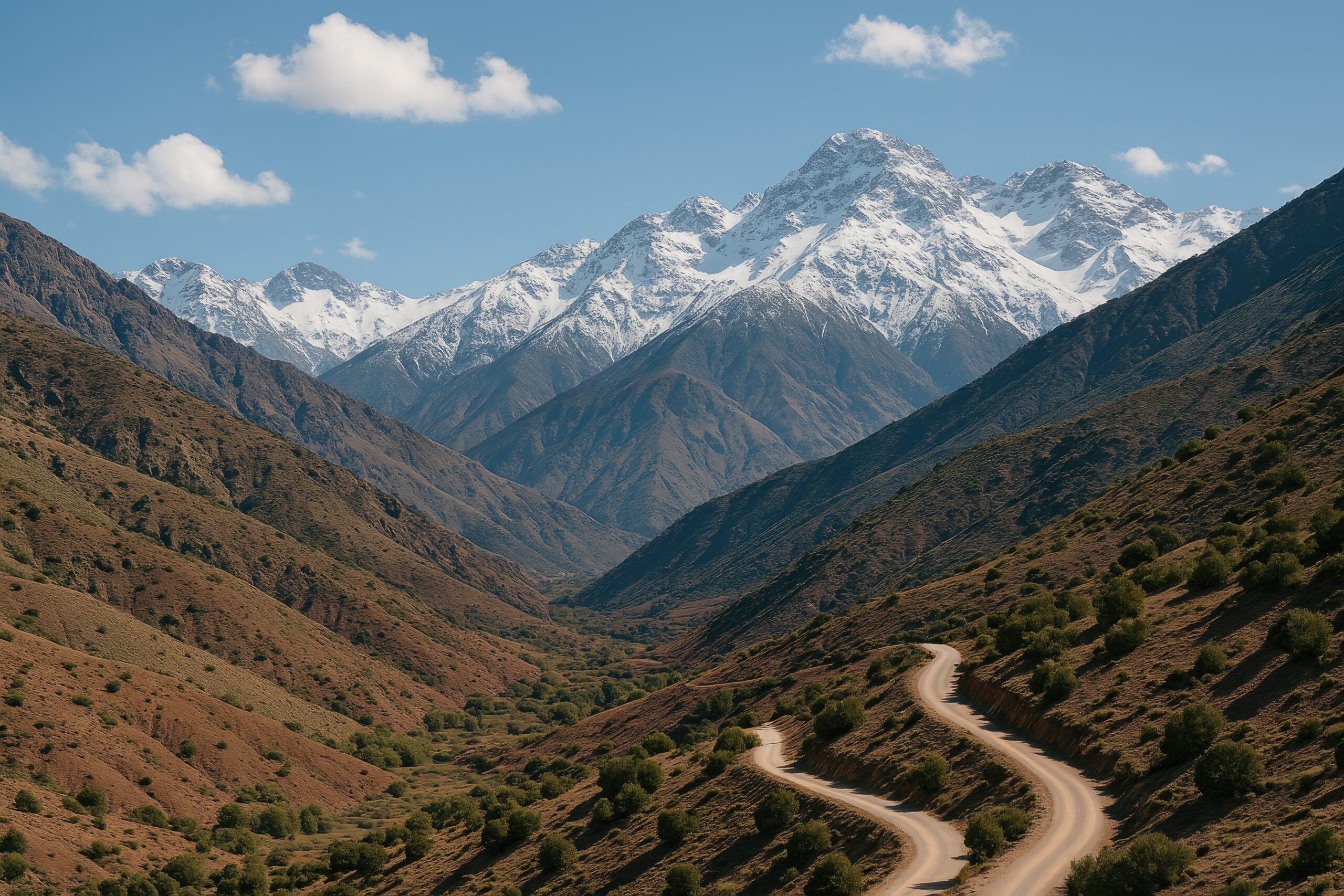
Toubkal’s summit slopes — loose scree, no ropes, and North Africa’s high point at the top.
The case for Mount Kenya
The better mountain — if you can give it the time.
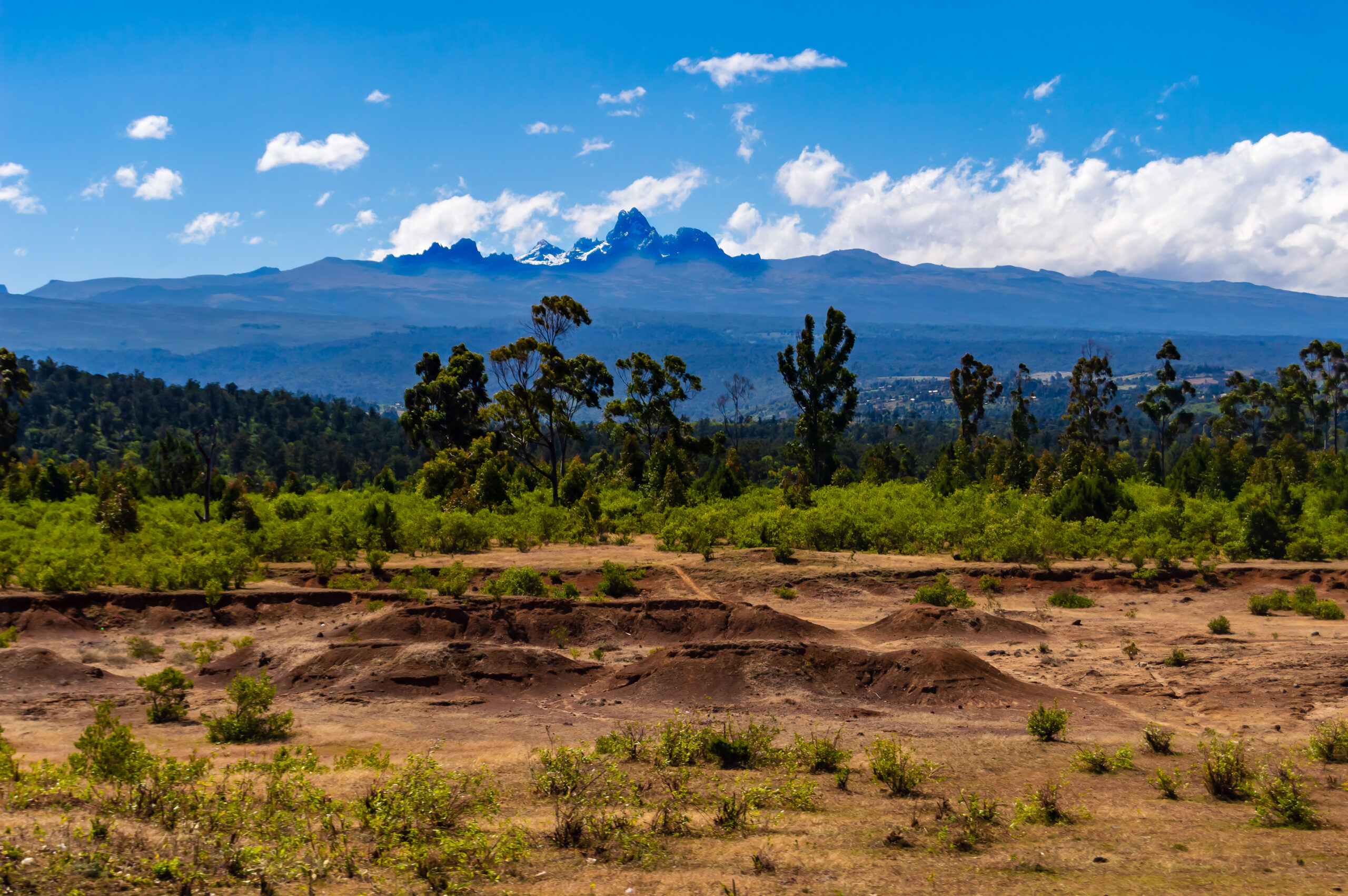
Mount Kenya — two mountains in one: a trek to Point Lenana, and real rock above it.
Mount Kenya is a step up in every dimension. Its trekking summit, Point Lenana (4,985 m), sits more than 800 m above Toubkal’s — high enough that acclimatization stops being a formality and becomes the thing that decides your summit. Above it stand Batian (5,199 m) and Nelion (5,188 m), Grade IV–V rock climbs separated by the Gate of Mists and summited by only around fifty people a year.
It also gives you choice, which Toubkal doesn’t. Sirimon (steady, best acclimatization), Chogoria (the most scenic, through the Gorges Valley), and Naro Moru (fast, steep) combine into 4–6 day itineraries — the classic being Sirimon up, Chogoria down. Add equatorial glaciers, UNESCO status, and thinner crowds than Kilimanjaro, and you have a mountain many experienced trekkers rate above its famous neighbour. Full detail in our Mount Kenya climbing guide.
The altitude gap that decides it
800 metres doesn’t sound like much. It changes everything.
The single most useful number in this comparison is the difference between the two trekking summits: Toubkal at 4,167 m, Point Lenana at 4,985 m. That 818 m sits exactly where altitude stops being a nuisance and starts being a hazard. On Toubkal, most reasonably fit trekkers manage with one night at the refuge; acute mountain sickness is uncommon and rarely severe. On Mount Kenya, you’re spending several nights above 4,000 m and pushing to nearly 5,000 m — territory where AMS is common, where a rushed itinerary genuinely fails, and where route choice (Sirimon’s gradual profile) measurably changes your odds.
Toubkal
Cheap, short, close, and high enough to teach you something real about yourself at altitude. Two or three days, a few hundred dollars, and a long weekend from Europe. There is no better place to find out whether the high mountains suit you.
Mount Kenya
Higher, longer, wilder, with route choice, glaciers, and rock climbing above. It demands a week, a bigger budget, and a real acclimatization plan — and it repays all three. This is a mountain, not an introduction to them.
The verdict
They’re not rivals — they’re consecutive.
Most comparisons frame these as competing options. They aren’t. Toubkal is where you start, and Mount Kenya is where you go next. Climb Toubkal if you have a long weekend, a modest budget, and have never been above 4,000 m — it will tell you, cheaply and quickly, whether you want more. Climb Mount Kenya if the answer was yes: if you can spare a week, want a mountain with routes and glaciers and consequence, and are ready for altitude that demands respect rather than tolerance. And if Batian tempts you, Mount Kenya is one of the few places in Africa where a trek and a serious rock climb share the same summit ridge.
Frequently asked questions
Is Toubkal or Mount Kenya harder?
Mount Kenya, considerably. Point Lenana (4,985 m) is ~800 m higher than Toubkal’s summit, routes run 4–6 days versus 2–3, and Batian and Nelion add Grade IV–V rock climbing. Toubkal is a non-technical summer trek — though winter ascents need crampons and an ice axe.
How high is Toubkal?
4,167 m (13,671 ft) — the highest mountain in North Africa and the Arab world, in Morocco’s High Atlas, about 65 km south of Marrakech.
Do you need a guide to climb Toubkal?
Yes — a licensed local guide is legally mandatory. Since the 2018 attack near Imlil, Gendarmerie Royale checkpoints verify your passport and your guide’s credentials en route to the refuge and summit.
Which is the better first African mountain?
Toubkal, for most people — 4,167 m over 2–3 days, a long weekend from Europe, a few hundred dollars, and a genuine test of how you handle altitude. Mount Kenya is the better mountain but works best as a step up.
How long does it take to climb Toubkal?
2–3 days. The standard itinerary walks Imlil → Toubkal (Neltner) Refuge at 3,207 m, summits at dawn, then descends. A three-day version adds an acclimatization hike and improves both comfort and summit odds.
Which is cheaper?
Toubkal, by a wide margin — roughly $200–500 including guide, refuge, and meals, plus cheap flights to Marrakech from Europe. Mount Kenya runs about $1,000–1,400 for 4–5 days, plus long-haul flights and park fees.
How we built this
Research-based — our team has not climbed either peak. Heights, guide regulations, refuge altitudes, and access details are compiled from Toubkal National Park and Kenya Wildlife Service information, operator itineraries, and survey records, cross-checked against our Mount Kenya climbing guide. Toubkal’s mandatory-guide rule and checkpoint enforcement are current as of publication; the 2023 Al Haouz earthquake affected this region, so verify access with a local operator. Costs are indicative ranges that vary by operator and season.
Ready for the step up?
Sirimon, Chogoria, or Naro Moru — the route decides your odds on Mount Kenya.
Compare the Mount Kenya routes →Toubkal vs Mount Kenya: North vs East Africa
North Africa’s highest against East Africa’s second-highest is a classic African-peak question. See both and the wider continent below.
Was this helpful?
🏔Related peaks nearby
🧭Explore & compare
Global Summit Guide is an independent mountaineering resource founded in 2026. The team combines first-hand trekking and climbing experience with in-depth research and professional health and nutrition review to help climbers choose objectives, prepare properly, and stay safe.
Health, altitude, and nutrition content is reviewed by Taylor Ludlow (Registered Nurse) and Brigg Hoopes (Nutritionist).
What We Don't Know Yet
Mountain information changes quickly. This box explains the limits of what this page can responsibly promise.
- Comparisons simplify complex decisions; the better mountain depends on current conditions, skills, timing, budget, and risk tolerance.
- Visa, passport, vaccination, border, insurance, and local transportation rules may change before your trip.
- Route conditions, snowpack, closures, and weather can change quickly after this page is updated.
- Permit rules, fees, quotas, and reservation windows may change between review cycles.
- Operator availability, pricing, guide ratios, and cancellation terms can change by season.
Verify current conditions with official land managers, guide services, local forecasts, and current route reports before booking or climbing.
Mountaineering, rock and ice climbing, glacier travel, and high-altitude activity are inherently dangerous and can result in serious injury or death. The information on Global Summit Guide is provided for general informational and educational purposes only and is not a substitute for professional instruction, qualified guiding, proper equipment, or your own judgment and experience.
Route conditions, weather, snowpack, permits, regulations, and hazards change constantly and may differ from what is described here. Details may be incomplete, out of date, or contain errors. Always verify current information with local authorities, certified guides, and official sources before making any decision in the mountains.
Nothing on this site is medical, legal, or financial advice. Our fitness, acclimatization, altitude, and nutrition content is general in nature; consult a qualified physician before beginning any strenuous exercise program or exposing yourself to high altitude.
You are solely responsible for your own safety and decisions. To the fullest extent permitted by law, Global Summit Guide and its team accept no liability for any loss, injury, damage, or expense arising from use of, or reliance on, this information. By using this site you acknowledge these risks and accept these terms.
Some links on this site may be affiliate links. If you buy through them we may earn a small commission at no extra cost to you; this never affects our recommendations.
Global Summit Guide recommendation path
Next Best Mountain to Research
Use these recommendations to continue the right planning path instead of stopping on one page.
Use current permit, weather, route, and operator information before booking or climbing.
Explore Travel Options for Your Destination
Once your mountain, dates and route are taking shape, compare flights, hotels and other travel options that fit the trip.
Affiliate link. We may earn a commission at no additional cost to you.