
Last updated September 20, 2026
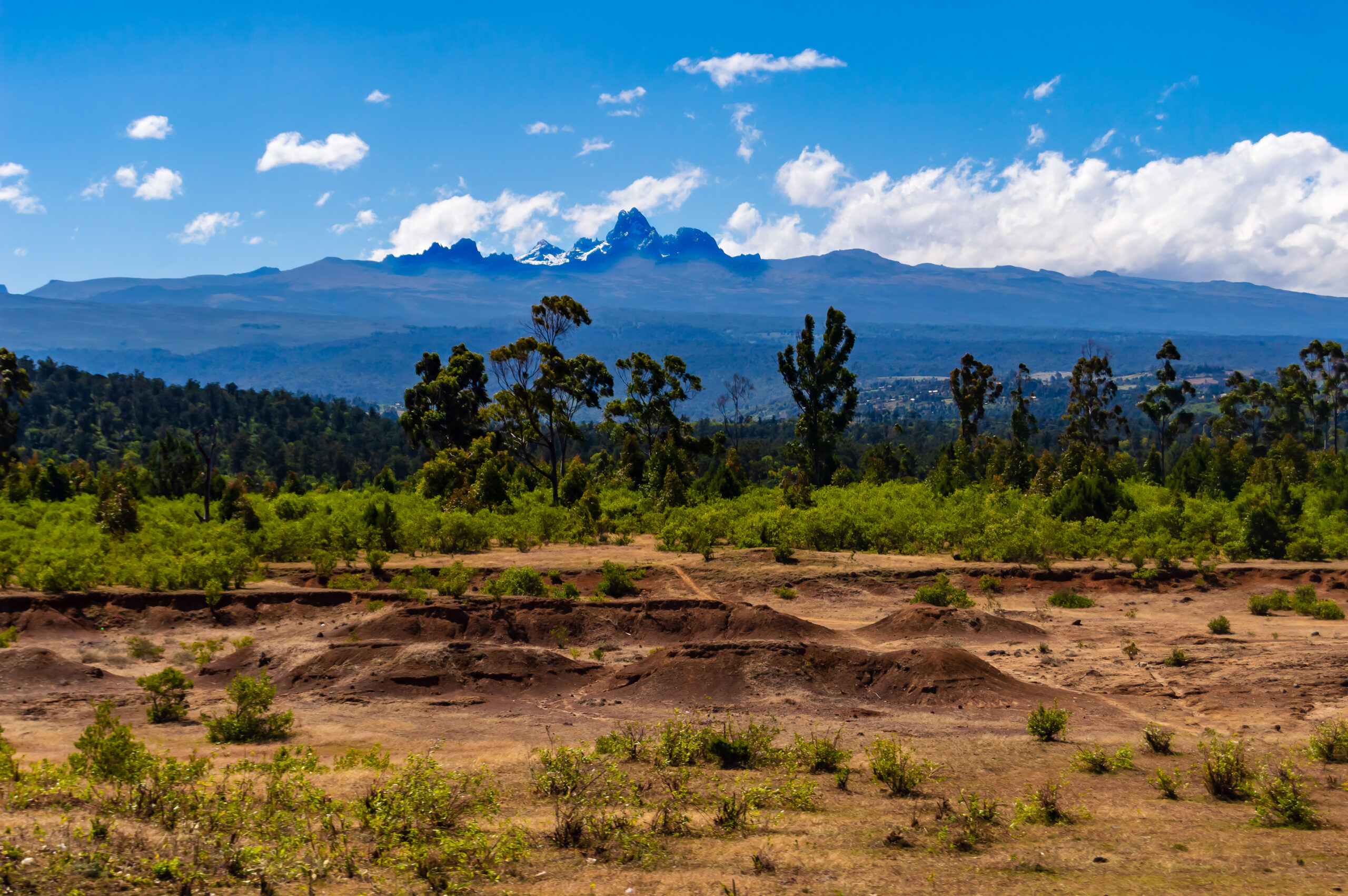
Mount Kenya vs Mount Meru: Which East African Peak Should You Climb?
Choose Mount Kenya if you want the higher trekking summit, multiple routes, a longer standalone mountain journey and the option to progress into serious technical climbing. Choose Mount Meru if you want a compact 3–4 day hut trek, a wildlife-rich approach, a dramatic volcanic crater ridge and the most convenient acclimatization climb before Kilimanjaro.
Mount Kenya Is the Bigger Standalone Objective. Meru Fits Better Before Kilimanjaro.
Mount Kenya: Point Lenana is the main trekking summit at 4,984 m, while Batian rises to 5,199 m and requires technical climbing. KWS recognizes Sirimon, Naro Moru and Chogoria as official access routes/gates, and its 2026 brochure says visitors must be accompanied by a qualified certified guide. Mount Meru: the Momella climb reaches Socialist Peak at about 4,565–4,566 m through Arusha National Park, using Miriakamba and Saddle huts before the exposed pre-dawn crater-rim summit.
The key distinction is not simply height. Mount Kenya gives you route choice, more days and a clear split between trekking and alpinism. Meru gives you a shorter hut-based volcanic climb in the same northern-Tanzania travel system as Kilimanjaro.
Mount Kenya vs Mount Meru at a Glance
This comparison starts with the normal trekking experiences and then separates Mount Kenya’s technical summits.
| Factor | Mount Kenya | Mount Meru | Decision takeaway |
|---|---|---|---|
| Main trekking summit | Point Lenana · 4,984 m | Socialist Peak · ~4,565–4,566 m | Kenya takes the trekker higher. |
| True summit | Batian · 5,199 m | Socialist Peak | Batian is technical; Meru’s true summit is reached by the standard trek. |
| Technical climbing | Not needed for Point Lenana; required for Batian/Nelion | Normal route is a trek with exposed/scrambly upper terrain | Only Kenya offers a major technical progression path. |
| Typical duration | About 4–6 days for many Point Lenana itineraries | 3–4 days | Meru fits a shorter trip. |
| Route choice | Sirimon · Naro Moru · Chogoria | Momella standard route | Kenya offers more itinerary design. |
| Guide / ranger system | KWS requires qualified certified guide accompaniment | Guide system plus armed-ranger escort on park-designated wildlife sections | Neither is an unsupported walk-in. |
| Accommodation | Huts and/or camps depending route | Miriakamba + Saddle huts | Meru is more fixed hut-to-hut. |
| Wildlife character | Mountain forest and alpine ecology | Strong Arusha National Park wildlife component | Meru has the stronger safari-on-foot feel. |
| Landscape | Glacial valleys, tarns, jagged spires | Rainforest, crater wall, ash cone, volcanic ridge | Kenya feels alpine; Meru volcanic. |
| Kilimanjaro pairing | Possible but involves Kenya–Tanzania transfer | Simple northern-Tanzania pairing | Meru has the logistics advantage. |
You want the mountain itself to be the trip.
Higher trekking altitude, route variety, glacial scenery and the option to progress to Batian/Nelion make Kenya the deeper standalone objective.
You want a compact volcanic climb—or Kilimanjaro preparation.
Meru’s four-day hut structure, wildlife approach and Tanzania location make it easy to add before Kilimanjaro.

Point Lenana Is a Trek. Batian Is an Alpine Climb.
Most trekking itineraries finish on Point Lenana. Batian at 5,199 m requires technical rock-climbing ability and a specialist plan.
Photo source: Wikimedia Commons
Three Official Approaches, One Trekking Summit
KWS identifies Naro Moru, Sirimon and Chogoria as the official peak-access routes/gates.
Steady Northern Approach
Frequently used for ascent in longer Point Lenana itineraries and easy to combine with Chogoria for a traverse.
Landscape-Focused Route
Known for valleys, tarns and dramatic eastern-side scenery; commonly paired with Sirimon.
Direct Western Access
The third official KWS route/gate and a frequent ascent or descent option.
Certified Guide Required
KWS’s 2026 brochure states all visitors must be accompanied by a qualified certified guide vetted by park management.
4,984 m Trekking Goal
The correct comparison with Mount Meru for a nontechnical high-altitude trek.
Technical Tier
Serious alpine rock objectives rather than “harder trekking summits.”
Current KWS park-entry reference: the Mount Kenya park page currently lists USD 70 for a non-resident adult. A multi-day trek costs more once guide, porter, accommodation/camping, food and transfers are added.

This Is the Right Trekking Comparison to Meru.
Point Lenana keeps the trip in the high-altitude trekking category; Batian and Nelion do not.
Photo source: Wikimedia Commons
One Principal Route, Two Huts, One Dramatic Crater Ridge
Meru is a more fixed mountain experience than Kenya: Momella Gate, Miriakamba, Saddle Hut, then the upper volcanic ridge to Socialist Peak.
Momella → Miriakamba
The climb begins through Arusha National Park wildlife habitat.
Miriakamba → Saddle
A shorter, steeper day positions the team for summit night and allows acclimatization time.
Crater-Rim Finish
The route is not a sustained roped climb, but the upper ridge can feel steep, narrow and exposed.
Arusha National Park
Buffalo, giraffe and colobus help make the lower approach unlike a normal mountain trailhead.
Miriakamba + Saddle
Fixed huts create a simpler overnight structure than Mount Kenya’s route-dependent mix.
Same Tanzania System
TANAPA materials describe Meru as an ideal high-altitude acclimatization warm-up before Kilimanjaro.
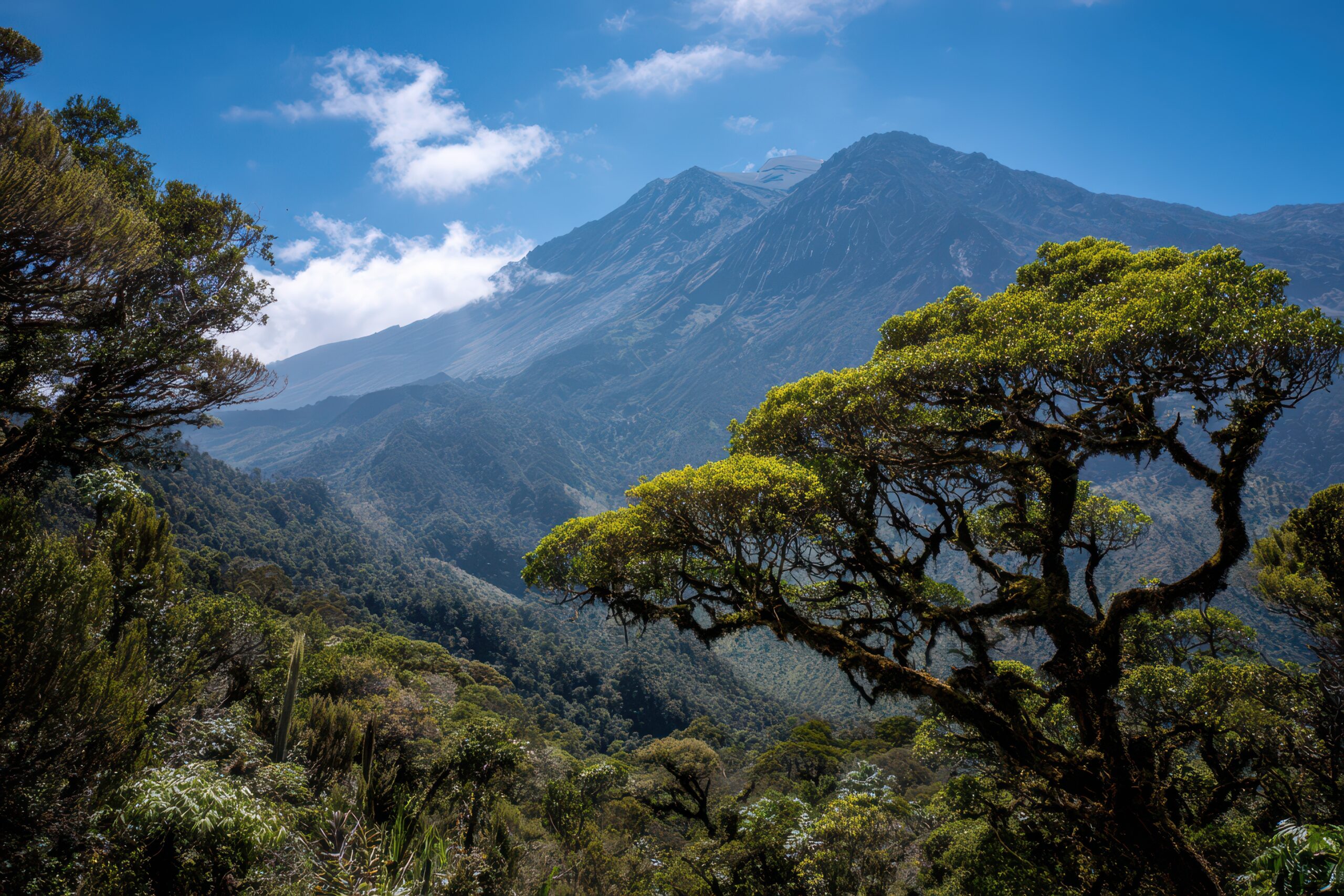
Meru Begins Like a Safari and Ends Like a High Mountain.
The lower forest is wildlife habitat; the upper route becomes an exposed volcanic ridge. That transition gives Meru its own identity.
Which Is Harder?
For trekkers, Mount Kenya usually brings the bigger altitude and multi-day problem. Meru compresses more steep, exposed upper terrain into a shorter itinerary.
| Factor | Point Lenana | Mount Meru |
|---|---|---|
| Altitude | Higher at 4,984 m | Lower at ~4,566 m |
| Duration | Often 4–6 days | Usually 3–4 days |
| Route options | Multiple official approaches | One principal summit route |
| Exposure | Mostly trekking terrain, conditions dependent | Upper crater ridge can feel narrower and more exposed |
| Technical tier | Batian/Nelion are separate technical climbs | No equivalent technical summit tier on normal route |
| Acclimatization | Higher summit but longer itinerary options | Lower summit; 3-day schedules compress ascent |
For trekking: Kenya is the bigger altitude journey; Meru is the sharper volcanic summit day.
For technical climbing, Batian changes the category completely.

“Nontechnical” Does Not Mean “Ordinary Trail.”
The normal route avoids sustained roped climbing, but the crater rim still rewards sure footing and conservative weather judgment.
Photo source: Wikimedia Commons
Meru’s Advantage Is Proximity and Recent Altitude
Meru does not reproduce Kilimanjaro’s full altitude profile, but it gives you recent exposure above 4,500 m, a pre-dawn summit routine and several consecutive mountain days without leaving northern Tanzania.
No Border Transfer
Meru and Kilimanjaro fit into the same Tanzania arrival, hotel and operator ecosystem.
Above 4,500 m
You learn something about your altitude response before Kilimanjaro reaches nearly 5,900 m.
Pre-Dawn Start
Useful rehearsal for cold layers, headlamp pacing and eating before a long summit morning.
Rest Still Matters
Recent altitude helps only if you arrive at Kilimanjaro recovered rather than depleted.
Meru Is Much Lower
A successful 4,566 m summit does not prove tolerance of 5,895 m.
Kenya as the Main Trip
If Kilimanjaro is not the goal, Mount Kenya often deserves the full mountain block.

The Profiles Are Not the Same.
Meru works because it is close and gets you above 4,500 m first. Kilimanjaro is still roughly 1,330 m higher.
Photo source: Wikimedia Commons
Which Mountain Fits Your East Africa Trip?
Use the reason for your trip—not one overall difficulty score—to decide.
| Your priority | Choose | Why |
|---|---|---|
| Best pre-Kilimanjaro climb | Mount Meru | Same country, short transfer and recent 4,500 m+ exposure. |
| Higher trekking summit | Mount Kenya | Point Lenana reaches 4,984 m. |
| Shorter trip | Mount Meru | Three or four days is common. |
| More route choice | Mount Kenya | Sirimon, Naro Moru and Chogoria create more itinerary options. |
| Wildlife emphasis | Mount Meru | Arusha National Park gives the approach a walking-safari character. |
| Biggest standalone mountain trip | Mount Kenya | Longer itinerary, higher trekking summit and technical progression tier. |
| Future technical climbing | Mount Kenya | Batian and Nelion create a serious alpine progression path. |
| Tanzania safari + mountain | Mount Meru | Easy Arusha-based logistics. |
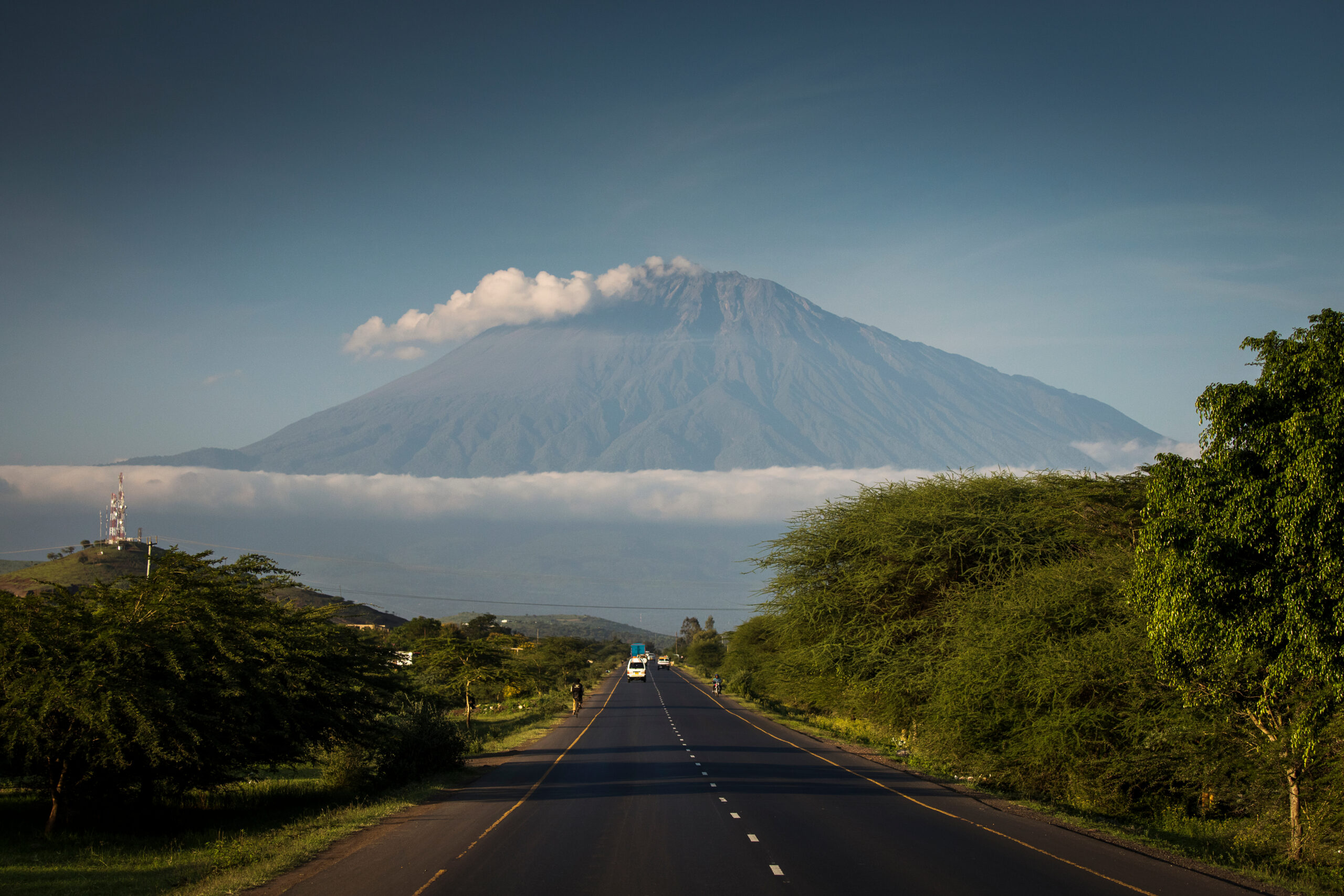
Meru Is Easier to Add. Mount Kenya Is Easier to Build a Whole Trip Around.
Meru slots neatly into a Kilimanjaro or safari itinerary; Mount Kenya rewards giving the mountain itself more time.
Mount Kenya, Mount Meru and Kilimanjaro on One Map
The geography explains the itinerary logic: Mount Kenya sits north of Nairobi; Meru sits beside Arusha and much closer to Kilimanjaro.
Continue From Kenya vs Meru
The first row goes deeper on the mountains and Kilimanjaro pairing. The second row contains exactly three Deep Recovery targets from the internal-link recovery pool.
Mount Kenya vs Mount Meru FAQ
Short answers to the planning questions that matter most.
Which is higher, Mount Kenya or Mount Meru?
Mount Kenya is higher. Batian reaches 5,199 m and Point Lenana, the main trekking summit, reaches 4,984 m. Mount Meru’s Socialist Peak is about 4,565–4,566 m depending on the TANAPA source.
Which is harder?
For trekkers, Point Lenana is higher and Mount Kenya itineraries are often longer, while Meru has a steeper, more exposed crater-rim finish. Batian is a technical climb and belongs to a different category.
Which is better before Kilimanjaro?
Mount Meru is more convenient because it is in the same northern-Tanzania travel system and reaches above 4,500 m. It does not duplicate Kilimanjaro’s full altitude profile.
Do I need a guide on Mount Kenya?
Yes. The current KWS Mount Kenya brochure says visitors must be accompanied by a qualified certified guide.
Do I need an armed ranger on Mount Meru?
TANAPA mountain rules allow the park to assign armed-ranger escort on forest and wildlife sections of the climb.
What are the main Mount Kenya trekking routes?
KWS identifies Naro Moru, Sirimon and Chogoria as the three official peak-access routes/gates.
How many days do the climbs take?
Point Lenana itineraries commonly take about four to six days. Mount Meru is commonly climbed in three or four days.
Which is better as a standalone trip?
Mount Kenya generally offers more depth because it has multiple routes, a higher trekking summit, glacial landscapes and a separate technical climbing tier. Meru remains a complete climb for travelers who value wildlife and volcanic terrain.
Use the Park That Controls the Mountain
Park fees, access rules and guide/ranger procedures can change. KWS controls Mount Kenya; TANAPA controls Mount Meru.
Mount Kenya for the Mountain Journey. Mount Meru for the Tanzania Pairing.
Point Lenana gives you the higher, longer and more varied trekking objective. Mount Meru gives you the cleaner short itinerary, wildlife-rich hut approach and easiest bridge into Kilimanjaro. If technical rock climbing is part of the goal, Mount Kenya separates itself through Batian and Nelion.
Mount Kenya vs Mount Meru: The Kili Warm-Ups
Kenya and Meru are the two great acclimatization peaks before Kilimanjaro. See both and the wider African peaks below.
Was this helpful?
🏔Related peaks nearby
🧭Explore & compare
Global Summit Guide is an independent mountaineering resource founded in 2026. The team combines first-hand trekking and climbing experience with in-depth research and professional health and nutrition review to help climbers choose objectives, prepare properly, and stay safe.
Health, altitude, and nutrition content is reviewed by Taylor Ludlow (Registered Nurse) and Brigg Hoopes (Nutritionist).
What We Don't Know Yet
Mountain information changes quickly. This box explains the limits of what this page can responsibly promise.
- Comparisons simplify complex decisions; the better mountain depends on current conditions, skills, timing, budget, and risk tolerance.
- Visa, passport, vaccination, border, insurance, and local transportation rules may change before your trip.
- Route conditions, snowpack, closures, and weather can change quickly after this page is updated.
- Permit rules, fees, quotas, and reservation windows may change between review cycles.
- Operator availability, pricing, guide ratios, and cancellation terms can change by season.
Verify current conditions with official land managers, guide services, local forecasts, and current route reports before booking or climbing.
Mountaineering, rock and ice climbing, glacier travel, and high-altitude activity are inherently dangerous and can result in serious injury or death. The information on Global Summit Guide is provided for general informational and educational purposes only and is not a substitute for professional instruction, qualified guiding, proper equipment, or your own judgment and experience.
Route conditions, weather, snowpack, permits, regulations, and hazards change constantly and may differ from what is described here. Details may be incomplete, out of date, or contain errors. Always verify current information with local authorities, certified guides, and official sources before making any decision in the mountains.
Nothing on this site is medical, legal, or financial advice. Our fitness, acclimatization, altitude, and nutrition content is general in nature; consult a qualified physician before beginning any strenuous exercise program or exposing yourself to high altitude.
You are solely responsible for your own safety and decisions. To the fullest extent permitted by law, Global Summit Guide and its team accept no liability for any loss, injury, damage, or expense arising from use of, or reliance on, this information. By using this site you acknowledge these risks and accept these terms.
Some links on this site may be affiliate links. If you buy through them we may earn a small commission at no extra cost to you; this never affects our recommendations.
Global Summit Guide recommendation path
Next Best Mountain to Research
Use these recommendations to continue the right planning path instead of stopping on one page.
Use current permit, weather, route, and operator information before booking or climbing.
Explore Travel Options for Your Destination
Once your mountain, dates and route are taking shape, compare flights, hotels and other travel options that fit the trip.
Affiliate link. We may earn a commission at no additional cost to you.