
Last updated October 20, 2026
The 10 Classic Alpine Peaks: Which Should You Climb?
From Mont Blanc and the Matterhorn to the Eiger, Weisshorn and Grandes Jorasses, compare ten iconic Alpine objectives by route, technical challenge and gateway town. Then build a realistic progression.
Compare all 10 peaksExplore all mountains
Ten peaks, three gateways, a lifetime of climbing
There is no official list of the Alps’ ten “classic” climbs. This selection brings together historic and technically influential peaks: Mont Blanc, Dufourspitze, Dom, Weisshorn, Matterhorn, Grandes Jorasses, Jungfrau, Aiguille Verte, Mönch and Eiger.
Compare the 10 classic Alpine peaks
Elevations are approximate and route grades are indicative; difficulty changes with the chosen line, season and conditions. The grade shown is not a guarantee that a route is safe or suitable.
| Peak | Elevation | Region | Indicative route grade | Gateway |
|---|---|---|---|---|
| Mont Blanc | ≈4,806 m | France / Italy | PD | Chamonix |
| Dufourspitze (Monte Rosa) | 4,634 m | Switzerland / Italy | AD | Zermatt |
| Dom | 4,545 m | Switzerland | PD+/AD | Randa |
| Weisshorn | 4,506 m | Switzerland | AD+/D | Zinal / Randa |
| Matterhorn | 4,478 m | Switzerland / Italy | AD | Zermatt |
| Grandes Jorasses | 4,208 m | France / Italy | D and harder | Courmayeur / Chamonix |
| Jungfrau | 4,158 m | Switzerland | PD+/AD | Grindelwald |
| Aiguille Verte | 4,122 m | France | D | Chamonix |
| Mönch | 4,107 m | Switzerland | PD+ | Grindelwald |
| Eiger | 3,967 m | Switzerland | AD and harder | Grindelwald |
Note: the Eiger is 3,967 m, so it is a classic but not one of the UIAA 4,000ers.
Meet the ten classics
Each mountain earns its place for history, character and climbing significance. Start with the qualities of the actual route—not a ranked “easiest-to-hardest” myth.
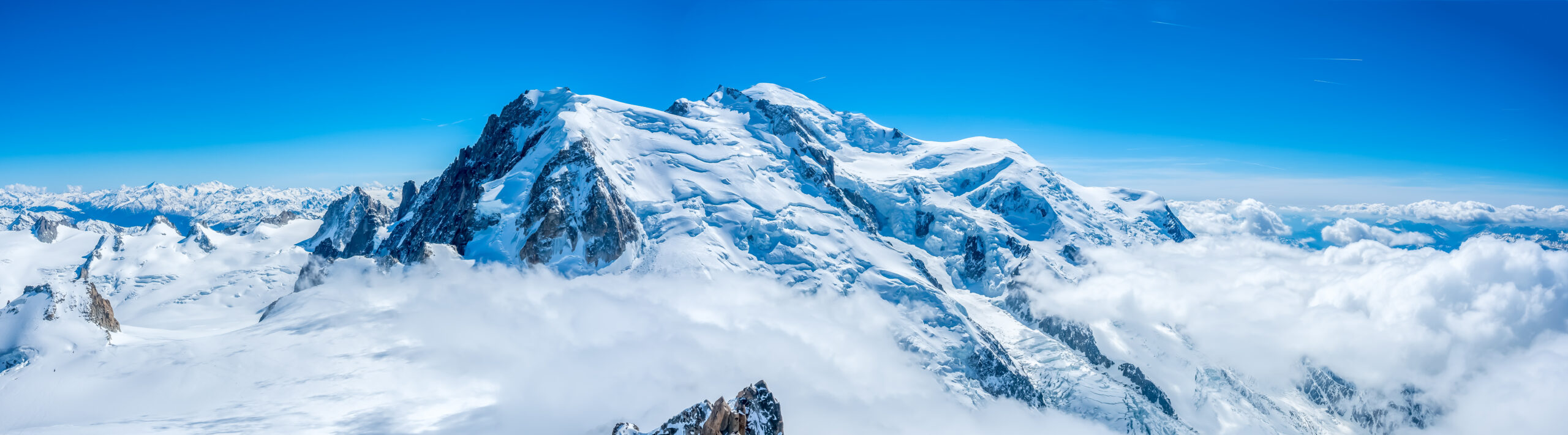
Mont Blanc
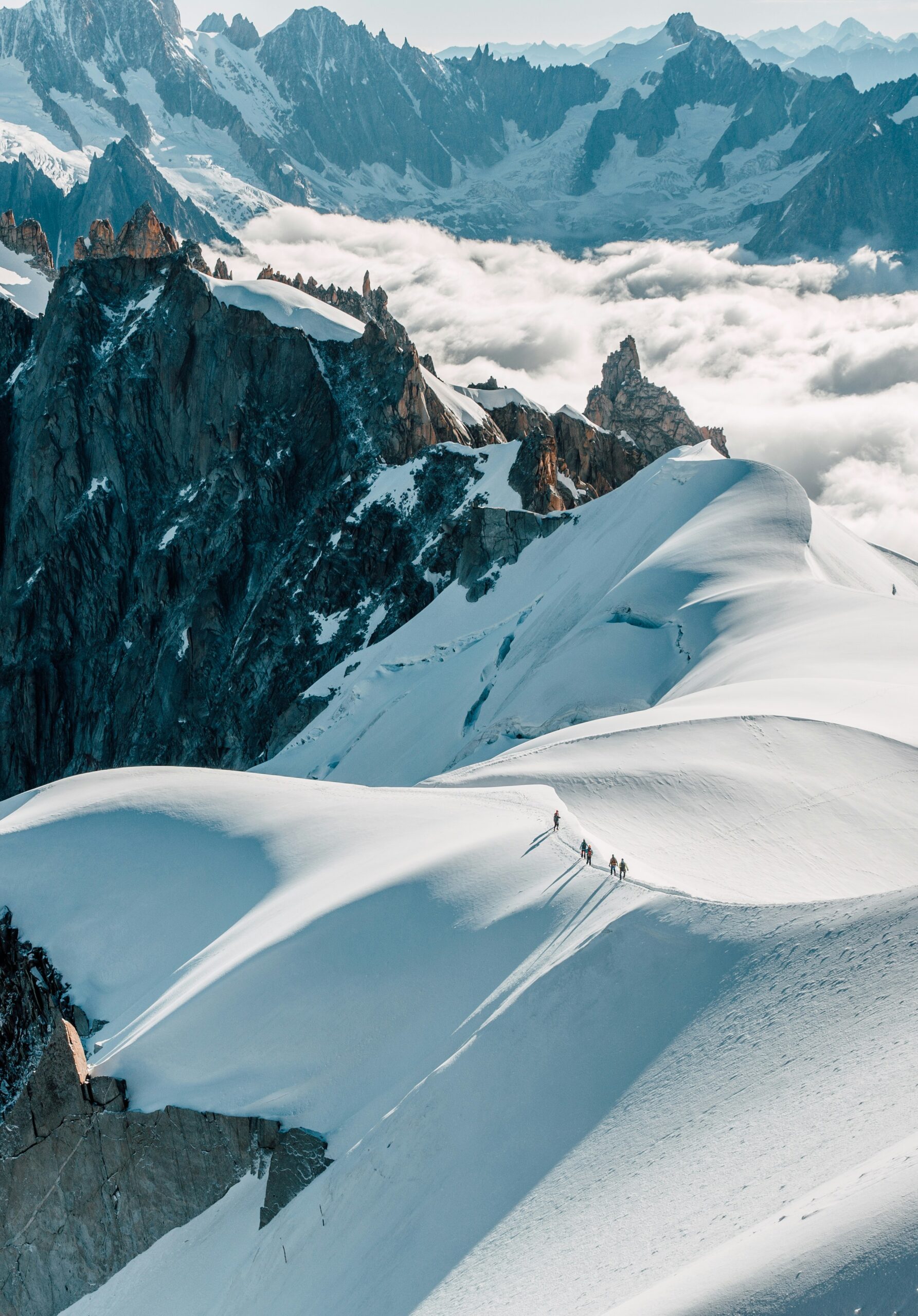
The highest Alpine summit. The Goûter approach is a serious snow-and-glacier climb with rockfall exposure at the Grand Couloir. A mountain to earn through preparation, not an introductory hike.
Gateway: Chamonix.
Explore Mont Blanc guides →
Dufourspitze (Monte Rosa)
The lofty high point of the Monte Rosa massif rewards glacier competence, strong fitness and confidence on an exposed summit ridge. Monte Rosa Hut logistics are a central part of the climb.
Gateway: Zermatt.
Explore the mountain index →Dom
Switzerland’s highest peak entirely within the country. Long approach and summit days make endurance and acclimatization especially important.
Gateway: Randa.
Explore the mountain index →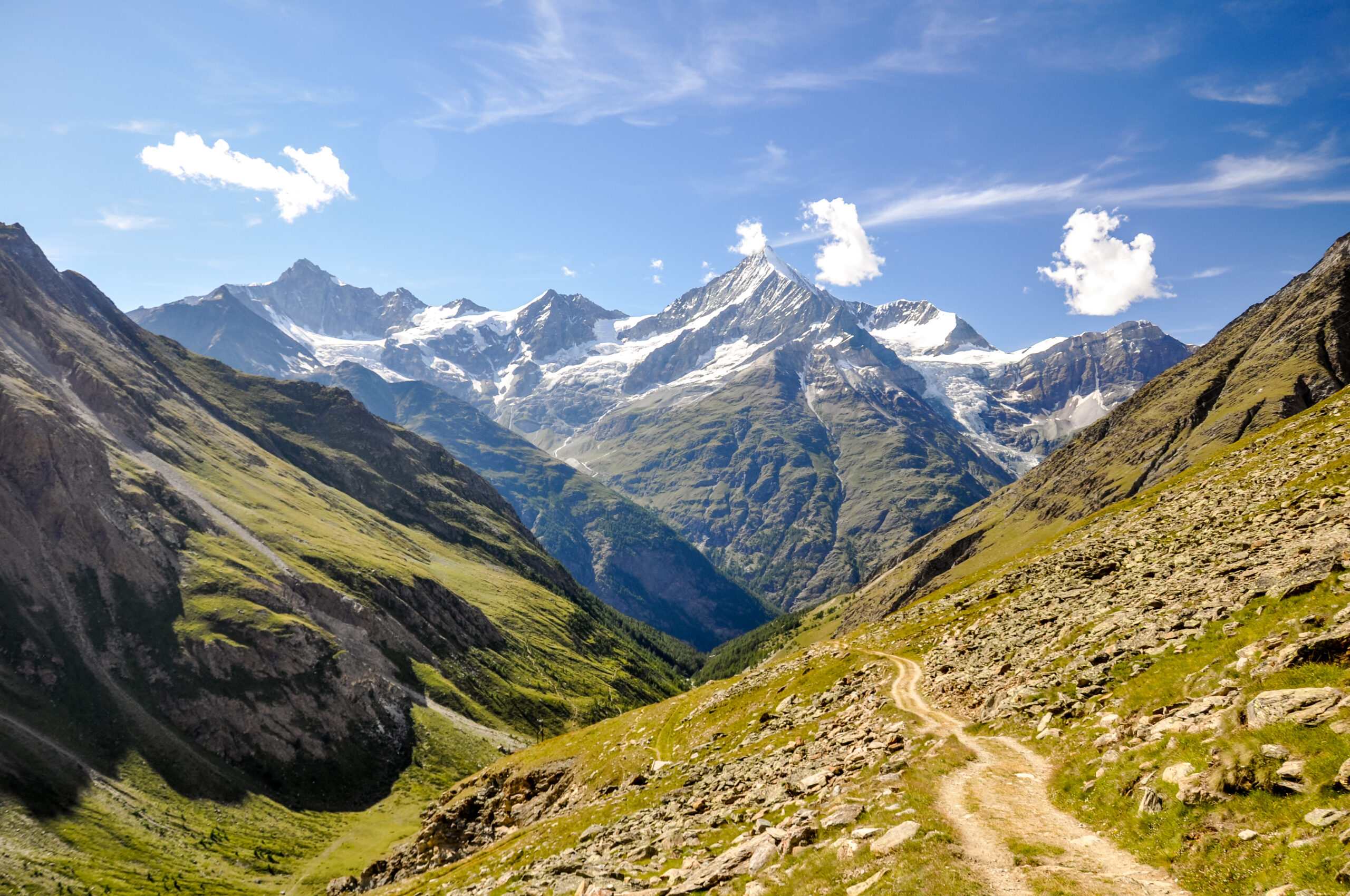
Weisshorn
A striking pyramid prized for its long, exposed ridges. This is a demanding objective for experienced alpinists, not a first 4,000er.
Gateway: Zinal / Randa.
Explore the mountain index →Matterhorn
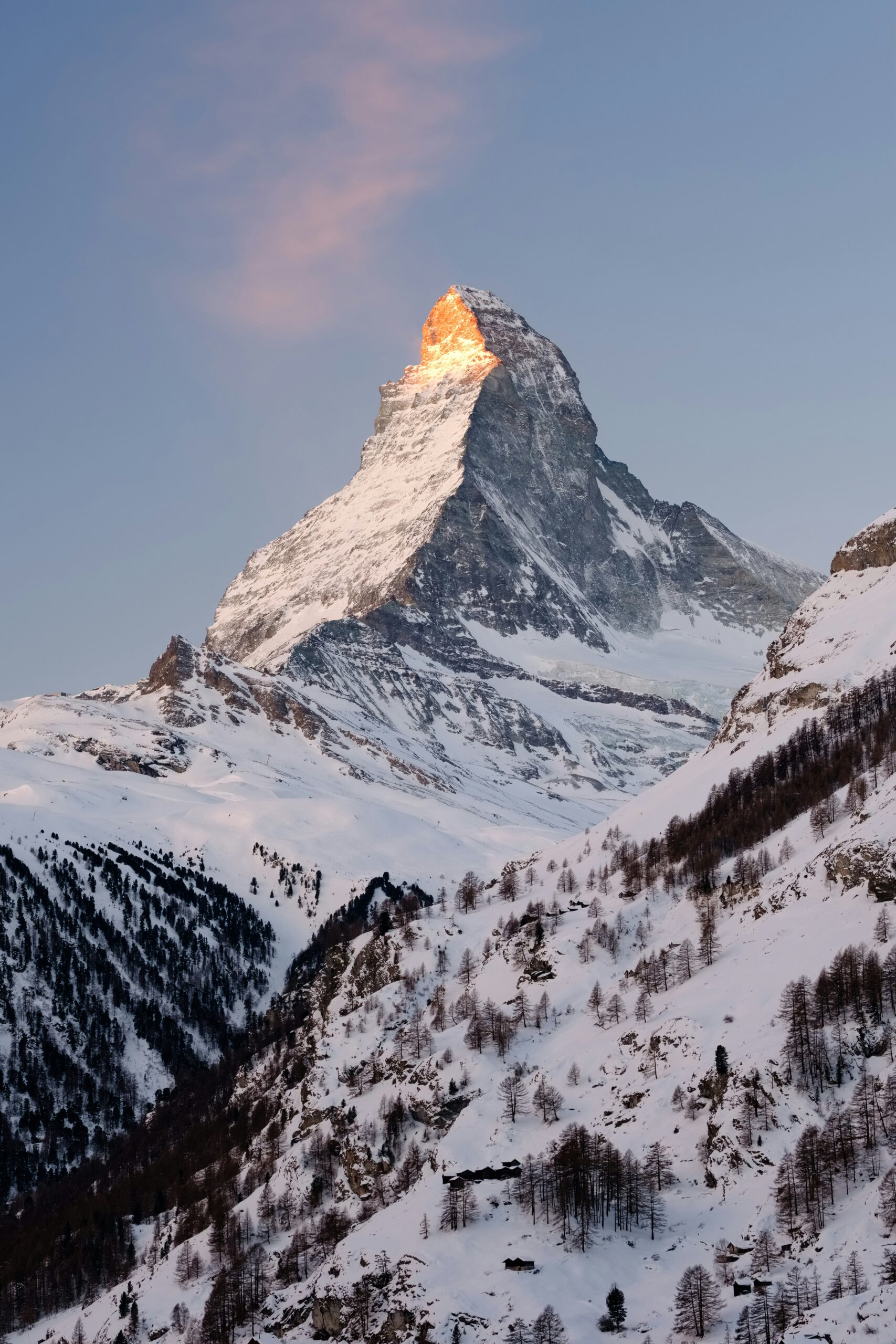
The iconic Hörnli Ridge demands efficient scrambling, route-finding, exposed movement and a fast descent. A guide often requires proof of comparable prior climbs.
Gateway: Zermatt.
Read the Matterhorn guide →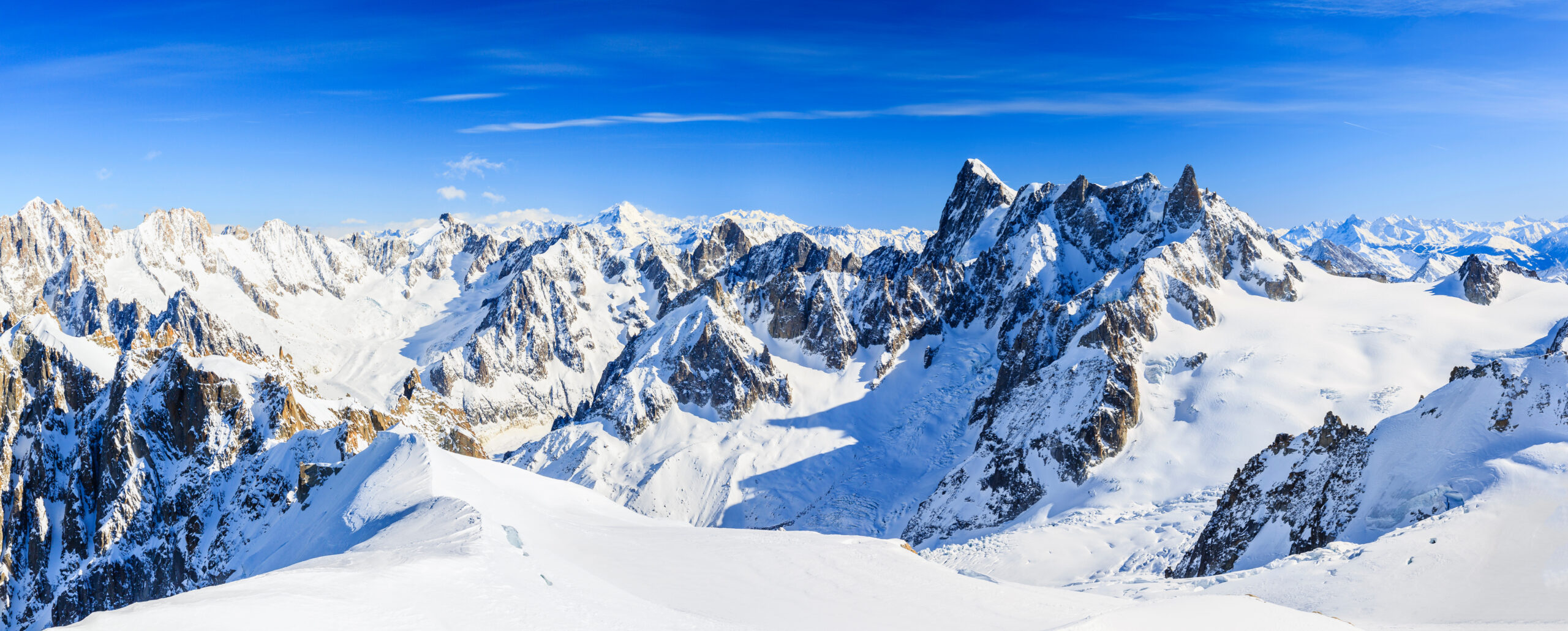
Grandes Jorasses
A committing high-alpine massif; its technical ridges and celebrated north-face lines belong to climbers with deep mountain experience.
Gateway: Courmayeur / Chamonix.
Explore the mountain index →Jungfrau
Rail access to the Jungfraujoch shortens the approach, not the need for glacier judgment. Crevasses, steep snow and changing conditions make it a guided choice for many visitors.
Gateway: Grindelwald.
Explore the mountain index →Aiguille Verte
Steep couloirs and complex descents make the Verte a serious Chamonix testpiece. Route choice is highly condition-dependent.
Gateway: Chamonix.
Explore the mountain index →Mönch
A well-known progression climb above Jungfraujoch. Its snow crest can be very exposed and requires solid rope handling and snow skills.
Gateway: Grindelwald.
Explore the mountain index →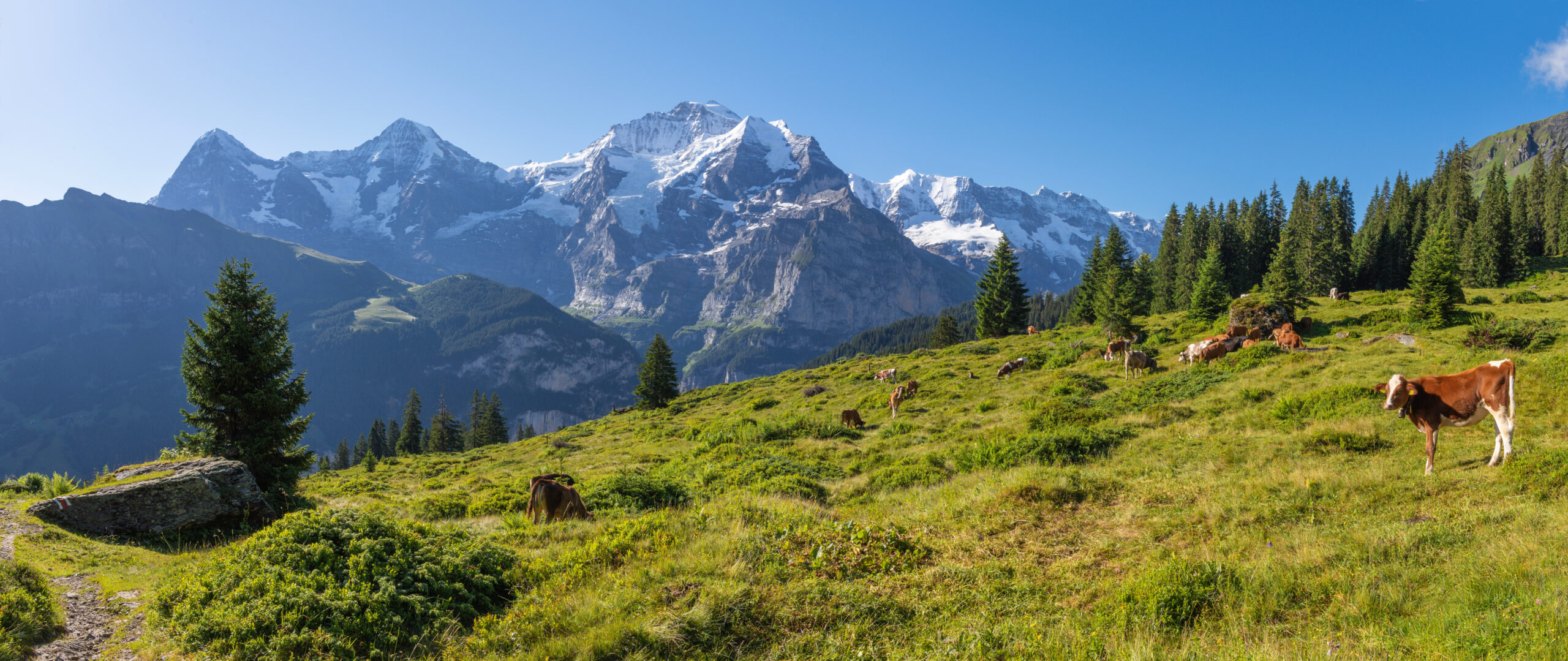
Eiger
The Mittellegi Ridge is a celebrated exposed alpine route. The North Face is an entirely different, much harder undertaking and should never be treated as a standard summit option.
Gateway: Grindelwald.
Read the Eiger guide →Photographs are used only where identifiable site-library photographs are available. Some peaks share a massif or panorama and do not have an individually confirmed media asset in this edition.
What are the 82 Alpine 4,000ers?
The UIAA’s recognized list contains 82 Alpine summits at or above 4,000 metres, selected using topographic and mountaineering criteria. Not every famous Alpine climb is on it: the Eiger falls just below the cutoff. Equally, some 4,000ers are less technically severe on their standard routes than lower but more committing classics.
For summit collectors, the distinction matters. For a climber making a smart plan, glacier skills, rock difficulty, exposure, route length and objective hazards matter more than crossing an elevation threshold. Use the peak database to research alternatives.
Read French Alpine grades correctly
| Grade | General character | What it signals |
|---|---|---|
| F | Facile | Relatively straightforward alpine terrain, still potentially glaciated. |
| PD | Peu Difficile | Easy-to-moderate technical sections, snow/ice travel and route judgment. |
| AD | Assez Difficile | More sustained technical movement and commitment. |
| D | Difficile | Serious, sustained technical alpine climbing. |
| TD / ED | Très / Extrêmement Difficile | Highly committing routes requiring deep technical experience. |
Choose the right Alpine gateway
Chamonix
Access the Mont Blanc massif, Aiguille Verte and approaches toward the Grandes Jorasses. Excellent guide and cable-car infrastructure; conditions and hut access can be decisive.
Zermatt
The natural base for Matterhorn and Monte Rosa plans, plus nearby acclimatization peaks. Plan around guides, huts, lifts and technical readiness.
Grindelwald / Jungfraujoch
Best for the Bernese Oberland trio: Eiger, Mönch and Jungfrau. Rapid rail access does not eliminate altitude or glacier risk.
Which Alpine classic should you attempt first?
01 · Build glacier foundations
Take a glacier travel and crevasse-rescue course; consider Gran Paradiso or a suitable Breithorn itinerary with instruction.
02 · Earn experience
Progress to conditions-appropriate routes on Mönch, Mont Blanc, Dom or Jungfrau only when your movement, endurance and rope systems justify it.
03 · Develop technical range
Build sustained rock, snow and mixed-climbing experience before pursuing the Matterhorn, Weisshorn, Eiger, Verte or Grandes Jorasses.
How much does Alpine climbing cost?
Pricing changes sharply by mountain, guide ratio, number of preparation days, hut rates and transport. Use the illustrative planning ranges below rather than treating a single advertised summit fee as the complete trip budget.
| Expense | Planning range | Remember |
|---|---|---|
| Mountain guide (day) | €400–€900+ | Technical 1:1 objectives can cost more. |
| High hut (night) | €60–€150+ | Board basis and membership vary. |
| Lift/rail transfers | €40–€250+ | High mountain railways are often costly. |
| Rental equipment (day) | €15–€70+ | Check boots, crampons, helmet, rope/harness inclusions. |
| Guided technical summit package | €1,500–€4,000+ | Guide ratio, preparation days, lodging and rescue cover vary. |
Editorial estimates for initial budgeting, not verified live quotations. Request an itemized 2026/2027 quote before booking.
Use the expedition budget calculator → · Compare expedition operators →
Affiliate disclosure: Global Summit Guide may earn a commission from qualifying travel bookings at no additional cost to you.
When is the best time to climb the classics?
The principal Alpine mountaineering season generally runs from late June through September, but there is no universally safest month. Earlier snow can be supportive on some routes while heavy snow creates avalanche issues elsewhere. Later summer warmth may increase rockfall exposure and leave crevasses more open. A mountain’s condition, not a calendar promise, should determine the attempt.
Check local hut operation, lift schedules, park restrictions, current route reports and a trusted forecast immediately before departure. Strong teams regularly turn around even in a celebrated high-pressure window.
Read the mountain-weather guide → · Check your mountain equipment →
Alpine classics FAQ
What are the most iconic peaks of the Alps?
Mont Blanc, Matterhorn and Eiger are especially recognizable. Our ten-peak editorial collection also includes Dufourspitze, Dom, Weisshorn, Grandes Jorasses, Jungfrau, Aiguille Verte and Mönch.
Are there exactly 82 4,000-metre mountains in the Alps?
The standard UIAA list includes 82 qualifying Alpine 4,000ers; other historic counting systems use different criteria.
Is the Matterhorn a good first alpine climb?
No. The standard Hörnli Ridge is exposed and sustained. Most aspiring climbers should first gain glacier, scrambling, route-finding and efficient descent experience.
Is the Eiger a 4,000er?
No. At approximately 3,967 m, the Eiger falls below 4,000 m despite its outstanding place in alpine climbing history.
Can I climb the classics without a guide?
Independent climbing is appropriate only for teams with the necessary technical skills, rescue competence and judgment. A qualified local guide is often the prudent route for first attempts or unfamiliar terrain.
Start with the climb you’re ready for.
Compare peaks, develop your skills, research current conditions and build a complete trip plan. The Alps reward sound decisions more than rushed summits.
Explore mountain collections → · Mountain index → · Planning tools →
Safety and editorial note: Route grades, hazards and access change. This is general planning information, not mountaineering instruction. No paid placement determines peak selection or ranking. Verify conditions with local authorities and qualified guides.
Mont Blanc

Matterhorn

Was this helpful?
🏔Peaks in this region
🧭Explore & compare
Global Summit Guide is an independent mountaineering resource founded in 2026. The team combines first-hand trekking and climbing experience with in-depth research and professional health and nutrition review to help climbers choose objectives, prepare properly, and stay safe.
Health, altitude, and nutrition content is reviewed by Taylor Ludlow (Registered Nurse) and Brigg Hoopes (Nutritionist).
What We Don't Know Yet
Mountain information changes quickly. This box explains the limits of what this page can responsibly promise.
- Route conditions, trailhead access, crevasse exposure, stream crossings, and rescue access may vary from published planning guidance.
- Total trip cost can change with flights, lodging, guide pricing, permits, gear rentals, transportation, and exchange rates.
- Comparisons simplify complex decisions; the better mountain depends on current conditions, skills, timing, budget, and risk tolerance.
Verify current conditions with official land managers, guide services, local forecasts, and current route reports before booking or climbing.
Mountaineering, rock and ice climbing, glacier travel, and high-altitude activity are inherently dangerous and can result in serious injury or death. The information on Global Summit Guide is provided for general informational and educational purposes only and is not a substitute for professional instruction, qualified guiding, proper equipment, or your own judgment and experience.
Route conditions, weather, snowpack, permits, regulations, and hazards change constantly and may differ from what is described here. Details may be incomplete, out of date, or contain errors. Always verify current information with local authorities, certified guides, and official sources before making any decision in the mountains.
Nothing on this site is medical, legal, or financial advice. Our fitness, acclimatization, altitude, and nutrition content is general in nature; consult a qualified physician before beginning any strenuous exercise program or exposing yourself to high altitude.
You are solely responsible for your own safety and decisions. To the fullest extent permitted by law, Global Summit Guide and its team accept no liability for any loss, injury, damage, or expense arising from use of, or reliance on, this information. By using this site you acknowledge these risks and accept these terms.
Some links on this site may be affiliate links. If you buy through them we may earn a small commission at no extra cost to you; this never affects our recommendations.
Global Summit Guide recommendation path
Next Best Mountain to Research
Use these recommendations to continue the right planning path instead of stopping on one page.
Use current permit, weather, route, and operator information before booking or climbing.
Start Planning Your Next Mountain Adventure
Found a mountain, hiking region or destination worth exploring? Use Expedia to start comparing the flights, places to stay, rental cars and travel options that can turn the idea into a realistic trip.
Explore current travel options for your next destination.
Affiliate disclosure: Global Summit Guide may earn a commission if you book through this link, at no additional cost to you.