
Last updated September 17, 2026
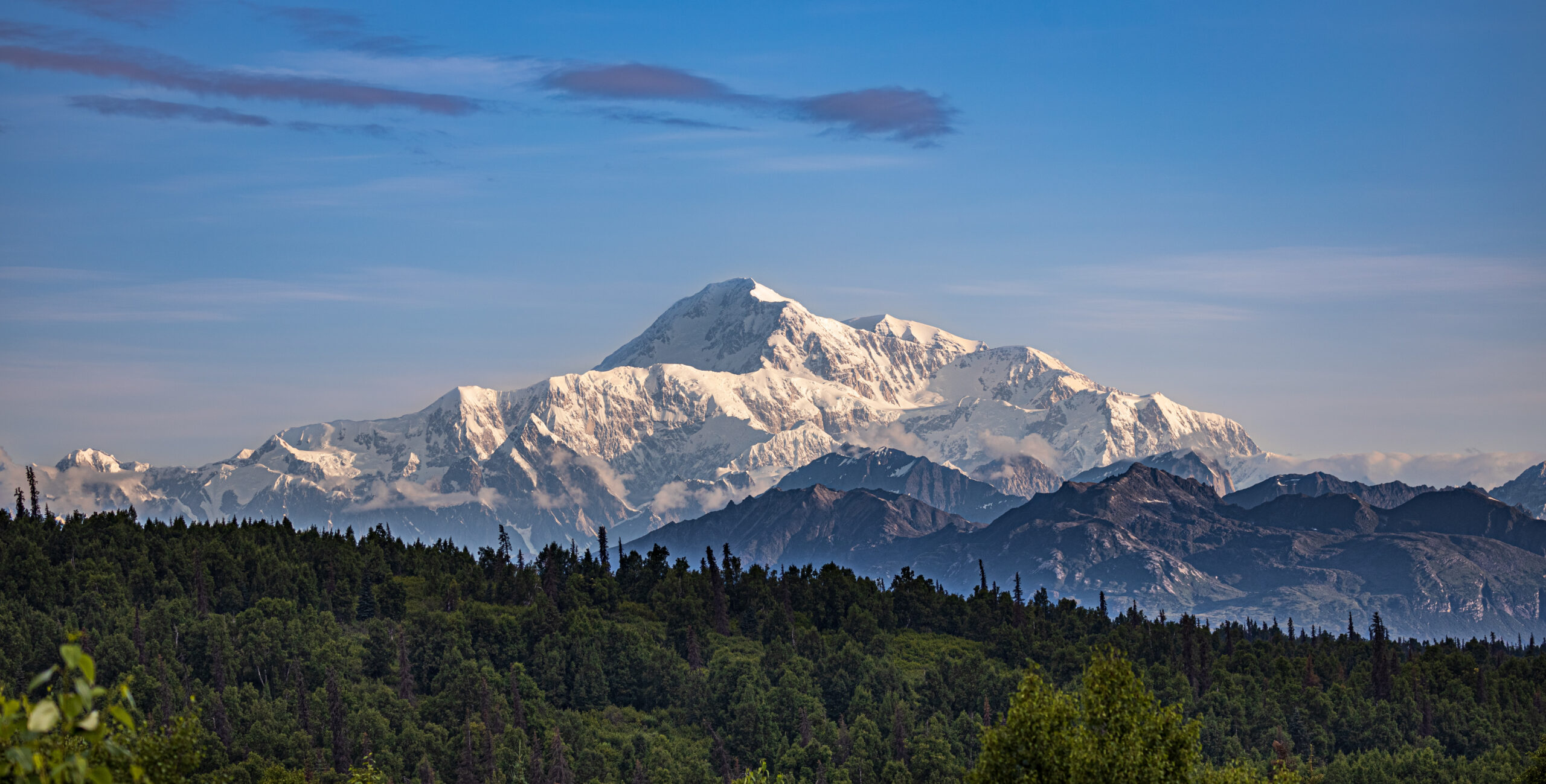
Aconcagua vs Denali: Which Is Harder, Higher & More Technical?
Aconcagua is higher. Denali is more technically and logistically demanding on the standard route. Aconcagua’s Normal Route is primarily an extreme-altitude expedition with commercial mule support to base camp; Denali’s West Buttress adds continuous glacier travel, crevasse rescue systems, sled hauling, heavier self-sufficient loads and much colder expedition conditions.
Aconcagua vs Denali: Quick Comparison at a Glance
That distinction is more useful than calling one mountain simply “harder.” Aconcagua’s standard Normal Route does not usually require sustained technical climbing, but the summit rises to nearly 7,000 metres. Denali is lower, yet requires climbers to operate as a rope team on a crevassed glacier, haul sleds and expedition loads, build and maintain camps in severe cold, and manage a more self-sufficient style of climbing.
If your weakness is extreme altitude, Aconcagua may expose it first. If your weakness is glacier systems, cold-weather camping, load hauling or expedition self-sufficiency, Denali exposes more of those gaps.
Aconcagua vs Denali at a Glance
The comparison below focuses on the standard commercial route most climbers mean when they search these two mountains.
| Factor | Aconcagua | Denali | Why it matters |
|---|---|---|---|
| Elevation | ~6,961 m / 22,838 ft | 6,190 m / 20,310 ft | Aconcagua has the larger absolute altitude load. |
| Standard route | Normal Route via Plaza de Mulas | West Buttress via Kahiltna Glacier | The Denali route requires glacier systems from the start. |
| Technical character | Primarily high-altitude trekking/mountaineering | Glacier travel, fixed terrain, snow/ice systems | Denali requires a broader technical skill set. |
| Crevasse exposure | Low on the Normal Route | Core hazard on the Kahiltna/West Buttress | Rope-team competence is essential on Denali. |
| Load hauling | Mules to base camp; climbers still carry above | Heavy packs + sleds between camps | Denali adds sustained expedition work. |
| Cold | Serious high-altitude cold and wind | Colder, longer-duration Alaska expedition cold | Denali requires a more specialized cold system. |
| Guided price example | $7,800 current Alpine Ascents program | $12,250 current Alpine Ascents program | Examples show the structural logistics gap, not a universal market price. |
| Main commercial season | Nov–Feb | May–early Jul | Opposite hemispheres create opposite seasons. |
| Core lesson | How your body handles extreme altitude | How you operate on a cold, glaciated expedition | The peaks test different capabilities. |
The Geography Explains Part of the Difference.
Aconcagua sits in the central Andes near 33° south. Denali sits near 63° north in the Alaska Range. That latitude gap influences season, pressure, cold and daylight.
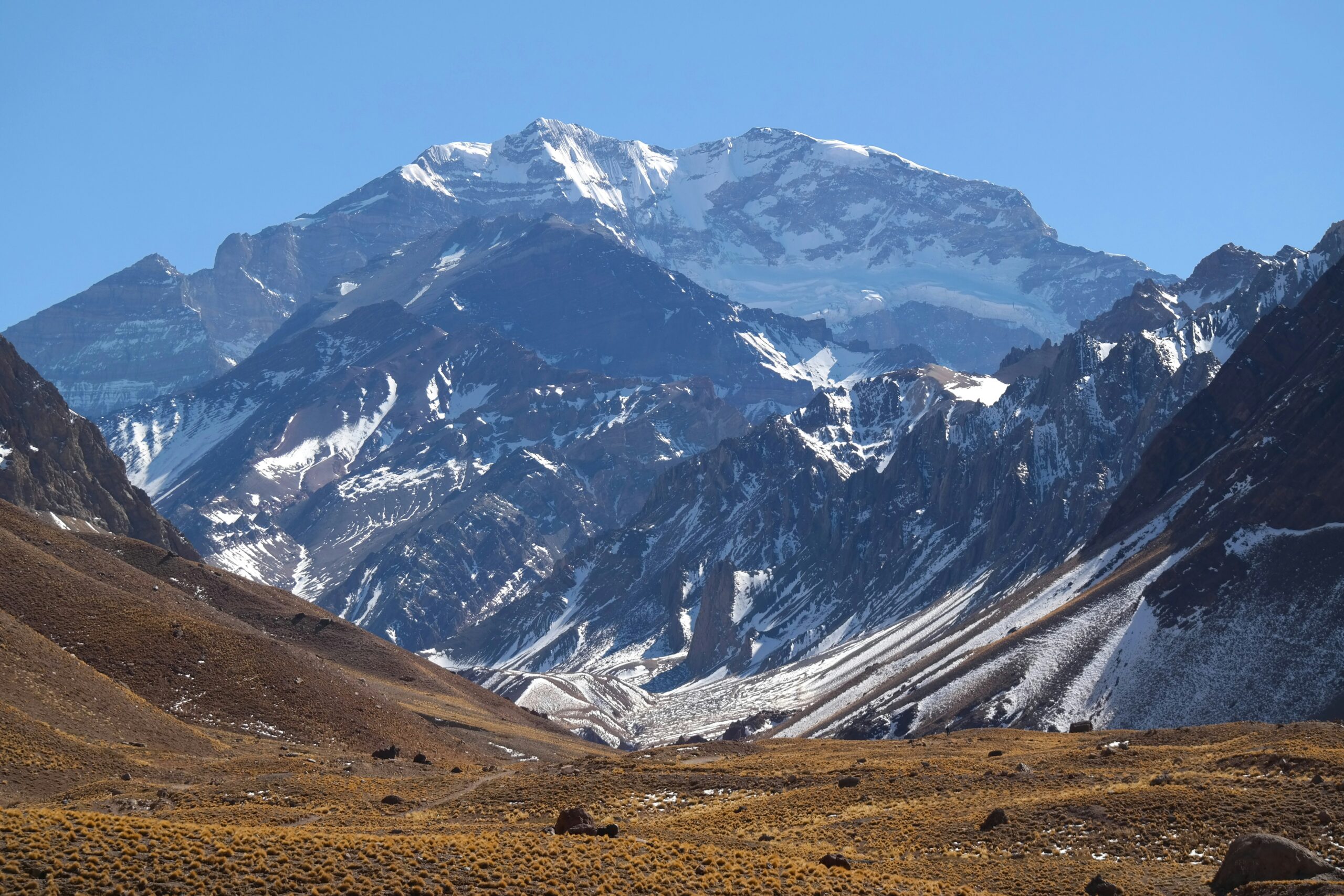
The Mountain Makes You Carry the Expedition With You.
Denali’s West Buttress is not difficult because of one technical crux. The difficulty accumulates through rope travel, crevasse risk, sled hauling, camp moves, cold management and the need to repeat those systems for days at a time.
Altitude Hard vs Expedition Hard
A climber can be well prepared for one mountain and underprepared for the other because the capability stacks are different.
The Normal Route Is Simple Technically, Not Easy Physically.
- Nearly 7,000 m summit elevation
- Long acclimatization cycle
- Multiple high camps above base camp
- Strong wind and rapid weather deterioration
- Long summit day while severely hypoxic
- Cold and exhaustion still matter even without glacier travel
The West Buttress Adds Technical Systems to the Altitude.
- Roped glacier travel on the Kahiltna
- Crevasse rescue competence
- Sled hauling plus heavy packs
- Cold-weather expedition camping
- Fixed-line / steep snow-and-ice movement higher on route
- More self-sufficient team logistics
What Denali Requires That Aconcagua Often Does Not
This is the cleanest reason many climbers treat Denali as the larger mountaineering progression step even though Aconcagua is higher.
| Skill | Aconcagua Normal Route | Denali West Buttress | Training implication |
|---|---|---|---|
| Rope-team glacier travel | Usually not central | Essential | Practice before Alaska, not during the expedition. |
| Crevasse rescue | Usually not central | Essential | Team should know arrest, anchors and hauling. |
| Sled hauling | No standard equivalent | Standard expedition system | Train hips, posterior chain and load management. |
| Cold-camp systems | Important | More demanding | Denali requires a deeper margin in shelter, sleep and hand/foot warmth. |
| Extreme altitude pacing | Primary challenge | Still important | Aconcagua gives more exposure above 6,000 m. |
| Self-sufficient expedition logistics | Moderate with commercial support | High | Denali tests the full camp-to-camp system. |
Denali Usually Costs More Because the Logistics Are Heavier.
Operator prices change. Use named current examples instead of pretending one fixed market average applies to every guide company.
| Cost item | Aconcagua | Denali | Current note |
|---|---|---|---|
| Published guided example | Alpine Ascents: $7,800 Normal Route / Vacas Valley | Alpine Ascents: $12,250 | Current published examples checked September 2026. |
| Government climbing fee | Varies by season, route and visitor category | $450 special-use fee in 2026 | Denali also requires $15 park entrance unless covered by a qualifying pass. |
| Approach transport | Overland + mule-supported approach | Air taxi to Kahiltna Glacier | Denali aviation is a core structural cost. |
| Personal gear | High-altitude expedition system | More specialized extreme-cold + glacier system | Existing gear ownership can change the total materially. |
| Insurance | High-altitude rescue/evacuation coverage | High-altitude + remote Alaska rescue/evacuation coverage | Policy language matters more than headline premium. |
What the Latest Completed Seasons Actually Show
Recent statistics are more useful than old “typical” figures, but the two park systems count and report climbers differently. Treat these as current snapshots, not a direct probability contest.
NPS reported 976 registered Denali climbers and 582 summits in its July 20, 2026 wrap-up. The same preliminary report listed 28 helicopter search-and-rescue missions and five climber deaths on the West Buttress. The route was clear of climbers by July 9.
Mendoza’s official season reporting said 3,364 mountaineers attempted the summit and approximately 20% reached it during the reported season. That rate should not be compared mechanically with Denali’s 60% because the two authorities use different seasons, definitions, route mixes and reporting methods.
Nearly 7,000 Metres Changes the Mountain Even When the Route Is Simple.
The Normal Route’s relative technical simplicity is exactly why climbers can underestimate Aconcagua. At that elevation, pacing, acclimatization, hydration, cold management and the decision to turn around become the climb.
The Two Peaks Fit Different Parts of the Year.
This makes it possible to train for one after the other, but it does not mean doing both in the same calendar year is automatically wise.
November Through February
Current commercial programs for the 2026–27 season run from late November into February. December and January hold much of the commercial traffic, but shoulder dates can change the cold, snow, wind and service environment.
May Through Early July
NPS’s 2026 West Buttress season was clear of climbers by July 9. Commercial teams concentrate heavily in May and June, with exact timing balancing lower-glacier conditions, cold, weather and summit-window patterns.
Which One Should Come First?
There is no single sequence that fits every climber. The better question is which capability gap you need to test next.
You Need an Extreme-Altitude Test
- You already have strong hiking fitness but limited time above 5,000 m.
- You want to learn how your body responds on a long acclimatization cycle.
- You prefer more commercial infrastructure before adding glacier complexity.
- You are building toward higher Himalayan objectives.
You Already Have Strong Glacier and Expedition Experience
- You already know crevasse rescue and rope-team travel.
- You have cold-weather expedition camping experience.
- You have meaningful prior altitude exposure from other mountains.
- Your next goal specifically requires self-sufficient expedition systems.
Separate Durable Mountain Facts From Fast-Changing Expedition Data.
Elevation and route character change slowly. Permit fees, operator prices, season statistics and route conditions need recurrent verification.
Current primary references
How to interpret the comparison
- Standard routes are being compared, not technical variants.
- Named operator prices are examples, not market-wide averages.
- Success rates from different parks are not directly interchangeable.
- Latitude affects pressure, but “equivalent altitude” figures are approximations.
- Neither mountain should be reduced to one numeric difficulty score.
- Current weather, permit and route conditions must be checked again before booking.
Aconcagua vs Denali FAQ
These questions cover the main comparison intent without repeating stale “typical” figures as if they were permanent.
Which is harder, Aconcagua or Denali?
On their standard routes, Denali generally requires more mountaineering systems: glacier travel, crevasse rescue, sled hauling, cold-weather expedition camping and heavier self-sufficient logistics. Aconcagua is higher and can be harder physiologically because the Normal Route reaches nearly 7,000 m.
Which is higher?
Aconcagua, at about 6,961 m / 22,838 ft, versus Denali at 6,190 m / 20,310 ft.
Does Denali really “feel like” a 6,700 m mountain?
Latitude does affect pressure, but exact equivalent-altitude numbers vary by method. Treat the effect as real but the specific converted number as approximate.
What skills does Denali require that Aconcagua usually does not?
Rope-team glacier travel, crevasse rescue, sled hauling and deeper cold-weather expedition systems are central on Denali’s West Buttress. They are not central to Aconcagua’s Normal Route.
How much does a guided expedition cost?
Current Alpine Ascents examples list Aconcagua at $7,800 and Denali at $12,250. Other operators and service levels vary, and personal gear, flights, insurance and contingency costs can materially change the total.
What is the current Denali permit fee?
For 2026, NPS lists a $450 mountaineering special-use fee for most climbers, $350 for climbers age 24 or younger, plus the $15 park entrance fee unless covered by a qualifying pass.
What happened on Denali in 2026?
NPS’s preliminary season wrap reported 976 registered Denali climbers, 582 summits and a 60% summit rate, along with 28 helicopter search-and-rescue missions and five climber deaths on the West Buttress.
When are Aconcagua and Denali climbed?
Aconcagua’s commercial season broadly runs November through February. Denali’s primary season is May into early July, with many commercial teams concentrated in May and June.
Continue the Aconcagua–Denali Progression
Use the mountain guides for route-level planning, then move into the specific capability you need to build next.
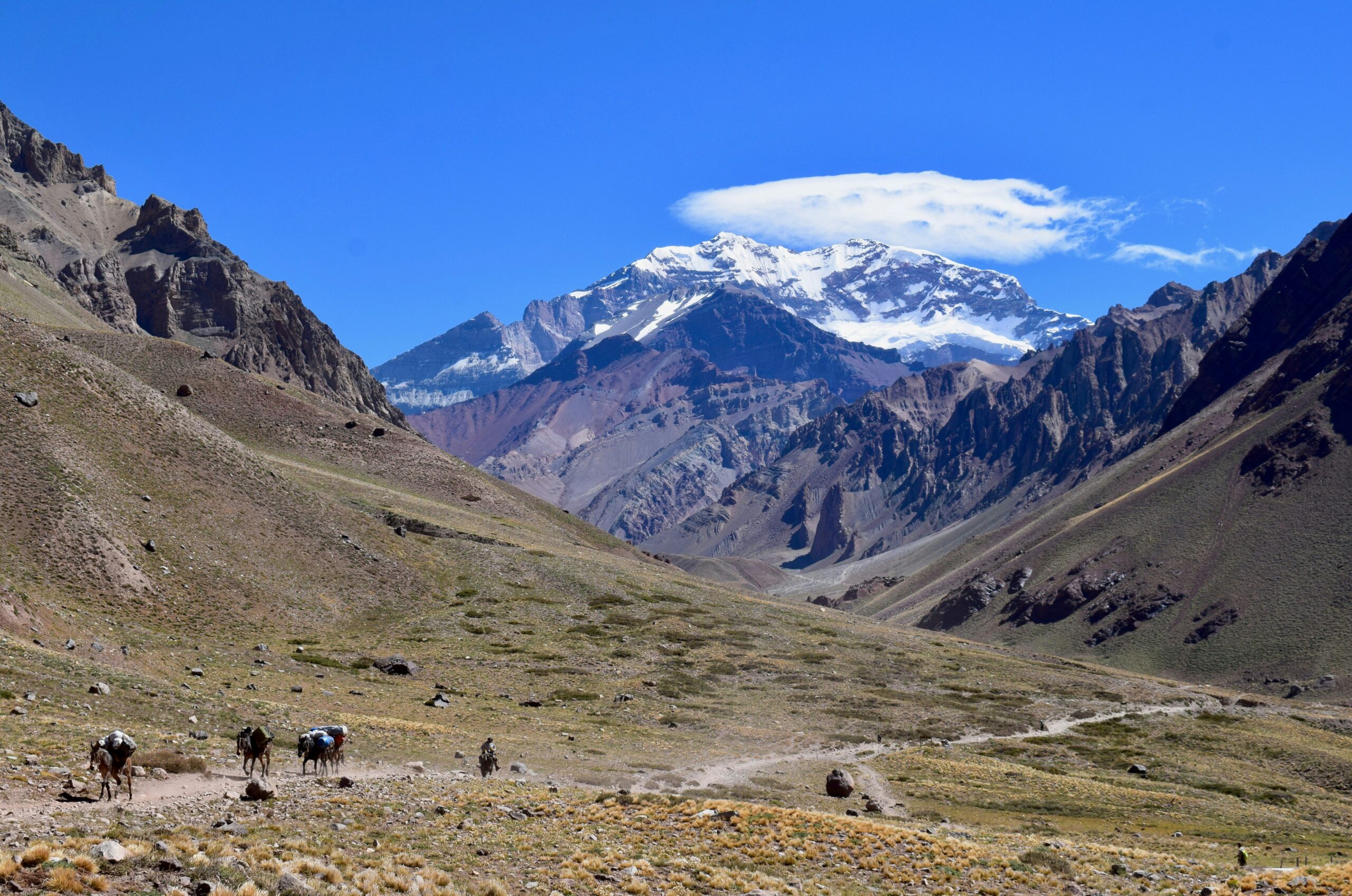
Aconcagua Tests How High You Can Function. Denali Tests How Completely You Can Run an Expedition.
Neither replaces the other. The right next mountain depends on whether your missing capability is extreme altitude, glacier travel, cold-weather systems, load hauling or expedition self-sufficiency.
Was this helpful?
🏔More comparisons
🧭Explore & compare
Global Summit Guide is an independent mountaineering resource founded in 2026. The team combines first-hand trekking and climbing experience with in-depth research and professional health and nutrition review to help climbers choose objectives, prepare properly, and stay safe.
Health, altitude, and nutrition content is reviewed by Taylor Ludlow (Registered Nurse) and Brigg Hoopes (Nutritionist).
What We Don't Know Yet
Mountain information changes quickly. This box explains the limits of what this page can responsibly promise.
- Comparisons simplify complex decisions; the better mountain depends on current conditions, skills, timing, budget, and risk tolerance.
- Visa, passport, vaccination, border, insurance, and local transportation rules may change before your trip.
- Route conditions, snowpack, closures, and weather can change quickly after this page is updated.
- Permit rules, fees, quotas, and reservation windows may change between review cycles.
- Operator availability, pricing, guide ratios, and cancellation terms can change by season.
Verify current conditions with official land managers, guide services, local forecasts, and current route reports before booking or climbing.
Mountaineering, rock and ice climbing, glacier travel, and high-altitude activity are inherently dangerous and can result in serious injury or death. The information on Global Summit Guide is provided for general informational and educational purposes only and is not a substitute for professional instruction, qualified guiding, proper equipment, or your own judgment and experience.
Route conditions, weather, snowpack, permits, regulations, and hazards change constantly and may differ from what is described here. Details may be incomplete, out of date, or contain errors. Always verify current information with local authorities, certified guides, and official sources before making any decision in the mountains.
Nothing on this site is medical, legal, or financial advice. Our fitness, acclimatization, altitude, and nutrition content is general in nature; consult a qualified physician before beginning any strenuous exercise program or exposing yourself to high altitude.
You are solely responsible for your own safety and decisions. To the fullest extent permitted by law, Global Summit Guide and its team accept no liability for any loss, injury, damage, or expense arising from use of, or reliance on, this information. By using this site you acknowledge these risks and accept these terms.
Some links on this site may be affiliate links. If you buy through them we may earn a small commission at no extra cost to you; this never affects our recommendations.
Global Summit Guide recommendation path
Next Best Mountain to Research
Use these recommendations to continue the right planning path instead of stopping on one page.
Use current permit, weather, route, and operator information before booking or climbing.
Start Planning Your Next Mountain Adventure
Found a mountain, hiking region or destination worth exploring? Use Expedia to start comparing the flights, places to stay, rental cars and travel options that can turn the idea into a realistic trip.
Explore current travel options for your next destination.
Affiliate disclosure: Global Summit Guide may earn a commission if you book through this link, at no additional cost to you.