
Last updated October 21, 2026
The 10 Hardest Mountains to Climb in the World
K2 ranks #1 for all-around difficulty when technical terrain, extreme altitude, objective hazard, retreat and weather are considered together. Some mountains are harder in pure technical climbing.
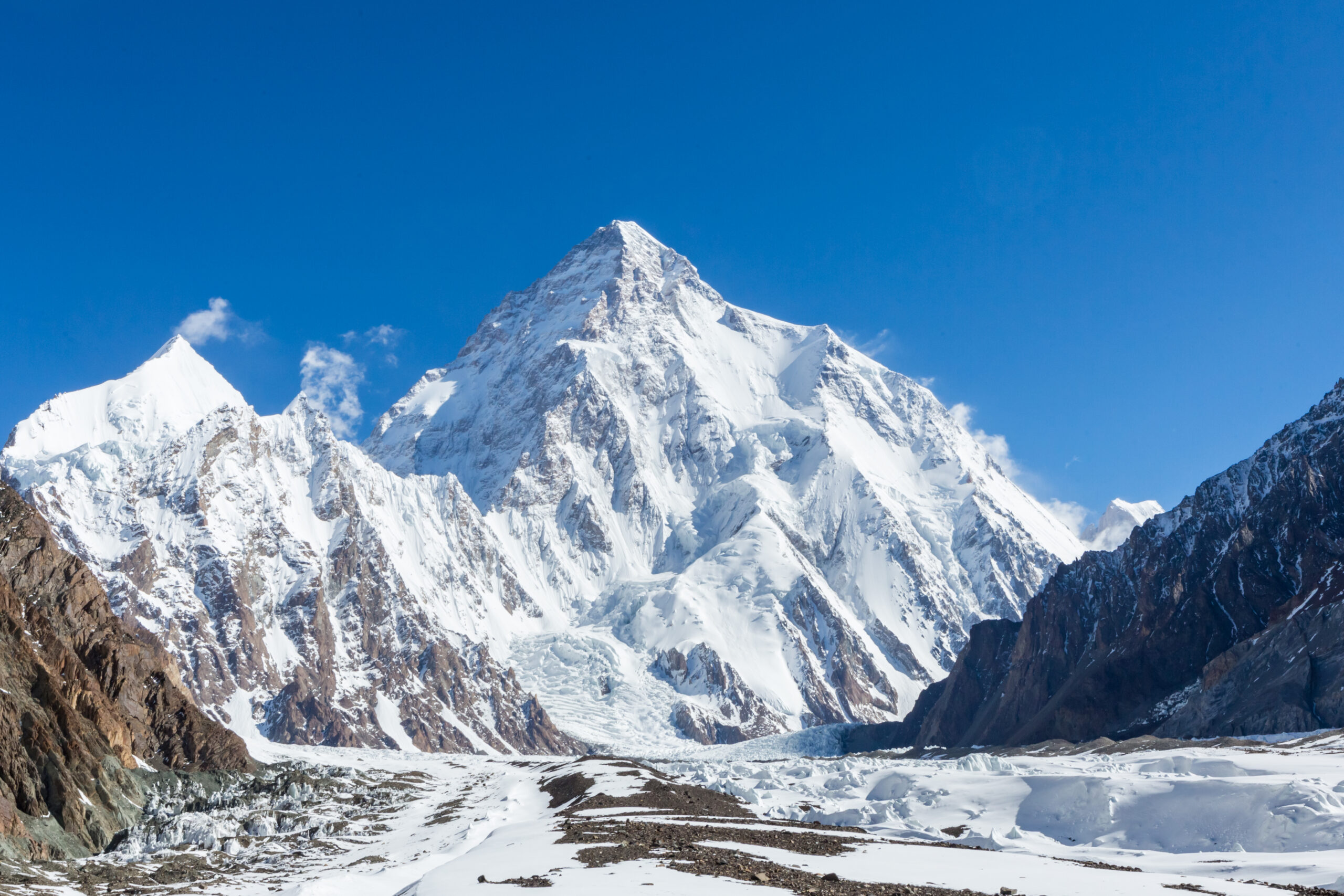
K2, the strongest overall contender in this ranking.
K2 is the hardest overall—not necessarily the hardest technical route.
No international climbing body publishes an official universal ranking. This editorial comparison evaluates the combined demands of serious modern routes. Gasherbrum IV, Latok I and Cerro Torre can exceed K2 in pure technical movement, while Annapurna I presents exceptional avalanche and serac hazards. Difficulty is not the same as mortality.
Compare all fourteen 8,000-metre peaks → · K2 vs. Annapurna →
Top 10 hardest mountains, ranked
The order preserves Global Summit Guide’s published ranking. It compares each mountain’s defining serious climbing challenge—not a standardized normal-route grade or a climber’s probability of dying.
| Rank | Mountain | Elevation | Why it makes the list | Technical | Altitude |
|---|---|---|---|---|---|
| 1 | K2 | 8,611 m | The strongest all-around test: extreme altitude, technical ground, Bottleneck exposure and a difficult retreat. | Extreme | Extreme |
| 2 | Gasherbrum IV | 7,925 m | A benchmark of serious high-altitude wall climbing; the celebrated West Face ascent did not finish at the main summit. | Extreme | Very high |
| 3 | Latok I | 7,145 m | The North Ridge is legendary for sustained technical difficulty and commitment. The 2018 summit team exited the full ridge line. | Extreme | Very high |
| 4 | Baintha Brakk (The Ogre) | 7,285 m | Severe rock and mixed climbing with complicated descent and very little margin for error. | Extreme | Very high |
| 5 | Nanga Parbat | 8,126 m | Immense faces, long routes, harsh weather and extreme altitude create an unusually committing expedition. | Very high | Extreme |
| 6 | Annapurna I | 8,091 m | Avalanche and serac hazards drive its reputation; climbing skill cannot remove all objective exposure. | Very high | Extreme |
| 7 | Kangchenjunga | 8,586 m | Remote logistics, complex terrain and extreme altitude demand a strong expedition team. | Very high | Extreme |
| 8 | Cerro Torre | ≈3,128 m | Elite technical rock and mixed climbing exposed to rapidly changing Patagonian weather. | Extreme | Moderate |
| 9 | Masherbrum | 7,821 m | Steep high-altitude terrain and severe faces make it a world-class technical objective. | Extreme | Very high |
| 10 | Jannu (Kumbhakarna) | 7,710 m | High-altitude wall climbing at the elite end of Himalayan alpinism. | Extreme | Very high |
Grades are qualitative comparisons, not UIAA, French Alpine, or other formal route grades. Conditions and climbing styles change the actual difficulty.
Five different kinds of difficult
01 · Technical climbing
Sustained rock, ice and mixed terrain, exposure, route finding and descent complexity.
02 · Altitude
Reduced oxygen, impaired recovery and judgment, prolonged time at elevation and greater rescue constraints.
03 · Objective hazard
Avalanches, serac fall, rockfall and other dangers that cannot be completely eliminated by skill.
04 · Commitment
Length of route, remoteness, retreat difficulty, expedition support and access to rescue.
05 · Weather
Storm frequency, wind, cold, limited windows and the consequences of waiting or retreating.
Style matters
A summer supported ascent and a winter alpine-style first ascent are not interchangeable. This is not a ranking of the hardest possible stunt on every peak.
What makes each climb so serious?
K2
The strongest all-around test: extreme altitude, technical ground, Bottleneck exposure and a difficult retreat.
Gasherbrum IV
A benchmark of serious high-altitude wall climbing; the celebrated West Face ascent did not finish at the main summit.
Latok I
The North Ridge is legendary for sustained technical difficulty and commitment. The 2018 summit team exited the full ridge line.
Baintha Brakk (The Ogre)
Severe rock and mixed climbing with complicated descent and very little margin for error.
Nanga Parbat
Immense faces, long routes, harsh weather and extreme altitude create an unusually committing expedition.
Annapurna I
Avalanche and serac hazards drive its reputation; climbing skill cannot remove all objective exposure.
Kangchenjunga
Remote logistics, complex terrain and extreme altitude demand a strong expedition team.
Cerro Torre
Elite technical rock and mixed climbing exposed to rapidly changing Patagonian weather.
Masherbrum
Steep high-altitude terrain and severe faces make it a world-class technical objective.
Jannu (Kumbhakarna)
High-altitude wall climbing at the elite end of Himalayan alpinism.
Hardest does not mean deadliest.
Death-to-summit ratios are historical comparisons with changing denominators, not personal fatality probabilities or technical climbing grades. Annapurna’s objective hazards are particularly serious; K2 has a stronger overall combination of altitude, technical difficulty, weather and retreat complexity in our framework.
Why K2 stays at #1
K2’s Abruzzi Spur involves exposed rock, steep snow and ice, the Black Pyramid and the Bottleneck beneath unstable ice. Its 8,611-metre altitude magnifies the consequences of every delay and mistake; descent remains difficult after summit fatigue.
That combined commitment is why we place K2 above peaks that may contain harder individual pitches.
Compare K2 and Annapurna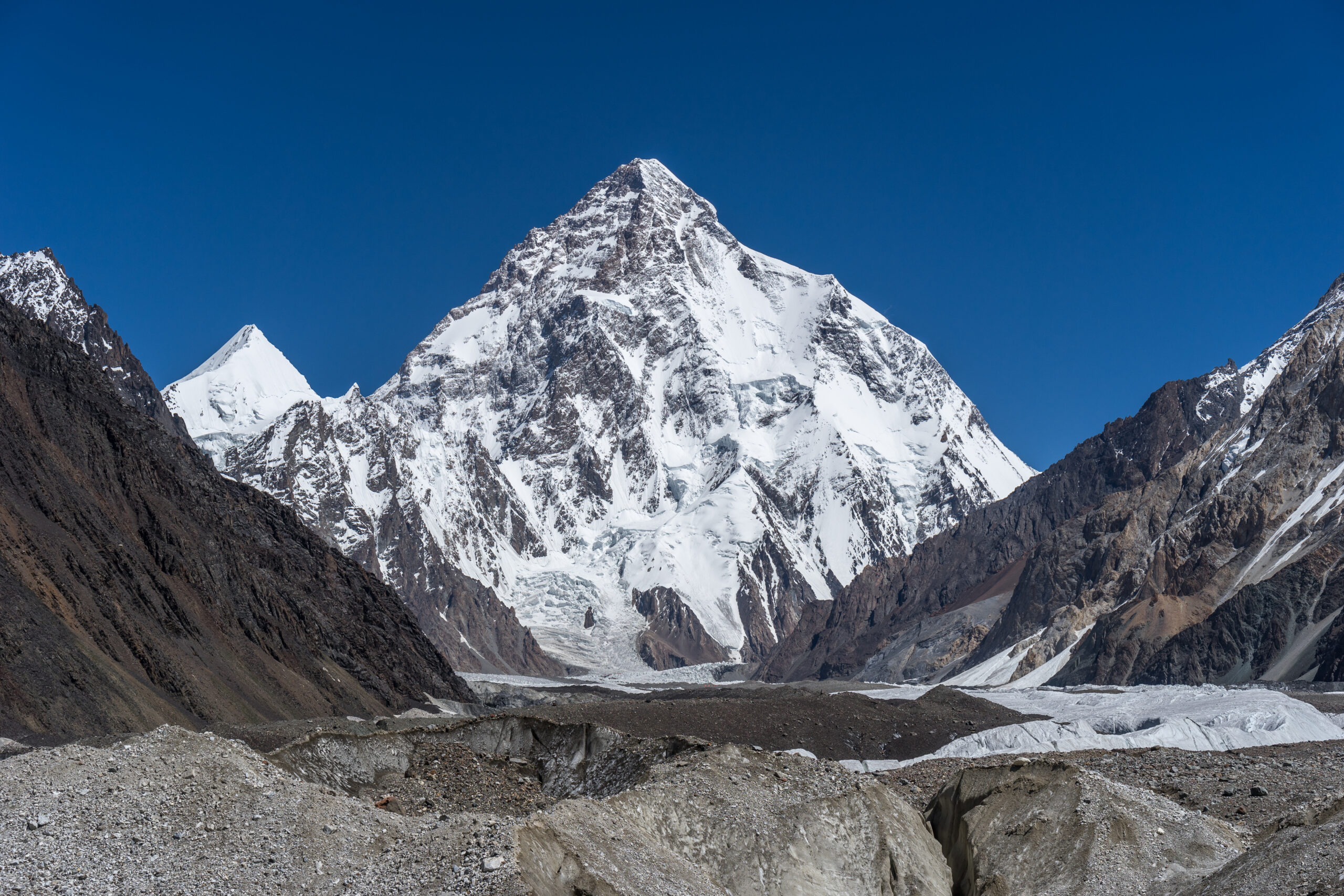
Why Everest is not on this list
Everest is an extreme high-altitude expedition. On established commercial routes, however, its relatively developed guiding, fixed-rope, forecasting and logistics infrastructure differs from the more remote, technical or committing lines ranked here. Winter, unsupported, new-route or no-oxygen Everest can change that comparison.
Questions climbers ask
What is the hardest mountain in the world to climb?
K2 ranks first in this editorial comparison when technical climbing, altitude, objective hazards, weather and commitment are considered together. No official universal ranking exists.
Is K2 harder than Mount Everest?
On their commonly used modern summit routes, K2 is generally considered the more sustained technical and committing climb. Everest is higher and remains extremely dangerous.
Is Cerro Torre harder than K2?
Cerro Torre can be harder in pure technical alpinism. K2 ranks higher here because its climbing combines technical difficulty with extreme altitude and expedition-scale risk.
Why isn’t Annapurna ranked first?
This is not a death-rate ranking. Annapurna I has severe objective hazards, but K2 ranks highest for the combined challenge across all five dimensions.
Should an aspiring climber start with one of these peaks?
No. All are advanced to elite objectives. Start with instruction, appropriate easier mountains, glacier and rope skills where relevant, and a conservative progression.
Choose your next mountain with confidence.
For a practical progression, move from ranking lists to specific route difficulties, training requirements, seasonal conditions and operator evidence.
Explore the mountain index → · Use planning tools → · Compare operators →
Editorial ranking; not route-specific safety advice. Check current access, hazards, weather and qualified local sources before any expedition. Commercial links elsewhere on Global Summit Guide may generate affiliate revenue without changing editorial rankings.
Was this helpful?
🏔Related peaks nearby
🧭Explore & compare
Global Summit Guide is an independent mountaineering resource founded in 2026. The team combines first-hand trekking and climbing experience with in-depth research and professional health and nutrition review to help climbers choose objectives, prepare properly, and stay safe.
Health, altitude, and nutrition content is reviewed by Taylor Ludlow (Registered Nurse) and Brigg Hoopes (Nutritionist).
What We Don't Know Yet
Mountain information changes quickly. This box explains the limits of what this page can responsibly promise.
- Weather, snowpack, avalanche risk, road access, and route conditions can change quickly and may be different on your climbing dates.
- Route conditions, trailhead access, crevasse exposure, stream crossings, and rescue access may vary from published planning guidance.
- Fitness and altitude response vary by person; no guide, itinerary, or training plan can guarantee acclimatization or summit success.
- Comparisons simplify complex decisions; the better mountain depends on current conditions, skills, timing, budget, and risk tolerance.
- Visa, passport, vaccination, border, insurance, and local transportation rules may change before your trip.
Verify current conditions with official land managers, guide services, local forecasts, and current route reports before booking or climbing.
Mountaineering, rock and ice climbing, glacier travel, and high-altitude activity are inherently dangerous and can result in serious injury or death. The information on Global Summit Guide is provided for general informational and educational purposes only and is not a substitute for professional instruction, qualified guiding, proper equipment, or your own judgment and experience.
Route conditions, weather, snowpack, permits, regulations, and hazards change constantly and may differ from what is described here. Details may be incomplete, out of date, or contain errors. Always verify current information with local authorities, certified guides, and official sources before making any decision in the mountains.
Nothing on this site is medical, legal, or financial advice. Our fitness, acclimatization, altitude, and nutrition content is general in nature; consult a qualified physician before beginning any strenuous exercise program or exposing yourself to high altitude.
You are solely responsible for your own safety and decisions. To the fullest extent permitted by law, Global Summit Guide and its team accept no liability for any loss, injury, damage, or expense arising from use of, or reliance on, this information. By using this site you acknowledge these risks and accept these terms.
Some links on this site may be affiliate links. If you buy through them we may earn a small commission at no extra cost to you; this never affects our recommendations.
Global Summit Guide recommendation path
Next Best Mountain to Research
Use these recommendations to continue the right planning path instead of stopping on one page.
Use current permit, weather, route, and operator information before booking or climbing.
Start Planning Your Next Mountain Adventure
Found a mountain, hiking region or destination worth exploring? Use Expedia to start comparing the flights, places to stay, rental cars and travel options that can turn the idea into a realistic trip.
Explore current travel options for your next destination.
Affiliate disclosure: Global Summit Guide may earn a commission if you book through this link, at no additional cost to you.