
The 10 Hardest Mountains to Climb in the World (2026)
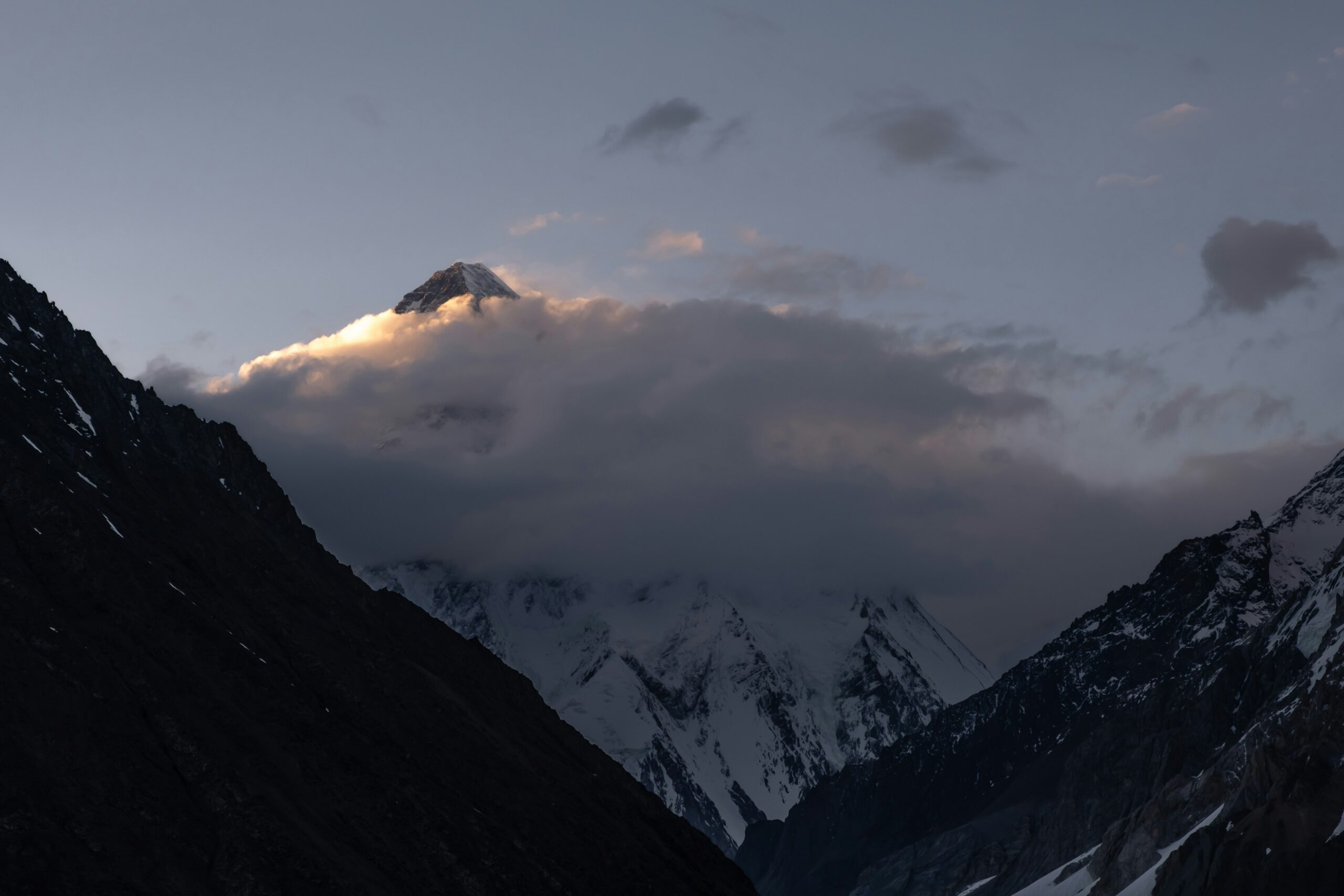
K2 ranks #1 overall because it combines 8,611-metre altitude with sustained technical terrain, objective hazard, difficult retreat and severe Karakoram weather. Gasherbrum IV, Latok I and Cerro Torre can be harder in pure technical climbing. Annapurna I can be more dangerous under some historical mortality measures. “Hardest” depends on the question.
K2 Is the Hardest Mountain Overall.
There is no official world federation table that can declare one mountain universally hardest. A useful comparison has to define the problem first.
For this list, the problem is the combined burden of technical climbing, altitude, objective hazard, commitment and weather. K2 is the strongest #1 because it stays near the extreme end of all five at once.
That does not mean K2 contains the hardest individual climbing on Earth. Gasherbrum IV’s West Face, Latok I’s North Ridge, modern Cerro Torre routes, Baintha Brakk and Jannu contain technical problems that can exceed the standard Abruzzi Spur. K2’s advantage is that difficult climbing continues inside a full 8,000-metre expedition with severe weather and high-consequence retreat.
The 10 Hardest Mountains to Climb
The order stays deliberately qualitative. Route, style, season and current conditions can move the difficulty of one ascent far more than a fake decimal score ever could.
| # | Mountain | Elevation | Why It Ranks Here | Technical | Altitude | Hazard | Commitment | Weather |
|---|---|---|---|---|---|---|---|---|
| 1 | K2 | 8,611 m | Hardest overall No weak dimension. | Extreme | Extreme | Extreme | Extreme | Extreme |
| 2 | Gasherbrum IV | 7,925 m | Elite technical climbing near 8,000 m; West Face defines its reputation. | Extreme | Very high | Very high | Extreme | Extreme |
| 3 | Latok I | 7,145 m | North Ridge / north-side difficulty and extraordinary commitment. | Extreme | Very high | Very high | Extreme | Extreme |
| 4 | Baintha Brakk (The Ogre) | 7,285 m | Steep rock, mixed climbing, altitude and difficult retreat. | Extreme | Very high | Very high | Extreme | Very high |
| 5 | Nanga Parbat | 8,126 m | Huge relief, altitude, objective hazard and expedition scale. | Very high | Extreme | Extreme | Extreme | Extreme |
| 6 | Annapurna I | 8,091 m | Serious climbing dominated by avalanche and serac exposure. | Very high | Extreme | Extreme | Extreme | Very high |
| 7 | Kangchenjunga | 8,586 m | Extreme altitude, remoteness and complex expedition terrain. | Very high | Extreme | Very high | Extreme | Very high |
| 8 | Cerro Torre | ≈3,128 m | One of the strongest pure-technical contenders; brutal Patagonian weather. | Extreme | Moderate | Very high | Extreme | Extreme |
| 9 | Masherbrum | 7,821 m | Near-8,000 m technical mountain with exceptionally severe faces. | Extreme | Very high | Very high | Extreme | Extreme |
| 10 | Jannu (Kumbhakarna) | 7,710 m | High-altitude technical wall climbing at the elite edge of alpinism. | Extreme | Very high | Very high | Extreme | Very high |
What “Hardest Mountain” Means Here
One number cannot fairly compare a 7,000-metre Karakoram wall, an 8,000-metre expedition and a Patagonian granite tower. These five questions keep the comparison honest.
How Hard Is the Movement?
Rock, ice and mixed difficulty, steepness, route-finding and the amount of sustained technical climbing. Gasherbrum IV, Latok I, Baintha Brakk, Cerro Torre, Masherbrum and Jannu rise sharply here.
How Much Does Thin Air Change the Climb?
Above 8,000 metres, speed, recovery, judgment and cold tolerance deteriorate while rescue options shrink. K2, Nanga Parbat, Annapurna I and Kangchenjunga carry a physiological burden the lower technical peaks do not.
What Can Skill Not Remove?
Avalanche, serac fall, rockfall and unstable snow cannot be solved simply by climbing harder. Annapurna I is the clearest example; K2’s Bottleneck and many Karakoram approaches add the same problem in different forms.
How Hard Is It to Retreat?
Remote rescue, long walls, complicated descents, weak communications and multi-day exposure make a route more serious than the crux grade alone. This is why the Karakoram dominates the upper half of the list.
How Narrow Is the Usable Window?
Karakoram storms and Patagonian wind can turn a climbable route into a closed door for days or weeks. Forecasting helps; it does not create a weather window that is not there.
The Same Mountain Can Become a Different Problem
A fixed-rope summer ascent, winter climb, new route, alpine-style ascent and no-oxygen ascent are not equivalent. This list compares the mountain’s modern serious summit problem rather than the hardest imaginable stunt on each peak.
K2 Wins Because Every Problem Arrives Together.
The Abruzzi Spur combines sustained steep terrain, the Black Pyramid, the Bottleneck beneath hanging ice, extreme altitude, difficult descent and Karakoram weather. K2 does not need to be the hardest mountain in every single category to be the strongest overall answer.
The Abruzzi Spur Has No Easy Dimension
House’s Chimney to the Black Pyramid
The standard route includes steep rock and mixed climbing well below the summit ridge. American Alpine Journal reports from multiple eras describe difficult terrain through the Abruzzi system and the Black Pyramid.
The Bottleneck Adds High-Consequence Exposure
The Bottleneck is a steep snow-and-ice ramp beneath a large serac barrier above 8,000 metres. Fixed lines can improve movement; they do not remove overhead ice hazard or the consequences of delay.
Technical Work Continues in the Death Zone
K2 reaches 8,611 metres. Complex movement, route management and descent continue where climbers have little physiological reserve and mistakes become harder to correct.
2026 Was Another Reminder
The 2026 Karakoram summer closed without a successful K2 summit after repeated wind, snowfall and unstable conditions disrupted progress. A single season does not prove a ranking, but it illustrates how little margin the mountain can offer.
The Pure-Technical Contenders
If altitude is removed or heavily discounted, several mountains can move ahead of K2. Their defining routes are among the most serious technical lines in high-altitude alpinism.
A Technical Wall Near 8,000 Metres
Gasherbrum IV combines huge technical faces with near-8,000-metre altitude. The 1985 West Face ascent by Wojciech Kurtyka and Robert Schauer reached the summit ridge at about 7,900 m but did not continue to the main summit. That detail matters: the West Face is a defining benchmark, not a neat normal-route summit statistic.
The North Ridge Is Still a Different Problem From the Summit
Piolets d’Or describes the 2018 north-side ascent as 2,500 m, ED+. Aleš Česen, Luka Stražar and Tom Livingstone climbed much of the north side, then moved toward the West Col and reached the summit from the south side. The complete North Ridge to the main summit remains a distinct unfinished line.
Steep Rock, Mixed Ground and a Famous Descent
The Ogre’s 1977 first ascent became part of mountaineering history not just because of the summit but because of the difficult retreat after Doug Scott broke both legs. Later attempts and ascents confirm the same basic character: complex, steep high-altitude climbing with little room for an easy exit.
Lower Altitude, Severe Technical Climbing
Cerro Torre trades death-zone altitude for steep granite, mixed climbing, rime ice and Patagonian weather. Piolets d’Or’s Torres Traverse description records 1,600 m of climbing with 90° terrain and hard rock climbing—useful evidence for why Cerro Torre belongs in any pure-technical discussion.
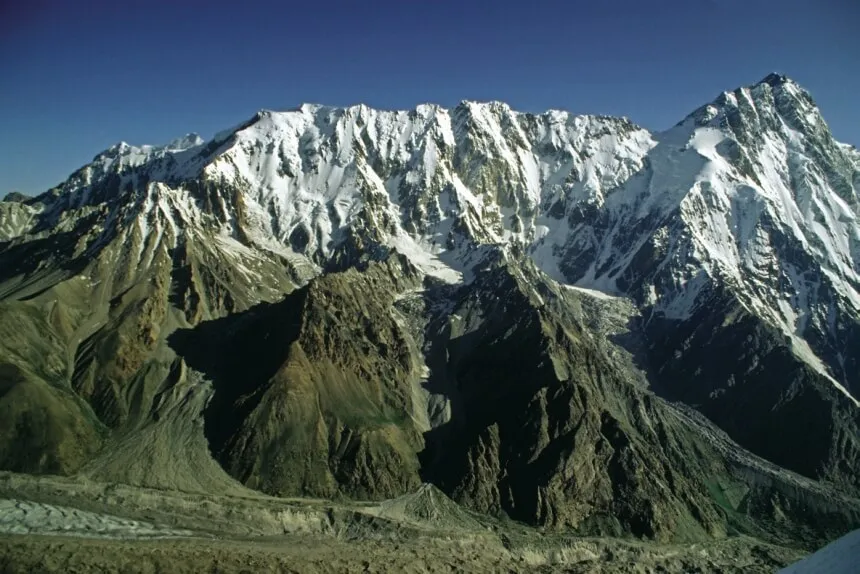
Nanga Parbat Is a Scale Problem as Much as a Climbing Problem.
Huge relief, extreme altitude, avalanche terrain, long retreat and unsettled weather compound one another. The modern Diamir / Kinshofer side is more established than its great historic faces, but it remains a major 8,000-metre expedition.
Extreme Scale + Altitude
Nanga Parbat’s ranking comes from the size of the mountain, 8,126-metre altitude, objective hazard and serious retreat. Its commonly used Diamir side is not as continuously technical as the elite Karakoram walls above it, which is why it sits at #5 rather than #2 or #3.
Open Nanga Parbat →Extreme Altitude Far From the Everest Machine
At 8,586 m, Kangchenjunga is the third-highest mountain on Earth. Its remoteness, long expedition logistics, altitude and complex upper mountain keep commitment high even though its standard-route technical climbing is not the hardest on this list.
Open Kangchenjunga →Near-8,000-Metre Technical Seriousness
Masherbrum combines high altitude with steep Karakoram terrain and severe modern objectives. Its famous Northeast Face remains a separate unresolved face problem, so the mountain’s exact placement is necessarily less tidy than a peak with one dominant standard line.
Modern High-Altitude Wall Climbing
Jannu’s technical reputation remains current. The 2023 North Face route Round Trip Ticket was 2,700 m and graded M7 AI5+ A0, climbed high on a 7,710-metre Himalayan wall. Piolets d’Or recognized it among the standout ascents of its era.
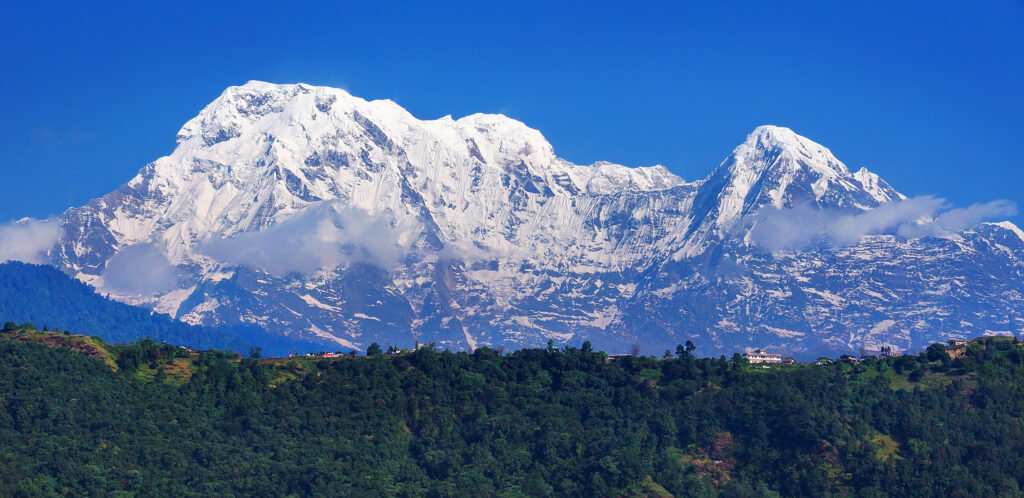
Annapurna Shows Why Dangerous and Hardest Are Not the Same Word.
Avalanche and serac exposure dominate the mountain’s reputation. That can make Annapurna brutally dangerous without making its standard modern climbing more technically sustained than K2, Gasherbrum IV or Latok I.
Why Annapurna Ranks #6 Instead of #1
Seven Summit Treks describes Annapurna I as steep, exposed, unpredictable and appropriate only for highly skilled climbers. The distinction here is not whether Annapurna is serious; it is what kind of seriousness dominates.
Annapurna’s north-side commercial terrain is strongly shaped by avalanche and serac exposure. Those hazards cannot be removed by better rock-climbing technique. That pushes the mountain high on any difficulty list, but it does not automatically place it ahead of technical test pieces where difficult movement remains sustained for far longer.
Why Mount Everest Is Not in the Top 10
Everest is higher than every mountain on this list. Height alone is not the same thing as overall climbing difficulty.
The Most Extreme Altitude
At 8,849 m, Everest imposes the greatest summit altitude on Earth. Cold, hypoxia, duration and crowded high camps remain serious problems, and a normal-route ascent should never be described as easy.
More Established Normal-Route Infrastructure
Modern commercial Everest expeditions typically benefit from established camp systems, extensive fixed ropes, large operator teams, supplemental-oxygen systems, forecasting and communications. Many mountains above combine less infrastructure with harder technical movement or more committing retreat.
K2 Went Unsummited in Summer 2026
The season is worth recording because the page carries a 2026 date, but one bad year should not be turned into a permanent difficulty statistic.
Zero Successful K2 Summits
Alan Arnette’s August 22 Karakoram wrap reported that the season ended without a K2 summit. High winds, heavy snow and unstable conditions repeatedly narrowed the usable window.
Illustration, Not Proof
A zero-summit season fits K2’s reputation for weather and commitment, but the ranking is not based on 2026 alone. A single season can be distorted by team size, timing, route fixing, accidents on neighboring peaks and unusual weather.
Climbing References Behind the Hardest Claims
Difficulty labels are strongest when they are tied to actual routes and ascent history rather than recycled list articles.
American Alpine Journal
Historical Abruzzi Spur reports document the Black Pyramid, Bottleneck, deep snow, unstable conditions and technical retreat that shape the standard-route comparison.
Open K2 reference →The Shining Wall
Wojciech Kurtyka’s American Alpine Journal account records the 1985 West Face ascent to the summit ridge at about 7,900 m and the descent by the North Ridge.
Open G IV reference →Piolets d’Or
The 2018 north-side ascent is recorded as 2,500 m, ED+, with the team moving toward the West Col before reaching the summit from the south side.
Open Latok I reference →Piolets d’Or
Round Trip Ticket on Jannu’s North Face is recorded at 2,700 m, M7 AI5+ A0, a modern example of extreme technical climbing at 7,710 m.
Open Jannu reference →Current Expedition Standard
Seven Summit Treks’ current Annapurna FAQ describes steep exposed terrain, unpredictable weather and the high level of experience required.
Open Annapurna reference →Karakoram Season Wrap
Used only for current season context: the 2026 summer closed without a successful K2 summit.
Open 2026 wrap →Difficulty, Mortality & Technical Climbing
14 Eight-Thousanders Ranked by Difficulty
Compare only the world’s 8,000-metre peaks, where altitude is shared and route differences become clearer.
Rank the 8,000ers → MortalityDeath Rates by Mountain
Keep historical mortality ratios separate from climbing-difficulty rankings and label every denominator.
Compare mortality → TechnicalTop 50 Technical Mountaineering Objectives
Move altitude and broad expedition difficulty aside and look more closely at elite technical routes.
See technical objectives → K2K2 Climbing Guide
Abruzzi Spur, permits, route sections, season and the details behind the #1 ranking.
Open K2 → Nanga ParbatNanga Parbat Climbing Guide
Diamir, Rupal, route history and the scale that pushes Nanga Parbat into the top five.
Open Nanga Parbat → Annapurna IAnnapurna I Climbing Guide
See why objective hazard can dominate a mountain even when pure technical climbing is not the hardest.
Open Annapurna → Snow hazardAvalanche Awareness
Understand terrain, loading and exposure on mountains where objective hazard changes the entire difficulty picture.
Review avalanche basics → WeatherMountain Weather for Climbers
See why wind, snow, freezing level and timing can outweigh a route grade on high-consequence terrain.
Read mountain weather → CommitmentNavigation & Emergency Communication
Remote routes become more serious when retreat, rescue and communication are uncertain.
Review emergency planning →Hardest Mountains FAQ
What is the hardest mountain in the world to climb?
K2 ranks first here when “hardest” means the combined burden of technical climbing, extreme altitude, objective hazard, commitment and severe weather. No international federation publishes an official hardest-mountain ranking, and other peaks can be harder in one specific dimension.
Is K2 harder than Everest?
On their normal modern summit routes, K2 is generally the harder all-around climbing objective. Everest is higher, but its standard commercial routes benefit from more established camps, fixed-rope systems, forecasting and expedition support. Change the style or season and the comparison can change dramatically.
Why is Annapurna not ranked #1?
Because difficulty and mortality are different questions. Annapurna I has severe avalanche and serac exposure, but this ranking also weighs sustained technical climbing, altitude, commitment and weather.
Is Cerro Torre harder than K2?
Cerro Torre has a strong claim in pure technical climbing. K2 ranks higher here because it combines difficult terrain with 8,611-metre altitude, major objective hazard, difficult retreat and Karakoram weather.
Why is Mount Everest not in the top 10?
Everest remains an extreme high-altitude expedition, but its normal commercial routes have more established infrastructure and support than many peaks on this list. Winter, no oxygen, alpine style or new-route Everest would be a very different problem.
What is the hardest technical mountain?
There is no single universal answer. Gasherbrum IV, Latok I, Cerro Torre, Baintha Brakk, Masherbrum and Jannu all contain elite technical objectives that can exceed K2 in pure climbing difficulty.
Was Latok I’s North Ridge climbed in 2018?
A 2018 team made a historic summit ascent from the north side, but the successful line moved off the full North Ridge toward the West Col before reaching the summit from the south side. The complete North Ridge to the main summit remains a distinct unfinished problem.
Did anyone summit K2 in 2026?
No. The 2026 Karakoram summer season closed without a successful K2 summit. The season illustrates K2’s weather and commitment problems, but one year is not the basis of the overall ranking.
Is the hardest mountain also the deadliest?
No. Technical difficulty, altitude, objective hazard and historical mortality overlap, but they are not interchangeable. A deaths-to-summits ratio is not a technical grade and should not be used as one.
K2 Is #1 Overall. Other Mountains Win Individual Categories.
Gasherbrum IV and Latok I can be harder technical climbing problems. Cerro Torre can rival them in pure alpine difficulty. Annapurna I can carry more objective hazard. Nanga Parbat can feel larger and more committing than its ranking suggests. K2 remains first because it combines difficult climbing, 8,611-metre altitude, objective hazard, retreat complexity and severe weather without giving the climber an easy dimension.