web analytics

Tag: mountain fatality rates

  • Cerro Torre Death Rate: How Deadly Is Patagonia’s Spire?

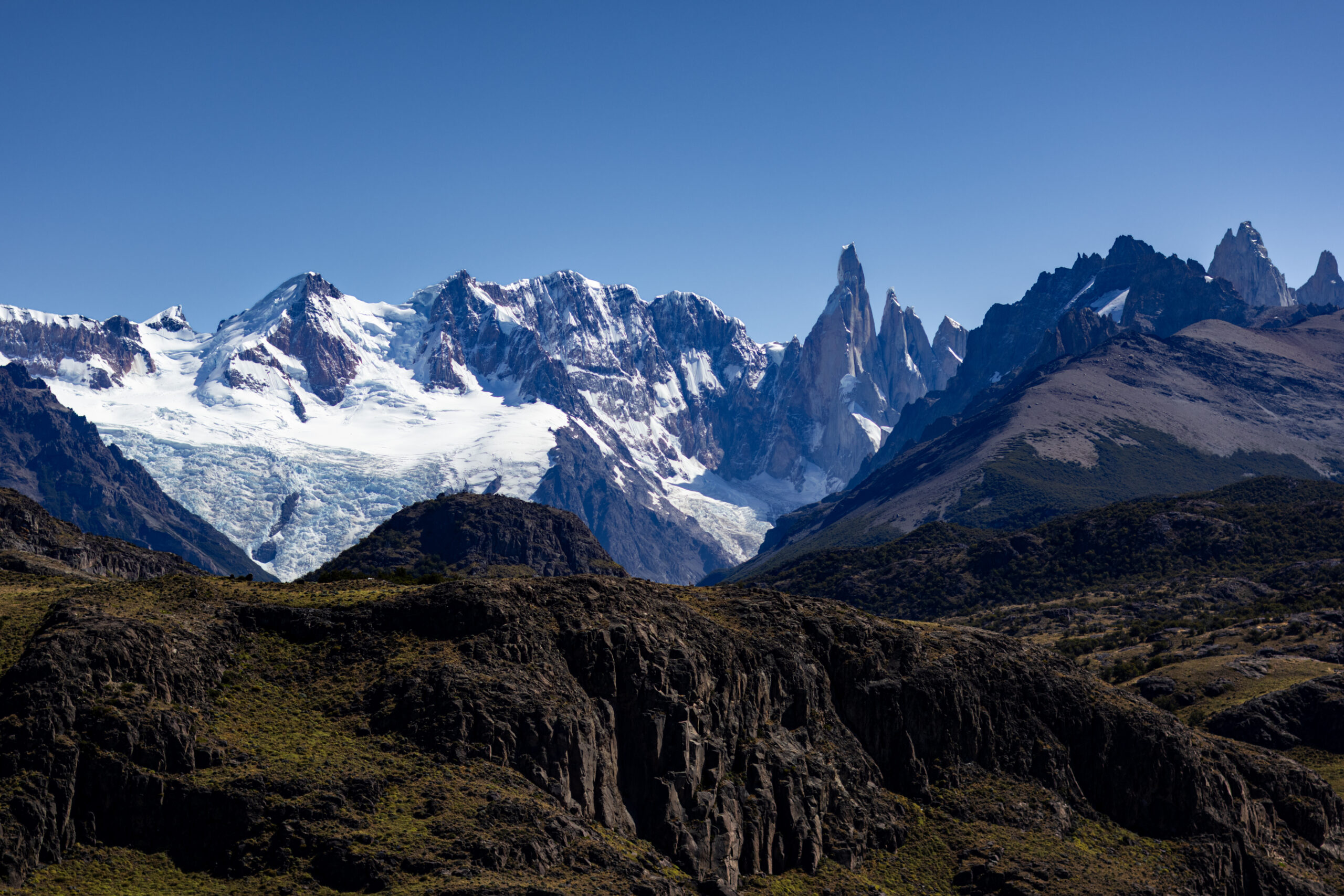
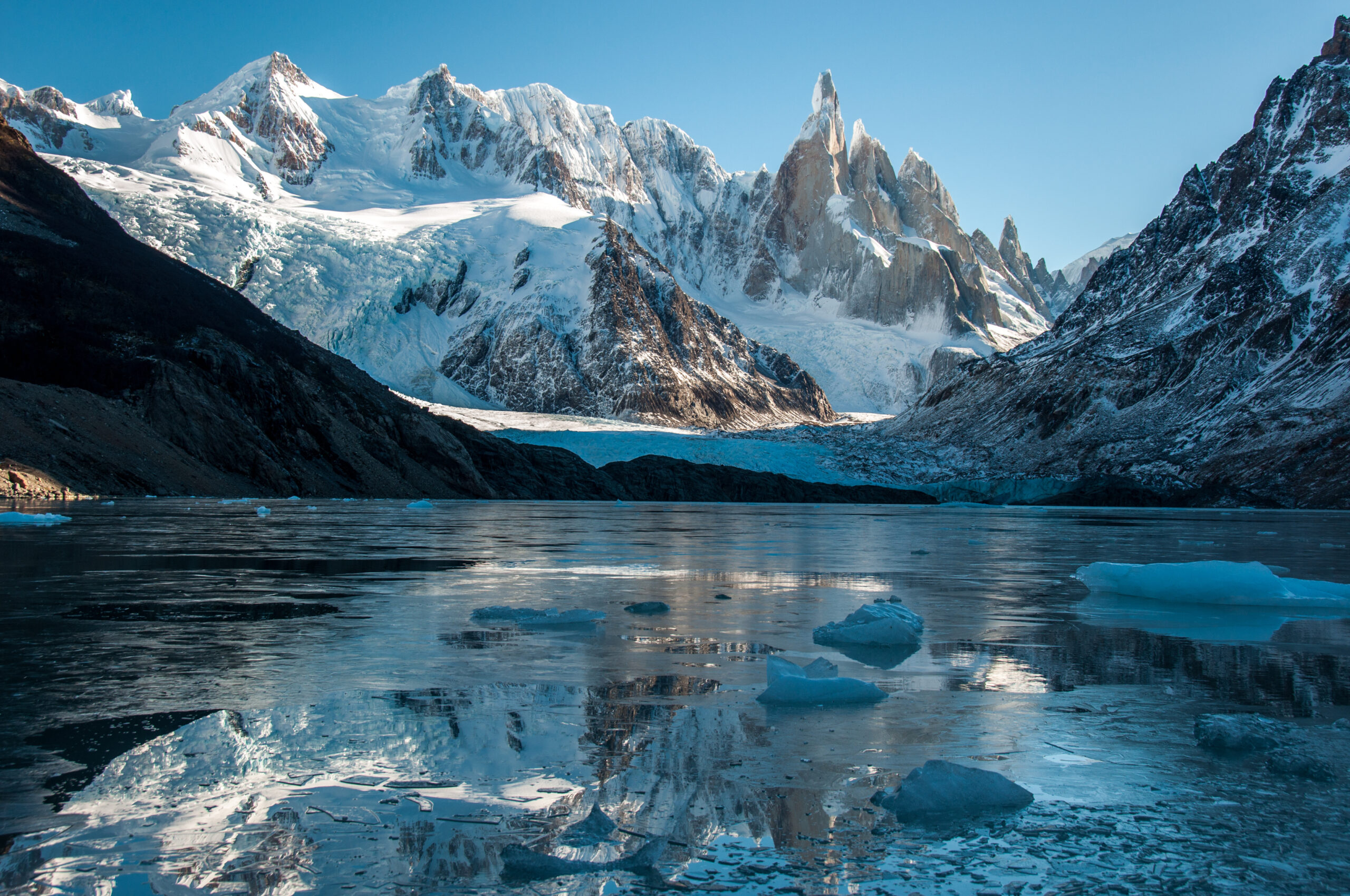
    Cerro Torre, the rime-iced granite spire of Patagonia and one of the hardest climbs on Earth
    Safety & Risk · Fatality Data · 2026

    Cerro Torre Death Rate: How Deadly Is Patagonia’s Hardest Spire?

    Barely 3,128 metres tall, yet one of the most feared mountains on Earth. Cerro Torre’s danger has nothing to do with altitude and everything to do with vertical granite, rime ice, and the worst weather in the inhabited world. Here’s the real death rate, what it means, and the deaths that built the legend.

    The short answer

    Around 6% per climber among serious attempts – extreme for a peak under 3,200 m.

    Cerro Torre’s estimated fatality rate is roughly 6% per climber among serious attempts – far below the deadliest 8,000ers (Annapurna ~27-32%, K2 ~22-25%), but severe for its modest height. Its danger is technical, not altitudinal: vertical granite, rime ice, and ferocious weather.

    The number works differently here than on commercial 8,000ers. Cerro Torre is an elite objective attempted by relatively few, where most attempts are turned back by storms rather than reaching the top – so read it as danger-per-attempt, not a death-to-summit ratio. For where it sits among all peaks, see our most dangerous mountains ranking.

    3,128 mSummit (10,262 ft)
    ~6%Per-climber fatality (serious attempts)
    1959First death (Toni Egger)
    1974First undisputed ascent
    Rime iceThe signature hazard

    Fatality Snapshot

    As of Jul 17, 2026 · directional risk band · few attempts, elite objective
    Fatality rate

    ~6% per climber, serious attempts

    Danger source

    Technical + weather not altitude

    Trend

    Falling far lower than 1959-1980s

    For comparison

    Annapurna ~27-32% deadliest 8000er by ratio

    What the number means

    Danger-per-attempt, not a death-to-summit ratio.

    On the 8,000ers, “death rate” almost always means deaths divided by successful summits. Cerro Torre can’t be measured that cleanly: it’s an elite technical objective climbed by comparatively few people, and on any given expedition most attempts are turned back by weather without reaching the summit. So its estimated ~6% per-climber fatality rate among serious attempts is best read as danger-per-attempt. That’s low next to Annapurna or K2 – but for a peak barely 3,128 m high, it reflects just how unforgiving the climbing is.

    Why it’s so dangerous

    Everything hard about mountaineering, minus the altitude.

    Cerro Torre rises as a near-vertical granite spire straight out of the Southern Patagonian Ice Field, and its danger is a stack of technical hazards rather than thin air:

    HazardWhy it kills
    Rime iceFragile, feathery ice mushrooms cap the spire; climbers must tunnel through unstable, unprotectable rime
    Patagonian weatherAmong the fiercest on Earth – violent storms arrive fast, and windows are measured in hours
    Vertical graniteSustained hard rock and mixed climbing where a fall is typically fatal
    RockfallWarming has increased rockfall on some sections – a factor in recent deaths
    No rescueRemote, committing terrain; if a storm traps you high, there is often no safe retreat and no help
    The tiny-window trap. More than almost any mountain, Cerro Torre punishes impatience. Climbers wait days or weeks for a narrow good-weather window, then move fast and commit – and a window that closes early can leave a party high on the spire in a full Patagonian storm. That combination of extreme difficulty and unforgiving weather is exactly what the death rate is measuring.
    The rime-ice mushrooms and vertical granite of Cerro Torre in Patagonia
    The signature hazard. The summit mushrooms of Cerro Torre – unstable, feathery rime ice that can’t be reliably protected – are the crux and the reason the mountain resisted an undisputed ascent until 1974. Terrain like this is why a slip here is rarely survivable.

    The deaths that defined it

    From the disputed first ascent to a modern tragedy.

    Cerro Torre’s reputation was forged in controversy and loss. In 1959, Cesare Maestri claimed the first ascent with Austrian climber Toni Egger – but Egger was swept to his death on the descent, taking the only camera and with it the proof. When later expeditions failed to repeat the line and brought further deaths, doubt hardened into one of climbing’s most famous disputes; the first undisputed ascent came only in 1974, by Casimiro Ferrari’s Ragni di Lecco team via the west face. Decades later, in 2022, the accomplished alpinist Korra Pesce was struck by rockfall while descending and died – a reminder that even for the world’s best, the mountain’s margins are razor-thin.

    Cerro Torre vs the 8000ers

    A different kind of deadly.

    Comparing Cerro Torre’s rate to an 8,000er’s is almost comparing two different sports. The great Himalayan and Karakoram killers – Annapurna, K2, Nanga Parbat – are lethal through a mix of extreme altitude and objective hazard on expeditions that many attempt. Cerro Torre is lethal through pure technical difficulty and weather on a peak few can even seriously try. It’s why it appears near the top of every “hardest mountain” list but well down the fatality-rate table.

    Deadly through difficulty
    Cerro Torre

    ~6% per attempt · technical climbing + Patagonian weather, not altitude.

    Deadly through altitude & hazard
    Annapurna / K2

    ~22-32% death-to-summit · thin air, avalanche, serac on commercial expeditions.

    Where it ranks. For the full fatality-rate order across every major peak, see our most dangerous mountains ranked by fatality rate and the death rates by mountain hub. For why it’s a top technical objective, see the 10 hardest mountains and the difficulty framework.

    Has it become safer?

    Safer than it was – not safe.

    The modern fatality rate is dramatically lower than during the 1959-1980s era. Better equipment, vastly improved forecasting, refined technique, and accumulated route knowledge have all cut the risk for skilled parties who wait for the right window. But the mountain hasn’t changed: the rime, the storms, and the exposure remain, and warming has increased rockfall on some sections. Cerro Torre rewards experience and patience – and still humbles the best climbers alive.

    Planning a Patagonia trip? Compare flights and lodging via the Global Summit Guide Expedia travel shop. Disclosure: affiliate link; we may earn a small commission at no extra cost to you, and it never affects our reporting.

    Cerro Torre death rate FAQ

    The questions people search right after “cerro torre death rate.”

    What is Cerro Torre’s death rate?

    Roughly 6% per climber among serious attempts – far below Annapurna (~27-32%) or K2 (~22-25%), but extreme for a 3,128 m peak. It’s danger-per-attempt, not death-to-summit, since most attempts are turned back by weather. The modern rate is far lower than the 1959-1980s era.

    Why is it so dangerous under 3,200 m?

    Its danger is technical and weather-driven, not altitude: vertical granite, fragile rime ice, violent Patagonian storms, rockfall, and no rescue. A fall on this terrain is typically fatal.

    How many have died on it?

    There’s no official tally as for the 8,000ers, but deaths have accumulated since the first-ascent era. The most famous is Toni Egger (1959); more recently, Korra Pesce died in 2022 from rockfall on the descent.

    Is it the deadliest mountain?

    No – by rate it’s well below the deadliest 8,000ers, and Mont Blanc has a far higher total toll. It’s among the most feared for difficulty, not for topping the death charts. See most dangerous mountains.

    Has it become safer?

    Yes – modern gear, forecasting, and technique have cut the rate sharply since the 1980s. But the rime, storms, and exposure are unchanged, so it’s safer, not safe.

    How we built this

    • Patagonian climbing records, alpine journals, and accident reporting for fatality context
    • First-ascent history (Maestri 1959 dispute; Ferrari / Ragni di Lecco 1974) for the historical record
    • GSG house estimate of ~6% per-climber fatality among serious attempts, cross-checked against the most-dangerous ranking
    • Presented as a directional risk band, since Cerro Torre sees far fewer attempts than the 8,000ers

    Last updated: July 17, 2026. Next review: January 2027. Research-based safety data, not a record of personal ascents; figures are directional, not exact probabilities.

    About the author

    Travis Ludlow · Founder & Head of Research · Safety review: Dawson Ludlow

    Travis leads research at Global Summit Guide, which maintains a safety-data hub covering fatality patterns across the world’s major peaks. This Cerro Torre page sits within that hub – a single-peak deep dive that points up to the cross-mountain ranking.

    Read the editorial mission and team background.

    See how Cerro Torre stacks up

    One spire, one very specific kind of danger. Compare it against every major peak – by fatality rate and by difficulty – in our safety-data hub.

    Most Dangerous Mountains The 10 Hardest Mountains
    Was this helpful?

    Yes
    No
    Thanks for your feedback!
  • 10 Hardest Mountains to Climb in the World: K2 Ranks #1

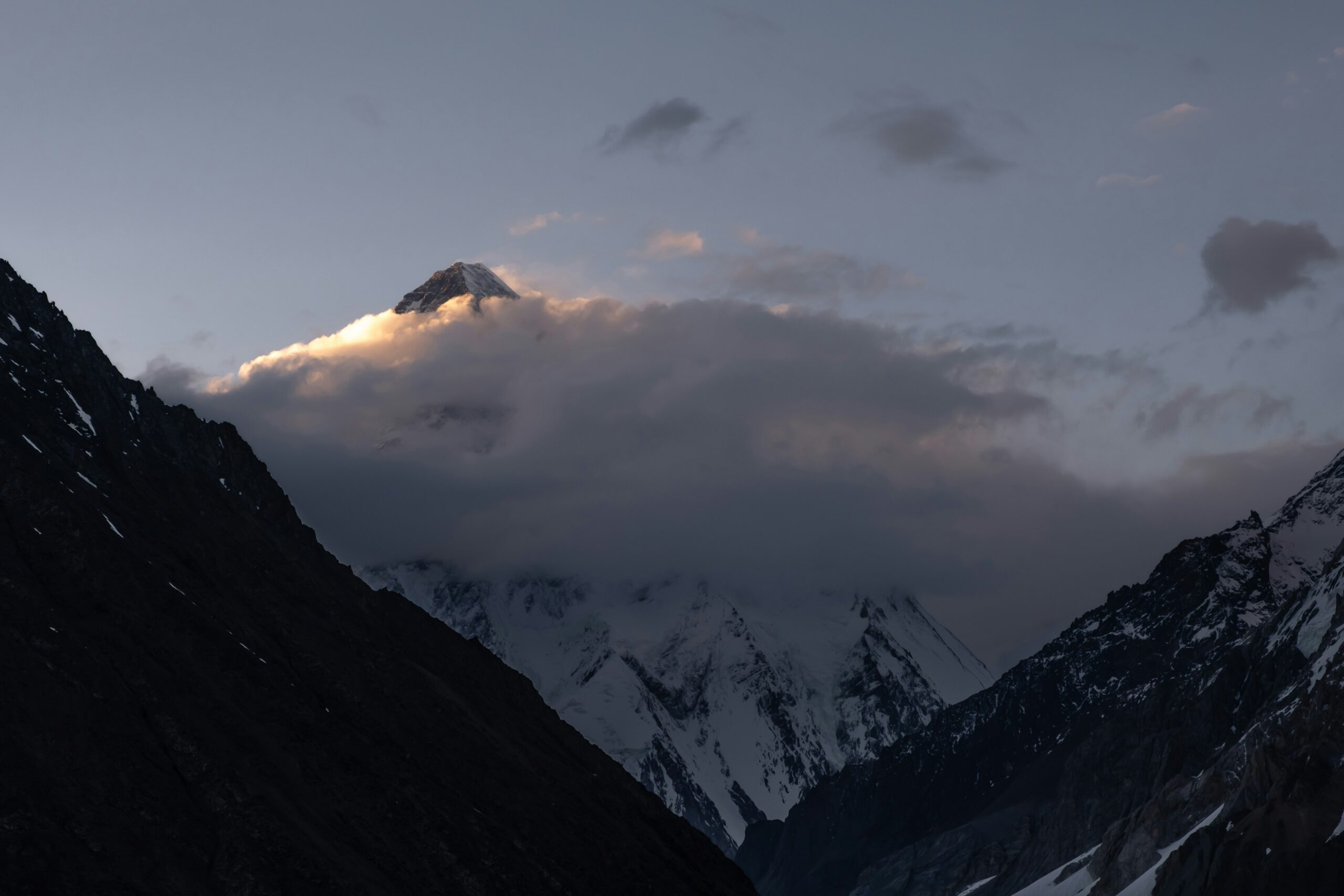
    K2 in the Karakoram, ranked the hardest mountain to climb overall
    Difficulty ranking · 10 mountains · 5-factor framework · 2026

    The 10 Hardest Mountains to Climb in the World (2026)

    K2 ranks #1 overall. This list separates climbing difficulty from fatality rate and ranks mountains by technical climbing, altitude, objective hazard, commitment and weather—not fame, height or death toll alone.

    K2 #1 overallDifficulty ≠ fatalityFive dimensions usedRoute/style context stated

    Ranking restored and refreshed August 8, 2026 · Editorial ranking · Research-based

    K2#1 overall
    5Difficulty dimensions
    10Ranked mountains
    Hardest vs deadliest
    By Travis Ludlow · Global Summit Guide Research
    Research-based · Reviewed August 2026
    Cluster correction: this URL owns the ranked “hardest mountains” query. The methodology explainer belongs at What Makes a Mountain Hard to Climb?, while fatality rankings belong at Most Dangerous Mountains by Fatality Rate.
    The direct answer

    K2 is the hardest mountain to climb overall.

    K2 wins because it stacks all five major difficulty dimensions at once: extreme altitude, sustained technical terrain, objective hazard, severe commitment and volatile weather. Gasherbrum IV, Latok I and Cerro Torre can be harder technically; Annapurna can be more dangerous by historical risk measures. K2 is the strongest all-around answer.

    • #1 overall: K2
    • Pure technical contenders: Gasherbrum IV, Latok I, Cerro Torre
    • Objective-hazard standout: Annapurna I
    • Extreme scale + altitude: Nanga Parbat, Kangchenjunga
    • Not a fatality ranking: use the dedicated danger pages.
    The ranked answer

    The 10 Hardest Mountains to Climb

    This is a holistic editorial ranking. Qualitative factor bands are used instead of fake decimal precision because route, style, season and current conditions can change difficulty dramatically.

    #MountainElevationWhy It ContendsTechnicalAltitudeHazardCommitmentWeather
    1K28,611 mHardest overallExtremeExtremeExtremeExtremeExtreme
    2Gasherbrum IV7,925 mTechnical + altitudeExtremeVery highVery highExtremeExtreme
    3Latok I7,145 mTechnical / commitment test pieceExtremeVery highVery highExtremeExtreme
    4Baintha Brakk (The Ogre)7,285 mMixed-climbing legendExtremeVery highVery highExtremeVery high
    5Nanga Parbat8,126 mScale + altitude + seriousnessVery highExtremeExtremeExtremeExtreme
    6Annapurna I8,091 mObjective-hazard giantVery highExtremeExtremeExtremeVery high
    7Kangchenjunga8,586 mRemote 8,000m expeditionVery highExtremeVery highExtremeVery high
    8Cerro Torre3,128 mPure technical winnerExtremeModerateVery highExtremeExtreme
    9Masherbrum7,821 mSevere Karakoram technical mountainExtremeVery highVery highExtremeExtreme
    10Jannu (Kumbhakarna)7,710 mElite 7,000m technical mountainExtremeVery highVery highExtremeVery high

    Ranking rule

    We rank the mountain as a serious summit objective using the route or style that defines its modern climbing reputation. We do not rank a legally closed mountain simply because nobody is allowed to climb it, and we do not use death rate as a substitute for difficulty.

    The framework in brief

    Five Dimensions Make a Mountain Hard

    Technical climbing, altitude, objective hazard, commitment and weather are the five dimensions behind the ranking.

    Technical climbing

    Steep rock, ice, mixed ground and route complexity push Gasherbrum IV, Latok I, Baintha Brakk and Cerro Torre upward.

    Altitude

    Thin air changes pace, judgment, recovery, cold tolerance and rescue. K2, Nanga Parbat, Annapurna and Kangchenjunga carry a physiological burden lower technical peaks do not.

    Objective hazard

    Avalanche, serac fall and rockfall are dangers skill cannot completely remove. Annapurna and K2 show why a technically manageable section can still be objectively severe.

    Commitment

    Length, remoteness, difficult retreat and limited rescue margin are major reasons the Karakoram dominates the list.

    Weather

    A route can be climbable on paper and practically impossible when violent wind, snowfall or tiny weather windows repeatedly shut it down.

    For grades and the full method, use What Makes a Mountain Hard to Climb?.

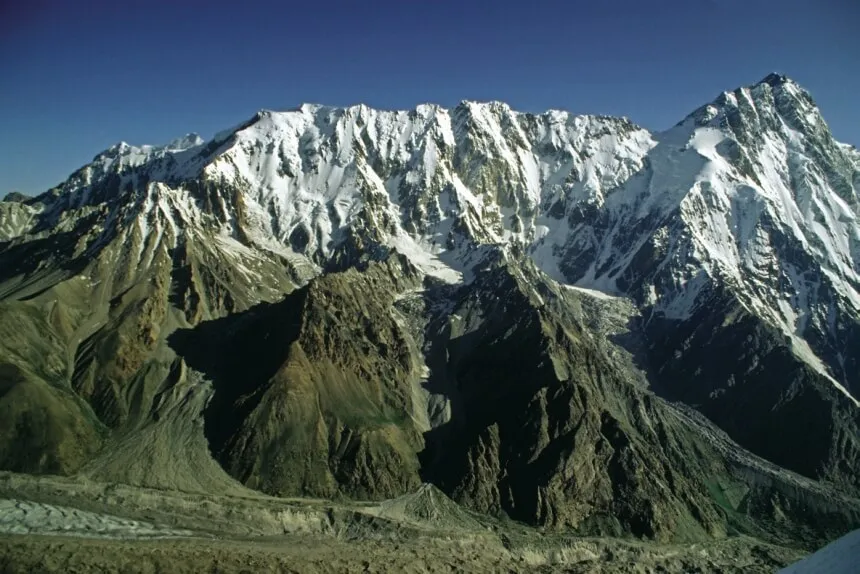
    Nanga Parbat illustrating altitude, scale, commitment and objective hazard
    Stacked problems

    The hardest mountains rarely win on one factor alone.

    Nanga Parbat shows the pattern: huge relief, 8,000-metre altitude, serious weather, avalanche exposure and long retreat compound one another.

    The reasoning behind every position

    Why Each Mountain Ranks Here

    The list avoids pretending one route grade or one accident statistic can settle the entire debate.

    01
    Hardest overall

    K2

    8,611 m · Karakoram · Pakistan / China

    K2 ranks first because it stacks extreme altitude, sustained technical terrain, objective hazard, commitment and Karakoram weather more evenly than any other regularly climbed major peak.

    TechnicalExtremeAltitudeExtremeHazardExtremeCommitmentExtremeWeatherExtreme

    Why #1: It does not have to win every single factor; it stays near the top in nearly all of them.

    Supporting GSG research →
    02
    Technical + altitude

    Gasherbrum IV

    7,925 m · Karakoram · Pakistan

    Gasherbrum IV is one of the clearest examples of world-class technical alpinism at near-8,000-metre altitude. Its defining West Face combines a huge technical wall with thin air, remoteness and a tiny margin for error.

    TechnicalExtremeAltitudeVery highHazardVery highCommitmentExtremeWeatherExtreme

    Why #2: Pure climbing difficulty may exceed K2 on its defining lines, but K2 carries greater summit-altitude exposure and broader all-around difficulty.

    Supporting GSG research →
    03
    Technical / commitment test piece

    Latok I

    7,145 m · Karakoram · Pakistan

    Latok I became a symbol of elite alpine difficulty because its North Ridge combines sustained hard climbing, severe weather, remote rescue conditions and multi-day commitment on a huge Karakoram wall.

    TechnicalExtremeAltitudeVery highHazardVery highCommitmentExtremeWeatherExtreme

    Why #3: Lower altitude than K2 and Gasherbrum IV keeps it below them overall, but its technical and commitment demands are among the highest on Earth.

    Supporting GSG research →
    04
    Mixed-climbing legend

    Baintha Brakk (The Ogre)

    7,285 m · Karakoram · Pakistan

    The Ogre is a steep, complicated rock-and-ice mountain made legendary by the 1977 first ascent and epic descent. Few mountains combine big-wall climbing, altitude and difficult retreat so dramatically.

    TechnicalExtremeAltitudeVery highHazardVery highCommitmentExtremeWeatherVery high

    Why #4: Its technical terrain and descent commitment place it above most 8,000ers even though it lacks death-zone summit altitude.

    Supporting GSG research →
    05
    Scale + altitude + seriousness

    Nanga Parbat

    8,126 m · Western Himalaya · Pakistan

    Nanga Parbat is defined by enormous relief, long serious lines, 8,000-metre altitude and severe weather. Even the more commonly used Diamir side remains a major expedition.

    TechnicalVery highAltitudeExtremeHazardExtremeCommitmentExtremeWeatherExtreme

    Why #5: Its overall seriousness is extraordinary, while the usual summit objective is somewhat less technically sustained than the Karakoram test pieces above it.

    Supporting GSG research →
    06
    Objective-hazard giant

    Annapurna I

    8,091 m · Himalaya · Nepal

    Annapurna belongs high on any hardest-mountains list because avalanche and serac exposure can overwhelm even excellent technique. It shows why difficulty is not merely the grade of the hardest pitch.

    TechnicalVery highAltitudeExtremeHazardExtremeCommitmentExtremeWeatherVery high

    Why #6: It ranks below the top technical test pieces because objective hazard dominates more of its reputation than sustained technical climbing.

    Supporting GSG research →
    07
    Remote 8,000m expedition

    Kangchenjunga

    8,586 m · Himalaya · Nepal / India

    The world’s third-highest mountain combines extreme altitude with remoteness, difficult rescue context, complex terrain and less standardized support than Everest.

    TechnicalVery highAltitudeExtremeHazardVery highCommitmentExtremeWeatherVery high

    Why #7: Its altitude and commitment are exceptional, while its defining standard-route technicality is below the most extreme technical objectives above.

    Supporting GSG research →
    08
    Pure technical winner

    Cerro Torre

    3,128 m · Patagonia · Argentina / Chile

    Cerro Torre proves altitude is only one way a mountain becomes hard. Steep granite, mixed climbing, rime ice and violent Patagonian weather make it one of the hardest technically accessible mountains on Earth.

    TechnicalExtremeAltitudeModerateHazardVery highCommitmentExtremeWeatherExtreme

    Why #8: It could rank first on pure technical climbing, but lower altitude removes the death-zone physiological burden carried by the higher peaks.

    Supporting GSG research →
    09
    Severe Karakoram technical mountain

    Masherbrum

    7,821 m · Karakoram · Pakistan

    Masherbrum combines near-8,000-metre altitude with steep alpine terrain and exceptional technical seriousness. Its famous Northeast Face is a separate route problem, but the mountain itself remains elite.

    TechnicalExtremeAltitudeVery highHazardVery highCommitmentExtremeWeatherExtreme

    Why #9: Its most famous modern challenge is an unclimbed face rather than the established summit route, which makes exact placement less clean than the mountains above.

    Supporting GSG research →
    10
    Elite 7,000m technical mountain

    Jannu (Kumbhakarna)

    7,710 m · Himalaya · Nepal

    Jannu has long carried a reputation as one of the hardest 7,000-metre mountains because steep technical climbing continues high into thin air.

    TechnicalExtremeAltitudeVery highHazardVery highCommitmentExtremeWeatherVery high

    Why #10: It closes the top ten because it combines technical difficulty and altitude better than most Alpine or Patagonian peaks while remaining below the full death-zone burden of the hardest 8,000ers.

    Supporting GSG research →
    Three pages, three jobs

    Hardest Is Not the Same as Deadliest

    Separating these intents is important for readers and search architecture.

    P1 · This page

    Hardest Mountains

    Ranks overall climbing difficulty: technicality, altitude, hazard, commitment and weather.

    Current ranked list →
    P2 · Fatality ownership

    Most Dangerous Mountains

    Owns fatality/risk ranking. Annapurna can rank #1 there without ranking #1 for overall climbing difficulty.

    Open fatality ranking →
    P3 · Method ownership

    What Makes a Mountain Hard?

    Explains the five factors and Alpine grades. It should not contain a competing numbered top-10 list.

    Open framework →
    The obvious search question

    Why Mount Everest Is Not in the Top 10

    Everest is the highest mountain on Earth. That does not automatically make it one of the ten hardest climbing problems.

    The normal commercial routes impose extraordinary altitude, cold and duration, but they also benefit from the world’s most developed high-altitude expedition system: established camps, fixed ropes, large operator teams, forecasting, communications and high-altitude staff.

    Strip those systems away—winter, no supplemental oxygen, a new route, alpine style—and Everest becomes radically harder. But this ranking compares the overall seriousness of mountains as they are meaningfully climbed and discussed today, rather than the hardest imaginable style on each mountain.

    Everest remains elite expedition mountaineering

    Excluding Everest from the top ten is not calling it easy. It means other mountains impose more technical or more evenly stacked difficulty across the five dimensions.

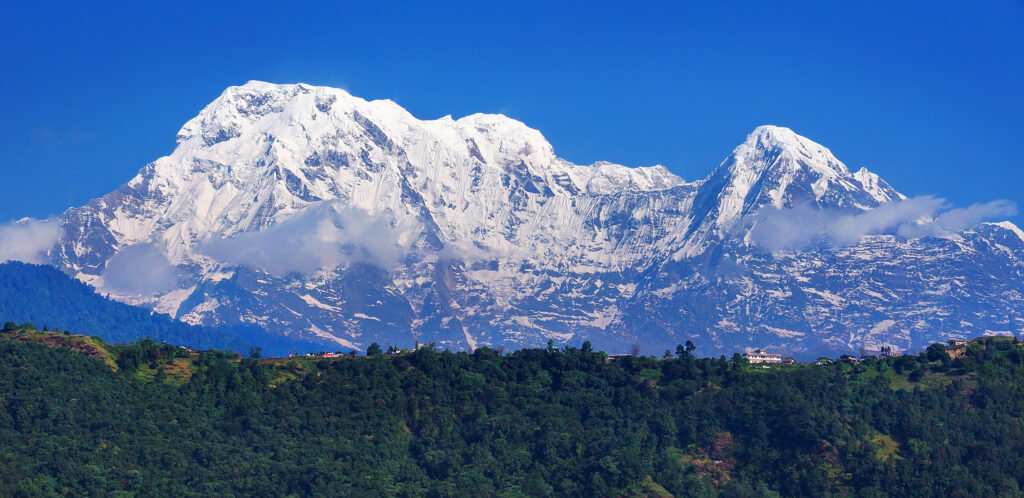
    Annapurna massif illustrating the difference between danger and overall difficulty
    Different question, different winner

    Annapurna explains why “hardest” and “deadliest” must remain separate.

    Objective hazard can make a mountain brutally serious even when its technical climbing is not the hardest on Earth.

    A separate ranking answers a separate question

    What If You Rank Only Technical Climbing?

    If technical climbing alone is the question, the order changes. Global Summit Guide’s Top 50 Technical Mountaineering Objectives places routes such as Latok I North Ridge and Gasherbrum IV West Face at the edge of modern alpinism. Cerro Torre, Baintha Brakk, Jannu and other steep technical objectives also rise.

    This page answers the broader “hardest mountains to climb” query by combining technique with altitude, objective hazard, commitment and weather. For the narrower eight-thousander question, use Eight-Thousanders Ranked by Difficulty.

    Methodology and boundaries

    How This Ranking Was Built

    This is an editorial synthesis, not an official UIAA ranking or a mathematical claim of certainty.

    What the ranking uses

    • The five-factor Global Summit Guide framework.
    • Established Alpine, rock, ice and mixed grading context.
    • Route histories and modern technical-objective comparisons.
    • Altitude and expedition seriousness.
    • Objective hazard, remoteness, retreat and weather.
    • Cross-checking against GSG’s 8,000er difficulty and Top 50 technical research.

    What it does not do

    • Rank by death rate alone.
    • Equate highest with hardest.
    • Treat legally closed peaks as automatically hardest.
    • Pretend the easiest route and hardest face are the same problem.
    • Assign fake decimal precision to route/style judgments.

    What we do not know

    No universal authority can declare one objective “the hardest mountain in the world.” New routes, repeats, climate-driven terrain changes, better forecasting and changing rescue infrastructure can alter how a mountain is understood.

    Search-intent answers

    Hardest Mountains FAQ

    Direct answers for the questions this ranked page should own.

    What is the hardest mountain in the world to climb?

    K2 ranks #1 here because it combines extreme altitude, technical terrain, objective hazard, commitment and severe weather. Other peaks can be harder in one specific dimension.

    Is K2 harder than Everest?

    Yes on overall mountaineering difficulty. Everest is higher, but its normal commercial routes have far more fixed infrastructure and support. K2 is steeper, more technical and less forgiving.

    Why is Annapurna not #1 if it is historically deadlier?

    Because this page ranks overall climbing difficulty, not fatality statistics. Annapurna’s objective hazard is exceptional, but several mountains impose more sustained technical difficulty.

    Is Cerro Torre harder than K2?

    By pure technical climbing, a strong argument can be made for Cerro Torre. By combined altitude, technical difficulty, hazard, commitment and weather, K2 ranks higher overall.

    Why is Everest not in the top 10?

    Everest is an extreme-altitude expedition, but normal routes benefit from fixed ropes, established camps, large operator systems, forecasting and rescue infrastructure. Height and fame are not the same as overall climbing difficulty.

    What is the hardest technical mountain?

    There is no universal answer. Latok I, Gasherbrum IV, Cerro Torre, Masherbrum and Baintha Brakk all have legitimate claims depending on route and definition.

    How are these mountains ranked?

    Global Summit Guide uses five broad dimensions: technical climbing, altitude, objective hazard, commitment and weather. The list is an editorial ranking rather than an official federation table.

    Is hardest the same as most dangerous?

    No. Difficulty and fatality risk overlap, but they are different questions. Use the Most Dangerous Mountains and Death Rates pages for fatality-focused comparisons.

    Keep the cluster clean

    Rank the Mountains. Separate the Risk. Explain the Method.

    This page owns the ranked top 10. The danger page owns fatality. The framework page owns methodology.

    Was this helpful?

    Yes
    No
    Thanks for your feedback!
Language »