
Last updated October 26, 2026
Eiger Death Rate: How Deadly Is the North Face?
The Eiger’s North Face is known as the Mordwand—the “Murder Wall.” Historical sources cite at least 64 deaths, with a 2020 climbing-history account reporting 72. Neither is a verified 2026 death total, and no complete public count of climber attempts exists to calculate a reliable percentage. Here is what the records actually show.
Updated October 26, 2026 · Death toll ≠ per-climber fatality rate · Route-specific interpretation
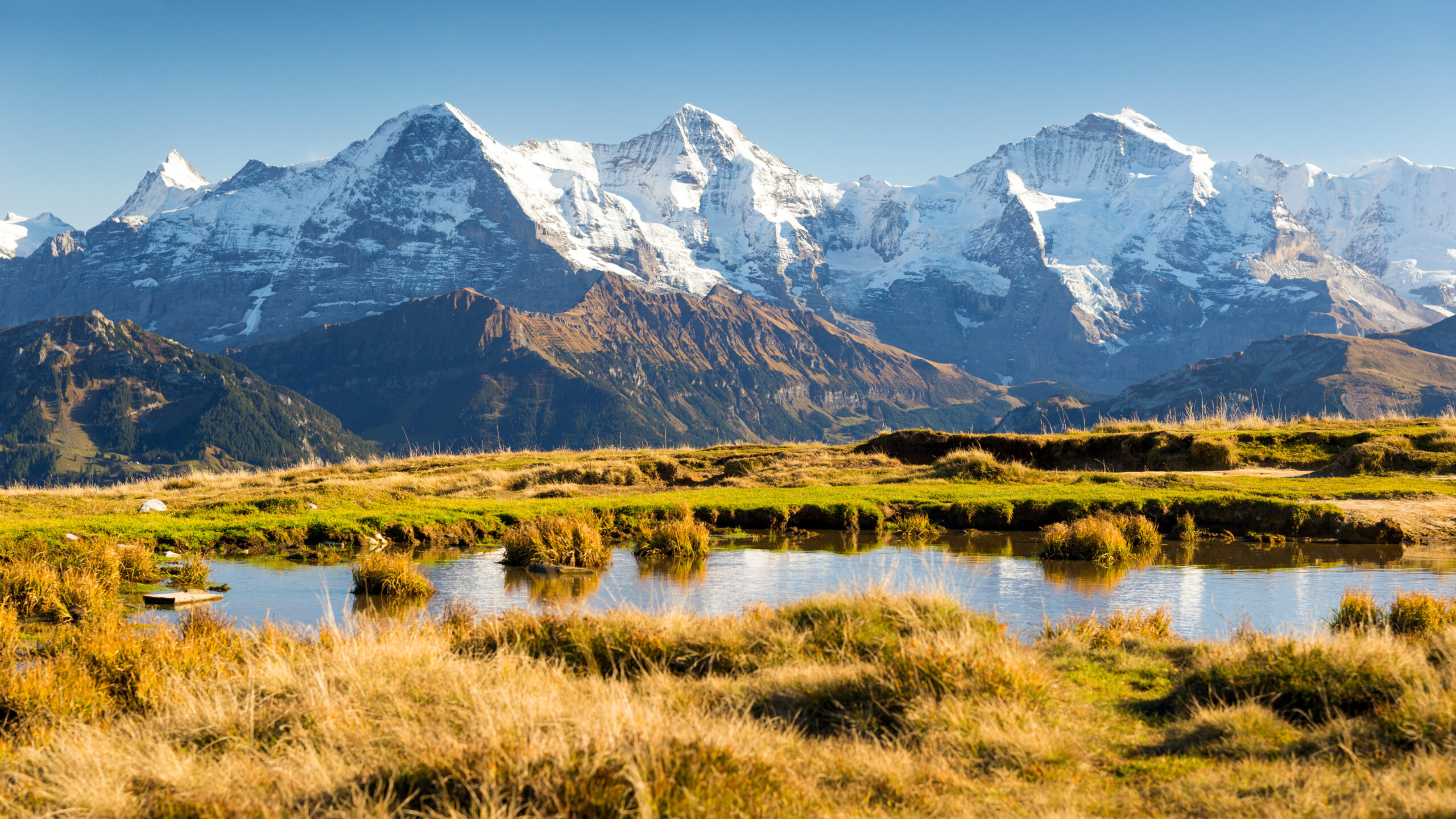
The Eiger has a famous death toll. It does not have a trustworthy single “death rate.”
When people search for the Eiger death rate, they usually mean the North Face—not the summit via its easier approaches. The North Face has an extraordinary history of fatal accidents, but reported counts come from different years and do not establish the chance that a present-day climber will die on an attempt.
Most important distinction: The Eiger’s North Face (Nordwand) and its West Flank normal route are different mountaineering objectives. A figure associated with one cannot responsibly be applied to all climbers on the mountain. Even the West Flank is a serious route: the Swiss Alpine Club grades it AD (ZS in its German guide), with exposure, considerable vertical ascent and demanding descent.
For the complete route picture, open the Eiger climbing guide. For an honest explanation of what counts as a fatality rate, compare the Death Rates by Mountain research hub.
How many climbers have died on the Eiger North Face?
There is no single continuously updated, official public census of North Face deaths that can be treated as a definitive 2026 total. Historically published numbers vary by scope, source and publication date. The widely repeated at least 64 figure should not be mistaken for today’s exact tally.
| Reported tally | Source / reporting date | What it does and does not establish |
|---|---|---|
| Nearly 60 deaths | Swissinfo, August 2001 | Historical snapshot discussing deaths on the North Face; not a 2026 count. |
| At least 64 climbers | Published Eiger climbing chronology; widely circulated historical figure | Often describes people killed attempting the Eiger, mainly on the North Face; scope may include other routes. |
| 72 climbers | Lacrux, 2020 | Climbing-history article reporting a higher cumulative toll since 1935; does not include a denominator of all attempts. |
Do not subtract one source’s historical number from another to claim an exact count of deaths in a particular period. Definitions and reporting scopes may differ; the sources are not a harmonized time series. We have not independently audited a climber-by-climber fatality registry for the period through October 2026.
Direct answer for readers: The Eiger North Face has claimed dozens of climbers, with widely cited historical totals including 64 and 72. The exact current cumulative total is not verified here, and the “death rate” cannot be calculated credibly from those totals alone.
Why isn’t there a percentage for the Eiger death rate?
To describe deaths per climbing attempt, we would need the number of fatalities and the number of attempts counted in exactly the same period, on a consistently defined set of routes. To describe deaths per successful summit, we would need a trustworthy tally of summits and deaths using the same definitions. The public historical record does not provide a reconciled, comprehensive series of these Eiger quantities.
| Metric readers encounter | Calculation | Defensible for the Eiger? |
|---|---|---|
| Historical fatality count | Recorded deaths within a specified period and route set | Approximate counts exist; source dates and scope must be stated. |
| Deaths per 100 attempts | Fatalities ÷ all qualifying attempts × 100 | No robust whole-history denominator is available. |
| Deaths per 100 successful summits | Fatalities ÷ successful summits × 100 | Cannot be computed reliably here; also not the probability of death per attempt. |
| Deaths per year | Fatalities ÷ specified years | Possible only for a clearly documented period; would not estimate individual risk. |
A century-spanning average would obscure changes in climbing equipment, forecasting, guide practices, access, season and route selection. A professional winter North Face ascent, a summer Mittellegi Ridge traverse and a West Flank ascent are not statistically interchangeable.
A warning about misleading comparisons: Some articles call a deaths-to-summits ratio a “death rate.” It is not the same as the chance of dying during an attempt, because unsuccessful survivors are omitted from the denominator. The Eiger cannot be assigned a credible all-route percentage by borrowing ratios from the Himalaya.
See the related mountaineering statistics explainer to understand why different climbing risk metrics must not be combined.
North Face vs West Flank vs Mittellegi Ridge.
The face’s terrible reputation should not be transferred to every Eiger route—but neither is an alternative route an easy hike. The Swiss Alpine Club describes the West Flank as the easiest route, while also emphasizing the Eiger’s demanding terrain, long descents and need for mature alpine judgment.
| Route | Primary character | What matters for safety |
|---|---|---|
| North Face · classic Heckmair line | Highly committing steep rock, snow, ice and mixed climbing over a vast wall | Rockfall and icefall, high exposure, severe weather, complex retreat; typically an elite-level objective. |
| West Flank · easiest / normal route | Demanding alpine terrain, with substantial ascent and routefinding | Swiss Alpine Club reports AD grade and approx. 6–8 h ascent for the West Flank route; long descent is serious. |
| Mittellegi Ridge · northeast ridge | Exposed alpine ridge with roped scrambling/climbing | SAC lists this as a demanding ridge; time, fixed sections and complicated descent require proven skills and appropriate conditions. |
North Face: extremely serious wall climbing
The north face’s historical fatality tally cannot be converted into a modern per-attempt probability; the route requires expert rock, ice and mixed-climbing competence, planning and a realistic retreat strategy.
Educational comparison only, not a live conditions assessment, route grade guarantee or substitute for a qualified mountain guide.
What “the normal route is safer” actually means
The easiest line avoids many North Face-specific objective hazards and the notorious wall’s level of technical commitment, but still exposes climbers to loose rock, sudden weather and complex descents. The Swiss Alpine Club’s published difficulty and time guidance are a much better planning starting point than a single mountain-wide fatality figure.
For route details and a current guide assessment, use the Swiss Alpine Club Eiger route portal and the Eiger operator comparison.
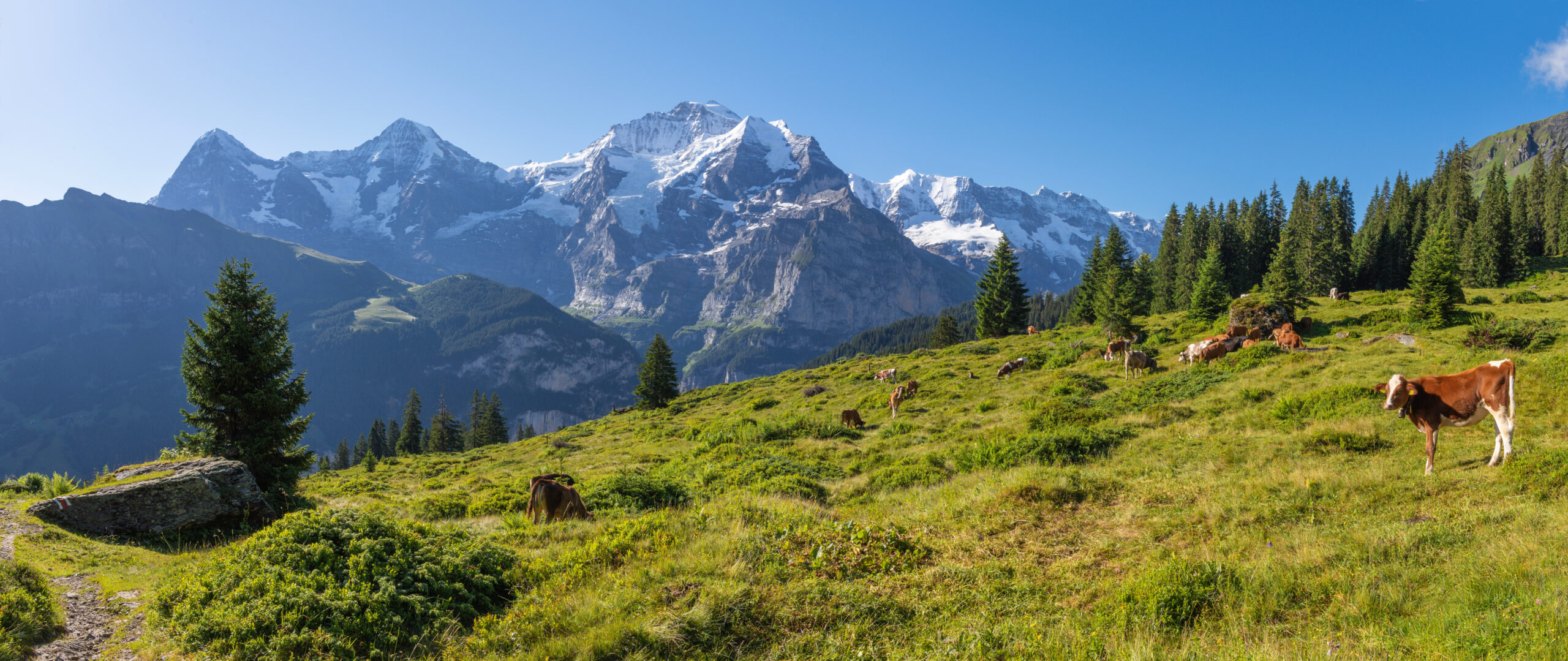
The disasters behind the “Murder Wall” name.
The nickname Mordwand plays on Nordwand (North Face), and the reputation became worldwide news after repeated accidents in the 1930s. Four dates establish the historical foundation.
The Eiger summit is first climbed
Charles Barrington reaches the summit with guides Christian Almer and Peter Bohren via the West Flank. This is the mountain’s first ascent—not a North Face ascent.
Death Bivouac
Max Sedlmayr and Karl Mehringer die in severe conditions during an early attempt on the central North Face. The events become foundational to its deadly reputation.
The Hinterstoisser / Toni Kurz tragedy
Andreas Hinterstoisser, Willy Angerer, Edi Rainer and Toni Kurz are trapped on the face during a retreat. All four die. Kurz’s desperate rescue attempt from near the railway gallery is among the best-known tragedies in Alpine history.
First successful ascent of the North Face
Anderl Heckmair, Ludwig Vörg, Heinrich Harrer and Fritz Kasparek complete the celebrated first ascent after joining forces on the wall.
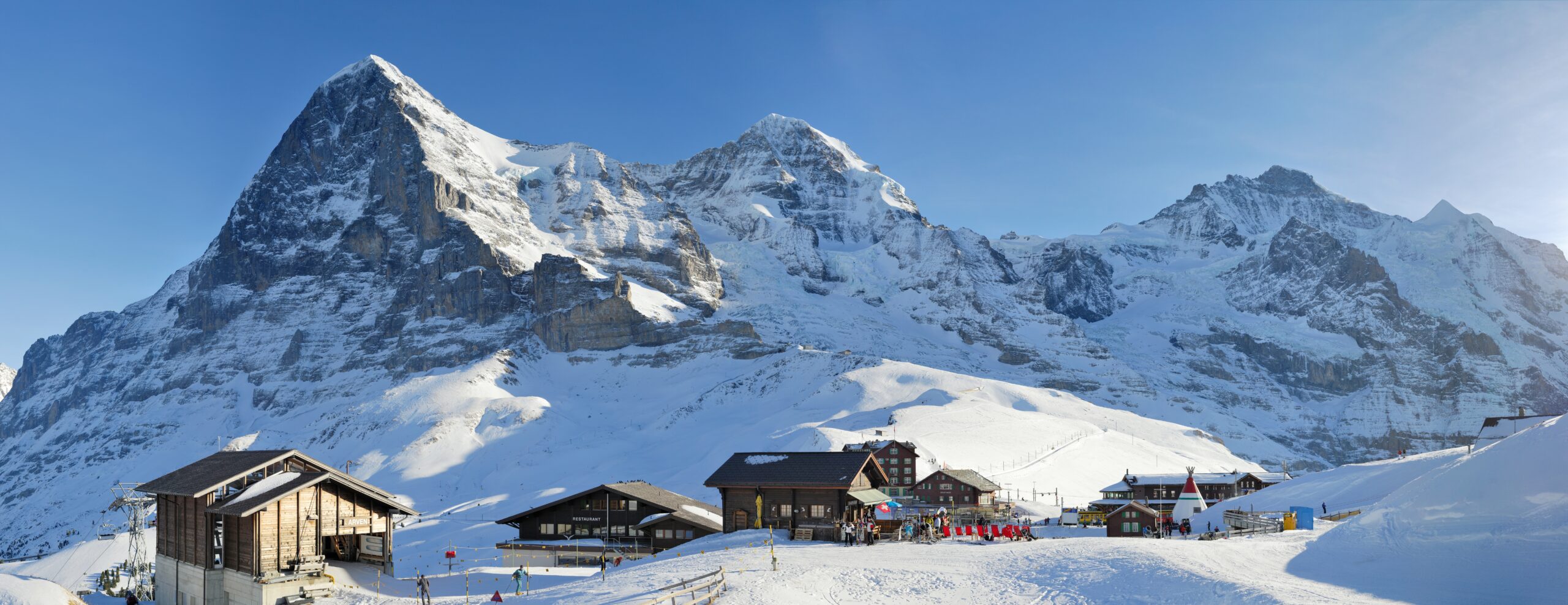
Continue the history: Read our complete 1936 Eiger disaster reconstruction for the Hinterstoisser Traverse, the retreat and Toni Kurz’s final rescue attempt. Historic mountaineering casualties deserve accurate reporting, not sensationalized percentages.
Why the Eiger North Face remains dangerous today.
Modern equipment and forecasting have changed North Face climbing, but they have not eliminated objective hazards or the technical consequences of a mistake.
Rockfall and icefall
Loose rock and overhead ice can strike without warning. Temperature shifts change the frequency and location of debris fall.
Rapid alpine storms
Wind, precipitation and whiteout conditions can turn exposed traverse sections into difficult emergencies.
Complex descents
Reversal of traverses and difficult rappels require time, equipment and clear decision-making under pressure.
Scale of the wall
The roughly 1,800 m face makes small routefinding errors and weather delays materially more consequential.
Changing seasons
Some colder windows can reduce particular rockfall hazards while introducing greater cold, ice, wind and avalanche concerns.
Extraction is uncertain
Proximity to trains, observers or helicopters does not guarantee that rescuers can reach a climber in poor weather or difficult terrain.
Check conditions rather than calendar promises. The SAC notes that the classic North Face route is now commonly attempted during the colder half of the year. That is not a blanket “best time” recommendation. Use verified local conditions, current forecasts and competent guide judgment.
To understand rope and fixed-line demands, read fixed-line and rope-team techniques. For the full Eiger experience and terrain, see Eiger route and difficulty planning.
Is the Eiger deadlier than the Matterhorn or Mont Blanc?
A raw death count does not tell us which mountain is statistically more dangerous. Mont Blanc attracts enormous numbers of people across many approaches; the Matterhorn has heavily trafficked popular ridges; the Eiger North Face is a specialized undertaking undertaken by a far smaller and differently selected group. Their route, season, time-at-risk and reporting systems differ.
| Mountain / route focus | What readers often compare | Best interpretation |
|---|---|---|
| Eiger North Face | Dozens of historically reported fatalities; no complete attempt series | Exceptional technical exposure. No responsible single percentage. |
| Matterhorn | Cumulative historical fatalities on high-traffic ridges | Compare route-specific incidents and participant volume before ranking. |
| Mont Blanc | More climbers and multiple alpine-access routes | Large absolute counts can be driven in part by far greater exposure. |
If the question is “which mountain should I climb next?”, historical North Face incidents are not the appropriate risk model. Compare current route conditions, your ability, forecast exposure and planned guides—not a ranking graphic with mismatched denominators.
See the complete Death Rates by Mountain comparison, or compare the major Alps peaks side by side.
Five checks that matter more than a death-rate headline.
- Identify your route and likely descent. The North Face, West Flank and Mittellegi Ridge require different preparation, hardware and contingency plans.
- Assess conditions within days of the climb. Review current forecast, rockfall/icefall patterns, wind, freezing level and avalanche context where relevant. Use MeteoSwiss and local professionals rather than a generic seasonal label.
- Check technical competence. Ropework, exposed scrambling, mixed climbing and emergency retreat must be appropriate to the chosen route.
- Set turnaround and backup logistics. Agree on what changes the plan and how a team communicates when weather or timing deteriorates.
- Verify medical/evacuation coverage and emergency response. Read exact climbing exclusions before buying; see our mountaineering insurance comparison to understand categories, while checking policy eligibility for the Alps specifically.
Plan for conditions, not reputation. The claim that a lower fatality count makes a route safe is incorrect; likewise, the North Face’s fame does not make every other Eiger route equivalent to the Mordwand. Hire appropriately qualified IFMGA/UIAGM mountain-guide support if your skills or route familiarity require it.
Eiger death-rate FAQ.
What is the death rate on the Eiger?
There is no reliable all-time percentage for the Eiger as a whole or its North Face, because comprehensive and consistently defined attempt records are unavailable. Published historic tallies include 64 and 72 climbers, but these are not usable modern per-attempt probabilities.
How many climbers have died on the Eiger North Face?
At least 64 is frequently cited, while a 2020 climbing-history report cited 72 deaths since 1935. The dates and reporting scopes differ; we have not verified a definitive cumulative total through 2026. Avoid treating either as a live death counter.
Why is the Eiger North Face called the Murder Wall?
“Mordwand” is a grim play on the German “Nordwand,” or North Face. Multiple fatal attempts during the 1930s, especially the 1936 Hinterstoisser tragedy, gave the wall a worldwide reputation.
What happened to Toni Kurz on the Eiger in 1936?
Toni Kurz was one of four climbers trapped on the North Face during a disastrous retreat. He survived longer than the other three and attempted to reach rescuers who had accessed the face via the railway gallery, but died before they could reach him.
Is the Eiger West Flank route safe?
It is the easiest normal-route line on the mountain, but not an easy walk. The Swiss Alpine Club rates it AD/ZS and describes a long, demanding route with exposure, routefinding, rockfall and descent hazards. Safe conditions, experience and proper equipment are essential.
Is the Eiger North Face more dangerous than the Matterhorn?
These objectives have different routes, exposure, participant volumes and historical records. Without a consistent number of attempts and matching fatality definitions, no defensible single probability comparison is possible.
What is the Eiger North Face’s best climbing season?
For the classic Heckmair route, colder periods are frequently considered because seasonal rockfall and ice conditions change. The Swiss Alpine Club notes that it is now usually climbed in the colder half-year; that does not guarantee suitability or safety on any particular date.
Can the Eiger be climbed without attempting the North Face?
Yes. The West Flank and Mittellegi Ridge are established alternatives. Both are substantial mountaineering undertakings requiring appropriate experience and weather conditions; the North Face is a different, more committing objective.
Sources, count limitations and verification.
We deliberately do not assign the Eiger a modern climber-death percentage, convert non-comparable mountain totals into an ordered fatality ranking, or claim to have independently reconstructed every event since the 1930s. Historical reported totals are labeled by publication year and scope. The Eiger is 3,967 m high according to the Swiss Alpine Club; its North Face is generally described as approximately 1,800 m.
- Swiss Alpine Club: Eiger alpinism and route classifications. Main source for route comparison, West Flank normal route, technical difficulty and seasonal description.
- Swissinfo, August 10, 2001: Eiger North Face poses ultimate challenge. Period historical toll and 1938 first ascent.
- Swissinfo, April 14, 2008: Ogre still lurks on the mountain. History and reputation.
- Lacrux, 2020: The North Face of the Eiger is far from obsolete. Alternative reported 72-death historical count.
- UKHillwalking: Rainer Rettner interview and the Eiger Nordwand. Context for the Toni Kurz rescue and 1936 tragedy.
- British Mountaineering Council: How to climb the Eiger. Mittellegi Ridge traverse, guide-level logistics and descent.
Updated October 26, 2026. This article describes the evidentiary limitations of historical death-toll reporting; it does not claim a newly certified 2026 death registry. Safety decisions require current local information and individual instruction. Images are exact-subject Eiger / Eiger-region photographs from Global Summit Guide’s own media library.
Editorial research for Global Summit Guide. About the project and editorial team. The website may earn revenue from clearly disclosed advertising on other pages; such revenue does not determine fatality estimates.
Know the route. Know the conditions.
An honest history of Eiger fatalities is only the starting point. Compare route-specific demands and current conditions before choosing a technical Alpine objective.
The North Face Has a Death Toll. It Does Not Have a Defensible Modern Per-Climber Death Rate.
The widely cited figure of roughly 64 North Face deaths is an approximate cumulative toll since serious attempts began in the 1930s. It is useful historical context, but it is not the numerator of a clean modern probability calculation because there is no complete, standardized record of every North Face attempt across the same period.
In other words, dividing 64 by an estimated number of climbers would create false precision. Attempt definitions vary, historical records are incomplete, parties retreat before formally beginning routes, and the face itself has been climbed by multiple lines under radically different conditions.
There Is No Single Eiger Risk Profile
Searchers often ask for one “Eiger death rate,” but the Eiger’s routes differ so dramatically that collapsing them into one number would hide the most useful safety information.
| Route / objective | Character | Primary risk pattern | How to interpret fatality data |
|---|---|---|---|
| North Face / Heckmair | 1,800 m committing mixed wall; elite alpine objective | Rockfall, icefall, spindrift, storm, route-finding, retreat complexity | The famous ~64-death historical toll belongs primarily to this face. No defensible all-era attempt denominator exists. |
| Mittellegi Ridge | Classic exposed ridge; SAC D | Exposure, technical movement, snow/firn conditions, weather and descent | Do not apply the North Face toll or reputation to a guided Mittellegi traverse. |
| West Flank | SAC normal/easiest route; AD | Rockfall, snow, exposure, route-finding and rapidly changing Alpine conditions | Far less extreme than the Nordwand, but no reliable mountain-wide percentage should be invented for it either. |
For current route grades and planning context, see the complete Eiger climbing guide .
Four Dates Explain the “Murder Wall” Legend
The North Face’s reputation was created before it was successfully climbed and was amplified because early attempts could be watched from Kleine Scheidegg.
First Eiger Summit
Charles Barrington with Christian Almer and Peter Bohren reached the summit by the West Flank, decades before the North Face era began.
First North Face Fatalities
Max Sedlmayer and Karl Mehringer died high on the face during a storm. Their bivouac site became known as Death Bivouac.
The Toni Kurz Disaster
Andreas Hinterstoisser, Toni Kurz, Willy Angerer and Edi Rainer all died during a retreat that became one of mountaineering’s defining tragedies.
First North Face Ascent
Anderl Heckmair, Ludwig Vörg, Heinrich Harrer and Fritz Kasparek completed the first successful ascent of the face.
Why Expert Climbers Still Die on the Nordwand
The Eiger’s danger cannot be explained by inexperience alone. Objective hazards remain even when the climber is highly skilled.
Rockfall and Icefall
The concave wall channels falling rock and ice through terrain that climbers may have little ability to avoid once committed.
Rapid Storm Development
Cloud, wind, snow and plunging temperature can transform the face faster than a party can safely reverse complex sections.
Retreat Can Be Harder Than Advance
Features such as the Hinterstoisser Traverse make retreat a technical problem of its own, especially once ropes or conditions have changed.
1,800 Vertical Metres
The wall is long enough that small delays accumulate into exposure to warmer rockfall conditions, darkness, fatigue or incoming weather.
Cold Can Be Safer
Modern North Face teams often seek frozen, stable conditions because warmer rock and ice can increase objective hazard.
Help Is Not Guaranteed
The face may be visible from the valley, but cloud, wind, terrain and location can still make rescue difficult or impossible when it matters.
Eiger vs Other Famous Mountain Death Statistics
Mountains can look “deadlier” depending on whether the statistic measures total deaths, deaths per attempt, deaths per summit, or one route rather than the whole mountain.
| Mountain | What the headline number describes | Why it is different from the Eiger |
|---|---|---|
| Eiger | Roughly 64 historical deaths concentrated on the North Face. | Route-specific toll with no complete standardized North Face attempt denominator. |
| Matterhorn | Very large cumulative death total on a heavily climbed mountain. | Participation volume is far higher; its headline statistic is mainly an absolute-count story. |
| Mont Blanc | Enormous cumulative historical toll across a heavily trafficked massif. | Huge exposure volume makes raw totals fundamentally different from the Nordwand. |
| Denali | Modern NPS season records can include registered climbers and annual outcomes. | A documented registration denominator allows different statistical questions than the historic Eiger record. |
See the full methodology on Death Rates by Mountain and the site’s Mountaineering Statistics & Data research hub.
The Eiger Research Cluster
This page owns the Eiger death-rate question. Route planning, the 1936 tragedy, current Eiger conditions and broader Alpine fatality comparisons each have separate owners.
Eiger Risk Statistics FAQ
These questions extend the page’s existing FAQ without repeating the Toni Kurz and Murder Wall answers already covered above.
Can you calculate an exact Eiger North Face death rate?
Not responsibly across the full historical period. The approximate North Face death toll is documented, but there is no complete, standardized count of every North Face attempt using one consistent definition from the 1930s to the present. Without a reliable denominator, an exact per-climber percentage would be false precision.
Do the roughly 64 Eiger deaths apply to the whole mountain?
No. The widely cited figure is associated primarily with the North Face, the Nordwand. The West Flank and Mittellegi Ridge are different routes with very different grades, traffic patterns and hazards, so the North Face toll should not be presented as the risk profile for every Eiger climb.
Is the Eiger West Flank safe?
It is far less extreme than the North Face, but “safer” does not mean safe. The West Flank is still an alpine route with exposure, rockfall, snow, route-finding and rapidly changing weather. Its risk should be evaluated separately rather than borrowing the Nordwand’s reputation.
Why can’t you compare the Eiger death toll directly with Mont Blanc or the Matterhorn?
Because the exposure populations are completely different. Mont Blanc and the Matterhorn receive far more climbing traffic, while the Eiger North Face is an elite technical wall attempted by a much smaller group. Raw death totals do not control for how many people were exposed to the risk.
Has modern equipment made the Eiger North Face safe?
No. Modern clothing, equipment, forecasting and fast climbing have improved what elite alpinists can do, but they do not remove rockfall, icefall, sudden storms, complex retreat, long exposure or the consequences of a serious error high on the wall.
What is the most useful Eiger danger statistic?
For most readers, the most useful fact is not a percentage. It is that the historical fatalities are heavily concentrated on the North Face, while the Eiger’s standard summit routes represent a different level and type of risk. Route choice is therefore more informative than a single mountain-wide death-rate number.
How Eiger Compares to the Deadliest Mountains
One peak is only one denominator. See how Eiger compares with the other deadliest mountains, or step up to the ranked overview and the full collection.
The 1936 Hinterstoisser Tragedy
The event that helped create the Eiger North Face’s grim reputation deserves a direct path from the fatality analysis.
1936The Eiger 1936: The Hinterstoisser TragedyFour climbers died during a retreat from the North Face, including Toni Kurz after an extraordinary rescue attempt.→Was this helpful?
🏔Related peaks nearby
🧭Explore & compare
Global Summit Guide is an independent mountaineering resource founded in 2026. The team combines first-hand trekking and climbing experience with in-depth research and professional health and nutrition review to help climbers choose objectives, prepare properly, and stay safe.
Health, altitude, and nutrition content is reviewed by Taylor Ludlow (Registered Nurse) and Brigg Hoopes (Nutritionist).
What We Don't Know Yet
Mountain information changes quickly. This box explains the limits of what this page can responsibly promise.
- Visa, passport, vaccination, border, insurance, and local transportation rules may change before your trip.
- Route conditions, snowpack, closures, and weather can change quickly after this page is updated.
- Permit rules, fees, quotas, and reservation windows may change between review cycles.
- Operator availability, pricing, guide ratios, and cancellation terms can change by season.
- Your fitness, altitude response, risk tolerance, and experience level may change what is safe or realistic.
Verify current conditions with official land managers, guide services, local forecasts, and current route reports before booking or climbing.
Mountaineering, rock and ice climbing, glacier travel, and high-altitude activity are inherently dangerous and can result in serious injury or death. The information on Global Summit Guide is provided for general informational and educational purposes only and is not a substitute for professional instruction, qualified guiding, proper equipment, or your own judgment and experience.
Route conditions, weather, snowpack, permits, regulations, and hazards change constantly and may differ from what is described here. Details may be incomplete, out of date, or contain errors. Always verify current information with local authorities, certified guides, and official sources before making any decision in the mountains.
Nothing on this site is medical, legal, or financial advice. Our fitness, acclimatization, altitude, and nutrition content is general in nature; consult a qualified physician before beginning any strenuous exercise program or exposing yourself to high altitude.
You are solely responsible for your own safety and decisions. To the fullest extent permitted by law, Global Summit Guide and its team accept no liability for any loss, injury, damage, or expense arising from use of, or reliance on, this information. By using this site you acknowledge these risks and accept these terms.
Some links on this site may be affiliate links. If you buy through them we may earn a small commission at no extra cost to you; this never affects our recommendations.
Global Summit Guide recommendation path
Next Best Mountain to Research
Use these recommendations to continue the right planning path instead of stopping on one page.
Use current permit, weather, route, and operator information before booking or climbing.