
Last updated November 3, 2026
How Hard Is the Matterhorn? The Grade Is Only the Beginning.
The normal Hörnli Ridge is graded AD+, but a number on a route chart cannot describe hours of exposed movement, complicated navigation and a technical descent. Learn what the climb actually demands—and how to decide whether you are ready.
Independent climbing research · Swiss Alpine Club grades and ZERMATTERS standards · Not a live conditions report
Already planning? Check the separate Hörnli Ridge conditions guide →
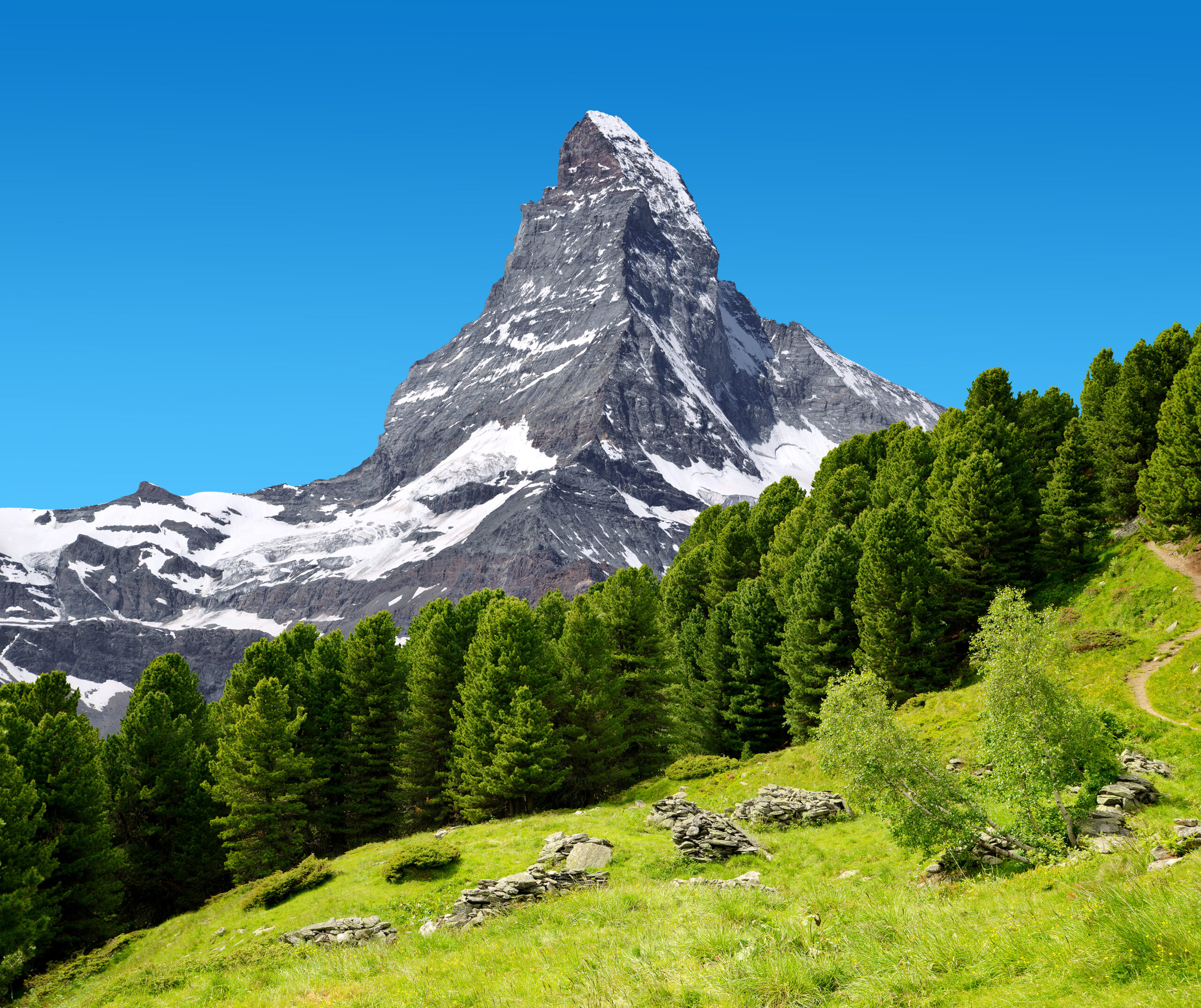
Is the Matterhorn Difficult to Climb? Yes. Even the Standard Route Is Serious.
The Matterhorn is a serious technical alpine climb—not a hike or a beginner scramble. The Swiss Alpine Club grades the Hörnli Ridge AD+ (Assez Difficile+), with approximately 1,200 vertical metres of ascent from the Hörnli Hut and reference times of 4–5 hours up and 4–5 hours down. It demands efficient movement on exposed rock, crampon skills, competent route-finding and enough stamina to descend without a large loss of precision. SAC route portal →
The danger is cumulative. A climber may manage individual moves and still be unprepared for the length, traffic, mixed snow and rock, time pressure and consequence of a mistake. This page is about difficulty and safety; for permits, hut booking, route descriptions and prices, see the complete Matterhorn climbing guide.
The 8–10-hour figure combines SAC’s separate 4–5-hour reference times; actual days vary with conditions, team pace and congestion. The local guided product describes roughly an eight-hour summit day under suitable conditions.
Next decision: Which climbs should you complete before the Matterhorn? →
AD+ Is a Starting Point, Not a Promise of Easy Climbing.
The Hörnli Ridge is the standard Swiss-side ascent. “Normal route” describes the line most people use; it does not make it nontechnical.
| Question | Hörnli Ridge answer | Why it matters |
|---|---|---|
| How hard is the grade? | AD+ in the current Swiss Alpine Club route portal | Alpine grades reflect the overall climb, not just one hard rock move. |
| How much vertical gain? | About 1,200 m from Hörnlihütte | The climb is physically long, with substantial work still ahead after reaching the summit. |
| How much time? | 4–5 hr ascent and a similar descent reference (SAC) | Route-finding delays and traffic can make a good forecast window too short. |
| What technical ability? | Local guides expect confident scrambling and ridge climbing up to about UIAA grade III | Movement must remain efficient while roped and wearing alpine equipment. |
| What environmental demands? | Cold, wind, rapid weather changes, snow and verglas possible | The same rock ridge can be a very different objective under fresh snow or ice. |
| Is there assistance on route? | Fixed ropes in some sections; Solvay emergency shelter near 4,003 m | Fixed ropes do not remove risk; the emergency bivouac is not a planned rest stop. |
The route is more than a rock-climbing grade.
The hardest isolated move may not be what defeats a capable climber. What often matters is maintaining balance and judgment across exposed rock, snow and occasionally icy surfaces for an entire summit day.
Efficiency means moving with correct rope technique, choosing the line without extended hesitation, changing equipment promptly, managing fatigue and descending steep terrain without letting the pace collapse.

Six Reasons the Matterhorn Punishes Small Mistakes.
The common problems interact. A late start causes congestion; congestion pushes a team into warming conditions; a poor descent choice increases exposure as weather deteriorates.
One wrong traverse can cost far more than five minutes.
The standard ridge includes sections where an inefficient line creates awkward climbing or leads to harder ground. Familiarity with the route is a safety resource.
Rockfall is not fully controllable.
Rock loosened by weathering or other parties can strike below. Warming and changing snow and ice conditions may alter rockfall exposure.
There is little margin for an unprotected slip.
Long stretches of exposed rock and mixed terrain demand consistently deliberate movement. A single lapse matters more than on a low-angle training peak.
Other teams can change your schedule.
Passing, waits and differing rope-team speeds can lengthen the route. A good party plans for uncertainty rather than assuming a clear ridge.
A familiar summer route can transform overnight.
Fresh snowfall or a glaze of ice increases difficulty and slows every transition. Photographs or advice from yesterday are not a current conditions report.
The most consequential decisions can come after the summit.
Tired legs, poorer concentration and diminishing time margins make the return a primary hazard rather than an afterthought.

The practical response is a pre-agreed turnaround rule. Decide what conditions, timing or team performance will stop the ascent before excitement and sunk costs complicate the decision. See the mountain navigation and emergency-communication guide for the broader planning system.
Getting Down the Matterhorn Is Not a Simple Walk Back.
The summit is not the end of the technical work. A credible attempt budgets time, energy, weather and rope-team attention for the full return to the hut.
Plan the descent before the ascent.
SAC gives approximately 4–5 hours for the Hörnli Ridge descent as well as 4–5 hours for the climb up. The descent retraces complex, exposed sections where tiredness can make every route decision harder.
On steep terrain, down-climbing is a separate skill. A climber may feel comfortable following a guide upward but struggle with controlled foot placements, balance, crampon transitions and rope management coming down.
Teams should understand their guide’s or leader’s time checkpoints, the expected margin for delay and what a turnaround means in practice.
Four descent questions before leaving the hut
- Can every climber descend the exposed terrain efficiently?
- What is the latest safe turnaround time for this party?
- How will a delay affect deteriorating weather and rockfall exposure?
- What is the fallback if a member is too slow or conditions change?

Before choosing a date: check the separate Matterhorn Hörnli conditions page →
Good Matterhorn Conditions Are About More Than a Sunny Forecast.
A dry forecast over Zermatt is insufficient. The useful question is what happened on the ridge overnight and what is expected while your party is still descending.
| Variable | What climbers should assess | Why it changes the decision |
|---|---|---|
| Recent precipitation | New snow, ice and fresh deposits on exposed ledges | Dry-rock moves can become slower, more insecure mixed terrain. |
| Freezing level | Overnight freeze, daytime thaw and temperature trend | Surface changes and rockfall exposure can alter the safety margin. |
| Ridge wind | Wind speed, gusts and projected timing at exposed elevations | Exposure magnifies the consequence of balance problems. |
| Cloud and visibility | Cloud base, fog and route visibility | Route-finding is especially costly when landmarks disappear. |
| Thunderstorms | Development time compared with the complete round-trip duration | The party must leave exposed terrain before the hazardous period, not merely before the summit. |
| Traffic and pace | Expected number of other parties and your own proven speed | Queueing can consume a good weather window. |

A forecast cannot certify climbability. Cross-check a specialist alpine forecast with current guide or hut information and direct observations. If the line is not safe for your ability in the conditions actually present, move the objective to another day.
Read next: Mountain Weather for Climbers—how to turn a forecast into a route decision →
Who Is Actually Ready to Climb the Matterhorn?
ZERMATTERS’ published readiness standard is demanding: several previous 4,000-metre peaks, strong acclimatization, confident ice axe and crampon use, and comfort on exposed rock and ice terrain up to roughly UIAA grade III.
You may be approaching readiness if…
- You have multiple real alpine ascents, not just hiking fitness.
- You can move confidently on exposed, sometimes loose rock.
- Crampons on mixed snow and rock are familiar, not new.
- You can handle an 8–10-hour technical alpine day while acclimatized.
- You have practiced descending exposed terrain with suitable rope systems.
- You accept your guide’s or leader’s decision to turn around.
You are likely not ready yet if…
- The Matterhorn would be your first technical alpine climb.
- You only know rock climbing indoors or on short single-pitch routes.
- Using crampons, an ice axe or a rope on steep ground is unfamiliar.
- Exposure makes your movement slow or unreliable.
- Your fitness depends on an optimistic summit-day time.
- You would see a canceled summit as unacceptable rather than normal.
A guide is not a substitute for the prerequisites.
The normal guided Hörnli experience is commonly run one client to one mountain guide. That reflects the technical and exposed nature of the climb—not a guarantee of success. Local guides may cancel a summit attempt if fitness, technique or current conditions do not meet their safety threshold.
Independent climbers need to supply the route knowledge, rope-team technique, protection decisions, weather judgment and efficient descent that a guide would otherwise lead.
For a broader decision about guiding models, see guided versus independent mountaineering.

Train for Efficient Movement—Not Just a Bigger VO₂ Max.
Fitness is necessary but insufficient. The most useful preparation is a record of long, technical mountain days completed accurately and efficiently.
Build long-day endurance.
Practice sustained elevation gain, downhill load tolerance and stable footing when fatigued. An efficient descent is the objective, not just fast upward movement.
Become fluent in alpine movement.
Gain supervised experience with crampons, ice axe, exposed scrambling, appropriate rope technique and mixed ground. Transitions should be routine.
Prove speed on real routes.
Practice route-finding, timing and decision-making on technical objectives before attempting the Hörnli Ridge. Choose progression climbs for the skills they demonstrate, not their names.
Detailed plan: Matterhorn training for the Hörnli Ridge → · What to climb before Matterhorn →
What about Mont Blanc?
Mont Blanc’s normal routes can build endurance, altitude experience and glacier skills. But summiting Mont Blanc does not automatically prove the sustained exposed rock movement, route recognition and technical descent needed for the Matterhorn. Compare the objectives in Mont Blanc vs Matterhorn.
Check Your Alpine Kit Before the Trip.
Footwear, helmet, harness, weather protection, gloves and a layered clothing system must fit the route, conditions and your guide’s equipment list. Browse relevant outdoor gear without substituting shopping for technical preparation.
Affiliate disclosure: Global Summit Guide may earn a commission if you buy through partner links, at no additional cost to you. Gear recommendations and climbing-readiness judgments are editorially independent. For the full equipment breakdown, see the Matterhorn gear list.
How Dangerous Is the Matterhorn, Really?
The mountain has a severe accident history. The important distinction is between a cumulative historical toll and a defensible probability for one particular climb.
Official historical benchmark: Zermatt’s Grave of the Unknown Climber memorial describes more than 500 deaths since 1865. It is a historical figure, not a live counter and not a “500 out of X” personal death-rate calculation. An individual’s risk depends on route, season, weather, training, judgment and other factors that this total alone cannot resolve. Official Zermatt memorial →
Four members of the successful first-ascent team died during the descent in 1865. That history remains a useful reminder: the descent has always been central to Matterhorn safety. Counts from different publications can differ with the reporting date and the inclusion criteria, and a precise per-climber rate needs a defensible denominator.
See the full historical analysis: Matterhorn Death Rate →

The Hut, the Guide and the Actual Climbing Season.
Hörnlihütte · about 3,260 m
The Hörnli Hut provides the typical Swiss-side starting point. Reserving accommodation is a logistics step, not proof that summit conditions will be safe or that you meet the technical requirements.
Normal guiding season · mid-July to mid-September
ZERMATTERS lists mid-July to mid-September for its guided Hörnli product, explicitly dependent on the conditions on the ridge and summit. Dates are an operating window, not a safety guarantee.
Before paying a nonrefundable deposit, ask how the operator assesses experience, what preparation climbs it expects, how it handles cancellations, and what equipment and travel assumptions apply. Read current terms with the provider; prices and inclusions change.
Understand Rescue and Evacuation Before Booking.
Medical evacuation, field rescue and travel insurance are different services. Check activity eligibility, altitude provisions, operational limits and exclusions against your Matterhorn itinerary. No membership can promise rescue in every situation.
Partnership disclosure: Global Summit Guide is a Global Rescue Safe Travel Partner. This commercial relationship does not influence our climbing-readiness standards or guide recommendations. Coverage, membership and separate insurance products are governed by their current terms.
Matterhorn Difficulty and Safety FAQ.
How hard is climbing the Matterhorn?
Hard. The Hörnli Ridge normal route is AD+ under the Swiss Alpine Club scale. It requires fast, confident technical movement, route-finding, mixed snow and rock skills, excellent fitness, and a demanding descent.
Can a beginner or a very fit hiker climb the Matterhorn?
Fitness alone is not sufficient. The local ZERMATTERS standard expects previous 4,000-metre alpine peaks, acclimatization, competent ice axe/crampon movement and exposed ridge climbing experience to about UIAA III.
What is the easiest Matterhorn route?
The Hörnli Ridge is the commonly used normal route on the Swiss side, graded AD+. The Italian Lion Ridge is also an established normal route. Neither is a beginner route. Other ridges can be considerably more committing.
How long does the Hörnli Ridge take?
The Swiss Alpine Club lists around 4–5 hours for the ascent and 4–5 hours for the descent from the Hörnli Hut. Local guided timings and actual trip duration depend heavily on conditions and party speed.
Is the Matterhorn harder than Mont Blanc?
For normal-route technical climbing, generally yes: the Matterhorn requires more continuous exposed rock and mixed movement, while Mont Blanc normal routes emphasize a different combination of glacier travel, altitude and endurance. Neither should be treated as a trivial climb.
Do you have to hire a guide for the Matterhorn?
An independent climb is possible for appropriately experienced alpinists; a guide is not presented here as a blanket legal requirement. Guided Hörnli ascents commonly use one client per guide, and a guide does not remove the need for strong prior technical experience.
When is the Matterhorn climbing season?
The usual Swiss guided summer window is roughly mid-July to mid-September, depending on route conditions. Fresh snow, ice, wind and unstable weather can close the practical window even within that period.
How many people have died on the Matterhorn?
Zermatt’s official memorial description states more than 500 deaths since 1865. This is a historical cumulative toll and cannot be used alone as a reliable individual fatality percentage.
Why is the descent so dangerous?
The descent reverses exposed rock and mixed passages when fatigue, route-finding mistakes, weather or queues may be more severe than earlier in the day. A summit is not a complete ascent until the team gets safely back down.
Can fixed ropes make the Matterhorn safe?
No. Equipped sections can help on specific terrain, but they do not eliminate rockfall, exposure, congestion, route-finding errors, icy rock, weather or the demands of the descent.
Turn This Difficulty Guide Into an Actual Plan.
Choose the next article according to the question you still need to solve, not a generic list of other stories.
Primary References and Photo Credits.
This page prioritizes specialist route-grade and guide-readiness sources rather than generic travel descriptions. It does not purport to report today’s snow, rockfall or weather conditions.
- Swiss Alpine Club — Matterhorn route portal: AD+ on Hörnli, 1,200 m ascent, 4–5-hour ascent and descent benchmarks.
- ZERMATTERS — Matterhorn Hörnli guided ascent: prerequisites, UIAA III, one client per guide, hut and operating-season details.
- Zermatt Tourism — Matterhorn ascent: history, normal ridges, one-to-one guiding and general climbing context.
- Swiss Alpine Club — Solvay emergency bivouac: shelter near 4,003 m is intended for genuine emergencies.
- Zermatt Tourism — Grave of the Unknown Climber: official more-than-500-deaths historical context.
Images: Global Summit Guide licensed stock photographs; simonsimages (CC BY 2.0), Freesolo Adventures (CC0), Simon (CC0), Blueoceansky1234 (CC0), and Mikhail Hanief (CC BY-SA 4.0), via Wikimedia Commons. Image credits and CC license links appear beside each applicable image. Wikimedia images depict the real Matterhorn and its ridges, but may reflect different seasons and do not indicate current route conditions.
Build the Skills. Read the Conditions. Be Ready to Turn Around.
A successful Matterhorn objective starts by being realistic about your current ability—not by reserving a summit date and hoping the route is kind. Use the next guide to close the biggest gap in your preparation.
Matterhorn planning · Official source check
Before You Attempt the Matterhorn: Verify These Four Things
The Hörnli Ridge’s published AD+ grade describes the route, not its condition on your climbing day. Use these primary sources when planning, and obtain a recent, first-hand route report from a qualified local guide before committing.
Confirm the route you intend to climb
The Swiss Alpine Club lists the Hörnli normal route as AD+, with roughly 1,200 m of ascent and reference times of 4–5 hours up and 4–5 down. These are benchmarks, not guaranteed times.
Swiss Alpine Club route portalMatch your experience to the route
ZERMATTERS expects previous alpine 4,000 m peaks, efficient movement on exposed terrain, grade III rock-climbing ability and confident use of crampons and ice axe.
ZERMATTERS Matterhorn requirementsVerify dates and accommodation directly
As checked November 3, 2026, the official Hörnlihütte website lists June 25–September 20, 2027 for staffed operations, with reservations possible from April 1. Hut opening does not certify summit safety.
Official Hörnlihütte dates and bookingCheck more than the valley forecast
Review current Swiss weather warnings and mountain forecasts, then request recent information about upper-ridge snow, verglas, wind, rockfall, fixed ropes and the descent from your guide.
MeteoSwiss forecasts and warningsCritical distinction: a reserved hut, a clear forecast or a published route grade does not establish that the Matterhorn is safe to climb. If current, reliable route observations are unavailable, the condition is unverified. Turnaround decisions must account for the full technical descent.
Source and calendar references checked November 3, 2026. Details may change. For GSG’s dated status reporting, see the Matterhorn Hörnli Ridge conditions guide. This section is editorial reference material, not a live route report or climbing clearance.
Plan the Matterhorn: Conditions, Route, Risk & Training
The Matterhorn is a full planning problem – conditions, route, exposure and fitness. Compare it inside the Alps, or go deeper on each piece below.
Was this helpful?
🏔Related peaks nearby
🧭Explore & compare
Global Summit Guide is an independent mountaineering resource founded in 2026. The team combines first-hand trekking and climbing experience with in-depth research and professional health and nutrition review to help climbers choose objectives, prepare properly, and stay safe.
Health, altitude, and nutrition content is reviewed by Taylor Ludlow (Registered Nurse) and Brigg Hoopes (Nutritionist).
What We Don't Know Yet
Mountain information changes quickly. This box explains the limits of what this page can responsibly promise.
- Visa, passport, vaccination, border, insurance, and local transportation rules may change before your trip.
- Route conditions, snowpack, closures, and weather can change quickly after this page is updated.
- Permit rules, fees, quotas, and reservation windows may change between review cycles.
- Operator availability, pricing, guide ratios, and cancellation terms can change by season.
- Your fitness, altitude response, risk tolerance, and experience level may change what is safe or realistic.
Verify current conditions with official land managers, guide services, local forecasts, and current route reports before booking or climbing.
Mountaineering, rock and ice climbing, glacier travel, and high-altitude activity are inherently dangerous and can result in serious injury or death. The information on Global Summit Guide is provided for general informational and educational purposes only and is not a substitute for professional instruction, qualified guiding, proper equipment, or your own judgment and experience.
Route conditions, weather, snowpack, permits, regulations, and hazards change constantly and may differ from what is described here. Details may be incomplete, out of date, or contain errors. Always verify current information with local authorities, certified guides, and official sources before making any decision in the mountains.
Nothing on this site is medical, legal, or financial advice. Our fitness, acclimatization, altitude, and nutrition content is general in nature; consult a qualified physician before beginning any strenuous exercise program or exposing yourself to high altitude.
You are solely responsible for your own safety and decisions. To the fullest extent permitted by law, Global Summit Guide and its team accept no liability for any loss, injury, damage, or expense arising from use of, or reliance on, this information. By using this site you acknowledge these risks and accept these terms.
Some links on this site may be affiliate links. If you buy through them we may earn a small commission at no extra cost to you; this never affects our recommendations.
Global Summit Guide recommendation path
Next Best Mountain to Research
Use these recommendations to continue the right planning path instead of stopping on one page.
Use current permit, weather, route, and operator information before booking or climbing.
Explore Travel Options for Your Destination
Once your mountain, dates and route are taking shape, compare flights, hotels and other travel options that fit the trip.
Affiliate link. We may earn a commission at no additional cost to you.