
Last updated September 21, 2026
Mount Roraima Trekking Guide: Route, Cost, Safety & Best Time
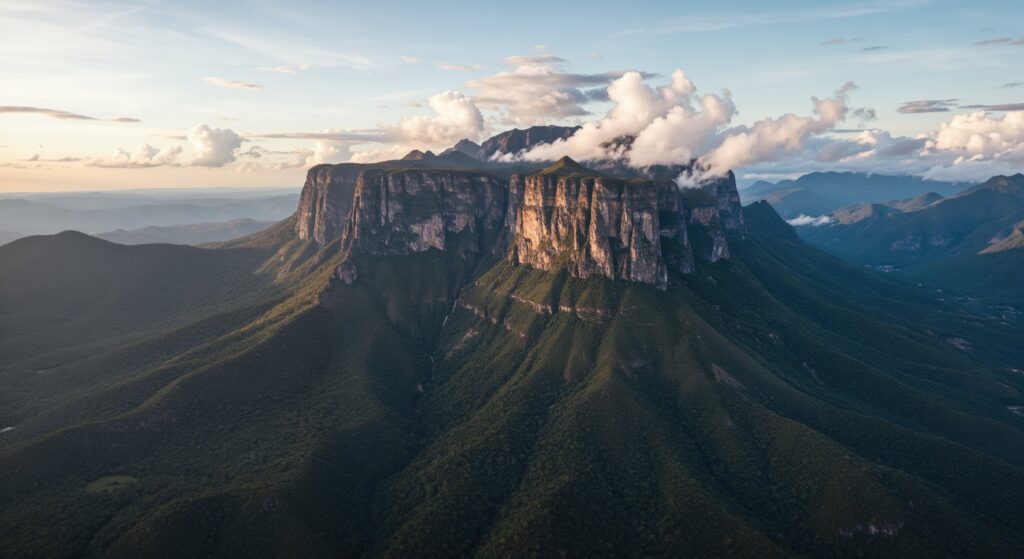
Mount Roraima is not a conventional summit climb. The classic journey crosses open savanna from the Pemón community of Paraitepuy, passes the Río Tek and Río Kukenán, climbs a natural ramp through the tepui’s enormous cliffs, and then becomes a multi-day exploration of one of the world’s strangest mountain plateaus.
What Is the Mount Roraima Trek Really Like?
The standard Mount Roraima trek is a strenuous multi-day hiking expedition rather than a technical climb. Most trekking groups approach from Venezuela, beginning at Paraitepuy and hiking through the Gran Sabana to Río Tek, the mountain base and finally the natural ramp that reaches the summit plateau.
The climb itself is only part of the experience. Once on top, trekkers enter a maze of black sandstone formations, pools, valleys, waterfalls and viewpoints. Longer itineraries allow enough time to explore the plateau instead of treating the trip as a simple touch-the-top-and-leave summit.
There Is One Normal Tourist Trek—not Four Different Summit Routes.
The established trekking journey begins from Paraitepuy in Venezuela. The Río Tek camp, base camp and plateau are stages of the same route, not separate climbing routes.
| Stage | Approximate character | Main challenge | What changes |
|---|---|---|---|
| Paraitepuy → Río Tek | About 12 km through open Gran Sabana | Heat, sun, rolling terrain, pack weight | The tepuis dominate the horizon but the terrain remains mostly open savanna. |
| Río Tek → Base Camp | About 13 km with river crossings and increasingly steep terrain | Río Tek / Kukenán crossings, mud and accumulated fatigue | The cliff becomes the central route problem. |
| Base → La Rampa → Plateau | Steep natural weakness through the cliff system | Wet rock, waterfalls, slippery footing and roughly 800 m of ascent | The trek changes from savanna approach to steep mountain travel. |
| Plateau exploration | Rough sandstone, pools, labyrinths and open plateau walking | Fog, rain, navigation, slippery rock and long exploratory days | There is no single obvious summit trail across the entire top. |

The Normal Route Uses the Mountain’s Rare Natural Weakness.
Roraima’s cliffs look impossible from the Gran Sabana. The standard trek succeeds because La Rampa cuts diagonally through the wall, creating a steep but normally non-technical passage to the summit plateau.
Photo: Tadashi Okoshi / Wikimedia Commons · CC BY 2.0
A Better 7-Day Mount Roraima Itinerary.
Six-day versions exist, but a seventh day gives the trip more value because it allows meaningful exploration on the plateau rather than making the top merely a turnaround point.

Rain Is Part of the Route, Not Merely a Forecast Problem.
Water pours from the plateau over the cliff system and across parts of the ascent line. Even in the drier season, expect wet rock, spray and rapid changes in visibility.
Photo: Alexcocopro / Wikimedia Commons · CC BY-SA 4.0
Reaching the Plateau Is Only the Beginning.
Mount Roraima is unusual because its most memorable landscapes sit across the top rather than at one obvious pointed summit.
Rock Labyrinths
Wind and water have sculpted the sandstone into towers, corridors, overhangs and isolated forms that make the top feel like a separate landscape.
Pools & Drainage
Standing pools, streams and waterfalls are part of the summit environment. Waterproof organization remains important after the main climb is over.
Triple Point
The Venezuela–Brazil–Guyana boundary marker is a popular extended objective, but reaching it can require a substantial additional plateau walk.
Maverick Rock
The plateau’s highest point is commonly identified near 2,810 meters. Not every standard itinerary visits it.

Roraima’s Summit Is a Landscape, Not a Point.
The plateau mixes exposed sandstone, isolated plant communities, water channels and rock formations across a broad surface that can become surprisingly difficult to read when fog closes in.
Photo: Edmilson Sanches / Wikimedia Commons · CC BY-SA 3.0
How Do You Get to Mount Roraima?
Although the plateau touches Venezuela, Brazil and Guyana, the established tourist trekking route begins from Venezuela. Brazil is often used as the international access corridor—not as the summit trail.
Mount Roraima Access Map.
The summit sits near the international tripoint, but the normal trekking corridor lies on the Venezuelan side of the Gran Sabana.
When Is the Best Time to Trek Mount Roraima?
The goal is not to find a completely dry season—Roraima can be wet at any time. The useful question is when river levels, mud and sustained rain are generally less disruptive.
| Period | General pattern | Advantages | Watch-outs |
|---|---|---|---|
| December–February | Generally driest core window | More manageable river crossings and trail conditions on average | Rain, cloud and summit moisture still occur |
| March–April | Transition | Can still produce excellent trekking windows | Rain frequency generally increases |
| May–August | Wetter | More dramatic waterfalls and lush Gran Sabana landscapes | Mud, high rivers, wet gear and reduced plateau visibility |
| September–November | Variable / often wet | Trips still operate | Do not assume conditions will resemble the dry-season trek |

A Clear View From La Ventana Is Never Guaranteed.
Cloud can arrive rapidly and erase the enormous drop beyond the plateau edge. Build enough time into the itinerary that one foggy afternoon does not become your only chance to see the mountain’s major viewpoints.
Photo: Jailsoncmjunior / Wikimedia Commons · CC BY-SA 3.0
How Much Does It Cost to Trek Mount Roraima?
There is no useful single “average” because some packages begin in Santa Elena, others include transport from Boa Vista or Puerto Ordaz, and premium products add hotels, equipment and wider travel logistics.
| 2026 example | Published price | Trip style | What the number teaches |
|---|---|---|---|
| Regional 6-day package | US$725 example | Guided trek with ground logistics and camping support | Local/regional products can remain below US$1,000 before international travel. |
| Regional 7-day package | US$835 example | Additional trekking / plateau time | An extra day may add more value than choosing the shortest possible product. |
| Premium 8-day product | About US$1,999 published launch example | More complete expedition logistics and equipment support | Service level can double the headline price without changing the mountain. |
| Brazil-based package | R$7,850+ published 2026 example | Boa Vista-oriented international logistics | Useful for travelers who want the Brazil border crossing handled inside the package. |

A Cheap Six-Day Trek and a Fuller Eight-Day Expedition Are Not the Same Product.
Compare how long you actually spend on top, which landmarks are realistic, how much porter support is included and where the operator’s responsibility begins and ends.
Photo: Misstetei / Wikimedia Commons · CC BY-SA 3.0
The Biggest Planning Issue in 2026 Is Not the Technical Difficulty.
The standard Mount Roraima trek enters rural Bolívar State, Venezuela. As of June 27, 2026, the U.S. Department of State lists Venezuela at Level 3: Reconsider Travel and specifically advises U.S. citizens not to travel to rural areas of Bolívar State because of crime and kidnapping risk.
That is government travel advice for U.S. citizens, not a statement that every trekking expedition encounters an incident. It does mean that travelers should treat country-level security, border procedures, medical evacuation, insurance and operator vetting as core parts of the Mount Roraima decision.
Is Mount Roraima Hard to Climb?
It is technically straightforward on the classic route, but “non-technical” is not the same as easy.
Low
The standard route does not normally require ropes, pitched climbing, glacier travel or crampons.
Moderate–High
Multiple consecutive trekking days, a loaded pack, river crossings and a steep plateau ascent create cumulative fatigue.
High
Mud, rain, humidity, sun exposure, slippery rock and cold wet summit nights are the real difficulty multipliers.
Moderate
At about 2,810 meters the plateau is high enough for some travelers to notice altitude, but it is not the main challenge for most trekkers.
Pack for Persistent Moisture, Not High-Altitude Mountaineering.
Roraima does not need an ice axe and crampons on the standard trek. The defining equipment problem is keeping critical gear functional while moving through rain, rivers and mud for days.
Double-Protect Critical Gear
- Waterproof shell
- Pack liner
- Dry bags for sleep clothing and electronics
- Quick-drying trekking layers
Expect Them to Get Wet
- Well-tested trekking footwear
- Multiple socks
- Blister care
- Camp footwear
Prepare for Cold & Fog
- Warm midlayer
- Dry sleeping clothing
- Headlamp
- Reliable rain shell
Gran Sabana Exposure
- Sun hat
- Sunscreen
- Eyewear
- Accessible water system
Confirm What Is Supplied
- Tent
- Sleeping bag
- Sleeping pad
- Cooking equipment
Resolve Porter Support
Ask exactly how much personal weight the porter service covers and what remains in your own daypack before packing.
Plan Around Pemón-Guided Access.
Current 2026 commercial itineraries consistently organize the trek with Pemón guides, community coordination, porters and park formalities. Independent walk-up access should not be assumed.
Verify the Contracting Company
Know who receives your money, who operates inside Venezuela and who is responsible if the border or route status changes.
Ask Who the Pemón Guide Is
Current local route knowledge matters on the plateau, at river crossings and when weather changes the itinerary.
Ask Before Departure
Confirm communications, evacuation procedure, first-aid responsibility and what happens if a trekker cannot continue.
Roraima Is More Than an Adventure Product.
The trek begins in Pemón territory and enters a globally significant protected landscape. Canaima National Park is a UNESCO World Heritage property recognized for its immense tepui systems, geology and biodiversity.
Follow your guide’s current rules for camps, waste and plateau access. Do not remove crystals, rocks, plants or other natural material from the summit. Treat the plateau as a protected ecosystem rather than a collection of souvenirs.
Isolation Is Why the Plateau Is Special—and Why It Is Vulnerable.
Roraima’s strange geology and isolated ecological communities are the very features that attract trekkers. They are also the reason visitors should minimize disturbance and follow the guide’s current conservation rules.
Photo: Edmilson Sanches / Wikimedia Commons · CC BY-SA 3.0
Mount Roraima Trek FAQ.
The questions that matter most before choosing dates, an operator and a travel route.
How long does the Mount Roraima trek take?
Most guided expeditions take about six to eight trekking days. Six days can complete the classic journey, while seven or eight days usually allow more time to explore the summit plateau.
Is Mount Roraima difficult to climb?
The classic route is non-technical, but it is physically demanding. Multiple trekking days, mud, river crossings, rain, slippery terrain and the steep ascent through La Rampa make it a serious multi-day hike.
Do you need climbing gear for Mount Roraima?
Normally no technical climbing equipment is required on the classic Paraitepuy route. Waterproof trekking equipment, reliable footwear, warm summit layers and good camp organization matter much more.
What is the best time to trek Mount Roraima?
December through March or early April is generally the best starting point for planning because rainfall and river levels tend to be more manageable. Rain and fog remain possible at any time of year.
Can you climb Mount Roraima from Brazil?
The mountain includes Brazilian territory, but the established tourist trekking route begins in Venezuela. Brazil is commonly used as the travel corridor: Boa Vista to Pacaraima, across the border to Santa Elena de Uairén, and then to Paraitepuy.
Can you climb Mount Roraima from Guyana?
Guyana shares part of the plateau, but it does not provide the standard tourist trekking access used by normal guided expeditions. The classic route is from Paraitepuy in Venezuela.
Do you need a guide for Mount Roraima?
Current 2026 commercial expeditions use Pemón guides and arrange community and park access as part of the trip. Travelers should plan around guided access and verify the current INPARQUES and community requirements before departure.
How much does a Mount Roraima trek cost?
Published 2026 products vary widely according to starting point and inclusions. Current examples range from roughly US$725–835 for some regional six- and seven-day packages to around US$1,999 or more for premium logistics. Brazil-based packages may be quoted separately in Brazilian reais.
Is Mount Roraima safe to visit in 2026?
Mountain hazards include river crossings, heavy rain, slippery terrain, fog and remote evacuation. Travelers must also consider current country-level security advice. As of June 27, 2026, the U.S. State Department lists Venezuela at Level 3 and advises U.S. citizens not to travel to rural Bolívar State, which includes the standard Roraima trekking region.
Is Mount Roraima inside Canaima National Park?
The Venezuelan portion of Mount Roraima lies within Canaima National Park, a UNESCO World Heritage property covering roughly three million hectares of southeastern Venezuela.
Put Mount Roraima in the Right South America Context.
Roraima belongs with expedition-style trekking mountains, not with technical Andes climbing simply because both appear on mountain lists.
Recheck Access Before You Pay a Deposit.
Border conditions, security advice, park procedures and operator logistics can change faster than the mountain itself. These are useful starting points for final verification.
- UNESCO World Heritage Centre — Canaima National Park
- U.S. Department of State — Venezuela Travel Advisory
- Geological Survey of Brazil — Mount Roraima route geography
- Habitat Expedições — current Brazil-to-Venezuela access logistics
- CUMBRE Expeditions — current 2026 Roraima expedition example
Last researched: September 21, 2026. Check the current travel advisory for your nationality, Venezuelan entry rules, border operations and your operator’s latest route confirmation before departure.
Come for the Plateau—not Just the Summit.
Mount Roraima is a rare mountain where elevation and technical difficulty explain very little. The real experience is seven days of savanna, rivers, rain, Pemón-guided travel, a cliff ascent and time inside a landscape that feels completely separate from the world below.
Mount Roraima & the Peaks of South America
Roraima’s flat-topped tepui is unlike anything in the Andes. Explore South America’s summits and the Andes collection below.
Was this helpful?
🏔Related peaks nearby
🧭Explore & compare
Global Summit Guide is an independent mountaineering resource founded in 2026. The team combines first-hand trekking and climbing experience with in-depth research and professional health and nutrition review to help climbers choose objectives, prepare properly, and stay safe.
Health, altitude, and nutrition content is reviewed by Taylor Ludlow (Registered Nurse) and Brigg Hoopes (Nutritionist).
What We Don't Know Yet
Mountain information changes quickly. This box explains the limits of what this page can responsibly promise.
- Route conditions, trailhead access, crevasse exposure, stream crossings, and rescue access may vary from published planning guidance.
- Total trip cost can change with flights, lodging, guide pricing, permits, gear rentals, transportation, and exchange rates.
- Visa, passport, vaccination, border, insurance, and local transportation rules may change before your trip.
Verify current conditions with official land managers, guide services, local forecasts, and current route reports before booking or climbing.
Mountaineering, rock and ice climbing, glacier travel, and high-altitude activity are inherently dangerous and can result in serious injury or death. The information on Global Summit Guide is provided for general informational and educational purposes only and is not a substitute for professional instruction, qualified guiding, proper equipment, or your own judgment and experience.
Route conditions, weather, snowpack, permits, regulations, and hazards change constantly and may differ from what is described here. Details may be incomplete, out of date, or contain errors. Always verify current information with local authorities, certified guides, and official sources before making any decision in the mountains.
Nothing on this site is medical, legal, or financial advice. Our fitness, acclimatization, altitude, and nutrition content is general in nature; consult a qualified physician before beginning any strenuous exercise program or exposing yourself to high altitude.
You are solely responsible for your own safety and decisions. To the fullest extent permitted by law, Global Summit Guide and its team accept no liability for any loss, injury, damage, or expense arising from use of, or reliance on, this information. By using this site you acknowledge these risks and accept these terms.
Some links on this site may be affiliate links. If you buy through them we may earn a small commission at no extra cost to you; this never affects our recommendations.
Global Summit Guide recommendation path
Next Best Mountain to Research
Use these recommendations to continue the right planning path instead of stopping on one page.
Use current permit, weather, route, and operator information before booking or climbing.
Explore Travel Options for Your Destination
Once your mountain, dates and route are taking shape, compare flights, hotels and other travel options that fit the trip.
Affiliate link. We may earn a commission at no additional cost to you.