
Last updated April 23, 2026
Climbing Ismoil Somoni Peak: The Complete 2026 Borodkin Spur, Pamirskoe Plateau & Former Communism Peak Guide
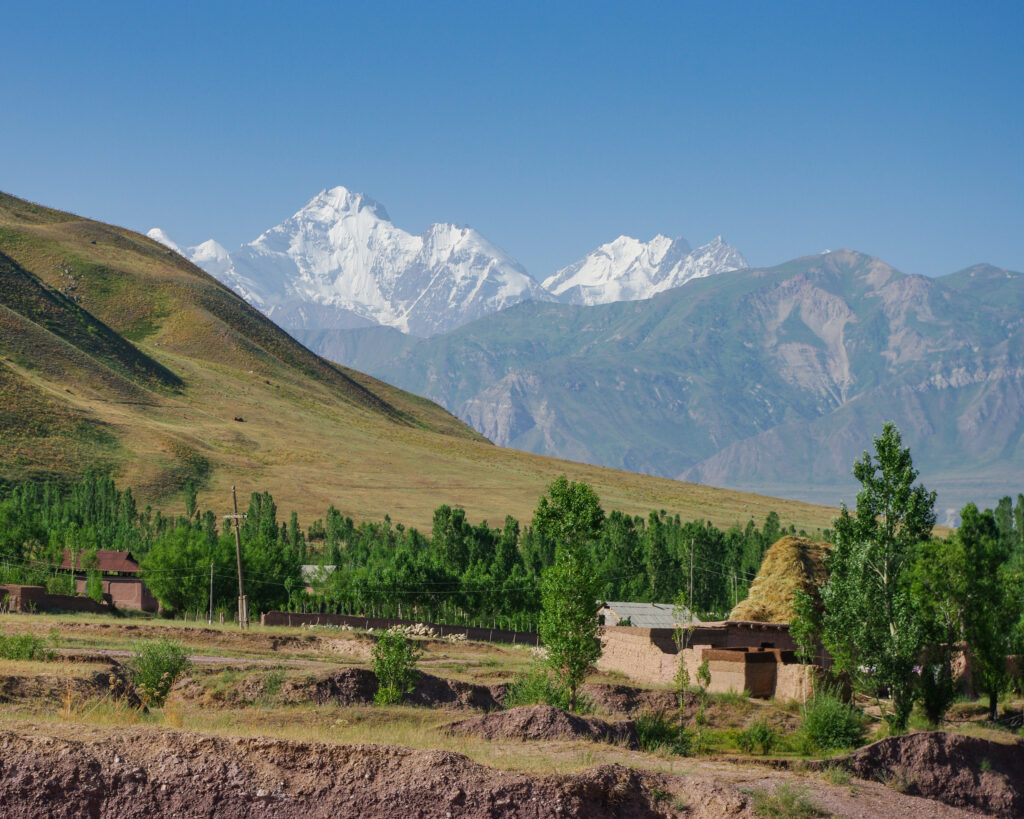
Ismoil Somoni Peak rises to 7,495 meters (24,590 ft) in the Academy of Sciences Range of the Pamir Mountains. Specifically, this summit stands as the highest mountain in Tajikistan, the highest point in the former USSR, and the highest peak in the former Russian Empire. Additionally, it ranks as one of the two most technically demanding Snow Leopard peaks alongside Pobeda.
The peak carries an extraordinary history of four different official names. Originally identified as Pik Garmo until 1933 from the 1913 Willi Rickmer Rickmers expedition. Subsequently, Soviet authorities renamed it Stalin Peak (Pik Stalina) following the 1933 first ascent. Moreover, Nikita Khrushchev renamed it Communism Peak (Pik Kommunizma) in 1962 during de-Stalinization. Finally, Tajikistan renamed the peak Ismoil Somoni in 1998 honoring the Samanid dynasty founder.
Additionally, Ismoil Somoni features the unique Pamirskoe Firn Plateau — one of the world’s largest and highest. Specifically, the plateau measures 3 kilometers wide by 12 kilometers long. Moreover, it extends from 4,700m to 6,300m creating an unparalleled high-altitude expanse. Furthermore, the standard Borodkin Spur Route crosses this plateau as the central challenge of the ascent. Consequently, Ismoil Somoni offers climbing unlike any other 7,000-meter peak on Earth.
Furthermore, the peak sits in extreme remote isolation. Specifically, helicopter transport from Dzhirgatal village to Moskvina Base Camp at 4,200m represents the only viable access. Moreover, hiking approaches through the Fortambek Glacier are no longer passable due to glacial deterioration. Additionally, the peak lies at the junction of the Academy of Sciences Range and Peter the Great Range. Importantly, this remoteness makes rescue operations extraordinarily complex and entirely helicopter-dependent.
Ultimately, Ismoil Somoni Peak delivers the ultimate Pamir high-altitude challenge. Specifically, the Borodkin Spur Route demands Russian grade 5A technical climbing with four or five high-altitude camps. Additionally, the traverse of Dushanbe Peak at 6,950m adds significant complexity. Moreover, the 150-meter climb back up Borodkin Spur from the Pamirskoe Plateau on descent creates deadly commitment in bad weather. Consequently, Ismoil Somoni ranks alongside Pobeda as the two “big pieces” of the Snow Leopard Challenge.
(24,590 ft)
Tajikistan highest
Apply 1 month ahead
Abalakov & Gorbunov
Ismoil Somoni Peak Location & Summit Weather
Check live 7-day forecast conditions at the Ismoil Somoni summit (7,495m). Additionally, view the interactive terrain map showing Ismoil Somoni’s position at the junction of the Academy of Sciences and Peter the Great ranges in Tajikistan’s Gorno-Badakhshan region, accessed exclusively by helicopter from Dzhirgatal to Moskvina Base Camp.
Ismoil Somoni · Academy of Sciences Range
38.95°N, 72.02°ESummit Weather
Elev: 7,495 m · Summit −30 to −50°CIsmoil Somoni Peak stands as the ultimate Pamir summit. Specifically, it combines the highest elevation in the former USSR with the unique massive Pamirskoe Firn Plateau — a climbing feature unmatched anywhere else on Earth. Additionally, the peak anchors the Snow Leopard Challenge as one of the two “big pieces” alongside Pobeda. Furthermore, its extreme remoteness requires helicopter-only access creating complex expedition logistics.
The peak rises to 7,495 meters (24,590 ft) in northwestern Tajikistan. Moreover, the summit sits at the strategic junction of the Academy of Sciences Range and the Peter the Great Range. Notably, the existence of a peak higher than Lenin Peak in the Soviet Pamirs was first established in 1928. However, it took until 1932 for Soviet expeditions to confirm Ismoil Somoni as a distinct peak from the previously mapped Mt Garmo.
Today’s climbers encounter extraordinarily complex terrain across the standard route. First, helicopter transport from Dzhirgatal village to Moskvina Base Camp at 4,200m. Second, ascent of the Borodkin Spur to the “Breasts” formation at 6,200m with rocky and icy climbing. Third, the unique 3-kilometer Pamirskoe Firn Plateau crossing at 6,100-6,300m elevation. Fourth, the ascent of Dushanbe Peak (the “Great Barrier”) at 6,950m. Finally, the summit push along the steep north ridge to 7,495m.
However, Ismoil Somoni Peak is an elite-level alpine objective — not a standard expedition peak. Specifically, the 23-27 day standard program involves Russian grade 5A technical climbing with extreme altitude exposure. Additionally, prior experience on Lenin Peak (7,134m) and ideally Korzhenevskaya (7,105m) represents an essential prerequisite. Moreover, the extended time above 6,000m on the Pamirskoe Plateau demands exceptional acclimatization. Consequently, Ismoil Somoni should be attempted only after extensive Central Asian 7,000m experience.
Currently, a comprehensive permit framework governs every ascent. Specifically, climbers need a Tajikistan visa with GBAO (Gorno-Badakhshan) permit, Border Zone Permit, OVIR registration, and environmental fee. Additionally, licensed operators like ClimberCA, Central Asia Travel, and Marvel Treks handle all paperwork automatically. Furthermore, all permits must be submitted at least one month before arrival. Consequently, booking through registered operators eliminates administrative uncertainty.
Most importantly, Ismoil Somoni Peak carries exceptional historical significance. Specifically, the 1933 first ascent by Yevgeniy Abalakov and Nikolai Gorbunov represented a triumph of Soviet mountaineering. Moreover, Ismoil Samani himself — the 9th-10th century Samanid emir — founded the first Tajik state in Central Asian history. Additionally, the peak’s four-name evolution through Pik Garmo, Stalin Peak, Communism Peak, and Ismoil Somoni reflects a century of Central Asian political history. Ultimately, few peaks carry such dense cultural and historical layers.
Ismoil Somoni Peak requires helicopter transport from Dzhirgatal village to Moskvina Base Camp at 4,200m. Specifically, hiking approaches through the Fortambek Glacier are no longer passable due to glacial deterioration. Additionally, the helicopter charter represents approximately USD 500-1,000 per person of the total expedition cost. Moreover, licensed operators like ClimberCA, Central Asia Travel, Marvel Treks, Adventure Peaks, Alexclimb, and Expeditions Unlimited coordinate all helicopter logistics. Furthermore, weather can delay flights for days — operators build reserve days into itineraries. Importantly, Moskvina Base Camp sits at the confluence of the Walter and Moskvin Glaciers beside an alpine lake, serving as the operational hub for both Ismoil Somoni and Korzhenevskaya expeditions. See the 2026 Permit section for the complete booking walkthrough.
Ismoil Somoni ranks alongside Pobeda Peak as the two most demanding Snow Leopard objectives. Specifically, the 7,495m elevation combined with the unique 3-kilometer Pamirskoe Plateau crossing creates unparalleled altitude exposure. Additionally, the Dushanbe Peak traverse at 6,950m adds serious technical complexity. Moreover, the 150-meter climb back up the Borodkin Spur from the Pamirskoe Plateau on descent creates deadly commitment in bad weather. Furthermore, rescue operations depend entirely on helicopter availability from remote Dzhirgatal. Consequently, Ismoil Somoni demands maximum preparation — experienced Snow Leopard aspirants typically complete Lenin Peak and Korzhenevskaya first before attempting this ultimate Pamir summit.
All 2026 figures were verified against primary Central Asian operator documentation from ClimberCA International Consortium, Central Asia Travel, Marvel Treks, Adventure Peaks, Alexclimb, Expeditions Unlimited (Serge Bazin IFMGA), Pamir Expeditions, and Silk Road Adventures. Additionally, historical context draws on Wikipedia’s Ismoil Somoni Peak article, SummitPost’s Pik Kommunizma documentation, and the 1933 Abalakov first ascent records. Furthermore, route details reference the 1968 Borodkin Spur first ascent documentation from Moscow mountaineers. Moreover, naming history follows the official Soviet and post-Soviet Tajik renaming decisions. Fact-check: April 23, 2026.
Ismoil Somoni Peak at a Glance
Why Ismoil Somoni Peak Holds Legendary Status
The Former USSR’s Highest Summit
Ismoil Somoni stands at 7,495 meters as the highest mountain in the entire former Soviet Union. Specifically, it also ranks as the highest point in the former Russian Empire. Additionally, the peak dominates the Academy of Sciences Range of the Pamirs. Moreover, it lies at the junction of two major ranges — Academy of Sciences and Peter the Great. Consequently, Ismoil Somoni holds singular geopolitical and mountaineering significance across Central Asia.
The Four-Name Historical Heritage
The peak carries four distinct official names reflecting Central Asian political history. Specifically, Pik Garmo (until 1933), Stalin Peak (1933-1962), Communism Peak (1962-1998), and Ismoil Somoni (1998 to present). Additionally, Nikita Khrushchev’s 1962 renaming formed part of the nationwide de-Stalinization process. Moreover, Tajikistan’s 1998 renaming honored Ismail Samani, the 9th-10th century founder of the Samanid dynasty and first Tajik state.
The World’s Highest Firn Plateau
The Pamirskoe Firn Plateau represents a geographic wonder unique to Ismoil Somoni. Specifically, it measures approximately 3 kilometers wide by 12 kilometers long. Moreover, it extends from 4,700m to 6,300m creating the world’s largest high-altitude plateau. Additionally, climbers must traverse this plateau on the standard route. Furthermore, locals call the peak Uz-tergi meaning “head-spinning” for the disorienting scale of this feature.
Snow Leopard Challenge “Big Piece”
Ismoil Somoni ranks alongside Pobeda Peak as one of the two “big pieces” of the Snow Leopard Challenge. Specifically, the challenge requires summits of all five 7,000m peaks in the former USSR. Additionally, Ismoil Somoni’s extreme altitude combined with the Pamirskoe Plateau commitment make it technically demanding. Moreover, most Snow Leopard aspirants complete Lenin Peak and Korzhenevskaya first. Consequently, Ismoil Somoni represents a culminating Snow Leopard objective.
The 1933 Abalakov First Ascent
Legendary Soviet alpinist Yevgeniy Abalakov completed the first ascent on September 3, 1933. Specifically, he climbed with politician-chemist Nikolai Gorbunov via the East Ridge from Bivachny Glacier. Moreover, the ascent was part of the Tajik-Pamir Expedition of the Academy of Sciences. Additionally, Yevgeniy Abalakov was the brother of legendary Vitaly Abalakov who climbed Pobeda in 1956. Furthermore, this first ascent established Soviet prestige in Central Asian mountaineering.
The Dushanbe Peak Traverse
The standard Borodkin Route crosses Dushanbe Peak (6,950m) — also called the “Great Barrier” or “western shoulder.” Specifically, this traverse represents a crux section of the ascent. Additionally, climbers must establish Camp 4 at 6,900m on a snowy col between Dushanbe Peak and the main summit. Moreover, this traverse adds significant technical complexity beyond the initial Borodkin Spur climb. Consequently, the Dushanbe Peak traverse defines the character of the ascent.
The Borodkin Spur Legacy
The standard Borodkin Spur Route was first climbed in 1968 by Moscow mountaineers led by Borodkin. Specifically, the route avoids the extreme length of Abalakov’s 1933 East Ridge line. Additionally, the Borodkin Spur now serves as the sole viable commercial route. Moreover, the route grades Russian 5A on the spur with additional complexity on the Dushanbe Peak traverse. Furthermore, modern climbers occasionally use alternative rocky lines to avoid serac hazards on the main ramp.
The Helicopter-Only Access
Ismoil Somoni remains uniquely accessible only by helicopter. Specifically, all climbers fly from Dzhirgatal village to Moskvina Glade Base Camp at 4,200m. Additionally, hiking approaches through the Fortambek Glacier are no longer passable due to glacial deterioration. Moreover, the flight covers approximately 80 kilometers over spectacular glaciated terrain. Furthermore, this helicopter dependency makes weather delays common — operators build multiple reserve days into their itineraries.
Who Can Climb Ismoil Somoni Peak?
Ismoil Somoni Peak suits only elite high-altitude mountaineers with extensive 7,000-meter experience, strong technical skills, and demonstrated capability in extreme remote environments. Moreover, Ismoil Somoni should never be attempted as a climber’s first or even second 7,000m objective. Specifically, operators typically require documented prior ascents of Lenin Peak, Korzhenevskaya, or Muztagh Ata before accepting Ismoil Somoni clients.
Physical preparation matters substantially alongside technical skill. Specifically, guides recommend the ability to hike 12-15 kilometers with a 18-20kg pack at altitude, sustained over consecutive days in extreme conditions. Additionally, cardiovascular conditioning through sustained running, cycling, or mountaineering for 12+ months before departure dramatically improves summit success rates. Moreover, regular work at 4,000+ meters and prior experience above 7,000m represent essential prerequisites.
Technical requirements include proven competence with double ice axes, front-pointing on steep ice, fixed-rope ascension using jumars, crevasse self-rescue, high-altitude bivouac skills, and complex route-finding across glaciated terrain. Furthermore, climbers should have completed multi-week expeditions in extreme cold environments. Additionally, some operators require documented successful ascents of peaks like Lenin Peak (7,134m) or Korzhenevskaya (7,105m) in recent years.
Specialized travel insurance covering high-altitude mountaineering rescue to at least 8,000m with helicopter evacuation remains absolutely critical. Notably, standard travel policies universally exclude climbing above 4,000m. Specifically, Global Rescue, Austrian Alpine Club OeAV membership, and DAV Alpenverein offer appropriate policies. Moreover, verify that the insurer’s assistance company operates in Tajikistan — coverage can vary significantly between Central Asian countries. Furthermore, rescue operations on Ismoil Somoni depend entirely on helicopter availability from Dushanbe.
Operators report that climbers who complete Korzhenevskaya Peak first as acclimatization achieve the highest Ismoil Somoni summit rates. Specifically, many climbers combine Korzhenevskaya with Ismoil Somoni in a single season using the shared Moskvina Base Camp. Moreover, Vorobeva Peak (5,691m) and Chetyreh Peak (6,299m) serve as additional acclimatization options. Additionally, climbers with prior experience on Lenin Peak, Muztagh Ata, or 8,000m Himalayan peaks arrive properly acclimatized and technically prepared. Furthermore, operators offering extended acclimatization schedules with 4-6 extra days achieve substantially higher summit rates than compressed programs. Consequently, plan a multi-peak season culminating in Ismoil Somoni rather than a solo attempt.
Ismoil Somoni Peak in Snow Leopard Mountaineering Context
Ismoil Somoni Peak occupies a singular position as the highest Snow Leopard objective. Specifically, the peak anchors the Academy of Sciences Range and represents the ultimate elevation challenge among the five Soviet-era 7,000-meter peaks. Additionally, its shared Moskvina Base Camp with Korzhenevskaya creates logical pairing opportunities for multi-peak seasons.
For climbers planning regional trips, Ismoil Somoni pairs ideally with Korzhenevskaya Peak (7,105m) which sits just 13 kilometers away. Moreover, Lenin Peak (7,134m) provides the essential first 7,000m acclimatization. Additionally, many elite alpinists pursue Three Peaks Pamir programs combining Lenin + Korzhenevskaya + Ismoil Somoni in single seasons. Furthermore, operators like ClimberCA and Pamir Expeditions offer dedicated Three 7000+ Peaks of Pamir programs as the ultimate Central Asian mountaineering experience.
The Five Snow Leopard Peaks
The Snow Leopard Award requires summits of all five 7,000m peaks in the former Soviet Union. Additionally, Ismoil Somoni ranks as one of the two “big pieces” alongside Pobeda — both require exceptional preparation and prior 7,000m experience.
Ismoil Somoni Peak History: From Pik Garmo to Ismoil Somoni
Ismoil Somoni Peak’s recorded history spans over a century and includes some of the most dramatic chapters in Central Asian mountaineering. Ultimately, few peaks combine such complex geographic discovery, dramatic first ascent, and repeated political renaming. Specifically, the mountain’s identification as the highest point in the former USSR required decades of Soviet exploration.
1913: Willi Rickmer Rickmers Expedition
In 1913, German mountain explorer Willi Rickmer Rickmers led an expedition into the central Pamirs. Specifically, the team penetrated the upper reaches of the Obikhingou River and observed a 6,650-meter peak. Additionally, they named it Garmo Peak following local Tajik naming from Pashimgar. Moreover, this expedition provided the first systematic documentation of the area. However, the peak they identified was subsequently confused with what became Ismoil Somoni.
1928: Soviet-German Expedition Discovery
The Tajik-Pamir Expedition of the Academy of Sciences of the USSR began in 1928. Specifically, this long-term expedition started as a Soviet-German effort with participation by Willi Rickmers. Additionally, topographic survey revealed that one of the peaks visible west of the Fedchenko Glacier reached 7,495 meters. Moreover, the expedition members initially identified this as the Garmo Peak mapped by Korzhenevsky in 1925. However, subsequent surveys would reveal these were actually different peaks.
1932: Peak Identification Confirmed
By 1932, further Soviet expeditions confirmed that Ismoil Somoni and Garmo Peak were actually two separate mountains. Specifically, the 7,495m peak was recognized as a distinct summit in the Academy of Sciences Range. Additionally, this discovery established the peak as higher than Lenin Peak — a major geographical revelation. Moreover, the first expedition to the mountain itself was completed in 1932 as reconnaissance for the planned first ascent attempt.
September 3, 1933: Abalakov’s First Ascent
On September 3, 1933, Soviet mountaineer Yevgeniy Abalakov and politician-chemist Nikolai Gorbunov completed the first ascent. Specifically, Abalakov and Gorbunov summited via the East Ridge from the Bivachny Glacier during the Tajik-Pamir Expedition. Additionally, the ascent represented a triumph of Soviet mountaineering. Moreover, the peak was immediately renamed Stalin Peak (Pik Stalina) honoring Joseph Stalin, the contemporary Soviet leader.
Yevgeniy Abalakov was the brother of legendary Vitaly Abalakov who would climb Pobeda Peak in 1956. The 1933 expedition demonstrated Soviet capability in extreme Central Asian alpine exploration. Furthermore, the East Ridge route taken by the Abalakov team was extremely long and technically demanding. Consequently, this original line has rarely been repeated — later expeditions established easier routes on the mountain’s other aspects.
1962: De-Stalinization and Renaming
In 1962, Soviet Premier Nikita Khrushchev implemented a nationwide de-Stalinization process removing Stalin’s name from public monuments and places. Specifically, as part of this campaign, Stalin Peak was officially renamed Communism Peak (Pik Kommunizma). Additionally, this name remained until Tajikistan’s independence and subsequent 1998 renaming. Moreover, international climbers still frequently use “Peak Communism” as the name has not fully been supplanted in global mountaineering vernacular.
1968: Borodkin Spur First Ascent
The Borodkin Spur Route was first climbed in 1968 by a team of Moscow mountaineers led by Borodkin. Specifically, this route approaches from the north via the Walter Glacier and climbs the spur to access the Pamirskoe Firn Plateau. Moreover, the new route was dramatically shorter and more practical than Abalakov’s 1933 East Ridge line. Additionally, the Borodkin Spur Route has since become the standard commercial route for all modern Ismoil Somoni expeditions.
1977: Potbelly Direct Route
In 1977, Soviet alpinist A. Nepomniashkiy completed the direct “Potbelly” (Puso) line on the South Face. Specifically, this route tackles the massive 600-800 meter rock wall on the South Face rising beyond 80 degrees. Additionally, E. Mislovskiy had previously climbed to the right of the Potbelly in 1968 for the first South-West face ascent. Moreover, K. Valiev and V. Solonnikov subsequently opened additional technical routes on this challenging aspect. Furthermore, the face above Tramplinniy Glacier remains unclimbed and considered virtually impossible due to dangerous icefall exposure.
1990: Fastest Ascent Record
In 1990, V. Obikhod and E. Klinezkiy completed the fastest recorded ascent of Ismoil Somoni. Specifically, they summited and returned to base camp in approximately 20 hours with no bivouac. Additionally, this represents a vertical gain of approximately 3,300 meters in a single push. Moreover, this record demonstrates the extraordinary capability of elite Soviet-era alpinism. Furthermore, such fast ascents remain exceptionally rare on a peak typically requiring 4-5 high camps.
1998: Renaming to Ismoil Somoni
Following Tajikistan’s post-Soviet independence, in 1998 the country’s leadership officially renamed Communism Peak to Ismoil Somoni Peak (Qullai Ismoili Somoni). Specifically, the name honors Ismail Samani, the 9th-10th century emir who founded the Samanid dynasty and the first Tajik state. Additionally, Ismail Samani ruled from 892 to 907 CE during the Islamic Golden Age. Moreover, this renaming reflected Tajikistan’s national identity rooted in Persian cultural heritage separate from Soviet political influences.
Climbing Routes on Ismoil Somoni Peak
Ismoil Somoni Peak features multiple climbing routes across its four major faces. Specifically, the Borodkin Spur Route dominates commercial traffic due to established logistics from Moskvina Base Camp. Furthermore, the historic East Ridge (first ascent), the classic Burevestnik West Ridge, and demanding South Face lines offer alternatives for experienced alpinists seeking specific challenges.
| Route | Face | Grade | Camps | Character | Notes |
|---|---|---|---|---|---|
| Borodkin Spur | North | Russian 5A | 4-5 camps | Snow/ice ridge | 1968 standard commercial route |
| East Ridge (Abalakov) | East | Russian 5B | 5-6 camps | Extended ridge | 1933 first ascent line |
| Burevestnik West Ridge | West | Russian 5B | 5-6 camps | Technical ridge | Maksimov classic alternative |
| South Face Direct | South | Russian 6A-6B | Alpine style | Steep rock/ice | Puso/Potbelly elite lines |
Borodkin Spur — The Northern Ramp
The Borodkin Spur Route established in 1968 by Moscow mountaineers represents the standard commercial route on Ismoil Somoni Peak. Specifically, climbers approach via helicopter from Dzhirgatal village to Moskvina Base Camp at 4,200m at the confluence of the Walter and Moskvin Glaciers. Moreover, this route is the sole option offered by nearly all Central Asian operators due to established logistics and relatively moderate technical grade.
From base camp, climbers ascend the Borodkin Spur via a steep rocky ridge to Camp 1 at 5,300m. Specifically, the approach crosses the Walter Glacier and climbs above the rocky triangle. Additionally, from Camp 1, the route continues up snowy ridges with icy rises to the twin snowy caps known as the “Breasts” or “Bosom” (Grudi) at 6,200m. Moreover, climbers then descend briefly to Camp 3 at 6,100m on the Pamirskoe Firn Plateau.
The route’s central challenge involves crossing the massive Pamirskoe Plateau — 3 kilometers wide at approximately 6,100-6,300m elevation. Subsequently, climbers traverse the plateau and ascend a flat snow ridge to Camp 4 at 6,400m. Furthermore, the route continues along the southeast rocky spur to the Dushanbe Peak (Great Barrier) at 6,950m. Additionally, the assault camp establishes at a snowy col at 6,900m between Dushanbe Peak and the main summit.
The summit push traverses left along a steep glacier under rocks to reach the final col — the crux at high altitude. Moreover, the final 300 meters climb along the steep (40°) north ridge to the 7,495m summit. Additionally, the grade rates Russian 5A on the Borodkin Spur with Russian 4B-5A on the Dushanbe Peak traverse. Crucially, descent requires climbing 150 meters back up the Borodkin Spur from the Pamirskoe Plateau — a dangerous commitment in bad weather.
East Ridge — The 1933 Abalakov Route
The East Ridge Route follows the 1933 first ascent line by Yevgeniy Abalakov and Nikolai Gorbunov. Specifically, the route approaches via the Bivachny Glacier and climbs the extensive eastern ridge system to the summit. Moreover, the line remains historically significant but rarely climbed due to its extreme length and technical demands. Additionally, some alternative eastern approaches were established in 1970 by V. Elchibekov’s Central Command team via the Ordzhonikidze Glacier for safer access.
This route suits only experienced alpinists seeking historical heritage ascents. Additionally, no commercial operators currently offer scheduled East Ridge departures. Moreover, the route requires substantial logistics independent of the standard Moskvina Base Camp infrastructure. Furthermore, the 1933 first ascent took several weeks of complex climbing — modern repeats remain equally demanding.
Burevestnik West Ridge — Maksimov Route
The Burevestnik West Ridge (Maksimov Route) represents the classic alternative line to the Borodkin Spur. Specifically, this route approaches from the west via the Fortambek Glacier and climbs a prominent ridge. Moreover, the line provides access to the Pamirskoe Firn Plateau from a different direction than the standard route. Additionally, some expeditions use the nearby Suloev/Fortambek Camp on the Fortambek plateau opposite the Tramplinniy Glacier.
The Burevestnik grades Russian 5B with sustained technical ridge climbing. Moreover, few commercial operators offer scheduled Burevestnik departures, making this a primarily private expedition objective. Additionally, the route offers reduced crowding and a different climbing experience compared to the standard route. Consequently, Burevestnik ascents remain rare but appeal to experienced alpinists seeking variety.
South Face Direct — The Potbelly Wall
The South Face of Ismoil Somoni plunges approximately 2,000 meters toward the Belyaeva Glacier. Specifically, it’s dominated by the massive Puso (“Potbelly”) rock wall measuring 600-800 meters tall at angles exceeding 80 degrees. Moreover, many of the mountain’s hardest lines exist here. Additionally, E. Mislovskiy first climbed the South-West face in 1968 to the right of the Puso.
The direct Potbelly line was climbed in 1977 by A. Nepomniashkiy. Later routes were opened by K. Valiev and V. Solonnikov — Valiev’s most extreme line grades an exceptional Russian 6B. Additionally, these routes require Himalayan-level technical mountaineering and exceptional alpine experience. Moreover, no commercial operators offer scheduled South Face ascents. Consequently, this face remains the domain of elite private expedition teams.
Ismoil Somoni Peak Permits & Border Zone Regulations 2026
Ismoil Somoni Peak requires comprehensive permits due to its remote position in Tajikistan’s Gorno-Badakhshan Autonomous Region (GBAO). Specifically, climbers need a Tajikistan visa with GBAO permit, Border Zone Permit, OVIR registration, and environmental fee. Additionally, licensed Central Asian operators handle all paperwork automatically as part of their 2026 packages, dramatically simplifying the administrative process.
Tajikistan requires a visa with GBAO permit for climbing in the Gorno-Badakhshan Autonomous Region. Specifically, the GBAO permit is often issued as a stamp on the Tajik visa for an additional fee. Additionally, climbers must submit passport copies, full name, date and place of birth, passport details, and accommodation information at least one month before arrival. Moreover, the Border Zone Permit adds additional requirements due to the nearby Afghan and Chinese borders. Furthermore, unauthorized climbers in border zones face fines, deportation, and potential arrest. Consequently, respecting all permit timelines remains essential — late applications often result in cancelled expeditions at peak season.
Required Documentation for 2026
For 2026 Ismoil Somoni Peak climbs, each climber must provide the following documentation:
- Valid passport — with at least 6 months validity beyond entry date
- Tajikistan entry visa with GBAO permit — mandatory for Pamir region access
- Passport copy — submitted one month before arrival for all permit processing
- Travel insurance — covering high-altitude mountaineering to 8,000m with helicopter evacuation
- Climbing experience declaration — documented prior 7,000m ascents strongly recommended
- OVIR registration form — completed within 3 days of arrival in Tajikistan
- Border Zone Permit — due to proximity to Afghan and Chinese frontiers
- Environmental protection fee receipt — included in most operator packages
- Satellite phone permit — additional permit required for satellite communication devices
Permit Fee Breakdown
The 2026 permit fee structure for Ismoil Somoni Peak includes several components:
- Tajikistan visa with GBAO: approximately USD 50-80 per person
- Border Zone Permit: approximately USD 30-50 per person
- Environmental protection fee: approximately USD 30-50 per person
- OVIR registration: small administrative fee within 3 days
- Satellite phone permit: approximately USD 20-30 per device
- Helicopter charter: approximately USD 500-1,000 per person from Dzhirgatal
Booking Sequence with Licensed Operator
Working through a registered Central Asian operator streamlines the complex process significantly. First, select your preferred departure window approximately 6-8 months ahead. Second, submit deposit and initial passport details 4 months before arrival. Third, provide complete permit information 1-2 months ahead. Fourth, arrange Tajik visa with GBAO before travel. Finally, arrive at Dushanbe International Airport for operator transfers to Dzhirgatal village and helicopter access to Moskvina Base Camp.
Access Logistics from Dushanbe
Ismoil Somoni Peak is accessible via Dushanbe International Airport, the capital of Tajikistan. Specifically, climbers transfer from Dushanbe to Dzhirgatal (Jirgital) village by road — approximately 6-8 hours through scenic mountainous terrain. Additionally, from Dzhirgatal, helicopter transport to Moskvina Base Camp is the only viable option. Moreover, hiking approaches through the Fortambek Glacier are no longer passable due to glacial deterioration. Furthermore, operators coordinate all road and helicopter transfers as part of comprehensive packages.
Tajikistan Visa Considerations
Visa requirements for the Pamir region vary by nationality. Specifically, Tajikistan operates an e-Visa system that allows online applications for most Western nationalities. Additionally, the e-Visa with GBAO option costs approximately USD 50-80 depending on nationality and duration. Moreover, visa processing typically takes 3-5 business days online. Furthermore, verify current requirements at the official Tajikistan e-Visa portal before travel as policies occasionally update. Consequently, apply well in advance of departure to accommodate any administrative delays.
Ismoil Somoni Peak Expedition Costs 2026
Ismoil Somoni Peak expeditions rank among the most expensive 7,000-meter climbs globally due to helicopter logistics, extreme remoteness, and specialized expertise requirements. Furthermore, licensed Central Asian operators offer competitive 2026 pricing across several tiers based on group size and inclusions. Additionally, most packages bundle permits, IFMGA-certified guide services, helicopter transfers, base camp services, meals, fixed ropes, and rescue registration into comprehensive programs.
2026 Core Fee Breakdown
Standard 2026 expedition packages include these core components across most tiers:
- Tajikistan visa and GBAO permit assistance: handled by operator
- Border Zone Permit and OVIR registration: handled by operator
- Helicopter transfers: Dzhirgatal to Moskvina Base Camp and return (included)
- Moskvina Base Camp accommodation: tent with mattress, mess tent, meals, showers
- Fixed ropes on key sections: installed and maintained by operator
- Radio equipment and check-in protocol: included safety service
- Environmental protection fee: included in comprehensive packages
- Dushanbe airport transfers: included in most packages
- Acclimatization peak services: optional add-ons for Vorobeva or Chetyreh
2026 Expedition Package Tiers
Basic Logistics Package
Basic logistics packages from USD 3,000 per person serve self-guided experienced parties. Specifically, this tier includes permits, helicopter transfer to Moskvina, tent accommodation at base camp, meals at base camp, and rescue service registration. Moreover, climbers without guide support must demonstrate prior 7,000m experience — typically Lenin Peak, Korzhenevskaya, or equivalent.
Adventure Peaks and Pamir Expeditions offer similar basic tier options. Additionally, this tier suits experienced independent teams wanting self-direction on the mountain while benefiting from shared base camp infrastructure. Furthermore, climbers must bring all personal climbing gear, food for high camps, and organize their own guide or partner arrangements.
Alexclimb 23-Day Program
Alexclimb offers EUR 2,700-3,700 per person for 23-day Ismoil Somoni expeditions. Specifically, the program features guided ascent along the Borodkin Ridge on a 23-day schedule in August. Moreover, the program accepts climbers with advanced-level high-altitude experience. Additionally, mini-group options with special conditions are available at the EUR 3,700 tier.
This tier represents excellent value for European climbers seeking guided access without premium pricing. Furthermore, Alexclimb provides complete permits, helicopter transfer, base camp services, and high-altitude support. Consequently, Alexclimb’s program serves as a bridge between budget and premium operations on Ismoil Somoni.
Standard Guided Optimal Package
Mid-range “Optimal” or “Full” packages from multiple operators cost USD 4,500-6,000 per person for 24-27 day programs. Specifically, this tier includes certified high-altitude guide services (one guide per 1-3 climbers), full base camp services, helicopter transfers, hotel stays in Dushanbe, and complete permit handling.
Central Asia Travel structures this tier with base program plus add-ons — summit push to Ismoil Somoni costs USD 2,000 and guide services USD 2,900 per program for 1-3 climbers. Additionally, similar pricing applies to ClimberCA, Marvel Treks, and Pamir Expeditions packages. Moreover, ClimberCA also offers combined Ismoil Somoni + Korzhenevskaya programs pairing both peaks from shared Moskvina Base Camp. Consequently, this tier provides excellent value for experienced alpinists seeking comprehensive support.
Expeditions Unlimited French Program
Expeditions Unlimited (Secret Planet) operates premium programs led by French IFMGA guide Serge Bazin for EUR 6,500-8,500 per person. Specifically, Bazin brings extensive Himalayan guiding experience including Manaslu, Makalu, and multiple Korzhenevskaya successes. Moreover, this tier suits French-speaking climbers or those preferring Western operator standards. Additionally, the program integrates Ismoil Somoni as part of comprehensive Snow Leopard progression over multiple years.
Expeditions Unlimited implements strict carbon reduction protocols aligning with Paris climate agreements. Furthermore, the company reduces activity emissions 5% per year targeting 2,160 tons CO2 by 2030. Additionally, they encourage participant donations to independent NGOs as part of their charter. Consequently, this tier appeals to environmentally conscious climbers seeking Western-standard operations in Central Asia.
Marvel Treks International Guided
Full-service international guided tours run over USD 9,000 per person through operators like Marvel Treks and similar international companies. Specifically, this tier includes Western-standard guide services, premium base camp amenities, comprehensive training sessions, extended weather reserve days, and complete logistics integration.
International tier programs emphasize small group sizes (typically 4-6 climbers) with premium guide attention. Additionally, satellite weather monitoring, pulse oximetry daily, Gamow bag availability at base camp, and comprehensive medical support characterize this level. Moreover, this tier suits climbers prioritizing maximum comfort and safety on Tajikistan’s most remote 7,000m objective. Consequently, international tier programs provide the premium Ismoil Somoni experience for elite alpinists.
Essential Gear for Ismoil Somoni Peak
Gear requirements for Ismoil Somoni match the most demanding 8,000-meter Himalayan expeditions. Furthermore, the extended time above 6,000m on the massive Pamirskoe Plateau demands exceptional cold-weather equipment. Consequently, expedition-grade gear represents an essential investment for safety and summit success on the former USSR’s highest peak.
Footwear (Essential)
- B3-rated 8000m-style double boots (broken in)
- Heated boot liners or equivalent thermal system
- Thick wool socks — 5+ pairs minimum
- Vapor barrier socks for extreme cold
- Insulated camp booties for tent use
- Heavy-duty expedition gaiters
Clothing Systems (Essential)
- 8000m-rated expedition down suit (mandatory)
- Multiple heavyweight merino base layers
- Fleece or primaloft mid-layers
- Gore-Tex Pro hardshell jacket and pants
- Multiple insulated jackets for layering
- Softshell pants for lower elevations
Head & Hands
- Category 4 glacier sunglasses (multiple pairs)
- Ski goggles with 2+ lens options
- Multiple balaclavas and neck gaiters
- Heated gloves plus heated mittens
- Backup vapor-barrier gloves
- Multiple warm hats
Technical Gear (Essential)
- 12-point steel crampons (not aluminum)
- Two ice axes including one technical tool
- Expedition climbing harness
- 4+ locking carabiners plus regular gates
- Jumar/Ascender plus backup
- Expedition-grade climbing helmet
Sleep System
- Expedition down sleeping bag (-40°C minimum)
- Vapor barrier liner for extreme cold
- Multiple inflatable high-R-value pads
- Closed-cell foam secondary pad
- High-altitude expedition tent
Pack & Lighting
- 80-90L expedition backpack
- 40L summit daypack
- Three headlamps plus spare batteries
- Multiple dry bags for waterproofing
Hydration & Nutrition
- Multiple insulated bottles (no hydration bladders)
- Multiple expedition thermoses
- 8000m-grade high-calorie foods
- Electrolyte tablets and powders
- Personal favorite comfort foods
Safety & Communication (Essential)
- Personal Locator Beacon (PLB)
- Garmin inReach or satellite phone (with permit)
- Personal medical kit with Dexamethasone
- Comprehensive first aid kit
- Pulse oximeter for daily monitoring
- Emergency oxygen bottle (recommended)
Ismoil Somoni Peak Hazards & Risk Assessment
Ismoil Somoni combines extreme altitude with unique route-specific hazards that demand elite preparation. Consequently, climbers must understand and prepare for specific risks that define the Tajikistan’s highest peak. Additionally, most incidents trace back to combinations of altitude, weather, plateau exposure, and complex rescue logistics from the remote Moskvina Base Camp.
Extreme Altitude and Pamirskoe Plateau Exposure
At 7,495m, Ismoil Somoni presents the highest altitude challenge in the former USSR. Specifically, the massive Pamirskoe Firn Plateau crossing at 6,100-6,300m demands extended time above extreme altitude. Additionally, climbers must spend multiple days above 6,000m during acclimatization and summit pushes. Moreover, the Dushanbe Peak traverse at 6,950m adds further high-altitude exposure. Consequently, altitude-related illness risks rank among the highest of any Snow Leopard peak.
The Borodkin Spur Descent Trap
The standard Borodkin Spur Route creates a deadly descent commitment. Specifically, after crossing the Pamirskoe Plateau and climbing to the summit, climbers must reverse the route. Moreover, descent from the Pamirskoe Plateau requires climbing 150 meters back up the Borodkin Spur. Additionally, this ascent on descent becomes extremely dangerous in bad weather or with tired climbers. Furthermore, the need to negotiate seracs under time pressure creates serious avalanche and icefall exposure. Consequently, weather forecasting and time management become critical safety factors.
Helicopter-Dependent Rescue Limitations
Ismoil Somoni’s remote location makes rescue operations extremely complex. Specifically, all helicopter operations depend on weather conditions from Dushanbe or Dzhirgatal. Additionally, helicopters cannot operate reliably above approximately 5,800m due to altitude limitations. Moreover, the entire Moskvina area is cut off from road access by glacier barriers. Furthermore, rescue coordination requires satellite communication and can take days to mobilize. Consequently, climbers must commit mentally to extended self-rescue scenarios before starting Ismoil Somoni.
Sharp Continental Pamir Climate
The central Pamirs feature notably unpredictable weather patterns. Specifically, the continental climate produces rapid changes with sudden storms possible at any time. Additionally, wind speeds at summit elevation can exceed 100 km/h during storm events. Moreover, temperatures at the summit routinely plunge below -30°C even during the climbing season. Furthermore, the short July-August climbing window concentrates all activity into a narrow weather-vulnerable period.
Crevasse Exposure on Walter Glacier
The initial approach and Borodkin Spur feature heavily crevassed terrain. Specifically, the Walter Glacier crossing between base camp and Camp 1 requires careful roped-team travel. Additionally, snow bridges over crevasses can collapse unpredictably during warming cycles. Moreover, the Pamirskoe Plateau contains hidden crevasses beneath deceptive snow cover. Furthermore, glacial retreat has exposed additional crevasses in recent years — a pattern expected to continue through 2026.
Dushanbe Peak Traverse Complexity
The Dushanbe Peak traverse at 6,950m represents a major technical challenge. Specifically, climbers must establish Camp 4 at 6,900m on a snowy col with significant exposure. Additionally, the final summit approach traverses under summit rocks to reach the crux col. Moreover, the 300-meter climb along the steep (40°) north ridge to 7,495m tests climbers at maximum altitude. Furthermore, descent from the summit requires reversing the entire Dushanbe Peak traverse before reaching Camp 4. Consequently, this route section demands exceptional high-altitude technical competence.
Safety Protocols for Ismoil Somoni Peak
Safety on Ismoil Somoni Peak rests on five pillars: elite technical preparation, multi-peak acclimatization, professional IFMGA guide support, advanced medical protocols, and comprehensive expedition insurance. Furthermore, every reputable operator builds extensive safety measures into standard programs including satellite communications, weather monitoring systems, trained medical responders at base camp, and rigorous turnaround protocols.
Travel insurance covering high-altitude mountaineering rescue to at least 8,000m with helicopter evacuation remains absolutely critical. Notably, standard travel policies universally exclude climbing above 4,000m. Specifically, Global Rescue, Austrian Alpine Club OeAV membership, and DAV Alpenverein German alpine club membership offer appropriate policies. Moreover, verify that the insurance assistant operates in Tajikistan — some operators refuse certain assistance companies citing past difficulties.
Moskvina Base Camp medical infrastructure represents state-of-the-art for remote 7,000m peaks. Specifically, base camps maintain a dedicated medical tent, oxygen cylinders, and a Gamow bag for emergency stabilization. Additionally, daily pulse oximetry monitoring at every camp tracks climber health. Moreover, licensed operators carry Dexamethasone, Nifedipine, and Diamox for altitude illness treatment. Furthermore, satellite weather monitoring through Garmin InReach devices maintains constant communication between high camps and base rescue teams.
Turnaround protocols follow strict “climb high, sleep low” rotation schedules. Specifically, climbers who develop severe AMS, HAPE, or HACE symptoms descend immediately to base camp or lower elevations. Additionally, guides strictly enforce these protocols regardless of summit ambition. Moreover, helicopter evacuation coordination through Dushanbe rescue services provides essential backup capability though weather-dependent. Consequently, Ismoil Somoni’s safety infrastructure rivals that of commercial 8,000m Himalayan peaks.
When to Climb Ismoil Somoni Peak
The Ismoil Somoni climbing calendar offers only a narrow window. Specifically, the extreme position and sharp continental Pamir climate compress the viable season to approximately five weeks each summer. Additionally, this compressed season creates intense competition for helicopter slots and base camp accommodations shared with Korzhenevskaya expeditions.
Main Climbing Window: July 15 to August 20
The effective Ismoil Somoni season runs from mid-July through August 20. Specifically, this 5-week window represents the only time with reasonable weather for summit attempts. Moreover, daytime temperatures at base camp (4,200m) typically range 5-15°C, while summit temperatures remain below -30°C even on the clearest days. Furthermore, afternoon convective storms pose documented hazards throughout the climbing season.
Late July through early August typically offers the most stable summit conditions. However, these peak weeks also bring the most crowded base camps and earliest helicopter slot sellouts. Consequently, experienced operators recommend booking 6-8 months ahead for July-August dates on Ismoil Somoni.
Early Season: Mid-July
Mid-July brings emerging summer conditions but heavier snow on the routes and more hidden crevasses beneath snow bridges. Moreover, fixed ropes may not yet be fully installed at the start of season. Additionally, base camp services ramp up during the first two weeks of July as operators set up their complete infrastructure shared with Korzhenevskaya. Consequently, early-season Ismoil Somoni climbs suit only experienced alpinists willing to accept more unstable conditions.
Peak Window: Late July to Early August
Late July through early August represents the prime summit window. Specifically, weather stabilizes most reliably during these 2-3 weeks. Additionally, base camp infrastructure operates at full capacity with shared services between Ismoil Somoni and Korzhenevskaya climbers. Moreover, this period concentrates the largest number of expedition teams creating lively international climbing community atmosphere. Furthermore, helicopter logistics run most efficiently during peak weather windows.
Late Season: Mid to Late August
Mid to late August brings rapidly deteriorating conditions with increasing weather instability and early winter storms possible. Moreover, operator base camps typically close by August 25 as helicopter operations wind down. Additionally, the short days of late August compress summit windows further. Consequently, late-season Ismoil Somoni attempts carry very high turnaround rates and should be reserved for the most experienced climbers with complete flexibility.
Off-Season: September-June
Outside the July-August window, Ismoil Somoni is effectively unclimbable commercially. Specifically, winter conditions bring temperatures below -50°C and sustained hurricane-force winds that make safe ascents impossible. Moreover, helicopter operations cannot run reliably in winter storms. Furthermore, no mainstream operator schedules off-season Ismoil Somoni expeditions. Consequently, all commercial climbing concentrates in the short summer window.
Historical Expeditions on Ismoil Somoni Peak
1913 — Rickmers Expedition
German mountain explorer Willi Rickmer Rickmers led an expedition into the central Pamirs in 1913. Specifically, the team penetrated the upper reaches of the Obikhingou River and observed what they named Garmo Peak after local Tajik naming. Additionally, this expedition provided the first systematic documentation of the area. However, subsequent Soviet surveys would reveal this wasn’t actually Ismoil Somoni but a separate peak, leading to geographic confusion for decades.
1928-1932 — Soviet Surveys
The Tajik-Pamir Expedition of the USSR Academy of Sciences began in 1928 as a Soviet-German effort with Willi Rickmers’ participation. Specifically, topographic surveys revealed a 7,495m peak west of the Fedchenko Glacier. Additionally, by 1932, further expeditions confirmed this peak as distinct from the previously mapped Mt Garmo. Moreover, the reconnaissance established logistics for the planned 1933 first ascent attempt.
September 3, 1933 — Abalakov
Legendary Soviet alpinist Yevgeniy Abalakov and politician-chemist Nikolai Gorbunov completed the first ascent on September 3, 1933. Specifically, they summited via the East Ridge from the Bivachny Glacier during the Tajik-Pamir Expedition. Moreover, Yevgeniy Abalakov was the brother of legendary Vitaly Abalakov who would climb Pobeda in 1956. Additionally, the peak was immediately renamed Stalin Peak honoring the contemporary Soviet leader.
1968 — Borodkin Team
A team of Moscow mountaineers led by Borodkin established the now-classic Borodkin Spur Route in 1968. Specifically, this route approaches from the north via the Walter Glacier and climbs the spur to access the Pamirskoe Firn Plateau. Moreover, the new route was dramatically shorter and more practical than Abalakov’s 1933 East Ridge line. Additionally, the Borodkin Spur has since become the standard commercial route for all modern Ismoil Somoni expeditions.
1977 — Nepomniashkiy Direct
Soviet alpinist A. Nepomniashkiy completed the direct “Potbelly” (Puso) line on the massive South Face in 1977. Specifically, this route tackles the 600-800 meter rock wall at angles exceeding 80 degrees. Additionally, the ascent demonstrated elite Soviet technical alpinism. Moreover, K. Valiev and V. Solonnikov subsequently opened additional extreme routes on this challenging aspect — Valiev’s most demanding line grades Russian 6B.
1990 — Obikhod & Klinezkiy
In 1990, V. Obikhod and E. Klinezkiy completed the fastest recorded ascent of Ismoil Somoni Peak. Specifically, they summited and returned to base camp in approximately 20 hours with no bivouac. Additionally, this represents a vertical gain of approximately 3,300 meters in a single continuous push. Moreover, this record demonstrates the extraordinary capability of elite Soviet-era alpinism. Such fast ascents remain exceptionally rare on a peak typically requiring 4-5 high camps.
Planning Your 2026 Ismoil Somoni Peak Expedition
Ismoil Somoni Peak Frequently Asked Questions
Do I need a permit to climb Ismoil Somoni Peak in 2026?
Yes, climbers need a Tajikistan visa with GBAO (Gorno-Badakhshan) permit, a Border Zone Permit, OVIR registration, and environmental fee for Ismoil Somoni Peak in 2026. Specifically, operators like ClimberCA, Central Asia Travel, Marvel Treks, Adventure Peaks, Alexclimb, and Expeditions Unlimited handle all paperwork automatically.
Additionally, climbers must register with OVIR within 3 days of arrival in Tajikistan. Moreover, all commercial ascents approach via helicopter from Dzhirgatal to Moskvina Base Camp. Furthermore, standard 2026 packages include all permits, helicopter transfers, and government royalties as integrated costs. The Tajik e-Visa with GBAO is available online at evisa.tj for most Western nationalities.
How difficult is climbing Ismoil Somoni Peak?
Ismoil Somoni Peak rates as one of the two most challenging Snow Leopard peaks alongside Pobeda Peak — graded Russian 5A on the Borodkin Spur normal route. Specifically, the challenge combines extreme altitude (7,495m — highest in former USSR), the unique massive Pamirskoe Firn Plateau crossing at 6,000+m, complex helicopter-only access, and the demanding Dushanbe Peak traverse at 6,950m.
Additionally, four or five high-altitude camps are typically required. Moreover, prior ascents of Lenin Peak (7,134m) and ideally Korzhenevskaya (7,105m) are essentially mandatory before attempting Ismoil Somoni. Furthermore, the 150-meter climb back up Borodkin Spur from the Pamirskoe Plateau on descent adds significant complexity to weather emergencies.
Do I need a guide to climb Ismoil Somoni Peak?
Yes, a professional IFMGA or KMGA mountain guide is absolutely essential for safe Ismoil Somoni Peak climbs. The extreme altitude, technical terrain, 3-kilometer Pamirskoe Plateau crossing, Dushanbe Peak traverse at 6,950m, and helicopter-only access make unguided attempts reckless.
Reputable operators include ClimberCA International Consortium, Central Asia Travel, Marvel Treks, Adventure Peaks, Alexclimb, and Expeditions Unlimited (led by French IFMGA guide Serge Bazin). Additionally, local guides coordinate the helicopter logistics from Dzhirgatal, manage weather windows, and navigate the complex 5-camp system. Moreover, rescue operations depend entirely on helicopter availability — guides ensure proper communication and emergency protocols.
What is the best time to climb Ismoil Somoni Peak?
The climbing window is very short, running from mid-July through August 20. Specifically, late July through early August represents the most reliable summit window. Additionally, the sharp continental Pamir climate creates rapid weather changes with frequent storms.
Moreover, most operators schedule expeditions between July 15 and August 25. Furthermore, helicopter logistics from Dzhirgatal only operate reliably during this narrow window. Outside this period, conditions become severely unclimbable with arctic winter temperatures, deep snow, and hurricane-force winds that make commercial ascents impractical. Consequently, booking 6-8 months ahead is essential for peak-season departure dates.
Who made the first ascent of Ismoil Somoni Peak?
The first ascent was completed on September 3, 1933 by Soviet mountaineer Yevgeniy Abalakov and politician-chemist Nikolai Gorbunov. Specifically, the ascent was part of the Tajik-Pamir Expedition of the Academy of Sciences of the USSR led by Nikolai Gorbunov. Additionally, the route ascended via the East Ridge from the Bivachny Glacier — an extremely long line rarely repeated since.
Moreover, Yevgeniy Abalakov was the brother of the legendary Vitaly Abalakov who first climbed Pobeda Peak in 1956. Originally the peak was named Pik Garmo (until 1933 based on the 1913 Rickmers expedition), then Stalin Peak (1933), Communism Peak (1962 under Khrushchev), and finally Ismoil Somoni Peak (1998) after the Samanid dynasty founder.
Why does Ismoil Somoni Peak have so many names?
The peak carries four historical names reflecting Central Asian political history. Specifically, originally known as Pik Garmo until 1933 following the 1913 German expedition led by Willi Rickmer Rickmers. Additionally, in 1933 Soviet authorities renamed it Stalin Peak (Pik Stalina) honoring Joseph Stalin after the first ascent that same year.
Moreover, in 1962 Nikita Khrushchev renamed it Communism Peak (Pik Kommunizma) as part of the nationwide de-Stalinization process. Furthermore, in 1998, following Tajikistan’s independence, the country’s leadership renamed it Ismoil Somoni Peak (Qullai Ismoili Somoni) honoring Ismail Samani, the 9th-10th century founder of the Samanid dynasty and the first Tajik state. Despite the official name change, many international climbers still use Peak Communism or Pik Kommunizma.
What is the standard route up Ismoil Somoni Peak?
The standard route is the Borodkin Spur (Ridge) first climbed in 1968 by a Moscow team led by Borodkin. Specifically, climbers start from Moskvina Base Camp at 4,200m accessed by helicopter from Dzhirgatal. The route ascends the Borodkin Spur to the “Breasts/Bosom” formation at 6,200m, descends briefly to Camp 3 at 6,100m on the Pamirskoe Firn Plateau, crosses the massive 3-kilometer plateau to Camp 4 at 6,400m, climbs to a col between Dushanbe Peak and the main summit at 6,900m, and ascends the final 300m along the north ridge to 7,495m.
Moreover, the route grades Russian 5A with four or five high-altitude camps required. Additionally, the 150-meter climb back up the Borodkin Spur on descent creates significant weather-related commitment. Consequently, weather forecasting and time management become critical safety factors.
How much does an Ismoil Somoni Peak expedition cost in 2026?
Ismoil Somoni Peak expeditions rank among the most expensive 7,000-meter climbs globally due to helicopter logistics and extreme remoteness. Specifically, basic logistics packages start from USD 3,000 for experienced independent alpinists. Additionally, Alexclimb offers programs from EUR 2,700 (with mini-group options at EUR 3,700).
Moreover, mid-range “Optimal” or “Full” packages cost USD 4,500-6,000. Furthermore, premium international guided tours run over USD 9,000. Central Asia Travel charges separately for summit push (USD 2,000) and guide services (USD 2,900 per program for 1-3 climbers). Expeditions Unlimited’s French-speaking program with IFMGA guide Serge Bazin runs at premium pricing, typically EUR 6,500-8,500.
Why is Ismoil Somoni Peak considered among the hardest Snow Leopard peaks?
Ismoil Somoni ranks alongside Pobeda Peak as the two most demanding Snow Leopard objectives. Specifically, the combination of 7,495m elevation — highest in the former USSR — and the unique massive Pamirskoe Firn Plateau crossing creates unparalleled altitude exposure. Additionally, the plateau measures 3km wide by 12km long and sits at 4,700-6,300m, requiring extended time above extreme altitude.
Moreover, the Dushanbe Peak traverse at 6,950m adds significant technical complexity. Furthermore, the remote helicopter-only access to Moskvina Base Camp makes rescue operations extraordinarily difficult. Consequently, experienced Snow Leopard aspirants typically complete Lenin Peak and Korzhenevskaya first, then use acclimatization peaks like Vorobeva (5,691m) before attempting the ultimate Pamir summit.
What equipment do I need to climb Ismoil Somoni Peak?
Essential gear includes B3-rated high-altitude double boots, 12-point crampons, two ice axes (one technical tool), climbing harness, helmet, multiple locking carabiners, and jumar ascenders for fixed-rope sections. Additionally, clothing systems require expedition-weight 8000m-rated down suit, multiple merino base layers, heavy fleece mid-layers, Gore-Tex Pro hardshell, and insulated glacier mittens with heated glove options.
Furthermore, bring UV-rated glacier sunglasses (category 4), multiple goggles, balaclava, expedition sleeping bag rated to -40°C minimum, high-altitude expedition tent, 80-90L backpack, and satellite communication device including personal locator beacon. Moreover, the extended time on the Pamirskoe Plateau above 6,000m demands gear performance equivalent to 8,000m Himalayan expeditions.
Sources & References
This 2026 Ismoil Somoni Peak climbing guide was compiled from primary Central Asian operator documentation, Soviet mountaineering archives, scientific expedition records, and verified field reports. Additionally, all figures were cross-referenced across multiple licensed operators for accuracy.
- ClimberCA International Consortium — 2026 Communism/Korzhenevskaya combined expedition documentation
- Central Asia Travel (centralasia-travel.com) — 2026 Communism Peak program and cost structure
- Marvel Treks (marveltreks.com) — Complete 2026 Ismoil Somoni expedition guide and safety protocols
- Adventure Peaks (adventurepeaks.com) — Ismoil Somoni/Peak Communism expedition documentation
- Alexclimb (alexclimb.com) — 23-day Borodkin Ridge program with pricing structure
- Expeditions Unlimited (expeditions-unlimited.com) — Serge Bazin IFMGA-guided Ismoil Somoni program
- Pamir Expeditions — Three 7000+ Peaks of Pamir programs
- Silk Road Adventures — Detailed history of Ismoil Somoni / Communism Peak discovery and early climbs
- Wikipedia — Ismoil Somoni Peak comprehensive geological, historical, and naming overview
- SummitPost — Pik Kommunizma route documentation including alternative Borodkin Spur lines
- Centralasia Adventures — Detailed Borodkin Spur and Moskvina Base Camp logistics
- 1933 Tajik-Pamir Expedition records — Primary first ascent documentation
- 1968 Borodkin Spur first ascent documentation from Moscow mountaineering archives
More from Global Summit Guide
Ready for the Ultimate Pamir Summit?
Ismoil Somoni Peak demands the most rigorous preparation of any 7,000m objective in the former USSR. Book with a licensed Central Asian operator, complete Lenin Peak and Korzhenevskaya first as acclimatization, and train seriously for the technical and psychological demands of Tajikistan’s highest summit.
Was this helpful?
🏔Related peaks nearby
🧭Explore & compare
Global Summit Guide is an independent mountaineering resource founded in 2026. The team combines first-hand trekking and climbing experience with in-depth research and professional health and nutrition review to help climbers choose objectives, prepare properly, and stay safe.
Health, altitude, and nutrition content is reviewed by Taylor Ludlow (Registered Nurse) and Brigg Hoopes (Nutritionist).
What We Don't Know Yet
Mountain information changes quickly. This box explains the limits of what this page can responsibly promise.
- Permit availability, reservation windows, quotas, and official fee rules may change after this page is updated.
- Guide-company prices, departure dates, guide ratios, included services, and cancellation rules can change without notice.
- Weather, snowpack, avalanche risk, road access, and route conditions can change quickly and may be different on your climbing dates.
- Route conditions, trailhead access, crevasse exposure, stream crossings, and rescue access may vary from published planning guidance.
- Total trip cost can change with flights, lodging, guide pricing, permits, gear rentals, transportation, and exchange rates.
Verify current conditions with official land managers, guide services, local forecasts, and current route reports before booking or climbing.
Mountaineering, rock and ice climbing, glacier travel, and high-altitude activity are inherently dangerous and can result in serious injury or death. The information on Global Summit Guide is provided for general informational and educational purposes only and is not a substitute for professional instruction, qualified guiding, proper equipment, or your own judgment and experience.
Route conditions, weather, snowpack, permits, regulations, and hazards change constantly and may differ from what is described here. Details may be incomplete, out of date, or contain errors. Always verify current information with local authorities, certified guides, and official sources before making any decision in the mountains.
Nothing on this site is medical, legal, or financial advice. Our fitness, acclimatization, altitude, and nutrition content is general in nature; consult a qualified physician before beginning any strenuous exercise program or exposing yourself to high altitude.
You are solely responsible for your own safety and decisions. To the fullest extent permitted by law, Global Summit Guide and its team accept no liability for any loss, injury, damage, or expense arising from use of, or reliance on, this information. By using this site you acknowledge these risks and accept these terms.
Some links on this site may be affiliate links. If you buy through them we may earn a small commission at no extra cost to you; this never affects our recommendations.
Global Summit Guide recommendation path
Next Best Mountain to Research
Use these recommendations to continue the right planning path instead of stopping on one page.
Use current permit, weather, route, and operator information before booking or climbing.