
Last updated September 12, 2026
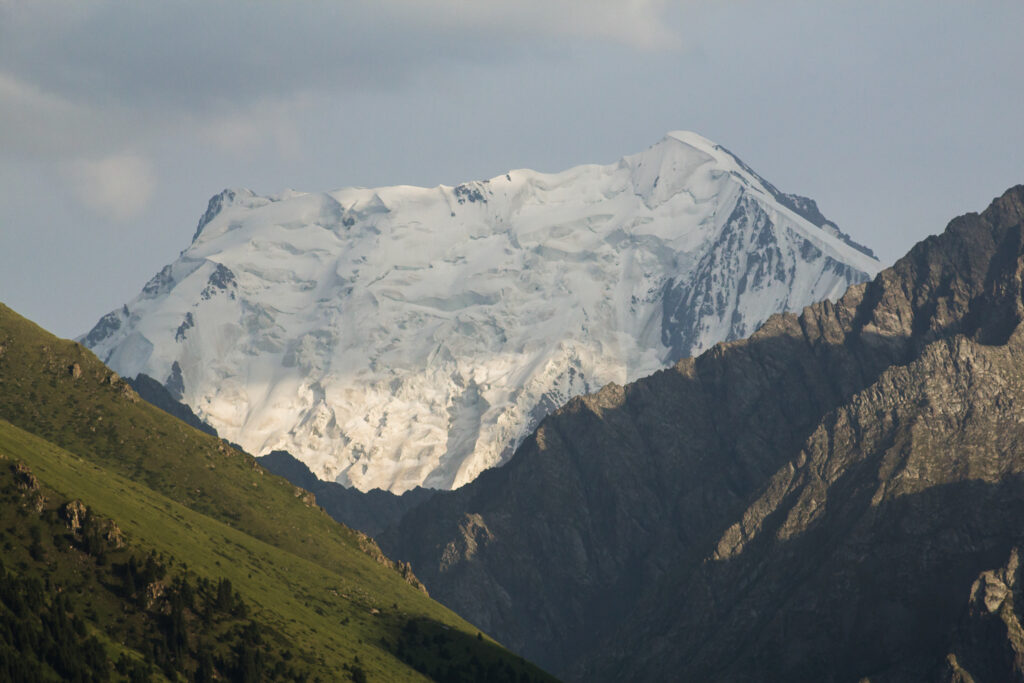
Jengish Chokusu (Pobeda Peak): Route, Difficulty & Expedition Guide
Jengish Chokusu – widely known as Pobeda Peak or Pik Pobedy – is the 7,439-metre high point of the Tien Shan and one of Central Asia’s most serious expedition objectives. The challenge is not one crux: it is prolonged altitude, severe cold, avalanche-prone terrain, glacier travel, an exposed summit ridge, remote logistics and very limited rescue options stacked together.
Pobeda is a final-stage 7,000 m objective, not an introductory expedition.
Current 2026 operators describe Pobeda as a mountain for climbers already comfortable with prolonged movement above 7,000 metres, glacier travel, rope-team systems, steep snow and ice, high camps, difficult weather and independent expedition decision-making. Major current programs provide base-camp, transport and helicopter logistics rather than treating the mountain as a conventional guided commercial summit.
- Same mountain: Jengish Chokusu = Pobeda Peak = Pik Pobedy.
- Elevation: 7,439 m / 24,406 ft.
- Base camp: South Engilchek, about 4,000 m.
- Current main season: July-August.
- Access: border-zone pass required.
- Separate climbing permit: current operators say none is required.
- Current model: largely self-guided above base camp.
- Progression: serious 7,000 m experience first.
South Engilchek / Western Ridge
Current Ak-Sai material calls the main expedition line the classic South Route / Western Ridge from South Engilchek Base Camp.
Advanced Expedition
Crevasses, avalanche-prone slopes, steep snow and ice and a long summit ridge above 7,000 m.

Border Pass Required
The Chinese frontier makes the border-zone permit a central logistical requirement. Current packages normally arrange it.
Self-Reliance Is Critical
Current Ak-Sai terms say it does not operate rescue services from Pobeda and climbers above base camp are responsible for themselves.
The biggest correction from the old page
Do not describe Pobeda as a normal commercially guided summit. Ak-Sai’s current 2026 Pobeda program is explicitly self-guided, and its packages exclude guides and high-altitude porters. ClimberCA likewise says that it does not provide guiding services on Pobeda because of the mountain’s risk profile. Climbers should verify the exact support model before assuming a guide is included.
Jengish Chokusu, Pobeda Peak and Pik Pobedy Are the Same Mountain
Searchers commonly reach this mountain under several names. The modern Kyrgyz name is Jengish Chokusu. Russian-language mountaineering literature commonly uses Pik Pobedy or Pobeda Peak, meaning Victory Peak. Chinese sources commonly refer to the mountain as Tomur or Tomur Feng.
At 7,439 metres, the mountain is the highest summit in the Tien Shan. It lies on the Kyrgyzstan-China border in the Kokshaal-Too sector of the Central Tien Shan, southwest of Khan Tengri. Modern Kyrgyz-side expeditions normally use the South Engilchek glacier system and the established base-camp logistics shared with the Khan Tengri season.
This page uses Jengish Chokusu and Pobeda Peak interchangeably because both names remain common in English-language climbing research and commercial expedition planning.
Pobeda Peak Route: South Engilchek to the Western Ridge
Exact camps and the safest line can move with glacier and snow conditions. The current operator structure below is more useful than treating historic camp coordinates as permanent.
4,000 m
South Engilchek Base Camp.
4,200 m
Lower glacier progression.
5,300 m
Technical terrain increases.
5,800 m
High-camp rotation.
6,400 m
Major altitude exposure.
6,918 m
Summit positioning.
Bishkek to Karkyra
Current expeditions begin in Bishkek and travel overland to Karkyra, the staging area for helicopter access to the Central Tien Shan. Weather can affect both the outbound and return helicopter schedule, so international flights should not be booked around a zero-buffer itinerary.
Karkyra to South Engilchek Base Camp
Helicopter transport moves climbers and equipment to South Engilchek Base Camp at roughly 4,000 metres. This camp is the major logistical hub for both Pobeda and Khan Tengri.
High-camp rotations
Ak-Sai’s current expedition structure moves progressively through camps at roughly 4,200, 5,300, 5,800, 6,400 and 6,918 metres. Climbers establish their own high camps and carry their own systems under the current self-guided model.
Summit push
The upper route combines steep snow and ice with an extended summit ridge above 7,000 metres. At this point, modest technical terrain can become extremely consequential because of altitude, wind, cold, exhaustion and the difficulty of retreat.
Do not freeze the historical route into one permanent camp plan.
Camp locations and passages can shift. The guide or logistics team operating at South Engilchek during your season should provide the current route condition, avalanche issues, fixed-rope status and high-camp plan.
Pobeda Peak Difficulty Is the Combination of Six Problems
The route is serious because the individual hazards reinforce one another at very high altitude.
Extended Time Above 7,000 m
Summit movement happens after a multi-camp expedition and from a high camp already near 6,900 metres.
Severe Cold & Wind
Current operators warn of violent winds, blizzards and temperatures around -30 C even during the summer climbing season.
Avalanche Exposure
Snow stability can control progress between high camps and can end a summit cycle even when the team is otherwise ready.
Crevasses & Rope Travel
Competence with rope-team movement and crevasse systems is assumed, not taught as part of a normal Pobeda expedition.
Self-Managed High Camps
Climbers may need to establish and manage camps, food, fuel and movement themselves above base camp.
Very Limited External Margin
A rescue benefit on an insurance certificate does not guarantee a physical extraction from the upper mountain.
Pobeda is not where to acquire the missing skill.
If glacier travel, steep snow, fixed-rope movement, crevasse rescue, high-camp management or prolonged 7,000-metre exposure is new to you, use an earlier mountain to build that skill first.
Pobeda Peak Cost, Permit & Logistics Snapshot
Current published pricing is for expedition infrastructure. Do not mistake a logistics package for a fully guided summit service.
| Item | Current published position | What it means |
|---|---|---|
| Ak-Sai Economy | From US$1,900 | Current self-guided logistics package including helicopter, scheduled transfers, base-camp infrastructure, border pass and registration if required. |
| Ak-Sai Basic | From US$3,100 | Adds Bishkek hotel/transfer support and additional base-camp logistics. |
| Guide | Not included | The published Pobeda expedition is self-guided. Verify separately whether any private guiding arrangement is currently available. |
| High-altitude porter | Not included | Do not assume camps will be stocked or moved for you. |
| Border-zone pass | Required / included in current packages | Pobeda lies on the Kyrgyzstan-China frontier. |
| Climbing permit | Current operators list none required | Verify again before the season because administrative rules can change. |
| Insurance | Not included | Must match technical high-altitude mountaineering and the operator’s emergency requirements. |
| Rescue operation | Not included | Ak-Sai currently states that it does not operate rescue services from Pobeda Peak. |
The $1,900 figure is not the cost of a complete Pobeda climb.
It is the entry price for a current self-guided logistics package. Your complete budget can also include international airfare, insurance, personal equipment, high-altitude food, communications, hotel nights, excess helicopter baggage, private support, extra rotations and weather-related changes.
Best Time to Climb Pobeda Peak
Current 2026 Pobeda expedition programs operate in July and August. That reflects base-camp operation, helicopter access and the best available summer summit window rather than mild or reliably stable mountain conditions.
Reserve days are a core part of the expedition. Current operators specifically identify strong winds, storms, avalanche risk and severe cold as schedule-controlling factors. A departure date is therefore only the beginning of the weather plan.
Treat helicopter dates as another weather-dependent part of the trip. Build buffer into the return from South Engilchek before committing to a tightly timed international flight.
What Should Come Before Pobeda?
The progression is more useful than another paragraph describing how dangerous the mountain is.
Lenin / Ibn Sina Peak
Build high-altitude expedition experience on a more accessible 7,000-metre objective before moving into harder Tien Shan terrain.
Build: altitude and expedition systems → Stage 02Khan Tengri
Add steeper technical terrain and Central Tien Shan systems while using the same South Engilchek logistical environment.
Build: technical Tien Shan experience →Recovery & Assessment
Decide whether your speed, cold management, high-camp systems and decision-making are strong enough for a more committing objective.
Build: margin rather than momentumJengish Chokusu / Pobeda
Approach Pobeda only after the underlying systems are familiar enough that the mountain itself is the challenge.
Apply: complete 7,000 m experienceKhan Tengri is the most natural regional bridge.
It shares the Central Tien Shan operating environment and South Engilchek logistics. Current multi-peak planning programs explicitly use Khan Tengri before Pobeda to build acclimatization and preserve the final mountain as the most demanding stage of the project.
Why the Mountain Is Called Victory Peak
The name Pobeda comes from the Russian word for “victory,” while the modern Kyrgyz name Jengish Chokusu carries the same meaning. Soviet-era mountaineering history is central to the mountain’s identity, and the peak remains one of the defining objectives of the traditional Snow Leopard program.
The mountain’s history includes early disputed summit claims, major Soviet expeditions, serious accidents and later technical routes. Those stories help explain Pobeda’s status, but they do not change the practical planning decision: a modern climber still needs mature glacier, high-altitude and independent expedition skills before making the trip to South Engilchek.
Insurance Does Not Solve the Pobeda Rescue Problem
Insurance can fund eligible services. It cannot make those services physically available high on Pobeda.
Technical Mountaineering
Verify that the actual activity – not merely hiking or trekking – is covered.
At Least 7,439 m
Coverage must extend beyond the highest point on the itinerary, not just base camp.
Extraction Can Still Fail
Weather, altitude and terrain may prevent rapid external rescue even when insurance wording appears adequate.
Use the specialist insurance comparison.
Before buying coverage, use the mountaineering insurance above 6,000 m guide and confirm the named mountain, summit altitude, technical activity, Kyrgyzstan and helicopter/rescue provisions in writing.
Jengish Chokusu / Pobeda Peak FAQ
Are Pobeda Peak and Jengish Chokusu the same mountain?
Yes. Jengish Chokusu is the modern Kyrgyz name. Pobeda Peak or Pik Pobedy is the widely used Russian-era name. Both refer to the same 7,439-metre summit.
How difficult is Pobeda Peak?
Extremely serious. Current operators expect strong prior 7,000 m experience plus glacier travel, rope-team movement, steep snow and ice, high-camp management and the ability to operate independently in severe weather.
What is the standard Pobeda Peak route?
Current commercial logistics use South Engilchek Base Camp and describe the main line as the classic south or western-ridge route. Exact high-camp positions and passages change with current glacier and snow conditions.
Do I need a climbing permit?
Current Kyrgyz operators state that there is no separate ascent permit, but the border-zone pass is required. Expedition packages normally arrange the border pass and any registration that applies.
Is Pobeda Peak guided?
Do not assume so. Current major 2026 offerings are self-guided logistics packages and explicitly exclude mountain guides and high-altitude porters.
How much does a Pobeda expedition cost?
Current Ak-Sai self-guided packages begin around US$1,900 and US$3,100 depending on logistics level. These are not full trip budgets and exclude insurance, rescue, guides, porters, international flights and personal equipment.
When is the climbing season?
Current commercial operations run primarily in July and August. Strong winds, storms, avalanche risk and severe cold remain possible throughout that window.
What should I climb before Pobeda?
A climber should already have serious 6,000- and 7,000-metre expedition experience. Lenin Peak can build altitude experience, while Khan Tengri is a particularly useful Central Tien Shan technical progression before Pobeda.
What Was Rechecked for This Pobeda Peak Guide
Current expedition logistics
- Ak-Sai Travel – Pobeda Peak Expedition for 2026 route structure, season, package price, high camps, helicopter logistics, exclusions and rescue position.
- ClimberCA – Pobeda Peak Expedition 2026 for current pricing, border-pass inclusions and expedition requirements.
What should be verified again
- Border-zone processing requirements.
- Kyrgyz registration rules for your nationality.
- Current helicopter operating dates.
- Exact camp positions and route condition.
- Avalanche and glacier conditions.
- Whether any private guiding option exists.
- Insurance acceptance and rescue procedure.
- Current package price before payment.
Last verification: September 11, 2026
This page deliberately avoids treating historical permit prices, fixed camp locations or old operator practices as permanent facts. Recheck administrative and operating information before making a non-refundable booking.
Central Asian 7,000 m Peaks and the Skills Behind Pobeda
Pobeda should sit near the end of the Central Asia progression. Use the other Snow Leopard peaks to build altitude, glacier movement, expedition systems and technical efficiency before committing to the highest Tien Shan objective.
Was this helpful?
🏔Related peaks nearby
🧭Explore & compare
Global Summit Guide is an independent mountaineering resource founded in 2026. The team combines first-hand trekking and climbing experience with in-depth research and professional health and nutrition review to help climbers choose objectives, prepare properly, and stay safe.
Health, altitude, and nutrition content is reviewed by Taylor Ludlow (Registered Nurse) and Brigg Hoopes (Nutritionist).
What We Don't Know Yet
Mountain information changes quickly. This box explains the limits of what this page can responsibly promise.
- Route conditions, trailhead access, crevasse exposure, stream crossings, and rescue access may vary from published planning guidance.
- Visa, passport, vaccination, border, insurance, and local transportation rules may change before your trip.
- Route conditions, snowpack, closures, and weather can change quickly after this page is updated.
- Permit rules, fees, quotas, and reservation windows may change between review cycles.
- Operator availability, pricing, guide ratios, and cancellation terms can change by season.
Verify current conditions with official land managers, guide services, local forecasts, and current route reports before booking or climbing.
Mountaineering, rock and ice climbing, glacier travel, and high-altitude activity are inherently dangerous and can result in serious injury or death. The information on Global Summit Guide is provided for general informational and educational purposes only and is not a substitute for professional instruction, qualified guiding, proper equipment, or your own judgment and experience.
Route conditions, weather, snowpack, permits, regulations, and hazards change constantly and may differ from what is described here. Details may be incomplete, out of date, or contain errors. Always verify current information with local authorities, certified guides, and official sources before making any decision in the mountains.
Nothing on this site is medical, legal, or financial advice. Our fitness, acclimatization, altitude, and nutrition content is general in nature; consult a qualified physician before beginning any strenuous exercise program or exposing yourself to high altitude.
You are solely responsible for your own safety and decisions. To the fullest extent permitted by law, Global Summit Guide and its team accept no liability for any loss, injury, damage, or expense arising from use of, or reliance on, this information. By using this site you acknowledge these risks and accept these terms.
Some links on this site may be affiliate links. If you buy through them we may earn a small commission at no extra cost to you; this never affects our recommendations.
Global Summit Guide recommendation path
Next Best Mountain to Research
Use these recommendations to continue the right planning path instead of stopping on one page.
Use current permit, weather, route, and operator information before booking or climbing.
Search Flights, Hotels & Rental Cars
Have the mountain or destination picked? Use Expedia to compare the flights, lodging and rental cars that fit your actual trip dates. For mountain travel, consider arriving early enough for delays and adding a buffer night after the climb before a fixed flight home.
Compare current flight, hotel and car options.
Affiliate disclosure: Global Summit Guide may earn a commission if you book through this link, at no additional cost to you.