
Last updated April 23, 2026
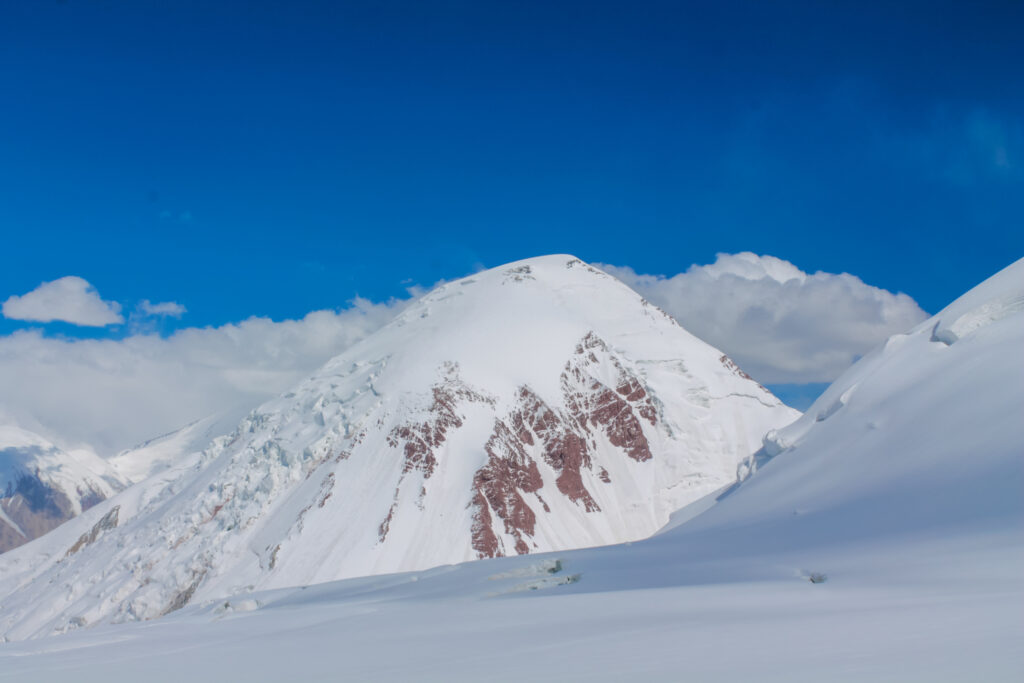
Climbing Lenin Peak / Ibn Sina Peak: The Complete 2026 Razdelnaya Route, Border Permit & Pamir Mountains Guide
Lenin Peak rises to 7,134 meters (23,406 ft) on the Kyrgyzstan-Tajikistan border in the Trans-Alay Range of the Pamir Mountains. Specifically, the peak stands as the highest summit of the Trans-Alay Range and the second-highest point in both Kyrgyzstan and Tajikistan. Additionally, it holds unique status as the most accessible 7,000-meter peak in the world and receives the most ascents of any seven-thousander.
The peak carries multiple official names reflecting its Soviet and post-Soviet heritage. Originally named Mount Kaufmann in 1871 after the first Governor-General of Russian Turkestan. Subsequently, Soviet authorities renamed it Lenin Peak (Pik Lenina) in 1928 honoring Vladimir Lenin. Moreover, Tajikistan renamed its side Qullai Abuali ibni Sino (Ibn Sina Peak or Avicenna Peak) in July 2006 honoring the 11th-century Persian polymath Abu Ali ibn Sina.
Additionally, Lenin Peak serves as the gateway Snow Leopard peak. Specifically, most climbers target Lenin as their first 7,000-meter objective before progressing to Khan Tengri, Korzhenevskaya, Ismoil Somoni, or Pobeda. Furthermore, the classic Razdelnaya Route grades Russian 3B or French PD+ — comparable technically to Mont Blanc or Elbrus. Importantly, the high altitude rather than technical difficulty creates the primary challenge on Lenin Peak.
However, Lenin Peak carries a sobering tragic history. Specifically, the July 13, 1990 avalanche killed 43 of 45 climbers at Camp 2 — Guinness World Records recognizes this as the deadliest mountaineering disaster ever. Moreover, eight Soviet women died on the 1974 Shatayeva traverse in a storm. Additionally, both events occurred on a peak reputed as the “easiest” 7,000m climb, reminding climbers that altitude and weather remain serious hazards regardless of technical difficulty.
Ultimately, Lenin Peak delivers genuine 7,000-meter experience with world-class commercial infrastructure. Specifically, Achik-Tash Base Camp at 3,600m features stationary tents, mess facilities, showers, and sauna. Moreover, operators provide pre-installed tents at Camps 2 and 3 plus fixed ropes on key sections. Additionally, the 12-14 day climbing program from Osh represents among the most affordable high-altitude expeditions worldwide. Consequently, Lenin Peak attracts hundreds of climbers annually from around the world.
(23,406 ft)
Gateway Snow Leopard
Apply 1 month ahead
Soviet-German team
Lenin Peak Location & Summit Weather
Check live 7-day forecast conditions at the Lenin Peak summit (7,134m). Additionally, view the interactive terrain map showing Lenin Peak’s position in the Trans-Alay Range of the Pamir Mountains on the Kyrgyzstan-Tajikistan border, accessible from Osh and the Achik-Tash Base Camp.
Lenin Peak · Trans-Alay Range
39.34°N, 72.88°ESummit Weather
Elev: 7,134 m · Summit −15 to −30°CLenin Peak stands as the Pamir’s gateway seven-thousander. Specifically, it combines genuine 7,134-meter altitude with commercially accessible infrastructure and non-technical terrain. Additionally, the peak anchors the Snow Leopard Challenge as the logical first objective before progressing to harder peaks like Khan Tengri or Pobeda. Furthermore, hundreds of climbers from around the world attempt Lenin Peak each summer season.
The peak rises to 7,134 meters (23,406 ft) on the Kyrgyzstan-Tajikistan border. Moreover, the summit straddles both countries, with northern slopes in Kyrgyzstan’s Alai Province and southern slopes in Tajikistan’s Gorno-Badakhshan region. Notably, Lenin Peak was thought to be the highest point in the Pamirs until 1933 when Ismoil Somoni Peak (formerly Stalin Peak) was climbed and found to be more than 300 meters higher. However, Lenin remains the most climbed 7,000-meter peak globally.
Today’s climbers encounter straightforward terrain across the classic route. First, road transfer from Osh to Achik-Tash Base Camp at 3,600m taking 6-8 hours. Second, acclimatization rotations through Camp 1 “Solnechniy” at 4,400m. Third, the critical traverse to Camp 2 at 5,300m — historically called the “Frying Pan” for its flat broad basin. Fourth, Camp 3 established on Razdelnaya Peak at 6,100m. Finally, the summit push to the bronze Lenin bust marker at 7,134m.
However, Lenin Peak is a serious high-altitude expedition — not a trekking destination. Specifically, the 12-18 day climbing program involves Russian grade 3B technical climbing with moderate glacier travel, crevasse crossings, and steep snow slopes. Additionally, operator success rates typically run around 60% for properly acclimatized climbers. Moreover, prior experience above 5,000 meters with basic glacier and crampon skills represents an essential prerequisite. Consequently, Lenin Peak should not be attempted as a first high-altitude experience.
Currently, a multi-jurisdictional permit system governs every ascent. Specifically, climbers need a climbing permit, OVIR/IVIR registration, and border zone permit because the summit lies on an international border. Additionally, the propusk costs approximately EUR 30 and requires passport details submitted at least one month before arrival. Furthermore, an environmental fee is included in most operator packages. Consequently, booking through registered operators eliminates administrative uncertainty.
Most importantly, Lenin Peak carries sobering tragic history despite its “easy” reputation. Specifically, the 1990 avalanche disaster killed 43 of 45 climbers at Camp 2 — the deadliest mountaineering event ever recorded. Moreover, the 1974 tragedy killed all 8 women of the Shatayeva traverse team in a storm. Additionally, the first Westerner Snow Leopards only achieved the award in 1985 (two Americans). Ultimately, Lenin Peak remains the most accessible yet sometimes unforgiving 7,000-meter peak.
Lenin Peak in 2026 requires a climbing permit, OVIR/IVIR registration, and Border Zone Permit (propusk) since the summit sits on the Kyrgyzstan-Tajikistan border. Specifically, the propusk costs approximately EUR 30 and requires passport details submitted at least one month before arrival. Additionally, an environmental fee of approximately EUR 30-50 is included in most operator packages. Moreover, licensed operators like Central Asia Travel, ClimberCA, IMC Pamir, SummitClimb, Pamir Expeditions, and AWExpeditions handle all paperwork automatically. Furthermore, the vast majority of commercial ascents approach from the Kyrgyz side via Osh, simplifying permit logistics considerably compared to Tajik approaches. Peak-season July-August slots fill fast — book at least 2-3 months ahead. See the 2026 Permit section for the complete booking walkthrough.
Lenin Peak’s reputation as the “easiest” 7,000m peak is dangerously misleading. Specifically, the July 13, 1990 avalanche killed 43 of 45 climbers at Camp 2 — Guinness World Records recognizes this as the deadliest mountaineering disaster in history. Additionally, the 1974 storm claimed all 8 women of the Soviet Shatayeva traverse team. Moreover, altitude-related illness (AMS, HAPE, HACE) poses sustained threats given the route crosses above 6,000m multiple times. Furthermore, the Pamir’s sharp continental climate produces sudden storms with hurricane-force winds. Consequently, proper acclimatization, professional guide support, and specialized insurance remain essential even on the “accessible” 7,000m peak.
All 2026 figures were verified against primary Central Asian operator documentation from Central Asia Travel, ClimberCA International Consortium, IMC Pamir, SummitClimb (Felix Berg), Expeditions Unlimited, AWExpeditions, and Pamir Expeditions. Additionally, historical context draws on Wikipedia’s comprehensive Lenin Peak article, the UIAA mountain medicine documentation, ExplorersWeb’s detailed tragedy coverage, and Guinness World Records. Furthermore, disaster analysis references the Lenin Peak disaster Wikipedia page and Wired For Adventure’s 1990 retrospective. Moreover, naming history follows the official post-Soviet republic decisions and 2006 Tajik renaming documentation. Fact-check: April 23, 2026.
Lenin Peak at a Glance
Why Lenin Peak Holds Iconic Status
The Most Accessible 7,000m Peak
Lenin Peak earns universal recognition as the most accessible 7,000-meter peak in the world. Specifically, technical difficulty compares to Mont Blanc or Mount Elbrus on the classic Razdelnaya Route. Additionally, a road reaches almost to the foot of the mountain. Moreover, no technical rock or ice climbing is required on the normal route. Consequently, Lenin Peak sees more ascents annually than any other 7,000m summit globally.
The Gateway Snow Leopard Peak
Lenin Peak serves as the starting Snow Leopard objective for climbers pursuing the prestigious Soviet-era award. Specifically, the challenge requires summits of all five 7,000m peaks in the former USSR. Additionally, Lenin ranks as the least technical among the five, making it the logical first attempt. Moreover, climbers progress to Korzhenevskaya, Ismoil Somoni, Khan Tengri, and Pobeda after successful Lenin ascents.
The Three-Name Cultural Heritage
The peak carries three official names reflecting political history. Specifically, originally Mount Kaufmann (1871) honoring Governor-General Konstantin Kaufman. Subsequently, Lenin Peak (1928) honoring Vladimir Lenin in Soviet tradition. Finally, Tajikistan renamed their side in 2006 as Qullai Abuali ibni Sino — Ibn Sina or Avicenna Peak — honoring the 11th-century Persian polymath Abu Ali ibn Sina (980-1037 CE).
Trans-Alay Range Highpoint
Lenin Peak stands as the tallest mountain in the entire Trans-Alay Range. Specifically, the Trans-Alay extends across Central Asia forming a natural border between the Alai Valley and the Pamir Plateau. Additionally, Lenin Peak is the second-highest point in both Kyrgyzstan and Tajikistan. Moreover, only Ismoil Somoni (7,495m in Tajikistan) and Jengish Chokusu (7,439m in Kyrgyzstan) exceed Lenin’s elevation within each country.
The Deadliest Mountaineering Disaster Site
Lenin Peak witnessed the deadliest mountaineering disaster in history on July 13, 1990. Specifically, a 6.4-magnitude earthquake centered in Afghanistan triggered a massive avalanche at Camp 2 (5,300m). Moreover, 43 of 45 climbers perished including 23 from Leningrad, 6 Czechoslovakians, 4 Israelis, 2 Swiss, and 1 Spaniard. Additionally, Guinness World Records officially recognizes this as the worst mountaineering disaster ever recorded.
The Shatayeva 1974 Tragedy
In August 1974, the Soviet all-female team led by Elvira Shatayeva attempted a traverse of Lenin Peak. Specifically, all eight women perished in a storm with 100+ kph winds and temperatures below -20°C. Additionally, Shatayeva maintained radio contact with base camp reporting their deteriorating condition. Moreover, the women stayed together until their last breath rather than abandoning each other. Consequently, this remains one of Soviet mountaineering’s most poignant tragedies.
The 1928 Soviet-German First Ascent
The historic September 1928 first ascent involved a joint Soviet-German Pamir expedition. Specifically, Germans Eugen Allwein and Karl Wien and Austrian Erwin Schneider reached the summit from the south side. Moreover, the team approached via the Saukdara River Valley, Krylenko Pass at 5,820m, and the northeast ridge. Additionally, this expedition combined mountaineering objectives with comprehensive Pamir mapping — a cornerstone of early Soviet scientific exploration.
World-Class Base Camp Infrastructure
Lenin Peak features exceptional commercial infrastructure rarely found on 7,000m peaks. Specifically, Achik-Tash Base Camp at 3,600m includes stationary tents with wooden platforms, mess tents serving three meals daily, showers, sauna, and medical facilities. Additionally, operators provide pre-installed tents at Camps 2 and 3. Moreover, multiple competing base camps create service quality competition benefiting climbers. Consequently, Lenin Peak rivals Everest base camp amenities at fraction of the cost.
Who Can Climb Lenin Peak?
Lenin Peak suits experienced intermediate mountaineers with prior altitude experience above 5,000 meters, basic glacier and crampon skills, and substantial cardiovascular conditioning. Moreover, the peak represents an ideal first 7,000-meter objective for climbers progressing from Aconcagua, Mount Elbrus, or Denali. Specifically, operators typically require documented prior ascents of peaks above 5,500m with glacier travel experience.
Physical preparation matters substantially alongside altitude experience. Specifically, guides recommend the ability to hike 8-10 kilometers with a 12-15kg pack at altitude, sustained over consecutive days. Additionally, cardiovascular conditioning through sustained running, cycling, or mountaineering for 6-9 months before departure dramatically improves summit success rates. Moreover, regular work at 3,000+ meters during training amplifies acclimatization efficiency and reduces altitude sickness risk.
Technical requirements include basic competence with crampons, single ice axe, rope travel in glaciated terrain, and crevasse self-rescue. Furthermore, climbers should have completed at least one multi-day glacier expedition before attempting Lenin Peak. Additionally, some operators require a pre-expedition skills check or mountaineering course such as those offered through Ala-Archa National Park training programs.
Specialized travel insurance covering high-altitude mountaineering rescue to at least 7,500m with helicopter evacuation remains absolutely essential. Notably, standard travel policies universally exclude climbing above 4,000m. Specifically, Global Rescue, Austrian Alpine Club OeAV membership, and DAV Alpenverein offer appropriate policies. Furthermore, verify that the insurer operates in Kyrgyzstan and Tajikistan — some companies have restricted coverage for Central Asian countries.
Operators report that climbers who allow 4-6 extra days for acclimatization achieve dramatically higher summit rates. Specifically, Expeditions Unlimited reports around 60% success on their extended programs versus typical 40-50% for shorter itineraries. Additionally, climbers with prior Aconcagua (6,961m), Denali (6,190m), or Mount Elbrus (5,642m) experience arrive properly prepared for Lenin Peak’s altitude profile. Moreover, the Razdelnaya Route requires substantial glacier travel that demands prior roped-team experience. Furthermore, summer 2023-2025 conditions showed increasing crevasse exposure due to glacial retreat — a pattern expected to continue through 2026. Consequently, selecting operators with extended acclimatization schedules and experienced local guides dramatically improves outcomes.
Lenin Peak in Snow Leopard Mountaineering Context
Lenin Peak occupies a singular position as the gateway Snow Leopard peak. Specifically, the mountain anchors the Trans-Alay Range and represents the natural first objective among the five Soviet-era 7,000-meter peaks. Additionally, Lenin Peak’s relative technical accessibility makes it the logical starting point for Snow Leopard aspirants progressing toward harder summits.
For climbers planning regional trips, Lenin Peak pairs logically with several nearby peaks. Specifically, Razdelnaya Peak (6,148m) serves as acclimatization during the standard route. Moreover, Korzhenevskaya Peak and Ismoil Somoni Peak in the same Pamir range offer natural progression targets. Additionally, many elite alpinists pursue Three Peaks Pamir programs combining Lenin with these Tajik giants in single seasons. Furthermore, operators like ClimberCA and Pamir Expeditions offer dedicated Three 7000m Peaks of Pamir programs.
The Five Snow Leopard Peaks
The Snow Leopard Award requires summits of all five 7,000m peaks in the former Soviet Union. Additionally, Lenin Peak ranks as the most accessible — traditionally the first objective for Snow Leopard aspirants.
Lenin Peak History: From Mount Kaufmann to Ibn Sina
Lenin Peak’s recorded history spans over 150 years and encompasses Russian imperial exploration, Soviet mountaineering glory, and post-Soviet national identity. Ultimately, few peaks carry such dense layers of geographic discovery, political renaming, and tragic mountaineering history. Specifically, the mountain has held three distinct official names reflecting the political currents of Central Asia.
1871: Mount Kaufmann Discovery
Russian imperial explorers first identified the peak in 1871 during the expansion of Russian Turkestan. Specifically, they named the mountain Mount Kaufmann after Konstantin Kaufman, the first Governor-General of Russian Turkestan. Additionally, this original name honored Kaufman’s role in establishing Russian imperial administration across Central Asia. Moreover, the peak appeared on Russian maps under this name for nearly six decades.
Throughout the late 19th and early 20th centuries, Russian geographers conducted systematic surveys of the Pamirs. Additionally, the peak was initially thought to be the highest point in the entire Pamir mountain system. However, subsequent measurements in 1933 identified Ismoil Somoni Peak (then known as Stalin Peak) as more than 300 meters higher. Consequently, Lenin Peak’s status shifted to second-highest in the Pamirs despite its continued prominence.
1928: First Ascent and Soviet Renaming
In September 1928, a Soviet-German Pamir expedition completed the first ascent of what was still called Mount Kaufmann. Specifically, the summit team included German climbers Eugen Allwein and Karl Wien and Austrian climber Erwin Schneider. Moreover, the expedition was a joint effort combining mountaineering with comprehensive Pamir mapping objectives. Additionally, Soviet climbers and porters supported the international team.
The team approached from the south side — starting in the Saukdara River Valley, continuing up the south slope of the Trans-Alay Range, and ascending via the Greater Saukdara Glacier. Subsequently, their route wound from Krylenko Pass (at 5,820m) to the northeast ridge toward the summit. Furthermore, that same year Soviet authorities renamed the peak Lenin Peak (Pik Lenina) honoring Vladimir Lenin, the recently deceased Soviet leader.
1934: North Face First Ascent
In 1934, Soviet climbers completed the first ascent from the northern (Kyrgyz) side. Specifically, this opened the approach routes that would eventually become the standard commercial routes. Moreover, the north side offers substantially shorter approaches from populated areas compared to the remote Tajik south side. Consequently, subsequent Lenin Peak activity shifted primarily to the north face.
1954: Classic Razdelnaya Route Established
On 1954, a team of Soviet climbers under the direction of V. Kovalev established what is now called the Razdelnaya Route or Classic Route. Specifically, the team included P. Karpov, E. Nagel, V. Narishkin, and V. Nozdryuhin. Additionally, the route ascends via Razdelnaya Peak (6,148m) and the northwest ridge to the main summit. Moreover, this route has since become the standard for hundreds of climbers annually due to its moderate grade and established camps.
1958: First Female Ascent
Soviet alpinist Ekaterina Mamleeva completed the first female ascent of Lenin Peak in 1958. Specifically, this achievement established early precedent for women’s high-altitude mountaineering in the Soviet Union. Additionally, Mamleeva’s ascent inspired subsequent female expeditions including the tragic 1974 Shatayeva traverse attempt. Furthermore, Lenin Peak has since seen hundreds of successful female ascents under the “Lord of Snow” tradition.
1974: The Shatayeva Tragedy
In August 1974, the all-female Soviet team led by Elvira Shatayeva attempted an ambitious traverse. Specifically, they planned to ascend via the Lipkin Ridge on the north face and descend the Razdelnaya Route. The women topped out on August 7 despite warnings from base camp of an approaching storm. Additionally, the worst storm in 25 years caught them below the summit with winds exceeding 100 kph.
Their thin cotton tents shredded in the wind. Moreover, temperatures dropped below -20°C exposing the team to fatal hypothermia. Additionally, Shatayeva maintained radio contact with base camp reporting dwindling supplies and frostbite. American climber John Roskelley and nearby Japanese alpinists attempted rescue but were repelled by the blizzard. Tragically, over two days, all eight women succumbed to hypothermia and exhaustion while staying together rather than abandoning each other.
July 13, 1990: The Deadliest Mountaineering Disaster
On July 13, 1990 at 9:30 pm, the deadliest mountaineering disaster in recorded history occurred on Lenin Peak. Specifically, a 6.4-magnitude earthquake centered in Afghanistan’s Hindu Kush at 216.8 km depth dislodged a massive serac from Chapaev Peak. Moreover, the resulting avalanche crashed onto Camp 2 at 5,300m on the Razdelnaya Route — an area nicknamed “the Frying Pan” for its flat broad basin.
45 climbers were at Camp 2 preparing for ascent to Camp 3. The team composition included 23 members of the Leningrad Mountaineering Club, 6 from Czechoslovakia, 4 Israelis, 2 Swiss, and 1 Spaniard. The ice and snow buried the camp within seconds. Tragically, 43 of 45 climbers died. Only Alexei Koren (Russia) with a broken arm and Miroslav Brozman (Slovakia, also known as Miro Grozman) with a broken leg survived. Moreover, both positioned at the camp’s edge managed to dig themselves out and descend to Camp 1 for help. Guinness World Records officially recognizes this as the deadliest mountaineering disaster in history.
2006: Tajik Renaming to Ibn Sina Peak
In July 2006, Tajikistan officially renamed its side of the peak to Qullai Abuali ibni Sino (Ibn Sina Peak or Avicenna Peak). Specifically, the new name honors the great Persian polymath Abu Ali ibn Sina (980-1037 CE), known in the West as Avicenna. Moreover, Ibn Sina was born in Bukhara and represents one of the Islamic Golden Age’s greatest scholars — contributing foundational works in medicine, philosophy, astronomy, and mathematics. Additionally, the renaming reflected Tajikistan’s post-Soviet national identity rooted in Persian cultural heritage.
However, Kyrgyzstan still officially calls the mountain Lenin Chokusu (Lenin Peak). Moreover, in October 2017, Kyrgyz president Almazbek Atambayev called for renaming it “Manas Peak” after the hero of the Epic of Manas, but no official action followed since another peak already bears that name. Consequently, international climbers use either “Lenin Peak” or “Ibn Sina Peak” interchangeably depending on context.
2004-Present: Glacial Retreat and Remains Recovery
Beginning in 2004, glacial retreat began revealing remains from the 1990 disaster at approximately 4,200 meters elevation. Specifically, by 2007, further melting uncovered bones, body parts, climbing equipment, clothing, tents, cooking utensils, stoves, and passports. Additionally, recovery expeditions led by survivor Alexei Koren continue collecting and burying partial remains near a memorial plaque at Achik-Tash Base Camp. Moreover, Kyrgyz authorities coordinate the sensitive recovery with international mountaineering groups.
Climbing Routes on Lenin Peak
Lenin Peak features 16 established climbing routes — 9 on the southern slopes and 7 on the northern slopes. Specifically, the Classic Razdelnaya Route dominates commercial traffic due to its moderate grade and established base camp infrastructure. Furthermore, several technical variations and less-traveled routes provide alternatives for experienced alpinists seeking different challenges on the peak.
| Route | Country | Grade | Duration | Character | Notes |
|---|---|---|---|---|---|
| Razdelnaya (Classic) | Kyrgyzstan | Russian 3B | 12-18 days | Moderate glacier | Standard 1954 commercial route |
| Lipkin Ridge | Kyrgyzstan | Russian 5A | 14-20 days | Mixed climbing | 1974 Shatayeva tragedy route |
| North Face Direct | Kyrgyzstan | Russian 5B | 18-22 days | Steep ice/mixed | 1960 first complete ascent |
| Krylenko (South) | Tajikistan | Russian 4A | 18-25 days | Remote approach | Original 1928 first ascent line |
Razdelnaya Classic Route — Via NW Ridge
The Razdelnaya Classic Route established by V. Kovalev’s team in 1954 dominates Lenin Peak climbing traffic. Specifically, climbers begin with a road transfer from Osh to Achik-Tash Base Camp at 3,600m in Kyrgyzstan’s lush Alai Valley. Moreover, this route is the preferred option for all major commercial operators including Central Asia Travel, ClimberCA, IMC Pamir, SummitClimb, Expeditions Unlimited, and AWExpeditions.
From base camp, climbers progress through Camp 1 “Solnechniy” at 4,400m reached via a 6-8 hour trek across meadows and lower glaciers. Specifically, porters or horses can transport equipment to Camp 1 for supported ascents. Additionally, Camp 2 at 5,300m sits in the historic “Frying Pan” — the broad flat basin where the 1990 disaster occurred. Furthermore, Camp 3 at 6,100m occupies Razdelnaya Peak’s summit plateau with spectacular views of the Pamir range.
The technical climbing grades at Russian 3B (approximately UIAA II-III or French PD+). Moreover, most sections involve moderate glacier travel with roped-team travel, crevasse crossings, and steep snow slopes up to 40 degrees. Additionally, the summit day typically involves 10-14 hours round trip from Camp 3 with sustained effort at extreme altitude. Furthermore, the famous bronze Lenin bust at the summit has been photographed by thousands of successful climbers.
Success rates on the Razdelnaya Route typically run 40-60% depending on weather windows, acclimatization schedules, and operator experience. Consequently, selecting operators with extended acclimatization programs dramatically improves outcomes on this accessible yet altitude-demanding seven-thousander.
Lipkin Ridge — The 1974 Tragedy Route
The Lipkin Ridge route ascends via a pronounced ridge on Lenin Peak’s north face. Specifically, this route grades Russian 5A with mixed climbing, exposed rock sections, and sustained technical difficulty. Moreover, the 1974 Shatayeva traverse used this route as their ascent line, attempting to descend via the Razdelnaya Route.
The Lipkin Ridge appeals to experienced alpinists seeking more technical engagement than the Razdelnaya. Additionally, few commercial operators offer scheduled Lipkin Ridge departures, making this a primarily private expedition objective. Moreover, the route’s tragic history ensures climbers approach with serious respect for weather and conditions. Consequently, Lipkin Ridge ascents remain rare despite offering an exceptional alternative line on Lenin Peak.
North Face Direct — 1960 First Ascent
The North Face Direct was first climbed on August 15, 1960 by a group of eight Soviet alpinists. Specifically, this route tackles Lenin Peak’s steep north face directly with sustained mixed climbing on steep ice and rock. Moreover, the route grades Russian 5B — one of the most technically demanding lines on the peak.
This route suits only the most experienced alpinists with substantial Himalayan or Karakoram technical climbing experience. Additionally, no commercial operators offer scheduled North Face Direct ascents. Furthermore, the route represents private expeditions by established alpinist partners seeking the ultimate Lenin Peak challenge. Consequently, this variation remains exceptionally rare among modern ascents.
Krylenko Route — 1928 First Ascent Line
The Krylenko Route follows the 1928 Soviet-German first ascent line from the Tajik south side. Specifically, the route begins in the Saukdara River Valley and ascends the Greater Saukdara Glacier to Krylenko Pass at 5,820m. Moreover, from the pass, the route follows the northeast ridge to the summit. Russian grade 4A describes the overall difficulty with substantial glacier navigation.
This route requires longer approaches and more complex Tajik permit arrangements compared to the Kyrgyz side. Additionally, the remote southern approach appeals to climbers seeking historical heritage and reduced crowds. However, fewer commercial operators offer scheduled Krylenko Route departures. Consequently, this route often requires private expedition arrangements with experienced Tajik-based operators willing to provide comprehensive logistics.
Lenin Peak Permits & Border Zone Regulations 2026
Lenin Peak requires a comprehensive permit framework due to its position on the Kyrgyzstan-Tajikistan border. Specifically, climbers need three separate permissions: a climbing permit, OVIR/IVIR registration, and a border zone permit. Additionally, licensed Central Asian operators handle all paperwork automatically as part of their 2026 packages, dramatically simplifying the administrative process.
The Border Zone Permit (Propusk) is mandatory because Lenin Peak’s summit lies directly on the Kyrgyzstan-Tajikistan border. Specifically, the permit takes time to process through Kyrgyz authorities. Additionally, climbers must submit passport copies, full name, date and place of birth, passport issue date and place, and home stay information. Moreover, licensed operators require these details at least one month before arrival. Furthermore, unauthorized climbers in border zones face fines and potential expulsion. Consequently, respecting the propusk timeline is essential — late applications often result in cancelled trips on peak-season dates.
Required Documentation for 2026
For 2026 Lenin Peak climbs, each climber must provide the following documentation:
- Valid passport — with at least 6 months validity beyond entry date
- Kyrgyz entry visa — most Western nationalities enter visa-free or obtain visa at Manas Airport
- Passport copy — submitted one month before arrival for permit processing
- Travel insurance — covering high-altitude mountaineering to 7,500m with helicopter evacuation
- Climbing experience declaration — documented prior 5,000m and ideally 6,000m ascents
- OVIR/IVIR registration form — completed within 5 days of arrival in Kyrgyzstan
- Mountain rescue registration — at local rescue service (handled by operator)
- Environmental protection fee receipt — included in most operator packages
Permit Fee Breakdown
The 2026 permit fee structure for Lenin Peak includes several components:
- Climbing permit: approximately EUR 30-50 per person
- Border Zone Permit (Propusk): approximately EUR 30 per person (mandatory)
- Environmental protection fee: approximately EUR 20-30 per person
- OVIR/IVIR registration: free but mandatory within 5 days
- Alpine Club of Kyrgyzstan Certificate of Ascent: issued post-summit
- Kyrgyz visa (if required): USD 30-100 depending on nationality
Booking Sequence with Licensed Operator
Working through a registered Central Asian operator streamlines the process significantly. First, select your preferred departure window approximately 4-6 months ahead. Second, submit deposit and initial passport details 2-3 months before arrival. Third, provide complete propusk information 1-2 months ahead. Fourth, confirm Osh arrival flight. Finally, arrive at the operator’s base in Osh for final preparation and drive to Achik-Tash Base Camp.
Access Logistics from Osh
Lenin Peak is accessible via Osh Airport (OSS), the second-largest city in Kyrgyzstan. Specifically, Osh can be reached by internal flight from Bishkek (1 hour via Air Manas or Avia Traffic) or by bus/shared taxi (12-14 hours). Moreover, the drive from Osh to Achik-Tash Base Camp at 3,600m takes approximately 6-8 hours through scenic mountainous terrain. Additionally, operators coordinate transport by mules and horses to Camp 1 for supported ascents.
Kyrgyzstan Visa Considerations
Visa requirements for Lenin Peak vary by nationality and change frequently. Specifically, Kyrgyzstan dropped visa requirements for many Western nationals and offers visa-on-arrival at Manas International Airport in Bishkek. Additionally, airport visas cost USD 30-100 depending on nationality and often cheaper than embassy-issued visas. Moreover, verify current requirements at the Kyrgyz consulate website well before travel as policies occasionally update. Furthermore, if planning to climb from the Tajik side, Tajikistan visa and GBAO permit are required for Gorno-Badakhshan access.
Lenin Peak Expedition Costs 2026
Lenin Peak remains among the most affordable 7,000-meter peaks globally due to established Soviet-era infrastructure and lower permit fees. Furthermore, licensed Central Asian operators offer competitive 2026 pricing across multiple tiers from budget self-guided arrangements to premium Western-operated programs. Additionally, most packages bundle permits, base camp services, guide support, meals, and transportation from Osh into comprehensive programs.
2026 Core Fee Breakdown
Standard 2026 expedition packages include these core components across most tiers:
- Climbing permit and environmental fee: included in packages
- Border Zone Permit (Propusk): approximately EUR 30 per person (included)
- OVIR/IVIR registration: free but handled by operator
- Osh airport transfers: included in most packages
- Road transport to Achik-Tash: 6-8 hour drive included
- Base camp accommodation: stationary tent on wooden platform, mess tent, three meals, showers, sauna
- Pre-installed tents at Camps 2 and 3: shared two climbers per tent (premium tiers)
- Fixed ropes on key sections: installed by operator
- Alpine Club Certificate of Ascent: issued post-summit
2026 Expedition Package Tiers
Central Asia Travel Super Economy
Central Asia Travel’s Super Economy package starts from USD 300 per person for climbers bringing their own logistics. Specifically, this tier provides permit processing, basic base camp access, and administrative support only. Moreover, climbers must handle their own travel to Achik-Tash, food, tents, and all climbing logistics independently.
This tier suits experienced independent climbers with extensive prior 7,000m peak experience and complete self-sufficiency. Additionally, climbers can use the Edelweiss Meadow Base Camp facilities on a pay-per-use basis. However, this package includes no guide services or climbing infrastructure beyond the bare permit minimum. Consequently, this remains a specialized option for experienced independent alpinists only.
Basic Guided Package
Basic guided packages from multiple operators run USD 2,000-3,500 per person for independent climbing with comprehensive base camp support. Specifically, this tier includes climbing permit, IVIR registration, environmental fee, complete Achik-Tash base camp facilities (stationary tent, food tent, shower tent, toilet, sauna), catering with three meals daily at base camp, and double tent accommodation on wooden platforms.
SummitClimb operated by Felix Berg, Pamir Expeditions, and ClimberCA all offer similar basic packages. Moreover, this tier suits experienced climbers preferring independence on the mountain while benefiting from shared infrastructure. Additionally, porter services and higher camp organization available for additional fees. Furthermore, basic packages typically include emergency rescue coordination but not summit guide support.
Full-Service Guided Expedition
Standard full-service guided expeditions cost USD 3,500-5,000 per person with comprehensive guide support. Specifically, this tier includes certified high-altitude guide services (one guide per 3-4 climbers), pre-installed tents at Camps 2 and 3, high-altitude food rations, fixed ropes, organized acclimatization schedule, and group leadership by expedition leader.
Multiple operators offer this tier including ClimberCA, Central Asia Travel, Pamir Expeditions, SummitClimb, and IMC Pamir. Additionally, SummitClimb’s CEO Felix Berg has personally summited Lenin multiple times (2017, 2023, 2024) providing extensive expedition leadership. Furthermore, this tier represents excellent value for first-time 7,000m climbers seeking comprehensive support.
AWExpeditions Women-Only 22-Day
AWExpeditions operates a specialized women-only 22-day Lenin Peak program at USD 6,650 per person. Specifically, the program runs August 3-24, 2027 with maximum 8 guests and 2 guides. Moreover, the 2026 dates (August 2-23) are reported full, demonstrating high demand for this specialized program.
This tier requires application with priority given to AWE alumnae who completed prior expeditions. Additionally, non-alumnae undergo thorough vetting ensuring readiness. Furthermore, the women-only format creates a supportive environment for climbers seeking this dynamic. Consequently, AWExpeditions’ Lenin Peak program represents one of the most exclusive women-only 7,000m programs available in 2026-2027.
Expeditions Unlimited French Program
Expeditions Unlimited (Secret Planet) operates premium Lenin Peak programs with EUR 4,000-6,500 pricing. Specifically, the program features an experienced French mountain guide assisted by a local guide during summit push. Moreover, Expeditions Unlimited allows 4-6 extra days beyond typical schedules for superior acclimatization.
This extended schedule produces success rates around 60% — substantially higher than operators offering compressed itineraries. Additionally, the company reached the summit in 2018, 2021, 2022, and 2025. Furthermore, Expeditions Unlimited implements carbon reduction protocols aligning with Paris climate agreements. Consequently, this tier appeals to environmentally conscious climbers seeking Western-standard operations with maximum summit probability.
Essential Gear for Lenin Peak
Gear requirements for Lenin Peak match standard 7,000-meter Himalayan expeditions without the extreme cold demands of Pobeda or Khan Tengri. Furthermore, the continental Pamir climate requires comprehensive cold-weather systems despite Lenin’s lower altitude compared to harder Snow Leopard peaks. Consequently, expedition-grade gear represents essential investment for safety and summit success.
Footwear (Essential)
- B3-rated high-altitude double boots (broken in)
- Thick wool or synthetic socks — 4 pairs minimum
- Vapor barrier socks for extreme cold
- Insulated camp booties for tent use
- Heavy-duty gaiters
Clothing Systems (Essential)
- Expedition-weight down jacket or suit
- Multiple merino wool base layers
- Heavy fleece mid-layer
- Gore-Tex hardshell jacket and pants
- Softshell pants for lower elevations
Head & Hands
- UV-rated glacier sunglasses (category 4)
- Ski goggles with multiple lens options
- Balaclava plus neck gaiter
- Multiple warm beanie hats
- Insulated glacier mittens plus backup gloves
Technical Gear (Essential)
- 12-point crampons (steel, not aluminum)
- Single ice axe (general mountaineering tool)
- Climbing harness rated for expedition use
- Two locking carabiners plus regular gates
- Trekking poles for glacier travel
- Climbing helmet
Sleep System
- Expedition down sleeping bag (-30°C minimum)
- Vapor barrier liner for extreme cold
- Inflatable high-R-value sleeping pad
- Closed-cell foam secondary pad
Pack & Lighting
- 70L expedition backpack
- 30-40L summit daypack
- Two headlamps plus spare batteries
- Dry bags for critical waterproofing
Hydration & Nutrition
- Insulated water bottles (no hydration bladders — freeze)
- Expedition thermos
- High-calorie expedition foods
- Electrolyte tablets and powders
- Personal favorite comfort foods
Health & Safety (Essential)
- High-altitude SPF 50+ sunscreen
- Personal medications plus Diamox
- Comprehensive first aid kit
- Personal Locator Beacon (PLB)
- Satellite communication device
Lenin Peak Hazards & Risk Assessment
Lenin Peak carries substantial fatality history despite its “easy” reputation — the 1990 avalanche alone killed 43 climbers. Consequently, climbers must understand and prepare for specific hazards that cause most rescues and deaths. Additionally, most incidents trace back to altitude, weather, avalanche, or combination factors rather than technical difficulty.
Avalanche Exposure at Camp 2
The historic “Frying Pan” at Camp 2 (5,300m) remains exposed to avalanche danger from Chapaev Peak seracs. Specifically, the July 13, 1990 earthquake-triggered avalanche killed 43 of 45 climbers at this location. Additionally, smaller slide events continue to occur in this zone. Moreover, modern operators locate camps slightly higher than the 1990 site to reduce but not eliminate exposure. Consequently, all climbers on the Razdelnaya Route pass through extensive avalanche-prone terrain.
Altitude and Sharp Continental Climate
At 7,134m, Lenin Peak creates significant altitude and weather challenges. Specifically, the Pamir Mountains feature sharp continental climate with rapid weather changes. Additionally, summit temperatures routinely plunge below -20°C with wind chill approaching -30°C on exposed ridges. Moreover, hurricane-force winds can develop within hours — the 1974 Shatayeva tragedy demonstrated deadly consequences of caught by such storms at altitude.
Crevasse Exposure on Lenin Glacier
The route crosses heavily crevassed glaciers between Base Camp and Camp 3. Specifically, glacial retreat due to climate change has exposed additional crevasses in recent years. Additionally, snow bridges over crevasses can collapse unpredictably during afternoon warming cycles. Moreover, roped glacier travel becomes mandatory from Camp 1 upward. Furthermore, 2004 onwards has seen remains from the 1990 disaster revealed by glacial retreat near Camp 1.
High-Altitude Pulmonary and Cerebral Edema
Despite its moderate technical grade, Lenin Peak exposes climbers to serious altitude illness risks. Specifically, the rapid elevation gain from Base Camp (3,600m) through Camp 3 (6,100m) to summit (7,134m) challenges even acclimatized climbers. Additionally, HAPE (High Altitude Pulmonary Edema) and HACE (High Altitude Cerebral Edema) cases occur annually. Moreover, Diamox and Dexamethasone supplies should be carried by all climbers as preventive and emergency medications.
Weather Volatility and Short Summit Windows
Lenin Peak’s climbing window is relatively long but weather-dependent from early July through late August. Specifically, the Pamir continental climate produces sudden storms with high winds common at summit elevation. Moreover, unpredictable weather changes can trap climbers at high camps requiring emergency descent. Additionally, convective afternoon storms pose documented hazards throughout the main season. Consequently, experienced operators build multiple summit attempt opportunities into their schedules.
The Deceptive “Easy” Reputation
Lenin Peak’s reputation as the easiest 7,000m peak creates deadly false confidence. Specifically, climbers sometimes arrive underprepared expecting a straightforward trek. However, the altitude alone poses severe challenges regardless of technical difficulty. Moreover, the 1974 and 1990 disasters demonstrated that 7,000m peaks remain serious alpine objectives. Furthermore, the mountain’s accessibility ironically increases fatality risk by attracting less-prepared climbers. Consequently, proper preparation, realistic expectations, and professional guide support remain essential.
Safety Protocols for Lenin Peak
Safety on Lenin Peak rests on four pillars: proper acclimatization, professional guide support, appropriate travel insurance, and respect for weather windows. Furthermore, every reputable operator builds redundant safety measures into their standard programs including radio communications, fixed rope systems, first aid supplies, and trained medical responders at base camp.
Travel insurance covering high-altitude mountaineering rescue to at least 7,500m with helicopter evacuation remains absolutely essential. Notably, standard travel policies universally exclude climbing above 4,000m. Specifically, Global Rescue, Austrian Alpine Club OeAV membership, and DAV Alpenverein German alpine club membership offer appropriate policies. Moreover, verify that the insurance operates in Kyrgyzstan and Tajikistan — some companies have restricted coverage for Central Asian countries.
Medical assistance infrastructure at Achik-Tash Base Camp includes emergency service, medical supplies, and evacuation coordination. Specifically, base camps maintain basic first aid facilities, but serious injuries require helicopter evacuation to Osh hospital. Consequently, helicopter rescue coordination through local rescue services provides essential capability though weather-dependent. Additionally, licensed operators carry emergency oxygen, dexamethasone, and radio communication equipment throughout the expedition.
Emergency descent procedures focus on immediate altitude loss. If a climber develops severe AMS, HAPE, or HACE symptoms at Camps 2 or 3, the standard response involves rapid descent to Base Camp (3,600m), followed by helicopter evacuation to urban medical facilities in Osh. Additionally, licensed operators maintain radio contact with base camp every few hours, allowing early detection of emerging problems before they become critical.
When to Climb Lenin Peak
The Lenin Peak climbing calendar offers a longer window than other Snow Leopard peaks. Specifically, the viable season extends from early July through late August — approximately 8 weeks of opportunity. Additionally, this extended season provides flexibility for climbers balancing work schedules, weather windows, and operator availability.
Main Climbing Window: July 1 to August 31
The effective Lenin Peak season runs from early July through late August. Specifically, IMC Pamir operates their base camp from July 1 through September 1 annually. Moreover, the prime summit window spans mid-July through mid-August when weather stabilizes most reliably. Additionally, daytime temperatures at base camp typically range 10-20°C in peak season, while summit temperatures remain below -15°C even on clear days.
Mid-July through mid-August typically offers the most stable summit conditions. However, these peak weeks also bring the most crowded base camps and busy Camp 1 conditions. Consequently, experienced operators recommend booking 4-6 months ahead for July-August dates.
Early Season: Early July
Early July brings emerging summer conditions but heavier snow on the routes and more hidden crevasses beneath snow bridges. Moreover, fixed ropes may not yet be fully installed at the start of season. Additionally, base camp services ramp up during the first two weeks of July as operators set up their complete infrastructure. Consequently, early-season climbs suit experienced climbers willing to accept somewhat unstable conditions.
Late Season: Late August
Late August brings cooler temperatures with increasing weather instability toward the end of the month. Moreover, operator base camps typically close by early September as Pamir winter approaches. Additionally, the decreasing daylight hours compress summit windows in the final weeks. However, late August often features stable high-pressure systems providing excellent summit conditions. Consequently, experienced climbers sometimes prefer late-August dates for reduced crowds and good conditions.
Ski Mountaineering Season: June
Lenin Peak uniquely offers ski mountaineering opportunities in June. Specifically, several Central Asian operators offer specialized ski touring and backcountry programs before the main climbing season. Additionally, the extensive snowfields on lower slopes provide excellent skiing terrain. Moreover, ClimberCA and Pamir Expeditions both offer dedicated Lenin Peak ski mountaineering expeditions in June as alternatives to the traditional climbing program.
Off-Season: September-May
Outside the climbing season, Lenin Peak becomes effectively off-limits for commercial ascents. Specifically, winter conditions bring -40°C temperatures and heavy snow that makes safe ascents impractical. Moreover, base camps close and road access to Achik-Tash becomes difficult or impossible. Furthermore, no commercial operators schedule off-season Lenin Peak expeditions. Consequently, climbers focus all activity in the July-August main window.
Historical Expeditions on Lenin Peak
September 1928 — Soviet-German Team
The first ascent was completed in September 1928 by a joint Soviet-German Pamir expedition. Specifically, the summit team included German climbers Eugen Allwein and Karl Wien and Austrian Erwin Schneider. Additionally, they approached from the south via the Saukdara River Valley, the Greater Saukdara Glacier, Krylenko Pass at 5,820m, and the northeast ridge. Moreover, this expedition combined mountaineering with comprehensive Pamir mapping objectives.
1954 — Kovalev Team
In 1954, V. Kovalev led a Soviet team that established what is now the classic Razdelnaya Route via the northwest ridge. Specifically, the team included P. Karpov, E. Nagel, V. Narishkin, and V. Nozdryuhin. Additionally, this route has since become the standard for hundreds of climbers annually due to its moderate technical grade and accessible camp locations. Moreover, the route’s establishment transformed Lenin Peak into the most commercially accessible 7,000m peak.
1958 — Ekaterina Mamleeva
Soviet alpinist Ekaterina Mamleeva completed the first female ascent of Lenin Peak in 1958. Specifically, this achievement established early precedent for women’s high-altitude mountaineering in the USSR. Additionally, Mamleeva’s success inspired subsequent female climbing programs and expeditions throughout Soviet mountaineering. Furthermore, Lenin Peak has since seen hundreds of successful female ascents under various programs including dedicated women-only expeditions.
August 1974 — Shatayeva Team
The Soviet all-female team led by Elvira Shatayeva attempted a traverse of Lenin Peak in August 1974. Tragically, all 8 women perished in a violent storm with 100+ kph winds and temperatures below -20°C. Specifically, Shatayeva maintained radio contact with base camp as her teammates perished around her. Moreover, the women stayed together until their last breath rather than abandon each other. This remains one of Soviet mountaineering’s most poignant tragedies.
July 13, 1990 — Avalanche
The 1990 Lenin Peak disaster remains Guinness-recognized as the deadliest mountaineering disaster in history. Specifically, a 6.4-magnitude earthquake dislodged a serac from Chapaev Peak at 9:30 pm. The avalanche hit Camp 2 at 5,300m killing 43 of 45 climbers. Survivors Alexei Koren (Russia, broken arm) and Miroslav Brozman (Slovakia, broken leg) descended to seek help. Moreover, glacial retreat has slowly revealed remains from 2004 onwards.
August 2-23, 2026 — AWExpeditions
AWExpeditions runs a 22-day Lenin Peak expedition for women August 2-23, 2026. Specifically, the program features maximum 8 guests with 2 certified guides for USD 6,650 per person. Additionally, priority is given to AWE alumnae who have completed at least one prior expedition. Moreover, the 2026 team is already full, and applications are open for the August 3-24, 2027 expedition. Consequently, this program demonstrates strong demand for women-only high-altitude expeditions.
Planning Your 2026 Lenin Peak Expedition
Lenin Peak Frequently Asked Questions
Do I need a permit to climb Lenin Peak / Ibn Sina Peak in 2026?
Yes, climbers need a climbing permit, OVIR/IVIR registration, and border zone permit for Lenin Peak in 2026. Specifically, operators like Central Asia Travel, ClimberCA, Pamir Expeditions, and SummitClimb handle all paperwork automatically.
The border zone permit costs approximately EUR 30 and requires passport details submitted at least one month before arrival because the peak sits directly on the Kyrgyzstan-Tajikistan border. Additionally, climbers must register with OVIR within 5 days of arrival in Kyrgyzstan. Moreover, most ascents approach from the Kyrgyz (north) side via Osh, simplifying permit logistics compared to Tajik approaches. Furthermore, an environmental fee is included in most basic packages.
How difficult is climbing Lenin Peak?
Lenin Peak is widely considered the most accessible 7,000-meter peak in the world and the least technical of all Snow Leopard peaks. Specifically, the technical difficulty compares to Mont Blanc (4,810m) or Mount Elbrus (5,642m) on the classic Razdelnaya Route. However, Lenin Peak’s altitude — more than 2,000 meters higher than Mont Blanc — makes it physically demanding.
Additionally, the normal route involves moderate glacier travel, crevasse crossings, and steep snow slopes, but essentially no technical rock or ice climbing. Moreover, Russian grade 3B / French PD+ describes the route. Furthermore, prior experience above 5,000m with basic glacier and crampon skills is essential. Operator success rates typically run around 60% for properly acclimatized climbers.
Do I need a guide to climb Lenin Peak?
While not legally required, a professional mountain guide is strongly recommended for Lenin Peak. Specifically, the altitude, glacier travel, avalanche risk, and unpredictable Pamir weather make unguided attempts hazardous despite the non-technical nature of the route.
Reputable operators include Central Asia Travel, ClimberCA, IMC Pamir, SummitClimb (Felix Berg), Expeditions Unlimited, Pamir Expeditions, and AWExpeditions (women-only). Additionally, guides coordinate helicopter rescue logistics, manage fixed ropes on dangerous sections, and provide trail-breaking through deep snow. Moreover, the 1990 avalanche disaster and 1974 storm tragedy demonstrate the serious consequences of inadequate support on what many call the “easy” 7,000m peak.
What is the best time to climb Lenin Peak?
The climbing season runs from early July through late August. Specifically, mid-July through mid-August represents the prime window with the most stable weather. Additionally, base camp operators like IMC Pamir operate from July 1 through September 1 annually.
Moreover, Central Asia Travel’s Edelweiss Meadow Base Camp runs throughout this window. Furthermore, late July through early August typically offers the most stable summit conditions. Ski mountaineering is possible on Lenin Peak during June with operators offering specialized backcountry programs. Outside this period, conditions become severe with hurricane-force winds and deep snow that make commercial ascents impractical.
Who made the first ascent of Lenin Peak?
The first ascent was completed in September 1928 by a Soviet-German Pamir expedition. Specifically, the summit team included German climbers Eugen Allwein and Karl Wien and Austrian climber Erwin Schneider. Additionally, the expedition approached from the south side via the Saukdara River Valley and Greater Saukdara Glacier, then via Krylenko Pass at 5,820m and the northeast ridge.
Moreover, the original 1871 name was Mount Kaufmann after Konstantin Kaufman, the first Governor-General of Russian Turkestan. The mountain was renamed Lenin Peak in 1928 honoring the Soviet leader. In 2006, Tajikistan officially renamed their side Qullai Abuali ibni Sino (Ibn Sina or Avicenna Peak) after the Persian polymath. Furthermore, the classic Razdelnaya Route was first climbed in 1954 by V. Kovalev’s Soviet team.
What happened in the 1990 Lenin Peak disaster?
The 1990 Lenin Peak disaster remains the deadliest mountaineering tragedy in history per Guinness World Records. Specifically, on July 13, 1990 at 9:30 pm, a 6.4-magnitude earthquake centered in Afghanistan’s Hindu Kush dislodged a serac from Chapaev Peak. Additionally, the massive ice-snow avalanche struck Camp 2 at 5,300m on the Razdelnaya Route — an area nicknamed “the Frying Pan.”
Of 45 climbers present, 43 died including 23 from the Leningrad Mountaineering Club, 6 Czechoslovakians, 4 Israelis, 2 Swiss, and 1 Spaniard. Only Alexei Koren (Russia, broken arm) and Miroslav Brozman (Slovakia, broken leg) survived. Furthermore, glacial retreat began revealing remains in 2004 at 4,200m elevation. Recovery expeditions continue to this day.
What is the standard route up Lenin Peak?
The standard route is the Razdelnaya Route (also called the Classic Route via the northwest ridge) first climbed in 1954 by V. Kovalev’s Soviet team. Specifically, the route begins at Achik-Tash Base Camp at 3,600m in Kyrgyzstan’s Alai Valley. Climbers progress through Camp 1 “Solnechniy” at 4,400m, Camp 2 at 5,300m (the historic “Frying Pan”), and Camp 3 on Razdelnaya Peak at 6,100m before summiting at 7,134m.
Moreover, the route grades Russian 3B / French PD+ with no technical climbing, just moderate glacier travel and steep snow slopes. Additionally, 16 established routes exist — 9 on the south and 7 on the north. Furthermore, the vast majority of climbers use the Razdelnaya Route due to established base camps and logistics.
How much does a Lenin Peak expedition cost in 2026?
Lenin Peak expedition costs vary dramatically based on service level. Specifically, Central Asia Travel’s Super Economy package starts from USD 300 per person for climbers bringing their own logistics. Additionally, basic guided packages run USD 2,000-3,500 covering permits, base camp services, and local guide support.
Moreover, standard full-service guided expeditions cost USD 3,500-5,000 with one guide per 3-4 climbers. Furthermore, premium Western-operated programs run EUR 4,000-6,500 through Expeditions Unlimited and similar operators. AWExpeditions offers women-only 22-day expeditions for USD 6,650 including 8 guests and 2 guides. Consequently, Lenin Peak remains among the most affordable 7,000m peaks globally.
Why is Lenin Peak also called Ibn Sina Peak?
The peak carries different official names in Kyrgyzstan and Tajikistan due to post-Soviet naming decisions. Specifically, the original 1871 name was Mount Kaufmann after Konstantin Kaufman, the first Governor-General of Russian Turkestan. The Soviets renamed it Lenin Peak (Pik Lenina) in 1928 honoring Vladimir Lenin.
Moreover, Tajikistan renamed their side in July 2006 to Qullai Abuali ibni Sino (Ibn Sina Peak or Avicenna Peak) honoring the great Persian polymath Abu Ali ibn Sina who lived 980-1037 CE. Additionally, Kyrgyzstan still officially calls it Lenin Chokusu. Furthermore, in October 2017, Kyrgyz president Almazbek Atambayev called for renaming it “Manas Peak” after the hero of the Epic of Manas, but no official change followed. Most international climbers use either “Lenin Peak” or “Ibn Sina Peak” interchangeably.
What equipment do I need to climb Lenin Peak?
Essential gear includes B3-rated high-altitude double boots, 12-point crampons, single ice axe, climbing harness, helmet, and locking carabiners. Additionally, clothing systems require expedition-weight down jacket or suit, multiple merino base layers, fleece mid-layers, Gore-Tex hardshell, and insulated gloves plus backup pairs.
Furthermore, bring UV-rated glacier sunglasses (category 4), balaclava, expedition sleeping bag rated to -30°C minimum, high-altitude tent, 70L expedition backpack, and headlamp with spare batteries. Moreover, operators provide fixed ropes on specific dangerous sections, group equipment, and often offer pre-installed tents at Camps 2 and 3. Consequently, budget EUR 500-1,000 for gear if starting from scratch.
Sources & References
This 2026 Lenin Peak / Ibn Sina Peak climbing guide was compiled from primary Central Asian operator documentation, Soviet mountaineering archives, scientific expedition records, Guinness World Records documentation, and verified field reports. Additionally, all figures were cross-referenced across multiple licensed operators for accuracy.
- Central Asia Travel (centralasia-travel.com) — 2026-2027 Lenin Peak expedition documentation including Edelweiss Meadow Base Camp and Solnechniy Camp 1
- ClimberCA International Consortium — 2026 Lenin Peak Special Offer and combined Snow Leopard programs
- IMC Pamir — International Mountaineering Camp Pamir 2026 operations schedule
- SummitClimb (Felix Berg) — 2026 Pik Lenin basic and full-service package documentation
- Expeditions Unlimited (expeditions-unlimited.com) — 2026 French IFMGA-guided program with 60% success rate
- AWExpeditions (awexpeditions.org) — Women-only 22-day expedition August 2026 and 2027
- Pamir Expeditions — 2026 Lenin Peak and Three 7000+ Peaks of Pamir programs
- Wikipedia — Lenin Peak comprehensive geological, historical, and naming overview
- Wikipedia Lenin Peak disaster — Detailed 1990 avalanche documentation
- Guinness World Records — Official designation as deadliest mountaineering disaster
- ExplorersWeb — “Lenin Peak: Historic Climbs and Tragedies” detailed tragedy analysis
- UIAA Mountain Medicine — Climb of Lenin Peak normal route documentation
- Grokipedia — Lenin Peak disaster comprehensive coverage with rescue operation details
More from Global Summit Guide
Ready for Your First 7,000-Meter Peak?
Lenin Peak offers the perfect gateway to Snow Leopard-level mountaineering. Book with a licensed Central Asian operator, allow 4-6 extra acclimatization days, and train seriously for the physical demands of the world’s most accessible seven-thousander.
Was this helpful?
🏔Related peaks nearby
🧭Explore & compare
Global Summit Guide is an independent mountaineering resource founded in 2026. The team combines first-hand trekking and climbing experience with in-depth research and professional health and nutrition review to help climbers choose objectives, prepare properly, and stay safe.
Health, altitude, and nutrition content is reviewed by Taylor Ludlow (Registered Nurse) and Brigg Hoopes (Nutritionist).
What We Don't Know Yet
Mountain information changes quickly. This box explains the limits of what this page can responsibly promise.
- Permit availability, reservation windows, quotas, and official fee rules may change after this page is updated.
- Guide-company prices, departure dates, guide ratios, included services, and cancellation rules can change without notice.
- Weather, snowpack, avalanche risk, road access, and route conditions can change quickly and may be different on your climbing dates.
- Route conditions, trailhead access, crevasse exposure, stream crossings, and rescue access may vary from published planning guidance.
- Total trip cost can change with flights, lodging, guide pricing, permits, gear rentals, transportation, and exchange rates.
Verify current conditions with official land managers, guide services, local forecasts, and current route reports before booking or climbing.
Mountaineering, rock and ice climbing, glacier travel, and high-altitude activity are inherently dangerous and can result in serious injury or death. The information on Global Summit Guide is provided for general informational and educational purposes only and is not a substitute for professional instruction, qualified guiding, proper equipment, or your own judgment and experience.
Route conditions, weather, snowpack, permits, regulations, and hazards change constantly and may differ from what is described here. Details may be incomplete, out of date, or contain errors. Always verify current information with local authorities, certified guides, and official sources before making any decision in the mountains.
Nothing on this site is medical, legal, or financial advice. Our fitness, acclimatization, altitude, and nutrition content is general in nature; consult a qualified physician before beginning any strenuous exercise program or exposing yourself to high altitude.
You are solely responsible for your own safety and decisions. To the fullest extent permitted by law, Global Summit Guide and its team accept no liability for any loss, injury, damage, or expense arising from use of, or reliance on, this information. By using this site you acknowledge these risks and accept these terms.
Some links on this site may be affiliate links. If you buy through them we may earn a small commission at no extra cost to you; this never affects our recommendations.
Global Summit Guide recommendation path
Next Best Mountain to Research
Use these recommendations to continue the right planning path instead of stopping on one page.
Use current permit, weather, route, and operator information before booking or climbing.
Search Flights, Hotels & Rental Cars
Have the mountain or destination picked? Use Expedia to compare the flights, lodging and rental cars that fit your actual trip dates. For mountain travel, consider arriving early enough for delays and adding a buffer night after the climb before a fixed flight home.
Compare current flight, hotel and car options.
Affiliate disclosure: Global Summit Guide may earn a commission if you book through this link, at no additional cost to you.