
Last updated September 22, 2026

The World’s Great Treks
Everest Base Camp, the Inca Trail, Torres del Paine, Annapurna, Te Araroa and the Overland Track are all called great treks—but they ask for completely different skills and amounts of time. This guide compares seven defining journeys from four-day cultural routes to multi-month Himalayan and New Zealand traverses, then shows how to choose the one that fits your calendar, fitness and travel style.
What Are the World’s Great Bucket-List Treks?
Everest Base Camp is the defining high-altitude destination trek. Annapurna Circuit adds a true Himalayan circuit and the 5,416-metre Thorong La. Torres del Paine’s O Circuit is the complete Patagonian wilderness journey. The Inca Trail combines mountain trekking with one of the world’s most important archaeological destinations. Overland Track is a compact six-day wilderness trek in Tasmania. Te Araroa crosses the length of New Zealand over four to six months. The Great Himalaya Trail moves beyond normal trekking entirely into an expedition-scale traverse measured in months.
Seven Great Treks Across Three Continents.
The map makes the scale of this collection clear. Nepal contributes three fundamentally different Himalayan journeys; South America adds Patagonia and the Andes; and Oceania ranges from a six-day Tasmanian track to a four-to-six-month journey across New Zealand.
The World’s Great Treks Compared.
The useful comparison is not which trek is “best.” It is what kind of commitment each route demands: altitude, time, independence, reservations, technical terrain or expedition logistics.
| Trek | Region | Approx. scale | Typical time | Support style | Defining challenge |
|---|---|---|---|---|---|
| Everest Base Camp | Nepal · Khumbu | ≈130 km round trip* | ≈12–14 days | Teahouses | Altitude and acclimatization |
| Torres del Paine O Circuit | Chile · Patagonia | ≈93–120 km by itinerary | 8–10 days | Refugios + camps | Wind, weather, reservations and John Garner Pass |
| Te Araroa | New Zealand | ≈3,000 km | 4–6 months | Huts + towns + camping | Duration, mixed surfaces and full-country logistics |
| Great Himalaya Trail | Nepal Himalaya | ≈1,700 km+ | Several months | Mixed expedition support | Remote passes, permits, altitude and complex logistics |
| Overland Track | Tasmania, Australia | 65 km | 6 days | Huts + campsites | Cold maritime wilderness weather |
| Annapurna Circuit | Nepal | Varies with modern road access | ≈15–22 days | Teahouses | 5,416 m Thorong La and acclimatization |
| Inca Trail | Peru | ≈43 km | 4 days | Controlled guided trek | Permit access, altitude and fixed itinerary |
*Everest Base Camp mileage varies with acclimatization side trips and exact lodging choices; Nepal Tourism Board more consistently defines the classic journey by its approximately two-week itinerary. Torres del Paine mileage also varies by exact campground and side-trip combination. Use distances here as planning baselines rather than GPS-certified route totals.
Which Great Trek Fits You?
A famous trail can still be the wrong trail. Start with the defining experience you want, then ask whether the logistics, altitude and calendar match it.
Everest Base Camp
Choose EBC when reaching the foot of the world’s highest mountain matters more than completing a point-to-point wilderness traverse.
Annapurna Circuit
Choose Annapurna when you want changing landscapes, teahouse culture and a major high pass rather than one famous endpoint.
Torres del Paine O
The full circuit gives the Paine massif a sense of journey that the shorter W cannot fully reproduce, including the backside of the range and John Garner Pass.
Inca Trail
No route in this collection integrates archaeological sites and a famous final destination as tightly as the classic four-day walk into Machu Picchu.
Overland Track
A strong choice when you want a self-contained multi-day wilderness trip without high altitude or an international expedition-length commitment.
Te Araroa or GHT
Choose Te Araroa for a country-length trail system. Choose the Great Himalaya Trail when remote mountain expedition logistics are part of the objective.
Seven Journeys That Define Modern Trekking.
These routes are not ranked. They represent seven different answers to the question: what can a multi-day journey on foot become?
Everest Base Camp Trek
The classic EBC trek begins and ends around Lukla and progresses through Namche Bazaar, Tengboche, Dingboche or Pheriche, Lobuche and Gorak Shep before reaching Everest Base Camp at about 5,364 metres.
Nepal Tourism Board describes the journey as roughly two weeks and emphasizes acclimatization stops around Namche and higher in the valley. Teahouses remove the need to carry camping equipment, but they do not remove the physiological problem: the route ends far higher than most trekkers have ever slept.
Everest Base Camp complete guide →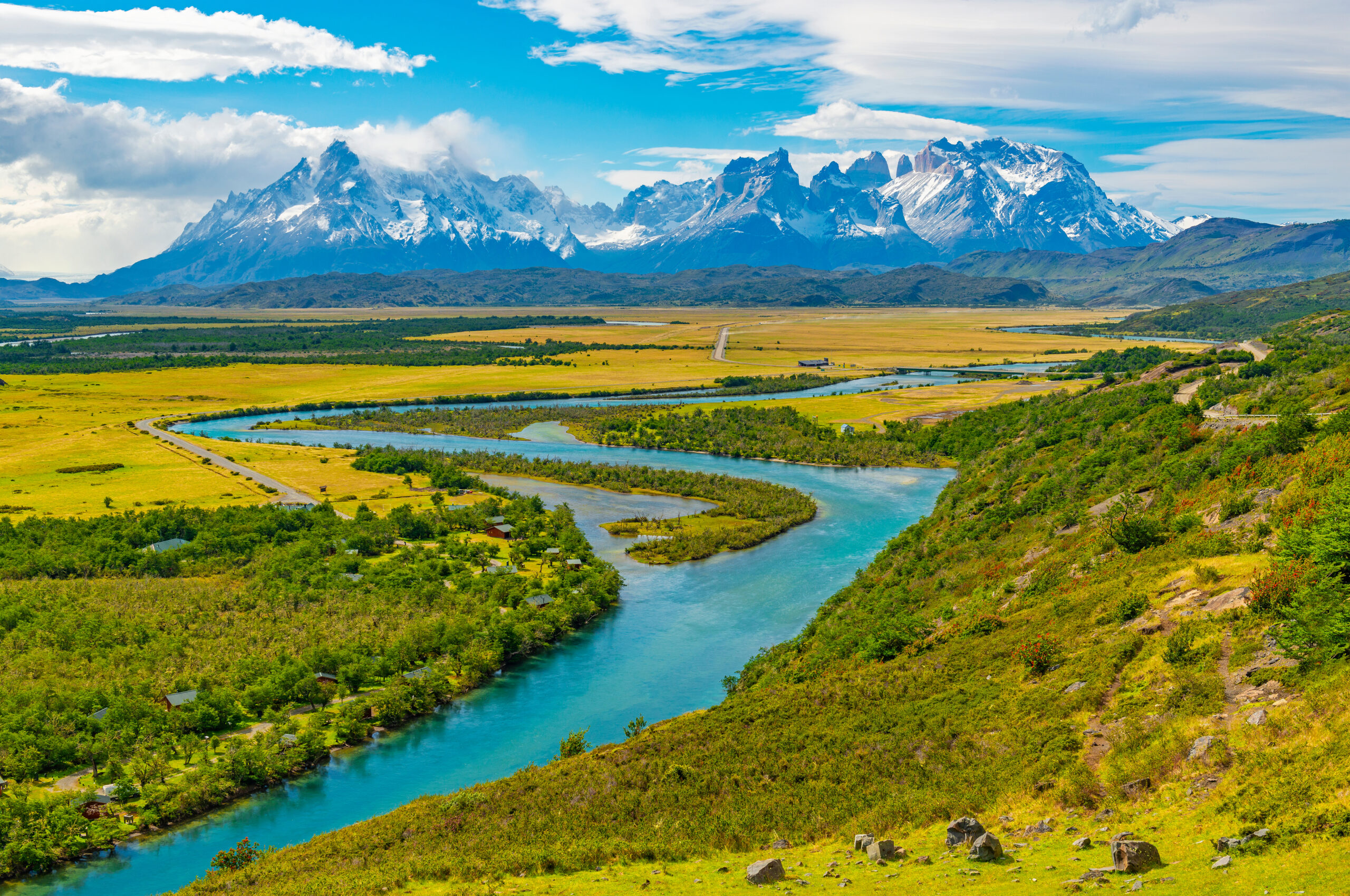
Torres del Paine O Circuit
The O Circuit—officially the Macizo Paine circuit—travels around the Paine massif and then incorporates the famous W corridor. Park guidance currently describes an 8–10 day itinerary.
The route’s defining moment is the crossing of John Garner Pass and descent toward Grey Glacier, but logistics matter just as much as scenery. Overnight reservations, seasonal openings, campsite rules and trail-direction controls make this a trek to organize before arriving in Patagonia.
Torres del Paine O Circuit guide →
Te Araroa
Te Araroa runs roughly 3,000 kilometres from Te Rerenga Wairua / Cape Reinga to Motupōhue / Bluff. The official trail organization describes a full through-walk as a four-to-six-month undertaking.
This is not 3,000 kilometres of uninterrupted wilderness tread. The route moves across beaches, roads, river systems, towns, farmland, forests and major mountain sections. That variety is its identity—and one reason planning requires more than copying the resupply model from an American thru-hike.
Te Araroa complete guide →
Great Himalaya Trail
Nepal Tourism Board describes the Great Himalaya Trail as stretching about 1,700 kilometres from Kanchenjunga in the east toward Humla in the west and requiring months to complete.
The important distinction is that this is not a single uniform path behaving like the Appalachian Trail. It is a large Himalayan trekking concept linking multiple regions, permit systems, landscapes and route choices. High-route versions involve remote terrain where expedition planning and local support become part of the undertaking.
Great Himalaya Trail guide →
Overland Track
Tasmania Parks and Wildlife Service calls the Overland Track Australia’s premier alpine walk: 65 kilometres from Ronny Creek to Narcissus, commonly walked over six days through Cradle Mountain–Lake St Clair National Park.
The main route is compact, but optional summit and side trips can significantly expand the journey. Huts provide shelter infrastructure, yet walkers still need a genuine wilderness system because Tasmanian weather can bring rain, wind, cold and snow even outside winter.
Overland Track guide →
Annapurna Circuit
The Annapurna Circuit encircles the Annapurna massif and crosses Thorong La at 5,416 metres. Nepal Tourism Board describes the traditional complete journey as a roughly three-week trek, while modern road access allows shorter versions.
That road access is why a single mileage figure can mislead. The more useful planning question is where you begin and finish on foot, how quickly you gain altitude and whether the itinerary preserves enough acclimatization before Thorong La.
Annapurna Circuit guide →
Classic Inca Trail
Peru’s tourism inventory describes the classic route at approximately 43 kilometres over four days and three nights, beginning around Piscacucho and reaching Machu Picchu through Intipunku, the Sun Gate.
This is the shortest core trek in the collection, but distance understates it. The route climbs over high Andean passes, passes archaeological complexes and operates through a controlled permit and authorized-tour system. Its scarcity is logistical rather than geographical.
Inca Trail guide →The Right Trek Is Usually Determined by Its Hardest Constraint.
For Everest and Annapurna, that constraint is often altitude. For Torres del Paine and the Inca Trail, reservations can determine whether the trip happens at all. Te Araroa is primarily a time and durability problem. The Great Himalaya Trail adds expedition logistics. Choosing the landscape first and solving the constraint later is backwards.
Best World Treks by Time Available.
The amount of uninterrupted time you can protect is the fastest way to reduce seven very different trips to a realistic shortlist.
Inca Trail
The most compact core trip, with a fixed destination and controlled access.
Overland Track
A full Tasmanian wilderness journey inside roughly one week.
Torres del Paine O
A complete Patagonian mountain circuit with reserved camps and refugios.
EBC / Annapurna
Enough time for a major Himalayan experience with acclimatization built into the itinerary.
Te Araroa / GHT
These stop behaving like vacations and become season-scale life projects.
Altitude Can Matter More Than Distance.
A strong sea-level hiker can still struggle badly at 5,000 metres. Fitness and acclimatization are related, but they are not the same thing.
- Everest Base Camp: destination around 5,364 m.
- Annapurna Circuit: Thorong La at 5,416 m.
- Great Himalaya Trail: route choice can involve repeated very high Himalayan passes.
- Inca Trail: substantially lower, but still reaches high Andean elevation.
- Torres, Overland and Te Araroa: weather, distance and terrain usually dominate more than extreme elevation.
Do not shorten Himalayan itineraries simply because your hiking pace at home is fast. Acclimatization requires time that fitness cannot replace.
 Thorong La Pass · 5,416 m · Wikimedia Commons
Teahouse Trek, Refuge Circuit or Full Backpack?
Two routes of similar length can require completely different equipment and planning if one provides meals and beds while the other requires a self-contained wilderness system.
Everest & Annapurna
Lodges along the route provide beds and meals, allowing trekkers to travel without a full camping kitchen and shelter system on standard itineraries.
Torres del Paine
Your daily itinerary is tied tightly to legal overnight locations. The reservation plan therefore becomes part of the route plan.
Overland Track
Huts exist, but Tasmania Parks still expects walkers to be prepared for wilderness conditions and changing mountain weather.
Te Araroa
Huts, camping, towns, roads, river travel and varied terrain all appear across one continuous journey.
Inca Trail
The classic route operates under controlled access with authorized operators and fixed camping systems rather than independent thru-hike logistics.
Great Himalaya Trail
Remote regions, restricted-area permits and high-route decisions can make local support far more consequential than on a conventional trekking route.

Four Days and Four Months Belong in Different Planning Categories.
The Inca Trail asks you to secure access and perform well for a fixed four-day window. Te Araroa asks whether your feet, equipment, finances and motivation still work after week eight. The word “trek” is broad enough to describe both, but the preparation should never be confused.
Other Treks That Belong on the World Shortlist.
The seven core routes build this cluster’s architecture, but a serious answer to “best treks in the world” should acknowledge the other journeys travelers routinely compare with them.
K2 Base Camp & Concordia
A remote glacier journey into the heart of the Karakoram beneath K2, Broad Peak and the Gasherbrums. More expedition-like than the standard Himalayan teahouse trek.
Mount Kilimanjaro
Technically a summit trek rather than a long-distance trail, but one of the world’s defining multi-day walking objectives and a common comparison for EBC.
Huayhuash Circuit
A high Andean circuit for trekkers who want remote mountain travel without making Machu Picchu the destination.
Snowman Trek
A long, high and logistically demanding Himalayan journey whose weather window and repeated passes make completion a major objective.
Routeburn Track
A much shorter Great Walk that fits travelers who want South Island mountain scenery without committing to Te Araroa.
Camino de Santiago
One of the world’s defining long walks, but treated separately here because pilgrimage tradition and cultural purpose shape the journey differently from mountain trekking.
Why Kilimanjaro and the Camino Are Not Core Children Here
Kilimanjaro is fundamentally a summit objective, while the Camino is fundamentally a pilgrimage network. Both deserve major Global Summit Guide coverage, but separating them keeps this cluster focused on trekking journeys rather than forcing every famous walk into one category.
Move From Inspiration Into the Exact Trek.
This hub owns comparison and selection. Each child page owns its detailed route, itinerary, accommodation, permits, seasonal window and current logistics.
Explore the Regions Behind the Treks.
These established Global Summit Guide pages let readers step sideways from one famous trek into the larger regional hiking system.
Understand the Trek Before You Build the Itinerary.
These guides separate long-distance trekking from related mountain-travel categories and help with the decisions shared by multiple routes.
Verify the Details Where the Trek Is Managed.
Weather, permits, seasonal closures and route regulations change faster than the identity of the trek. These are the primary starting points before travel.
World’s Great Treks FAQ.
The most important comparisons concern altitude, time, permits and how independently the route can be traveled.
What are the best treks in the world?
Frequently discussed world-class treks include Everest Base Camp, Annapurna Circuit, Torres del Paine, the Inca Trail, Te Araroa, the Overland Track, Tour du Mont Blanc, GR20, K2 Base Camp, the Walker’s Haute Route and several longer Himalayan routes. Which one fits best depends on time, altitude experience, support style and preferred terrain.
What is a good first international multi-day trek?
A well-supported route with straightforward logistics is generally easier to learn on than a remote expedition-scale route. The Overland Track, Tour du Mont Blanc and other developed multi-day trails can reduce logistical complexity. High-altitude routes such as Everest Base Camp require a separate acclimatization strategy even when lodging is plentiful.
How long does the Everest Base Camp trek take?
Nepal Tourism Board describes the classic Lukla-to-Everest Base Camp journey as approximately two weeks. Good itineraries include acclimatization time rather than simply minimizing the number of walking days.
How long is Te Araroa?
Te Araroa Trust describes the trail at roughly 3,000 kilometres from Cape Reinga to Bluff. A complete through-walk normally takes about four to six months.
How long is the Overland Track?
Tasmania Parks and Wildlife Service lists the standard Overland Track from Ronny Creek to Narcissus at 65 kilometres and six days. Side trips and walking around Lake St Clair can add distance and days.
How long is the classic Inca Trail?
Peruvian tourism sources describe the classic route at approximately 43 kilometres over four days and three nights, finishing at Machu Picchu through the Sun Gate.
Is the Great Himalaya Trail one continuous marked trail?
It is better understood as a large Himalayan trekking network and long-distance concept than as one uniformly marked path with one fixed tread. Route choice, permits, support requirements and remoteness vary substantially between regions.
Which trek reaches the highest altitude?
Among the core routes here, standard Annapurna Circuit itineraries cross Thorong La at 5,416 metres, while Everest Base Camp is around 5,364 metres. Great Himalaya Trail high-route variants can involve additional very high passes depending on the chosen route.
Which of these treks can be done without camping?
Everest Base Camp and Annapurna Circuit normally use teahouse accommodation. Other routes such as Torres del Paine and the Overland Track use controlled camps, huts or refugios, while Te Araroa requires a mixed system across its full length.
Is Kilimanjaro a trek or a climb?
Standard Kilimanjaro routes are non-technical trekking routes in normal conditions, but their objective is a mountain summit rather than completion of a long-distance trail. Global Summit Guide therefore treats Kilimanjaro primarily inside the mountain and trekking-peak architecture.
Pick the Trek by the Problem You Want to Solve.
For altitude and Himalayan culture, start with Everest or Annapurna. For dramatic wilderness inside two weeks, look at Torres del Paine. For archaeology and a tightly defined four-day journey, choose the Inca Trail. For a one-week wilderness route, consider the Overland Track. If the goal is to live on the trail for months, Te Araroa and the Great Himalaya Trail move into an entirely different category.
Was this helpful?
Global Summit Guide is an independent mountaineering resource founded in 2026. The team combines first-hand trekking and climbing experience with in-depth research and professional health and nutrition review to help climbers choose objectives, prepare properly, and stay safe.
Health, altitude, and nutrition content is reviewed by Taylor Ludlow (Registered Nurse) and Brigg Hoopes (Nutritionist).
What We Don't Know Yet
Mountain information changes quickly. This box explains the limits of what this page can responsibly promise.
- Comparisons simplify complex decisions; the better mountain depends on current conditions, skills, timing, budget, and risk tolerance.
- Visa, passport, vaccination, border, insurance, and local transportation rules may change before your trip.
- Route conditions, snowpack, closures, and weather can change quickly after this page is updated.
- Permit rules, fees, quotas, and reservation windows may change between review cycles.
- Operator availability, pricing, guide ratios, and cancellation terms can change by season.
Verify current conditions with official land managers, guide services, local forecasts, and current route reports before booking or climbing.
Mountaineering, rock and ice climbing, glacier travel, and high-altitude activity are inherently dangerous and can result in serious injury or death. The information on Global Summit Guide is provided for general informational and educational purposes only and is not a substitute for professional instruction, qualified guiding, proper equipment, or your own judgment and experience.
Route conditions, weather, snowpack, permits, regulations, and hazards change constantly and may differ from what is described here. Details may be incomplete, out of date, or contain errors. Always verify current information with local authorities, certified guides, and official sources before making any decision in the mountains.
Nothing on this site is medical, legal, or financial advice. Our fitness, acclimatization, altitude, and nutrition content is general in nature; consult a qualified physician before beginning any strenuous exercise program or exposing yourself to high altitude.
You are solely responsible for your own safety and decisions. To the fullest extent permitted by law, Global Summit Guide and its team accept no liability for any loss, injury, damage, or expense arising from use of, or reliance on, this information. By using this site you acknowledge these risks and accept these terms.
Some links on this site may be affiliate links. If you buy through them we may earn a small commission at no extra cost to you; this never affects our recommendations.
Global Summit Guide recommendation path
Next Best Mountain to Research
Use these recommendations to continue the right planning path instead of stopping on one page.
Use current permit, weather, route, and operator information before booking or climbing.