
Last updated September 17, 2026
Why Mountain Accidents Happen on Descent: What the Data Actually Shows
There is no single global dataset proving that most mountain accidents happen on descent. But multiple high-quality datasets show that descent is a disproportionately vulnerable phase in specific forms of hiking and mountaineering. The reasons repeat across disciplines: falls, fatigue, late-day conditions, route-finding in reverse, technical transitions, and the psychological letdown after reaching the objective.
Descent is a high-vulnerability phase—but the exact risk depends on the population.
The strongest statement the evidence supports is not “most mountain accidents happen on descent everywhere.” It is that several independent datasets show a strong concentration of falls, rescue need or fatalities during descent in specific mountain populations.
A nine-year Austrian Alps study of 5,368 fall-related hiking accidents found 75.3% occurred during descent. A Swiss Alps study of 303 fatal high-altitude mountaineering emergencies found that falls caused about 80% of deaths and 61.1% of those fatal falls happened during descent. In Baxter State Park, Maine, 84.4% of applicable search-and-rescue or medical incidents occurred while descending.
High-altitude mountaineering shows a different but related pattern. In an Everest mortality study, 56% of mountaineers who died after climbing above 8,000 metres died during descent from the summit, with another 17% dying after turning back. That is important Everest evidence—but it is not a universal mountain statistic.
What descent-risk studies actually found
Each row answers a different question. The value is in the repeated pattern—not in pretending the percentages are directly interchangeable.
| Dataset | Population / years | Descent finding | What it means | What it does not mean |
|---|---|---|---|---|
| Austrian Alps hiking falls | 5,368 fall accidents, 2006–2014 | 75.3% of victims fell during descent | Descent dominated fall-related hiking accidents in this large dataset. | 75.3% of all mountaineering accidents worldwide occur on descent. |
| Swiss Alps fatal high-altitude emergencies | 303 fatal events, 2009–2021 | 61.1% of fatal falls were during descent | Among fatal falls, descending was more common than ascending. | 61.1% of all Swiss mountain deaths occurred during descent. |
| Baxter State Park SAR | 754 SAR / medical events, 1992–2014 | 84.4% of applicable acute need occurred descending | Rescue and medical need strongly clustered on descent in this hiking population. | A technical climbing accident rate. |
| Everest mortality | Mountaineers above 8,000 m, historical cohort | 56% of deaths in that subgroup occurred on summit descent; another 17% after turning back | Extreme altitude can make descent physiologically and cognitively dangerous. | An Everest percentage that can be applied to Rainier, hiking or rock climbing. |
| AAC ANAC human-factors review | Historical North American climbing reports | Rappel errors, poor downclimb route-finding and exposed-terrain slips account for nearly 30% of serious incidents in some years | Descent failure modes recur often enough to deserve explicit systems. | A fixed annual or universal climbing rate. |
| UIAA / SERAC / French PGHM context | French alpine accident reports | Falls by climbers are described as by far the most frequent accident type; PGHM data average about 24 deaths/year from such falls | Fall prevention deserves priority across ascent and descent. | Proof that rappel errors are the most common accident overall. |
The pattern appears in very different mountain environments
This is a context map for the research populations cited on this page—not an accident heat map.
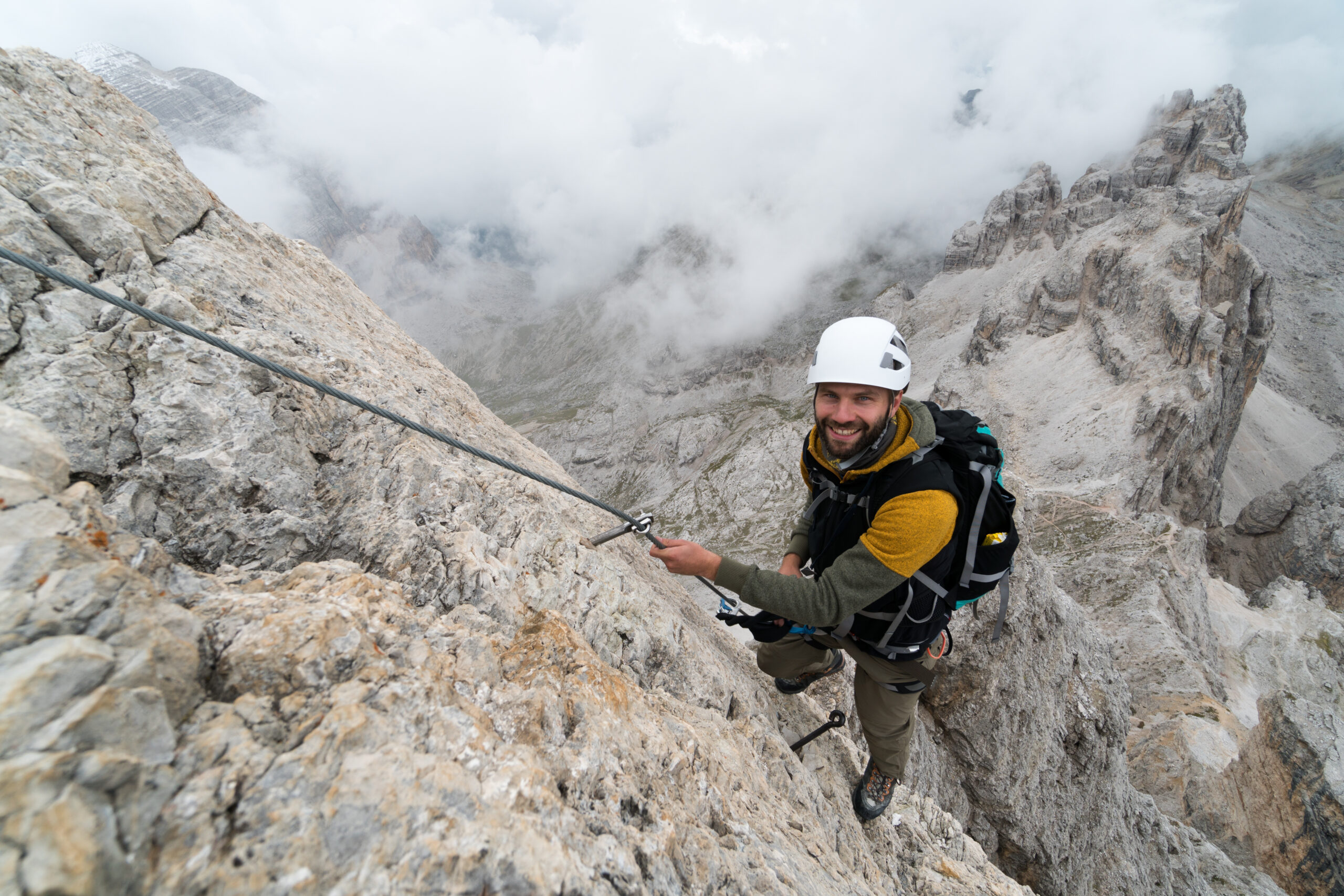
Going down asks for precision when the body is least able to provide it.
Descending changes how the body and the terrain interact. Footholds are harder to see, eccentric muscle loading increases, loose terrain is more likely to move under braking steps, and a small slip can accelerate instead of being absorbed by upward momentum. None of that requires a rappel to become consequential.
Falls are the strongest recurring signal
The page’s old emphasis on rappel error was too narrow. Broader alpine data place falls—not one specific rope mistake—at the center of the accident record.
Descending hides the next move.
On rock and scrambling terrain, holds that were obvious from below can be difficult to see from above. Tired climbers often lower onto feet they have not fully tested.
Legs absorb rather than generate force.
Repeated downhill braking loads quadriceps and stabilizers differently from ascent. Fatigued legs make slips, knee buckling and uncontrolled steps more likely late in the day.
Scree and rock move under a descending climber.
Weighting downhill edges can trigger movement, while a fall tends to accelerate downslope. A helmet reduces some consequences but does not solve bad position or exposure.
Later-day surfaces may be softer or icier.
Afternoon warming can weaken snow and bridges; shaded slopes can remain hard. The descent may therefore cross a materially different surface from the ascent.
Protection often disappears before consequence does.
AAC guidance on third- and fourth-class terrain repeatedly notes approach and descent accidents where climbers moved unroped because the terrain felt too easy for protection.
Descending terrain looks unfamiliar.
The line that was obvious climbing upward can disappear when viewed from above, especially at junctions, gullies and cliff bands.

The descent occurs after the team’s strongest hours are already spent.
On glaciated peaks, the hazards do not end at the summit. Rope spacing, crevasse exposure, crampon technique and self-arrest readiness still matter while fatigue, sun-softened snow and reduced concentration are increasing.
Fatigue is not just tired legs—it changes decisions
The AAC human-factors review is strongest when it explains why capable climbers make ordinary mistakes late in the day.
Small shortcuts become easier to justify.
After hours of route finding, weather evaluation, pacing and technical work, climbers have less cognitive bandwidth. AAC’s human-factors analysis connects descent vulnerability with fatigue, pressure to finish and decisions made under stress.
The practical effect is familiar: “we have done this setup all day,” “that anchor is probably fine,” “we can make the next station,” or “the trail must be over there.” Each sentence reduces margin at exactly the point when fewer reserves remain.
The objective ends psychologically before it ends physically.
Summits, top-outs and high points trigger a natural release of focus. The climbing goal has been achieved, photos are taken, and the brain shifts toward getting home. Yet the route may still require rappels, exposed downclimbing, glacier travel or hours of hiking.
That mismatch between psychological completion and physical exposure is why “the summit is halfway” remains a useful mental model even though no single statistic applies to every mountain.
Rappelling is a recurring failure mode—not the universal leading killer
AAC records make one lesson very clear: the transition into a rappel is where simple omissions can become catastrophic.
Unclosed systems recur in accident reports.
AAC accident reports document climbers rappelling off rope ends when strands were uneven or the intended station was farther away than assumed. Stopper knots are one common safeguard where appropriate.
Fixed does not mean redundant or reliable.
AAC human-factors work emphasizes backing up dubious anchors and inspecting fixed material rather than relying on familiarity or popularity.
The setup must match the equipment.
Fatal incidents have involved devices used incorrectly or with incompatible rope diameters. Hands-on instruction and pre-commitment checks matter more than memorizing one universal configuration.
Assumptions multiply at anchors.
Partner confusion about rope length, who is on belay, or whether a system is ready appears repeatedly in accident analysis. Explicit checks are safer than implied understanding.
Tired climbers benefit from simpler systems.
A system that is elegant in practice can become fragile under darkness, cold or fatigue. Use systems you have practiced and understand rather than improvising at the last anchor.
Written instruction is not enough.
Rappelling, anchor evaluation and rescue systems are high-consequence skills. Learn and practice them with qualified instruction on low-consequence terrain before relying on them in the mountains.
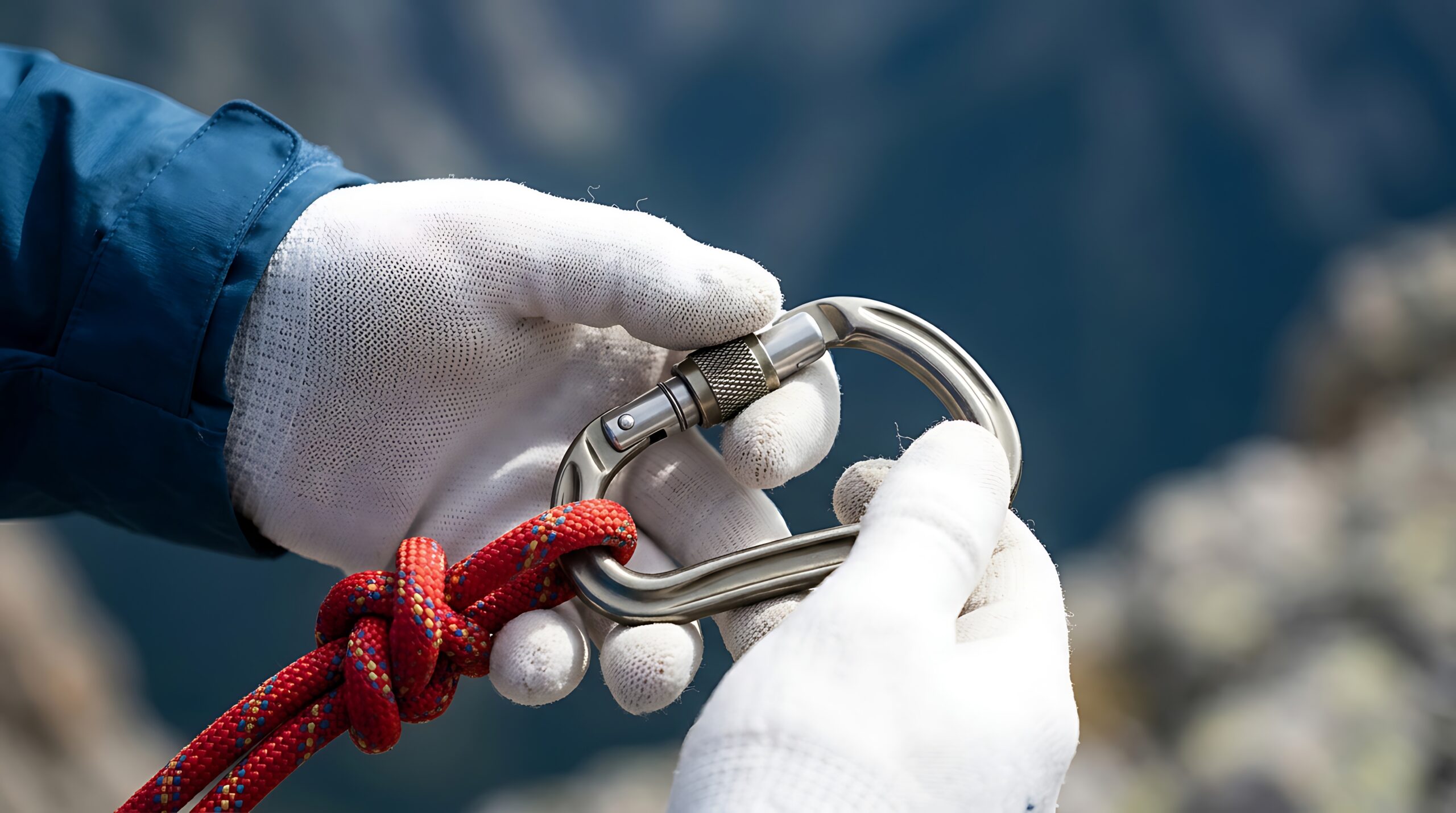
Transitions deserve a deliberate reset
The moment a team changes systems is exactly when assumptions should be replaced by explicit checks.

Practice before consequence is high
Repetition on controlled terrain builds the habits that fatigue otherwise strips away. Wikimedia Commons · CC BY 2.0.
Many descent falls happen where the terrain feels manageable
AAC’s Safer 4th Class guidance is valuable because it focuses on the terrain climbers are most tempted to stop protecting.
Easy movement can still have a fatal runout.
Third- and fourth-class terrain may not feel like “climbing,” but a slip can turn into a long tumble. Loose rock, poor visibility of footholds and fatigue make easy downclimbing disproportionately unforgiving.
The correct question is not “can I climb this without a rope?” It is “what happens if I slip here while tired?” Consequence—not technical grade—should drive the protection decision.
Familiarity lowers perceived risk.
AAC’s human-factors research describes risk normalization: repeated successful exposure can reduce the emotional signal that normally prompts caution. The climber stops checking because the system has always worked or unropes because the ridge has always felt easy.
That is why experienced climbers still appear in accident records. Experience can improve skill while simultaneously increasing comfort with shortcuts.

On Denali and Everest, descent risk is not only mechanical.
Hypoxia, cold, dehydration, long summit days and depleted energy can impair movement and judgment at the same time. NPS annual summaries repeatedly document falls, altitude illness and medical emergencies during descent on Denali, while Everest mortality research found a strong concentration of deaths after summit or turnaround among climbers operating above 8,000 metres.
The surface may be worse on the way down than it was on the way up
Time of day changes the mountain. Snow softens, snow bridges weaken, rock warms and weather often builds after the morning ascent window.
Afternoon warming changes support.
A firm morning surface can become punchy or unstable, increasing postholing, slip and wet-snow concerns. The ascent track is not a guarantee of descent quality.
Speed turns a slip into a fall.
Uncontrolled glissades can accelerate quickly. Crampons can catch violently during a slide. Learn snow-descent techniques under qualified instruction before using them on consequential slopes.
The glacier is still crevassed after the summit.
Rope discipline should not relax because the high point is behind you. Warming can weaken snow bridges later in the day.
Fast is not always efficient.
Loose rock rewards controlled movement and spacing. Rushing increases slips and can send rocks onto teammates below.
Later often means less margin.
Thunderstorms, whiteout, heat and wind can arrive after the summit window. Turnaround planning should protect the descent, not just the ascent.
Late descent compounds every other problem.
Headlamps solve visibility, not fatigue or route uncertainty. A late turnaround can stack darkness on top of already degraded decision-making.
Everest shows why summit timing and descent physiology matter
This is one of the few settings where descent mortality has been studied with a clearly defined historical cohort.
| Everest finding | Historical result | Interpretation |
|---|---|---|
| Deaths after climbing above 8,000 m | 56% during descent from summit | Descent was the largest single stage among deaths in this subgroup. |
| After turning back | 17% | Risk did not disappear because the summit attempt ended. |
| During ascent | 10% | The ascent accounted for fewer deaths in this specific above-8,000 m subgroup. |
| Common observed features | Profound fatigue, cognitive changes, ataxia | Extreme altitude can degrade both mobility and judgment during descent. |
| Summit timing | Non-survivors summited later on average than survivors | A late summit can compress descent margin in the highest-risk environment. |
Eight gates to protect the second half of the climb
The best descent plan is built before the summit. Each gate is a decision point that preserves margin rather than relying on tired judgment.
Route home
Know the descent line, key junctions, rappel stations and escape options before leaving the trailhead.
Turnaround
Choose a time or condition threshold before summit fever and sunk cost can renegotiate it.
Reserve
Carry enough food, water, lighting and insulation for the descent—not just for reaching the objective.
Reset
At the summit or top-out, deliberately pause and mentally switch from achievement to descent execution.
Transitions
Slow down when changing systems. Use practiced checks and explicit partner communication.
Protect consequence
If easy-looking terrain has severe fall consequence, use appropriate protection rather than trusting tired footwork.
Reassess surface
Assume snow, ice, rock and weather may have changed since the ascent and evaluate them again.
Finish the day
Keep the team engaged until objective hazard and route-finding consequence are truly behind you.

Reserve is a safety system.
Energy, daylight, food, water, warmth and attention are all forms of margin. A team that spends every reserve reaching the top has already made the descent more fragile, even if no single mistake has happened yet.
What real accident reports keep repeating
The purpose of case studies is pattern recognition, not hindsight blame. The examples below are summarized without sensationalizing the people involved.
The rope did not reach the intended station.
In a documented multi-pitch descent, a climber attempted to pass one rappel station and continue to a lower anchor. The ropes did not reach, and the climber came off the ends. AAC’s analysis emphasized that knots in the rope ends could have prevented the fall.
Transferable lesson: when tired and under time pressure, do not turn an estimate into a system. Confirm rope length and keep the system closed where appropriate.
One strand was shorter than expected.
A moderately experienced climber rappelled off one end of an uneven rope and suffered serious injuries. AAC identified the uneven strands and lack of stopper knots as key factors.
Transferable lesson: experience does not protect against a familiar setup being slightly wrong.
A medical emergency occurred during summit descent.
NPS reported a climber experiencing a medical emergency while descending the West Buttress at roughly 18,600 feet after midnight. The incident illustrates how medical and altitude problems can emerge during the return from the summit rather than before it.
Transferable lesson: the summit does not end altitude exposure or physiological risk.
Transition errors often look trivial before they become consequential.
AAC’s 2005–2024 human-factors analysis repeatedly finds miscommunication, incorrect device use, overcomplicated systems and skipped checks around anchors and transitions.
Transferable lesson: build habits for the tired version of yourself, not only the fresh one.
Why this page no longer claims one universal descent statistic
Accident datasets are valuable only when the population and denominator remain attached.
American Alpine Club — ANAC & Know the Ropes
AAC has published Accidents in North American Climbing since 1948. Its human-factors analysis uses historical reports to identify recurring technical and psychological patterns, including descent vulnerability, transition errors, risk normalization and decision fatigue.
Reporting-bias warning
ANAC is a teaching archive, not a complete census of every climbing accident. Published medical research has specifically cautioned that voluntary ANAC reporting captures only a fraction of U.S. mountaineering incidents and should not be treated as a population denominator.
This is why the AAC “nearly 30% in some years” figure is preserved with exactly that qualifier rather than presented as a fixed annual rate.
Peer-reviewed hiking evidence
The Austrian Alps study analyzed 5,368 fall-related hiking accidents from 2006–2014 and found 75.3% occurred on descent.
Peer-reviewed Swiss mountaineering evidence
A 2009–2021 observational analysis examined 303 fatal high-altitude mountaineering events. Falls caused about 80% of the deaths, and 61.1% of fatal falls occurred during descent.
Fatal high-altitude mountaineering accidents in the Swiss Alps
Baxter State Park SAR evidence
A retrospective review of 754 search-and-rescue and medical incidents found 84.4% of applicable acute need occurred while descending; fatigue was also prominent in medical SAR events.
Everest mortality evidence
The Everest study provides strong stage-of-climb data for extreme altitude, but it is deliberately separated from hiking and ordinary alpine datasets because the population, physiology and objective hazards are different.
UIAA / SERAC fall context
UIAA’s 2026 SERAC discussion states that falls by climbers are by far the most frequent accident type in the French alpine reports it references and cites PGHM data averaging 24 deaths per year from such falls in French mountain ranges.
What this page can responsibly conclude
Across several independent populations, descent repeatedly appears as a high-vulnerability period, especially for falls, fatigue-driven errors, route finding and technical transitions. The data do not justify one universal claim that most mountain accidents worldwide happen on descent.
Mountain accident descent FAQ
The visible answers below match the FAQ schema and preserve the population limits behind each statistic.
Do most mountain accidents happen on the descent?
There is no single global mountaineering dataset proving that claim. However, several large datasets show strong descent concentrations in specific contexts: 75.3% of fall-related hiking accidents in one Austrian Alps study occurred on descent, 61.1% of fatal falls in a Swiss high-altitude mountaineering dataset occurred on descent, and 84.4% of applicable Baxter State Park SAR or medical incidents occurred while descending.
Why can descending be more dangerous than climbing up?
Descending often stacks accumulated fatigue, reduced attention after reaching the objective, harder-to-see footholds, braking loads on the legs, later-day weather and snow changes, reverse route-finding, and technical transitions such as rappelling.
What does the American Alpine Club say about descent accidents?
AAC’s Know the Ropes human-factors work identifies the end of the day and descent from a summit as times of great vulnerability. Its historical analysis says rappelling errors, poor route-finding on downclimbs and slipping on exposed terrain account for nearly 30% of serious incidents in some years.
Are rappel accidents the most common mountain accidents?
No. Rappel failures are a recurring and sometimes fatal descent failure mode, but broader alpine data identify falls as the more common accident category. UIAA’s SERAC discussion describes falls by climbers as by far the most frequent type in the French alpine accident reports it references.
Why are rappel transitions vulnerable?
They require a climber to change from one safety system to another, often while tired. AAC accident analysis repeatedly identifies miscommunication, incorrect device use, overly complex systems, weak anchors, poorly tied knots and failure to maintain a closed system.
Why do experienced climbers still make descent mistakes?
Experience does not eliminate fatigue, time pressure, familiarity bias or skipped checks. AAC human-factors research describes risk normalization, authority effects and decision fatigue in experienced as well as newer climbers.
Why is easy terrain dangerous on descent?
Lower-difficulty terrain often receives less protection and attention even when fall consequence remains severe. AAC guidance notes recurring approach and descent accidents from slips, loose rock and moving unroped on terrain judged too easy for protection.
Does high altitude increase descent risk?
It can. In a historical Everest cohort, 56% of mountaineers who died after climbing above 8,000 metres died while descending from the summit, and another 17% died after turning back. Profound fatigue, cognitive changes and ataxia were common among non-survivors. Those numbers are Everest-specific.
What is the best preparation for a safer descent?
Plan the descent before starting, preserve time and energy for it, set turnaround thresholds, practice technical descent systems under qualified instruction, use simple redundant systems, perform partner checks, and treat fatigue or route-finding difficulty as reasons to slow down rather than rush.
The summit is not the danger-free half of the day.
The data do not support one universal claim that most mountain accidents happen on descent. They do support something more useful: falls, fatigue, reverse route-finding, late-day conditions and technical transitions repeatedly make descent a high-vulnerability phase. Plan for the version of yourself who will be tired, cold and eager to be finished—not only the version who starts fresh at the trailhead.
Study the Mountain Accident Lessons PillarAccident chains, rappels, turnaround times & mountain judgment
This page owns the evidence for descent vulnerability. Use the guides below for the specific human factors and technical systems that turn that evidence into better mountain decisions.
Was this helpful?
Global Summit Guide is an independent mountaineering resource founded in 2026. The team combines first-hand trekking and climbing experience with in-depth research and professional health and nutrition review to help climbers choose objectives, prepare properly, and stay safe.
Health, altitude, and nutrition content is reviewed by Taylor Ludlow (Registered Nurse) and Brigg Hoopes (Nutritionist).
What We Don't Know Yet
Mountain information changes quickly. This box explains the limits of what this page can responsibly promise.
- Visa, passport, vaccination, border, insurance, and local transportation rules may change before your trip.
- Route conditions, snowpack, closures, and weather can change quickly after this page is updated.
- Permit rules, fees, quotas, and reservation windows may change between review cycles.
- Operator availability, pricing, guide ratios, and cancellation terms can change by season.
- Your fitness, altitude response, risk tolerance, and experience level may change what is safe or realistic.
Verify current conditions with official land managers, guide services, local forecasts, and current route reports before booking or climbing.
Mountaineering, rock and ice climbing, glacier travel, and high-altitude activity are inherently dangerous and can result in serious injury or death. The information on Global Summit Guide is provided for general informational and educational purposes only and is not a substitute for professional instruction, qualified guiding, proper equipment, or your own judgment and experience.
Route conditions, weather, snowpack, permits, regulations, and hazards change constantly and may differ from what is described here. Details may be incomplete, out of date, or contain errors. Always verify current information with local authorities, certified guides, and official sources before making any decision in the mountains.
Nothing on this site is medical, legal, or financial advice. Our fitness, acclimatization, altitude, and nutrition content is general in nature; consult a qualified physician before beginning any strenuous exercise program or exposing yourself to high altitude.
You are solely responsible for your own safety and decisions. To the fullest extent permitted by law, Global Summit Guide and its team accept no liability for any loss, injury, damage, or expense arising from use of, or reliance on, this information. By using this site you acknowledge these risks and accept these terms.
Some links on this site may be affiliate links. If you buy through them we may earn a small commission at no extra cost to you; this never affects our recommendations.
Global Summit Guide recommendation path
Next Best Mountain to Research
Use these recommendations to continue the right planning path instead of stopping on one page.
Use current permit, weather, route, and operator information before booking or climbing.