<

Tag: salt lake city mountains

  • Best Mountains Near Salt Lake City to Hike & Climb

    Best Mountains Near Salt Lake City to Hike & Climb

    Best Mountains Near Salt Lake City to Climb | 12 Peak Guide | Global Summit Guide
    Home Mountains Wasatch Range Best Mountains Near Salt Lake City
    Salt Lake City · Utah · Wasatch & Beyond · Summer Guide

    Best Mountains Near Salt Lake City to Hike & Climb

    Salt Lake City is surrounded on four sides by serious mountain terrain. Within ninety minutes of downtown, you can stand on a summit above 11,000 feet, cross a glacier, watch bison graze below you from a Great Salt Lake island peak, or bag the tallest point in the entire Wasatch Range. This guide covers the 12 best mountains within reach of the city — organized by direction, difficulty, and drive time so you can pick your peak and go.

    ⛰️ 12 Peaks covered — all directions
    🚗 20 – 90 min from downtown SLC
    📈 7,679 – 11,933 ft summit range
    🗓️ Best season: June – October

    Why Salt Lake City Is One of America’s Best Mountain Cities

    20 min
    Closest Summit Trailhead
    Grandeur Peak’s trailhead in lower Millcreek Canyon is less than 20 minutes from downtown Salt Lake City — the shortest drive time to a genuine Wasatch summit available from a major US city.
    11,933 ft
    Highest Peak Within 90 Minutes
    Mount Nebo, the tallest peak in the Wasatch Range, sits roughly 90 minutes south of Salt Lake City near Nephi — a full-day expedition reachable on a single tank of gas.
    4 Directions
    Mountains Surround the City
    Unlike most mountain cities, SLC has serious climbing terrain in every direction — east into the Wasatch, north toward Ogden, south toward Timpanogos, and west into the Stansbury and Oquirrh ranges.
    4,226 ft
    City Starting Elevation
    Salt Lake City’s high base elevation gives every climber a meaningful head start on acclimatization. You begin closer to altitude than most lowland cities — a real advantage on summit days.

    Very few cities in the United States can match what Salt Lake City offers the mountain-focused hiker or climber. The Wasatch Range rises sharply on the eastern edge of the valley — from city streets to above-10,000-foot terrain in less time than most Americans spend on a commute. But the mountains don’t stop there. Drive north forty-five minutes and you’re beneath Ben Lomond above Ogden. Drive west and the Stansbury Mountains offer a genuinely remote 11,000-foot summit with a fraction of the crowd of any Wasatch canyon peak. Drive south and the rugged massif of Mount Timpanogos — one of the finest summit hikes in the American West — fills the horizon above Utah Valley.

    This guide is organized by direction from Salt Lake City, so you can choose your objective based on how much time you have, what kind of terrain you’re after, and how far you want to drive. Every peak includes an AllTrails link, drive time from downtown SLC, elevation stats, and the practical notes that determine whether a climb goes well or not. If you’re looking for more detailed coverage of the eastern Wasatch peaks specifically, our Top 10 Peaks in Salt Lake County guide and the Timpanogos Hiking Co. 2026 Challenge guide go deeper on those corridors.

    Canyon Fees & Timed Entry — Plan Before You Drive

    Big Cottonwood and Little Cottonwood Canyons operate seasonal per-vehicle day-use fees and have piloted timed-entry reservation systems on busy weekends. Millcreek Canyon has its own fee. Mount Timpanogos trailheads require timed-entry permits on weekends and holidays, bookable through Recreation.gov. Antelope Island charges a state park entry fee. Always check access conditions before your drive, especially on summer weekends when canyon capacity limits apply.

    1

    Mountains Near Salt Lake City: Drive Time Overview

    All distances are approximate drive times from downtown Salt Lake City (Temple Square area) under typical non-peak-hour conditions. Actual times vary with traffic, especially on canyon roads during summer weekend mornings.

    East — Wasatch Canyons
    • Grandeur Peak~20 min
    • Mount Olympus~25 min
    • Mount Aire~30 min
    • Mount Raymond~35 min
    • Twin Peaks~35 min
    • Mount Superior~40 min
    • Pfeifferhorn~45 min
    South — Utah County & Beyond
    • Lone Peak~35 min
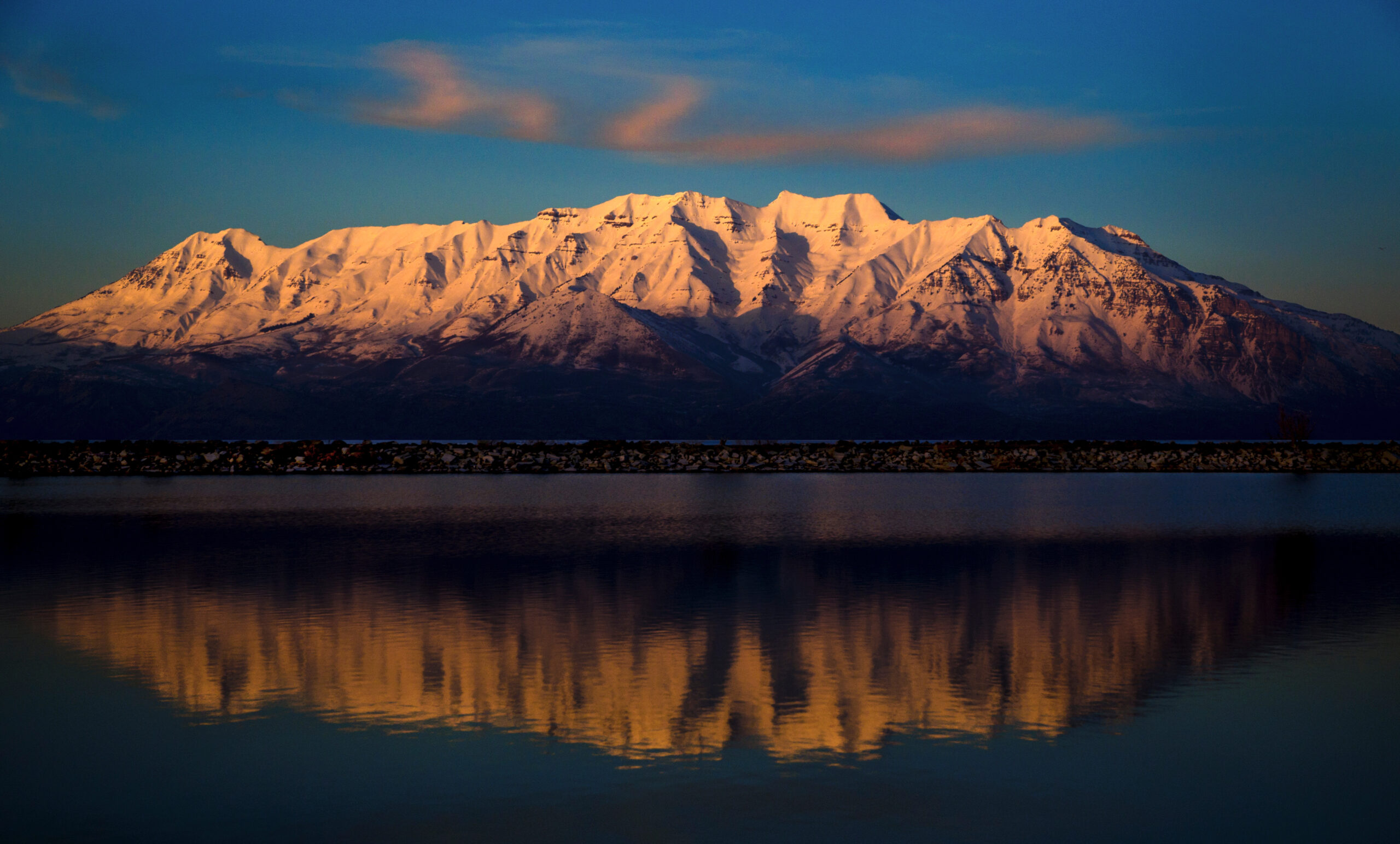
    • Mount Timpanogos~55 min
    • Mount Nebo~90 min
    West — Stansbury / Antelope Island
    • Frary Peak~45 min
    • Deseret Peak~60 min
    North — Davis / Weber County
    • Willard Peak~55 min
    • Ben Lomond~60 min
    # Peak Elevation Gain (RT) Distance Difficulty Drive from SLC Direction
    1Grandeur Peak8,299 ft~2,800 ft~6.6 miModerate~20 minEast
    2Mount Olympus9,026 ft~4,100 ft~8.2 miModerate–Hard~25 minEast
    3Twin Peaks11,330 ft~4,400 ft~10.4 miHard~35 minEast
    4Mount Superior11,132 ft~3,100 ft~7.4 miHard~40 minEast
    5Pfeifferhorn11,326 ft~3,700 ft~11.0 miHard~45 minEast
    6Lone Peak11,253 ft~5,500 ft~13.0 miVery Hard~35 minSouth
    7Mount Timpanogos11,753 ft~4,900 ft~16.0 miHard~55 minSouth
    8Mount Nebo11,933 ft~5,400 ft~12.0 miHard~90 minSouth
    9Frary Peak6,596 ft~2,100 ft~7.0 miModerate~45 minWest
    10Deseret Peak11,031 ft~3,300 ft~9.0 miModerate–Hard~60 minWest
    11Willard Peak9,764 ft~2,600 ft~7.8 miModerate~55 minNorth
    12Ben Lomond9,712 ft~4,200 ft~15.4 miModerate–Hard~60 minNorth
    Direction
    East — The Wasatch Canyons
    Millcreek · Big Cottonwood · Little Cottonwood

    The eastern Wasatch is the primary mountain playground for Salt Lake City residents and visitors. Three main canyons — Millcreek, Big Cottonwood, and Little Cottonwood — cut deep into the range and provide access to nearly every major summit. This is where you’ll find the most trail infrastructure, the most route options, and the most competition for trailhead parking on summer weekends. The peaks here also carry some of the highest quality summit experiences in Utah — particularly the cluster above 11,000 feet in the upper canyons.

    1. Grandeur Peak — Closest Real Summit to Downtown

    1Grandeur Peak
    ModerateBest Quick Summit
    8,299 ft
    Summit
    ~2,800 ft
    Gain
    6.6 mi
    Round Trip
    ~20 min
    Drive from SLC
    5,530 ft
    Trailhead Elev.

    Grandeur Peak earns its spot as the single most accessible genuine mountain summit from Salt Lake City. The trailhead sits near the mouth of lower Millcreek Canyon, putting you on trail in under twenty minutes from downtown — less time than many Salt Lake residents spend driving to work. The Church Fork approach climbs steadily through ponderosa pine and oak scrub to a broad, flat summit with 360-degree views of the entire Salt Lake Valley, the Oquirrh Mountains to the west, and the high Wasatch peaks rising behind you to the east. It is the best summit in the metro area for watching a sunrise from above the city, and the earliest-season accessible peak on this entire list — often clear of snow before Memorial Day.

    Grandeur is also one of the best training peaks for anyone building toward harder objectives. The consistent grade, manageable distance, and high starting elevation make it an ideal fitness benchmark hike. If you can run Grandeur in under two hours from the trailhead, you’re in solid shape for anything in the moderate-hard category on this list.

    • Two approach options: Church Fork (steeper, shorter) or Pipeline Trail (longer, more gradual)
    • No canyon fee — accessed from lower Millcreek before the fee gate
    • Excellent winter and early spring option — lower elevation means earlier snowmelt
    • Summit views at golden hour are among the best available near the city
    🗺 View Trail on AllTrails

    2. Mount Olympus — The Iconic Valley Silhouette

    2Mount Olympus
    Moderate–HardMost Recognized Summit
    9,026 ft
    Summit
    ~4,100 ft
    Gain
    8.2 mi
    Round Trip
    ~25 min
    Drive from SLC
    4,900 ft
    Trailhead Elev.

    Mount Olympus is the most recognizable mountain from the Salt Lake Valley floor — its twin-humped profile dominates the eastern skyline between the Millcreek and Big Cottonwood corridors and is visible from nearly every street in the city. Climbing it feels like climbing something genuinely famous, and the summit delivers: a 360-degree panorama of the metro area spread across the valley below, the Great Salt Lake glinting in the west, and the high Wasatch giants rising behind you. The final approach to the south summit involves hands-on scrambling over exposed quartzite, making Olympus the first peak on this list that requires real technical confidence rather than just fitness.

    • The trailhead is in the Olympus Cove neighborhood — no canyon fee required
    • South-facing lower slopes get brutally hot in summer — start before 7 AM in July and August
    • The summit scramble is exposed; comfortable with heights is a requirement, not a suggestion
    • Also included in our Salt Lake County Top 10 guide with more detailed route notes
    🗺 View Trail on AllTrails

    3. Twin Peaks — Highest Summit in Salt Lake County

    3Twin Peaks (Broads Fork)
    HardHighest SLC County Peak
    11,330 ft
    Summit
    ~4,400 ft
    Gain
    10.4 mi
    Round Trip
    ~35 min
    Drive from SLC
    6,940 ft
    Trailhead Elev.

    Twin Peaks is the highest summit in Salt Lake County and one of the most coveted objectives in the Wasatch. The Broads Fork approach ascends a spectacular glacially-carved cirque in Big Cottonwood Canyon — one of the finest alpine environments accessible from a major US city. The south summit, at 11,330 feet, is the higher of the two towers and requires sustained scrambling above the cirque basin on steep quartzite. This is a serious full-day objective that demands strong fitness, solid route-finding, and genuine comfort on exposed terrain. The reward is proportionate: summit views from Twin Peaks rank among the finest in the entire northern Wasatch.

    • Snow in the cirque basin persists well into July — microspikes often needed in June
    • Big Cottonwood Canyon fee applies; arrive early to guarantee parking at the Broads Fork pullout
    • Allow 5–7 hours round trip; very early starts (4–5 AM) recommended in summer
    🗺 View Trail on AllTrails

    4. Mount Superior — High Elevation, Maximum Efficiency

    4Mount Superior
    HardLittle Cottonwood Canyon
    11,132 ft
    Summit
    ~3,100 ft
    Gain
    7.4 mi
    Round Trip
    ~40 min
    Drive from SLC
    8,000 ft
    Trailhead Elev.

    Mount Superior offers the most efficient path to above-11,000 feet from Salt Lake City. The Cardiff Fork approach starts at 8,000 feet — the highest trailhead on this list for an 11,000-foot objective — which keeps total mileage compact despite the serious nature of the summit terrain. The route climbs steeply through subalpine terrain to the narrow summit ridge, which involves committed class 3 scrambling and significant exposure on both sides. Superior’s combination of high altitude, genuine technical challenge, and relative short distance from the city makes it a benchmark objective for serious Wasatch climbers.

    • High starting elevation — altitude effects are real, especially for visitors from sea level
    • Little Cottonwood Canyon fee and timed-entry restrictions may apply on summer weekends
    • Class 3 summit ridge — trekking poles stowed for the final section
    🗺 View Trail on AllTrails

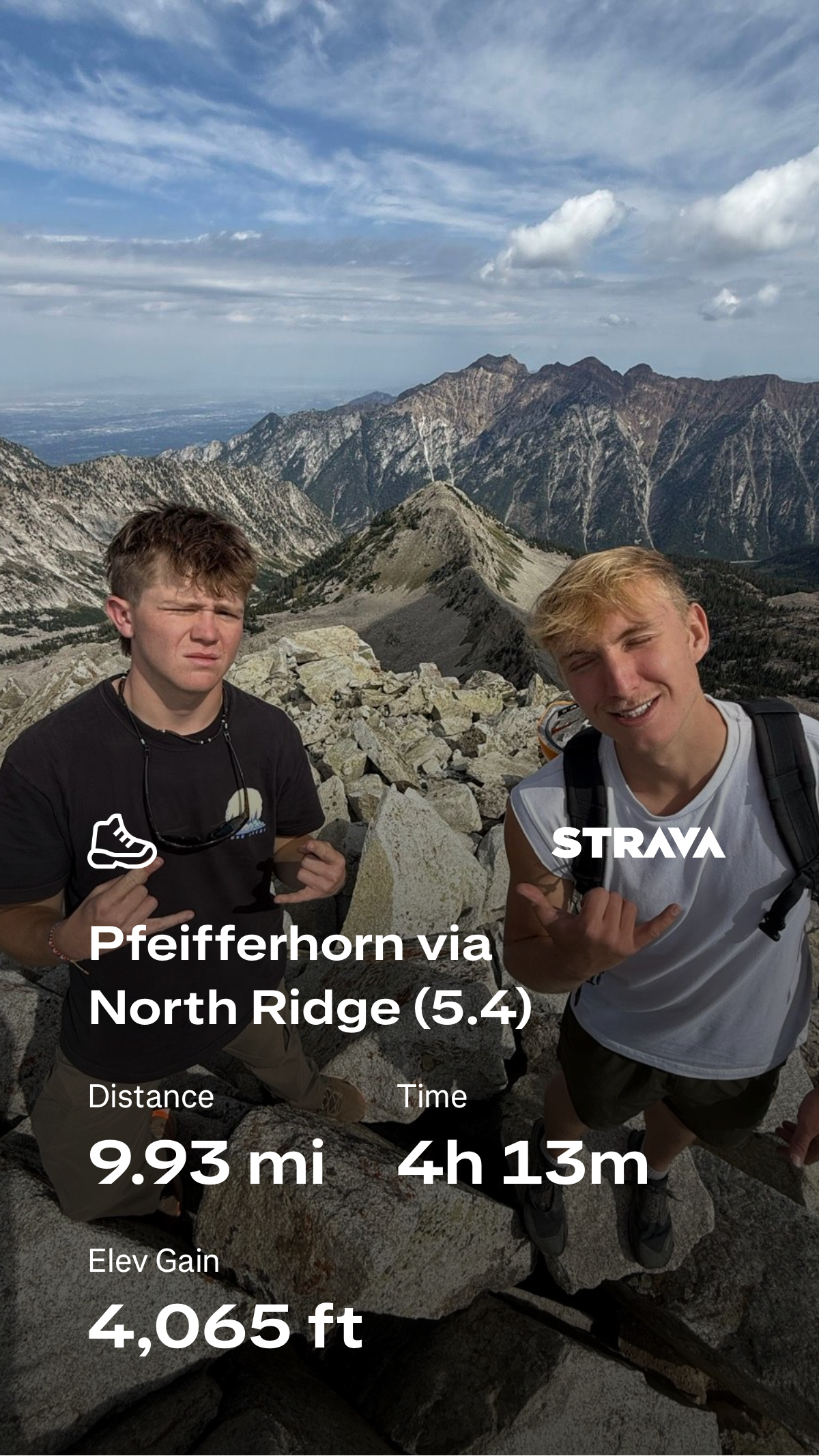
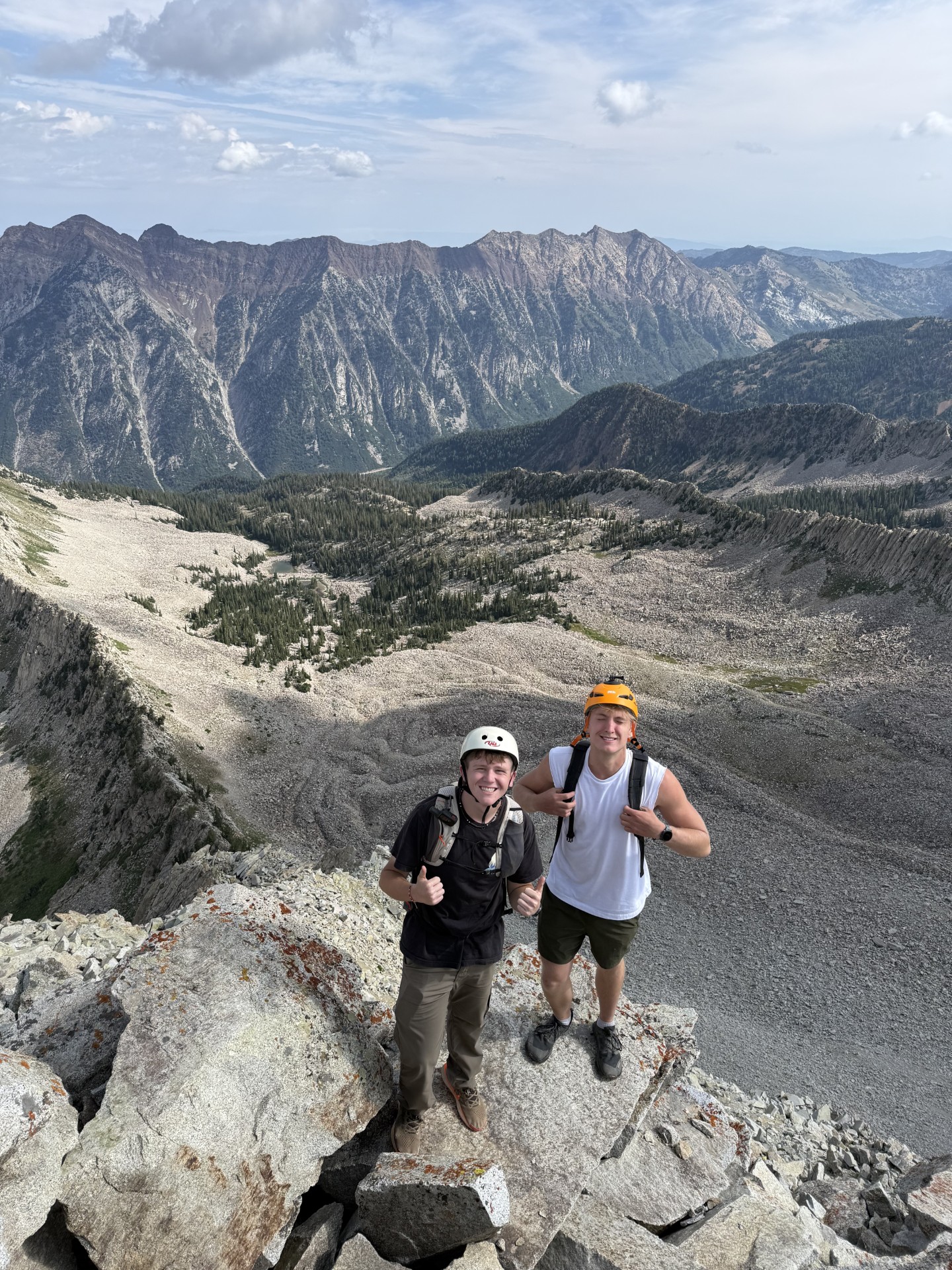
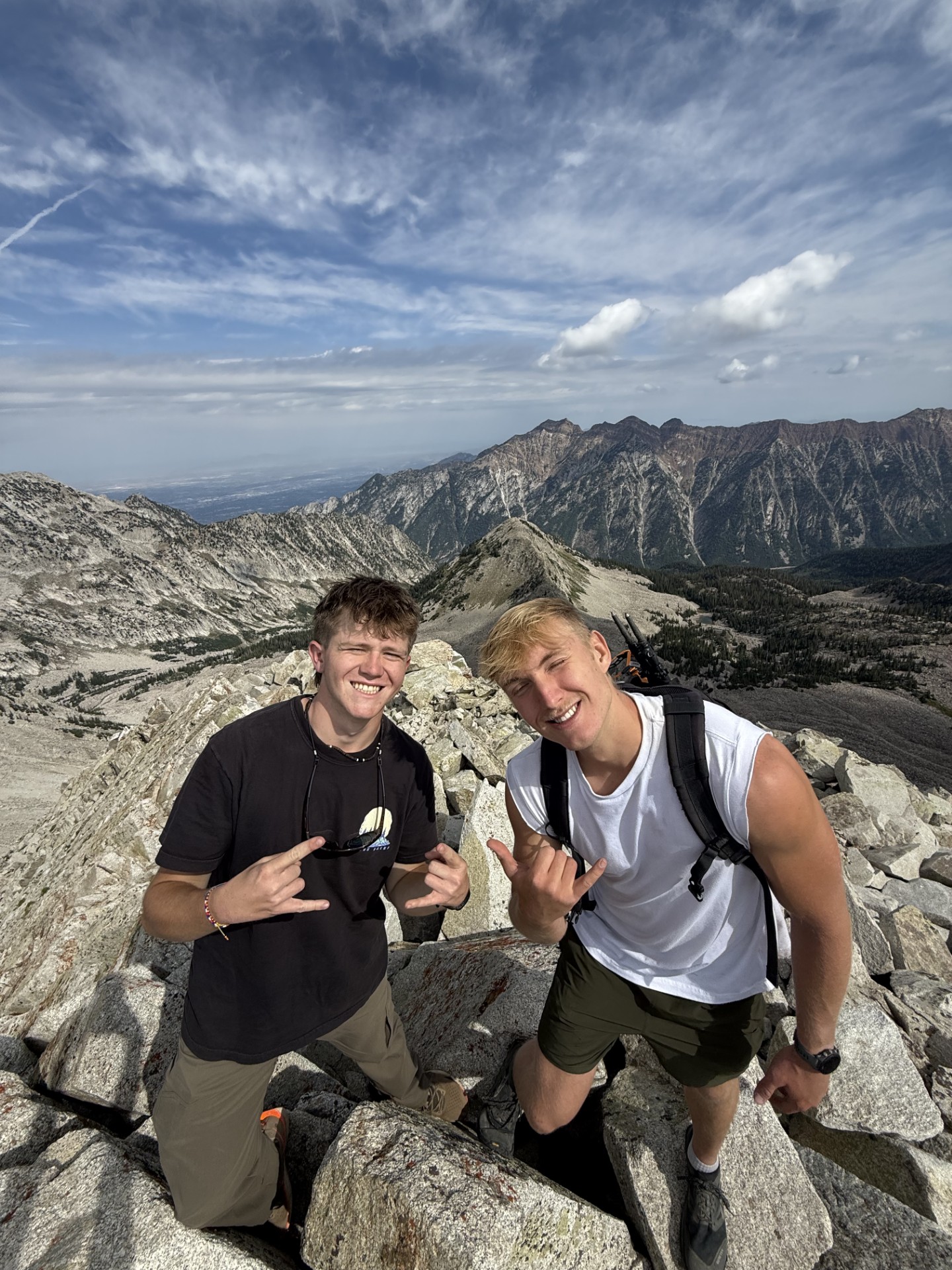
    5. Pfeifferhorn — The Most Alpine-Feeling Summit Near SLC

    5Pfeifferhorn
    HardMost Alpine Character
    11,326 ft
    Summit
    ~3,700 ft
    Gain
    11.0 mi
    Round Trip
    ~45 min
    Drive from SLC
    7,680 ft
    Trailhead Elev.

    The Pfeifferhorn is the most visually striking summit accessible from Little Cottonwood Canyon — its sharp horn profile stands out clearly against the canyon skyline and gives the peak an alpine character that few other Wasatch summits match. The route follows the Red Pine Lake trail through one of the canyon’s most beautiful upper basins before a steep, exposed final push to the horn itself. The summit is compact, the scrambling is genuine, and the views stretch from the Salt Lake Valley all the way to the Uinta Range. This is the peak that experienced Wasatch climbers point to as the most satisfying summit experience available within an hour of the city.

    • Red Pine Lake makes a worthy turnaround if weather rolls in before the summit push
    • Storm timing is life-critical on the exposed horn — be descending by noon on any day with afternoon buildups
    • LCC fee and potential timed-entry applies — purchase online in advance for weekend visits
    🗺 View Trail on AllTrails
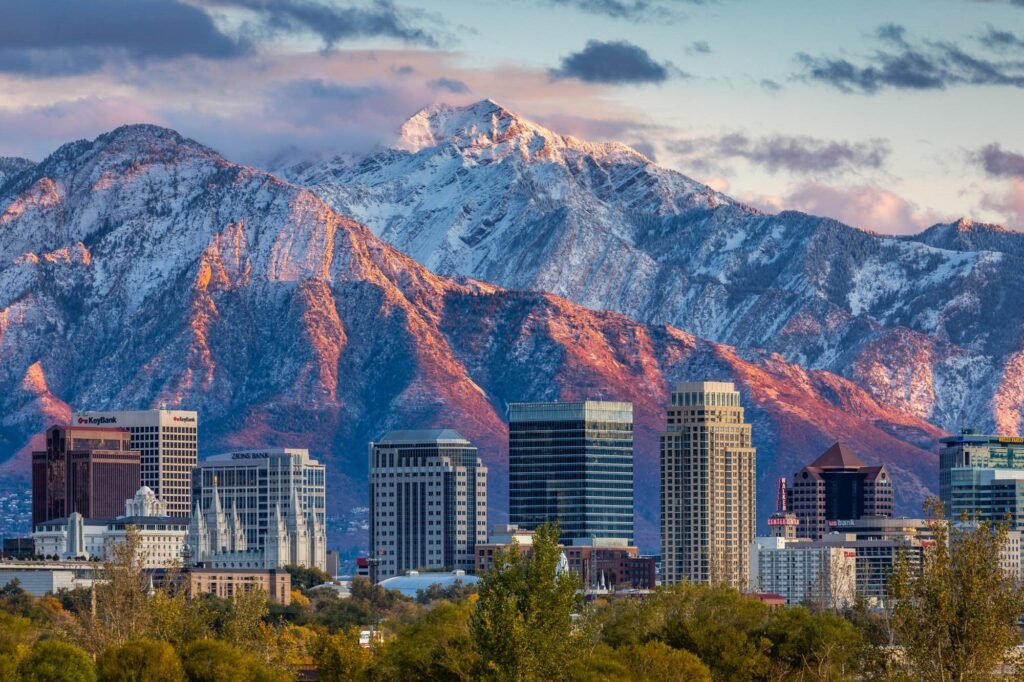
    Salt Lake City skyline viewed from above with the Wasatch Range forming a dramatic mountain backdrop — the defining geographic relationship that makes SLC one of America's best mountain cities
    Salt Lake City with the Wasatch Range rising to the east — within 45 minutes of this view you can be on a summit above 11,000 feet. Wasatch Range Peak Guide →
    Direction
    South — Utah County & the Southern Wasatch
    Draper · American Fork Canyon · Nephi

    Drive south from Salt Lake City and the Wasatch continues building in scale. Lone Peak rises above the south end of the valley as one of the most demanding day summits in the state. Another forty minutes takes you into Utah Valley where Mount Timpanogos — the most celebrated hike in the region — towers above the towns of Orem and Provo. Continue south another hour and you reach Mount Nebo, the Wasatch’s tallest peak, sitting in impressive isolation above the farming communities of Juab County. These are the peaks that require the most planning of any on this list, and the ones that reward most generously.

    6. Lone Peak — The Ultimate Full-Day Objective from SLC

    6Lone Peak
    Very HardFull Day · 5,500 ft Gain
    11,253 ft
    Summit
    ~5,500 ft
    Gain
    ~13 mi
    Round Trip
    ~35 min
    Drive from SLC
    ~5,400 ft
    Trailhead Elev.

    Lone Peak is a deceptively close objective — the trailhead above Draper is barely 35 minutes from downtown Salt Lake City — but it is the hardest peak on this list and one of the most demanding day summits in Utah. The approach via Jacobs Ladder from Corner Canyon involves relentless gain from a low starting elevation, building to a narrow granite summit that requires genuine class 3 scrambling in the final section. The Salt Lake Valley fills one horizon from the top; the high Wasatch and the Uinta peaks fill the other. Nothing in the Salt Lake metro area delivers a summit experience of this quality and difficulty within this short a drive of downtown.

    Lone Peak demands the same respect as any serious mountain objective. A pre-dawn start is non-negotiable for safe summit timing. Carry 4–5 liters of water minimum and food for a 10-hour day. Do not attempt this peak without prior experience on comparable Wasatch terrain — and use the Fitness Assessment Checklist before you commit.

    • Start no later than 5 AM from the trailhead — afternoon lightning on the summit ridge is life-threatening
    • North-facing upper slopes retain snow into July — microspikes often needed in early season
    • No canyon fee required from the Corner Canyon / Draper access
    🗺 View Trail on AllTrails

    7. Mount Timpanogos — The Defining Wasatch Summit

    7Mount Timpanogos
    HardMost Iconic Utah Hike
    11,753 ft
    Summit
    ~4,900 ft
    Gain
    ~16 mi
    Round Trip
    ~55 min
    Drive from SLC
    6,900 ft
    Trailhead Elev.

    Mount Timpanogos is the second-highest peak in the Wasatch Range and the most celebrated mountain hike within reach of Salt Lake City. At just under 11,800 feet, with over fourteen miles of trail and nearly 5,000 feet of gain on the standard Timpooneke route, Timp is a full alpine day that asks real effort and delivers an experience that most hikers describe as a turning point — a mountain that changes how they think about what a hike can be. The summit plateau hosts a historic stone shelter, mountain goats roam the upper slopes throughout summer, and on clear days the Great Salt Lake and the Uintas share the same horizon.

    Timp is also the centerpiece of the Timpanogos Hiking Co. badge tradition — see our full 2026 Timpanogos Hiking Challenge guide for details on how to earn a free badge for the summit. Weekend trailhead permits are required and sell out weeks in advance.

    • Timed-entry permits required on weekends and holidays — book at Recreation.gov well in advance
    • $10 parking fee at both Timpooneke and Aspen Grove trailheads
    • Start by 5 AM at the latest; afternoon thunderstorms build rapidly in July–August
    • Mountain goats are common above Emerald Lake — maintain a 50-foot minimum distance
    🗺 Timpooneke Trail on AllTrails

    8. Mount Nebo — Tallest Peak in the Wasatch

    8Mount Nebo
    HardWasatch High Point
    11,933 ft
    Summit
    ~5,400 ft
    Gain
    ~12 mi
    Round Trip
    ~90 min
    Drive from SLC
    6,500 ft
    Trailhead Elev.

    Mount Nebo is the highest peak in the entire Wasatch Range and sits at the range’s southern end above the town of Nephi — far enough from Salt Lake City to feel like a genuine expedition but close enough to do as a long day trip from downtown. Its geographic isolation gives it a distinctly different character from the Cottonwood Canyon peaks: the terrain is wilder, the crowds nearly absent, and the approach gains over 5,000 feet through rugged subalpine country to a narrow, multi-summit ridge that requires careful route-finding in the final miles. Nebo’s summit commands views from the Utah Valley and the Wasatch all the way south toward central Utah’s desert plateaus.

    • Plan for an 8–10 hour round-trip day; leave Salt Lake City by 5 AM for a comfortable summit window
    • North Peak is the standard approach; the trailhead road typically opens in late June
    • Also a key peak in the 2026 Timpanogos Hiking Co. GOAT Challenge
    • Weather patterns differ from northern Wasatch — check Juab County forecasts specifically
    🗺 View Trail on AllTrails
    Direction
    West — Stansbury Mountains & Antelope Island
    Tooele County · Great Salt Lake

    Most Salt Lake City hikers orient east without thinking about it — the Wasatch is right there, unavoidably dominant. But driving west opens up terrain that offers two of the most distinctive summit experiences in the region: a 6,596-foot island peak surrounded by the Great Salt Lake, and an 11,031-foot summit in the remote Stansbury Mountains with a fraction of any Wasatch canyon’s foot traffic. Both are worth the westward detour.

    9. Frary Peak — A Summit Above the Great Salt Lake

    9Frary Peak — Antelope Island
    ModerateMost Unique Setting
    6,596 ft
    Summit
    ~2,100 ft
    Gain
    7.0 mi
    Round Trip
    ~45 min
    Drive from SLC
    4,500 ft
    Trailhead Elev.

    Frary Peak is the highest point on Antelope Island, rising above the shimmering surface of the Great Salt Lake in one of the most genuinely unusual summit settings available from any American city. The summit delivers all-direction views over a vast inland sea — the lake stretching to every horizon, the Wasatch Range cutting the eastern skyline, the desert extending west toward Nevada. Bison roam the island slopes freely below the summit, giving the experience a wilderness character that no Wasatch canyon peak can match. The summit scramble involves some exposed rock near the top, and the landscape above treeline is completely open to wind — come prepared for rapidly changing conditions despite the modest elevation.

    • Antelope Island State Park entrance fee applies — approximately $15 per vehicle
    • Bison are present year-round — maintain a minimum 75-yard distance at all times
    • No shade above the trailhead; carry significantly more water than you think you need
    • Also part of the 2026 Timpanogos Hiking Co. GOAT Challenge
    🗺 View Trail on AllTrails

    10. Deseret Peak — Solitude and Elevation in the Stansburys

    10Deseret Peak
    Moderate–HardBest Crowd-Free Option
    11,031 ft
    Summit
    ~3,300 ft
    Gain
    9.0 mi
    Round Trip
    ~60 min
    Drive from SLC
    7,700 ft
    Trailhead Elev.

    Deseret Peak is the highest summit in the Stansbury Mountains of Tooele County and the best answer to the question that every frustrated Wasatch hiker eventually asks: where can I find an 11,000-foot summit without sharing the mountain with three hundred other people? The Stansbury Loop approach climbs through a high subalpine basin to the summit ridge, with views that extend over the Great Salt Lake to the north, the Wasatch Front to the east, and the Nevada desert to the west — a panoramic combination available from almost nowhere else near Salt Lake City. The mountain carries a genuine remote feel despite its reasonable drive time from the city.

    • Far less crowded than any Cottonwood Canyon equivalent — you may have the summit entirely to yourself on weekdays
    • Snow persists on the north-facing upper slopes into June in most years
    • No canyon fee system — the Stansbury Mountains are managed by the BLM and USFS with open access
    • Also a 2026 Timpanogos Hiking Co. GOAT Challenge peak — see our challenge guide
    🗺 View Trail on AllTrails
    Direction
    North — Davis & Weber County
    Farmington · Ogden · Willard

    Drive north from Salt Lake City along the Wasatch Front and the range continues to offer serious summit terrain above the communities of Farmington, Bountiful, and Ogden. The two standout peaks in this direction are Willard Peak — a remarkably efficient summit from the Willard Basin area above the city of Willard — and Ben Lomond, the massive ridge above Ogden that takes a full day to complete and delivers some of the finest long-range views in northern Utah.

    11. Willard Peak — Efficient Summit with Extraordinary Views

    11Willard Peak
    ModerateBox Elder County
    9,764 ft
    Summit
    ~2,600 ft
    Gain
    7.8 mi
    Round Trip
    ~55 min
    Drive from SLC
    7,150 ft
    Trailhead Elev.

    Willard Peak is one of the most underrated summits within reach of Salt Lake City. The Willard Basin Road climbs to over 7,000 feet before the trail even starts, making this the highest-starting trailhead for a non-canyon peak in this guide and cutting the effective work to a manageable 2,600 feet of gain. The summit ridge above the basin is open, grassy in late summer, and sits above most of the terrain features that trap crowds in the popular canyons to the south. The views from the top — over the northern Great Salt Lake, across the whole Wasatch Front from the Uintas to Ogden — rival any summit on this list at twice the effort. The catch: the Willard Basin Road is a rough dirt road that requires high-clearance vehicle access or adds significant walking distance.

    • High-clearance vehicle recommended for the Willard Basin Road — standard cars may struggle on the upper section
    • Trailhead road typically opens in late June when snow clears from the upper basin
    • Almost no crowds compared to Wasatch canyon objectives of similar quality
    • Excellent late-season option when lower Wasatch peaks are dried out and hot
    🗺 View Trail on AllTrails

    12. Ben Lomond — The Grand Summit Above Ogden

    12Ben Lomond
    Moderate–HardWeber County
    9,712 ft
    Summit
    ~4,200 ft
    Gain
    15.4 mi
    Round Trip
    ~60 min
    Drive from SLC
    5,500 ft
    Trailhead Elev.

    Ben Lomond is the defining summit above Ogden, Utah — a long, rolling ridge hike that trades the dramatic scrambling of the Cottonwood peaks for sustained high-elevation terrain, expansive views, and the satisfying momentum of a genuine ridge traverse. At over 15 miles round trip, this is the longest hike on this list and one that requires strong endurance conditioning rather than technical skill. The North Skyline Trail approach follows an undulating ridgeline with open terrain throughout, providing the rare Wasatch experience of spending significant time above treeline without the concentrated steepness of a canyon approach. Ben Lomond also appears in the original Timpanogos Hiking Co. Ten Peak Challenge lineup from 2024 as one of Utah’s signature northern peaks.

    • The longest hike on this list — plan for 7–9 hours round trip with a realistic early start
    • The North Skyline Trail is one of the finest ridge hikes in northern Utah; take your time on the approach
    • Limited water sources on the ridge — carry at least 3–4 liters from the trailhead
    • Ogden Canyon access: North Fork Park trailhead is the standard starting point
    🗺 View Trail on AllTrails
    Ben Lomond peak above Ogden Utah — the long North Skyline Trail ridge approach delivering sweeping views across the Wasatch Front and Great Salt Lake
    Ben Lomond above Ogden — the 15-mile North Skyline Trail ridge approach is one of the finest sustained above-treeline walks in northern Utah. Ben Lomond Trail on AllTrails →

    Planning Your Mountain Trip from Salt Lake City

    How to Pick the Right Peak for Your Day

    The most common mistake first-time visitors to Salt Lake City’s mountain landscape make is reaching for an 11,000-foot peak before they’ve had a chance to acclimatize to Utah’s base elevation. Salt Lake City sits at 4,226 feet — higher than Denver’s famous “mile high” — and even moderate peaks like Grandeur and Mount Olympus sit well above 8,000 feet. If you’re flying in from sea level, give yourself at least one day at city elevation before attempting anything above 9,000 feet, and use your first summit attempt to gauge how altitude affects your energy and pace.

    For a first-visit day hike with genuine Wasatch character, Grandeur Peak or Mount Olympus make ideal starting points. Both are accessible with no canyon fee complications, both are well-marked, and both deliver summits that feel legitimately rewarding rather than tourist-friendly compromises. If you want a big day and have prior mountain fitness, Twin Peaks or the Pfeifferhorn are the standard-setters for the Wasatch canyon experience at its peak quality.

    The Afternoon Thunderstorm Window — The Non-Negotiable Rule

    From mid-July through early September, strong afternoon convective thunderstorms develop over the Wasatch Range with alarming speed and frequency. Lightning at 10,000-plus feet on an open ridge is not a theoretical risk — it is the leading weather-related cause of injury and death in Utah’s mountains. The planning rule is absolute: be off the summit and descending below treeline by noon on any day with afternoon storm potential. For peaks like Twin Peaks, Lone Peak, or Mount Nebo that require 5–7 hours to summit, this means starting before 5 AM. Check the National Weather Service Mountain Forecast the evening before every climb.

    Acclimatization Strategy for Visitors

    Visitors arriving from sea level often underestimate how quickly altitude affects performance in Utah’s mountains. The combination of 4,200-foot base elevation, rapid gain to 10,000-plus feet, and summer heat on south-facing slopes creates conditions that drain energy faster than expected. A simple strategy: spend your first day below 8,000 feet on lower canyon trails or Grandeur Peak. By day two, your body has begun adjusting and higher objectives become more realistic. The Acclimatization Schedule Builder on this site can help you sequence multiple peaks across a trip to peak when it matters.

    Building a Progressive Week in Salt Lake City Mountains

    A well-structured week from SLC can take you from casual hiker to Wasatch veteran: Day 1 — Grandeur Peak or lower Millcreek trails for acclimatization. Day 2 — Mount Olympus for your first exposed scramble experience. Day 3 — Rest or Frary Peak (western detour, unique environment). Day 4 — Sunset Peak or Kessler Peak for your first above-10,000-foot experience. Day 5 — Twin Peaks, Pfeifferhorn, or Timpanogos as the capstone objective. This sequence builds altitude tolerance, technical confidence, and canyon familiarity in a logical order.

    Planning Tools

    Fitness Assessment Checklist

    Before committing to any of the hard or very hard peaks on this list — Lone Peak, Twin Peaks, Nebo, Timpanogos — run through the fitness assessment to identify gaps before your summit day rather than on the mountain.

    Open Checklist →
    📅

    Acclimatization Schedule Builder

    Visiting Salt Lake City for a multi-day climbing trip? The Acclimatization Builder helps you sequence your peaks intelligently so altitude fatigue doesn’t hit on your hardest day.

    Build Your Schedule →
    ⛰️

    Peak Comparison Tool

    Wondering how Utah’s best peaks stack up against Colorado 14ers, Cascade volcanoes, or other western US objectives? Compare by elevation, difficulty, and technical demands to calibrate your goals.

    Compare Peaks →

    Go Deeper: Related Guides on This Site

    Salt Lake County
    Top 10 Peaks in Salt Lake County
    Full peak-by-peak detail for all major Salt Lake County summits — Grandeur, Olympus, Twin Peaks, Superior, Pfeifferhorn, Lone Peak, and more — with complete route notes and AllTrails links.
    Read Full Guide →
    Utah County · 2026 Challenge
    Timpanogos Hiking Co. 2026 Challenge Guide
    Full breakdown of the 2026 GOAT and Escape the Noise challenge — all 15 badge peaks and destinations, how to earn your free badge, and planning notes for every summit.
    Read Challenge Guide →
    Peak Bagging
    Wasatch Range Peak Guide
    The complete Wasatch Range guide on Global Summit Guide — history, geography, seasonal conditions, and summit lists for the full range from Logan to Nephi.
    Explore Guide →
    Utah Challenges
    Utah 13ers
    Utah’s peaks above 13,000 feet — a short but elite list anchored by Kings Peak in the Uinta Mountains. A natural next step after you’ve worked through the Wasatch peaks on this list.
    Explore Utah 13ers →
    Regional Challenge
    Six-Pack of Peaks — Utah
    The self-guided Utah Six-Pack Challenge includes Mount Timpanogos and Mount Nebo — two peaks featured on this list. Complete all six for a structured summer challenge.
    Learn More →
    US Challenges
    Colorado 14ers — Full Guide
    After you’ve mastered the Wasatch, Colorado’s 14ers are the logical next challenge. See how Utah’s peaks compare and which Colorado objectives match your skill level.
    Explore Colorado 14ers →
    Disclaimer: This guide is for informational and planning purposes only. Trail conditions, canyon fee structures, permit requirements, and trailhead access change seasonally and year to year. Always verify current conditions with the Uinta-Wasatch-Cache National Forest, Utah State Parks, and relevant land managers before your hike. Elevation gain and distance figures are approximate and may vary by GPS device and route variation. Mountain travel involves inherent risk — assess your fitness and experience honestly before committing to any objective on this list.