
Last updated September 29, 2026

Mount Fuji Climbing Guide: Routes, Difficulty & Planning
Climbing Mount Fuji is a non-technical summer hike to Japan’s highest point, but altitude, weather, crowds, seasonal access rules and an exposed volcanic summit make it a real mountain objective. Start here, then move into the specialist Fuji guides for the detail you need.
What Does It Take to Climb Mount Fuji?
For most hikers, Mount Fuji is best understood as a strenuous high-altitude hike rather than a technical mountaineering climb. In the normal summer season, the four maintained routes use volcanic trails rather than ropes, glaciers or technical climbing equipment. The challenge comes from the fast gain to 3,776 m, long ascent and descent, cold wind near the summit, darkness on sunrise attempts and the temptation to underestimate a famous mountain that is easy to reach.
The classic plan is to choose one of the four official routes, travel to its high trailhead, climb partway to a mountain hut, rest, then continue toward the crater rim around dawn before descending. A one-day climb is possible within the official rules when planned correctly, but a staged two-day itinerary is the better framework for many visitors because it gives more time for pacing, weather decisions and altitude adjustment.
As of September 28, 2026, the normal summit season is closed. In 2026, Yoshida and Subashiri operated July 1–September 10, while Fujinomiya and Gotemba operated July 10–September 10. The official Mount Fuji portal says the summit trails are closed outside the designated season. The 2027 dates, fees and procedures should be treated as pending until Yamanashi and Shizuoka publish them.
Plan the rescue and evacuation layer before the trip.
Mount Fuji is below Global Rescue’s published 4,600 m high-altitude-package threshold, but remote rescue, medical evacuation and travel protection are still separate planning questions. Review the current terms against your exact route and trip.
Partnership disclosure: Global Summit Guide is a Global Rescue Safe Travel Partner. Membership and travel insurance are separate products; review current terms and eligibility before purchasing.On This Page
Fuji Is Accessible—But the Summit Is Still 3,776 Metres High.
The mountain’s transport network and popularity can create the wrong first impression. A maintained summer trail does not remove altitude, wind, fatigue or the need to descend safely.
Volcanic hiking, not technical climbing.
The normal summer routes use steep trail, steps, rock and loose volcanic gravel. Technical alpine tools are not standard in-season equipment.
The fast jump upward is the hidden difficulty.
Most travelers arrive from much lower elevations, reach a high trailhead quickly, then continue toward a summit well above the altitude where some people begin to feel symptoms.
The summit is only halfway.
Long loose descents tax the legs differently from the ascent. Train for downhill durability and keep energy, water and attention for the return.

Huts, Staff, Toilets and Transport Are Part of the Climbing System.
The standard Fuji experience depends on the official summer infrastructure. That is why an in-season climbing guide should never blur into advice for an improvised off-season ascent.
Four Trails Reach the Summit. They Solve Different Problems.
This parent page gives you the decision framework. The dedicated routes guide owns the detailed trail comparison, transport and route-specific planning.
Yoshida
The default route for many Tokyo-based first-time visitors: the largest hut network, strong transport connections and the greatest crowd pressure.
- Yamanashi side
- Most developed hut system
- 2026 daily cap applied
Subashiri
A forested lower approach that stays quieter before joining the Yoshida corridor higher on the mountain.
- Shizuoka side
- Forested start
- Sand-run style descent terrain
Fujinomiya
The highest starting trailhead and shortest standard way to the summit, traded for a steeper climb and descent.
- Shizuoka side
- Highest trailhead
- Efficient for strong hikers
Gotemba
Starts lower and stays on the mountain longer. The extra vertical makes it a stronger-hiker option rather than the obvious first Fuji route.
- Shizuoka side
- Lowest start
- Long ascent and descent
A Two-Day Climb Gives the Mountain More Room.
Exact gate rules, hut access and departure timing can change by season. The durable framework is simple: stage the climb instead of treating the entire mountain as one overnight sprint.
Reach the trailhead, then climb to a hut.
- Travel to your route’s 5th Station or seasonal entry point.
- Give yourself time to eat, organize and avoid starting in a rush.
- Climb steadily toward a reserved mountain hut.
- Eat, hydrate, check weather and rest before the final push.
Summit around dawn, then manage the descent.
- Leave the hut according to weather, route conditions and your planned summit timing.
- Reach the crater rim without treating sunrise as more important than safety.
- Continue to Kengamine only when the rim route is open and conditions fit.
- Descend with enough food, water, time and leg strength left for the long return.
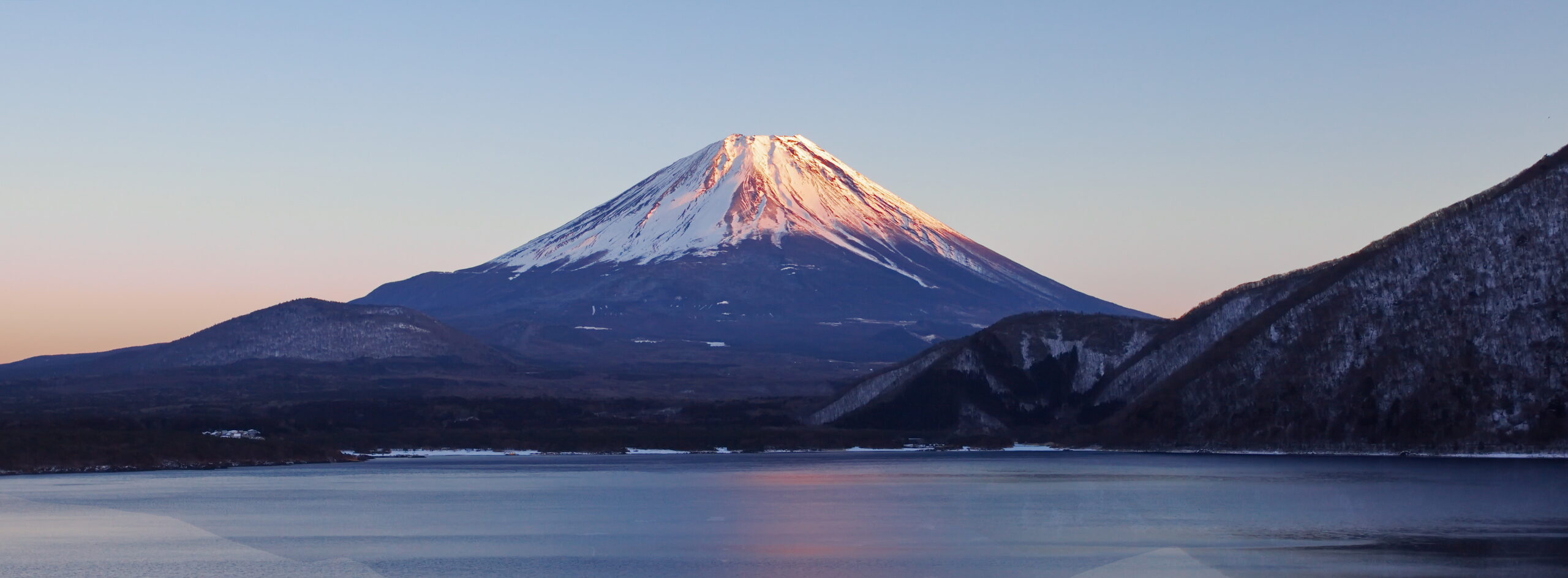
Separate the Physical Question From the Medical One.
Difficulty asks: can you sustain the uphill, manage the loose volcanic terrain and still descend well? That belongs in the Fuji difficulty guide.
Altitude asks: how does your body respond to a rapid ascent from a high trailhead to 3,776 m? That belongs in the medical and acclimatization guide.
Keeping those questions separate matters. A fit hiker can still develop altitude symptoms, while someone who acclimatizes reasonably can still be underprepared for the long descent.

Sunrise Is a Goal—Not a Deadline That Overrides the Mountain.
The pre-dawn summit is part of Fuji’s climbing tradition, but the better plan starts with the hut, weather and pacing. Build enough margin that a slower-than-planned climb does not force bad decisions just to reach the crater before first light.
The crater rim is not automatically “the summit.”
Different trails reach different points around the crater. The highest point, Kengamine, sits on the rim and may require additional walking beyond first arrival at the top.
The full rim circuit is a separate decision.
The summit-rim trail has its own opening status and can open later than lower routes. Treat it as an optional extension, not as something to force into a tired or weather-limited summit day.

Fuji’s Supported Summit Season Is Short.
Use the parent page for the framework; use the Best Time guide for weather, crowds and month-by-month timing, and the Status page for the live open/closed answer.
July 1 / July 10 to September 10.
Yoshida and Subashiri opened July 1 in 2026; Fujinomiya and Gotemba opened July 10. The normal summit season ended September 10.
Wind, rain and typhoons can erase a good itinerary.
Fuji’s isolated cone is exposed. Build enough trip flexibility to change plans when summit weather and transport are disrupted.
Closed does not mean “the same hike with fewer people.”
Official guidance says summit trails are closed outside the designated season; huts and normal summer infrastructure are not operating in the same way.
What the 2026 Access System Required.
These facts are retained as a historical reference because they show how modern Fuji access works. They are not a guarantee of 2027 rules.
Pack for the Summit, Train for the Descent.
The parent page should answer “what kind of system do I need?” The detailed packing list and training plan own the shopping and workout details.
Footwear + rain protection
Use hiking footwear you have already tested and carry a real rain system rather than planning around a city forecast.
Insulation for pre-dawn exposure
Bring warm layers, gloves and head protection for the coldest, windiest part of the climb—not the pleasant trailhead.
Headlamp + backup power
A sunrise itinerary means moving in darkness. Your lighting system is essential equipment, not an accessory.
Water, fuel and a practical daypack
Balance enough food and water against the reality that you carry your own load on a long uphill and downhill day.
Uphill endurance + downhill durability
Prepare for sustained elevation gain and the eccentric loading of a long descent on loose volcanic terrain.
Arrive with margin, not just fitness.
Training should create enough reserve that weather, crowding, altitude symptoms or a slower teammate do not immediately break the plan.
Choose Support Based on Your Planning Gaps.
Fuji does not require technical guiding simply because it is a mountain. An experienced hiker who understands the route, seasonal access, hut booking, altitude, weather and Japanese transport may be comfortable planning independently.
A guided climb can be useful when you want route logistics bundled together, prefer English-language support, are new to high-altitude hiking, or want a group structure for pacing and the overnight hut plan.
The operator hub is the right place to compare summit-climbing products. Do not confuse sightseeing tours around Fuji with guided summit ascents.
Compare Mount Fuji Guides & Climbing Tours →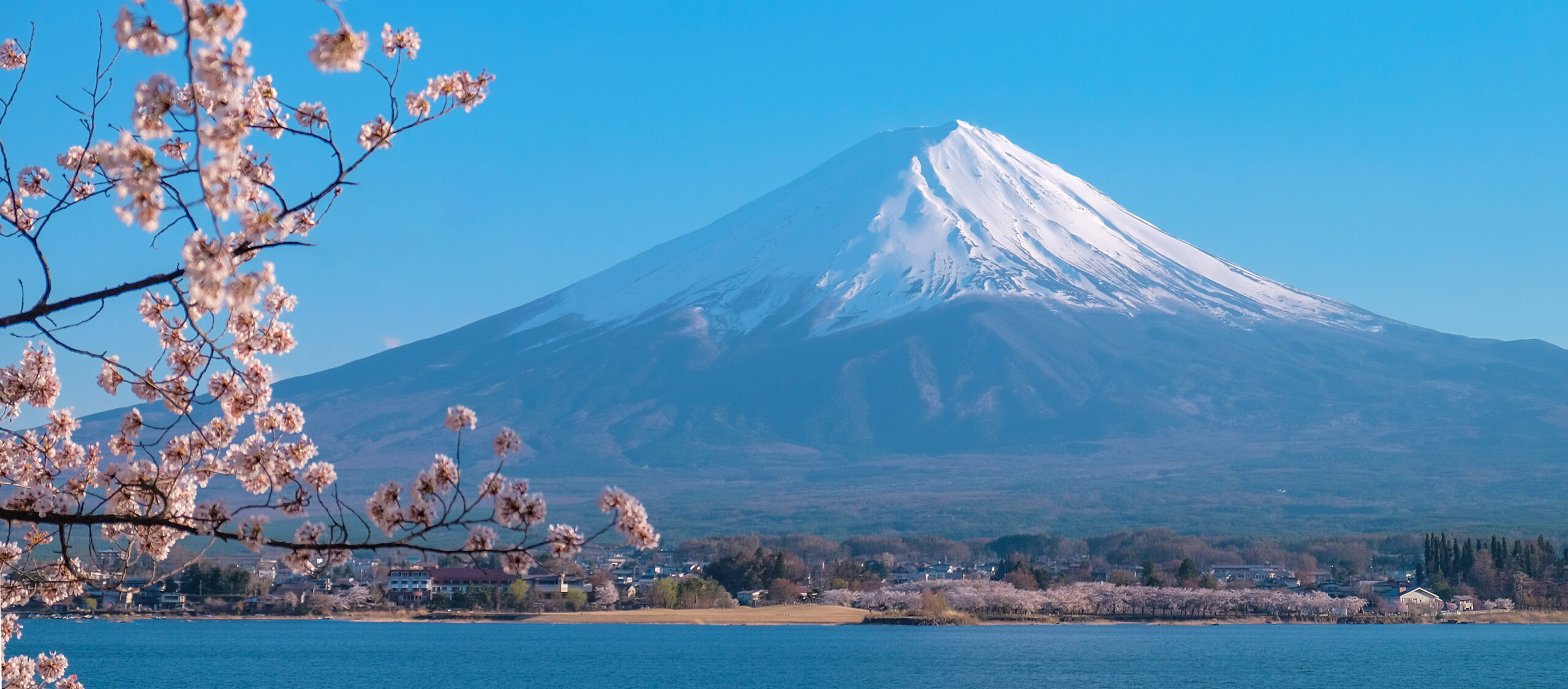
Fuji Is Not Just a Summit Objective.
UNESCO inscribed Fujisan in 2013 as a cultural World Heritage property: a sacred place and source of artistic inspiration shaped by pilgrimage, worship routes, shrines and centuries of art.
A mountain climbed as devotion.
UNESCO describes worship ascents, pilgrim routes and crater shrines as part of the cultural landscape that gives Fuji its global significance.
Ohachimeguri predates the modern hiking checklist.
Circling the summit crater formed part of historic pilgrimage practice. The modern rim walk still traces a landscape with religious meaning.
The mountain became an international image of Japan.
Fuji’s depiction in Japanese art—and especially 19th-century woodblock prints—helped carry its form and meaning far beyond Japan.
One Mountain, Four Different Approaches.
Mount Fuji sits on the boundary of Yamanashi and Shizuoka. Route choice changes where you approach, how high you start, how you reach the trailhead and which registration system applies.
- Yoshida: north / Yamanashi.
- Subashiri: east / Shizuoka.
- Gotemba: southeast / Shizuoka.
- Fujinomiya: south / Shizuoka.
Use the route guide for trail-specific transport and the permits/logistics guide for the current access system.
Use the Parent to Choose the Next Question.
This is the only Fuji page that intentionally routes to almost every canonical specialist guide. Each child should own one narrow intent and link back here once near the top.
Three Supporting Skills That Strengthen the Fuji Plan.
These are broader planning resources, not competing Fuji pages.
Mount Fuji Climbing FAQ
These answers separate evergreen planning from the date-specific 2026 rules that should be rechecked before a 2027 climb.
Is Mount Fuji hard to climb?
When is the Mount Fuji climbing season?
Which Mount Fuji route is best?
Do I need a guide to climb Mount Fuji?
How much was the Mount Fuji hiking fee in 2026?
Can I climb Mount Fuji after the official season?
Official Sources Checked
Date-specific Fuji rules can change between seasons. This page uses the official Mount Fuji portal for current-status and 2026 regulatory facts, and UNESCO for the mountain’s World Heritage context.

Choose the Route. Build the Margin. Let the Mountain Set the Timing.
Mount Fuji rewards good planning more than complicated technique. Use this page to understand the whole climb, then move into the specialist guide that owns your next decision.
Mount Fuji: Japan’s Sacred Mountain
Long before it was a bucket-list summit, Fuji was a god. For more than a thousand years the Japanese have revered Fujisan as a sacred mountain – a home of the kami, a goal of pilgrimage, and, in 2013, a UNESCO World Heritage site honored not for its geology but for its spiritual and artistic meaning.
The Mountain as a Deity
In Shinto, Fuji is a dwelling of the kami. Its guardian goddess, Konohanasakuya-hime, the Princess of Blossoming Flowers, is enshrined at the Sengen (Asama) shrines that ring the base and stand even on the summit – a mountain worshipped as a living presence.
The Pilgrim Confraternities
From the medieval era, mountain ascetics and the Fujiko pilgrimage confraternities climbed Fuji as devotion, blending Shinto and Buddhist practice in the mountain worship of Shugendo. For centuries the climb was an act of faith, not recreation.
Climbing Through the Night to the Sunrise
Pilgrims climbed by lamplight to witness goraiko – the sacred sunrise seen from the summit. Every summer, today’s climbers who ascend in darkness for the dawn are, knowingly or not, continuing a devotion many centuries old.
UNESCO Honored the Meaning, Not the Geology
In 2013 Fujisan was inscribed as a UNESCO World Heritage cultural site – ‘sacred place and source of artistic inspiration.’ It is a rare honor: a mountain recognized by the world for what it means, rather than for how it looks.
Fuji Among the Sacred Peaks of the World
Fuji is one of the world’s great sacred mountains – a pilgrimage peak climbed for centuries as devotion. Explore the collection, the reflection behind it, and the other holy summits below.
Was this helpful?
🏔Related peaks nearby
🧭Explore & compare
Global Summit Guide is an independent mountaineering resource founded in 2026. The team combines first-hand trekking and climbing experience with in-depth research and professional health and nutrition review to help climbers choose objectives, prepare properly, and stay safe.
Health, altitude, and nutrition content is reviewed by Taylor Ludlow (Registered Nurse) and Brigg Hoopes (Nutritionist).
What We Don't Know Yet
Mountain information changes quickly. This box explains the limits of what this page can responsibly promise.
- Route conditions, trailhead access, crevasse exposure, stream crossings, and rescue access may vary from published planning guidance.
- Visa, passport, vaccination, border, insurance, and local transportation rules may change before your trip.
- Route conditions, snowpack, closures, and weather can change quickly after this page is updated.
- Permit rules, fees, quotas, and reservation windows may change between review cycles.
- Operator availability, pricing, guide ratios, and cancellation terms can change by season.
Verify current conditions with official land managers, guide services, local forecasts, and current route reports before booking or climbing.
Mountaineering, rock and ice climbing, glacier travel, and high-altitude activity are inherently dangerous and can result in serious injury or death. The information on Global Summit Guide is provided for general informational and educational purposes only and is not a substitute for professional instruction, qualified guiding, proper equipment, or your own judgment and experience.
Route conditions, weather, snowpack, permits, regulations, and hazards change constantly and may differ from what is described here. Details may be incomplete, out of date, or contain errors. Always verify current information with local authorities, certified guides, and official sources before making any decision in the mountains.
Nothing on this site is medical, legal, or financial advice. Our fitness, acclimatization, altitude, and nutrition content is general in nature; consult a qualified physician before beginning any strenuous exercise program or exposing yourself to high altitude.
You are solely responsible for your own safety and decisions. To the fullest extent permitted by law, Global Summit Guide and its team accept no liability for any loss, injury, damage, or expense arising from use of, or reliance on, this information. By using this site you acknowledge these risks and accept these terms.
Some links on this site may be affiliate links. If you buy through them we may earn a small commission at no extra cost to you; this never affects our recommendations.
Global Summit Guide recommendation path
Next Best Mountain to Research
Use these recommendations to continue the right planning path instead of stopping on one page.
Use current permit, weather, route, and operator information before booking or climbing.
Search Flights, Hotels & Rental Cars
Have the mountain or destination picked? Use Expedia to compare the flights, lodging and rental cars that fit your actual trip dates. For mountain travel, consider arriving early enough for delays and adding a buffer night after the climb before a fixed flight home.
Compare current flight, hotel and car options.
Affiliate disclosure: Global Summit Guide may earn a commission if you book through this link, at no additional cost to you.