
Last updated October 11, 2026
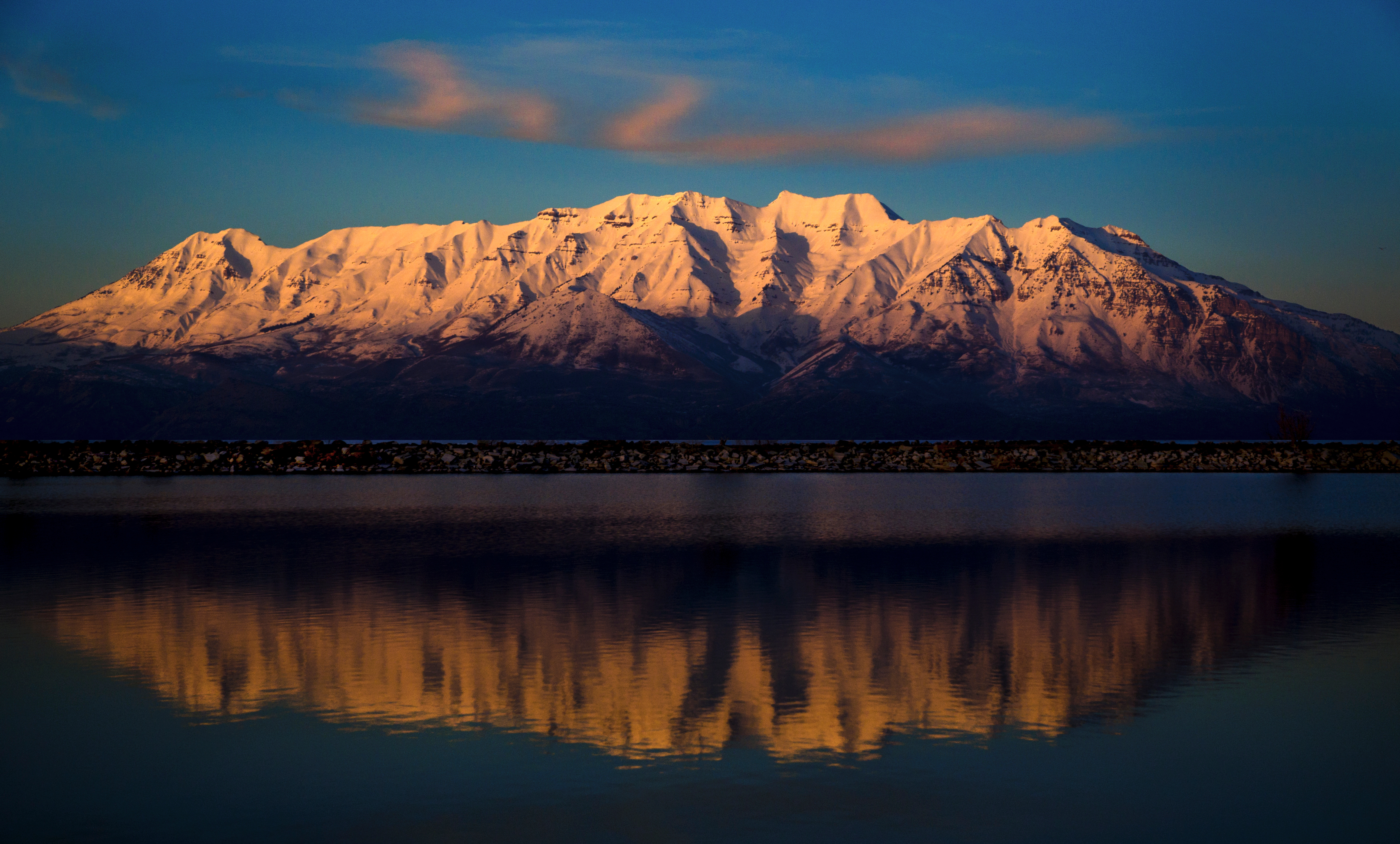
15 Best Mountains in Utah to Hike & Climb, Ranked by a Utah Local
Mount Timpanogos is our best overall Utah mountain; Kings Peak is the state-high-point wilderness choice; Mount Nebo is the quieter Wasatch giant. The ranking below is built to help you choose the right objective—not simply sort Utah peaks by elevation.
What Is the Best Mountain in Utah?
Mount Timpanogos is the best overall mountain in Utah for many hikers because it combines a true full-day objective with established trails, alpine basins, waterfalls, wildlife, a dramatic summit and easy access from Utah’s largest population corridor.
Kings Peak is the better choice when “best” means highest, wildest and most expedition-like. At 13,528 feet, Utah’s state high point usually requires a multi-day High Uintas backpack rather than a simple day hike.
Mount Nebo is the strongest quieter Wasatch alternative. It is the highest summit in the Wasatch Range and the home mountain for Global Summit Guide’s Utah-based operation.
The remaining ranking deliberately includes a scrambling progression peak, a Moab-area alpine giant, short training summits, quiet regional high points and remote desert mountains. Utah is too geographically diverse for one definition of “best.”
15 Best Mountains in Utah at a Glance
The list balances summit experience, access, scenery, progression value, state significance and geographic variety. It does not rank by height alone.
| # | Mountain | Elevation | Region / Range | Typical style | Best for | Score |
|---|---|---|---|---|---|---|
| 1 | Mount Timpanogos | 11,752 ft | Wasatch | Strenuous full-day hike | Best overall Utah mountain | 94 |
| 2 | Kings Peak | 13,528 ft | Uintas | Multi-day backpack | Highest + wilderness | 92 |
| 3 | Mount Nebo | 11,928 ft | Wasatch | Strenuous hike / ridge options | Wasatch high point | 90 |
| 4 | Lone Peak | 11,253 ft | Wasatch | Long hike + scrambling | Endurance / granite | 88 |
| 5 | Mount Peale | 12,726 ft | La Sal Mountains | High-elevation hiking / talus | Moab desert-to-alpine contrast | 86 |
| 6 | Pfeifferhorn | 11,326 ft | Wasatch | Hike + exposed scramble | Classic scrambling progression | 84 |
| 7 | Mount Olympus | 9,026 ft | Wasatch | Steep strenuous hike | Salt Lake City test piece | 82 |
| 8 | Bald Mountain | 11,943 ft | Uintas | Short high-altitude hike | Beginner high summit | 81 |
| 9 | Delano Peak | 12,174 ft | Tushars | Moderate high-country hike | Quiet southern Utah summit | 79 |
| 10 | Deseret Peak | 11,031 ft | Stansburys | Strenuous hike | West-desert range high point | 78 |
| 11 | Ben Lomond | 9,712 ft | Northern Wasatch | Long trail hike | Ogden skyline objective | 77 |
| 12 | Naomi Peak | 9,980 ft | Bear River Mountains | Moderate hike | Cache Valley / northern high point | 76 |
| 13 | Mount Ellen | 11,522 ft | Henry Mountains | Remote mountain hike | Desert remoteness | 75 |
| 14 | Grandeur Peak | 8,299 ft | Wasatch | Moderate–strenuous hike | Quick SLC training summit | 73 |
| 15 | South Twin Peaks | ~11,330 ft | Wasatch | Very strenuous / scrambling | Salt Lake County high-point objective | 72 |

The Wasatch Owns the Skyline. The Uintas Own the Elevation. The Rest of Utah Supplies the Surprise.
A statewide ranking should include more than the peaks visible from I-15. The La Sals, Tushars, Henry Mountains, Bear River Mountains and west-desert ranges are what make this a Utah list rather than a Wasatch list.
Utah’s 15 Best Mountains, Ranked
Each profile answers three questions: why it belongs, who should choose it, and where to go next for detailed planning.
Mount Timpanogos
Timpanogos wins because it gives the widest range of hikers a complete Utah mountain experience: a long approach, waterfalls, broad basins, high-alpine terrain, a distinct summit and immediate Utah Valley identity. It is difficult enough to matter without requiring technical climbing in normal snow-free conditions.
Kings Peak
Kings is a fundamentally different product from Timpanogos. The reward is not a convenient summit day; it is the long High Uintas approach, Utah’s state-high-point status and the feeling that the trip begins well before the final talus climb.
Read the first-hand 3-day Henrys Fork trip report →
Mount Nebo
Nebo is higher than Timpanogos, less crowded and broader in character. The mountain includes straightforward hiking choices in good summer conditions as well as more serious ridge options where exposure and route-finding matter. Its location above Nephi gives it a distinctly southern-Wasatch feel.
Lone Peak
Lone Peak is where the ranking turns from major hiking into a more committing alpine day. The mileage, enormous vertical relief and granite upper mountain make it a powerful test of endurance and judgment despite its location above one of Utah’s largest population corridors.
Mount Peale
Mount Peale earns its place because almost no other Utah summit creates the same visual contrast: real alpine elevation rising immediately above the red-rock country around Moab. It is the high point of the La Sal Mountains and transforms a desert trip into a mountain trip without leaving southeastern Utah.
Pfeifferhorn
Pfeifferhorn is the cleanest “do I actually enjoy exposed scrambling?” mountain in this ranking. The approach creates a full alpine day before the upper ridge forces more deliberate movement and better terrain judgment than an ordinary trail hike.
Mount Olympus
Olympus proves why elevation is a poor ranking system. It is much lower than Utah’s giants, yet its immediate rise above the Salt Lake Valley creates a hard, efficient mountain day. The steepness and descent punish hikers who judge it only by summit altitude.
Bald Mountain
Bald Mountain provides unusually efficient access to alpine elevation from the Mirror Lake Highway corridor. The route is shorter than the major Wasatch summits, yet the exposed ridge and thin air make it feel like a legitimate mountain rather than a roadside lookout.
Delano Peak
Delano gives southern Utah a genuine alpine mountain experience without the traffic profile of Timpanogos or the backpacking commitment of Kings. Open terrain, high elevation and the Tushars’ isolation make it one of the strongest “why haven’t I done this yet?” peaks in the state.
Deseret Peak
Deseret Peak brings the Great Basin side of Utah into the ranking. The Stansburys rise abruptly from the west desert, creating huge basin views and a mountain day that feels geographically separate from the Wasatch despite being practical from the Salt Lake region.
Ben Lomond
Ben Lomond belongs because northern Utah deserves more than a footnote. Its long rolling profile above Ogden emphasizes endurance and views more than scrambling, making it a useful contrast to the sharper, more technical character of the Cottonwood peaks.
Naomi Peak
Naomi Peak gives Cache Valley and the Bear River Mountains a proper statewide representative. It is a more approachable range-high-point experience than Utah’s major 11,000–13,000-foot objectives, with strong wildflower and Logan Canyon appeal.
Mount Ellen
Mount Ellen’s appeal begins before the trail. The Henry Mountains sit apart from Utah’s population centers, so access planning, road conditions and self-reliance are part of the experience. That remoteness is the feature, not an inconvenience to remove from the ranking.
Grandeur Peak
Grandeur is one of the most useful mountains in the state precisely because it is not enormous. It offers real vertical gain, a clean summit and quick access from Salt Lake City, making it an excellent fitness benchmark and repeatable training objective.
South Twin Peaks
South Twin belongs because the combination of county-high-point significance, large vertical relief and serious upper terrain creates a true local peakbagging objective. It is less universally recommendable than Olympus or Timpanogos, which is exactly why it ranks lower despite the harder day.
Best Utah Mountain by Goal
This is the section that turns a ranking into a decision. “Best” changes when your trip changes.
Mount Timpanogos
The most complete single-day blend of access, scenery, length and Utah identity.
Best overall.Kings Peak
Utah’s highest mountain and the strongest wilderness/backpacking objective in the ranking.
Best if elevation + wilderness are the goal.Mount Nebo
Highest summit in the Wasatch, fewer crowds and a range of route seriousness.
Best local alternative to Timp.Pfeifferhorn
A natural bridge from trail hiking to exposed alpine scrambling.
Best progression scramble.Bald Mountain
Shorter access to genuine Uinta altitude and exposed alpine scenery.
Best high-elevation beginner option.Mount Olympus
Iconic, close and hard enough to feel significant without a long drive.
Best SLC mountain test.Mount Peale
The state’s strongest red-rock-to-alpine contrast.
Best Moab-area summit.Mount Ellen
Remote access and Henry Mountains geography make the journey part of the objective.
Best remote Utah choice.Grandeur Peak
A practical, repeatable summit that is still a real fitness benchmark.
Best quick mountain.
The Best Mountain Today Should Make the Next Mountain Safer Tomorrow.
A smart Utah progression might move from Grandeur or Bald Mountain to Timpanogos, then toward longer or more exposed objectives such as Lone Peak and Pfeifferhorn. The point is not to collect difficulty—it is to earn it.
Which Utah Mountain Fits Your Current Level?
Do not use this as a rigid grading system. Conditions can raise the seriousness of any route, especially when snow or storms enter the picture.
Grandeur Peak · Bald Mountain · Naomi Peak
These are better choices for hikers learning pacing, mountain weather and sustained climbing without immediately taking on the longest or most exposed Utah objectives.
Next step: prove consistency before adding distance or exposure.Timpanogos · Nebo · Olympus · Delano
These require stronger endurance, more vertical and better descent durability. Timpanogos and Nebo become serious when weather, snow or late starts reduce the margin.
Next step: learn to manage full-day timing.Kings Peak
Kings adds wilderness logistics, multiple days, load management and higher altitude. The final summit is only one part of the trip.
Next step: plan the entire approach and exit, not just summit day.Pfeifferhorn · Lone Peak · South Twin
Exposure, route-finding and long-day fatigue make these inappropriate “next steps” simply because someone is fit.
Next step: arrive with proven scrambling judgment and retreat discipline.Utah Mountain Regions by Travel Base
This is intentionally brief. The fresh Wasatch 6.6 page owns the broad regional geography; this section only helps you choose the right base after choosing the kind of mountain.
Central Wasatch
Best for Olympus, Grandeur, Pfeifferhorn and South Twin. Use the dedicated Salt Lake decision guide for drive-time and canyon planning.
Utah Valley
Best for Timpanogos, Lone Peak and the broader Utah County mountain cluster.
Southern Wasatch
Best base for Mount Nebo and the quieter southern end of the range.
Uinta Mountains
Best for Bald Mountain and western Uinta access; Kings Peak usually requires a dedicated wilderness itinerary farther east.
La Sal Mountains
Best for Mount Peale and combining a summit with Arches, Canyonlands or a broader Moab trip.
Tushar Mountains
Best for Delano Peak and uncrowded high-country hiking in south-central Utah.
Why This Ranking Has a Utah Point of View
The advantage of being local should be better judgment—not pretending every summit has been personally climbed in every condition.
When “Best Mountain” Turns Into a Different Question
These pages continue three distinct intents without forcing the statewide ranking to become a range database or county list.
Wasatch Range Peaks
Use the inventory when you want peak completeness and Wasatch elevation data rather than a statewide editorial ranking.
Explore Wasatch Range Peaks →Utah Range High Points
Use the range-highpoint challenge when the goal becomes summiting the representative high point of Utah’s many mountain systems.
Explore Utah Range High Points →Best Peaks in Utah County
Use the county page when Timpanogos, Lone Peak and the southern Wasatch become a local peakbagging project rather than a statewide choice.
Explore Utah County Peaks →Use the Ranking to Choose One Mountain—Then Stop Reading Rankings.
Once the goal is clear, save the mountain in My Climb and move to its planning page. Verify route, access, season, parking, forecast, current snow, fitness and turnaround decisions there. The statewide ranking should help you choose; the mountain guide should help you execute.
Continue Through the Utah Mountain System
Each page has one job. That is how this statewide page supports the cluster without cannibalizing it.
Mount Timpanogos
Timpooneke vs Aspen Grove, parking, season, snow and summit-day planning.
Plan Timpanogos → Mountain entityKings Peak
Utah’s 13,528-foot state high point, route planning and High Uintas logistics.
Plan Kings Peak → Mountain entityMount Nebo
First-hand guide to the Wasatch high point and Global Summit Guide’s home mountain.
Plan Mount Nebo → Local decision hubMountains Near Salt Lake City
Choose by drive time, difficulty, canyon and how much of a day you actually have.
Choose an SLC mountain → Regional parentWasatch Mountains
Broad Wasatch geography, progression and regional hiking structure.
Explore the Wasatch → State hiking parentBest Hikes in Utah
Switch from summit selection to Utah’s best trails, including Zion, Bryce, Moab and Canyonlands.
Explore Utah hikes → High peaksUtah 13ers
Explore the Uinta summits above 13,000 feet and the state’s true high-elevation peakbagging niche.
Explore Utah 13ers → ComparisonTimpanogos vs Nebo
Choose between Utah’s two defining high Wasatch hiking objectives.
Compare Timp vs Nebo →How the Ranking Was Built
This is an editorial ranking grounded in real mountain differences. Stable facts are separated from route conditions that can change.
Scoring framework
- Summit experience — 25: how memorable and complete the mountain day feels.
- Route / trail quality — 20: quality of the journey, not merely the top.
- Utah significance — 15: skyline, high-point, cultural and geographic importance.
- Accessibility — 15: whether the mountain is realistic for the audience it serves.
- Progression value — 15: what the mountain teaches or prepares you to do next.
- Statewide representation — 10: recognition that Utah extends beyond the central Wasatch.
Primary verification sources
- Uinta-Wasatch-Cache National Forest — Wasatch and western Uinta land management.
- Ashley National Forest — High Uintas / Kings Peak region.
- Manti-La Sal National Forest — La Sal Mountains / Mount Peale region.
- Fishlake National Forest — Tushar Mountains region.
- Utah Geological Survey — statewide geology and mountain context.
- Global Summit Guide’s dedicated Utah mountain pages and documented first-hand climbing record.
Exact routes, road access, parking, snow and seasonal regulations belong on the individual mountain pages and should be checked immediately before travel.
Best Mountains in Utah FAQ
Short answers to the statewide queries this page should own.
What is the best mountain to hike in Utah?
Mount Timpanogos is the best overall Utah mountain for many hikers because it combines established access, a serious full-day objective, alpine basins, waterfalls and an iconic summit above Utah Valley. Kings Peak is better for the state high point and wilderness; Mount Nebo is the quieter Wasatch giant.
What is the highest mountain in Utah?
Kings Peak is Utah’s highest mountain at 13,528 feet in the Uinta Mountains. The standard Henrys Fork approach is normally a multi-day wilderness backpack rather than a short day hike.
What is the highest mountain in the Wasatch Range?
Mount Nebo is the highest summit in the Wasatch Range at 11,928 feet. Mount Timpanogos is lower at 11,752 feet but is more famous and more heavily visited.
What is the best Utah mountain for a beginner?
Bald Mountain in the Uintas is one of the best first high-elevation Utah summits for a fit beginner because the standard hike is comparatively short. Altitude, wind, lightning and exposed terrain still matter.
What is the best mountain near Salt Lake City?
Mount Olympus is the most iconic major summit immediately above Salt Lake City, while Grandeur Peak is a better first substantial summit or half-day objective. Experienced hikers seeking scrambling should look toward Pfeifferhorn.
Which Utah mountain is best for scrambling?
Pfeifferhorn is the clearest classic Utah choice for hikers progressing into exposed alpine scrambling. Lone Peak and South Twin Peaks are more committing and demand greater endurance and route judgment.
Which Utah mountain is best near Moab?
Mount Peale, the high point of the La Sal Mountains, is the strongest major alpine summit to pair with a Moab trip. It creates a dramatic contrast between high mountain terrain and the red-rock landscape around Arches and Canyonlands.
How many 14ers are in Utah?
Utah has no 14,000-foot mountains. Kings Peak is the state high point at 13,528 feet, and Utah’s 13,000-foot summits are concentrated in the Uinta Mountains.
One Utah Mountain? Hike Timpanogos. Highest? Choose Kings. Quieter Wasatch Giant? Choose Nebo.
Then stop comparing lists and plan the mountain you actually chose. Utah has enough range diversity that the right objective is less about winning a ranking and more about matching the mountain to your time, fitness, skills and reason for going.
Utah Mountains: From the Wasatch to the High Uintas
Utah’s mountains include the steep Wasatch Range, the east-west Uinta Mountains, high alpine peaks above Moab, and isolated ranges across the Great Basin and southern Utah.
Kings Peak in the Uinta Mountains is Utah’s highest mountain at approximately 13,528 feet. All Utah’s 13,000-foot summits lie in the Uintas, but many of its most popular hikes are in lower mountain ranges.
Famous Utah mountains include Mount Timpanogos, Mount Nebo, Kings Peak, Lone Peak, Mount Olympus, Mount Peale, Delano Peak and Deseret Peak. Their routes vary from moderate hiking to demanding backpacking and exposed alpine scrambling.

10 Major Mountain Ranges in Utah
These are ten prominent Utah mountain ranges representing different landscapes and hiking opportunities. This is a selected list, not an inventory of every range in the state.
| # | Mountain Range | Utah Region | Notable Peak | What Makes It Different? |
|---|---|---|---|---|
| 1 | Wasatch Range | Northern and central Utah | Mount Nebo | Steep, accessible peaks near the Wasatch Front |
| 2 | Uinta Mountains | Northeastern Utah | Kings Peak | Utah’s only 13,000-foot summits and major alpine wilderness |
| 3 | La Sal Mountains | Moab / southeastern Utah | Mount Peale | High alpine terrain above the red-rock desert |
| 4 | Tushar Mountains | Beaver / south-central Utah | Delano Peak | High volcanic mountains and broad alpine slopes |
| 5 | Henry Mountains | South-central Utah | Mount Ellen | Remote mountains above Colorado Plateau landscapes |
| 6 | Stansbury Mountains | Tooele region | Deseret Peak | Prominent Great Basin range west of the Wasatch |
| 7 | Bear River Mountains | Logan / northern Utah | Naomi Peak | Forested northern high country and Cache Valley views |
| 8 | Oquirrh Mountains | Western Salt Lake Valley | Flat Top Mountain | Prominent western skyline with significant land-use restrictions |
| 9 | Abajo Mountains | Monticello / southeastern Utah | Abajo Peak | Isolated high country near Canyonlands |
| 10 | Pine Valley Mountains | Southwestern Utah | Signal Peak | Forested mountains above the St. George region |
Geographic reference: Utah Geological Survey — How Utah’s Topography Formed .
Where Are Utah’s 13,000-Foot Mountains?
Utah’s highest peaks are concentrated in the Uinta Mountains, a distinctive east-west mountain range across northeastern Utah.
Kings Peak is the state high point. South Kings Peak, Gilbert Peak, Mount Emmons and Painter Peak are among the other significant high summits of the range.
Global Summit Guide’s Utah 13ers guide uses a 19-ranked-peak list based on a 200-foot prominence threshold. Other summit inventories can include additional 13,000-foot points that do not meet that ranking standard.
These remote peaks involve substantial wilderness travel, changeable alpine weather and more planning than most short Utah day hikes.

Which Utah Mountain Region Should You Explore First?
Match your available time and route experience to a mountain region before choosing an individual summit.
Salt Lake City & Utah Valley
Excellent for Grandeur Peak, Olympus, Timpanogos and other mountains with major elevation gain but established trail access.
Best Mountains Near Salt Lake City →High Uintas
Explore Bald Mountain for a shorter high-elevation objective or Kings Peak for a more involved backpacking project.
Uinta Mountains Hiking Guide →Mount Nebo
A major summit with broad ridgelines and demanding hiking routes. Nebo is the highest peak in the Wasatch Range.
Explore Mount Nebo →La Sal Mountains
A compelling choice for visitors combining Moab’s red-rock country with higher mountain terrain.
Explore Utah Range High Points →Tushars & Great Basin Ranges
Delano Peak, Deseret Peak and nearby range high points provide options beyond the popular central Wasatch trails.
Compare Utah’s Range High Points →Start With Your Current Ability
Compare route length, altitude, scrambling, trail conditions, weather and descent demands before choosing.
Assess Your Mountain Readiness →Find Your Next Utah Summit.
The existing 15-mountain ranking above is the place to compare Utah’s best-known hiking and climbing objectives.
For a more specialized challenge, choose the 19 ranked Utah 13ers, a Wasatch progression or the statewide range-highpoint list.
Mountains in Utah
Full climbing guides for every major peak in this region — routes, permits, difficulty and season.
Was this helpful?
🏔Related peaks nearby
🧭Explore & compare
Global Summit Guide is an independent mountaineering resource founded in 2026. The team combines first-hand trekking and climbing experience with in-depth research and professional health and nutrition review to help climbers choose objectives, prepare properly, and stay safe.
Health, altitude, and nutrition content is reviewed by Taylor Ludlow (Registered Nurse) and Brigg Hoopes (Nutritionist).
What We Don't Know Yet
Mountain information changes quickly. This box explains the limits of what this page can responsibly promise.
- Route conditions, trailhead access, crevasse exposure, stream crossings, and rescue access may vary from published planning guidance.
- Fitness and altitude response vary by person; no guide, itinerary, or training plan can guarantee acclimatization or summit success.
- Comparisons simplify complex decisions; the better mountain depends on current conditions, skills, timing, budget, and risk tolerance.
Verify current conditions with official land managers, guide services, local forecasts, and current route reports before booking or climbing.
Mountaineering, rock and ice climbing, glacier travel, and high-altitude activity are inherently dangerous and can result in serious injury or death. The information on Global Summit Guide is provided for general informational and educational purposes only and is not a substitute for professional instruction, qualified guiding, proper equipment, or your own judgment and experience.
Route conditions, weather, snowpack, permits, regulations, and hazards change constantly and may differ from what is described here. Details may be incomplete, out of date, or contain errors. Always verify current information with local authorities, certified guides, and official sources before making any decision in the mountains.
Nothing on this site is medical, legal, or financial advice. Our fitness, acclimatization, altitude, and nutrition content is general in nature; consult a qualified physician before beginning any strenuous exercise program or exposing yourself to high altitude.
You are solely responsible for your own safety and decisions. To the fullest extent permitted by law, Global Summit Guide and its team accept no liability for any loss, injury, damage, or expense arising from use of, or reliance on, this information. By using this site you acknowledge these risks and accept these terms.
Some links on this site may be affiliate links. If you buy through them we may earn a small commission at no extra cost to you; this never affects our recommendations.
Global Summit Guide recommendation path
Next Best Mountain to Research
Use these recommendations to continue the right planning path instead of stopping on one page.
Use current permit, weather, route, and operator information before booking or climbing.
Search Flights, Hotels & Rental Cars
Have the mountain or destination picked? Use Expedia to compare the flights, lodging and rental cars that fit your actual trip dates. For mountain travel, consider arriving early enough for delays and adding a buffer night after the climb before a fixed flight home.
Compare current flight, hotel and car options.
Affiliate disclosure: Global Summit Guide may earn a commission if you book through this link, at no additional cost to you.