
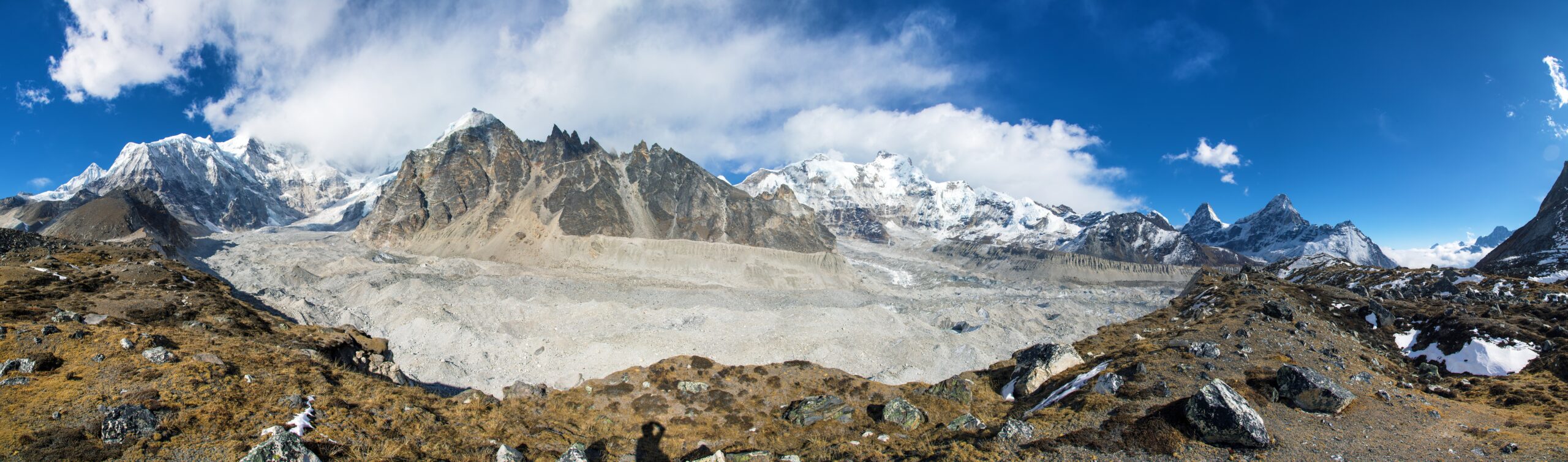
Cho Oyu: the easiest 8000er, when Tibet is open
The Turquoise Goddess is the most accessible and safest of the fourteen 8,000-metre peaks, and the classic first 8000er by the gentle Northwest Ridge from Tibet. But its whole appeal rests on Chinese access, which has closed for most recent seasons. This update covers the route, the access problem, the emerging Nepal side, and an honest readiness view. Heights in metres (feet).
Updated 27 July 2026 · Compiled by Travis Ludlow · Safety review by Dawson Ludlow · Medical review by Taylor Ludlow, RN
Single-mountain expedition update, compiled from China Tibet Mountaineering Association access reporting, operator route and pricing information, and published expedition records. Our team has not climbed Cho Oyu; the only first-hand summit anyone on our team claims is Kilimanjaro. This is a planning briefing for experienced climbers, not a how-to and not a substitute for training or a guide.
The most forgiving 8000er – if you can get to it.
Cho Oyu earns its reputation: a drive-to base camp, gentle snow slopes, one fixed-roped serac band, the lowest fatality rate of the 8000ers, and the highest success rates in open seasons. It is the classic first 8,000-metre peak and a common step toward Everest. The catch is access. It is climbed almost entirely from Tibet, and China has closed that side to foreign teams for most seasons since the pandemic.
- Standard route: Northwest Ridge, from Tibet.
- Safest 8000er: fatality around 1.3 percent.
- Success: 50 to 90 percent in open seasons.
- The catch: Tibet access, closed most recent springs.
- First climbed 1954, without supplemental oxygen.
On this page
What Cho Oyu involves
The gentlest 8,000-metre climb there is, staged from a road-head, with a single technical obstacle and one large caveat.
Cho Oyu, the Turquoise Goddess, is the sixth-highest mountain on Earth at 8,188 m, standing on the Nepal-Tibet border about 20 km west of Everest. Its normal route, the Northwest Ridge from the Tibetan side, is the most accessible way up any 8000er: a vehicle reaches Chinese base camp near 4,900 m, advanced base sits at about 5,650 m, and above that the climb is mostly gentle snow near 30 degrees. The one real obstacle is a fixed-roped serac and ice-cliff band near 6,600 m.
That gentleness, and the lowest fatality rate of the fourteen 8000ers, make Cho Oyu the classic first 8,000-metre peak and a common rehearsal for Everest. But the word easy is relative. This is still a death-zone climb of 30 to 40 days, in temperatures of -15 to -30 C, where the gentle slopes hide real objective danger and people still die. And the whole proposition depends on Chinese access to Tibet, which is where the current story lies. For the full route, permit, and cost detail, see our Cho Oyu climb guide.
The Tibet access problem
Cho Oyu’s reputation as the easy 8000er assumes you can reach the easy side. Lately, often, you cannot.
Almost every commercial Cho Oyu ascent uses the Northwest Ridge from Tibet, which means a permit from the China Tibet Mountaineering Association. Since the pandemic, China has kept the Tibetan side closed to foreign commercial expeditions for most seasons, with occasional exceptions such as spring 2023. Spring 2025 was formally closed, along with neighbouring Shishapangma. Autumn has more often opened than spring, but the decision is made by Chinese authorities and can change from one season to the next.
The closures have two practical effects. First, climbers pursuing the fourteen 8000ers, or a first 8000er, increasingly pivot to Manaslu in Nepal as the accessible alternative. Second, Nepali teams have worked since 2022 to open a commercial route on the Nepal side of Cho Oyu, and a few expeditions have fixed ropes and summited that way. That Nepal-side line is far harder than the Tibetan trade route and is not yet an established commercial option. The single most important planning question for Cho Oyu is therefore not when, but whether: confirm current access with your operator before committing.
Verify access first
Do not book flights or gear around Cho Oyu until an operator confirms Tibet access for your specific season. Build in a backup objective, and understand the cost consequences if China closes the peak late.
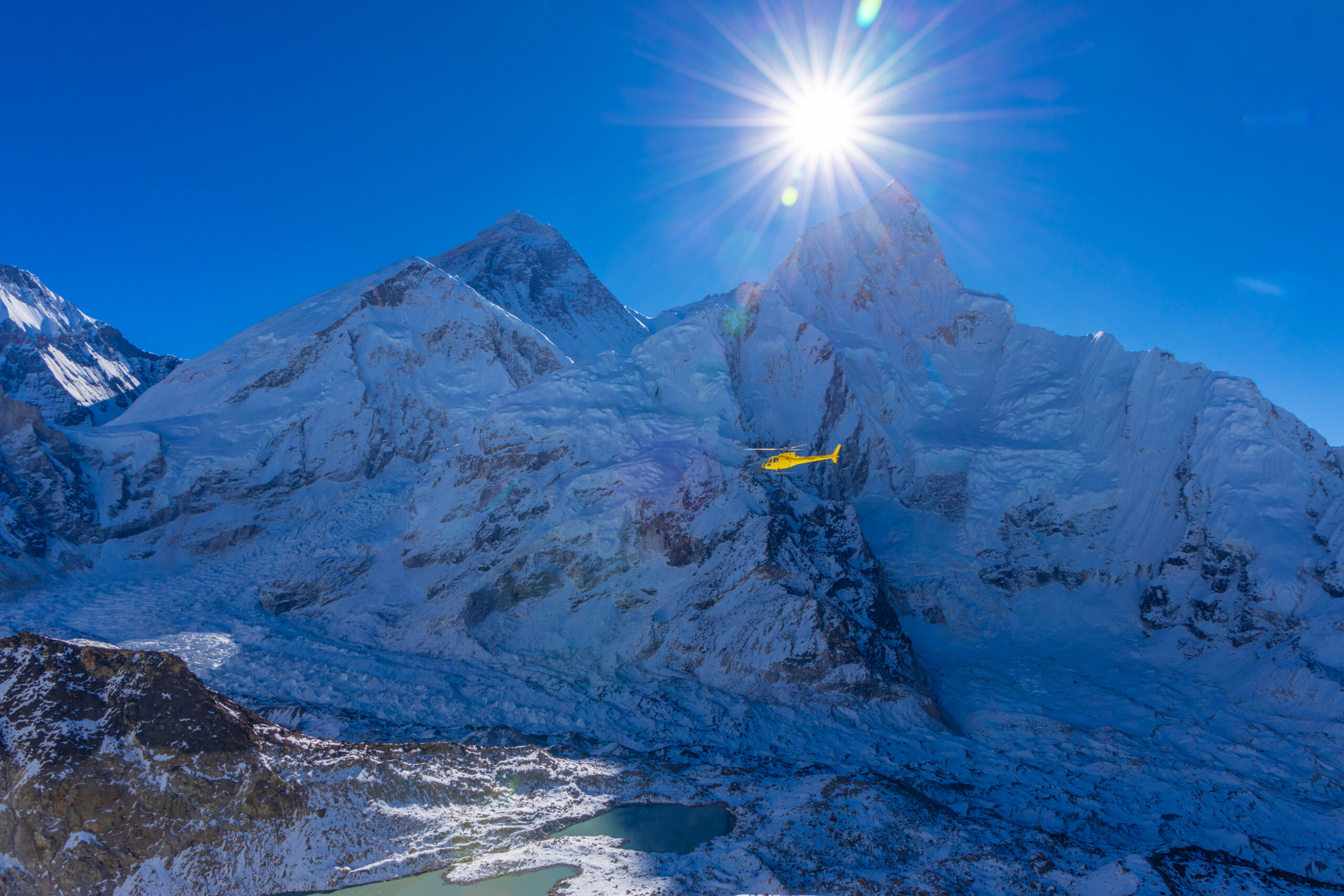
Gentle is not the same as safe
Cho Oyu is the safest 8000er by the numbers, but the numbers still record deaths. A serac band that has killed climbers, heavy snow loading after storms, and the simple arithmetic of the death zone all remain. The easy reputation is exactly what makes it easy to push too far.
Are you ready for Cho Oyu?
It is the most forgiving 8000er, not a beginner’s mountain. These are the prerequisites operators expect.
Proven Above 6,000 m
Operators expect prior high-altitude experience. Cho Oyu is a first 8000er, not a first big mountain, and the death zone is unforgiving of gaps.
Evidence: a solid 6,000 m-plus record.Up And Down, Alone
You must move confidently up and down fixed ropes and manage yourself between camps. The route is roped, but no one climbs it for you.
Evidence: efficient ascender and rappel work.Care For Yourself High
Eat, drink, manage oxygen, and solve small problems at 7,000 m and above. Guides cannot do everything for a hypoxic client.
Evidence: prior self-reliance at altitude.Plan For Closures
The single biggest variable is whether Tibet is open. Build flexibility, and a backup objective, into the plan from the start.
Evidence: a plan that survives a closure.| Requirement | Baseline | Why it matters |
|---|---|---|
| Altitude experience | Prior success above 6,000 m | The death zone punishes anyone who has not tested it lower first. |
| Fixed-rope competence | Fluent ascender and rappel work | The route is fixed but demands reliable movement while hypoxic. |
| Self-care | Independent between camps | Guides support, but cannot perform every task for a hypoxic client. |
| Fitness | Strong for a 30 to 40 day trip | The expedition is long, cold, and cumulative even on gentle ground. |
| Access flexibility | A plan that survives a closure | Tibet access can vanish for a season; a backup protects the trip. |
| Turnaround discipline | Willing to descend | An easy reputation makes it easy to push too far in bad conditions. |
If you are building toward this as a first 8000er, our what to climb before Everest progression puts Cho Oyu in context, and the acclimatization guide prepares your body for the death zone.
The Tibetan trade route and the Nepal side
One mountain, two very different climbs, separated by a border and a wide gap in difficulty.
Northwest Ridge – from Tibet
The normal route and the reason for Cho Oyu’s reputation. A drive-to base camp, an advanced base at 5,650 m, and mostly gentle snow slopes near 30 degrees, with one fixed-roped serac band near 6,600 m as the only technical obstacle. It depends entirely on Chinese access to the Tibetan side.
- Gentle snow, around 30 degrees
- One fixed-roped serac and ice-cliff band
- Drive-to base camp on the Tibetan side
- Needs Tibet open; closed most recent springs
The Nepal Side
A very different mountain. The Nepal side is technical, rarely climbed, and success is uncommon. Because Tibet keeps closing, Nepali teams have worked since 2022 to fix a commercial route from Nepal, and a few have summited that way, but it remains an expert undertaking rather than a trade route.
- Technical and rarely climbed
- An emerging, not established, commercial line
- Fixed and summited by a few recent teams
- An expert objective, not the easy 8000er
| Factor | Northwest Ridge (Tibet) | The Nepal side |
|---|---|---|
| Character | Gentle snow, one serac band | Technical and sustained |
| Access | Drive-to base camp; needs China open | From Nepal; no Chinese permit needed |
| Difficulty | The easiest 8000er | An expert undertaking |
| Status | Closed most recent springs | Emerging, not established |
| Who it suits | A first 8000er, when open | Expert alpinists, or when Tibet is shut |
The Cho Oyu climb guide covers the Northwest Ridge camps, permit, and gear in full.
The Northwest Ridge, camp by camp
An overview of the Tibetan trade route, from the road-head to the broad summit plateau. For the full detail, see the climb guide.
Chinese Base Camp ~4,900 m
Reached by vehicle on the Tibetan side, a rare luxury among 8000ers.
Advanced Base Camp ~5,650 m
A short walk up the moraine; the working base for the climb.
Onto The Mountain
Above ABC the route gains the lower slopes toward the serac band.
Serac Band ~6,600 m
A fixed-roped ice cliff, the only technical obstacle on the normal route.
Gentle Snow
Broad, moderate slopes near 30 degrees lead higher up the ridge.
Last Camp
The high camp for the summit push in cold, thin air.
The Broad Top
A wide summit plateau, deceptively flat, marks the true summit at 8,188 m.
Reverse The Ropes
Retrace the fixed lines; most incidents happen tired, on the way down.
The one obstacle
On a route this gentle, the serac and ice-cliff band near 6,600 m is the single place that demands real care. It is fixed with ropes, but timing and exposure through it are what a good team manages closely.
A Cho Oyu expedition timeline
A commercial Cho Oyu expedition runs about 30 to 40 days, most of it acclimatization and waiting rather than climbing.
Kathmandu and permits
Gather in Kathmandu, complete Tibet visa and Chinese permit formalities, and check gear.
Cross into Tibet
Travel to the Tibetan plateau and the drive-to Chinese base camp near 4,900 m.
Establish ABC
Move up the moraine to Advanced Base Camp at about 5,650 m, the real start.
Acclimatization rotations
Climb to Camps 1 and 2, sleep high, and descend to recover across several rounds.
Cross the serac band
Pass the fixed-roped ice cliff near 6,600 m, the route’s one real obstacle.
Wait for a window
Rest at base and watch the forecast for a settled summit period.
Summit push
Move through the high camps and up the gentle plateau to the summit, then descend.
Exit to Kathmandu
Clear the mountain and return across Tibet to Kathmandu.
Cost and operators
Cho Oyu is the affordable 8000er, and the most operator-rich after Everest, but tier choice matters more here than route choice.
| Component | Figure | Note |
|---|---|---|
| Operator fee | ~$20,000-$45,000 | Premium Western to budget Nepali; the tier affects success rate. |
| All-in trip cost | ~$35,000-$65,000 | Adds travel, insurance, gear, and tips; still far below Everest. |
| Chinese permit and logistics | Included by operator | The CTMA permit and Tibet logistics are handled by the operator. |
| Insurance | Often $90,000+ cover required | High-altitude rescue and evacuation cover is mandatory. |
| Duration | About 30 to 40 days | A full expedition, long even on relatively gentle terrain. |
Compare the field, tier by tier, in our Cho Oyu operators comparison, and see how the numbers are built in summit success rates.
Choosing a Cho Oyu operator
On Cho Oyu the operator tier affects success more than the route does. These are the questions that separate them.
Tibet, Confirmed
The first question: is the operator confident of Tibet access for your season?
If It Closes
Ask what happens, and what it costs, if China closes the peak late.
Support Up High
Clarify the climbing-Sherpa ratio and oxygen plan for the summit push.
How They Count
Ask which seasons and clients are in their quoted success rate.
The One Hazard
How the team manages timing and exposure through the serac band.
Right Experience
A serious operator checks your altitude record before accepting you.
How to choose an expedition operator covers the vetting in full, and the Cho Oyu operators comparison ranks the field.
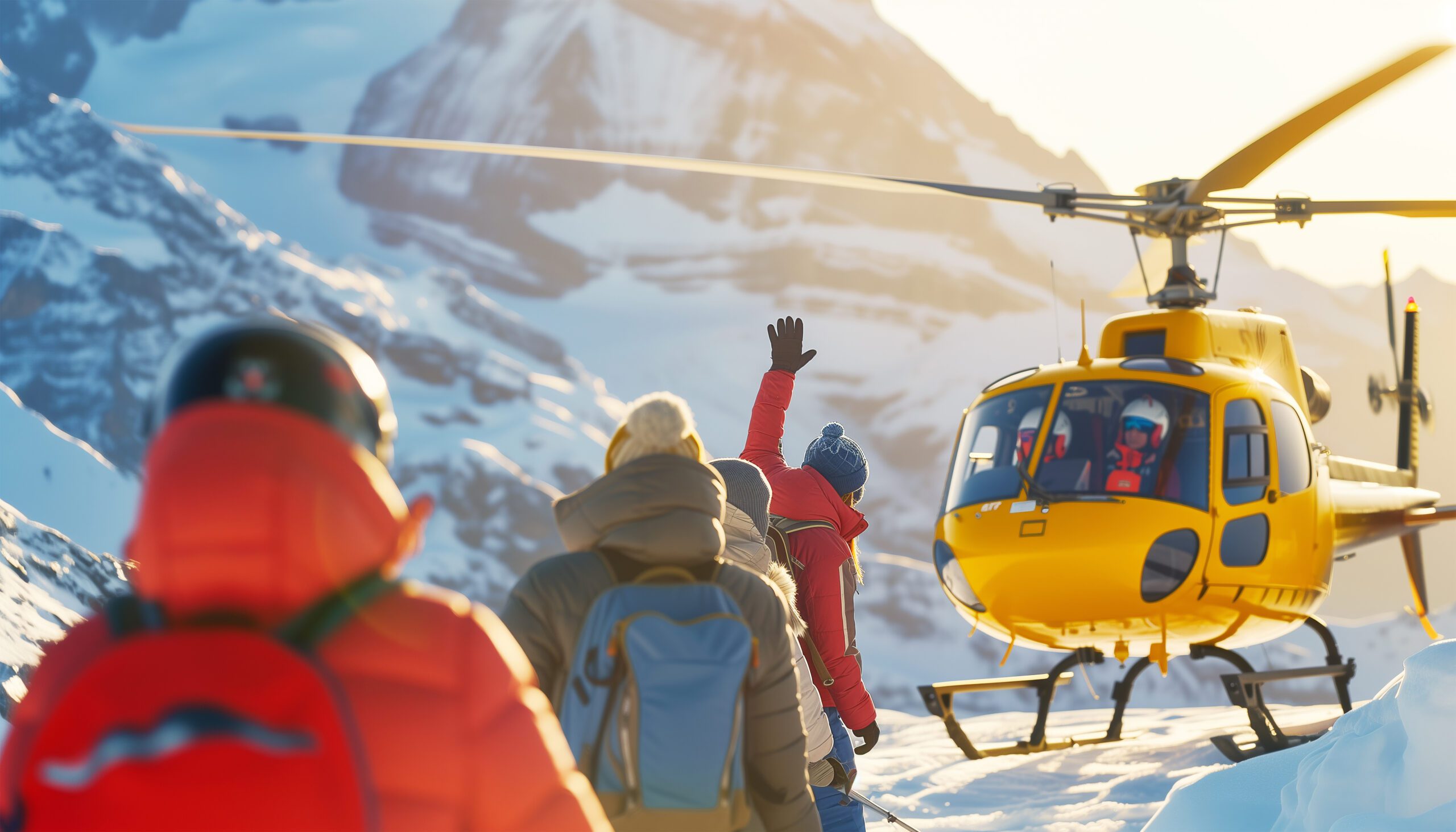
The safest 8000er is still an 8000er
A low fatality rate is a statistic, not a guarantee. Above 7,000 m the margins are thin, rescue is slow and weather-bound, and the descent, tired and hypoxic, is when most incidents happen. Treat Cho Oyu with the respect any death-zone peak demands.
Safety and success, honestly
Cho Oyu’s figures are the friendliest of the 8000ers, but only when you read what is inside them.
| Statistic | What it measures | How to use it |
|---|---|---|
| ~1.3% fatality | Lowest of the 8000ers | The safest 8000er, but not a safe mountain. |
| 50-90% success (open) | In good seasons | Among the highest 8000er success rates when Tibet is open. |
| ~35% headline | Includes closed seasons | Long-run figures fold in the permit closures; read the denominator. |
| The serac band | The recurring killer | Gentle slopes, but the ice cliff and post-storm snow are real hazards. |
Our summit success rates analysis explains why the headline rate is lower than what open-season operators report.
Season and conditions
Cho Oyu has two seasons, but access matters more than the calendar in deciding when you can actually go.
One Window
Climbed when open, though Tibet has often stayed shut in recent springs.
The Classic Season
The traditional Cho Oyu season, and more often open in recent years.
The Real Variable
Whether Tibet is open matters more than the month you choose.
-15 to -30 C
Thin, cold air makes even routine tasks a serious effort up high.
Snow Loading
Heavy precipitation raises avalanche risk on the accumulation slopes.
A short history of Cho Oyu
From a lightweight 1954 first ascent to the most-climbed 8000er after Everest.
Cho Oyu was first climbed on 19 October 1954 by Herbert Tichy, Sepp Joechler, and Pasang Dawa Lama, on a small, lightweight Austrian expedition and without supplemental oxygen. It was one of the earliest 8,000-metre summits, and unusual for its style at a time when the great peaks were being climbed by large siege expeditions. That lightweight ascent set the tone for a mountain that would become known for accessibility rather than extremity.
Since then Cho Oyu has become the most-climbed 8000er after Everest, with thousands of ascents, most by the Tibetan Northwest Ridge in autumn. Its role as the standard first 8000er is well established, which is why the recent Chinese access closures matter so much: they have disrupted the single most common on-ramp to 8,000-metre climbing, and pushed both climbers and Nepali operators to look for alternatives.
The Himalaya cluster
Cho Oyu sits among the 8000er updates, the alternatives when it closes, and the skills a first 8000er demands.
What to climb before Everest
Where Cho Oyu fits in a progression toward the highest peak.
Read the guide ->The other Tibet 8000erShishapangma
Closed alongside Cho Oyu, and climbed from the same side.
See the guide ->The alternativeManaslu
The go-to first 8000er in Nepal when Cho Oyu is shut.
See the guide ->Core skillFixed lines and jumars
The one skill the Cho Oyu trade route absolutely demands.
Learn the skill ->Cho Oyu climb guide
The full Northwest Ridge route, permit, and cost detail.
->Cho Oyu operators compared
The safest 8000er’s operator field, tier by tier.
->Summit success rates
How Cho Oyu’s numbers are built, and what they hide.
->Altitude acclimatization explained
Preparing your body for the death zone.
->Mountaineering insurance above 6000m
The high-altitude evacuation cover operators require.
->Mountain weather for climbers
Reading the windows that decide a summit push.
->Back to the full Expedition Updates dashboard for every mountain we track.
Where Cho Oyu fits
The fourteen 8000ers, its Himalayan neighbours, and the peak it prepares you for.
Eight-thousanders
Where Cho Oyu, the most accessible 8000er, sits among the fourteen.
Open the collection ->HimalayaLhotse and Makalu
Neighbouring 8000ers a short distance east, near Everest.
Read the updates ->The goalEverest
The peak most Cho Oyu climbers are ultimately training toward.
See the guide ->Cho Oyu FAQ
The questions climbers ask most about the difficulty, the access, the cost, and the season.
How high is Cho Oyu, and where is it?
Cho Oyu is 8,188 m (26,864 ft), the sixth-highest mountain on Earth. It sits on the Nepal-Tibet border about 20 km west of Everest, in the Mahalangur Himalaya. Its Tibetan name, Cho Oyu, is usually translated as Turquoise Goddess. Almost all commercial ascents climb the Northwest Ridge from the Tibetan side.
Why is Cho Oyu called the easiest 8000er?
Because its normal route asks less of a climber than any other 8,000-metre peak. The Northwest Ridge from Tibet is a mostly gentle snow climb of around 30 degrees, with a drive-to base camp and only one serious obstacle, a fixed-roped serac and ice-cliff band near 6,600 m. It has the lowest fatality rate of the fourteen 8000ers, around 1.3 to 1.4 percent, and the highest success rate. It is the classic first 8000er and a common step toward Everest. Easiest, though, is relative: it is still a death-zone peak.
Is Cho Oyu open right now?
That is the central question, and it changes. Cho Oyu is climbed almost entirely from Tibet, and China has kept the Tibetan side closed to foreign commercial expeditions for most seasons since the pandemic, with occasional exceptions such as spring 2023. Spring 2025 was formally closed. Autumn seasons have sometimes opened. Because access is set by the China Tibet Mountaineering Association and can change season to season, verify the current status with an operator before you plan around it.
Can you climb Cho Oyu from Nepal?
Yes, but it is a very different and much harder climb. The Nepal side is technical and rarely done, and success is uncommon. Because Tibet access keeps closing, Nepali teams have worked since 2022 to establish a viable commercial route from the Nepal side, and a few expeditions have fixed ropes and summited that way. For now, though, the Nepal side is an expert undertaking, not the accessible trade route that made Cho Oyu famous.
What is the success rate on Cho Oyu?
In open seasons with strong operators, summit rates commonly run 50 to 90 percent, among the highest of any 8000er. Headline long-run figures are lower, near 35 percent, because they fold in seasons disrupted or closed by Chinese permit decisions. Operator tier matters: premium teams report higher rates than budget ones. See our summit success rates analysis for how these numbers are built.
How much does a Cho Oyu expedition cost?
Operator fees in 2026 commonly run about $20,000 to $45,000, with all-in trip costs often $35,000 to $65,000 once travel, insurance, gear, and tips are included. It is far cheaper than Everest, which is part of its appeal as a first 8000er. Costs include the Chinese permit and Tibet logistics handled by the operator. A trip runs about 30 to 40 days.
When is the season?
Both spring (April to May) and autumn (September to October) are climbed, and autumn has long been the classic Cho Oyu season. Access, though, is the bigger variable than the calendar: in recent years the Tibetan side has more often opened in autumn than spring, but this is set by Chinese authorities and must be checked for the year you intend to climb.
Do you need supplemental oxygen or prior experience?
Cho Oyu is often climbed with supplemental oxygen on the commercial route, though a fit, experienced minority climb it without. It was first climbed in 1954 without oxygen. Either way, it is not a first big mountain: operators expect prior experience above 6,000 m, competence moving up and down fixed ropes, and the self-sufficiency to look after yourself between camps in the death zone.
Is Cho Oyu actually safe?
It is the safest of the 8000ers by fatality rate, but safe is the wrong word for any 8,000-metre peak. Its gentle slopes hide real objective danger: a serac zone that has killed climbers, and heavy snow accumulation that raises avalanche risk after storms. People die on Cho Oyu. Treat it as the most forgiving 8000er, not a guaranteed one.
How we built this update
What this page is based on, who reviewed it, and what we do not claim to know.
Sources
- China Tibet Mountaineering Association access decisions and current-season reporting.
- Operator route, itinerary, and 2026 pricing information for the Northwest Ridge.
- Published expedition records for the 1954 first ascent and Nepal-side attempts.
- Fatality and success-rate datasets for the fourteen 8000ers.
- Our own Cho Oyu climb guide and operators comparison for the detail.
Review and standards
Compiled by Travis Ludlow and reviewed for safety by Dawson Ludlow, our Climbing and Mountaineering Lead (Wilderness First Aid), whose highest first-hand summit is Kilimanjaro. Health and medical points were reviewed by Taylor Ludlow, RN. We do not fabricate summit experience, quotes, or credentials, and we say plainly when we are reporting rather than recounting.
What we do not claim to know
Access and conditions on Cho Oyu change, and no web page can replace a current operator confirmation and forecast. In particular:
- Tibet access is set season by season by Chinese authorities; confirm it before planning.
- The Nepal-side route is developing; its status and difficulty may change year to year.
- Success and fatality figures vary by source, season, and how open seasons are counted.
- Our team has not climbed Cho Oyu, so we report official access, records, and operator data, not personal experience.

Global Summit Guide research
We compile mountain updates from official access decisions, operator data, and published records, review them for safety and medical accuracy, and refresh them each season. We are transparent about what we have and have not climbed, and Cho Oyu is a research-based briefing, not a personal account.
About our team and standards ->Confirm access first. Then build the plan.
Start with the full route in our Cho Oyu climb guide, compare teams in the operators comparison, and weigh the alternative in the Manaslu guide in case Tibet stays shut. Expeditions gather in Kathmandu, so for flights and lodging there, browse travel on Expedia.
Disclosure: the Expedia link above is a sponsored affiliate link, and we may earn a commission at no extra cost to you. It is the only affiliate link on this page; our route, access, and safety guidance is independent.