
Last updated June 8, 2026
Shishapangma Climb Guide: The Last 8000er Climbed & the Knife-Edge Summit Traverse (2026)
On 2 May 1964, a Chinese expedition led by Xu Jing summited Shishapangma — the last of the 14 eight-thousanders to receive a first ascent. The mountain has been called “easy” and “ideal for first 8000ers.” Then on 7 October 2023, twin avalanches killed four climbers chasing the 14-peak collection. Add the Central vs Main Summit controversy that Elizabeth Hawley famously refused to forgive, plus Chinese permit closures in 2024 and 2025, and Shishapangma demands more honesty than its marketing suggests. Here’s the verified 2026 planning data.
The History of Shishapangma
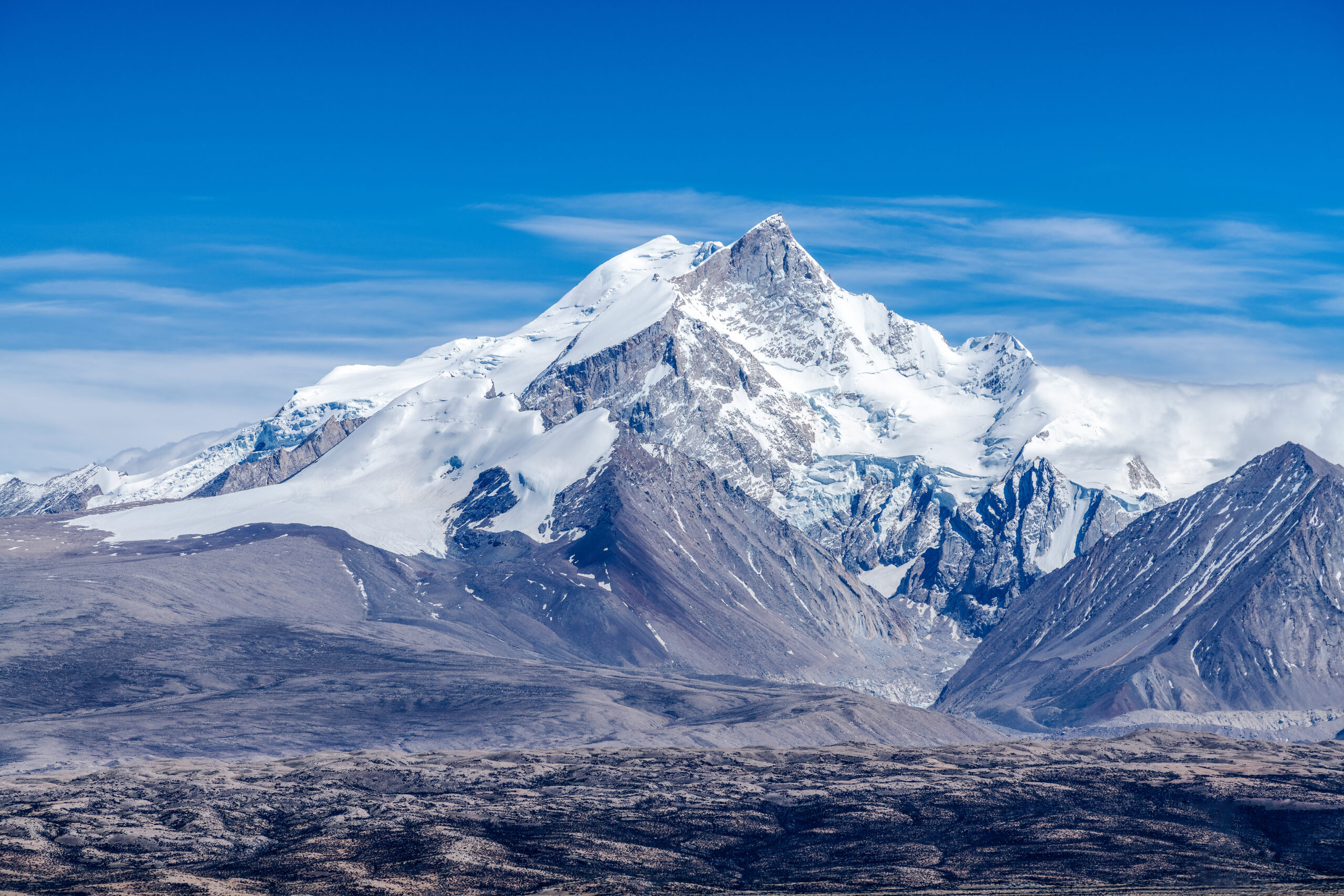
Shishapangma sits in the Jugal Himal range of Tibet (officially the Tibet Autonomous Region of China), approximately 5 km north of the Nepal border. It is the only 8000-meter peak entirely within Chinese territory. The mountain has multiple names: Shishapangma is the Tibetan name, often translated as “crest above grassy plains”; Xixabangma is the Chinese spelling; and Gosainthān (Sanskrit/Nepali) means “place of the saint” — the name used historically by Nepali geographers.
Why Shishapangma Was the Last 8000er Climbed
Throughout the 1950s — the “Golden Age” of Himalayan mountaineering when 13 of the other 14 eight-thousanders received their first ascents — Tibet was closed to foreign climbing expeditions because of Chinese political control. Annapurna fell in 1950, Everest in 1953, Nanga Parbat in 1953, K2 in 1954, Cho Oyu in 1954, Makalu in 1955, Kangchenjunga in 1955, Lhotse in 1956, Manaslu in 1956, Broad Peak in 1957, Gasherbrum I in 1958, Dhaulagiri in 1960. Shishapangma sat untouched, the last unclimbed prize, while political circumstances kept foreign expeditions out.
2 May 1964: Chinese First Ascent
On 2 May 1964, a Chinese expedition led by Xu Jing (Hsu Ching) completed the first ascent via the Northern Route. The summit team comprised ten Chinese climbers: Xu Jing, Zhang Junyan, Wang Fuzhou, Chen San, Cheng Tianliang, Migmar Trashi, Sodnam Dorje, Doji, Yonten, and Wu Zongyue.
This was the last of the fourteen 8000-meter peaks to be climbed, completing the first-ascent collection of all peaks above 8,000 meters worldwide. The ascent came fourteen years after Annapurna, eleven years after Everest, and four years after Dhaulagiri. The Chinese expedition was partly a national project, demonstrating Chinese mountaineering capability on a peak that had been denied to foreign teams during the Golden Age. It would be 16 more years before any foreign team reached the summit.
12 May 1980: First Foreign Ascent
The first foreign ascent came on 12 May 1980 when a Bavarian expedition reached the summit — sixteen years after the first ascent. China had finally opened Shishapangma to foreign mountaineering, ending the longest closure of any 8000m peak to foreign climbers in mountaineering history.
28 May 1981: Messner’s Ascent
On 28 May 1981, Reinhold Messner and Friedl Mutschlechner completed the fifth ascent as part of an Austrian expedition. Shishapangma’s inclusion in Messner’s 14-peak project later became an element in the broader Messner vs Hans Kammerlander vs Jerzy Kukuczka race to complete all 14 eight-thousanders. Messner eventually completed the 14 in October 1986 with Lhotse, becoming the first person in history to do so. Kukuczka completed his 14 just over a year later in September 1987.
28 May 1982: The British Southwest Face — Scott, MacIntyre, Baxter-Jones
On 28 May 1982, British climbers Doug Scott, Alex MacIntyre, and Roger Baxter-Jones completed the first ascent of the Southwest Face via the “Right-Hand Couloir” — now known as the British Route. The ascent was accomplished in alpine style and is considered one of the most significant Himalayan climbs of the 1980s. Alex MacIntyre died later in 1982 on Annapurna’s South Face when struck by a falling rock. Roger Baxter-Jones died on the Triolet in 1985. Doug Scott went on to become one of the most celebrated British mountaineers of all time.
5 October 1999: Alex Lowe’s Death
American alpinist Alex Lowe — widely considered one of the greatest climbers of his generation — died on Shishapangma on 5 October 1999 when an avalanche swept him and photographer Dave Bridges off the mountain. Climbing partner Conrad Anker survived. Lowe’s body was recovered in April 2016, 16 years after his death, emerging from the glacier as ice flow carried the bodies downslope. Lowe’s death at age 40 underscored that Shishapangma’s “accessible” reputation did not insulate even the most accomplished climbers from avalanche risk. Conrad Anker later married Alex Lowe’s widow Jennifer.
14 January 2005: First Winter Ascent of Central Summit
On 14 January 2005, Polish climber Piotr Morawski and Italian Simone Moro made the first winter ascent of Shishapangma’s Central Summit (8,013m). The true Main Summit (8,027m) was first climbed in winter later — definitively bringing all 14 8000ers into the winter-ascent column. Morawski died in 2009 on Dhaulagiri.
3 May 2018: Boyan Petrov’s Disappearance
On 3 May 2018, Bulgarian climber Boyan Petrov — a five-time Paralympian and one of Bulgaria’s most accomplished high-altitude mountaineers — disappeared after being last seen at Camp 3 (approximately 7,400m). A two-week search effort recovered only a few personal items and medicine. Petrov was attempting to become the first Bulgarian to complete all 14 eight-thousanders. His body was never found.
2023: Kristin Harila’s 14-Peak Speed Record
In 2023, Norwegian climber Kristin Harila completed all 14 eight-thousanders in just 92 days — shattering Nirmal Purja’s 2019 record of 6 months 6 days. Her Sherpa guide for much of the record run was Tenjen “Lama” Sherpa, who would die on Shishapangma later that same year.
7 October 2023: The Twin Avalanche Disaster. Two avalanches at approximately 7,600m and 8,000m killed four climbers on Shishapangma in a single morning. American Anna Gutu (33) and her guide Mingmar Sherpa (27) from Elite Exped died in the first avalanche. American Gina Marie Rzucidlo (45) and guide Tenjen “Lama” Sherpa (35) from Seven Summit Treks died in the second. Both American women were racing to complete the 14 eight-thousanders. Tenjen Lama had just completed Kristin Harila’s record 92-day 14-peak run earlier in 2023. Fifty-two climbers were on the mountain that day. The Chinese government suspended Shishapangma climbing after the tragedy. Spring 2024 was closed. Spring 2025 was again closed “for undisclosed reasons” per Alan Arnette’s reporting.
The Central vs Main Summit Controversy — Why 98% of Climbers Stop Short
Shishapangma is the only 8000-meter peak where “summit” itself is contested. The mountain has two distinct points exceeding 8000m: the Central Summit at 8,013m and the true Main Summit at 8,027m — 14 meters higher. A narrow knife-edge ridge connects them, requiring 45-90 minutes to traverse with exposed drops on both sides — fatal falls possible in either direction.
Approximately 98% of commercial summiteers stop at the Central Summit. The traverse is exposed, technical, and undertaken at the end of the longest climbing day in conditions where climbers are already exhausted from the push from Camp 3. Many descend without ever attempting the Main Summit.
Elizabeth Hawley’s verdict: The legendary Himalayan Database chronicler Elizabeth Hawley famously rejected Central Summit ascents as legitimate Shishapangma summits. She required climbers — including American Ed Viesturs — to return to the mountain and complete the Main Summit ridge for her records. Hawley’s standards have shaped the modern Himalayan Database verification protocol.
The verification problem for 14-peak project climbers: Climbers chasing all 14 eight-thousanders must decide whether to count a Central Summit ascent as Shishapangma — and risk later being told it doesn’t qualify. Satori Adventure’s guidance: “If you consider traversing the knife-edge ridge, we recommend that the forecast has a 0% chance of wind, snow, or low visibility.” That standard is rarely met.
The October 2023 tragedy occurred in the same terrain that produces this controversy — the avalanche-prone upper slopes between Camp 3 and the summit area where exhausted climbers face high-consequence decisions.
Shishapangma Climbing Timeline
Xu Jing’s 10-climber Chinese expedition makes the first ascent via the Northern Route, completing the first-ascent collection of all 14 eight-thousanders.
Bavarian expedition makes the first foreign ascent — 16 years after the Chinese first climb. The longest first-ascent-to-foreign-ascent gap of any 8000er.
Reinhold Messner and Friedl Mutschlechner complete the fifth ascent as part of his 14-peak project (completed 1986).
Doug Scott, Alex MacIntyre, Roger Baxter-Jones make the first ascent of the Southwest Face in alpine style. MacIntyre dies later in 1982 on Annapurna.
American alpinist Alex Lowe and photographer Dave Bridges killed in an avalanche. Conrad Anker survives. Lowe’s body recovered 16 years later in April 2016.
Polish climber Piotr Morawski and Italian Simone Moro make the first winter ascent of the Central Summit (8,013m). Main Summit climbed in winter later.
Bulgarian Paralympian and high-altitude climber last seen at Camp 3 at ~7,400m. Body never found.
Norwegian climber Kristin Harila completes all 14 8000ers in 92 days with Tenjen “Lama” Sherpa as primary guide.
Anna Gutu, Mingmar Sherpa, Gina Marie Rzucidlo, and Tenjen “Lama” Sherpa killed in two avalanches at 7,600m and 8,000m. Both American women racing to complete the 14-peak collection.
Chinese government issues no Shishapangma permits following the October 2023 tragedy.
Per Alan Arnette’s reporting, China again denied Shishapangma permits for spring 2025. Autumn 2025 saw limited permit issuance.
The Climbing Routes
Shishapangma has three main route lines, but the Northwest Ridge (the modified standard route based on the 1964 Chinese Northern Route) accounts for ~95% of modern summits. The Southwest Face is an elite alpine objective. The Chinese-only Northern Route from the original 1964 ascent is rarely climbed today.
| Route | Side | First Ascent | Status |
|---|---|---|---|
| Northwest Ridge (Standard) | North/Tibetan | Modified from 1964 | ● Open · Standard (~95%) |
| 1964 Northern Route (original) | North | 2 May 1964 (Chinese) | ● Open · Rare |
| Southwest Face / British Route | South | 28 May 1982 (Scott et al.) | ● Open · Elite Only |
| Polish Couloir / Variations | South/SW | Various | ● Open · Rare |
Northwest Ridge — The Commercial Standard
Approach: From Kathmandu, overland travel via the Gyirong border crossing into Tibet (Friendship Highway closed since 2015 earthquake; Gyirong is now the only land entry). Then along the Tibetan Plateau road network to Chinese Base Camp at 5,000m — uniquely among 8000ers, base camp is reached by vehicle. Total approach from Kathmandu: 3-5 days.
Route character: From Chinese Base Camp, climbers move to Advanced Base Camp at ~5,600m (typically a 1-2 day approach with yaks carrying loads). From ABC, the route ascends through Camp 1 (~6,400m) on the lower slopes, Camp 2 (~6,900m), and Camp 3 (~7,400m). Summit day departs Camp 3 and ascends the upper Northwest face/ridge to the Central Summit at 8,013m. Climbers seeking the true summit must then traverse the knife-edge ridge to the Main Summit at 8,027m.
Technical character: Alpine PD/AD — among the most moderate of any 8000er standard route. Sustained snow slopes at 30-45° with shorter steeper sections. Fixed lines are typically installed by lead operators on the steeper terrain. The technical difficulty is significantly lower than the Japanese Couloir on Gasherbrum I or K2’s Abruzzi Spur.
The summit traverse: 100-meter knife-edge ridge between Central and Main Summits — exposed, corniced, 45-90 minute traverse. Approximately 98% of commercial summiteers stop at the Central Summit.
Used by: All commercial operators when Chinese permits are issued (Madison Mountaineering, 8K Expeditions, Seven Summit Treks, Imagine Nepal, Furtenbach Adventures, Elite Exped).
Southwest Face / British Route — Elite Alpine Objective
Character: Doug Scott, Alex MacIntyre, and Roger Baxter-Jones made the first ascent of the Southwest Face via the “Right-Hand Couloir” on 28 May 1982 in alpine style — considered one of the most significant Himalayan climbs of the 1980s. The Southwest Face rises ~2,200m above the glacier with sustained steep snow and ice.
Access: Approached from the Nepal side via the Phu valley — significantly more logistically complex than the Tibetan-side commercial route. Rarely attempted in modern era.
Modern status: Open but extremely rare. Elite alpinists only. Several variations exist (Polish Couloir, etc.) but all face the same access and route-difficulty challenges that keep commercial traffic on the Northwest Ridge.
The Central/Main Summit Traverse — Why It Matters
Geometry: Central Summit at 8,013m. Main Summit at 8,027m. Distance: ~100 meters across an exposed knife-edge ridge with corniced sections and ~2,000m drops on both sides. Time required: 45-90 minutes in good conditions.
Why ~98% stop at Central: The traverse is undertaken after a 6-8 hour climb from Camp 3 in extreme cold (below -25°C is common, often colder). Climbers are exhausted, oxygen-depleted, and facing technical exposure with high consequences. Many simply lack the energy or judgment margin to continue safely.
Hawley’s verification: Himalayan Database chronicler Elizabeth Hawley famously rejected Central Summit ascents. Climbers like Ed Viesturs returned to the mountain to complete the Main Summit traverse for her records. Hawley’s standards remain the verification protocol for the modern Himalayan Database.
For 14-peak project climbers: Stopping at the Central Summit risks the ascent being denied by Hawley-standard verification — meaning the climber has to return to Shishapangma later. Several prominent 14-peak completers had to return for the Main Summit after initial Central Summit climbs.
Northwest Ridge Camp Structure
Modern commercial expeditions establish three high camps above Advanced Base Camp. Most teams summit from Camp 3.
The vehicle-access advantage and trap: Shishapangma is the only 8000er where Base Camp is reachable by vehicle. This eliminates the 9-10 day Baltoro trek that K2/G1/G2/Broad Peak climbers face. Total expedition time can be 32-45 days — the shortest of any 8000er program. But this accessibility creates a trap: climbers arrive less acclimatized than equivalent Pakistan trips, and the compressed timeline can produce overconfidence about altitude adaptation. Commercial operators now build mandatory acclimatization rotations to compensate.
Permits, Fees & Chinese Access Logistics
Shishapangma is uniquely difficult to plan because it requires Chinese government permit approval through the Chinese Tibet Mountaineering Association (CTMA). Unlike Nepal’s reliable annual permit issuance or Pakistan’s PATO court-protected fee structure, Chinese Shishapangma permits can be denied without notice — and have been in 2024 and 2025.
| Item | Cost (USD) | Notes |
|---|---|---|
| Chinese climbing permit | $7,500-11,000 per climber | Varies by group size; lower per-climber cost in larger teams |
| CTMA liaison officer | $2,500-4,000 per expedition | Mandatory Chinese-government-assigned liaison |
| Tibet travel permit | $150-300 per climber | Required for all foreigners entering Tibet |
| Chinese visa (group) | $140-200 per climber | Group visa typically processed through Chinese consulate in Kathmandu |
| Mandatory Tibetan ground services | $3,000-5,000 per climber | CTMA-approved Tibetan operators handle BC services |
| Kathmandu → Gyirong → BC transport | $1,500-3,000 per climber | Overland via Gyirong border crossing (post-2015 earthquake routing) |
| Oxygen + Sherpa support | Variable by operator | Most commercial expeditions use full oxygen from C2 or C3 |
| Budget guided expedition | $25,000-32,000 | Pakistani/Nepali-operated, basic logistics, partial oxygen |
| Mid-tier guided expedition | $35,000-48,000 | Full oxygen, dedicated Sherpa, weather forecasting |
| Premium guided expedition | $50,000-65,000+ | Madison Mountaineering, Furtenbach — high Sherpa ratios, pre-acclimatization |
Permit volatility is the planning reality. Spring 2024 was closed by China entirely following the October 2023 tragedy. Spring 2025 was again closed “for undisclosed reasons” per Alan Arnette’s reporting. Autumn 2025 saw limited permits issued. Climbers booking Shishapangma should: (1) work with operators who maintain active CTMA relationships and have demonstrated permit success in recent seasons, (2) accept that permit denial without notice is a real risk that has materialized in two recent years, (3) build flexibility into 14-peak project plans so a Shishapangma denial doesn’t compromise the broader timeline, and (4) have a backup objective (Manaslu or Cho Oyu autumn season) ready if Shishapangma closes.
Why Shishapangma costs more than Pakistan 8000ers: Despite Pakistan’s $2,500 permit being lower than Shishapangma’s $7,500-11,000, the cost gap doesn’t end at permits. Chinese CTMA requires use of approved Tibetan ground services at higher rates than Nepalese or Pakistani equivalents. The smaller commercial operator pool (because of CTMA approval requirements) reduces competition. The result: Shishapangma is consistently among the more expensive 8000er expeditions despite being one of the technically easier mountains. For 14-peak project climbers it’s unavoidable; for first-time 8000er climbers, Pakistan’s G2 or Nepal’s Manaslu typically deliver better value.
Best Time to Climb & Weather Windows
Shishapangma has two climbing seasons: spring (April-May) and autumn (September-October). This is unusual among 8000ers — most have a single dominant window. The two-season pattern reflects Shishapangma’s Tibetan Plateau location, which receives less monsoon precipitation than Nepal-side peaks.
| Season | Window | Conditions | Watch For |
|---|---|---|---|
| Spring | April – May | Traditional primary season; more stable weather | Chinese permits have been denied for spring 2024 and 2025 — verify with operator |
| Autumn | September – October | Secondary season; gaining traction as spring closures persist | The October 2023 tragedy occurred in this window; avalanche risk after monsoon snow |
| Pre-Monsoon | March (early) | Cold, less stable | High winds; rarely climbable |
| Winter | December – February | Elite alpinists only | Central Summit first winter ascent: 14 January 2005 (Morawski/Moro) |
The autumn 2023 lesson: The October 7, 2023 tragedy occurred during the autumn season after the post-monsoon snow accumulation cycle. Following heavy snowfall, the standard avalanche guidance is to wait 24-48 hours for new snow to bond to existing snowpack before climbing. The competitive 14-peak race culture that brought multiple teams to Shishapangma in October 2023 created pressure to climb on conditions that conservative approaches would have avoided. Climbers planning Shishapangma in either season should ask their operator’s specific avalanche protocol — particularly for the slopes between Camp 3 and the summit area where the 2023 avalanches struck.
Essential Gear Checklist
Shishapangma gear requirements match standard 8000-meter expedition kit. The shorter expedition timeline (32-45 days vs 45-55 for Pakistan) means slightly less approach gear, but the Tibetan Plateau cold and high winds demand top-tier insulation. The knife-edge summit traverse demands solid technical capability for the climbers attempting the Main Summit.
High-Altitude Clothing
- 8000m down suit OR expedition parka + down pants (-40°C rated)
- Base layers (3 sets), heavyweight fleece, windproof shell
- Expedition mitts + liner gloves (3 pairs)
- Balaclava + buff + goggles (2 pairs, including summit-clear lens)
- Glacier sunglasses (Category 4) — Tibetan Plateau sun is intense
Boots & Foot Systems
- 8000m triple boots (La Sportiva Olympus Mons, Millet Everest, Scarpa Phantom 8000)
- Mid-altitude double boots for ABC rotations
- Crampons with anti-balling plates (Petzl Lynx, Grivel G14)
- Multiple sock systems with vapor barrier
- Insulated overgaiters — important for Tibetan Plateau wind
Technical Hardware
- Harness (full strength, sized over down suit)
- Helmet (essential — avalanche-prone route history)
- Ice axe + 2nd tool for the knife-edge ridge traverse if attempting Main Summit
- Ascender + descender + 4 locking carabiners
- 2 prusik cords + 2 slings
Expedition & Comms
- Headlamp + 4 spare battery sets (cold-rated lithium)
- Personal first-aid + frostbite prevention kit
- Garmin inReach Mini 2 or sat phone (China network restrictions apply)
- Power bank + solar panel for ABC
- Chinese visa, Tibet permit, CTMA documentation
Difficulty & The “Easiest 8000er” Reality Check
Shishapangma is routinely marketed as “one of the easiest 8000ers” and “an ideal first 8000er.” The marketing has real grounding — the Northwest Ridge is Alpine PD/AD difficulty, base camp is vehicle-accessible, and the expedition is 32-45 days vs 45-55 for Pakistan peaks. But four genuine hazards make Shishapangma more serious than its marketing suggests:
1. Avalanche-prone terrain on the standard route. The 1999 Alex Lowe avalanche, the 2014 deaths of Sebastian Haag and Andrea Zambaldi on 24 September, and the 7 October 2023 twin avalanches all occurred on or near the standard Northwest Ridge route. The slopes between Camp 3 and the summit area are notably avalanche-prone after heavy snowfall — and the avalanche risk doesn’t care about a mountain’s “easy” reputation.
2. The Central vs Main Summit dilemma. ~98% of commercial summiteers stop at the Central Summit, which Elizabeth Hawley refused to credit as a valid Shishapangma summit. For 14-peak project climbers, this creates a verification problem that can require returning to the mountain. Climbers must decide in advance — when fresh and rested — whether they will commit to the Main Summit traverse if conditions allow.
3. The “last summit” 14-peak pressure. Shishapangma is frequently attempted last in 14-peak project sequences — both because of Chinese permit uncertainty and because of its “easier” reputation. The October 2023 tragedy demonstrated how this last-summit psychology can kill: Anna Gutu and Gina Marie Rzucidlo were both attempting Shishapangma as their final 14-peak mountain, racing to be first American woman to complete the collection. Compressed timelines and project-completion pressure compromised their decision-making.
4. Chinese permit volatility. Spring 2024 closed. Spring 2025 closed. Climbers planning Shishapangma must accept that permits can be denied without notice — a risk that doesn’t exist on Nepal-side or Pakistan-side 8000ers. Operators require 3-6 month lead times and cannot guarantee issuance. This volatility itself creates risk: climbers may rush an autumn season when conditions are marginal because they don’t know when (or if) they’ll get another chance.
What Shishapangma rewards: Climbers with prior 7000m experience (Ama Dablam, Spantik, Baruntse, Muztagh Ata, or Denali), strong fixed-line technique, mental preparation for the Central/Main Summit decision, weather flexibility, and acceptance that Chinese permit access can collapse. As a first 8000er when permits cooperate, the Northwest Ridge is genuinely more approachable than Pakistan’s Karakoram peaks. As “the last 8000er in a 14-peak race,” it has proven repeatedly fatal. The mountain itself doesn’t change — the climber’s preparation and decision-making does.
Featured Expedition Operators
The operators below maintain active CTMA relationships and have demonstrated permit success in recent seasons. When evaluating, ask specifically about: 2024-2025 permit track record (have they secured permits when others couldn’t?), Central vs Main Summit policy (will the team commit to the Main traverse if conditions allow?), avalanche assessment protocol after heavy snow, and how they handle Chinese permit denial scenarios.
Madison Mountaineering
U.S.-based premium operator with one of the strongest CTMA relationships in modern Shishapangma operations. Garrett Madison’s team has run Shishapangma programs through multiple permit-cycle disruptions. Higher Sherpa ratios, structured oxygen strategy, and weather forecasting via established partners. madisonmountaineering.com
8K Expeditions
Kathmandu-based operator focused on 8000m peak programs. Active Shishapangma history with maintained CTMA relationships. Mid-tier pricing with strong Sherpa support. 8kexpeditions.com
Seven Summit Treks
Kathmandu-based operator with the largest 8000m operational footprint globally. Active Shishapangma history. Multiple service tiers from budget to premium. The 7 October 2023 tragedy involved a Seven Summit Treks team (Rzucidlo and Tenjen Sherpa); the operator has since reviewed safety protocols on the mountain. sevensummittreks.com
Imagine Nepal
Nepali-owned operator run by Mingma Gyalje Sherpa. Expanding Shishapangma operations with strong Sherpa support. Premium-tier reputation built on Mingma G’s record of high-altitude achievements (including K2 winter 2021 and the 2021 Manaslu true summit drone confirmation). imaginenepaltreks.com
Furtenbach Adventures
Austrian-led operator with strong technology-forward systems including pre-acclimatization, hyperbaric tents, and rigorous weather analysis. Premium-tier pricing. Lower Shishapangma volume than the Nepali/Tibetan-focused operators above, but quality programs when permits allow. furtenbachadventures.com
Elite Exped
Founded by Nirmal Purja (Nimsdai), now a major operator across 8000m peaks. The 7 October 2023 tragedy involved an Elite Exped team (Gutu and Mingmar Sherpa); the operator has since reviewed safety culture on the mountain. Strong Nepali Sherpa support. eliteexped.com
RMI Expeditions
U.S.-based operator with selective 8000m programs. Markets Shishapangma as “an ideal first 8,000m peak” while emphasizing it is “by no means the easiest.” Smaller team sizes and rigorous client screening. rmiguides.com
Frequently Asked Questions
Shishapangma is the only 8000er entirely within Tibet/China. Throughout the 1950s “Golden Age” of Himalayan mountaineering — when 13 of the other 8000ers received their first ascents — Tibet was closed to foreign expeditions because of Chinese political control. The mountain was finally climbed on 2 May 1964 by a Chinese expedition led by Xu Jing — fourteen years after Annapurna, eleven years after Everest, and a decade after K2. The first foreign ascent didn’t come until 1980.
On 2 May 1964, a Chinese expedition led by Xu Jing (Hsu Ching) completed the first ascent via the Northern Route. The summit team comprised ten Chinese climbers: Xu Jing, Zhang Junyan, Wang Fuzhou, Chen San, Cheng Tianliang, Migmar Trashi, Sodnam Dorje, Doji, Yonten, and Wu Zongyue. The 1964 ascent completed the first-ascent collection of all 8000m peaks worldwide. The first foreign ascent came on 12 May 1980 by a Bavarian expedition. Reinhold Messner and Friedl Mutschlechner made the fifth ascent on 28 May 1981.
On 7 October 2023, two avalanches at approximately 7,600m and 8,000m killed four climbers on Shishapangma. American climber Anna Gutu (33) and her guide Mingmar Sherpa (27) from Elite Exped died in one avalanche; American Gina Marie Rzucidlo (45) and guide Tenjen “Lama” Sherpa (35) from Seven Summit Treks died in the other. Both American women were racing to complete the 14 eight-thousanders. Tenjen Lama had just completed Kristin Harila’s record 92-day 14-peak run earlier in 2023. Fifty-two climbers were on the mountain that day. The Chinese government suspended Shishapangma climbing after the tragedy.
Shishapangma has two summits exceeding 8000m — the Central Summit at 8,013m and the true Main Summit at 8,027m, 14 meters higher. A narrow knife-edge ridge connects them, requiring 45-90 minutes to traverse with exposed drops on both sides. Approximately 98% of commercial summiteers stop at the Central Summit. Himalayan Database chronicler Elizabeth Hawley famously rejected Central Summit ascents and required climbers including Ed Viesturs to return for the Main Summit. This makes Shishapangma the only 8000er where the definition of “summit” is contested — a verification problem for 14-peak project climbers.
Shishapangma access depends entirely on Chinese government permit decisions through the Chinese Tibet Mountaineering Association (CTMA). Spring 2024 was closed following the October 2023 tragedy. Spring 2025 was again closed by China “for undisclosed reasons” per Alan Arnette’s reporting. As of early 2026, autumn 2025 saw limited permits issued. Climbers planning Shishapangma in 2026 should work with operators who maintain active CTMA relationships (Madison Mountaineering, 8K Expeditions, Seven Summit Treks, Imagine Nepal) and accept that permit denial without notice is a real risk.
A guided commercial Shishapangma expedition typically costs $25,000-$65,000 — significantly more than Pakistan’s 8000ers ($18K-$48K) because of Chinese permit costs, mandatory Tibetan ground services, and the smaller commercial operator pool. The Chinese climbing permit alone runs approximately $7,500-11,000 per climber depending on group size, plus mandatory CTMA liaison officer fees. Combined with international travel via Kathmandu and overland transit through the Gyirong border, the total expedition cost typically exceeds comparable Nepal-side 8000er expeditions.
Shishapangma has two climbing seasons: spring (April-May) and autumn (September-October). Spring is the more traditional season with more stable weather; autumn has seen significant Chinese permit access since 2023 when spring permits have been restricted. Summit windows are typically 5-10 days. The October 2023 tragedy occurred during the autumn season. Winter ascents are extremely rare — the first winter ascent of the Central Summit came on 14 January 2005 by Piotr Morawski and Simone Moro; the Main Summit was first climbed in winter only later.
Shishapangma is in the Jugal Himal range of Tibet (Tibet Autonomous Region of China), approximately 5km north of the Nepal border. Coordinates: 28.3525°N, 85.7783°E. It is the only 8000m peak entirely within Chinese territory. The Chinese Base Camp at 5,000m on the Tibetan Plateau is reached by overland travel from Kathmandu through the Gyirong border crossing, then along the Tibetan Plateau road network. Alternate names: Xixabangma (Chinese) and Gosainthān (Sanskrit/Nepali). The Tibetan name means “crest above grassy plains.”
Yes. On 5 October 1999, American alpinist Alex Lowe — widely considered one of the greatest climbers of his generation — died on Shishapangma when an avalanche swept him and photographer Dave Bridges off the mountain. Climbing partner Conrad Anker survived. Lowe’s body was recovered in April 2016, 16 years after his death, emerging from the glacier as ice flow carried the bodies downslope. Lowe’s death at age 40 underscored that Shishapangma’s “accessible” reputation does not insulate even the most accomplished climbers from avalanche risk. Conrad Anker later married Alex Lowe’s widow Jennifer.
Shishapangma Map & Live Weather
Shishapangma’s summit coordinates: 28°21’09″N 85°46’42″E (28.3525°N, 85.7783°E). The map below shows the summit and the surrounding Jugal Himal region of Tibet. The Nepal border lies ~5km to the south. Everest is approximately 130km east; Cho Oyu is ~135km east.
This peak is one of the 14 mountains on Earth above 8,000 meters
The 14 eight-thousanders are the only mountains on Earth that rise above 8,000m — the altitude where the human body enters the Death Zone. See the complete collection ranked by elevation, with death rates, first ascent history, and the Messner/Kukuczka/Nims Purja completion records.
View All 14 Eight-Thousanders →🏔 Part of the 14 Eight-Thousanders
One of the 14 mountains on Earth above 8,000m. See the complete collection with death rates, first ascents, and the 14 Peaks Challenge history.
View All 14 Eight-Thousanders →Was this helpful?
🏔Related peaks nearby
🧭Explore & compare
Global Summit Guide is an independent mountaineering resource founded in 2026. The team combines first-hand trekking and climbing experience with in-depth research and professional health and nutrition review to help climbers choose objectives, prepare properly, and stay safe.
Health, altitude, and nutrition content is reviewed by Taylor Ludlow (Registered Nurse) and Brigg Hoopes (Nutritionist).
What We Don't Know Yet
Mountain information changes quickly. This box explains the limits of what this page can responsibly promise.
- Permit availability, reservation windows, quotas, and official fee rules may change after this page is updated.
- Guide-company prices, departure dates, guide ratios, included services, and cancellation rules can change without notice.
- Weather, snowpack, avalanche risk, road access, and route conditions can change quickly and may be different on your climbing dates.
- Route conditions, trailhead access, crevasse exposure, stream crossings, and rescue access may vary from published planning guidance.
- Total trip cost can change with flights, lodging, guide pricing, permits, gear rentals, transportation, and exchange rates.
Verify current conditions with official land managers, guide services, local forecasts, and current route reports before booking or climbing.
Mountaineering, rock and ice climbing, glacier travel, and high-altitude activity are inherently dangerous and can result in serious injury or death. The information on Global Summit Guide is provided for general informational and educational purposes only and is not a substitute for professional instruction, qualified guiding, proper equipment, or your own judgment and experience.
Route conditions, weather, snowpack, permits, regulations, and hazards change constantly and may differ from what is described here. Details may be incomplete, out of date, or contain errors. Always verify current information with local authorities, certified guides, and official sources before making any decision in the mountains.
Nothing on this site is medical, legal, or financial advice. Our fitness, acclimatization, altitude, and nutrition content is general in nature; consult a qualified physician before beginning any strenuous exercise program or exposing yourself to high altitude.
You are solely responsible for your own safety and decisions. To the fullest extent permitted by law, Global Summit Guide and its team accept no liability for any loss, injury, damage, or expense arising from use of, or reliance on, this information. By using this site you acknowledge these risks and accept these terms.
Some links on this site may be affiliate links. If you buy through them we may earn a small commission at no extra cost to you; this never affects our recommendations.
Global Summit Guide recommendation path
Next Best Mountain to Research
Use these recommendations to continue the right planning path instead of stopping on one page.
Use current permit, weather, route, and operator information before booking or climbing.
Search Flights, Hotels & Rental Cars
Have the mountain or destination picked? Use Expedia to compare the flights, lodging and rental cars that fit your actual trip dates. For mountain travel, consider arriving early enough for delays and adding a buffer night after the climb before a fixed flight home.
Compare current flight, hotel and car options.
Affiliate disclosure: Global Summit Guide may earn a commission if you book through this link, at no additional cost to you.