
Last updated September 21, 2026
Summit Fever: the psychology behind bad mountain decisions
Skilled, careful, experienced climbers die making decisions that look obviously wrong in hindsight. The reason is not weakness or stupidity; it is a set of mental shortcuts that quietly push a group toward more risk than the conditions justify, and they push hardest near the summit. Understand the psychology, and you can build the systems that beat it.
Read enough accident reports and a strange pattern appears: the people involved are often not reckless beginners. They are fit, trained, well-equipped, and cautious in every other part of their lives. Then, somewhere near the top of a mountain, they make a call that looks indefensible afterward, keep going when every sign says turn back, and pay for it on the descent. Calling that stupidity misses the point and, worse, leaves you exposed to the same trap. It is not stupidity. It is psychology, and it is predictable enough to plan against.
Summit fever is predictable psychology, and you beat it with systems, not willpower.
Willpower is exactly what fails near the top, where fatigue, altitude, and goal fixation are strongest. So the answer is not to resolve to be more disciplined. It is to build decisions that do not depend on in-the-moment judgment: a turnaround time set in advance, a plan made for the worst case, and a team that questions its own choices out loud.
The most powerful single countermeasure is pre-commitment. See our turnaround-time guide and worksheet for the tool that puts this into practice.
What summit fever really is
Not recklessness. A shift in how the brain frames the goal.
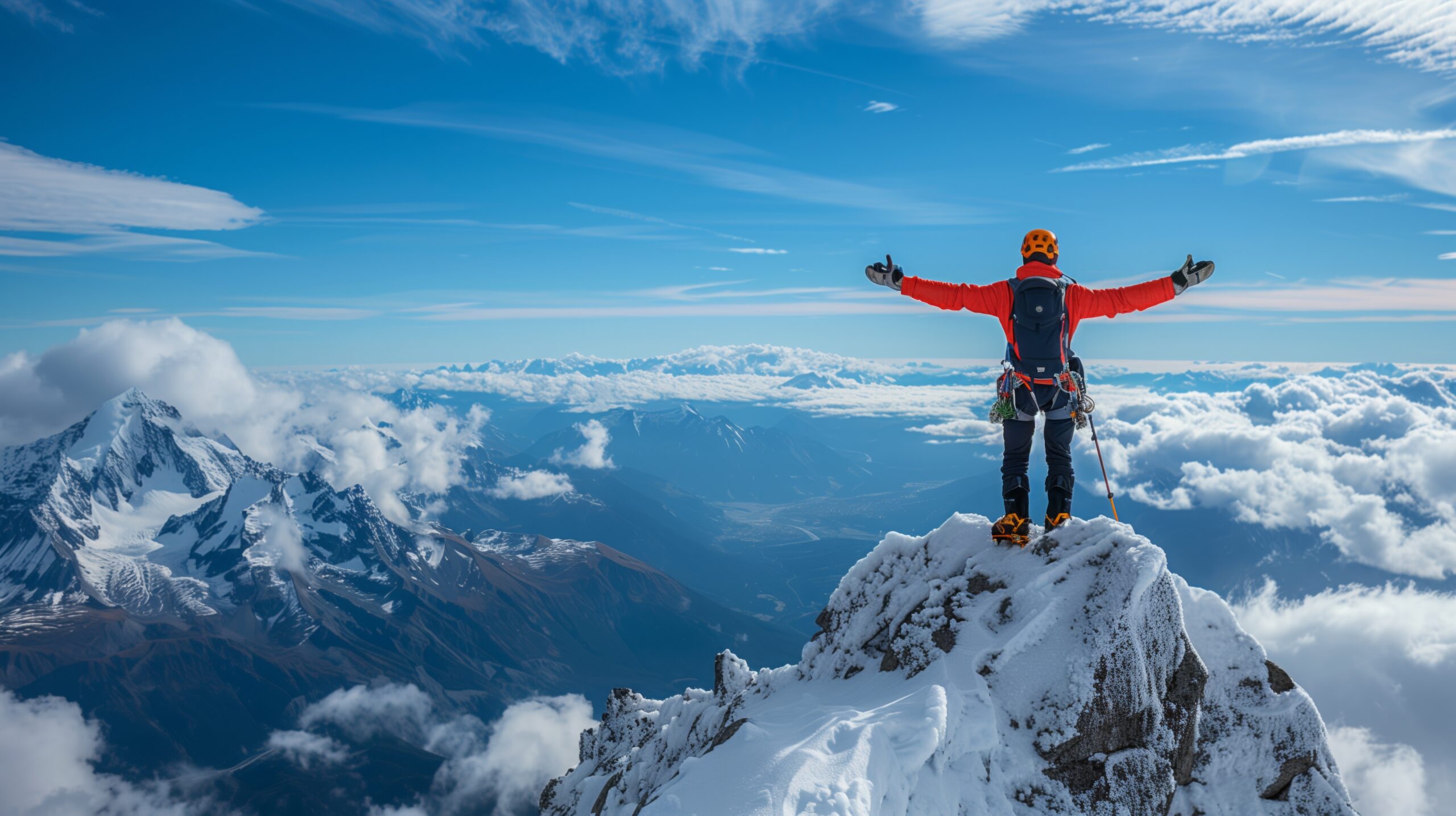
Summit fever is tunnel vision in which the desire to reach the top overrides logic, safety, and even the instinct for self-preservation. The mechanism underneath it is a quiet reframing: the brain stops treating the summit as the halfway point and starts treating it as the finish line. Once that switch flips, the descent, which is where most fatal accidents actually happen, drops out of the decision entirely. Everything narrows to the top. Warning signs get reinterpreted as obstacles to push through rather than information to act on. The climber is not ignoring the danger so much as no longer seeing it, and that is what makes it so effective at killing careful people.
The FACETS heuristic traps
Six mental shortcuts that quietly push groups toward more risk than the conditions justify.
Heuristics are rules of thumb that serve us well in everyday life. They become traps when they are applied unconsciously to situations where they do not fit. Avalanche researcher Ian McCammon analyzed hundreds of accidents and grouped the recurring ones under the acronym FACETS. They were identified in avalanche terrain, but they drive summit-day decisions just as reliably.
Familiarity
We let past experience on known ground guide present behavior. Parties on terrain they know well take more risk than parties in unfamiliar terrain, even when today’s conditions are worse.
“I’ve done this route a dozen times and it’s always been fine.”
Acceptance
We take risks to be noticed or approved of by people we like or respect. The wish to impress the group, the guide, or an audience back home quietly overrides caution.
“I don’t want to be the one who holds everyone back.”
Consistency and commitment
Once we make an initial decision, later decisions get easier if they stay consistent with it. A plan to summit becomes a commitment to summit, and changing course starts to feel like defeat rather than judgment.
“We came here to summit, so we’re summiting.”
Expert halo
We defer to an informal leader based on an overall positive impression rather than their actual grasp of today’s risk. The strongest climber or the most confident voice ends up making safety calls they are not necessarily qualified to make.
“She’s climbed all over the world, so if she’s going, it must be fine.”
Tracks and scarcity
When an opportunity feels rare or contested, we rush to grab it. A short weather window, a hard-won permit, or another team going for the summit creates pressure to push now rather than decide clearly.
“This is our only weather window, it’s now or never.”
Social facilitation
The presence of other people changes our risk-taking, often pushing it up. Larger groups and the sight of other parties committing can make a marginal decision feel normal and safe.
“Everyone else is still going up, so it must be okay.”
Why experience is not immunity
The most dangerous belief is that skill protects you from this. Sometimes it does the opposite.
It is tempting to assume these traps catch only the inexperienced. The data says otherwise, and this is the single most important point on the page.
In McCammon’s analysis, familiarity had its strongest effect on the most highly trained parties. Groups with advanced training, traveling on terrain they knew, exposed themselves to nearly twice the hazard level of less-trained groups, and roughly the same hazard as parties with no training at all.
Experience removes some errors, but it also feeds overconfidence, familiarity, and the expert halo. A string of past successes on a peak reads as proof of skill when it may only be proof of luck. Treat your own experience as something to double-check, not something that exempts you from the check.
The bias stack on top
The FACETS traps rarely act alone. Several well-known biases pile on near the summit.
Sunk-cost fallacy
The training, the money, the time away from home are already spent whether you continue or not, but the brain fights to avoid “wasting” them by turning back. The more you have invested, the harder this pulls.
Plan-continuation bias
Also called get-there-itis in aviation: the deeper you are into a plan, the harder it is to abandon, even as the evidence for stopping grows. Momentum quietly outweighs new information.
Best-case optimism
On a beautiful day we plan for the best case rather than the worst. We assume the weather holds, the descent goes smoothly, and our energy lasts, and we build decisions on the version of events we are hoping for.
Why altitude makes it worse
The environment attacks the exact faculty you need to resist all of this.
Every trap above assumes clear thinking is at least possible. High on a mountain it often is not. Hypoxia and exhaustion degrade judgment, working memory, and self-awareness precisely when the decisions matter most, and they do it invisibly: the impaired climber usually feels fine and reasonable. That is why decisions made at altitude cannot be trusted the way decisions made at camp can. The reasoning you would use to catch yourself is the first thing the mountain takes away, which is the whole argument for deciding in advance.
How to beat it with systems
You cannot out-discipline your own brain in the death zone. You can out-design it beforehand.
Because the failure is predictable, the defenses can be built in advance, when your judgment is clear. These are the countermeasures that consistently work:
Pre-commit to a turnaround time
Decide when you will quit before you start, and hand the decision to a clock instead of your tired judgment. This is the single strongest defense. Our turnaround-time guide and worksheet shows how to set and enforce one.
Decide for the worst case
Plan around what happens if the weather turns, the descent runs long, or someone slows down. Best-case plans have no margin exactly when you need it most.
Name the bias out loud
Saying “I think this is the scarcity trap” or “we’re only continuing because we’ve committed” breaks the spell. A trap you have named is a trap you can argue with.
Appoint a devil’s advocate and question the expert
Give one person the job of making the case for turning around, and treat the strongest climber’s opinion as an input, not an order. Ask “what are the actual reasons we’re still going up?” This directly counters the expert halo and social pressure.
Climb with operators who enforce the discipline
A good guide’s real value is not route-finding; it is holding the turnaround and the go/no-go call when clients are feverish. Choosing the right team is a safety decision. See how to evaluate an expedition operator and compare options in our operators hub.
Ask these before you commit near the top
- If I did not already want the summit, would today’s conditions justify going on?
- Am I continuing because it is safe, or because turning back feels like failure?
- Who is actually making this call, and are they qualified to judge today’s risk?
- Am I planning for the best case or the worst case from here?
- What time is it, and what did my clear-headed self decide about that?
- If a friend described this exact situation to me, what would I tell them to do?
Summit fever FAQ
The questions climbers ask most about the psychology of bad decisions.
What is summit fever?
Tunnel vision in which the desire to reach the top overrides logic, safety, and self-preservation. The brain reframes the summit from the halfway point into the finish line, so the descent, where most fatal accidents happen, drops out of the decision. It is predictable psychology, not weakness.
Why do experienced climbers fall for it?
Because experience is not immunity and can make some traps worse. McCammon found familiarity had its strongest effect on highly trained parties, who on familiar terrain exposed themselves to nearly twice the hazard, about the same as untrained parties. Skill feeds overconfidence, familiarity, and the expert halo.
What are heuristic traps and FACETS?
Heuristics are mental shortcuts that work in daily life but become traps applied unconsciously where they do not fit. McCammon grouped six under FACETS: Familiarity, Acceptance, Consistency and commitment, Expert halo, Tracks and scarcity, and Social facilitation. Each nudges a group toward more risk than conditions justify.
How do I avoid summit fever?
With systems, not willpower. Pre-commit to a turnaround time, decide for the worst case, name the bias out loud, appoint someone to argue for turning back, and question the informal leader rather than deferring. A guide or operator who enforces these habits is itself a countermeasure.
Is summit fever the same as the sunk-cost fallacy?
No. Sunk cost is one ingredient, but summit fever is a stack of biases acting together: sunk cost, goal fixation, plan-continuation bias, best-case optimism, and social and expert-halo pressure, all amplified by hypoxia and fatigue near the top.
📋 How this guide is built
This page is a research synthesis by the Global Summit Guide Editorial Team, drawing on Ian McCammon’s published work on heuristic traps, decision-science literature on cognitive bias, and documented mountaineering accidents. It was safety reviewed by Dawson Ludlow, our Climbing & Mountaineering Lead (Wilderness First Aid). It is educational and does not replace training, guiding, or your own judgment in the field.
Sources and further reading
- Ian McCammon, “Evidence of Heuristic Traps in Recreational Avalanche Accidents” – the FACETS framework and hazard-exposure findings.
- Avalanche.org – FACETS human-factors summary for backcountry travelers.
- American Alpine Club, Accidents in North American Climbing – human-factors and decision-making case analyses.
- Jon Krakauer, Into Thin Air, and published accounts of summit-fever fatalities.
- Decision-science literature on sunk cost, plan-continuation bias, and optimism bias.
Summit Fever & Mountain Decision-Making
Good decisions save more climbers than fitness does. Pair this with the turnaround, weather and safety skills below.
See How Decisions Play Out in Real Mountain Events
Decision psychology becomes most useful when paired with real accidents—and with stories where climbers survived when everything went wrong.
Was this helpful?
Global Summit Guide is an independent mountaineering resource founded in 2026. The team combines first-hand trekking and climbing experience with in-depth research and professional health and nutrition review to help climbers choose objectives, prepare properly, and stay safe.
Health, altitude, and nutrition content is reviewed by Taylor Ludlow (Registered Nurse) and Brigg Hoopes (Nutritionist).
What We Don't Know Yet
Mountain information changes quickly. This box explains the limits of what this page can responsibly promise.
- Visa, passport, vaccination, border, insurance, and local transportation rules may change before your trip.
- Route conditions, snowpack, closures, and weather can change quickly after this page is updated.
- Permit rules, fees, quotas, and reservation windows may change between review cycles.
- Operator availability, pricing, guide ratios, and cancellation terms can change by season.
- Your fitness, altitude response, risk tolerance, and experience level may change what is safe or realistic.
Verify current conditions with official land managers, guide services, local forecasts, and current route reports before booking or climbing.
Mountaineering, rock and ice climbing, glacier travel, and high-altitude activity are inherently dangerous and can result in serious injury or death. The information on Global Summit Guide is provided for general informational and educational purposes only and is not a substitute for professional instruction, qualified guiding, proper equipment, or your own judgment and experience.
Route conditions, weather, snowpack, permits, regulations, and hazards change constantly and may differ from what is described here. Details may be incomplete, out of date, or contain errors. Always verify current information with local authorities, certified guides, and official sources before making any decision in the mountains.
Nothing on this site is medical, legal, or financial advice. Our fitness, acclimatization, altitude, and nutrition content is general in nature; consult a qualified physician before beginning any strenuous exercise program or exposing yourself to high altitude.
You are solely responsible for your own safety and decisions. To the fullest extent permitted by law, Global Summit Guide and its team accept no liability for any loss, injury, damage, or expense arising from use of, or reliance on, this information. By using this site you acknowledge these risks and accept these terms.
Some links on this site may be affiliate links. If you buy through them we may earn a small commission at no extra cost to you; this never affects our recommendations.
Global Summit Guide recommendation path
Next Best Mountain to Research
Use these recommendations to continue the right planning path instead of stopping on one page.
Use current permit, weather, route, and operator information before booking or climbing.