
Last updated August 4, 2026
{ “@context”:”https://schema.org”, “@type”:”Article”, “headline”:”Dhaulagiri I Climbing Guide: Route, Cost & Death Rate (2026)”, “description”:”Climb Dhaulagiri I at 8,167 m. Compare the Northeast Ridge route, expedition cost, permit, historical death-rate data, best season, hazards and experience required.”, “author”:{“@type”:”Person”,”name”:”Travis Ludlow”,”jobTitle”:”Founder & Head of Research, Global Summit Guide”,”url”:”https://globalsummitguide.com/about/”}, “reviewedBy”:{“@type”:”Person”,”name”:”Dawson Ludlow”}, “publisher”:{“@type”:”Organization”,”name”:”Global Summit Guide”,”url”:”https://globalsummitguide.com/”,”logo”:{“@type”:”ImageObject”,”url”:”https://globalsummitguide.com/wp-content/uploads/2026/02/global-logo-new-2.png”}}, “datePublished”:”2026-02-20″, “dateModified”: “2026-08-04T06:55:49+00:00”, “mainEntityOfPage”:{“@type”:”WebPage”,”@id”:”https://globalsummitguide.com/mountains/mountains-dhaulagiri-i-climb-guide-nepal/”}, “articleSection”:”Mountain Guides”, “image”:[ “https://globalsummitguide.com/wp-content/uploads/2026/04/AdobeStock_113014852-scaled.jpeg”, “https://globalsummitguide.com/wp-content/uploads/2026/05/AdobeStock_165677340-scaled.jpeg” ], “keywords”:[“Dhaulagiri I climbing guide”,”Dhaulagiri route”,”Dhaulagiri cost”,”Dhaulagiri death rate”,”Northeast Ridge Dhaulagiri”,”Dhaulagiri permit”] } { “@context”:”https://schema.org”, “@type”:”BreadcrumbList”, “itemListElement”:[ {“@type”:”ListItem”,”position”:1,”name”:”Home”,”item”:”https://globalsummitguide.com/”}, {“@type”:”ListItem”,”position”:2,”name”:”Mountains”,”item”:”https://globalsummitguide.com/mountains/”}, {“@type”:”ListItem”,”position”:3,”name”:”Dhaulagiri I Climbing Guide”} ] } { “@context”:”https://schema.org”, “@type”:”FAQPage”, “mainEntity”:[ {“@type”:”Question”,”name”:”What is the standard route on Dhaulagiri I?”,”acceptedAnswer”:{“@type”:”Answer”,”text”:”The Northeast Ridge is the standard expedition route. Teams approach Base Camp at roughly 4,750 metres, establish a series of high camps, and make a long summit push from the upper mountain. The route involves glacier travel, fixed lines, avalanche and serac exposure, extreme altitude and a demanding descent.”}}, {“@type”:”Question”,”name”:”How dangerous is Dhaulagiri I?”,”acceptedAnswer”:{“@type”:”Answer”,”text”:”Dhaulagiri is one of the more serious 8,000-metre expeditions. The often-quoted figure near 15 percent is a historical deaths-to-recorded-summits ratio, not an individual climber’s probability of dying. Risk varies by era, route, team and counting method. Major hazards include avalanches, seracs, prolonged storms, extreme altitude, remoteness and descent fatigue.”}}, {“@type”:”Question”,”name”:”How much does it cost to climb Dhaulagiri I in 2026?”,”acceptedAnswer”:{“@type”:”Answer”,”text”:”Published Nepal-based expedition packages can start around US$15,000, while higher-support and international programs may cost substantially more. A realistic all-in budget is often about US$25,000 to $50,000 or more after permits, travel, insurance, equipment, oxygen strategy, summit bonuses and personal expenses. Compare inclusions rather than headline prices.”}}, {“@type”:”Question”,”name”:”How much is the Dhaulagiri climbing permit?”,”acceptedAnswer”:{“@type”:”Answer”,”text”:”For foreign climbers, Nepal’s spring royalty for mountains above 8,000 metres other than Everest and Manaslu is US$3,000 per person under the fee schedule effective 1 September 2025. Autumn is US$1,500 and winter or summer is US$750. Confirm the current official rate through the Department of Tourism and your registered operator.”}}, {“@type”:”Question”,”name”:”When is the best time to climb Dhaulagiri I?”,”acceptedAnswer”:{“@type”:”Answer”,”text”:”Spring, especially late April through May, is the primary expedition season. Autumn attempts occur but are less common. Dhaulagiri is known for severe and prolonged storm cycles, so teams need contingency days and a professional high-altitude forecast regardless of season.”}}, {“@type”:”Question”,”name”:”Can Dhaulagiri be a first 8,000-metre peak?”,”acceptedAnswer”:{“@type”:”Answer”,”text”:”It should not be treated as an introductory 8,000-metre mountain. Climbers need extensive expedition experience, strong glacier and fixed-line skills, proven performance at extreme altitude, avalanche awareness, excellent endurance and conservative decision-making.”}} ] } @import url(‘https://fonts.googleapis.com/css2?family=Outfit:wght@300;400;500;600;700&family=DM+Serif+Display:ital@0;1&display=swap’); .dg1-page{font-family:’Outfit’,sans-serif;color:#122a44;line-height:1.68;margin:0 auto;padding:0} .dg1-page *{box-sizing:border-box} .dg1-page h1,.dg1-page h2,.dg1-page h3{font-family:’DM Serif Display’,serif;font-weight:400;color:#091a2d;line-height:1.16} .dg1-page p{font-size:1.02rem;margin:0 0 1.08em} .dg1-page a{color:#245c8e;text-decoration:none;border-bottom:1px solid #b9cad9} .dg1-page a:hover{color:#c8812d;border-bottom-color:#c8812d} .dg1-hero{overflow:hidden;border-radius:14px;background:#081826;color:#fff;margin-bottom:18px} .dg1-hero img{width:100%;height:460px;object-fit:cover;display:block} .dg1-hero-copy{padding:34px 39px;background:linear-gradient(135deg,rgba(5,20,33,.97),rgba(28,74,110,.9))} .dg1-kicker{font-size:.82rem;color:#e3a249;text-transform:uppercase;letter-spacing:1.8px;font-weight:700;margin-bottom:10px} .dg1-hero h1{color:#fff!important;font-size:1.98rem;margin:0 0 14px} .dg1-hero h1 em{color:#e3a249;font-style:italic} .dg1-hero p{color:#edf5fb;font-size:1.05rem;max-width:960px;margin:0} .dg1-byline{background:#f7f3e9;border:1px solid #e4d5af;border-radius:9px;padding:15px 20px;margin:18px 0} .dg1-byline-top{display:flex;justify-content:space-between;gap:12px;flex-wrap:wrap} .dg1-author{font-weight:700;color:#0a1c30} .dg1-author a{border-bottom:none} .dg1-meta{font-size:.82rem;color:#74684e} .dg1-credentials{border-top:1px solid #e4d5af;margin-top:8px;padding-top:8px;font-size:.84rem;color:#5e543e;font-style:italic} .dg1-credentials strong{color:#0a1c30;font-style:normal} .dg1-verdict{background:linear-gradient(135deg,#102e49,#1c4a6e);color:#fff;border:4px solid #d58a32;border-radius:14px;padding:28px 34px;margin:24px 0;box-shadow:0 8px 24px rgba(10,34,55,.28)} .dg1-verdict h2{color:#fff!important;margin:0 0 12px!important;font-size:1.4rem!important} .dg1-verdict p{color:#edf5fb;margin-bottom:10px} .dg1-verdict strong{color:#ffd683} .dg1-tag{display:inline-block;background:#d58a32;color:#071a2c;padding:4px 11px;border-radius:5px;text-transform:uppercase;letter-spacing:.6px;font-size:.76rem;font-weight:700;margin-bottom:11px} .dg1-stats{display:grid;grid-template-columns:repeat(5,1fr);gap:11px;background:#091a2d;padding:20px;border-radius:11px;margin:22px 0} .dg1-stat{background:#143453;border:1px solid #d58a32;border-radius:8px;padding:14px 10px;text-align:center} .dg1-stat strong{display:block;font-family:’DM Serif Display’,serif;color:#e6a750;font-size:1.05rem;line-height:1.05} .dg1-stat span{display:block;color:#ecf4fa;font-size:.64rem;text-transform:uppercase;letter-spacing:.42px;margin-top:5px} .dg1-databox{background:#fff;border:2px solid #2e7d53;border-radius:12px;margin:24px 0;overflow:hidden;box-shadow:0 4px 16px rgba(20,60,40,.1)} .dg1-databox-head{background:linear-gradient(135deg,#1d5137,#2e7d53);color:#fff;padding:13px 20px;display:flex;justify-content:space-between;flex-wrap:wrap;gap:8px;align-items:center} .dg1-databox-head h3{color:#fff!important;margin:0;font-size:1.16rem} .dg1-databox-head span{font-size:.78rem;color:#d9f0e2} .dg1-data-grid{display:grid;grid-template-columns:1fr 1fr;gap:0} .dg1-data-cell{padding:13px 18px;border-top:1px solid #eef1ec;border-right:1px solid #eef1ec} .dg1-data-cell b{display:block;font-family:’Outfit’;font-weight:700;color:#091a2d;font-size:.92rem} .dg1-data-cell p{margin:3px 0 0;font-size:.85rem;color:#4a5b52} .dg1-data-cell .dg1-fig{font-family:’DM Serif Display’,serif;color:#256a3a;font-size:1.12rem} .dg1-facts{background:#fff;border:2px solid #1c4a6e;border-radius:12px;margin:24px 0;overflow:hidden;box-shadow:0 4px 16px rgba(18,42,68,.1)} .dg1-facts-head{background:linear-gradient(135deg,#102e49,#1c4a6e);color:#fff;padding:13px 20px} .dg1-facts-head h3{color:#fff!important;margin:0;font-size:1.16rem} .dg1-facts table{width:100%;border-collapse:collapse;font-size:.88rem} .dg1-facts td{padding:9px 16px;border-top:1px solid #eef1f4;color:#33475b;vertical-align:top} .dg1-facts td:first-child{font-weight:700;color:#091a2d;width:40%} .dg1-facts tr:nth-child(even) td{background:#f6f9fb} .dg1-toc{background:#f7f3e9;border:1px solid #e4d5af;border-radius:10px;padding:19px 24px;margin:23px 0} .dg1-toc strong{font-family:’DM Serif Display’,serif;font-size:1.1rem;color:#091a2d} .dg1-toc ol{columns:2;column-gap:30px;padding-left:22px;margin:10px 0 0} .dg1-toc li{font-size:.9rem;margin-bottom:5px} .dg1-section{background:linear-gradient(135deg,#102e49,#1c4a6e);border-left:8px solid #d58a32;color:#fff;border-radius:12px;padding:26px 31px;margin:40px 0 22px;box-shadow:0 6px 18px rgba(18,42,68,.24)} .dg1-section h2{color:#e6a750!important;font-size:1.6rem!important;margin:0 0 6px!important} .dg1-section h2 em{color:#ffd683;font-style:italic} .dg1-section p{color:#edf5fb;margin:0;font-size:.95rem} .dg1-content h3{font-size:1.22rem;margin:24px 0 8px} .dg1-info,.dg1-warning,.dg1-danger{padding:16px 20px;border-radius:7px;margin:20px 0;font-size:.94rem} .dg1-info{background:#e7f0f8;border-left:5px solid #245c8e} .dg1-warning{background:#fdf2e3;border-left:5px solid #b96a18} .dg1-danger{background:#f9e5e1;border-left:5px solid #a63e32} .dg1-info strong,.dg1-warning strong,.dg1-danger strong{display:block;margin-bottom:5px;color:#091a2d} .dg1-danger.dg1-big{border-width:2px;border-style:solid;border-color:#a63e32;background:#fbeae6} .dg1-table-wrap{overflow-x:auto;margin:18px 0} .dg1-table{width:100%;border-collapse:collapse;min-width:600px;font-size:.87rem;border:1px solid #e3d8bd} .dg1-table th{background:#091a2d;color:#fff;text-align:left;padding:10px 12px;font-size:.76rem} .dg1-table td{padding:9px 12px;border-top:1px solid #eee5d2;vertical-align:top;color:#394c5e} .dg1-table tr:nth-child(even) td{background:#faf7ef} .dg1-table td:first-child{font-weight:700;color:#091a2d} .dg1-fig{margin:24px 0 28px;background:#091a2d;border-radius:12px;overflow:hidden;border:1px solid #d58a32;box-shadow:0 7px 22px rgba(18,42,68,.18)} .dg1-fig img{display:block;width:100%;height:400px;object-fit:cover} .dg1-fig figcaption{padding:12px 16px;color:#eaf2f8;font-size:.82rem;line-height:1.45} .dg1-series{background:linear-gradient(135deg,#f7f3e9,#fbf6ea);border:1px solid #e4d5af;border-radius:12px;padding:20px 24px;margin:24px 0} .dg1-series h3{margin:0 0 4px} .dg1-series p{font-size:.9rem;margin:0 0 12px;color:#5e543e} .dg1-series-grid{display:grid;grid-template-columns:repeat(auto-fit,minmax(150px,1fr));gap:9px} .dg1-series-grid a{display:block;background:#fff;border:1px solid #e4d5af;border-radius:7px;padding:11px 13px;font-weight:600;font-size:.86rem;text-align:center;border-bottom:1px solid #e4d5af} .dg1-series-grid a:hover{background:#1c4a6e;color:#fff!important;border-color:#1c4a6e} .dg1-metric{background:#eef4f8;border:1px solid #c8d8e5;border-radius:10px;padding:18px 21px;margin:20px 0} .dg1-metric h3{margin:0 0 7px;font-size:1.08rem} .dg1-metric p{font-size:.92rem;margin:0 0 8px} .dg1-metric ul{margin:8px 0 0;padding-left:20px} .dg1-metric li{font-size:.88rem;margin-bottom:5px} .dg1-costgrid{display:grid;grid-template-columns:repeat(3,1fr);gap:12px;margin:18px 0} .dg1-costcard{background:#fff;border:1px solid #dfe6ec;border-top:5px solid #245c8e;border-radius:10px;padding:16px 17px} .dg1-costcard h3{margin:0 0 4px;font-size:1.05rem} .dg1-costcard strong{display:block;font-family:’DM Serif Display’,serif;color:#9d5917;font-size:1.3rem;margin-bottom:5px} .dg1-costcard p{font-size:.86rem;margin:0;color:#465868} .dg1-faq{background:#f7f3e9;border-radius:8px;margin-bottom:10px;padding:14px 18px} .dg1-faq h3{font-size:1.05rem;margin:0 0 7px} .dg1-faq p{font-size:.94rem;margin:0} .dg1-travel{background:linear-gradient(135deg,#fff8e8,#f7ecce);border:2px solid #d58a32;border-radius:12px;padding:20px 24px;margin:24px 0} .dg1-travel h3{margin:0 0 8px;color:#9d5917} .dg1-travel p{font-size:.92rem;margin:0 0 8px} .dg1-disc{font-size:.78rem;color:#8a7b58;font-style:italic} .dg1-button{display:inline-block;color:#fff!important;background:#173c5f;border:2px solid #d58a32!important;border-radius:6px;padding:12px 20px;margin:4px;text-decoration:none!important;font-weight:700} .dg1-button:hover{background:#d58a32;color:#091a2d!important} .dg1-method{background:#f1f5f8;border:1px solid #cbd9e5;border-radius:10px;padding:21px 24px;margin:28px 0} .dg1-method h3{margin:0 0 9px} .dg1-method ul{margin:8px 0 0;padding-left:20px} .dg1-method li{font-size:.88rem;margin-bottom:4px} .dg1-authorbio{display:flex;gap:21px;align-items:flex-start;background:linear-gradient(135deg,#f7f3e9,#fbf8f0);border:2px solid #d58a32;border-radius:12px;padding:25px 28px;margin:30px 0} .dg1-authorpic{width:100px;height:100px;flex:0 0 100px;border-radius:50%;border:3px solid #d58a32;background:url(‘https://globalsummitguide.com/wp-content/uploads/2026/03/561db5f8-15bb-43d8-9eba-251a8c35f89f.jpg’) center/cover} .dg1-authorbio h3{margin:0 0 3px} .dg1-authorrole{color:#ad641b;font-weight:700;font-style:italic;font-size:.9rem;margin-bottom:8px} .dg1-related{background:#f7f3e9;border-radius:11px;padding:22px 24px;margin:26px 0} .dg1-related h3{margin:0 0 10px} .dg1-related ul{columns:2;padding-left:20px;margin:0} .dg1-related li{margin-bottom:8px} .dg1-cta{text-align:center;background:linear-gradient(135deg,#102e49,#1c4a6e);border:3px solid #d58a32;color:#fff;border-radius:14px;padding:32px 27px;margin-top:30px} .dg1-cta h3{color:#e6a750;font-size:1.5rem;margin:0 0 10px} .dg1-cta p{color:#edf5fb;max-width:730px;margin:0 auto 19px} @media(max-width:820px){ .dg1-hero img{height:250px} .dg1-hero-copy{padding:24px 20px} .dg1-hero h1{font-size:1.46rem} .dg1-stats{grid-template-columns:repeat(2,1fr)} .dg1-data-grid{grid-template-columns:1fr} .dg1-facts td:first-child{width:46%} .dg1-toc ol,.dg1-related ul{columns:1} .dg1-fig img{height:240px} .dg1-costgrid{grid-template-columns:1fr} .dg1-authorbio{flex-direction:column;align-items:center;text-align:center} .dg1-section{padding:22px 20px} }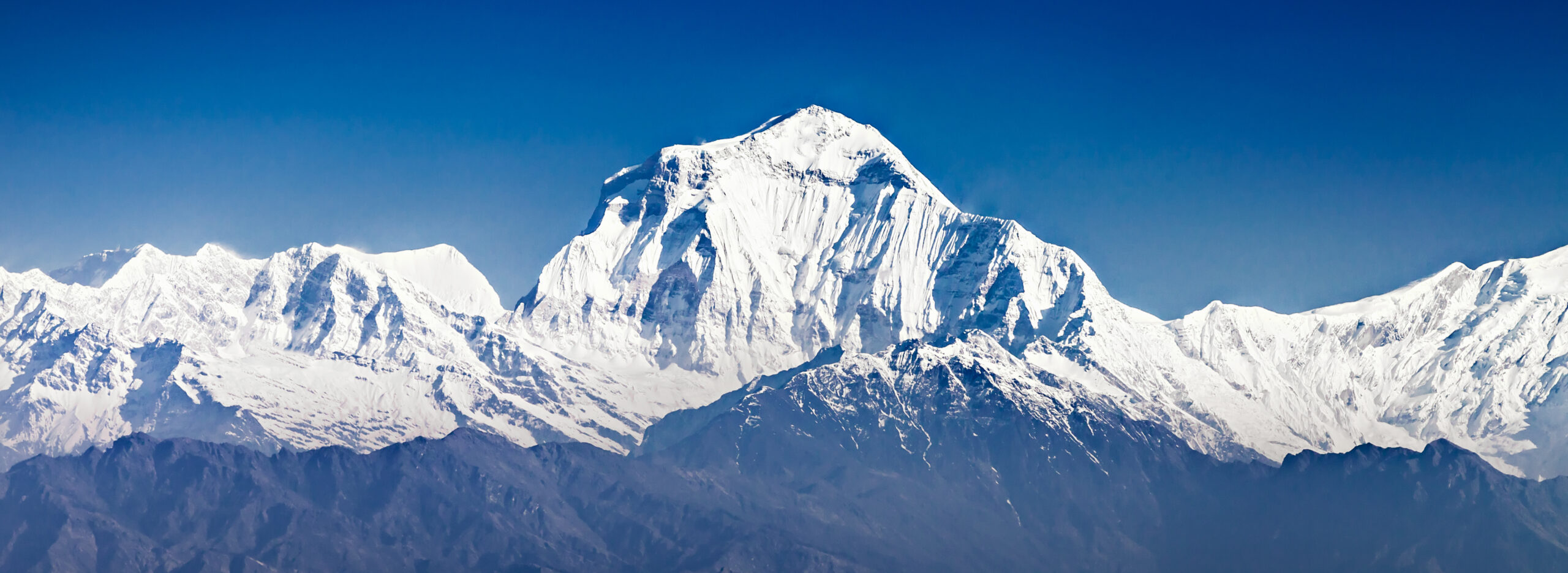
Dhaulagiri I Climbing Guide: Route, Cost & Death Rate (2026)
Dhaulagiri I rises to 8,167 m in western Nepal. This expedition guide explains the Northeast Ridge route, the 2026 permit, realistic package and all-in costs, the meaning behind its historical risk statistics, the best season, major hazards and the experience needed before attempting it.
Classic & Advanced Climbing Routes on Dhaulagiri I
The standard Northeast Ridge combines glacier travel, fixed lines, avalanche and serac exposure, severe storm cycles, a long summit day and an unforgiving descent. Spring is the primary season. Published operator packages can begin near $15,000, while a realistic all-in budget often reaches $25,000-$50,000+ depending on support and inclusions.
The familiar figure near 15% is a historical deaths-to-recorded-summits ratio. It is useful for comparing eras and mountains, but it is not a personal probability of death. Dhaulagiri should not be a first 8,000er.
Dhaulagiri 2026 Planning Snapshot
Updated Jul 21, 2026 · verify before bookingUS$3,000 per foreign climber under Nepal’s current 8,000 m fee schedule
Late April-May; autumn expeditions are less common
From ~$15K for some Nepal-based full expedition services
~$25K-$50K+ after support level, travel, gear, insurance and bonuses
Dhaulagiri I Fast Facts
| Elevation | 8,167 m (26,795 ft) – 7th highest on Earth |
| Location | Dhaulagiri Himal, Nepal – entirely within one country |
| Coordinates | 28.6983°N, 83.4875°E |
| Name | Sanskrit “Dhavala Giri” = Dazzling White Mountain · German “Berg der Sturme” = Mountain of Storms |
| First ascent | 13 May 1960 – Swiss / Austrian / Nepali expedition led by Max Eiselin |
| Standard route | Northeast Ridge (the 1960 line) |
| Base Camp | ~4,748 m, head of the Myagdi Khola |
| Historical risk metric | Often quoted near 15% deaths per recorded summit; this is not a per-attempt fatality probability |
| Distinction | One of the greatest local reliefs in the Himalaya, rising dramatically above the Kali Gandaki region |
Difficulty, hazards & death-rate context
Dhaulagiri’s reputation comes from objective hazards, weather and remoteness—not one simple percentage.
Dhaulagiri rises in relative isolation west of the Kali Gandaki region. The standard route remains a major high-altitude expedition: avalanche paths and seracs threaten parts of the line, storms can close the mountain for days, rescue options are limited, and a summit still leaves a long descent through the death zone.
Risk statistics used responsibly
- Deaths per summit: a historical severity ratio; affected by repeat summiters and changing commercial volume.
- Deaths per member above Base Camp: closer to personal exposure, but still changes by era, role and dataset.
- Summit success: must specify members, attempts, expeditions, guided clients or seasons.
Global Summit Guide therefore uses the historical ratio only as context and emphasizes the actual hazards: avalanche, serac fall, storms, extreme altitude, remoteness and descent fatigue. Compare the wider dataset in death rates by mountain.
Dhaulagiri I Northeast Ridge route
The standard commercial line – the same ridge climbed on the 1960 first ascent.

The Northeast Ridge is the line virtually all commercial expeditions follow, established on the 1960 ascent. From Base Camp at the head of the Myagdi Khola (~4,748 m), teams fix and stock a series of high camps through acclimatisation rotations before committing to a summit push on a stable window. A typical camp profile:
| Camp | Elevation | Character |
|---|---|---|
| Base Camp | ~4,748 m | Head of the Myagdi Khola; the expedition hub |
| Camp 1 | ~5,450 m | Onto the mountain proper; glacier and lower ridge |
| Camp 2 | ~6,400 m | Steepening ground, growing exposure |
| Camp 3 | ~7,400 m | Launch camp for the summit day, into the death zone |
| Summit | 8,167 m | A long, committing summit day and descent |
Alternative ridges and the huge south and west faces are considerably more technical and far less supported. They are specialist alpine objectives, not commercial alternatives to the Northeast Ridge.
Dhaulagiri permit & approach
The government royalty is only one part of a registered expedition’s administrative and access costs.
The usual approach runs from Kathmandu to Pokhara and Beni, followed by a multi-day trek toward Base Camp through the Myagdi Khola region. Exact roadheads and trek arrangements vary by operator and season. Remote access, porter logistics and weather delays require contingency days. Review the broader mountaineering permits and regulations guide.
How much does it cost to climb Dhaulagiri?
Headline package prices are not comparable until you know what they include.
Published 2026 operator pricing varies widely. Some Nepal-based full expedition packages begin around the mid-teens, while international or higher-support programs can cost substantially more. The safer planning number is the complete door-to-door budget—not the lowest advertised package.
Entry package
~$15K-$20KPossible with some Nepal-based operators. Check Sherpa ratio, oxygen, permits, summit bonus, high-camp support and exclusions.
Fuller support
~$20K-$35K+Broader logistics or higher support. Inclusions differ considerably, so compare contracts line by line.
Realistic all-in
~$25K-$50K+Package plus flights, hotels, gear, insurance, tips, summit bonus, personal oxygen choices and contingency costs.
Season & weather windows
Spring is the season – but the Mountain of Storms sets its own terms.
| Season | Window | Reality |
|---|---|---|
| Spring | Late April – May (primary) | Best overall odds of a stable summit window; the main commercial season |
| Autumn | Sep-Oct (less common) | Occasional attempts, potentially fewer teams, but more variable weather and fewer shared resources |
| Winter | Specialised only | Not a commercial season – extreme cold and storm exposure |
In any season, Dhaulagiri’s storm cycles can shut the mountain down for days and compress summit chances into a single short window – which is exactly why contingency days and patience matter here more than on friendlier peaks. Teams should use a professional expedition forecast and carry enough contingency days to wait for a safe window.
Who should attempt it
Dhaulagiri is a step up, not a starting point.
The right profile: a prior 8,000 m summit or a serious expedition peak, so you know how you perform in the death zone; strong glacier-travel and fixed-line skills; the endurance for a long summit day and descent at altitude; and the judgement to read avalanche risk and turn back when the mountain closes. Dhaulagiri is generally appropriate only after substantial expedition experience. Climbers who are not yet proven at extreme altitude should build a more conservative progression through what to climb before Everest, the expert mountaineering guide, fixed-line practice and glacier-rescue training.
History & first ascent
A mountain that turned away the team that would go on to make history on Annapurna.
When the French set out in 1950 for the first ascent of any 8,000er, they first eyed Dhaulagiri – and judged it too hard, turning instead to Annapurna, which they climbed as the first 8000er ever. Dhaulagiri held out another decade. It was finally climbed on 13 May 1960 by a Swiss/Austrian/Nepali expedition led by Max Eiselin, with summiters including Kurt Diemberger, Peter Diener, Ernst Forrer, Albin Schelbert, and Sherpas Nyima Dorje and Nawang Dorje. The expedition famously used a Pilatus PC-6 Porter aircraft nicknamed the Yeti to shuttle supplies, making an extraordinary high-altitude landing near 5,700 m during the expedition. See where Dhaulagiri fits among the 14 eight-thousanders.
Planning a Dhaulagiri expedition?
Compare operators by route leadership, Sherpa ratio, oxygen policy, high-camp support, weather forecasting, medical plan, evacuation coordination and transparent exclusions—not by the lowest headline price. Start with how to choose an expedition operator. For flights into Kathmandu and lodging before or after the expedition, the Global Summit Guide Expedia travel shop is available.
Disclosure: the Expedia link is an affiliate link; we may earn a small commission at no extra cost to you. It does not affect editorial recommendations.
Evaluate Operators Compare Expedition InsuranceDhaulagiri I FAQ
The questions climbers and researchers ask most.
What is the standard route on Dhaulagiri I?
The Northeast Ridge is the standard expedition route. Teams establish multiple camps above Base Camp and climb sustained snow, ice and glacier terrain to the 8,167 m summit. Avalanche, serac, storm and descent exposure remain serious even on the normal route.
How dangerous is Dhaulagiri I?
Dhaulagiri is a serious 8,000er. The commonly quoted figure near 15% is a historical deaths-to-summits ratio—not a personal probability of death. Avalanches, seracs, severe weather, remoteness, extreme altitude and descent fatigue are the main concerns.
How much does it cost to climb Dhaulagiri in 2026?
Some Nepal-based packages begin near $15,000, but a realistic complete budget is often around $25,000-$50,000 or more. The total depends on support ratio, oxygen, permits, travel, insurance, equipment, summit bonus, tips and exclusions.
How much is the climbing permit?
Nepal’s current foreign-climber royalty for Dhaulagiri is $3,000 in spring, $1,500 in autumn and $750 in winter or summer under the schedule effective September 1, 2025. Confirm the current fee before booking.
When is the best time to climb?
Late April through May is the primary expedition window. Autumn attempts occur but are less common. Teams need professional forecasting and enough contingency days to wait through Dhaulagiri’s prolonged storm cycles.
Can Dhaulagiri be a first 8,000er?
It should not be treated as an introductory 8,000-metre peak. Climbers need extensive expedition experience, fixed-line and glacier competence, proven performance at extreme altitude, avalanche awareness and conservative judgement.
Sources, definitions & verification
- The Himalayan Database for expedition, ascent and death records
- Nepal Department of Tourism for current royalty fees
- Current operator pages for published packages, itineraries and inclusions; prices are examples, not endorsements
- Risk figures are labelled by denominator because deaths per summit, deaths per member and success rates are not interchangeable
Last updated: July 21, 2026. Research-based; our team has not climbed Dhaulagiri. Route conditions, operator inclusions, regulations and prices can change. Verify everything with official sources and a qualified expedition operator.
The Mountain of Storms rewards patience
Dhaulagiri demands deep expedition experience, a transparent operator, conservative avalanche decisions and enough contingency time to wait for a credible summit window. Plan the descent as carefully as the ascent.
Compare the 8,000ers Build Your ProgressionThis peak is one of the 14 mountains on Earth above 8,000 meters
The 14 eight-thousanders are the only mountains on Earth that rise above 8,000m — the altitude where the human body enters the Death Zone. See the complete collection ranked by elevation, with death rates, first ascent history, and the Messner/Kukuczka/Nims Purja completion records.
View All 14 Eight-Thousanders →🏔 Part of the 14 Eight-Thousanders
One of the 14 mountains on Earth above 8,000m. See the complete collection with death rates, first ascents, and the 14 Peaks Challenge history.
View All 14 Eight-Thousanders →Was this helpful?
🏔Related peaks nearby
🧭Explore & compare
Global Summit Guide is an independent mountaineering resource founded in 2026. The team combines first-hand trekking and climbing experience with in-depth research and professional health and nutrition review to help climbers choose objectives, prepare properly, and stay safe.
Health, altitude, and nutrition content is reviewed by Taylor Ludlow (Registered Nurse) and Brigg Hoopes (Nutritionist).
What We Don't Know Yet
Mountain information changes quickly. This box explains the limits of what this page can responsibly promise.
- Permit availability, reservation windows, quotas, and official fee rules may change after this page is updated.
- Guide-company prices, departure dates, guide ratios, included services, and cancellation rules can change without notice.
- Weather, snowpack, avalanche risk, road access, and route conditions can change quickly and may be different on your climbing dates.
- Route conditions, trailhead access, crevasse exposure, stream crossings, and rescue access may vary from published planning guidance.
- Total trip cost can change with flights, lodging, guide pricing, permits, gear rentals, transportation, and exchange rates.
Verify current conditions with official land managers, guide services, local forecasts, and current route reports before booking or climbing.
Mountaineering, rock and ice climbing, glacier travel, and high-altitude activity are inherently dangerous and can result in serious injury or death. The information on Global Summit Guide is provided for general informational and educational purposes only and is not a substitute for professional instruction, qualified guiding, proper equipment, or your own judgment and experience.
Route conditions, weather, snowpack, permits, regulations, and hazards change constantly and may differ from what is described here. Details may be incomplete, out of date, or contain errors. Always verify current information with local authorities, certified guides, and official sources before making any decision in the mountains.
Nothing on this site is medical, legal, or financial advice. Our fitness, acclimatization, altitude, and nutrition content is general in nature; consult a qualified physician before beginning any strenuous exercise program or exposing yourself to high altitude.
You are solely responsible for your own safety and decisions. To the fullest extent permitted by law, Global Summit Guide and its team accept no liability for any loss, injury, damage, or expense arising from use of, or reliance on, this information. By using this site you acknowledge these risks and accept these terms.
Some links on this site may be affiliate links. If you buy through them we may earn a small commission at no extra cost to you; this never affects our recommendations.
Global Summit Guide recommendation path
Next Best Mountain to Research
Use these recommendations to continue the right planning path instead of stopping on one page.
Use current permit, weather, route, and operator information before booking or climbing.