web analytics

Last updated June 9, 2026

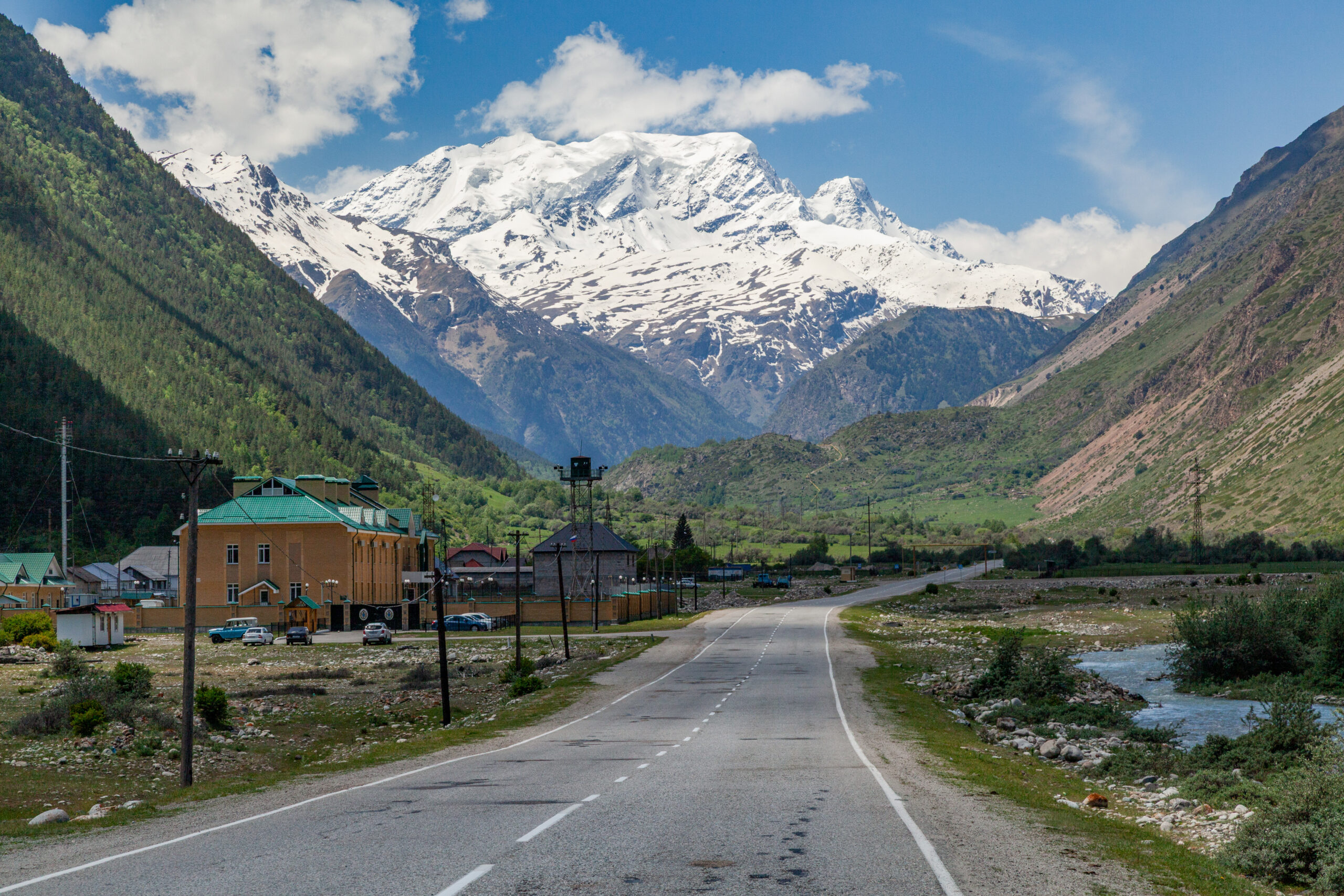
Caucasus Mountains panoramic view showing the dramatic high-altitude peaks of Europe's greatest range with Mount Elbrus 5,642 meters as Europe's highest peak and Seven Summits objective in Kabardino-Balkaria Russia plus Mount Kazbek 5,054 meters sacred mountain in Georgian Orthodox tradition and Dykh-Tau 5,205 meters Caucasus second highest peak and the Bezengi Wall containing 5 peaks above 5,000 meters and Shkhara 5,193 meters as Georgia's highest peak and Mount Ararat 5,137 meters biblical Noah's Ark mountain in eastern Turkey forming the dramatic Caucasus mountain range that spans Russia Georgia Armenia Azerbaijan and Turkey with 12 peaks above 5,000 meters more than the entire European Alps
Caucasus Mountains · Russia · Georgia · Armenia · Turkey · 2026 Complete Guide

Climbing the Caucasus Mountains: Europe’s Highest and Most Technical Range

The Caucasus is home to Mount Elbrus (5,642 m), Europe’s highest peak and a Seven Summit, plus 11 more peaks above 5,000 m — more 5,000 m+ peaks than the entire European Alps. Spanning Russia, Georgia, Armenia, Azerbaijan, and Turkey, the range hosts Mount Kazbek’s sacred summit, the technical Bezengi Wall, biblical Mount Ararat, and the Matterhorn-like Ushba. Complete coverage of 10 major peaks, costs $1,500-$3,500, and the June-September climbing window.

10 Peaks
Major Caucasus Mountains
5,642 m
Mount Elbrus (Europe’s Highest)
12 of 12
5,000 m+ Peaks (More than Alps)
$1.5K-$3.5K
Typical Expedition Cost

🏔 Caucasus Mountains Framework

The Caucasus is Europe’s highest and most technically demanding mountain range. First, Mount Elbrus (5,642 m) is Europe’s highest peak and one of the Seven Summits — climbed by 15,000-20,000 mountaineers per year. Second, the range contains 12 peaks above 5,000 m — more 5,000 m+ peaks than the entire European Alps, with the Bezengi Wall hosting 5 of them within a single 13km ridge.

Third, Mount Kazbek (5,054 m) in Georgia is the most accessible 5,000 m+ peak in the region — sacred in Georgian Orthodox tradition and increasingly the destination of choice as Russia visa restrictions complicate Elbrus access. Fourth, Mount Ararat (5,137 m) in Turkey is the biblical Noah’s Ark mountain and a cultural symbol of Armenia despite sitting in Turkish territory. Fifth, costs are 40-60% lower than equivalent Andean or Himalayan peaks — making the Caucasus the most cost-effective high-altitude mountaineering destination in the Northern Hemisphere.

The Caucasus Mountains are a continental-boundary range stretching approximately 1,200 kilometers from the Black Sea to the Caspian Sea — forming part of the traditional dividing line between Europe and Asia. Generally, the range is split into the Greater Caucasus (the higher northern range, hosting all peaks above 5,000 m) and the Lesser Caucasus (the southern range, hosting Mount Aragats and Mount Ararat). Specifically, the Greater Caucasus runs entirely across Russia and Georgia with smaller segments in Azerbaijan, while the Lesser Caucasus reaches into Armenia and Turkey. Notably, the range was the cradle of Soviet alpinism — generations of Russian, Georgian, and Ukrainian climbers trained on Caucasus peaks before attempting the 7,000 m+ “Snow Leopard” peaks of Central Asia and eventually the world’s 8,000 m peaks.

📜 Disclosure: This page contains affiliate links to Expedia. If you click through and make a booking, Global Summit Guide may earn a small commission at no additional cost to you. Editorial recommendations are independent of commission rates. See our full affiliate disclosure for details.
✈ ⛰ 🏨
Plan Your Adventure

Find Hotels, Flights & Trips for the World’s Best Hiking Destinations

The Global Summit Guide Travel Shop on Expedia — curated for outdoor adventurers, mountaineers, and serious hikers. Patagonia to the Alps. Nepal to the Rockies. Curated lodging for every region we cover.

Explore Travel Shop on Expedia →
✓ Curated recommendations  ·  ✓ Same price as direct booking  ·  ✓ Supports our editorial

Key Takeaways

  • Mount Elbrus (5,642 m) is Europe’s highest peak and a Seven Summit — climbed by ~15,000-20,000 people per year.
  • 12 peaks above 5,000 m in the Caucasus — more than the entire European Alps.
  • Mount Kazbek (5,054 m) in Georgia is the most accessible 5,000 m+ peak — sacred in Georgian Orthodox tradition.
  • Mount Ararat (5,137 m) in eastern Turkey is the biblical Noah’s Ark mountain and Armenia’s cultural symbol.
  • Bezengi Wall contains 5 peaks above 5,000 m within a 13km ridge — Europe’s highest concentration of high peaks.
  • Ushba (4,710 m) is the “Matterhorn of the Caucasus” — a technical alpine challenge in Svaneti, Georgia.
  • Russia visa challenges since 2022 have shifted commercial mountaineering focus from Elbrus to Mount Kazbek.
  • Cost $1,500-$3,500 for commercial Elbrus/Kazbek expeditions — 40-60% cheaper than equivalent Andean peaks.
  • Climbing season: June-September, with July-August offering the most stable conditions.
  • Soviet alpinism heritage — Caucasus was the training ground for the Snow Leopard award (5 peaks above 7,000 m in former USSR).
Updated June 2026 · Complete coverage of all 10 major Caucasus peaks · Russia/Georgia geopolitical context · Bezengi Wall climbing region · Soviet alpinism heritage · Costs $1,500-$3,500 · June-September window

The Caucasus Mountains: Europe’s Greatest Range

The Caucasus Mountains are the highest, most technically demanding, and most underappreciated major mountain range in Europe. Generally, the range stretches approximately 1,200 kilometers from the Black Sea to the Caspian Sea, forming part of the traditional dividing line between Europe and Asia. Specifically, the Caucasus contains 12 peaks above 5,000 m — more than the entire European Alps — yet receives a fraction of the international mountaineering attention that the Alps command. Notably, the range is anchored by Mount Elbrus (5,642 m), Europe’s highest peak and one of the Seven Summits, climbed by approximately 15,000-20,000 mountaineers per year.

The mountains span five countries: Russia (north of the main watershed, hosting Mount Elbrus and most of the Bezengi Wall), Georgia (south of the watershed, hosting Shkhara as Georgia’s highest peak plus Mount Kazbek and the iconic peaks of Svaneti), Azerbaijan (the eastern Caucasus reaching the Caspian Sea), Armenia (Lesser Caucasus, with Mount Aragats as the country’s highest peak), and Turkey (Mount Ararat sits just south of the main range in eastern Anatolia, traditionally grouped with Caucasus mountaineering). Generally, the Caucasus is divided into the Greater Caucasus (the higher northern range containing all peaks above 5,000 m) and the Lesser Caucasus (the southern range).

For international mountaineers, the Caucasus offers a unique combination of high altitude, technical challenge, low cost, and rich cultural context. Mount Elbrus delivers a non-technical Seven Summit at a fraction of Denali’s or Aconcagua’s price. Mount Kazbek provides accessible 5,000 m+ climbing in Georgia without the visa complications of Russia. The Bezengi Wall hosts technical alpine objectives comparable to the Mont Blanc massif. Mount Ararat carries 5,000+ years of cultural and religious significance. Generally, no other regional mountain range offers this combination of objectives within a single accessible area.

Greater vs Lesser Caucasus: Geography

The Caucasus Mountains divide naturally into two parallel ranges separated by the Kura-Aras lowlands. Generally, understanding this division is essential for trip planning because the two ranges differ substantially in elevation, climbing character, and access logistics.

🏨

Planning a Trip? Find Lodging on Expedia

Hotels, flights, and vacation packages for the world’s great hiking and mountaineering destinations.

Visit Shop →
LESSER CAUCASUS · ARMENIA / TURKEY

The Lesser Caucasus — Volcanic Highlands

The Lesser Caucasus runs parallel to the Greater Caucasus approximately 100-200 kilometers to the south, covering northern Armenia and northeastern Turkey. Generally, the range is lower than the Greater Caucasus — no peaks above 5,000 m except Mount Ararat (which is technically a separate volcanic massif rather than part of the Lesser Caucasus). Specifically, Mount Aragats (4,090 m) in Armenia is the most significant Lesser Caucasus peak — a dormant stratovolcano with four summit peaks. Notably, the Lesser Caucasus connects to the Iranian Plateau and the Anatolian Plateau, marking the transition from Eurasian to Middle Eastern geology and climate. Mount Ararat (5,137 m) in Turkey is geographically isolated from both ranges but is traditionally grouped with Caucasus mountaineering due to cultural and historical ties.

The 2026 Geopolitical Reality: Russia vs Georgia Access

Mountaineering in the Caucasus has been substantially reshaped by Russia’s invasion of Ukraine in February 2022 and the resulting Western sanctions. Generally, the practical effect for international climbers has been a major shift in commercial mountaineering focus from Russia (Elbrus) to Georgia (Kazbek) as Russia visa access and travel logistics have become substantially more complex.

⚠ Russia visa challenges since 2022

For climbers from NATO countries, US, UK, EU, Canada, and Australia, Russia visa access has become substantially restricted since 2022. Generally, direct commercial flights between Russia and most Western countries have been suspended. Specifically, visa applications now require travel to third-country Russian embassies (typically Turkey, Serbia, or the UAE) and processing times have extended significantly. Notably, payment for Russian commercial operators has also become difficult — Western credit cards no longer work in Russia, and SWIFT banking restrictions complicate wire transfers. The cumulative effect has been a substantial decline in Western climbers on Mount Elbrus, even as the mountain itself remains technically accessible.

Georgia, by contrast, has become the preferred Caucasus mountaineering destination for international climbers. Generally, Georgia offers visa-free entry for most Western nationalities (typically 365 days for US/EU/UK passport holders), straightforward flights from major European hubs through Tbilisi or Kutaisi, and an established mountaineering tourism infrastructure. Specifically, Mount Kazbek (5,054 m) has emerged as the practical Caucasus high-altitude objective — providing the 5,000 m+ experience that Elbrus traditionally offered, at lower cost, with simpler logistics. Notably, this shift is reflected in the search data: Mount Kazbek is now one of the highest-traffic Caucasus mountain pages on the internet despite being significantly less famous historically than Elbrus.

The 10 Major Caucasus Peaks: Comparison Table

The table below ranks the 10 major Caucasus climbing peaks by elevation. Generally, the Russian peaks dominate the high end (5 of the top 7 are in Russia), with Georgia hosting the cultural/accessibility leaders.

#PeakElevationCountryRangeDifficultyTypical Cost
1Mount Elbrus5,642 m / 5,642 mRussiaGreater CaucasusModerate (glacier)$1.5K – $3.5K
2Dykh-Tau5,205 m / 5,205 mRussiaGreater (Bezengi)Technical alpine$3K – $6K
3Shkhara5,193 m / 5,193 mGeorgia/RussiaGreater (Bezengi)Technical alpine$3K – $6K
4Koshtan-Tau5,151 m / 5,151 mRussiaGreater (Bezengi)Technical alpine$3K – $6K
5Mount Ararat5,137 m / 5,137 mTurkeyAnatolian HighlandsModerate (glacier)$1.2K – $2K
6Mount Kazbek5,054 m / 5,054 mGeorgiaGreater CaucasusModerate (glacier)$1.2K – $2.5K
7Mizhirgi Peak5,025 m / 5,025 mRussiaGreater (Bezengi)Technical alpine$3K – $5K
8Tetnuldi4,858 m / 4,858 mGeorgiaGreater (Svaneti)Moderate alpine$1.5K – $3K
9Ushba4,710 m / 4,710 mGeorgiaGreater (Svaneti)Technical alpine$3K – $5K
10Mount Aragats4,090 m / 4,090 mArmeniaLesser CaucasusEasy-Moderate hike$300 – $800
Mount Elbrus 5,642 meters as Europe's highest peak and Seven Summits objective shown with its distinctive twin volcanic cone summit in Kabardino-Balkaria Russia near the Georgian border with the East Peak at 5,621 meters first climbed in 1829 by Khillar Khachirov and the West Peak at 5,642 meters first climbed in 1874 by Florence Crauford Grove English expedition the dormant stratovolcano covered in 22 glaciers including the famous Garabashi Glacier on the standard South Side route with the Diesel Hut shelter at 4,100 meters elevation accessed via cable car from the Azau valley making this the most popular Seven Summits objective with approximately 15,000 to 20,000 mountaineers per year attempting the standard route during the May to October climbing season
Mount Elbrus — Europe’s highest peak at 5,642 m and the Seven Summit for the European continent. Generally, the twin-peaked dormant volcano has been the cradle of Soviet and Russian alpinism since the 19th century. Specifically, the East Peak was first climbed in 1829 by Khillar Khachirov during a Russian Imperial expedition led by General Georgy Emanuel; the higher West Peak was first climbed in 1874 by a British expedition led by Florence Crauford Grove. Notably, approximately 15,000-20,000 climbers attempt Elbrus annually — making it one of the most-climbed of the Seven Summits.

The 10 Caucasus Peaks: Detailed Coverage

The sections below cover the 10 major Caucasus climbing peaks in detail, ordered by elevation. Generally, each entry includes elevation, location, first ascent history, route character, cultural context, and links to dedicated peak guides where available.

01 · RUSSIA · SEVEN SUMMIT · EUROPE’S HIGHEST PEAK

Mount Elbrus

5,642 m / 5,642 m · Sentinel-anchor of the Greater Caucasus

First ascent: July 22, 1829 (East Peak) Khillar Khachirov · July 28, 1874 (West Peak) Florence Crauford Grove expedition

Mount Elbrus is Europe’s highest peak and one of the Seven Summits — the highest peak on each of the seven continents. Generally, the mountain is a dormant stratovolcano with two summits: the West Peak at 5,642 m (the higher) and the East Peak at 5,621 m. Specifically, Elbrus sits in the Republic of Kabardino-Balkaria in southern Russia, approximately 60 kilometers north of the Georgian border. Notably, the mountain is heavily glaciated — 22 named glaciers cover its slopes — and the standard South Side route is largely a glaciated snow climb requiring crampons and basic glacier travel skills but no technical mountaineering.

The standard South Side route from the Azau valley uses cable car infrastructure to reach the Garabashi Glacier at 3,800 m, where mountain refugees including the Diesel Hut and various other shelters provide high-camp accommodations at 4,100 m. Generally, climbers acclimatize for 3-5 days using Pastukhov Rocks and the lower summit slopes, then attempt the summit on a 10-14 hour round-trip from high camp. Specifically, the standard route’s technical difficulty is moderate — the main challenges are altitude, cold, and weather rather than technical climbing. Notably, the alternative North Side route is more remote and demanding, with no cable car infrastructure and longer approach times.

Elbrus has been a major mountaineering objective since the 19th century. The East Peak was first climbed on July 22, 1829 by Khillar Khachirov, a Karachay-Balkar guide accompanying a Russian Imperial expedition led by General Georgy Emanuel. Generally, the higher West Peak was first reached on July 28, 1874 by a British expedition led by Florence Crauford Grove, accompanied by Frederick Gardiner, Horace Walker, Peter Knubel, and Akhia Sottaiev. Notably, approximately 15,000-20,000 mountaineers attempt Mount Elbrus each year through the standard South Side route — making it one of the most-climbed of the Seven Summits. Success rates run 60-75% depending on weather and acclimatization.

5,642 mElevation
South SideStandard Route
60-75%Success Rate
$1.5K-$3.5KTypical Cost
Full Mount Elbrus climb guide →
02 · RUSSIA · BEZENGI WALL · TECHNICAL ALPINE OBJECTIVE

Dykh-Tau

5,205 m / 5,205 m · Bezengi region, Greater Caucasus

First ascent: July 1888 · Albert F. Mummery & Heinrich Zurfluh

Dykh-Tau is the second-highest peak in the Caucasus and considered one of the great alpine objectives of European mountaineering. Generally, the mountain is dramatically more demanding than Mount Elbrus — its routes involve sustained technical climbing on granite and mixed terrain rather than glacier walking. Specifically, Dykh-Tau was first climbed in July 1888 by Albert F. Mummery and Swiss guide Heinrich Zurfluh via the south-west ridge — one of the landmark alpine ascents of the 19th century. Notably, Mummery’s name remains attached to the standard “Mummery Route” on the mountain, and the ascent is considered foundational to the development of guideless British alpinism.

The standard climb of Dykh-Tau requires genuine alpine experience — solid rock climbing, mixed-terrain comfort, and high-altitude tolerance. Generally, climbers approach via the Bezengi base camp at 2,200 m, then move through intermediate camps to high camp at approximately 4,200 m before the summit push. Specifically, the climb typically takes 4-5 days from base camp with multiple intermediate camps and weather days. Notably, success rates are substantially lower than Elbrus — perhaps 30-50% depending on conditions and team experience. Dykh-Tau is climbed by perhaps 50-150 mountaineers per year, almost entirely experienced alpine teams.

5,205 mElevation
Mummery RouteSW Ridge
TechnicalGranite/Mixed
$3K-$6KPrivate Cost
03 · GEORGIA · GEORGIA’S HIGHEST PEAK · BEZENGI WALL

Shkhara

5,193 m / 5,193 m · Bezengi Wall, Georgia/Russia border

First ascent: 1888 · Ulrich Almer expedition

Shkhara is Georgia’s highest peak and the easternmost summit of the iconic Bezengi Wall — the 13-kilometer ridge that contains five 5,000 m+ peaks. Generally, Shkhara sits directly on the Georgia-Russia border and can be approached from either side, though most international expeditions use the Russian Bezengi base camp due to better infrastructure. Specifically, the mountain was first climbed in 1888 by an expedition led by Swiss guide Ulrich Almer — part of the same Caucasus exploration era that produced first ascents of Dykh-Tau, Koshtan-Tau, and the other Bezengi giants.

The standard route on Shkhara involves complex mixed terrain with substantial ridge traversing — the summit is actually the highest of multiple sub-peaks along the wall. Generally, climbers must cover several kilometers of exposed ridge with 4,000-5,000 m+ elevations throughout. Specifically, the ascent typically takes 4-6 days from Bezengi base camp at 2,200 m with multiple intermediate camps. Notably, Shkhara is climbed by perhaps 30-80 mountaineers per year — significantly less popular than the more accessible peaks of the wall (Dykh-Tau, Koshtan-Tau).

5,193 mElevation
Bezengi WallLocation
Mixed/RidgeRoute
$3K-$6KPrivate Cost
04 · RUSSIA · BEZENGI WALL · TECHNICAL ALPINE

Koshtan-Tau

5,151 m / 5,151 m · Bezengi region, Greater Caucasus

First ascent: September 1889 · Hermann Woolley, John Garforth Cockin & Christian Jossi

Koshtan-Tau is the fourth-highest peak in the Caucasus and a technical alpine objective at the western end of the Bezengi region. Generally, the mountain features a complex structure with multiple sub-peaks and ridges, making it a challenging objective even for experienced alpinists. Specifically, Koshtan-Tau was first climbed in September 1889 by a British-Swiss expedition consisting of Hermann Woolley, John Garforth Cockin, and Swiss guide Christian Jossi. Notably, this first ascent expedition occurred just one year after the Dykh-Tau first ascent — together these two expeditions opened the central Caucasus to European mountaineering attention.

The standard route on Koshtan-Tau involves sustained ridge climbing with mixed rock and ice sections. Generally, the climb requires solid alpine experience and good route-finding skills. Specifically, ascents typically take 4-5 days from Bezengi base camp through multiple intermediate camps. Notably, Koshtan-Tau is rarely attempted by Western climbers — most ascents are completed by Russian, Georgian, and Eastern European alpine teams working in the broader Bezengi region.

5,151 mElevation
Mixed RidgeStandard Route
TechnicalAlpine
$3K-$6KPrivate Cost
05 · TURKEY · BIBLICAL NOAH’S ARK MOUNTAIN · CULTURAL SYMBOL

Mount Ararat (Agri Dagi)

5,137 m / 5,137 m · Eastern Anatolia, Turkey

First ascent: October 9, 1829 · Friedrich Parrot (with Khachatur Abovian)

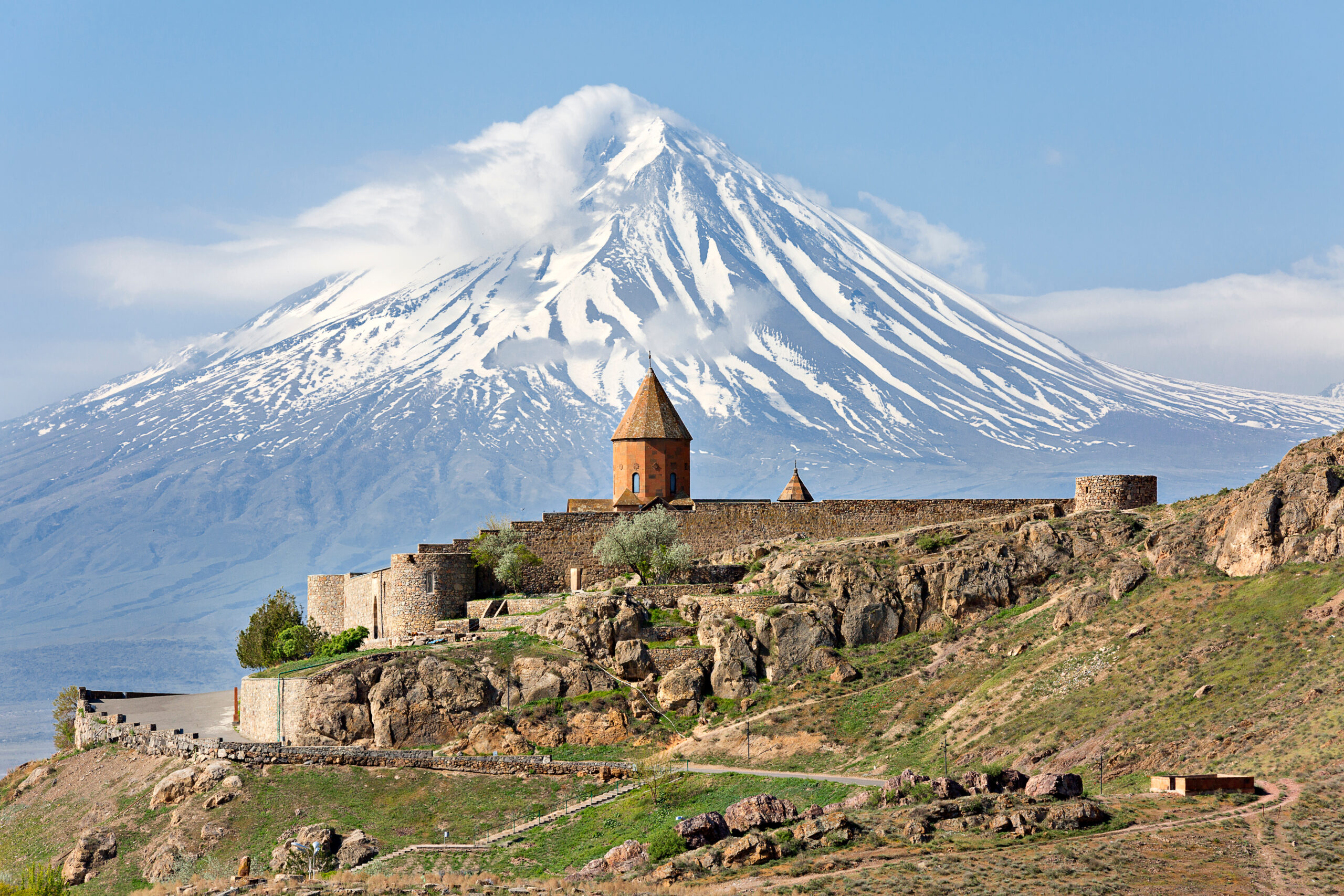
Mount Ararat is one of the world’s most culturally significant mountains and a major mountaineering objective in eastern Turkey. Generally, the mountain consists of two distinct volcanic cones: Greater Ararat (Büyük Ağrı) at 5,137 m and Lesser Ararat (Küçük Ağrı) at 3,896 m. Specifically, the peak sits in extreme eastern Turkey, just south of the Armenian border and approximately 35 kilometers west of the tripoint between Turkey, Armenia, and Iran. Notably, Ararat is the biblical landing place of Noah’s Ark according to the Book of Genesis — making it one of the most religiously significant mountains in the Judeo-Christian-Islamic tradition.

Mount Ararat is the cultural and spiritual symbol of the Armenian people, despite sitting in Turkish territory since the 1920s. Generally, the mountain appears on the Armenian national emblem, in Armenian literature and art across millennia, and serves as the central symbolic image of Armenian identity. Specifically, the territory containing Ararat was historically Armenian and was ceded to Turkey through the 1921 Treaty of Kars — an issue that remains culturally and politically sensitive. Notably, Armenians cannot easily visit Mount Ararat due to the closed Armenia-Turkey border; the peak is climbed almost exclusively from the Turkish side via the village of Doğubayazıt.

Mount Ararat was first climbed on October 9, 1829 by German-Russian explorer Friedrich Parrot, accompanied by Armenian scholar Khachatur Abovian and Russian soldiers Aleksei Zdorovenko and Matvei Chalpanov. Generally, this ascent occurred just months after Mount Elbrus’s East Peak first ascent — the two ascents together marked the start of organized European mountaineering exploration of the Caucasus region. Specifically, the standard climb is technically moderate — a 5-day program from Doğubayazıt with high camp at approximately 4,200 m, then a snow and glacier ascent to the summit. Notably, climbing permits are required from Turkish authorities and have occasionally been restricted due to regional security concerns near the Iranian border.

5,137 mElevation
DogubayazitGateway
1829First Ascent
$1.2K-$2KCost
06 · GEORGIA · MOST ACCESSIBLE 5,000M+ · SACRED MOUNTAIN

Mount Kazbek (Mkinvartsveri)

5,054 m / 5,054 m · Mtskheta-Mtianeti Georgia / North Ossetia Russia border

First ascent: July 1868 · Douglas W. Freshfield, Adolphus W. Moore & C. Comyns Tucker

Mount Kazbek is the most accessible 5,000 m+ peak in the Caucasus and increasingly the destination of choice for international climbers seeking high-altitude experience without the visa and logistical complications of Russia. Generally, the mountain sits on the Georgia-Russia border, approximately 160 kilometers north of Tbilisi via the historic Georgian Military Highway. Specifically, the Georgian name is Mkinvartsveri meaning “ice peak” or “glacier summit”; in Russian and Ossetian traditions the mountain is called Mqinvartsveri or Kazbek (the Russian name, after a 19th-century Georgian prince). Notably, Mount Kazbek holds deep religious significance in Georgian Orthodox tradition — the medieval Gergeti Trinity Church sits at 2,170 m on Kazbek’s southern flank with the dramatic peak rising behind it, an image that defines Georgian Christian visual identity.

The standard South Side route from Stepantsminda (formerly Kazbegi) takes 4-6 days. Generally, climbers acclimatize in the village at 1,750 m, hike to Gergeti Trinity Church for sightseeing and additional acclimatization, then move up to the Bethlemi Hut at 3,680 m for high camp. Specifically, the summit push from Bethlemi takes 8-12 hours via the Gergeti Glacier with moderate snow climbing, crevasse navigation, and a final ridge to the summit. Notably, success rates run 55-75% depending on weather — Kazbek is technically more challenging than Elbrus’s South Side but significantly more accessible logistically.

The mountain plays a central role in Caucasus mythology. Generally, in the Georgian tradition of Amirani (the Caucasus parallel to the Greek Prometheus myth), Amirani was chained to Mount Kazbek for stealing fire from the gods. Specifically, the Bethlemi Hut sits below a cave traditionally identified as Amirani’s prison. Notably, Mount Kazbek was first climbed on July 1868 by an English expedition led by Douglas W. Freshfield, accompanied by Adolphus W. Moore and C. Comyns Tucker — the same Freshfield who later led mountaineering exploration of Sikkim and was a major figure in the Royal Geographical Society.

5,054 mElevation
StepantsmindaGateway
Bethlemi HutHigh Camp 3,680 m
55-75%Success Rate
Full Mount Kazbek climb guide →
07 · RUSSIA · BEZENGI WALL · TECHNICAL ALPINE

Mizhirgi Peak

5,025 m / 5,025 m · Bezengi Wall, Greater Caucasus

One of the five great peaks of the Bezengi Wall

Mizhirgi Peak is one of the five major summits of the Bezengi Wall and a technical alpine objective in the central Caucasus. Generally, the peak features sustained ridge climbing and mixed terrain similar to its Bezengi neighbors. Specifically, Mizhirgi sits between Dykh-Tau and Koshtan-Tau on the main wall ridge, with approach typically via Bezengi base camp at 2,200 m. Notably, the peak is climbed less frequently than Dykh-Tau or Koshtan-Tau — perhaps 20-50 ascents per year by experienced Russian, Eastern European, and occasional Western teams.

Mizhirgi is sometimes climbed as part of Bezengi Wall traverses — multi-day expeditions covering several or all five major peaks of the wall in a single push. Generally, these traverses are considered among the great alpine objectives in European mountaineering, comparable in scope to the Mont Blanc massif traverses. Specifically, a full five-peak traverse (Shkhara, Janga, Katyn-Tau, Dykh-Tau, Mizhirgi) takes 7-10 days and requires sustained alpine performance at 5,000 m+.

5,025 mElevation
Bezengi WallLocation
Mixed AlpineDifficulty
$3K-$5KCost
08 · GEORGIA · SVANETI · MODERATE ALPINE OBJECTIVE

Tetnuldi

4,858 m / 4,858 m · Svaneti region, Georgia

First ascent: 1896 · Douglas W. Freshfield expedition

Tetnuldi is one of the most distinctive peaks of the Svaneti region in Georgia — a triple-summited pyramid that dominates the skyline above the historic Svanetian village of Mestia. Generally, the name Tetnuldi derives from the Svan language meaning “white woman,” referring to the perpetually snow-covered summits. Specifically, the mountain was first climbed in 1896 by Douglas W. Freshfield’s expedition — the same Freshfield who first climbed Mount Kazbek in 1868. Notably, Tetnuldi has become accessible to a wider range of climbers in recent years due to the development of the Tetnuldi ski resort on its lower slopes, which provides road and lift access to approximately 3,000 m.

The standard climb of Tetnuldi is moderate alpine — substantially easier than the Bezengi Wall peaks but more demanding than Elbrus’s South Side. Generally, the route involves snow climbing on moderate slopes with some crevasse hazard and a final ridge traverse to the summit. Specifically, the ascent typically takes 3-4 days from Mestia with high camp at approximately 4,000 m. Notably, Tetnuldi serves as an excellent acclimatization or technical preparation peak for climbers planning more demanding Caucasus objectives.

4,858 mElevation
Mestia, SvanetiGateway
ModerateAlpine
$1.5K-$3KCost
09 · GEORGIA · “MATTERHORN OF THE CAUCASUS”

Ushba

4,710 m / 4,710 m · Svaneti region, Georgia

First ascents: 1903 Adolf Schulze (South Peak) · 1903 John Garforth Cockin & U. Almer (North Peak)

Ushba is often called the “Matterhorn of the Caucasus” — though many climbers consider it harder than the Matterhorn itself. Generally, the mountain features two distinct summits (North Peak at 4,690 m and South Peak at 4,710 m) separated by a complex ridge. Specifically, despite being significantly lower than the Bezengi peaks, Ushba is considered one of the most technically demanding peaks in the entire Caucasus due to its steep granite faces, complex glaciation, and notoriously unstable weather. Notably, the mountain rises dramatically above the Svanetian village of Mestia, dominating the skyline as one of the most photogenic mountains in Georgia.

Ushba’s first ascents came late in the Caucasus exploration era due to the technical difficulty. Generally, the South Peak was first climbed in 1903 by Adolf Schulze with a German expedition, while the North Peak was climbed the same year by John Garforth Cockin and Ulrich Almer. Specifically, both ascents required substantial technical climbing — Ushba was the first major Caucasus peak whose first ascent demanded what we would now consider modern alpine technique. Notably, the mountain remains a serious test piece even with modern equipment; success rates on Ushba routes are substantially lower than Elbrus or Kazbek.

4,710 mSouth Peak
4,690 mNorth Peak
GraniteTechnical Wall
$3K-$5KCost
10 · ARMENIA · ARMENIA’S HIGHEST PEAK · DORMANT VOLCANO

Mount Aragats

4,090 m / 4,090 m · Aragatsotn Province, Armenia

Dormant stratovolcano with four named summits

Mount Aragats is the highest peak in Armenia and the highest peak in the Armenian Highlands south of the Greater Caucasus. Generally, the mountain is a dormant stratovolcano with four distinct summits arranged around a central caldera: North (4,090 m, the highest), West (4,080 m), East (3,916 m), and South (3,879 m). Specifically, the peak sits approximately 40 kilometers northwest of Yerevan and is accessible by paved road to Lake Kari at 3,200 m — making it the most road-accessible 4,000 m peak in the Caucasus region. Notably, Mount Aragats is culturally significant in Armenian tradition and appears in numerous works of Armenian literature, music, and visual art.

The standard climb of Aragats is easy-to-moderate hiking — substantially easier than any other peak in this guide. Generally, the South Peak (3,879 m) is reachable as a long day hike with no technical climbing required. Specifically, the North Peak (the true summit at 4,090 m) requires scrambling on rocky terrain and basic snow climbing in early season but no advanced mountaineering. Notably, Aragats serves as an excellent acclimatization peak for climbers planning Mount Ararat (just across the border in Turkey) or Mount Kazbek expeditions. The mountain is also home to Byurakan Astrophysical Observatory — one of the most significant scientific facilities in the Caucasus region.

4,090 mNorth Peak (Highest)
4 SummitsVolcanic Caldera
Easy-ModerateHike
$300-$800Cost
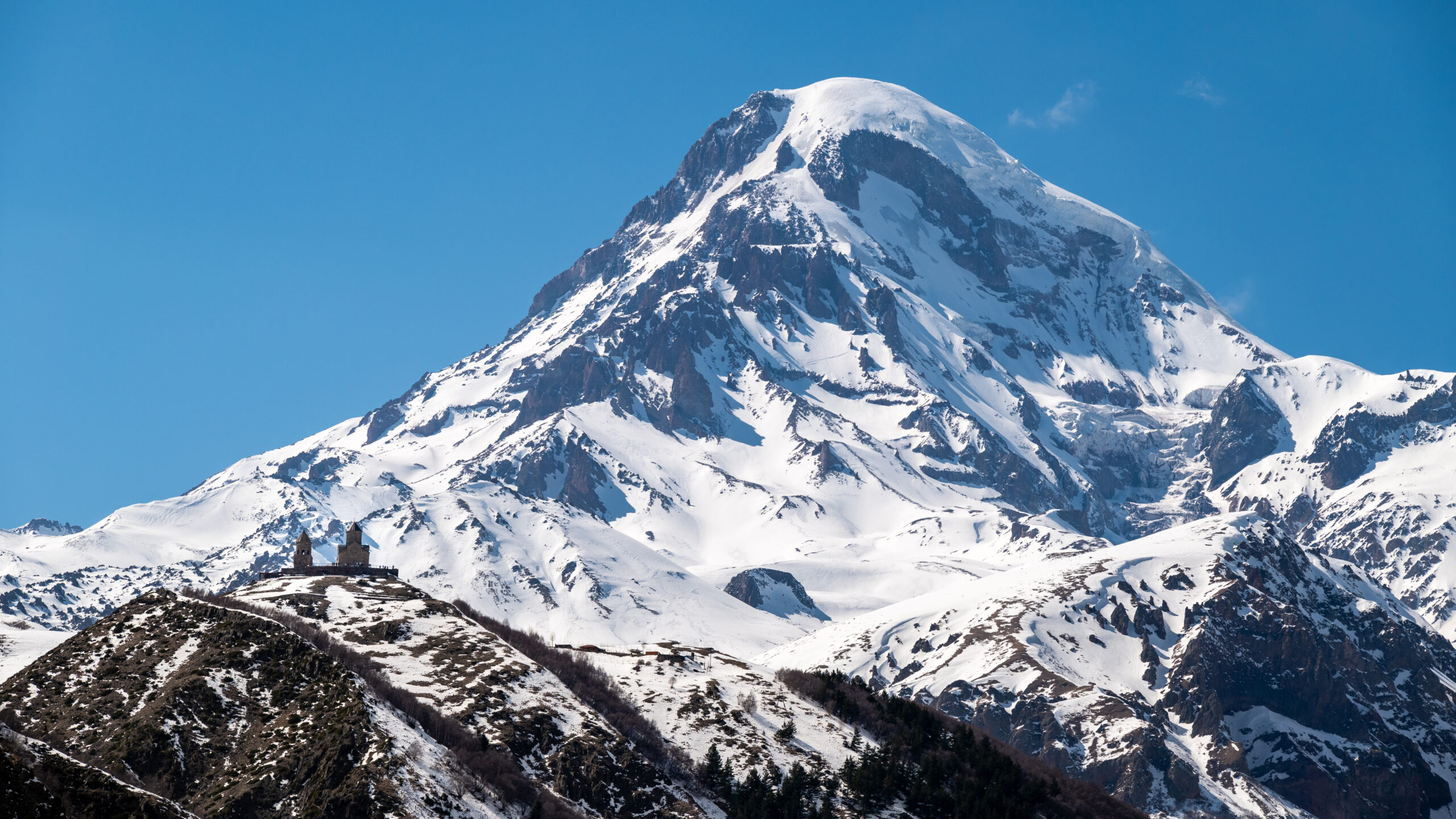
Mount Kazbek 5,054 meters as Georgia's sacred mountain in Mtskheta-Mtianeti Georgia near North Ossetia Russia border showing the dramatic glaciated peak rising above the historic Gergeti Trinity Church at 2,170 meters elevation on its southern flank one of the most iconic religious mountain images in the Eastern Orthodox tradition with first ascent on July 1868 by Douglas W Freshfield Adolphus W Moore and C Comyns Tucker English mountaineering expedition the mountain holds deep significance in Georgian Orthodox Christianity and the ancient Caucasus Amirani myth where the Promethean figure was chained to the mountain for stealing fire from the gods now serving as the most accessible 5,000 meter plus peak in the Caucasus region with the Bethlemi Hut at 3,680 meters as the standard high camp accessed via the Gergeti Glacier route from the Georgian village of Stepantsminda formerly known as Kazbegi located on the historic Georgian Military Highway approximately 160 kilometers north of Tbilisi
Mount Kazbek with Gergeti Trinity Church — Georgia’s sacred mountain at 5,054 m. Generally, the medieval church sits at 2,170 m on Kazbek’s southern flank, with the dramatic peak rising behind it. Specifically, this view defines Georgian Christian visual identity — appearing in literature, art, and tourism imagery for centuries. Notably, Mount Kazbek has emerged as the practical Caucasus high-altitude objective for international climbers since 2022, as Russia visa restrictions complicate Mount Elbrus access.

The Bezengi Wall: Europe’s Most Concentrated Alpine Challenge

The Bezengi Wall (Russian: Безенгийская стена, Georgian: ბეზინგის კედელი) is a 13-kilometer ridge in the central Caucasus that contains the highest concentration of 5,000 m+ peaks anywhere in Europe. Generally, the wall sits on the Russia-Georgia border in the Bezengi region of Kabardino-Balkaria Republic (Russia), with the southern slopes descending into Georgia’s Svaneti region. Specifically, the wall hosts five major peaks above 5,000 m within its 13km length: Shkhara (5,193 m, Georgia’s highest peak), Janga (5,059 m), Katyn-Tau (5,031 m), Pushkin Peak (5,100 m), and the satellite Dykh-Tau (5,205 m) accessed from the wall area.

The wall’s mountaineering significance comes from both its scale and its sustained difficulty. Generally, climbing any single Bezengi Wall peak requires technical alpine skills, high-altitude experience, and substantial commitment. Specifically, the full Bezengi Wall traverse (covering all five peaks in a single multi-day push) is considered one of the great alpine objectives in European mountaineering — comparable in technical scope to traverses of the Mont Blanc massif but at higher altitude with more sustained difficulty. Notably, the traverse typically requires 7-10 days of continuous alpine climbing between 4,500 m and 5,200 m — a substantial test of alpine fitness even for elite climbers.

Access to the Bezengi Wall runs through Bezengi base camp at 2,200 m, operated since Soviet times as a mountaineering training facility. Generally, the camp provides basic accommodations, climbing infrastructure, and approach trails to all wall peaks. Specifically, modern Western expeditions typically use the Russian Bezengi base camp due to its established infrastructure, though some teams approach from the Georgian Svaneti side. Notably, the camp has been the training ground for generations of Soviet, Russian, and Eastern European alpinists — climbers who earned the Snow Leopard award and went on to climb 8,000 m+ peaks typically trained on Bezengi peaks first.

Caucasus Sub-Regions: Where the Peaks Live

Beyond the Greater/Lesser division, the Caucasus has several distinct sub-regions, each with characteristic peaks, access patterns, and cultural context.

ELBRUS REGION · BAKSAN VALLEY · POPULAR SOUTH SIDE

The Elbrus Region — Russia’s Mountain Tourism Capital

The Mount Elbrus region in the Baksan Valley is the most developed mountaineering destination in the Russian Caucasus. Generally, the area features extensive cable car infrastructure on Elbrus’s South Side, multiple commercial high-altitude refugees, established hotels and bases in the towns of Terskol and Azau, and the longest operating season of any Caucasus region (May-October). Specifically, this is where Russia hosts the bulk of its commercial mountaineering tourism. Notably, the region has been impacted significantly by 2022 sanctions and visa restrictions affecting Western climbers.

SVANETI · GEORGIAN ALPINE HEARTLAND · USHBA REGION

Svaneti — Georgia’s Mountain Kingdom

The Svaneti region in northwestern Georgia is the cultural and mountaineering heart of Georgian alpinism. Generally, the region is centered on the historic mountain town of Mestia (1,500 m), accessed via mountain roads or seasonal flights from Tbilisi. Specifically, Svaneti hosts Mount Ushba (“the Matterhorn of the Caucasus”), Tetnuldi, the southern approach to Shkhara, and numerous secondary alpine peaks. Notably, the region preserves a unique Svan culture including medieval defensive tower-houses (UNESCO World Heritage) and the ancient Svan language — climbing in Svaneti is as much a cultural experience as a mountaineering objective.

KAZBEGI · MTSKHETA-MTIANETI · MILITARY HIGHWAY

The Kazbegi Region — Georgia’s Most Accessible Highland

The Kazbegi region (officially Mtskheta-Mtianeti) in north-central Georgia contains Mount Kazbek and the most accessible Caucasus high-altitude objective for international climbers. Generally, the region is accessed via the Georgian Military Highway from Tbilisi (3 hours drive) through Stepantsminda (formerly Kazbegi village) at 1,750 m. Specifically, the area combines mountain tourism with substantial cultural sites including Gergeti Trinity Church (14th century) and the dramatic Daryal Gorge marking the Russian border. Notably, Kazbegi has experienced explosive growth in mountain tourism since 2022 as international climbers shifted from Russia-based programs.

Climbing Season & Caucasus Weather

The Caucasus climbing season runs from June through September for technical objectives and snow routes. Generally, July-August offers the most stable weather and best climbing conditions. Specifically, June can carry significant winter snow and avalanche hazards on technical routes, while September brings increasing weather variability and early winter storms.

Mount Elbrus operates a longer season (May-October) due to its glaciated standard route — the South Side cable car infrastructure means the upper mountain remains accessible across a wider window than other peaks. Generally, May and October Elbrus expeditions face colder conditions but generally lower crowds. Specifically, prime Elbrus conditions occur in July-August when temperatures at the Diesel Hut high camp range from -5°C to 10°C (-5°C to 10°C) during the day, dropping to -15°C to -10°C (-15°C to -10°C) at night.

The Bezengi Wall peaks (Dykh-Tau, Shkhara, Koshtan-Tau, Mizhirgi) have shorter optimal windows. Generally, the technical climbing on these peaks requires stable weather and good snow conditions — best from mid-July through mid-August. Specifically, weather windows on the Bezengi Wall are typically 2-4 days long, requiring patient expedition timing. Notably, winter ascents of any Caucasus 5,000 m+ peak are extremely demanding and reserved for elite climbers — temperatures can drop below -30°C with sustained 100+ km/h winds.

Soviet Alpinism & the Caucasus Climbing Heritage

The Caucasus Mountains were the cradle of Soviet alpinism — a mountaineering tradition that produced some of the world’s strongest high-altitude climbers between the 1930s and the USSR’s dissolution in 1991. Generally, Soviet alpinism developed differently from Western mountaineering traditions: it was structured around state-supported climbing programs, the “Master of Sport” qualification system, and team-based rather than individual achievements. Specifically, the Caucasus served as the primary training ground — every Soviet mountaineer climbed Caucasus peaks before progressing to the higher peaks of the Pamir, Tien Shan, and eventually the Himalaya.

◆ The Snow Leopard (Snezhny Bars) Award

The Snow Leopard was the most prestigious Soviet mountaineering award — given to climbers who summited all five 7,000 m+ peaks within the former USSR: Peak Communism (now Ismoil Somoni Peak, 7,495 m, Tajikistan), Peak Lenin (now Peak Abu Ali ibn Sina, 7,134 m, Kyrgyzstan/Tajikistan), Peak Korzhenevskaya (7,105 m, Tajikistan), Peak Khan Tengri (7,010 m, Kyrgyzstan/China border), and Pobeda Peak / Jengish Chokusu (7,439 m, Kyrgyzstan/China border). Generally, the award was administered by the Soviet Mountaineering Federation from 1967 until the USSR’s dissolution. Specifically, approximately 600 climbers earned the Snow Leopard before the program ended. Notably, while none of the Snow Leopard peaks are in the Caucasus, the Caucasus served as the essential training ground — Snow Leopard candidates worked their way through Caucasus peaks before traveling to the 7,000 m peaks of Central Asia.

The legacy of Soviet alpinism continues to shape modern Caucasus climbing. Generally, the “Master of Sport” qualification system survives in Russian, Georgian, and Ukrainian climbing federations — climbers progress through formal certification levels based on completed routes and difficulty grades. Specifically, the Russian alpine grading system (1B through 6B) used throughout the former USSR differs from Western systems and emphasizes overall difficulty rather than individual pitch grades. Notably, modern Russian and Georgian alpine guides maintain this tradition — when hiring a Caucasus guide, climbers benefit from the formal certification system that Soviet alpinism produced.

Several specific Caucasus mountaineering figures shaped global alpinism. Generally, climbers like Anatoli Boukreev (who featured prominently in Jon Krakauer’s “Into Thin Air” account of the 1996 Everest disaster) trained extensively on Caucasus peaks before transitioning to international high-altitude climbing. Specifically, Boukreev was awarded the Snow Leopard in 1989 and went on to climb 10 of the 14 eight-thousanders. Notably, the entire generation of post-Soviet Russian climbers — including those active in modern Himalayan expeditions — typically came up through Caucasus alpine programs.

Frequently Asked Questions About Caucasus Mountains

What is the highest mountain in the Caucasus?

Mount Elbrus is the highest mountain in the Caucasus at 5,642 m. Mount Elbrus is also the highest peak in Europe and one of the Seven Summits. The mountain is a dormant twin-peaked volcano in southern Russia near the Georgian border. The East Peak (5,621 m) was first climbed in 1829 by Khillar Khachirov, while the West Peak (5,642 m) was first climbed in 1874. Approximately 15,000-20,000 climbers attempt Elbrus each year.

How many 5,000 m peaks are in the Caucasus?

The Caucasus Mountains contain 12 peaks above 5,000 m — more than the entire European Alps. All 12 are concentrated in the Greater Caucasus range spanning Russia and Georgia. These include Mount Elbrus (5,642 m), Dykh-Tau (5,205 m), Shkhara (5,193 m), Koshtan-Tau (5,151 m), Mount Ararat (5,137 m, in Turkey), Pushkin Peak (5,100 m), Janga (5,059 m), Mount Kazbek (5,054 m), Katyn-Tau (5,031 m), Mizhirgi Peak (5,025 m), and several others.

Is Mount Elbrus part of Europe or Asia?

Mount Elbrus is considered part of Europe and recognized as the European Seven Summits objective. The most widely accepted geographic convention places the Europe-Asia boundary along the watershed of the Greater Caucasus range, which puts Mount Elbrus firmly in Europe. The mountaineering community has consistently treated Elbrus as Europe’s highest peak since the late 19th century.

Can you still climb Mount Elbrus from Russia?

Yes, but with substantial restrictions and visa challenges as of 2026. Russian commercial operators continue to run Elbrus expeditions and the standard South Side route remains operational. The challenges are political: Russia’s invasion of Ukraine in 2022 has resulted in extensive sanctions, suspended commercial flights between Russia and most Western countries, visa restrictions, and payment difficulties. This has shifted commercial mountaineering focus toward Mount Kazbek in Georgia as the more accessible Caucasus high-altitude objective.

How much does it cost to climb in the Caucasus?

Caucasus expeditions are dramatically cheaper than other major mountain ranges. Mount Elbrus commercial expeditions run $1,500-$3,500 for 8-10 day programs. Mount Kazbek expeditions in Georgia run $1,200-$2,500 for 5-7 day programs. These costs are 40-60% less than equivalent Andean peaks ($4,000-$6,000 for Aconcagua) or Himalaya programs ($25,000+ for 6,000 m+ peaks). Technical Bezengi Wall objectives run $3,000-$6,000 for private expedition formats.

What is the Bezengi Wall?

The Bezengi Wall is a 13-kilometer ridge in the central Caucasus that contains the highest concentration of 5,000 m+ peaks in Europe. The wall hosts five major peaks: Shkhara (5,193 m, Georgia’s highest), Janga (5,059 m), Katyn-Tau (5,031 m), Dykh-Tau (5,205 m, accessed from the wall), and Pushkin Peak (5,100 m). The Bezengi Wall is considered one of the most technically demanding alpine climbing regions in Europe, comparable to Mont Blanc but at higher altitude.

Is Mount Ararat in the Caucasus?

Mount Ararat is geographically and culturally connected to the Caucasus, though some classifications place it in the Anatolian highlands. Ararat sits in eastern Turkey just south of the Armenian border, approximately 250 km southwest of the Greater Caucasus range. The mountain is part of the Alpide tectonic belt that includes the Caucasus, and is traditionally grouped with Caucasus mountaineering. Mount Ararat (5,137 m) was first climbed in 1829 by Friedrich Parrot — the same year as Mount Elbrus East Peak’s first ascent. The mountain is the biblical landing place of Noah’s Ark and the cultural symbol of Armenia.

When is the best time to climb the Caucasus?

The Caucasus climbing season runs from June through September, with July-August offering the most stable conditions. Mount Elbrus operates a longer season (May-October) due to its glaciated standard route. June can have lingering winter snow on technical objectives, while September brings weather variability and early winter storms. Winter ascents are extremely demanding and reserved for experienced climbers.

Is Mount Kazbek hard to climb?

Mount Kazbek is moderate in difficulty — substantially harder than Kilimanjaro but easier than the Bezengi Wall peaks. The standard route from Stepantsminda involves a multi-day approach to the Bethlemi Hut at 3,680 m, then a glacier crossing with crevasse hazard and a moderate snow slope to the summit at 5,054 m. Success rates run 55-75% depending on weather and acclimatization. Kazbek is the most accessible 5,000 m+ peak in the Caucasus for international climbers due to Georgia’s visa-free entry policies.

What was the Snow Leopard award?

The Snow Leopard (Snezhny Bars) was the prestigious Soviet mountaineering award for climbing all five 7,000 m+ peaks in the former USSR: Peak Communism (7,495 m, Tajikistan), Peak Lenin (7,134 m), Peak Korzhenevskaya (7,105 m), Peak Khan Tengri (7,010 m), and Pobeda Peak / Jengish Chokusu (7,439 m). The award was administered by the Soviet Mountaineering Federation from 1967 until the USSR’s dissolution. Approximately 600 climbers earned the Snow Leopard. While none of the peaks are in the Caucasus, the Caucasus served as the essential training ground for Snow Leopard candidates.

Sources and Methodology

Numbered Source References

This Caucasus Mountains guide synthesizes data from Russian and Georgian mountaineering federations, historical first-ascent records, current commercial operator pricing, and academic sources on Soviet alpinism heritage.

  1. Russian Mountaineering Federation (FAR – Russian Federation of Alpinism) — Official route classifications, peak elevations, and historical first-ascent records for all Russian Caucasus peaks.
  2. Georgian Mountaineering Federation — Official Georgian peak data, route classifications, and current operating conditions for Mount Kazbek, Shkhara, Ushba, and Tetnuldi.
  3. Alpine Journal historical archives (1868-2026) — First ascent records including Douglas Freshfield’s 1868 Mount Kazbek and 1896 Tetnuldi ascents, Mummery’s 1888 Dykh-Tau ascent.
  4. Royal Geographical Society archives — Florence Crauford Grove’s 1874 Mount Elbrus West Peak first ascent records and broader Caucasus exploration history.
  5. Friedrich Parrot’s “Journey to Ararat” (1834) — Primary source for the October 9, 1829 Mount Ararat first ascent.
  6. Anatoli Boukreev’s “The Climb” (1997) — Soviet alpinism context and Snow Leopard award perspective from a leading Russian alpinist.
  7. Bezengi base camp operational records — Current Bezengi Wall conditions, route status, and access information.
  8. Turkish Climbing Federation — Mount Ararat current permit requirements and access regulations.
  9. Armenian Mountaineering and Hiking Federation — Mount Aragats data and Lesser Caucasus mountain information.
  10. Internal Global Summit Guide research — Cross-referenced peak elevations, current commercial operator pricing across Russian and Georgian markets, and geopolitical impact assessment for 2026 climbing season.

Methodology note. Quarterly review cycle — next review September 2026. Russia visa requirements, Georgian commercial pricing, Mount Ararat permit conditions, and broader Caucasus political situation evolve continuously; verify current information with commercial operators and national mountaineering federations within 4-8 weeks of expedition booking.

Continue Your Caucasus Mountains Planning

Plan Your Caucasus Expedition

For climbers seeking high-altitude experience at the best value in the Northern Hemisphere, the Caucasus offers an unmatched combination: Europe’s highest peak (Elbrus), Georgia’s sacred mountain (Kazbek), the technical Bezengi Wall, and biblical Mount Ararat. Start with Mount Kazbek for accessible 5,000 m+ climbing or Mount Elbrus for the Seven Summit objective.

Mount Kazbek Guide → Mount Elbrus Guide →

Was this helpful?

Yes
No
Thanks for your feedback!
About Global Summit Guide

Global Summit Guide is an independent mountaineering resource founded in 2026. The team combines first-hand trekking and climbing experience with in-depth research and professional health and nutrition review to help climbers choose objectives, prepare properly, and stay safe.

Travis LudlowFounder & Head of Research · Master's in Business
Dawson LudlowClimbing & Mountaineering Lead
Walker LudlowClimber & Contributor

Health, altitude, and nutrition content is reviewed by Taylor Ludlow (Registered Nurse) and Brigg Hoopes (Nutritionist).

What We Don't Know Yet

Mountain information changes quickly. This box explains the limits of what this page can responsibly promise.

  • Weather, snowpack, avalanche risk, road access, and route conditions can change quickly and may be different on your climbing dates.
  • Total trip cost can change with flights, lodging, guide pricing, permits, gear rentals, transportation, and exchange rates.
  • Fitness and altitude response vary by person; no guide, itinerary, or training plan can guarantee acclimatization or summit success.
  • Visa, passport, vaccination, border, insurance, and local transportation rules may change before your trip.
Confidence: Medium

Verify current conditions with official land managers, guide services, local forecasts, and current route reports before booking or climbing.

Safety, medical & liability disclaimer

Mountaineering, rock and ice climbing, glacier travel, and high-altitude activity are inherently dangerous and can result in serious injury or death. The information on Global Summit Guide is provided for general informational and educational purposes only and is not a substitute for professional instruction, qualified guiding, proper equipment, or your own judgment and experience.

Route conditions, weather, snowpack, permits, regulations, and hazards change constantly and may differ from what is described here. Details may be incomplete, out of date, or contain errors. Always verify current information with local authorities, certified guides, and official sources before making any decision in the mountains.

Nothing on this site is medical, legal, or financial advice. Our fitness, acclimatization, altitude, and nutrition content is general in nature; consult a qualified physician before beginning any strenuous exercise program or exposing yourself to high altitude.

You are solely responsible for your own safety and decisions. To the fullest extent permitted by law, Global Summit Guide and its team accept no liability for any loss, injury, damage, or expense arising from use of, or reliance on, this information. By using this site you acknowledge these risks and accept these terms.

Some links on this site may be affiliate links. If you buy through them we may earn a small commission at no extra cost to you; this never affects our recommendations.

Global Summit Guide recommendation path

Next Best Mountain to Research

Use these recommendations to continue the right planning path instead of stopping on one page.

Use current permit, weather, route, and operator information before booking or climbing.

Ready to Plan Your Adventure?

Find curated hotels, flights, and vacation packages for your next hiking or mountaineering trip through our Expedia Travel Shop.

Book Your Trip on Expedia →
Affiliate links to Expedia. Same price as direct booking. Disclosure.
Language »