
Last updated September 3, 2026
Best Hikes in October: 15 Northern Hemisphere Trails for Fall Color & Desert Weather
October is the month when the Northern Hemisphere hiking map moves downhill and south. Early October still rewards exposed New England ridges and the last normal hiking days in Japan’s higher mountains. Mid-month is the best overlap for Acadia foliage, Great Smoky Mountains color and cool southern-Utah desert days. By late October, lower Appalachians, Kumano Kodo, the Nakasendo and the Southwest become the stronger bets.
Where Should You Hike in October?
Choose New England if fall color is the purpose of the trip. Acadia is the most forgiving because its coastal, lower-elevation trails hold a longer autumn window; Franconia Ridge is the more serious early-month mountain objective because above-treeline weather can turn winterlike well before the valleys do.
Choose the Southwest if trail conditions matter more than foliage. Canyonlands, Arches, Zion and the Grand Canyon become dramatically more attractive once summer heat backs off. October is one of the best times to commit to long exposed desert routes that are poor choices in July.
Choose Japan for the broadest mix. Early October can still work in the Central and Northern Alps, Kamikochi slides through different layers of autumn color during the month, and lower cultural routes such as Kumano Kodo and the Nakasendo become better as the month advances.
Choose the Southern Appalachians if you want to chase color by elevation. The Smokies’ foliage wave often begins high and moves lower over several weeks, which gives October more usable timing flexibility than a single-location peak-foliage trip.
Early vs Mid vs Late October
The best October hike changes faster than the month name suggests because elevation and latitude move autumn at different speeds.
High Mountains Before the Door Closes
Early October is the last normal hiking window for several exposed northern and alpine objectives.
- Franconia Ridge: excellent when the higher-summits forecast is dry and mild.
- Kiso-Komagatake: treat early October as the edge of the normal hiking season.
- Kamikochi: higher surrounding slopes begin showing strong color.
- Mount LeConte / Charlies Bunion: high Smokies color can be developing above 4,000 feet.
The Best Foliage Overlap
Mid-month is the strongest all-around window if you want both fall color and reliable hiking variety.
- Acadia: NPS says peak foliage usually falls around mid-October.
- Smokies: color moves from high elevations toward middle forests.
- Southern Utah: cooler desert hiking is established.
- Kamikochi: valley broadleaf color becomes the focus.
Lower Elevations and Desert Country Win
Late October is less reliable for northern alpine ridges but stronger for low-to-mid elevation forests and deserts.
- Kumano Kodo / Nakasendo: comfortable lower-elevation walking.
- Ramsey Cascades / Porters Creek: lower Smokies foliage strengthens.
- Canyonlands / Arches / Zion: long desert days remain excellent.
- Grand Canyon South Rim: cool inner-canyon hiking weather improves.
The 15 Best Northern Hemisphere Hikes in October
A lower-ranked hike may be the better trip if your dates line up with its strongest part of the month.
| # | Hike | Region | Style | Early Oct | Mid Oct | Late Oct | Why October works |
|---|---|---|---|---|---|---|---|
| 1 | Chesler Park / Joint Trail | Canyonlands, Utah | 10.7-mi desert loop | Excellent | Excellent | Excellent | Long exposed desert route becomes much more manageable after summer heat. |
| 2 | Beehive Loop | Acadia, Maine | Exposed rung hike | Good | Best | Good | Coastal granite, ocean views and Acadia’s normal mid-October foliage peak. |
| 3 | Kamikochi → Myojin | Nagano, Japan | Alpine valley walk | Excellent | Excellent | Good | Autumn shifts from higher Hotaka slopes into valley birch/maple and then larch. |
| 4 | Mount LeConte via Alum Cave | Great Smoky Mountains | 10-mi mountain hike | Excellent | Excellent | Conditional | High-to-mid elevation foliage, cooler air and major Smokies scenery. |
| 5 | Delicate Arch | Arches, Utah | 3-mi slickrock hike | Excellent | Excellent | Excellent | Fall temperatures turn an exposed no-shade route into a much better hiking day. |
| 6 | Franconia Ridge | White Mountains, NH | Exposed ridge loop | Best | Conditional | Winter risk | Early foliage and clear ridge days can be outstanding before winter conditions take over. |
| 7 | Kiso-Komagatake via Senjojiki | Central Alps, Japan | 2,956-m alpine summit | Best | Season edge | Not normal hiking | Autumn color and ropeway access, but normal hiking season ends around early October. |
| 8 | Charlies Bunion | Great Smoky Mountains | 8-mi AT out-and-back | Excellent | Excellent | Conditional | High-elevation Appalachian Trail hiking when color starts high in the Smokies. |
| 9 | Bright Angel → Havasupai Gardens | Grand Canyon, Arizona | ~9-mi canyon out-and-back | Good | Excellent | Excellent | Cooler inner-canyon temperatures make the reverse-elevation day far more manageable. |
| 10 | Mount Monadnock | New Hampshire | Granite summit hike | Excellent | Good | Variable | Classic New England color with easier weather exposure than the Presidential high country. |
| 11 | Kumano Kodo Nakahechi | Kii Peninsula, Japan | Multi-day pilgrimage | Good | Excellent | Excellent | Cooler walking weather and an autumn cultural journey without high-alpine season pressure. |
| 12 | Nakasendo: Magome → Tsumago | Kiso Valley, Japan | 9-km historic walk | Good | Excellent | Excellent | Forest, post towns and comfortable walking fit the middle-to-late month well. |
| 13 | Angels Landing | Zion, Utah | Exposed chain hike | Excellent | Excellent | Excellent | Cooler canyon weather, with the permit—not summer heat—becoming the main planning bottleneck. |
| 14 | Ramsey Cascades | Great Smoky Mountains | 8-mi waterfall hike | Good | Excellent | Excellent | Cove hardwood forest and lower elevation keep the foliage window later than high summits. |
| 15 | Porters Creek | Great Smoky Mountains | Forest / falls hike | Good | Excellent | Excellent | A quieter lower-elevation forest option when the main foliage wave drops toward the valleys. |
Hike High Early. Move Toward the Coast by Mid-Month.
New England gives October its strongest foliage identity, but exposed summits can enter winter while the valleys still look like fall.
Beehive Loop — Acadia
Acadia is the strongest October foliage trip on this list because the park combines hardwood color with granite, ocean and lower elevations that usually stay hikeable longer than New England’s high ridges. NPS says Acadia’s foliage peak usually falls in mid-October, often somewhere between the first and third week.
Beehive adds a real movement challenge: granite staircases, iron rungs and exposed cliff faces. That also means October rain changes the decision immediately. NPS calls the route very dangerous in inclement weather because wet granite becomes slippery.
October rule: choose Beehive on a dry day. If the rock is wet, switch to a lower-consequence Acadia foliage route such as the Bubbles, Dorr Mountain or Jordan Pond.
NPS Beehive Loop →Franconia Ridge
Franconia Ridge belongs near the top of an October list only because timing is so important. Early October can deliver cool air, broad foliage below the ridge and clear views from the exposed crest. Two weeks later, the same route can require winter judgment.
New Hampshire’s foliage reporting says White Mountains color traditionally starts in late September. That gives early October a strong visual window, but leaf timing says nothing about summit wind, freezing rain or ice.
October rule: the higher-summits forecast gets veto power. If exposed-ridge conditions are poor, move lower rather than trying to preserve the itinerary.
Mount Monadnock
Monadnock is the more flexible New England summit. It still gives open granite, big views and a recognizable mountain day without putting the whole route into the higher White Mountains’ weather exposure.
New Hampshire State Parks says day-use reservations are highly recommended and visitors can be turned away when the park is full. October weekends are exactly when that matters.
October rule: reserve the trailhead before you build the rest of the weekend.
Monadnock State Park →Acadia Lower Trails When the Ridges Turn Wet or Icy
October New England trips improve when the itinerary has vertical flexibility. Acadia’s Jordan Pond, Jesup Path and lower carriage-road network can preserve a foliage day when exposed rung routes are wet. The same idea applies in New Hampshire: use the valleys when the higher ridges cross into winter.
The goal is not to force the highest trail. It is to stay in the best version of autumn available that day.
Routes You Avoid at Midday in July Become Full-Day Possibilities.
Southern Utah’s fall weather is the opposite of the northern mountain story. As New England’s exposed ridges start losing their normal hiking season, Canyonlands, Arches and Zion become easier to use for long, open desert days.
October Is When the Desert Starts Making Sense Again.
Arches identifies mid-September through October as a temperate popular period, and that same shoulder-season logic extends across southern Utah and the Grand Canyon.
Chesler Park / Joint Trail — Canyonlands
This is the best complete October hiking day on the list. The route is long enough to feel like a journey, varied enough to justify a national-park trip and exposed enough that October’s cooler weather changes the experience materially.
NPS lists the loop at 10.7 miles and 5–7 hours. It also tells hikers to bring one liter of water per person per hour. Cooler weather reduces heat stress; it does not make the Needles a low-water environment.
October rule: use the temperature advantage to hike longer—not to carry less water.
NPS Chesler Park →Delicate Arch — Arches
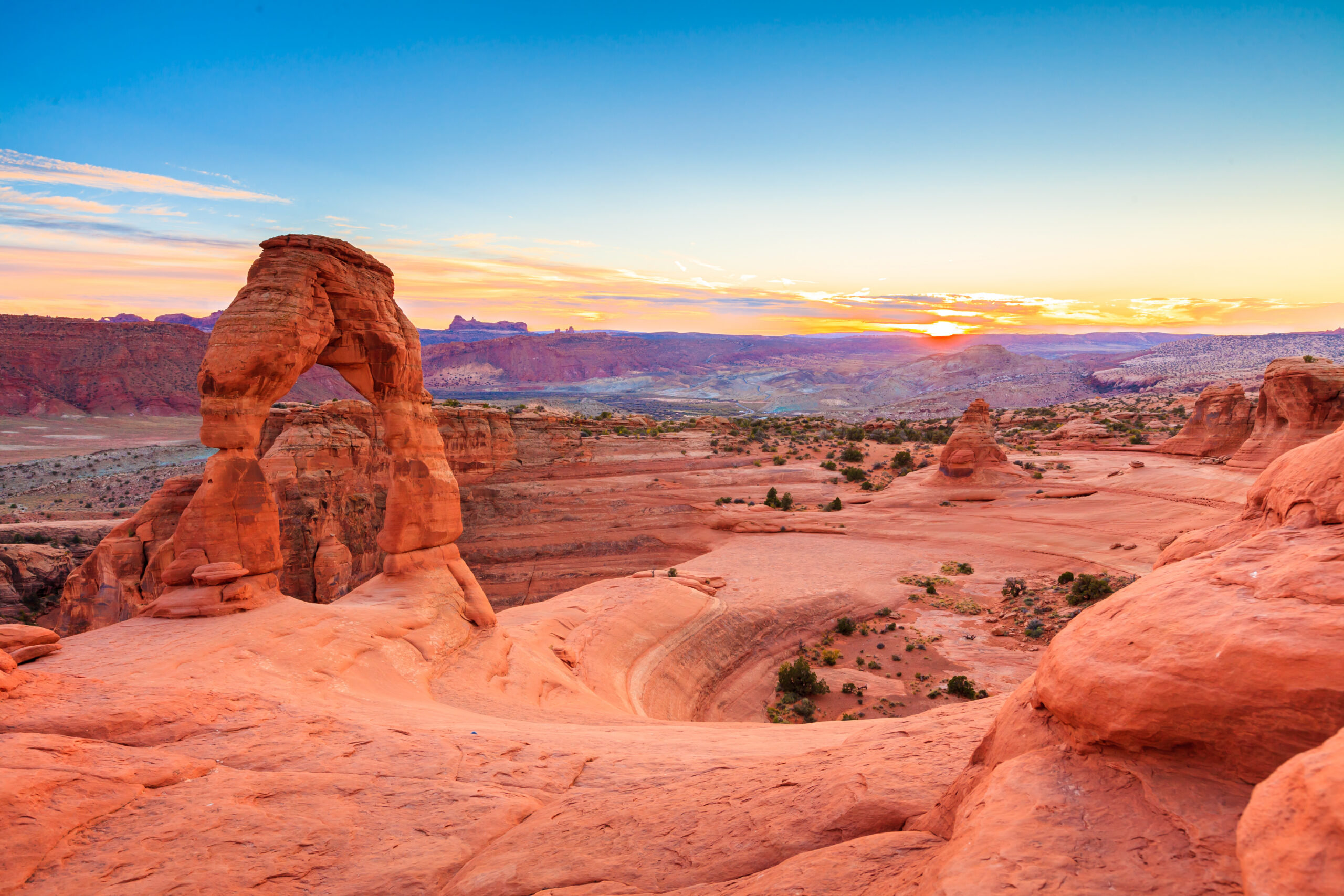
Delicate Arch is not difficult because of mileage. The slickrock slope, no shade and exposed ledge are what make summer timing unpleasant. NPS identifies fall as one of Arches’ temperate seasons, with average daytime highs roughly 60–80°F and lows around 30–50°F.
There is no drinking water at the trailhead. October is comfortable enough that hikers sometimes underestimate hydration because the air feels cool.
October rule: sunrise and sunset are visually attractive, but a normal daytime start is much more workable than it is in summer.
NPS Delicate Arch →Bright Angel → Havasupai Gardens
October is one of the strongest months to learn the Grand Canyon’s reverse-difficulty problem: descend while fresh, then climb back to the rim later. Havasupai Gardens is a better seasonal day objective than forcing a Colorado River turnaround.
Grand Canyon access changed repeatedly in 2026 after trail construction and flash flooding. The South Rim corridor to Havasupai Gardens has remained a core usable section in the current NPS updates, but water, bridges and canyon closures must be checked immediately before the hike.
October rule: use current NPS trail status—not an old route screenshot—to decide the turnaround.
Grand Canyon current hiking status →Angels Landing — Zion
October removes one of Zion’s biggest summer problems—heat—but not the route’s exposure or permit requirement. A permit is required for the chain section beyond Scout Lookout.
For fall 2026, the seasonal lottery covers September 1 through November 30, and Zion continues a day-before lottery. If you miss the permit, Scout Lookout still gives a substantial hike without entering the chain section.
October rule: apply for the permit, but build a non-permit Zion backup so the entire trip does not depend on one lottery.
Current Angels Landing permits →
The High Alps Are Closing While the Lower Walking Routes Are Getting Better.
October in Japan is not a Fuji-summit month. It is a transition from alpine hiking toward valley color, pilgrimage trails, historic roads and lower mountains.
Use Elevation to Decide What Kind of Japan Hike You Want.
JNTO describes October as one of Japan’s fairest outdoor months, with autumn leaves peaking in higher and more northern locations during the month.
Kamikochi → Myojin
Kamikochi is probably Japan’s best October hiking base because the scenery changes rather than simply ending. Early October emphasizes higher Hotaka color; mid-month brings stronger broadleaf color into the valley; late October can favor golden larch.
JNTO says Kamikochi is accessible from mid-April to mid-November and specifically calls out October as an autumn highlight. The easy valley path toward Myojin lets you use the season without pretending that every surrounding summit is still in summer hiking condition.
October rule: treat the valley as the guaranteed trip and any high summit as a separate weather-dependent decision.
JNTO Kamikochi →Kiso-Komagatake via Senjojiki
The Komagatake Ropeway creates unusually efficient access to high alpine terrain, but that convenience can hide how late the season actually is. JNTO’s hiking report puts the strongest hiking season from early July through early October and notes autumn grass from mid-September into early October.
The route from Senjojiki to Kiso-Komagatake is about eight kilometers and four hours in normal hiking conditions. A Hiking Notification Form is required at the ropeway gate or bus center.
October rule: this is an October 1–10 objective, not a blanket “October hike.” If snow, ice or a winter forecast arrives, the route has changed categories.
JNTO Kiso-Komagatake →Kumano Kodo Nakahechi
Kumano Kodo is the best October choice when the trip is about several days of walking rather than one summit. The routes are open year-round, and autumn takes humidity and heat out of the experience without forcing hikers onto high alpine terrain.
The Nakahechi is especially strong because villages, shrines, ryokan and onsen are part of the route rather than side trips. October’s main planning issue is lodging availability, not a mountain permit.
October rule: reserve the nights first; then build the walking stages around the rooms you can actually secure.
JNTO Japan hiking guide →Nakasendo: Magome → Tsumago
This is the October route for travelers who want fall walking without giving the entire Japan itinerary to the mountains. JNTO puts the classic Magome–Tsumago section around nine kilometers and roughly three hours.
The trail connects preserved post towns through forest and countryside, with bilingual signage and luggage forwarding available. It fits cleanly into a Tokyo–Nagoya–Kyoto journey.
October rule: use Nakasendo when the high Alps are no longer the right objective but you still want a real trail day.
JNTO Nakasendo →
When the Summit Season Ends, the Hiking Trip Does Not Have to End.
Japan and the Appalachians both work this way: as high terrain becomes colder, the strongest trail experience moves into valleys, forests and lower elevations rather than disappearing.
The Smokies Give October More Than One Peak-Color Week.
NPS says high-elevation color can start in September, color above 4,000 feet develops early to mid-October, and lower-to-mid elevations can be strongest from mid-October into early November.
Mount LeConte via Alum Cave
Alum Cave to LeConte crosses enough elevation that the hike can move through several versions of fall in one day. NPS lists the route at 10 miles round trip and warns about extreme crowding and limited trailhead parking.
A parking tag is required when parking in Great Smoky Mountains National Park for more than 15 minutes. The route can also develop ice in cold weather, especially later in the month.
October rule: start early for parking and use the actual summit forecast rather than Gatlinburg weather.
NPS Mount LeConte →Charlies Bunion
Charlies Bunion is an eight-mile Appalachian Trail day from Newfound Gap to an exposed rock viewpoint. It is a strong October choice because the route stays high enough to catch the earlier Smokies color wave.
NPS specifically notes that this is a high-elevation hike that can become dangerous in winter and extreme weather. Late October therefore deserves more caution than the valley foliage calendar suggests.
October rule: choose it for early/mid color; switch lower when frost, ice or cloud takes over the ridge.
NPS Charlies Bunion →Ramsey Cascades
Ramsey Cascades is the stronger late-month hard hike because the route spends more time in cove hardwood forest while climbing toward the park’s tallest waterfall. NPS lists it at eight miles with more than 2,000 feet of gain.
The trail grows rockier and steeper higher up and crosses multiple footlogs and streams. The waterfall itself should be viewed from below; NPS warns hikers not to climb around the top.
October rule: use it when high ridge color is fading but the forest is still entering its strongest phase.
NPS Ramsey Cascades →Porters Creek
Porters Creek ranks lower because it is not a major summit objective, but that is exactly why it can be one of the smarter late-October choices. The route stays in a lower forest system where the autumn wave arrives later.
NPS describes it as a moderate route that is typically less crowded than several of the park’s headline trails. Many hikers turn around at Fern Branch Falls about two miles in, creating an easy way to scale the day around weather and light.
October rule: when the high routes are brown, icy or packed with traffic, the lower forest may be the better autumn hike.
NPS Porters Creek →October Permit & Reservation Checklist
| Hike / region | Current planning issue | October move |
|---|---|---|
| Angels Landing | Permit required for chain section. | Use seasonal lottery if already planning; day-before lottery remains a backup. |
| Mount Monadnock | Day-use reservations highly recommended; capacity can fill. | Reserve before committing to a foliage weekend. |
| Great Smoky Mountains | Parking tag required when parked more than 15 minutes. | Buy tag before arriving; popular October parking fills early. |
| Grand Canyon | Trail and water status changed repeatedly in 2026. | Check current NPS Key Hiking Messages immediately before the hike. |
| Kiso-Komagatake | Hiking Notification Form required; normal hiking season ends early in month. | Treat as early-October only and recheck weather/route conditions. |
| Kumano Kodo | Small inns can fill; the trail itself is not the main bottleneck. | Reserve lodging before locking the walking stages. |
| Chesler Park / Delicate Arch | No ordinary day-hike permit, but water and parking remain practical constraints. | Carry full desert water and start before popular trailheads fill. |
Weather Traps That Break Good October Itineraries
Valley Fall Is Not Summit Fall
A foliage forecast is not a mountain forecast. Franconia Ridge can have freezing wind, cloud and ice while nearby valleys remain comfortable.
Cool Air Does Not Eliminate Desert Hydration
October makes long desert hikes better, but Canyonlands still tells hikers on Chesler Park to carry roughly one liter of water per person per hour.
Ropeway Access Can Hide Winter Conditions
Easy transport to 2,600 meters does not make a late-October alpine summit a normal hike. High routes can cross into winter while valley tourism continues.
Peak Color Is an Elevation Wave
Do not cancel a late-October Smokies trip because a high ridge has passed peak. Move lower and let the changing elevation band choose the trail.
Four October Hiking Trips Worth Building
Acadia + New Hampshire
Use Acadia as the foliage anchor and keep the White Mountains weather-dependent. If Franconia is dry and calm, hike high; if not, use Monadnock or lower New England trails.
Moab + Zion + Grand Canyon
Chesler Park, Delicate Arch, Angels Landing and a South Rim inner-canyon day form one of the strongest cool-season road trips in the U.S. Do not spend every day driving between parks; give each hiking system enough time.
Kamikochi + Nakasendo + Kumano
Start in the Japanese Alps while Kamikochi remains open, then move lower into the Kiso Valley and Kii Peninsula. This itinerary improves if the high mountains receive early snow because the lower walks remain the main plan.
Great Smoky Mountains
Use LeConte or Charlies Bunion when high elevations are still strong; then shift to Ramsey Cascades, Porters Creek or another lower forest route as the color descends.
October Hiking in the Global Summit Guide System
Best Hikes by Month
Compare October with September and November before locking the trip.
Open monthly calendar →Regional parentBest Hikes in the Southwest USA
Grand Canyon, Zion, Sedona, southern Utah, New Mexico and Nevada.
Explore Southwest →Regional parentBest Hikes in Japan
Kumano, Nakasendo, Kamikochi, Fuji and the Japanese Alps.
Explore Japan →Regional parentBest Hikes in Utah
Use the state guide for deeper Canyonlands, Arches, Zion and Bryce planning.
Explore Utah →Deep recovery 1Read a Topographic Map
Useful when October weather or closures force a route change away from the original plan.
Build navigation skill →Deep recovery 2Mountain Weather
Learn why a valley forecast can be misleading on exposed October ridges.
Improve weather checks →Deep recovery 3Fitness Standards
Use effort, gain and terrain—not foliage excitement—to choose the right route.
Check readiness →Adjacent monthBest Hikes in September
Move one month earlier for higher alpine routes, the Rockies, Alps and longer northern daylight.
Compare September →Sources to Recheck Before the October Trip
Acadia NPS + New Hampshire Foliage
Use Acadia for current trail/weather information and New Hampshire’s foliage tracker for the actual color progression rather than a fixed historical peak date.
Acadia fall info →NPS Trail & Permit Pages
Check Angels Landing permits, Canyonlands trail status, Arches conditions and Grand Canyon closures/water independently.
Zion permits →JNTO / National Parks of Japan
Use current seasonal guidance for Kamikochi, Central Alps access and lower walking routes before committing to an alpine objective.
Japan in October →Great Smoky Mountains NPS
The park’s fall-color page explains the elevation progression and current hiking pages provide trail, parking and weather notes.
Smokies fall color →Best Hikes in October FAQ
Where is the best hiking in October in the Northern Hemisphere?
Choose New England for fall foliage, the Southwest USA for cooler desert hiking, Japan for autumn valley and cultural walks, and the Southern Appalachians for a long foliage season that moves downhill through the month.
What is the best hike in October?
Chesler Park and the Joint Trail in Canyonlands is the best all-around October hiking day because cooler desert temperatures materially improve a long exposed route. If fall color is the main goal, Beehive Loop in Acadia is the stronger mid-October choice.
Is early or late October better for hiking?
Early October is better for northern and higher mountain routes such as Franconia Ridge and Kiso-Komagatake. Mid-October gives the strongest broad foliage overlap. Late October is better for the Southwest, lower Smokies, Kumano Kodo and Nakasendo.
Is October good for hiking in Utah?
Yes. Arches identifies mid-September through October as a temperate popular season with average daytime highs around 60–80°F and lows around 30–50°F. Canyonlands and Zion also become far more comfortable for long exposed hiking than in summer.
Is October good for hiking in Japan?
Yes, but elevation controls the answer. Kamikochi remains open through mid-November and transitions through several layers of autumn color. Kiso-Komagatake is an early-October objective because its normal hiking season is ending, while Kumano Kodo and Nakasendo improve deeper into the month.
Is October good for the Great Smoky Mountains?
Yes. It is also the park’s busiest month. Color begins at higher elevations and generally moves toward lower elevations through October, making it possible to change trails rather than chase one fixed peak-foliage date.
Which October hikes require permits or reservations?
Angels Landing requires a permit for the chain section. Mount Monadnock strongly recommends a day-use reservation because the park can reach capacity. Great Smoky Mountains requires a parking tag for parking longer than 15 minutes. Other access rules can change, so check the current land manager.
Should I hike Franconia Ridge in late October?
Only when the actual higher-summits forecast and trail conditions support normal hiking. Late October can bring freezing wind, snow and ice to exposed White Mountain ridges even when valleys remain in autumn.
Is Mount Fuji an October hike?
No in the normal summer-hiking sense. Fuji’s official climbing season ends in September. October Fuji is a different mountain environment and should not be treated as a continuation of the summer marked-route climb.
What should I pack differently for October?
Carry more layering range than in summer. Northern mountains can need gloves, insulation and traction contingency; deserts still demand substantial water and sun protection. The route’s elevation and exposure matter more than the month name.
Start High. Finish Low. Let the Month Move the Trip.
Early October belongs to the last normal high-mountain windows. Mid-October is the broad foliage sweet spot. Late October rewards lower forests, cultural walking routes and desert country. Build the trip around that seasonal movement and you do not need one perfect peak-foliage date to have a great October hiking trip.
Was this helpful?
Global Summit Guide is an independent mountaineering resource founded in 2026. The team combines first-hand trekking and climbing experience with in-depth research and professional health and nutrition review to help climbers choose objectives, prepare properly, and stay safe.
Health, altitude, and nutrition content is reviewed by Taylor Ludlow (Registered Nurse) and Brigg Hoopes (Nutritionist).
What We Don't Know Yet
Mountain information changes quickly. This box explains the limits of what this page can responsibly promise.
- Weather, snowpack, avalanche risk, road access, and route conditions can change quickly and may be different on your climbing dates.
- Route conditions, snowpack, closures, and weather can change quickly after this page is updated.
- Permit rules, fees, quotas, and reservation windows may change between review cycles.
- Operator availability, pricing, guide ratios, and cancellation terms can change by season.
- Your fitness, altitude response, risk tolerance, and experience level may change what is safe or realistic.
Verify current conditions with official land managers, guide services, local forecasts, and current route reports before booking or climbing.
Mountaineering, rock and ice climbing, glacier travel, and high-altitude activity are inherently dangerous and can result in serious injury or death. The information on Global Summit Guide is provided for general informational and educational purposes only and is not a substitute for professional instruction, qualified guiding, proper equipment, or your own judgment and experience.
Route conditions, weather, snowpack, permits, regulations, and hazards change constantly and may differ from what is described here. Details may be incomplete, out of date, or contain errors. Always verify current information with local authorities, certified guides, and official sources before making any decision in the mountains.
Nothing on this site is medical, legal, or financial advice. Our fitness, acclimatization, altitude, and nutrition content is general in nature; consult a qualified physician before beginning any strenuous exercise program or exposing yourself to high altitude.
You are solely responsible for your own safety and decisions. To the fullest extent permitted by law, Global Summit Guide and its team accept no liability for any loss, injury, damage, or expense arising from use of, or reliance on, this information. By using this site you acknowledge these risks and accept these terms.
Some links on this site may be affiliate links. If you buy through them we may earn a small commission at no extra cost to you; this never affects our recommendations.
Global Summit Guide recommendation path
Next Best Mountain to Research
Use these recommendations to continue the right planning path instead of stopping on one page.
Use current permit, weather, route, and operator information before booking or climbing.
Search Flights, Hotels & Rental Cars
Have the mountain or destination picked? Use Expedia to compare the flights, lodging and rental cars that fit your actual trip dates. For mountain travel, consider arriving early enough for delays and adding a buffer night after the climb before a fixed flight home.
Compare current flight, hotel and car options.
Affiliate disclosure: Global Summit Guide may earn a commission if you book through this link, at no additional cost to you.