
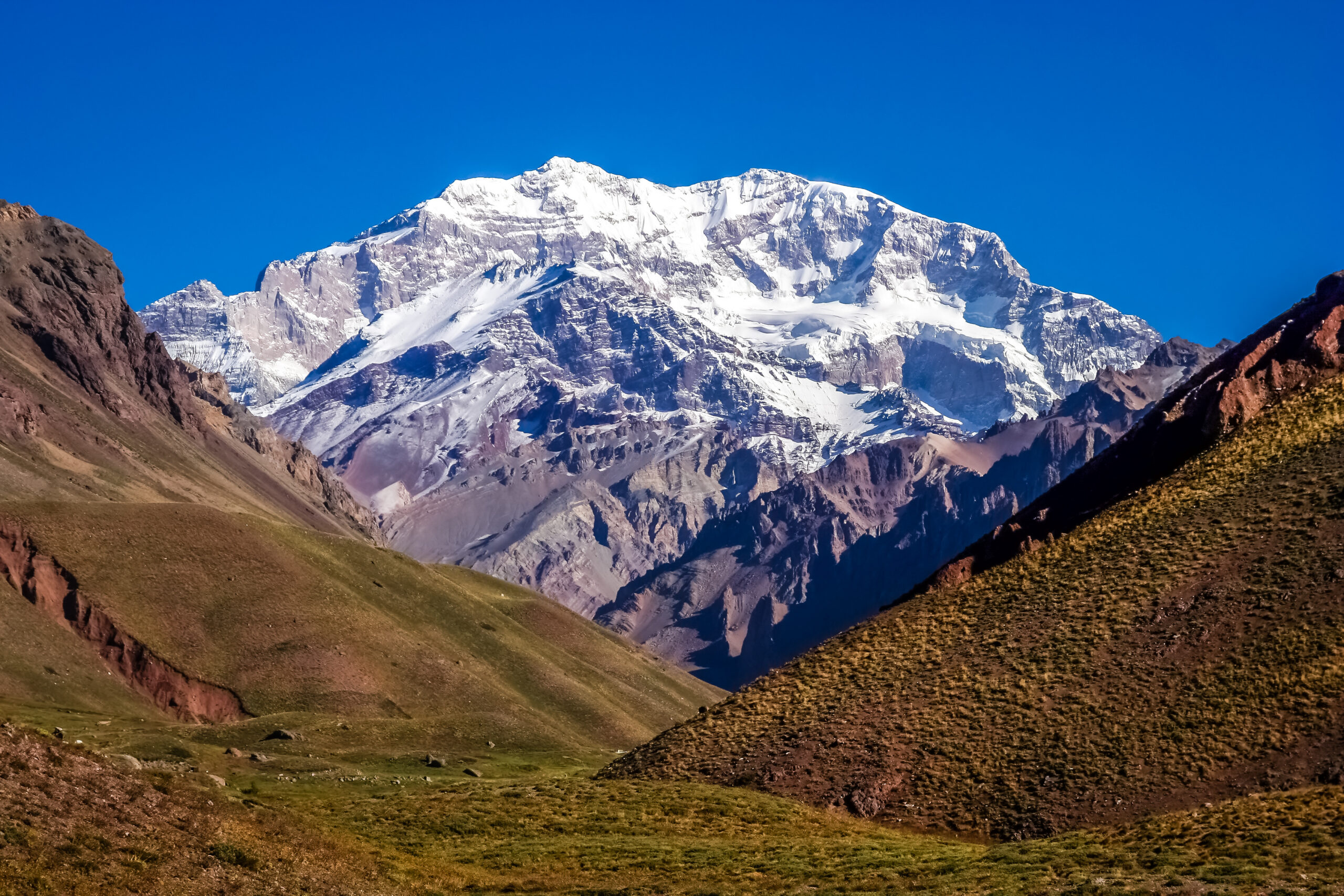
Aconcagua expedition update
Where Aconcagua stands this season, plus the Ruta Normal and its alternatives, the Mendoza permit rules, the Viento Blanco, and what the 30 to 40 percent summit rate really reflects. A single-mountain page in our Expedition Updates directory. Elevations in metres (feet).
Off-season now. The next window opens in December.
July is the austral winter in the Andes, so Aconcagua is off-season and no commercial expeditions are running. The climbing season is the austral summer, December to February, with January and February the peak months and some operators running into early March.
That makes this a planning page rather than a live-conditions one. If you are aiming at the 2026-27 season, now is the right time to be building fitness, booking an operator, and reading the permit rules.
Summit (22,838 ft)
The highest peak in the Americas, and the highest outside Asia.
Climbing season
Austral summer; off-season now, next window from December.
Summit rate
Driven by altitude, wind, and preparation rather than technical difficulty.
Aconcagua stands alone on the Andean crest in Mendoza Province, close enough to the road that people underestimate it and high enough that the mountain regularly corrects them. This page is the update view: where the peak sits in its calendar, the routes and camps, and the rules that shape a trip. For the full how-to on operators, gear, and itineraries, see our Aconcagua climb guide, and for the wider picture across ranges, the Expedition Updates dashboard.
Current status and next window
Where the mountain is today, and what to do about it.
Right now Aconcagua is out of season. The Southern Hemisphere winter brings deep cold and heavy wind to the high Andes, the park is outside its normal climbing season, and the operators who run the mountain are between years. The season opens as the austral summer arrives: December sees the first expeditions, January and February carry the bulk of the traffic and the best conditions, and a few trips run into early March before the window closes again. Because a full expedition runs 18 to 22 days, planning for the 2026-27 season means committing months ahead, both for operator places and for the training that decides whether you summit.
Routes and camps
One non-technical standard line, plus the quieter alternatives.
Ruta Normal (standard)
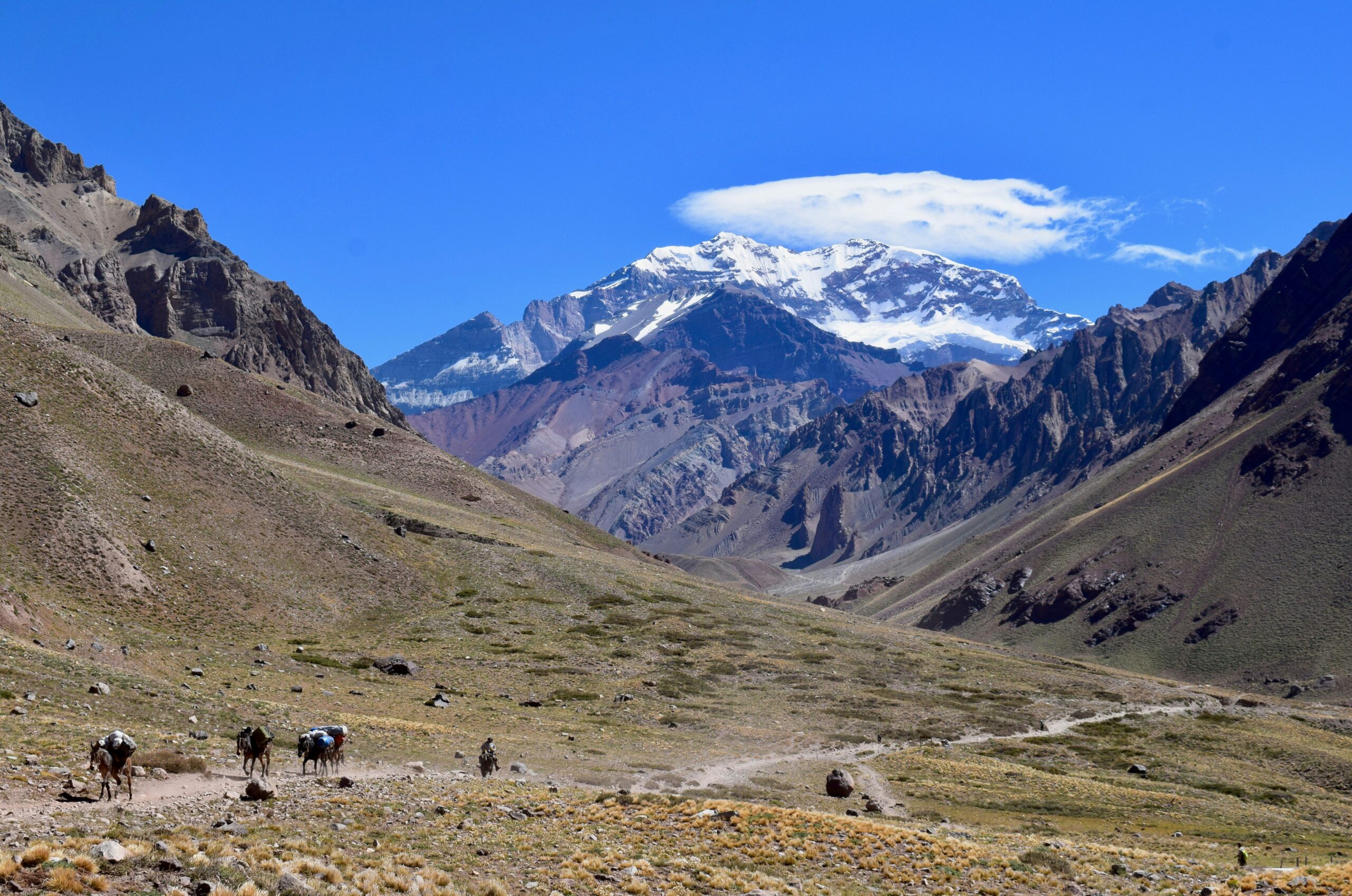
The classic line, approached through the Horcones valley to the Plaza de Mulas base camp at about 4,300 m (14,100 ft). From there teams work up through high camps in acclimatization rotations to Colera, then climb the long, punishing Canaleta to the summit ridge. No roped technical climbing is required, which is exactly why the peak is underestimated: the difficulty is altitude, wind, and endurance.
Polish Glacier and the 360 Traverse
The Polish Glacier route enters via the Vacas valley to the Plaza Argentina base camp on the eastern side, a longer and quieter approach. The 360 Traverse combines the two valleys, ascending one side and descending the other for a fuller circuit of the mountain. Both carry a different permit rate from the Ruta Normal. For the full breakdown, see the Aconcagua climb guide.
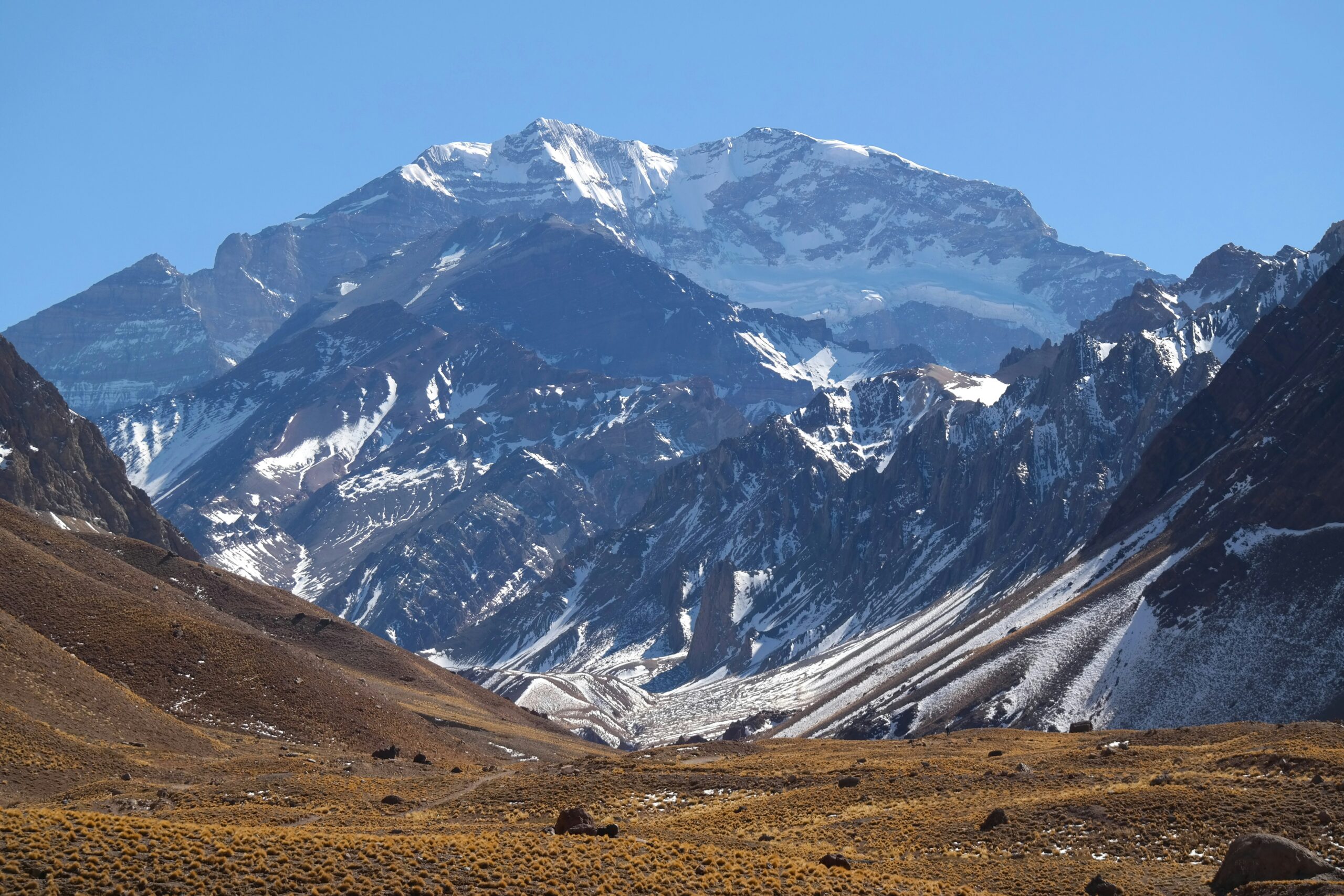
Weather and the Viento Blanco
The wind is the mountain’s defining hazard. Here is a live read.
Aconcagua sits high and isolated on the Andean crest, exposed to winds that arrive off the Pacific with nothing to slow them. The Viento Blanco, the white wind, is the local name for the violent storm that can strip a summit day out of an otherwise settled forecast, driving snow horizontally and dropping windchill to levels that end attempts within hours. Even in peak season, weather days are part of the itinerary rather than a contingency, and operators that build none into their schedule tend to report lower success. The live map below shows current wind and conditions for the massif; treat it as orientation, and rely on a dedicated expedition forecast in season.
For a fuller explanation of reading a mountain forecast, see mountain weather for climbers.
Permits and access
Issued by Mendoza Province, priced by season and route.
Every climber needs a permit from the Parque Provincial Aconcagua, issued by Mendoza Province and required to enter the park. It is mandatory, non-refundable, and priced by season, route, and nationality, with the high season commanding the top rate and unassisted climbers paying a surcharge over assisted ones. Rates are revised each year, and published figures vary between sources, so treat any number you read as indicative and confirm the current rate with the park before budgeting.
| Source | Reported high-season rate |
|---|---|
| Our Aconcagua permits guide (2026) | ~$1,170 assisted / ~$1,640 unassisted |
| Operator-reported figures | ~$800 to $1,000, higher on the Polish route |
| Permit validity | Around 20 days, enough for a full rotation schedule |
What the park expects
- Permit before entry – bought through the Mendoza system, priced by season and route.
- Minimum age and paperwork – climbers must be adults, with passport and any required medical documentation.
- Authorised operators – assisted climbers work through companies licensed to operate in the park.
- Rescue and conservation funding – the fee supports park facilities and the rescue service that covers the mountain.
For the full permit picture, see our Aconcagua permits and fees guide, and for what a trip really costs once flights, gear, and tips are counted, our honest cost breakdown.
What the summit rate reflects
Roughly a third to two-fifths of climbers top out. The reason matters.
Aconcagua’s overall summit rate sits around 30 to 40 percent, which surprises people who hear the Ruta Normal described as non-technical. The gap is not about difficulty of movement. It is about altitude and preparation: the summit stands at nearly 7,000 m, the Canaleta is a long grind on a body that has been at altitude for two weeks, and the wind can end a bid regardless of fitness. Compressed itineraries that cut acclimatization time correlate with lower success, so a cheap, short schedule is often a false economy. Climbers who arrive with prior high-altitude experience and a real training base do far better than the headline number suggests.
Aconcagua’s hazards are altitude illness, cold injury, and wind, not roped climbing. High-altitude cerebral and pulmonary oedema both occur here, and the descent from the Canaleta catches tired climbers. Build acclimatization time in, watch your team for symptoms, and be ready to go down. This page is not medical advice; check your risk with our AMS risk calculator and discuss altitude with a physician.
Aconcagua by the numbers
The context behind a season, from grounded records.
First ascent
Matthias Zurbriggen, January 14, on the FitzGerald expedition.
Days on a trip
Trek in, rotations, weather days, summit push, and descent.
South America
The continental high point, and a standard step before bigger peaks.
Aconcagua is the usual proving ground before Himalayan objectives, and the natural comparison is with the other big introductory peaks. Our Aconcagua vs Denali vs Elbrus guide weighs them side by side, and the best mountains in South America covers the wider range. For a Peruvian objective at similar altitude, see Huascaran.
Andes expedition updates
Aconcagua’s neighbours in the range, each with its own update page. Back to the full Expedition Updates dashboard.
Aconcagua update FAQ
The questions planners ask most about timing, permits, and difficulty.
When is the Aconcagua climbing season?
December to February, the austral summer, with January and February the peak months. Some operators run into early March. July sits in the austral winter, so the mountain is off-season now and no commercial expeditions run. The next window is the 2026-27 season.
How much is an Aconcagua permit?
The permit is issued by the Parque Provincial Aconcagua in Mendoza Province and varies by season, route, and nationality. Our own permits guide puts the 2026 high-season rates at about $1,170 assisted and $1,640 unassisted, with an unassisted surcharge, while some operator sources quote figures nearer $800 to $1,000. Rates change every season, so confirm the current figure at aconcagua.mendoza.gov.ar before budgeting.
What is the standard route on Aconcagua?
The Ruta Normal, which climbs from the Horcones valley to the Plaza de Mulas base camp at about 4,300 m (14,100 ft), then through high camps to Colera and up the Canaleta to the summit. The Polish Glacier route from the Vacas valley via Plaza Argentina and the 360 Traverse are the main alternatives.
How hard is Aconcagua?
The Ruta Normal is non-technical, with no roped climbing required, but it is very high and very windy. The overall summit rate sits around 30 to 40 percent, and that gap reflects preparation and altitude rather than technical difficulty. Long days, thin air above 6,000 m, and the Viento Blanco turn most people back.
How long does an Aconcagua expedition take?
Typically 18 to 22 days, including the trek in, acclimatization rotations between camps, weather days, and the descent. Compressed schedules that cut acclimatization time correlate with lower success rates, so treat a short itinerary as a warning sign rather than a bargain.
What is the current status of Aconcagua?
As of July the mountain is off-season in the austral winter, and the park is outside its normal climbing season. Planning now means targeting the 2026-27 window from December onward. Check this page and the park authority for the latest before you book.
📋 How this update is built
This page is compiled by Travis Ludlow, Founder and Head of Research at Global Summit Guide, from Parque Provincial Aconcagua information, operator reporting, and published records, with sources named below. It was reviewed for safety by Dawson Ludlow, our Climbing & Mountaineering Lead (Wilderness First Aid), whose highest first-hand summit is Kilimanjaro. Our team has no first-hand ascent of Aconcagua, so we report cited records rather than personal anecdote. Where sources disagree, as they do on current permit rates, we show the range and point you to the park authority.
Sources and further reading
- Parque Provincial Aconcagua, Mendoza Province – permits, park regulations, and season dates.
- Mendoza provincial park portal (aconcagua.mendoza.gov.ar) – official permit rates by season and route.
- Authorised Mendoza operators – expedition itineraries, service levels, and 2026 pricing.
- Published mountaineering records – the 1897 Zurbriggen first ascent on the FitzGerald expedition.
- Our own Aconcagua climb guide, permits guide, and cost breakdown for full detail.
- We report published figures and named sources rather than posting unverified live conditions.
Planning the 2026-27 season?
Start with the full Aconcagua climb guide, work through the progression plan, and read how to choose an expedition operator before you book, then compare teams in our operator directory. For flights and lodging around Mendoza, browse travel on Expedia.
Disclosure: the Expedia link above is a sponsored affiliate link. We may earn a commission at no extra cost to you.
Preseason Now. The 2026–27 Permit Tariff Is Still the Key Open Item.
Aconcagua remains outside its normal commercial climbing window in mid-September. Teams targeting the coming austral summer should be finalizing training, operator logistics, insurance and route choice—but should not treat last season’s permit prices as confirmed 2026–27 rates.
Mendoza’s most recent final tariff located for this review is the 2025–26 schedule. Global Summit Guide’s newer permit and parent pages correctly mark the next regular-season tariff as pending official publication. Until Mendoza issues the new decree, use last season only as a budgeting baseline.

Use 2025–26 as a Reference—Not as the 2026–27 Price.
Mendoza changes Aconcagua tariffs by season, route, nationality and assistance status. The exact coming-season matrix should be updated here only after the next official tariff is published.
| Last final official reference | Horcones / Normal Route | Vacas / 360 | 2026–27 status |
|---|---|---|---|
| International · with authorized assistance | US$1,170 | US$1,450 | Not yet confirmed for 2026–27 |
| International · without assistance | US$1,640 | US$2,000 | Not yet confirmed for 2026–27 |
| Permit validity | Last confirmed guidance: around 20 days for ascent permits | Reconfirm when the new season decree is published | |
What “Assisted” Means
The cheaper assisted rate historically depends on qualifying services from an authorized Mendoza provider. It does not necessarily mean a fully guided expedition. The exact qualifying-service rules should be reconfirmed for the new season rather than copied forward automatically.
What to Verify Before Paying
Confirm the season decree, your nationality category, entry valley, assistance status, permit validity, required insurance/medical documentation and the official booking/payment system. Use the dedicated Aconcagua permit guide for the live tariff once Mendoza publishes it.

What Should Be Confirmed Before This Page Switches to “In Season”?
An expedition-update page should change state only when dated evidence changes—not because the calendar merely gets closer to summer.

