
Nanga Parbat 2026 Season Wrap: Who Summited & What Happened
Nanga Parbat opened Pakistan’s 2026 summer 8,000-meter season with a crowded late-June summit window, then produced one of the year’s biggest ski-mountaineering stories. Andrzej Bargiel climbed and skied the mountain without supplemental oxygen, Liliya Ianovskaia set a women’s age record, Kili Pemba Sherpa completed all fourteen 8,000ers, and the season stayed alive into August through a serious new-route attempt on the Rupal Face.
What defined Nanga Parbat’s 2026 season?
The season was short, concentrated and unusually rich in distinct climbing stories. The supported Diamir Face / Kinshofer system carried the main commercial summit traffic. Contemporary reporting tied to Seven Summit Treks and 14 Peaks Expedition described more than 20 summiters on June 30, including the rope-fixing party and separate operator teams. Andrzej Bargiel summited the same day and completed a first full ski descent without supplemental oxygen.
On July 1, 8K Expeditions reported two more summit groups. Liliya Ianovskaia, age 66 according to her own expedition record, became the oldest woman reported to have summited Nanga Parbat. On July 3, Imagine Nepal’s Kili Pemba Sherpa reached the top with Lakpa Chhiri Sherpa and Wang Zhong, completing all fourteen 8,000-meter peaks.
The commercial season then faded quickly, but Nanga Parbat was not finished. Marek Holeček and Tomáš Petreček spent July acclimatizing for a new alpine-style line on the Rupal Face. Their August attempt encountered dangerous avalanche, rockfall and melt conditions, and both ultimately abandoned the project.
Nanga Parbat 2026 Timeline
Use the filters to isolate summit activity, ski history, records or the late alpine-style Rupal project.
Route fixers reach the summit and the main Diamir window opens
Reporting based on Seven Summit Treks’ expedition update named Mingtemba Sherpa, Pasang Dukpa Sherpa, Dawa Rinji Sherpa and two climbers named Pasang Nurbu Sherpa among the rope-fixing team that reached the summit before the larger supported groups followed.
Evidence: organizer-linked reporting published June 30.Seven Summit Treks and 14 Peaks put large groups on top
The Tourism Times, citing Chhang Dawa Sherpa and Tashi Lakpa Sherpa, reported more than 20 climbers reaching Nanga Parbat during the opening wave. The named parties included Seven Summit Treks clients and guides plus an 11-person 14 Peaks group. This is the largest omission in the earlier version of this season wrap.
Evidence: contemporaneous operator-linked report; named groups reproduced in the ledger below.Andrzej Bargiel summits and skis the Messner Route
Bargiel reached the summit with Janusz Gołąb after starting the final push from around 6,850 meters. He then skied more than 3,700 vertical meters down the Messner Route on the Diamir side without supplemental oxygen, completing the first continuous full ski descent attributed to Nanga Parbat.
Evidence: Bargiel/Red Bull reporting and ExplorersWeb.8K teams add a second major summit day
8K Expeditions published separate summit updates for an international summer team and a Japanese-led group. Liliya Ianovskaia’s own record lists a 6:50 a.m. summit at age 66, making her the oldest woman reported to have reached Nanga Parbat’s summit. Naoko Watanabe led a separate six-person 8K summit party.
Evidence: 8K Expeditions plus Ianovskaia’s own expedition record.Kili Pemba Sherpa completes all fourteen 8,000ers
Imagine Nepal reported Kili Pemba Sherpa on the summit at 10:42 a.m. Pakistan time with Lakpa Chhiri Sherpa and Chinese climber Wang Zhong. Nanga Parbat became the final mountain in Kili Pemba’s fourteen-peak set.
Evidence: Imagine Nepal; corroborated by Nepalese reporting.Holeček and Petreček acclimatize for the Rupal Face
The Czech pair moved to the south side with a new-route objective. They acclimatized on neighboring Rakhiot Peak and prepared for an alpine-style attempt with no routine commercial fixed-rope system or high-camp infrastructure.
Evidence: climber dispatches and ExplorersWeb.The new Rupal line proves too unstable
The pair entered the face via a snow gully and rocky terrain, but continuing avalanche activity, wet conditions and rock movement made the chosen line untenable. They retreated and briefly discussed another attempt on a different line.
Evidence: ExplorersWeb, August 5.Petreček stops; Holeček also decides against a solo continuation
Petreček announced he would not return to the face in 2026. Holeček considered continuing alone, but later accounts say he also concluded that he lacked the margin and internal commitment needed for a solo attempt. The expedition ended without a new route.
Evidence: ExplorersWeb August 6; later Czech/European reporting August 7–17.Who Summited Nanga Parbat in 2026?
This ledger separates operator reports instead of collapsing them into one unverified total. Search by climber, operator or date.
| Date | Team / project | Named summiters in public report | Why it matters | Evidence status |
|---|---|---|---|---|
| June 30 | Seven Summit Treks · fixing team | Mingtemba Sherpa (Mote); Pasang Dukpa Sherpa; Dawa Rinji Sherpa; Pasang Nurbu Sherpa (Makpa); Pasang Nurbu Sherpa | Opened the supported route to the summit for the season. | Organizer-linked |
| June 30 | Seven Summit Treks · expedition group | Tao Hu; Antonina Samoilova; Mindaugas Satkauskas; Dawa Sherpa (Italian Dawa); Dendi Sherpa; Lakpa Temba Sherpa; Abbas Ali Mehdi | Part of Pakistan’s first reported 8,000 m summit wave of summer 2026. | Named report |
| June 30 | 14 Peaks Expedition | Anni Katri Penttila; Ian Fraser; Rebecca Long; Alexander Joseph Hansen; Benjamin Edward Lieber; Phurbu Kusang Sherpa; Pasang Nurbu Sherpa; Dorchi Sherpa; Kusang Sherpa; Serjangbu Sherpa; Mehboob Ali | Separate 11-person group missing from the earlier season-wrap ledger. | Operator-linked |
| June 30 | Bargiel ski project | Andrzej Bargiel; Janusz Gołąb | Bargiel’s summit led directly into the historic ski descent. | First-party + specialist |
| July 1 | 8K Expeditions · international summer team | Liliya Ianovskaia; Iryna Karagan; Pavlo Sydrenko; Danylo Yasnyuk; Dawa Ongju Sherpa; Dawa Nupu Sherpa; Muhammad Ali; Ilyas | Included Ianovskaia’s oldest-woman record. | Team / climber record |
| July 1 | 8K Expeditions · Japanese-led group | Naoko Watanabe; Pechhumbe Sherpa; Keizo Konishi; Pasdawa Sherpa; Saori Eragaki; Mingma Dorchi Sherpa | Separate six-person summit update published by 8K Expeditions. | Operator report |
| July 3 | Imagine Nepal | Kili Pemba Sherpa; Lakpa Chhiri Sherpa; Wang Zhong | Kili Pemba completed all fourteen 8,000 m peaks. | Operator report |
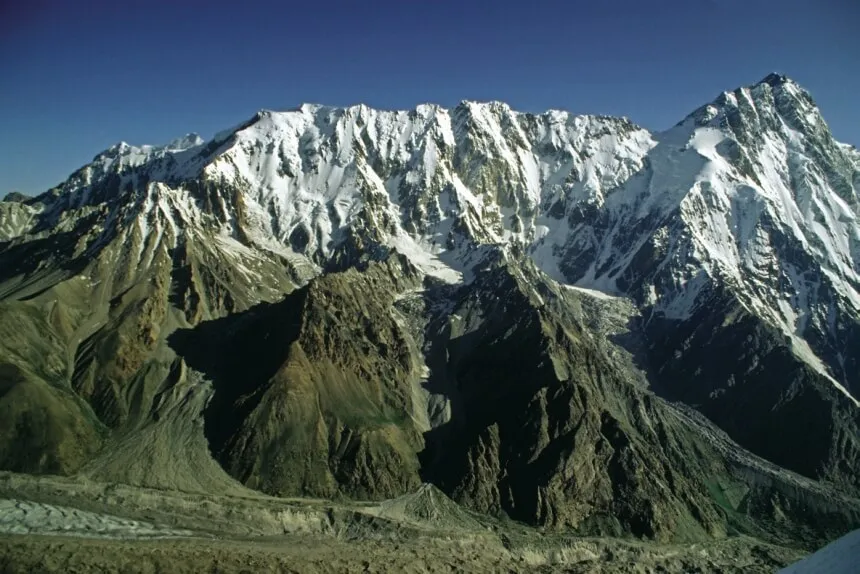
Bargiel’s ski descent was more than a summit with skis attached.
Andrzej Bargiel climbed Nanga Parbat without supplemental oxygen, reached the summit with Janusz Gołąb, clicked into his skis and descended the Messner Route on the Diamir side. His own account put the ski line at more than 3,700 vertical meters. Red Bull described it as the first continuous summit-to-snowline descent; Bargiel described skiing all the way to Base Camp. The language differs slightly, but the core event is consistent across the primary and specialist reporting: the first full continuous ski descent credited to Nanga Parbat.
How the Nanga Parbat ski project worked
The descent should be understood as its own route-and-snow problem, not simply as a faster version of the commercial Kinshofer descent.
Bargiel used the Diamir side and the route associated with Reinhold Messner’s 1978 solo ascent rather than treating the Kinshofer fixed-line corridor as the ski objective.
ExplorersWeb reported that Bargiel and Gołąb did not establish a Camp 4 for the final push; they left from Camp 3 for the summit.
The ascent and descent were completed without bottled oxygen, adding a major physiological demand to the skiing and route-reading problem.
Bargiel’s own account states that he skied more than 3,700 vertical meters via the Messner Route, completing his ski project on all five Pakistani 8,000ers.
A full ski descent has a stricter meaning than “skied on the mountain.”
High-altitude ski history is full of descents interrupted by rappels, long downclimbs, bare-rock carries or route discontinuities. The 2026 claim is specifically about linking the summit to the lower snow system in one continuous ski descent. That is why sources emphasize “continuous” and “full,” not just “first skier on Nanga Parbat.”
Nanga Parbat completed Bargiel’s Pakistani 8,000er ski set.
His previous Pakistani ski descents included Broad Peak, K2, Gasherbrum I and Gasherbrum II. Nanga Parbat closed that five-peak project. It is a different achievement from climbing all five: the line has to be suitable for skiing, connected, and timed to snow conditions that may not match the best conditions for climbers on fixed ropes.
Records and Milestones from 2026
The most useful season summary separates genuine 2026 milestones from impressive resumés that pre-dated the Nanga Parbat ascent.
Andrzej Bargiel
First full continuous ski descent of Nanga Parbat, completed June 30 without supplemental oxygen via the Messner Route. The descent also completed his project to ski all five of Pakistan’s 8,000-meter peaks.
Liliya Ianovskaia
Reached the summit July 1. Her own expedition record states she was 66, making her the oldest woman reported to have summited Nanga Parbat. Some secondary reporting called her 67; the first-party record is the cleaner age source.
Kili Pemba Sherpa
Summited July 3 with Lakpa Chhiri Sherpa and Wang Zhong, making Nanga Parbat the final mountain in his set of all fourteen 8,000ers.
Mindaugas Satkauskas
Lithuanian reporting identified Satkauskas’ June 30 summit as the first Lithuanian ascent of Nanga Parbat. This is a national record claim rather than a mountain-wide world record.
Naoko Watanabe
Watanabe led an 8K Expeditions summit party on July 1. Her larger record résumé—including completing all fourteen 8,000ers and multiple K2 summits—was established independently of this Nanga Parbat season, so it should not be recast as a new 2026 Nanga record.
Pakistan’s first 8,000 m wave
Nanga Parbat delivered the first major successful 8,000-meter summit activity reported in Pakistan’s 2026 summer season, before the later campaigns on K2, Broad Peak and the Gasherbrums developed.
Why some reports say June 30 and others imply July 2
Season-wrap pages get better when conflicting contemporary reports are preserved rather than silently harmonized.
The organizer-linked reporting is specific.
The Tourism Times published on June 30 and attributed the summit information directly to Seven Summit Treks expedition director Chhang Dawa Sherpa and 14 Peaks owner Tashi Lakpa Sherpa. Everest Chronicle also dated the SST success to Tuesday, June 30. Bargiel’s own summit and ski descent is independently fixed to June 30.
For the season chronology, June 30 is therefore the strongest date for the opening commercial wave.
Dawn and Pakistan Today described a Thursday summit.
Articles dated Friday, July 3 described the Seven Summit Treks group as having summited “on Thursday,” which would mean July 2. Those stories name the same seven-person SST party seen in the June 30 reports.
Rather than invent a second ascent for the same named team, this rebuild treats the later weekday reference as a reporting discrepancy and keeps it visible in the source record.
Diamir and Rupal were different sports in 2026
The commercial summit wave and the late new-route attempt shared a mountain, but almost nothing else about their operating systems was the same.
Home of the supported Kinshofer route system and the concentrated June–July summit traffic. Multiple operators shared seasonal route work, high camps and fixed-rope infrastructure.
Bargiel’s ski project used the route associated with Reinhold Messner’s 1978 solo ascent. It belonged to the Diamir side but was not simply a skier following the commercial fixed-line descent.
A roughly 4,600-meter wall with no routine commercial system. Holeček and Petreček approached it as an alpine-style new-route problem requiring self-contained movement, sustained stability and a very different retreat calculus.
| 2026 factor | Diamir / supported season | Rupal / Holeček–Petreček project |
|---|---|---|
| Primary objective | Summit via established Kinshofer route system | Open a new alpine-style route |
| Infrastructure | Seasonal fixing, camps, operator support | No routine commercial fixed-line system |
| Window required | Enough stability for a coordinated summit push | Longer, more committing stability for an unknown line and retreat |
| Main 2026 outcome | Multiple successful summit parties | Retreat; no new route |
| Useful lesson | A shared opening can move many teams quickly | Objective conditions can end a technically possible project before the crux is reached |
For the full face-by-face route analysis, use the Nanga Parbat route comparison. For camp structure and individual route history, see the Nanga Parbat routes guide.
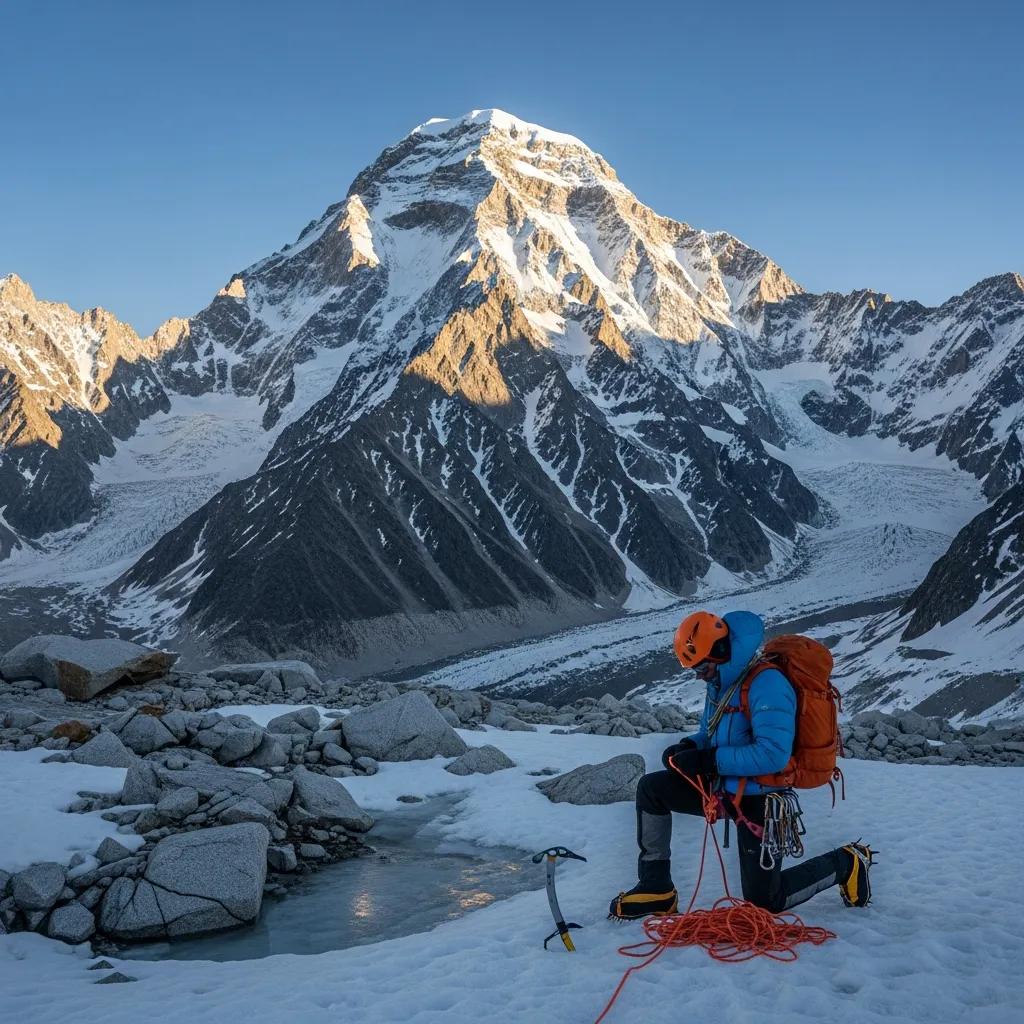
The season did not end when the summit traffic stopped.
Marek Holeček and Tomáš Petreček kept Nanga Parbat active well into August with an alpine-style attempt on the Rupal Face. They had tried the face together before, including a 2018 effort that reached high on the mountain. In 2026 they returned looking for a new line, but the lower face repeatedly showed how quickly a huge mixed wall can become unreasonable when snow, meltwater, avalanches and rock movement interact.
What happened to the new-route project?
The key story was not failure to solve a technical crux. The team decided the objective hazard had removed the margin before the main route could develop.
Rakhiot Peak gave the pair high-altitude preparation.
Before committing to the Rupal Face, Holeček and Petreček acclimatized on neighboring Rakhiot Peak, including high nights. The goal was to arrive at the wall ready for a single-push alpine-style attempt rather than spend weeks building a commercial camp chain.
The planned line broke down low on the face.
ExplorersWeb reported that the pair began through a snow gully and rocky terrain, bivouacked around 4,600 meters and then tried to progress through snow ramps toward a couloir. Avalanche activity and unstable conditions forced them out before they could commit to the upper wall.
Petreček chose not to return.
On August 6, Petreček publicly said he would not look at the Rupal Face again that year. His decision was framed around cumulative risk rather than the belief that the mountain was literally unclimbable.
Holeček considered soloing, then also stopped.
Later reporting says Holeček briefly considered a solo continuation but concluded that the project no longer justified the commitment. By August 7, the expedition was effectively over. There was no new route and no summit from the Rupal project.
Six lessons worth carrying forward
A season retrospective earns its place when it separates repeatable planning lessons from one-off headlines.
Many summits can happen in a very short opening.
The major documented success was compressed into June 30 through July 3. Teams that had finished rotations and were positioned for the opening could move; a climber who arrived late or recovered slowly had little spare calendar.
Fixing can shape the entire commercial season.
The opening summiters included the fixing team itself. On a route like Kinshofer, who fixes, when the upper line is opened and how shared infrastructure is managed are not background logistics—they directly affect who can use the window.
The same mountain can require completely different systems.
A supported Kinshofer expedition, Bargiel’s ski project and a Rupal new-route attempt cannot be compared as if they were three versions of one itinerary. Each depended on different skills, weather needs and retreat options.
A ski objective needs continuity as well as stability.
Bargiel had to solve both the ascent and a connected descent line. Snow that is acceptable for crampon movement can still be wrong for high-consequence skiing, and a route break that a climber can rappel may end a “continuous descent” claim.
Operator lists are useful, but they are not a single database.
The 2026 evidence is rich enough to identify the major parties and records, but not clean enough to publish a supposedly exact unique-person total without a formal reconciliation of duplicated support staff, spellings and late confirmations.
The Rupal decision belongs beside the summit records.
Holeček and Petreček did not add a new line to the mountain, but their retreat documents the other half of expedition alpinism: deciding that a theoretically possible route no longer offers an acceptable margin.
What should a 2027 Nanga Parbat climber take from 2026?
Not a prediction of next year’s conditions—rather, a short list of questions the 2026 season proved were worth asking.
Ask who carries the route-opening responsibility.
- Who is expected to fix the Kinshofer system?
- Which operator staffs the fixing team?
- How are rope fees and shared infrastructure handled?
- What high-camp support is actually included?
- How many clients share each high-altitude guide?
Build enough margin to use a short opening.
- When does the team expect to reach Base Camp?
- What acclimatization will be completed before Pakistan?
- How many rotation days are built in?
- How much recovery time remains before the likely window?
- What triggers a no-go decision if the mountain warms or loads with snow?
Primary and specialist sources behind the season record
The source list is deliberately event-specific. A sponsor release can be useful for a ski project’s details; an operator dispatch is useful for its own summit list; specialist reporting is useful for independent context.
Nanga Parbat 2026 Season FAQ
Answers reflect the reconciled public record checked through September 4, 2026.
Who summited Nanga Parbat in 2026?
Several distinct parties summited between June 30 and July 3. The strongest public lists come from Seven Summit Treks, 14 Peaks Expedition, 8K Expeditions, Imagine Nepal and Andrzej Bargiel’s project. Because operator reports can overlap in support roles and name spellings, the summit ledger above is safer than publishing one supposedly exact final unique-person total.
Did Andrzej Bargiel ski Nanga Parbat from the summit?
Yes. Bargiel reached the summit on June 30 without supplemental oxygen and completed what his team and specialist reporting describe as the first full continuous ski descent of Nanga Parbat. He used the Messner Route on the Diamir side and reported more than 3,700 vertical meters of skiing.
Did Bargiel use supplemental oxygen?
No. His 2026 Nanga Parbat ascent and ski descent were completed without bottled oxygen.
What record did Liliya Ianovskaia set?
Ianovskaia summited on July 1 and was reported as the oldest woman to summit Nanga Parbat. Her own expedition record lists her age as 66. Some secondary reports said 67, so this page uses the first-party figure and notes the discrepancy.
Did Kili Pemba Sherpa complete all fourteen 8,000ers on Nanga Parbat?
Yes. Imagine Nepal reported that Kili Pemba Sherpa reached Nanga Parbat’s summit on July 3 with Lakpa Chhiri Sherpa and Wang Zhong, completing his set of all fourteen 8,000-meter mountains.
Was the main 2026 route the Kinshofer Route?
Yes for the supported commercial season. The Kinshofer route system on the Diamir Face carried the main fixed-rope and high-camp infrastructure. Bargiel’s ski project used the Messner Route on the same broad face, while Holeček and Petreček’s August project was on the Rupal Face.
Was a new route completed on the Rupal Face in 2026?
No. Marek Holeček and Tomáš Petreček attempted a new alpine-style route, but dangerous avalanche, rockfall and melt conditions forced a retreat. Petreček ended his participation on August 6, and Holeček also decided against continuing solo.
Is Nanga Parbat in the Karakoram?
No. Nanga Parbat is part of the western Himalaya. It is often grouped with K2, Broad Peak and the Gasherbrums in Pakistan summer-season reporting because those are the country’s five 8,000-meter peaks.
Why do some reports date the first summit wave differently?
Organizer-linked reports published June 30 say the Seven Summit Treks and 14 Peaks groups summited that morning. Later newspaper stories dated July 3 describe the same named SST party as summiting “on Thursday,” which would imply July 2. This page keeps June 30 as the stronger timestamp and discloses the later conflict rather than creating a second event for the same team.
A short summit window, a major ski first and a long tail of serious alpinism.
Nanga Parbat’s 2026 story was not simply how many people stood on top. The season compressed large supported teams into a few days, produced a first continuous ski descent, closed one climber’s fourteen-peak quest, set a women’s age record and ended with two elite alpinists deciding that the Rupal Face no longer offered enough margin to continue.
Open the Nanga Parbat Climb GuideNanga Parbat: The Killer Mountain in Full Context
The 2026 season wrap is one snapshot. See the full Nanga Parbat guide, its risk profile, and how it sits among the eight-thousanders below.