web analytics

Tag: Denali National Park

  • Mount Foraker Expedition Update 2026: Sultana, Denali’s Wife & the Sultana Ridge

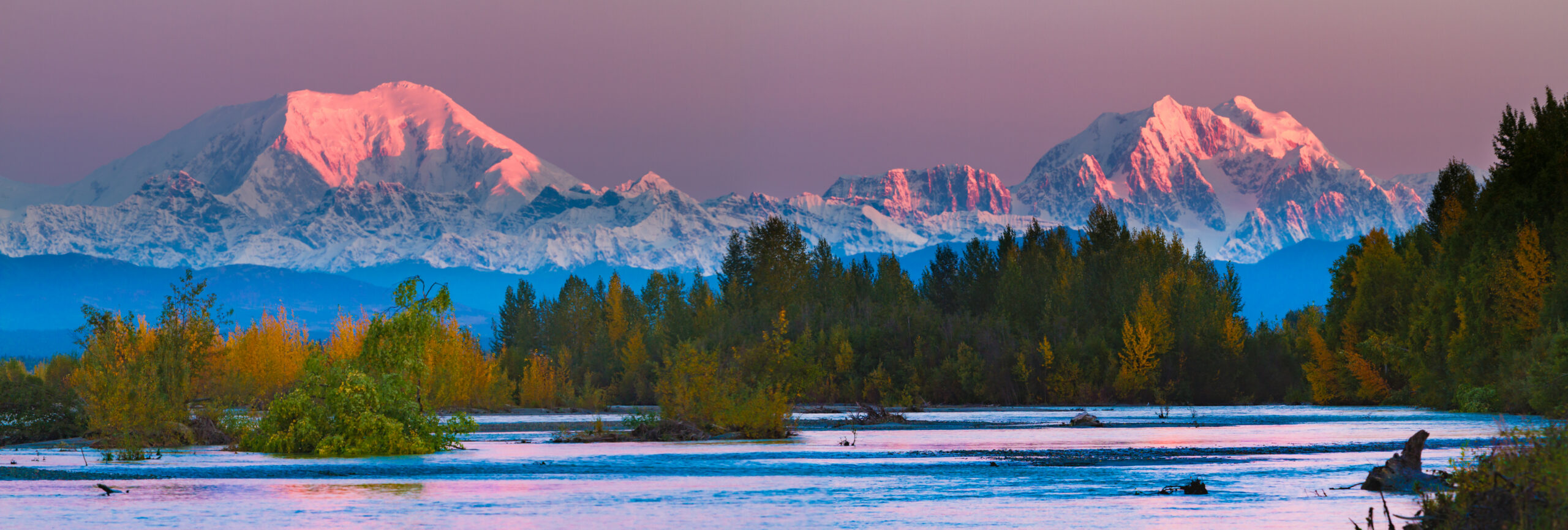
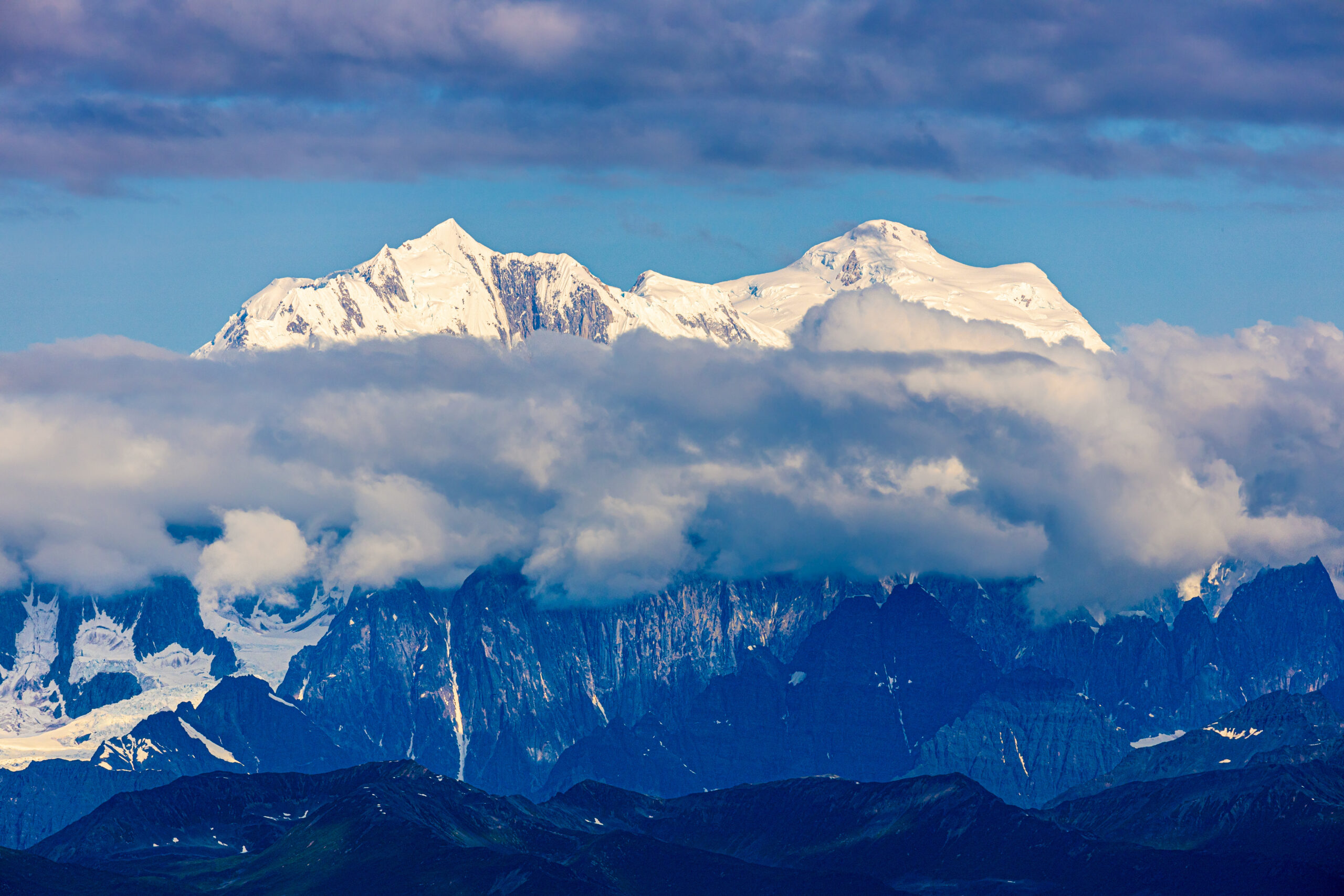
    Mount Foraker, Sultana, rising above the Kahiltna Glacier in the Alaska Range
    17,400 ft (5,304 m) · Alaska Range · Denali National Park

    Mount Foraker: Sultana, Denali’s Wife, and the range’s overshadowed giant

    Foraker is the second-highest peak in the Alaska Range and the third-highest in the United States, yet it stands in Denali’s shadow and is climbed by very few. Its Dena’ina name, Sultana, means the woman; it is Denali’s Wife. This update covers the committing Sultana Ridge, the permit rules that do apply here, and an honest readiness view. Heights in feet (metres).

    Research-based updateSafety and medical reviewReviewed each Alaska Range seasonOur team has not climbed Foraker

    Updated 27 July 2026 · Compiled by Travis Ludlow · Safety review by Dawson Ludlow · Medical review by Taylor Ludlow, RN

    17,400 ftSummit (5,304 m)
    2ndIn the Alaska Range
    3rdHighest in the US
    Sultana RidgeStandard (AK Grade 3)
    May-JunSeason
    KahiltnaBase glacier

    Single-mountain expedition update, compiled from National Park Service registration rules, operator route information, and published alpine records. Our team has not climbed Mount Foraker; the only first-hand summit anyone on our team claims is Kilimanjaro. This is a planning briefing for experienced expedition climbers, not a how-to and not a substitute for training or a guide.

    The range’s second giant, in the shadow of the first.

    Foraker is the second-highest peak in the Alaska Range and third-highest in the US, but almost everyone drawn to the Kahiltna goes for Denali instead. Its standard route, the Sultana Ridge, is a long, corniced, committing climb with no easy way up, staged from the same glacier as Denali but with none of the crowds or support. It is a serious, quiet mountaineer’s peak.

    • Second-highest in the Alaska Range; third in the US.
    • Sultana, the woman; Denali’s Wife.
    • Standard route: the corniced Sultana Ridge.
    • The Denali permit rules do apply here.
    • Rarely climbed; fully self-supported.
    The mountain

    What Foraker involves

    A committing, self-supported alpine expedition on a big, quiet peak, staged from Denali’s own glacier.

    Mount Foraker rises to 17,400 ft about 14 miles southwest of Denali, above the Kahiltna Glacier, the second-highest peak in the Alaska Range and the third-highest in the United States. Climbers reach it the same way they reach Denali, by ski-plane from Talkeetna onto the Kahiltna, but there the similarity ends. Foraker has no trade route, no fixed lines, and no crowd: its standard line, the Sultana Ridge, is a long, corniced, committing climb around Alaska Grade 3.

    Because it is overshadowed by its taller neighbour, Foraker sees only a handful of parties a year, and fewer summits. That quiet is part of its appeal and part of its seriousness: a team is truly on its own, negotiating miles of corniced ridge and long weather holds without support. For the full route, registration, and cost detail, see our Mount Foraker climb guide.

    Sultana

    Denali’s Wife, and the family of three

    The Dena’ina names for these peaks tell a family story, and Foraker is its quiet, powerful centre.

    In Dena’ina, Denali is the high one, the great parent of the range. Foraker is Sultana, the woman, also called Menlale, Denali’s Wife. Mount Hunter is Begguya, Denali’s Child. The three stand together above the Kahiltna Glacier, a family of peaks, and Foraker is the second-tallest of them, a giant in its own right that happens to live beside a larger one. We cover the others in our Denali and Hunter updates.

    The English name came in 1899, when the mountain was named for an Ohio senator, Joseph Foraker, who never saw it. Among the ancient names of the range it is the newcomer, and many climbers prefer Sultana, which fits a peak so closely bound to its towering partner.
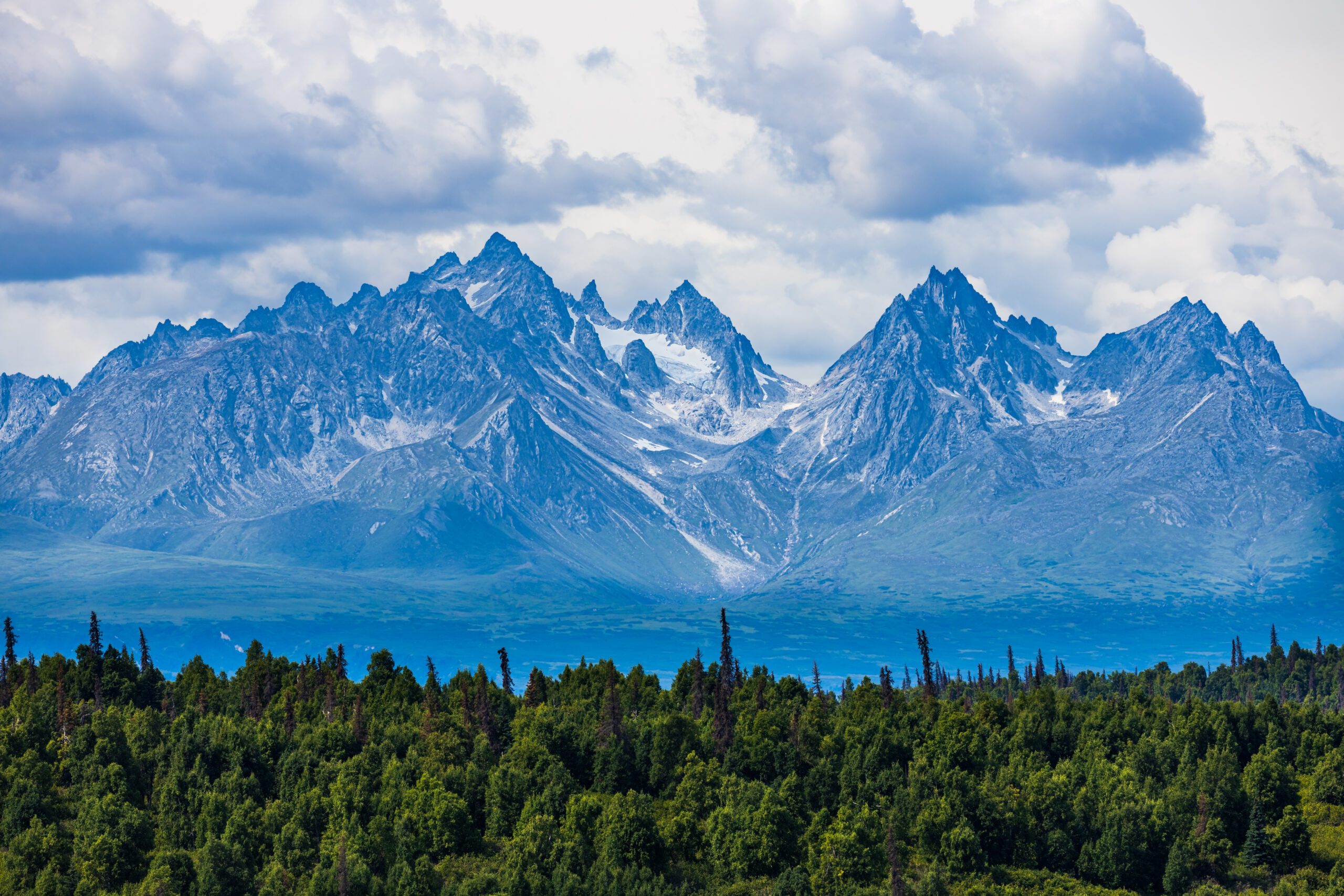
    Mount Foraker and the Alaska Range under a broad glaciated sky

    Second-highest, and almost alone

    For the second-tallest peak in the Alaska Range, Foraker is strikingly empty. The crowds and the infrastructure gather on Denali, next door, while Sultana keeps its long corniced ridges and its silence. That is exactly why experienced expedition climbers seek it out, and exactly why it demands so much of them.

    Honest self-assessment

    Are you ready for Foraker?

    Foraker is not a first big mountain. It rewards fully self-reliant expedition teams. These are the prerequisites.

    Glacier and alpine skill

    Rope, Ice, Cornice

    You must be fluent on crevassed glaciers and steep, corniced snow and ice. This is a real alpine climb, not a walk-up.

    Evidence: prior glaciated alpine routes.
    Expedition self-support

    No Trade-Route Help

    Foraker has no fixed lines, ranger camps, or crowds. Your team hauls, camps, and solves everything itself.

    Evidence: prior self-supported expeditions.
    Cornice judgment

    Read The Ridge

    The Sultana Ridge is long and heavily corniced. Knowing where it is safe to move is a survival skill.

    Evidence: sound calls on corniced terrain.
    Storm endurance

    Wait It Out

    Alaska Range weather forces long holds. You need the supplies and patience to sit safely for days.

    Evidence: prior storm-bound expeditions.
    RequirementBaselineWhy it matters
    Alpine competenceFluent on glaciers and corniced ridgesThe route is long, exposed, and objectively hazardous.
    Expedition experiencePrior self-supported big-range tripsNo infrastructure exists; the team provides everything.
    Cornice judgmentComfortable on heavily corniced groundThe Sultana Ridge crest is long and exposed.
    Fitness and haulingStrong for a committing multi-day climbThe approach and ridge demand endurance under load.
    Storm readinessSupplies and craft for long holdsWeather holds of days are normal in the range.
    Turnaround disciplineWilling to retreatReversing the ridge is as serious as the ascent.

    Build the foundation with glacier travel basics and crevasse rescue basics, and study the ridge hazard in avalanche awareness for climbers.

    The routes

    The Sultana Ridge, and the harder lines

    One committing standard route, and a set of serious technical lines for expert teams.

    The standard line

    Sultana Ridge – the Southeast Ridge

    The usual route on Foraker, reached from the Kahiltna Glacier. It is a long, corniced ridge climbed over several days, around Alaska Grade 3, committing and exposed, with real objective hazard. It is the most reasonable way up a mountain that has no easy route.

    • Long, heavily corniced ridge
    • Around Alaska Grade 3; committing
    • Reached from the Kahiltna Glacier
    • Multi-day, with real exposure
    Best fit: experienced, self-supported expedition teams.
    The harder lines

    Northeast and Talkeetna Ridges

    Beyond the Sultana Ridge, Foraker holds harder, less-travelled lines, including the northeast and Talkeetna ridges and steeper faces. These are serious technical objectives for expert alpinists, climbed rarely, and well beyond the standard route in difficulty and commitment.

    • Steeper, harder ridge and face lines
    • Rarely climbed; expert objectives
    • More technical than the Sultana Ridge
    • For strong, self-reliant teams
    Best fit: expert alpinists seeking a hard line.
    FactorSultana RidgeHarder lines
    GradeAround Alaska Grade 3Alaska Grade 4 and above
    CharacterLong, corniced ridgeSteep ridges and faces
    TrafficThe standard, but rarely climbedVery rare; expert only
    Main hazardCornices, avalanche, weatherTechnical difficulty plus objective hazard
    Who it suitsSelf-supported expedition teamsExpert alpinists

    The Mount Foraker climb guide covers the Sultana Ridge camps, registration, and gear in full.

    Route profile

    The Sultana Ridge, section by section

    An overview of the standard route, from the Kahiltna to the south summit and back. For the full detail, see the climb guide.

    Fly-in

    Kahiltna Base ~7,200 ft

    The ski-plane base camp shared with Denali and Hunter traffic.

    The approach

    Onto Foraker

    Leave the Denali flow and cross toward Foraker’s own slopes.

    Lower ridge

    Gaining The Sultana

    Climb onto the southeast, Sultana, ridge and its lower camps.

    The corniced crest

    Long And Exposed

    Miles of corniced ridge, the defining character of the route.

    High camp

    Below The Summit

    A committing high camp for the final push to the top.

    South summit ~17,400 ft

    The True Top

    The higher of Foraker’s summits, the objective of the climb.

    North summit

    The Lower Top

    A secondary summit along the mountain’s crest.

    Descent

    Reverse The Ridge

    The long corniced ridge must be reversed; descent stays serious.

    The cornices are the crux

    Foraker’s difficulty is less about a single hard pitch and more about miles of long, corniced ridge at altitude. Judgment about where to move on that crest, and the patience to wait for the right conditions, matter more than raw technical grade.

    How a trip runs

    A Foraker expedition timeline

    A Foraker attempt runs several weeks, most of it acclimatization, ridge climbing, and waiting out Alaska Range weather.

    1

    Talkeetna, register and fly

    Complete the 60-day registration and fee, sort gear, and charter the ski-plane.

    2

    Fly to the Kahiltna Glacier

    Land at the base camp near 7,200 ft and establish the expedition base.

    3

    Acclimatize and prepare

    Skills, load carries, and acclimatization before committing to the ridge.

    4

    Gain the Sultana Ridge

    Cross toward Foraker and climb onto the southeast ridge.

    5

    Climb the corniced crest

    Work along the long, exposed, corniced ridge over several days.

    6

    Summit push

    Take a settled window to reach the south summit and turn around promptly.

    7

    Descend the ridge

    Reverse the committing ridge carefully back toward the glacier.

    8

    Fly out

    Return to base camp and wait for the ski-plane window to Talkeetna.

    Money and rules

    Cost and the permit

    Foraker is guided rarely and costs like a serious Alaska expedition, and unlike Hunter, the Denali permit rules apply.

    ComponentFigureNote
    Guided expedition~$10,000-$15,000+Committing and multi-week; few operators guide Foraker.
    Registration and feeApplies, like DenaliThe 60-day pre-registration and mountaineering fee are required.
    Ski-plane charterTalkeetna to the KahiltnaThe bush flight onto the glacier, weather permitting.
    Personal gearFull expedition kitTechnical alpine and expedition gear for weeks of self-support.
    InsuranceRemote-evacuation coverRescue is distant and weather-bound; verify remote cover.

    The Denali rules apply to Foraker

    Unlike neighbouring Mount Hunter, Foraker is covered by the same National Park Service requirements as Denali: climbers must register at least 60 days in advance and pay the special mountaineering fee through the Talkeetna ranger station. Confirm the current requirements and fees with Denali National Park before you plan.

    Choosing a team

    Choosing a Foraker guide

    Few operators guide Foraker, so the right questions matter. Look for genuine experience on this peak, not just Denali.

    Foraker experience

    Not Just Denali

    Ask how many times the guide has climbed Foraker itself.

    Ratio

    Tight On The Ridge

    A close guide-to-client ratio matters on corniced, exposed ground.

    Self-sufficiency

    Built For No Support

    Confirm the plan assumes full self-support, not trade-route help.

    Weather buffer

    Days For Holds

    Ask how the itinerary absorbs long Alaska Range storm holds.

    Screening

    Right Experience

    A serious operator checks your expedition record before accepting you.

    Rescue reality

    Remote And Slow

    Understand that outside help is distant and never assured.

    How to choose an expedition operator covers the vetting in full, and the operator directory is a place to start.
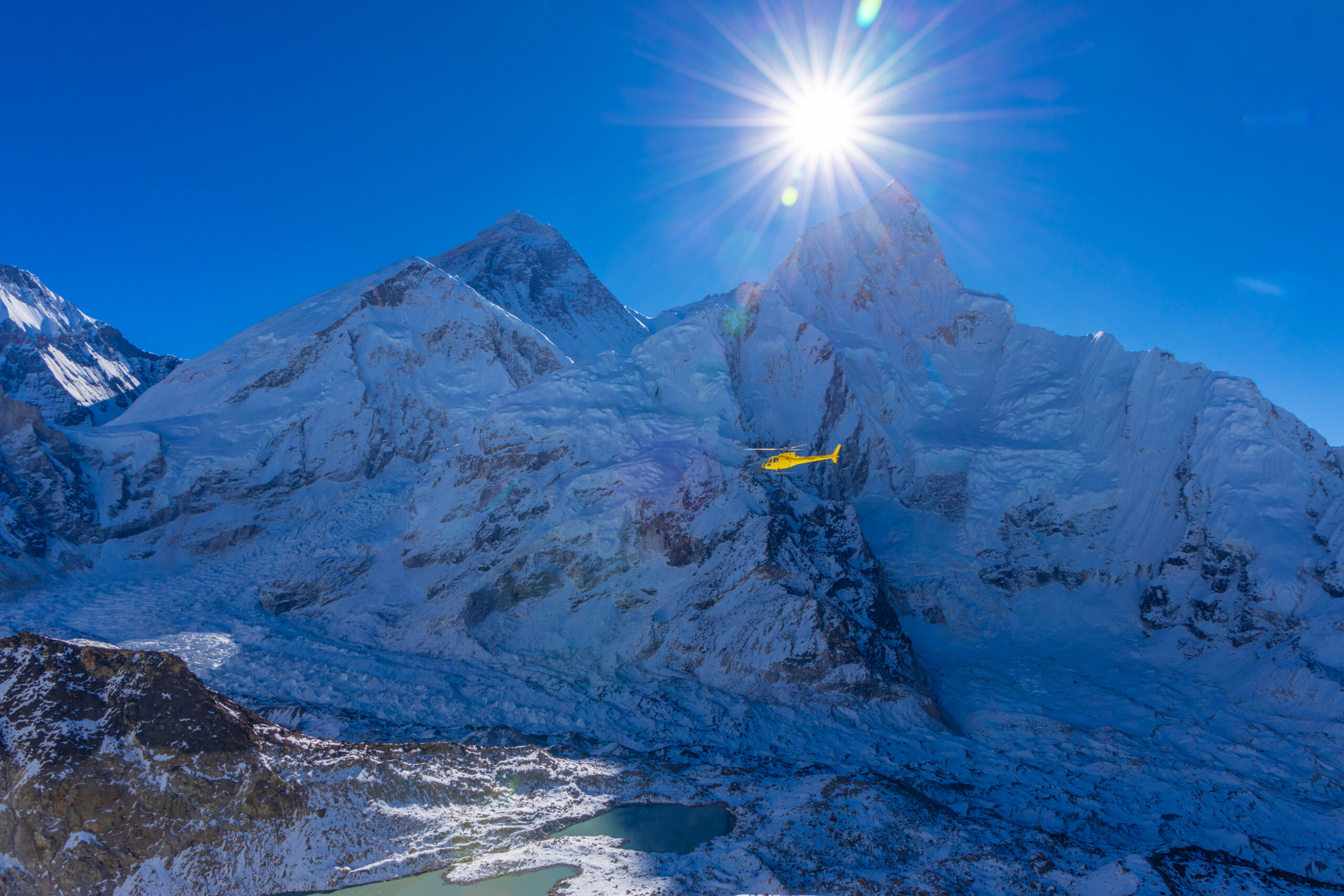
    A helicopter over a glaciated range, a reminder that rescue is remote

    Quiet means alone

    Foraker’s emptiness is its character and its risk. With almost no other teams on the mountain and no trade-route infrastructure, a party in trouble cannot count on neighbours or a quick rescue. Self-sufficiency, from crevasse fall to multi-day storm, is the price of the solitude.

    The hazards

    Difficulty and rarity

    Foraker is hard for reasons that do not fit a single grade: length, cornices, weather, and the absence of any support.

    FactorWhat it isHow to treat it
    Few ascentsA small, expert fieldThe second-highest range peak, yet rarely climbed.
    Long corniced ridgeThe defining hazardMiles of exposed, cornice-laden crest to negotiate.
    Avalanche and stormsAlaska Range weatherLoaded slopes and long storms shape every attempt.
    No infrastructureSelf-support throughoutNo fixed lines, camps, or crowds to fall back on.
    Timing

    Season and weather

    Foraker is a spring climb, on the same calendar as Denali, and always at the mercy of Alaska Range weather.

    Early May

    Cold, Early

    Colder, more stable snow, and very few teams.

    Mid May-Jun

    Prime

    The core of the Alaska Range climbing window.

    Late June

    Warmer

    Warmer and more hazardous as the snowpack changes.

    Weather

    The Deciding Factor

    Storms and flight delays control every trip.

    Winter

    Extreme

    Rare, elite ascents only, in brutal cold.

    Live wind and weather for Mount Foraker. Source: Windy.com. For how to read a mountain forecast, see our weather guide.
    Mount Foraker, about 14 miles southwest of Denali, above the Kahiltna Glacier. Map: OpenStreetMap contributors.
    History

    A short history of Foraker

    From a 1934 first ascent to a peak that remains quiet by choice of the crowds next door.

    Mount Foraker was first climbed in 1934 by Charles Houston, T. Graham Brown, and Chychele Waterston, a committing early Alaska Range ascent at a time when the range was barely explored. The mountain took its English name in 1899, after the Ohio senator Joseph Foraker, though its Dena’ina name, Sultana, is far older.

    In the decades since, Foraker has remained one of the quietest big peaks in North America, precisely because it stands beside Denali. Its long routes, serious commitment, and lack of a easy line keep the numbers low, and it endures as a prize for experienced expedition mountaineers who want a giant to themselves.

    Questions

    Mount Foraker FAQ

    The questions climbers ask most about the difficulty, the name, the permit, and the season.

    How high is Mount Foraker, and where is it?

    Mount Foraker is 17,400 ft (5,304 m), the second-highest peak in the Alaska Range after Denali, and the third-highest mountain in the United States after Denali and Mount Saint Elias. It stands in Denali National Park, about 14 miles southwest of Denali, rising above the Kahiltna Glacier. Its Dena’ina name is Sultana, the woman, and it is widely known as Denali’s Wife.

    Why is Foraker called Denali’s Wife?

    Because of the local naming. In Dena’ina, Denali is the high one, the parent of the range; Foraker is Sultana, the woman, or Menlale, Denali’s Wife; and Mount Hunter is Begguya, Denali’s Child. The three form a family of peaks above the Kahiltna. The English name Foraker, given in 1899 after an Ohio senator, is the newcomer among them.

    Is Foraker harder than Denali?

    In the way that matters to a climber, yes. Denali is higher and far busier, with a trade route, fixed infrastructure in season, and ranger presence. Foraker has none of that: its routes are long, corniced, and committing, it is climbed by very few, and a party is on its own. It is not as technical as Mount Hunter’s hardest lines, but it is a serious, remote expedition that stands in Denali’s shadow.

    What is the standard route?

    The Sultana Ridge, the southeast ridge, is the usual line, reached from the Kahiltna Glacier. It is a long, corniced ridge climb, around Alaska Grade 3, committing and multi-day, with real exposure and objective hazard. Other lines, such as the northeast or Talkeetna Ridge, are harder still. None of Foraker’s routes is a straightforward climb.

    Do the Denali permit rules apply to Foraker?

    Yes. Unlike nearby Mount Hunter, Foraker is covered by the same National Park Service rules as Denali: climbers must register at least 60 days in advance and pay the special mountaineering fee, through the Talkeetna ranger station. Confirm the current requirements and fees with Denali National Park before you plan, as they are updated over time.

    How do you get there, and when do people climb?

    Access is the same as Denali: fly to Talkeetna, then take a ski-equipped bush plane onto the Kahiltna Glacier, and climb from there. The season is the Alaska Range spring, roughly May and June. Because Foraker is lower and quieter than Denali, it sees a tiny fraction of the traffic, and weather holds and self-sufficiency shape every trip.

    How often is Foraker climbed?

    Rarely, especially for the second-highest peak in the range. Most climbers drawn to the Kahiltna go for Denali, and Foraker’s length, commitment, and lack of a easy route keep its numbers low. In a typical season only a small number of parties attempt it, and fewer succeed. It is a peak for experienced expedition mountaineers, not a first big climb.

    What experience do you need?

    Solid glacier and technical alpine skills, prior expedition experience with self-support and storm camps, sound judgment on long corniced ridges, and the fitness for a committing multi-day climb at altitude. Foraker rewards teams that are fully self-reliant, because there is no trade-route infrastructure and no crowd to follow.

    Transparency

    How we built this update

    What this page is based on, who reviewed it, and what we do not claim to know.

    Sources

    • National Park Service, Denali National Park registration and mountaineering-fee rules.
    • Operator and guide-service route information for the Sultana Ridge.
    • Published alpine records for the 1934 first ascent and later routes.
    • Alaska Range guidebooks for grade, character, and hazard.
    • Our own Mount Foraker climb guide for the detailed route and cost.

    Review and standards

    Compiled by Travis Ludlow and reviewed for safety by Dawson Ludlow, our Climbing and Mountaineering Lead (Wilderness First Aid), whose highest first-hand summit is Kilimanjaro. Health and medical points were reviewed by Taylor Ludlow, RN. We do not fabricate summit experience, quotes, or credentials, and we say plainly when we are reporting rather than recounting.

    What we do not claim to know

    Conditions on Foraker change from year to year, and no web page can replace current route reports and a guide’s judgment. In particular:

    • Ridge conditions and cornice hazard vary by season; recent reports matter most.
    • Registration rules and fees change; confirm the current requirements with Denali National Park.
    • Guided pricing and availability shift with operators and dates.
    • Our team has not climbed Foraker, so we report official rules and records, not personal experience.
    Global Summit Guide research team

    Global Summit Guide research

    We compile mountain updates from official rules and published records, review them for safety and medical accuracy, and refresh them each season. We are transparent about what we have and have not climbed, and Foraker is a research-based briefing, not a personal account.

    About our team and standards ->
    Plan your Alaska Range season

    A giant to yourself, if you are ready for it.

    Start with the full route in our Mount Foraker climb guide, weigh yourself against our fitness standards, and read the family in the Denali and Hunter updates. Expeditions stage through Anchorage and Talkeetna, so for flights and lodging, browse travel on Expedia.

    Disclosure: the Expedia link above is a sponsored affiliate link, and we may earn a commission at no extra cost to you. It is the only affiliate link on this page; our route, permit, and safety guidance is independent.
    Was this helpful?

    Yes
    No
    Thanks for your feedback!
  • Mount Hunter (Begguya) Expedition Update 2026: The Hardest 14er in North America

    Mount Hunter, Begguya, rising steep and corniced above the Kahiltna Glacier in the Alaska Range
    14,573 ft (4,442 m) · Alaska Range · Denali National Park

    Mount Hunter: Denali’s Child, and the hardest of the three

    Begguya is the smallest of the Alaska Range’s big three, and the hardest. This expedition update covers why it is the most technical 14,000-foot climb in North America, the West Ridge and the Moonflower Buttress, the permit distinction from Denali and Foraker, and an honest readiness view. Heights in feet (metres).

    Research-based updateSafety and medical reviewReviewed each Alaska Range seasonOur team has not climbed Hunter

    Updated 27 July 2026 · Compiled by Travis Ludlow · Safety review by Dawson Ludlow · Medical review by Taylor Ludlow, RN

    14,573 ftSummit – north (4,442 m)
    3rdIn the Alaska Range
    Under 40%Summit success
    West RidgeStandard route (AK Grade 4)
    Apr-JunSeason
    KahiltnaBase glacier

    Single-mountain expedition update, compiled from National Park Service registration rules, operator route information, and published alpine records. Our team has not climbed Mount Hunter; the only first-hand summit anyone on our team claims is Kilimanjaro. This is a planning briefing for experienced alpinists, not a how-to and not a substitute for training or a guide.

    The technical test of the range, not the tallest.

    Hunter is lower than Denali and Foraker, yet it is widely called the most difficult 14,000-foot climb in North America. The standard West Ridge is a long, corniced, Alaska Grade 4 climb; the north face’s Moonflower Buttress is a world-class mixed testpiece. Fewer than 40 percent of attempts on the peak succeed. It stages from the same Kahiltna Glacier as Denali, but it asks for technical skill the West Buttress never does.

    • Standard route: the West Ridge, Alaska Grade 4.
    • Signature hard route: the Moonflower Buttress.
    • Success: under 40 percent of attempts.
    • Permit: the Denali and Foraker special fee does not apply.
    • Name: Begguya, Denali’s Child, in Dena’ina.
    The mountain

    What climbing Hunter involves

    A technical alpine climb staged from a familiar glacier, but with none of the trade-route support that makes its taller neighbour approachable.

    Mount Hunter rises about 8 miles south of Denali, towering some 7,000 feet above the Kahiltna Glacier, the longest in the Alaska Range at 44 miles. Climbers fly in by ski-plane from Talkeetna to the same glacier base camp used for Denali and Foraker, and from there the resemblance ends. Where Denali’s West Buttress is a walk-up by alpine standards, Hunter’s standard West Ridge is a sustained, corniced Alaska Grade 4 climbed on snow and ice throughout, with a mixed step low down and huge cornices high on the crest.

    The peak has two summits, a north top at 14,573 ft, which is the true and higher one, and a south top at 13,966 ft, joined by a long corniced ridge. Because Hunter is lower than its neighbours, the upper mountain is not as brutally cold as Denali’s high camps, but that is scant comfort: the difficulty here is technical and sustained, not a matter of altitude. Fewer than 40 percent of the small number who attempt it each year reach the top. For the full route detail, camps, and gear, see our Mount Hunter climb guide.

    Honest self-assessment

    Are you ready for Hunter?

    Hunter is not a peak to grow into. Read these as prerequisites, and if any is a stretch, build toward it on smaller objectives first.

    Technical ability

    Steep Ice and Mixed

    You must be fluent on steep alpine ice and mixed ground, not only glacier walking. The West Ridge is Alaska Grade 4; the Moonflower is far above that.

    Evidence: prior AI3-plus and mixed routes.
    Alaska Range record

    Cold, Storms, Self-Rescue

    Prior Alaska Range or comparable big-range experience: crevassed glaciers, storm days pinned at camp, and self-sufficiency far from any help.

    Evidence: prior expeditions in a big range.
    Cornice judgment

    Read the Ridge

    The West Ridge traverses enormous cornices with huge exposure. Knowing where it is safe to walk is a survival skill, not a detail.

    Evidence: sound decisions on corniced terrain.
    Self-sufficiency

    No Trade-Route Support

    Unlike Denali’s West Buttress, Hunter has no fixed lines, ranger camps, or crowds to follow. Your team solves every problem itself.

    Evidence: an independent expedition record.
    RequirementBaselineWhy it matters
    Technical gradeFluent to Alaska Grade 4 (AI3, ~5.8)The route is sustained steep snow, ice and mixed, not a walk.
    Alaska Range recordPrior range or comparable big-alpine experienceWeather, glaciers and remoteness punish the underprepared.
    Cornice judgmentComfortable on heavily corniced ridgesThe West Ridge crest is exposed and cornice-laden.
    Self-sufficiencyFull independent expedition capabilityNo trade-route infrastructure or crowds to follow.
    Fitness and loadStrong for 12 to 14 days under loadThe approach and ridge demand endurance with weight.
    Turnaround disciplineWilling to retreat from technical groundReversing the ridge is as serious as climbing it.

    The self-selection trap

    Hunter’s low success rate is not softened by an inexperienced crowd dragging the average down. The field is small and expert, and it still turns back more often than not. If strong alpinists fail here regularly, an honest look at your own record matters more than ambition.

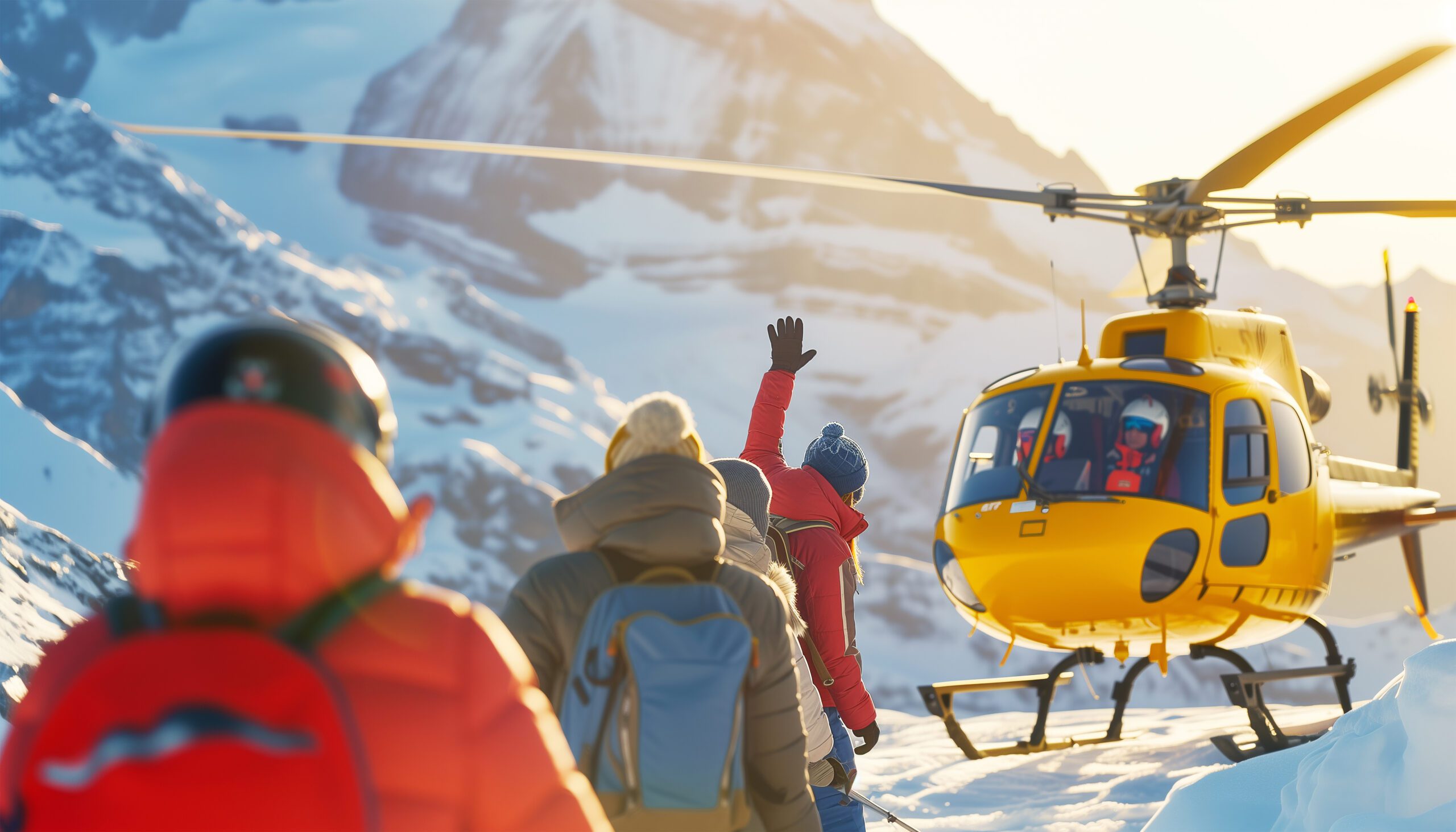
    A helicopter over a glaciated range, a reminder that rescue is limited and slow

    Rescue is limited, and self-rescue is the plan

    Deep in the Alaska Range, help is distant and weather-dependent. Bush planes fly only when conditions allow, and a rescue can be days away. On Hunter your team is the first and often the only responder, which is why self-sufficiency is a prerequisite, not a virtue.

    The two routes

    The West Ridge and the Moonflower

    Two very different climbs share the mountain: a serious guided ridge, and one of the continent’s hardest mixed walls.

    Standard route

    West Ridge

    The standard and original line, first climbed in 1954 by Fred Beckey, Heinrich Harrer, and Henry Meybohm. It is a long ridge on snow and ice throughout, with a mixed step low down at the rabbit ears and enormous cornices high on the crest.

    • Alaska Grade 4 (AI3, around 5.8 rock)
    • Sustained snow, ice and one mixed step
    • Huge, exposed cornice traverses
    • One of the 50 Classic Climbs; 12 to 14 days guided
    Best fit: strong alpinists ready for a sustained Grade 4.
    North face testpiece

    Moonflower Buttress

    A route on the north face, first climbed by Bibler and Klewin in 1983, and one of the hardest mixed climbs in North America. It is far above the West Ridge in difficulty and is a personal objective for elite alpinists, not a guided trip.

    • Sustained vertical ice, mixed and rock
    • Among the hardest mixed lines on the continent
    • The nearby Mini Moonflower is used as training
    • An elite testpiece, rarely guided
    Best fit: elite technical alpinists only.
    FactorWest RidgeMoonflower Buttress
    AspectSouth-west and west ridgeNorth face
    GradeAlaska Grade 4 (AI3, ~5.8)Among the hardest mixed climbs in North America
    StyleLong ridge, snow and ice, one mixed stepSustained vertical ice, mixed and rock
    First ascent1954: Beckey, Harrer, Meybohm1983: Bibler and Klewin
    Who it suitsStrong alpinists ready for Grade 4Elite technical alpinists only
    Guided?Occasionally, 12 to 14 daysRarely; a personal objective
    Route profile

    The West Ridge, section by section

    An overview of the standard line, from the glacier to the north summit and back. For the full detail, see the climb guide.

    Fly-in

    Kahiltna Base ~7,200 ft

    Ski-plane base camp, shared with Denali and Foraker traffic.

    Approach

    Toe of the West Ridge

    Gain the ridge from the glacier; the Northwest Basin variation is shorter but harder.

    Mixed step

    The Rabbit Ears

    A rock feature low on the ridge with a mixed climbing step.

    The crux character

    The Corniced Crest

    Enormous cornices; teams stay off the crest, usually to the south.

    Between the tops

    The Plateau

    A broad glacier plateau links the terrain toward the summits.

    Main summit

    North Summit 14,573 ft

    The true, higher summit and the objective of the climb.

    Lower top

    South Summit 13,966 ft

    Joined to the north by a long corniced ridge.

    Descent

    Reverse the Ridge

    The corniced ridge must be down-climbed; the descent stays committing.

    The Northwest Basin variation

    In stable snow, many parties gain the ridge by the Northwest Basin, which is shorter and more direct than the toe of the ridge, but also harder. The choice depends on conditions, and it is one your guide or team makes on the ground.

    How a trip runs

    A Hunter expedition timeline

    A guided West Ridge attempt runs about 12 to 14 days on the mountain, weather permitting, plus travel and contingency.

    1

    Talkeetna, briefing and flight

    Ranger check-in, gear and food sorting, weather, and the ski-plane charter to the Kahiltna.

    2

    Fly to the Kahiltna Glacier

    Land near 7,200 ft, build base camp, and wait out weather if the planes cannot fly.

    3

    Acclimatize and prepare

    Shorter climbs, skills, and load carries; the lower summit means less extreme cold than Denali.

    4

    Gain the West Ridge

    Climb from the glacier onto the ridge, or take the steeper Northwest Basin variation.

    5

    Climb the corniced ridge

    Sustained snow and ice, the mixed step at the rabbit ears, and the long cornice traverses.

    6

    Summit push to the north top

    Move over the plateau to the true north summit and turn around without lingering.

    7

    Descend the ridge

    Reverse the technical ground carefully; the descent remains the serious half of the climb.

    8

    Fly out

    Return to base camp and wait for the ski-plane window back to Talkeetna.

    Money and rules

    Cost and the permit distinction

    Hunter costs less than Denali to guide and skips the special mountaineering fee, but the barrier here was never the paperwork.

    ComponentFigureNote
    Guided West Ridge~$10,000-$15,000+12 to 14 days; far fewer operators than Denali.
    Ski-plane charterIncluded or ~$700-$900Talkeetna to the Kahiltna Glacier, weather permitting.
    Park registrationNo special feeThe Denali and Foraker mountaineering fee does not apply to Hunter.
    Personal gear$5,000-$10,000+Technical alpine kit and a serious ice and mixed rack.
    InsurancePolicy-dependentVerify activity, altitude, evacuation and repatriation cover.

    The Denali and Foraker fee does not apply

    The National Park Service requires climbers on Denali and Foraker to register at least 60 days in advance and pay a special mountaineering fee. Those rules apply to those two peaks only. Hunter climbers register as backcountry climbers flying into the range and fly with an authorized air-taxi concessionaire, but they skip the 60-day pre-registration and the fee. Confirm the current requirements with Denali National Park before you plan.

    Choosing a team

    Choosing a Hunter operator

    Only a handful of operators guide Hunter, and the right questions separate a serious team from an optimistic brochure.

    Hunter experience

    Specific to This Peak

    Ask how many times the guide has climbed Hunter itself, not just the range.

    Honest route match

    Grade Matched to You

    A good operator matches the West Ridge to your real record, or turns you away.

    Team ratio

    Small Rope Teams

    Technical terrain needs tight ratios and strong rope-team management.

    Flight contingency

    Bush-Plane Delays

    Ask how weather delays to and from the glacier are handled and costed.

    Screening

    Willing to Say No

    The best sign is an operator who screens hard and declines the underqualified.

    Rescue reality

    Limited, Self-First

    Understand that rescue is limited and self-rescue is the expectation.

    How to choose an expedition operator covers the vetting in full, and the operator directory is a place to start the search.

    A mountain rescue helicopter against a cold sky, symbolizing weather-bound evacuation

    Weather runs the whole trip

    From the flight in to the summit window and the flight out, Alaska Range weather decides everything. Teams routinely wait days for a break, and a plan that does not build in patience is a plan to fail. Read the sky, and set your turnaround before you leave camp.

    The numbers

    Difficulty and success, read honestly

    Use the statistics as a mirror, not a dare. They describe an elite objective with a stubbornly low success rate.

    StatisticWhat it measuresHow to use it
    Under 40% successShare of attempts reaching the topThe hardest 14er in North America; treat it as elite.
    Few annual attemptsA small, self-selected fieldMost climbers here are experienced alpinists.
    Alaska Grade 4The West Ridge technical gradeSustained, not a single crux; the whole ridge tests you.
    Two summitsNorth (main) and SouthThe higher north summit is the true objective.
    Timing

    Season and weather

    Hunter is a spring and early-summer climb, on the same calendar as Denali and Foraker, and always at the mercy of the sky.

    Early April

    Season Opens

    Cold, more stable snow, and fewer teams on the glacier.

    Late April-May

    Prime

    The core of the Alaska Range climbing window.

    June

    Late Season

    Warmer, with more objective hazard as the snow thaws.

    Weather

    The Deciding Factor

    Storms and bush-plane delays shape every single trip.

    Winter

    Extreme

    Rare, elite ascents only, in brutal cold and dark.

    Live wind and weather for Mount Hunter. Source: Windy.com. For how to read a mountain forecast, see our weather guide.
    Mount Hunter (Begguya), about 8 miles south of Denali, above the Kahiltna Glacier. Map: OpenStreetMap contributors.
    Begguya

    Denali’s Child, and the family of three

    The Dena’ina names for these peaks tell a family story, and Hunter is the youngest and fiercest of them.

    In Dena’ina, Denali is the high one, the great parent of the range. Foraker is Sultana, often rendered as Denali’s Wife. Hunter is Begguya, Denali’s Child. The three stand together above the Kahiltna, and the naming captures something true about them: the child is the smallest, but it is also the most difficult to climb, steeper and more technical than either elder. We cover its neighbours in our Denali and Foraker updates.

    The English name is an accident of history. It was transferred from a nearby peak that an early climber named after a relative who helped fund his travels, and it stuck to this mountain by mistake. Begguya is the older name, and the more fitting one for a peak so bound up with its towering parent.

    History

    A short history of climbing Hunter

    From a corniced first ascent to a north-face testpiece, Hunter’s story is one of technical ambition.

    The West Ridge was first climbed in 1954 by Fred Beckey, Heinrich Harrer, and Henry Meybohm, following a corniced line proposed a year earlier by the great range surveyor Bradford Washburn. It remains the standard route and a coveted objective, listed among the 50 Classic Climbs of North America. Even today, gaining the higher north summit is hard by any route and turns back most who try.

    In 1983, Mugs Stump’s era of hard alpine climbing found its Hunter landmark when Todd Bibler and Doug Klewin climbed the north face’s Moonflower Buttress, a route that became one of the most respected mixed climbs on the continent. The peak has since drawn elite alpinists to its steep faces, while the West Ridge continues to test strong mountaineers as the mountain’s classic line.

    Questions

    Mount Hunter FAQ

    The questions climbers ask most about the difficulty, the name, the permit, and the season.

    Why is Mount Hunter called the hardest 14er in North America?

    Because difficulty is about terrain, not height. Hunter is the third-highest peak in the Alaska Range, lower than Denali and Foraker, but its routes are steeper and more technical than either. The standard West Ridge is a long, corniced, Alaska Grade 4 climb of sustained snow and ice with a mixed step, and fewer than 40 percent of attempts on the peak succeed. Alpinists widely regard it as the most difficult 14,000-foot climb on the continent.

    What does Begguya mean?

    Begguya is the Dena’ina name for the mountain and means Denali’s Child. It fits a family of three: Denali, the high one, the parent of the range; Foraker, called Sultana or Denali’s Wife; and Hunter, Begguya, the child. The English name Hunter came from a historical mix-up, transferred from a nearby peak that an early climber named after a relative, so Begguya is the older and truer name.

    How hard is the West Ridge?

    The West Ridge is rated Alaska Grade 4, with crux difficulties around 5.8 on rock and AI3 on ice, but the grade understates it because the challenge is sustained rather than a single crux. It is a long corniced ridge climbed on snow and ice throughout, with a mixed step low down at a rock feature known as the rabbit ears, and huge cornices higher up where teams stay off the crest. Guided ascents run about 12 to 14 days, and it is one of the 50 Classic Climbs of North America.

    What is the Moonflower Buttress?

    The Moonflower Buttress is a route on Hunter’s north face, first climbed by Bibler and Klewin in 1983, and it is one of the hardest mixed climbs in North America. It is far more difficult than the West Ridge, a sustained wall of vertical ice, mixed ground, and rock that draws elite alpinists as a personal testpiece rather than a guided objective. A shorter nearby route, the Mini Moonflower, is used as training.

    Do you need a permit, or the Denali and Foraker fee?

    You do not pay the special Denali and Foraker mountaineering fee on Hunter. The National Park Service requires climbers on Denali and Foraker to register at least 60 days in advance and pay that fee, but those rules apply only to those two peaks. Hunter climbers register as backcountry climbers flying into the range, fly with an authorized air-taxi concessionaire, and follow park rules, but they skip the 60-day pre-registration and the special fee. Confirm the current requirements with Denali National Park before you plan around them.

    What is the success rate on Mount Hunter?

    Fewer than 40 percent of attempts on Mount Hunter reach the summit, and only a small number of climbers attempt it in a given year. The field is self-selected and experienced, which makes the low success rate all the more telling: even strong alpinists turn back often. Treat the number as confirmation that this is an elite objective, not a peak to grow into.

    When is the climbing season?

    April to June, the Alaska Range spring and early-summer window, the same season as Denali and Foraker. Because Hunter is lower, the upper mountain is not as brutally cold as Denali’s high camps, but the weather is still fierce and unpredictable, and bush-plane flights to and from the glacier depend entirely on it. Late April through May is the core of the season.

    What experience do you need for Mount Hunter?

    Fluency on steep alpine ice and mixed ground to at least Alaska Grade 4, prior experience in the Alaska Range or a comparable big-alpine setting, sound judgment on heavily corniced ridges, and full self-sufficiency. Unlike Denali’s West Buttress, Hunter has no fixed lines, ranger camps, or crowds to follow, so your team must solve everything itself. It is not a first big mountain.

    How high is Mount Hunter and where is it?

    Mount Hunter is 14,573 ft (4,442 m) at its north summit, the main top, with a lower south summit at 13,966 ft (4,257 m) joined to it by a long corniced ridge. It stands in the Alaska Range in Denali National Park and Preserve, about 8 miles south of Denali, rising some 7,000 feet above the 44-mile Kahiltna Glacier, the longest glacier in the range.

    Transparency

    How we built this update

    What this page is based on, who reviewed it, and what we do not claim to know.

    Sources

    • National Park Service, Denali National Park backcountry climbing registration and mountaineering fee rules.
    • Operator and guide-service route information for the West Ridge and the Northwest Basin variation.
    • Published alpine records for the first ascent and the Moonflower Buttress.
    • Alaska Mountaineering School and range guidebooks for grade, success rate, and character.
    • Our own Mount Hunter climb guide for the detailed route and cost.

    Review and standards

    Compiled by Travis Ludlow and reviewed for safety by Dawson Ludlow, our Climbing and Mountaineering Lead (Wilderness First Aid), whose highest first-hand summit is Kilimanjaro. Health and medical points were reviewed by Taylor Ludlow, RN. We do not fabricate summit experience, quotes, or credentials, and we say plainly when we are reporting rather than recounting.

    What we do not claim to know

    Conditions on Hunter change from year to year and within a season, and no web page can substitute for current route reports and a guide’s judgment. In particular:

    • Success rates and attempt numbers are approximate and vary by source and year.
    • Park registration rules and fees change; confirm the current requirements with Denali National Park.
    • Guided pricing shifts with operators, dates, and fuel; treat figures as a planning range.
    • Our team has not climbed Mount Hunter, so we report official rules and published records, not personal experience.
    Global Summit Guide research team

    Global Summit Guide research

    We compile mountain updates from official rules and published expedition records, review them for safety and medical accuracy, and refresh them each season. We are transparent about what we have and have not climbed, and Mount Hunter is a research-based briefing, not a personal account.

    About our team and standards ->
    Plan your Alaska Range season

    Hunter rewards the prepared, and only them.

    Start with the full route in our Mount Hunter climb guide, weigh yourself against our fitness standards, and read the neighbours in the Denali and Foraker updates. Expeditions stage through Anchorage and Talkeetna, so for flights and lodging there, browse travel on Expedia.

    Disclosure: the Expedia link above is a sponsored affiliate link, and we may earn a commission at no extra cost to you. It is the only affiliate link on this page; our route, permit, and safety guidance is independent.

    Was this helpful?

    Yes
    No
    Thanks for your feedback!
Language »