Last updated July 1, 2026

Mount Kilimanjaro Climbing Guide 2026: Routes, Cost & Success
Kilimanjaro is the highest mountain in Africa (5,895 m / 19,341 ft), the highest free-standing peak on Earth, and the most accessible of the Seven Summits — a non-technical trek where the real adversary is altitude. This is the complete 2026 guide: all seven routes compared, costs and park fees, success rates by day, the best time to go, and how to train for Uhuru Peak.
What it is: Africa’s highest peak (5,895 m) and the easiest Seven Summit — a non-technical trek, but a serious high-altitude one.
Best route: the 8-day Lemosho or 9-day Northern Circuit — the best acclimatization and the highest success rates.
Success rate: ~30-50% on rushed 5-day climbs, rising to 85-95% on 8-9 day routes. Days on the mountain decide it.
Cost: quality packages $2,000-6,000 (park fees alone ~$950-1,100); all-in with flights and tips ~$4,000-6,500.
Best time: January-mid March and June-October (the dry seasons).
Guide: mandatory — solo climbing is illegal.
📑 On This Page
The Mountain: Africa’s Roof
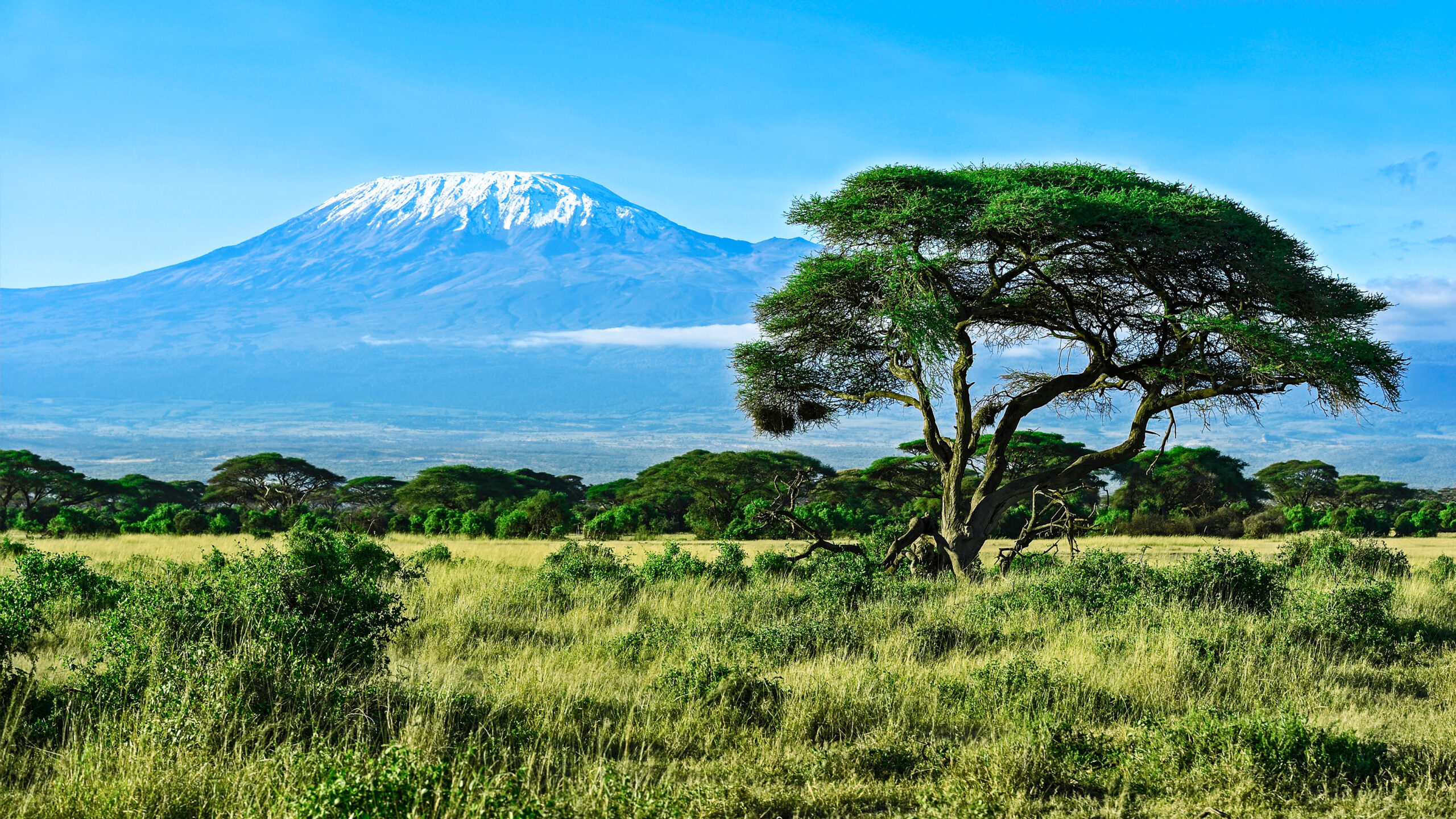
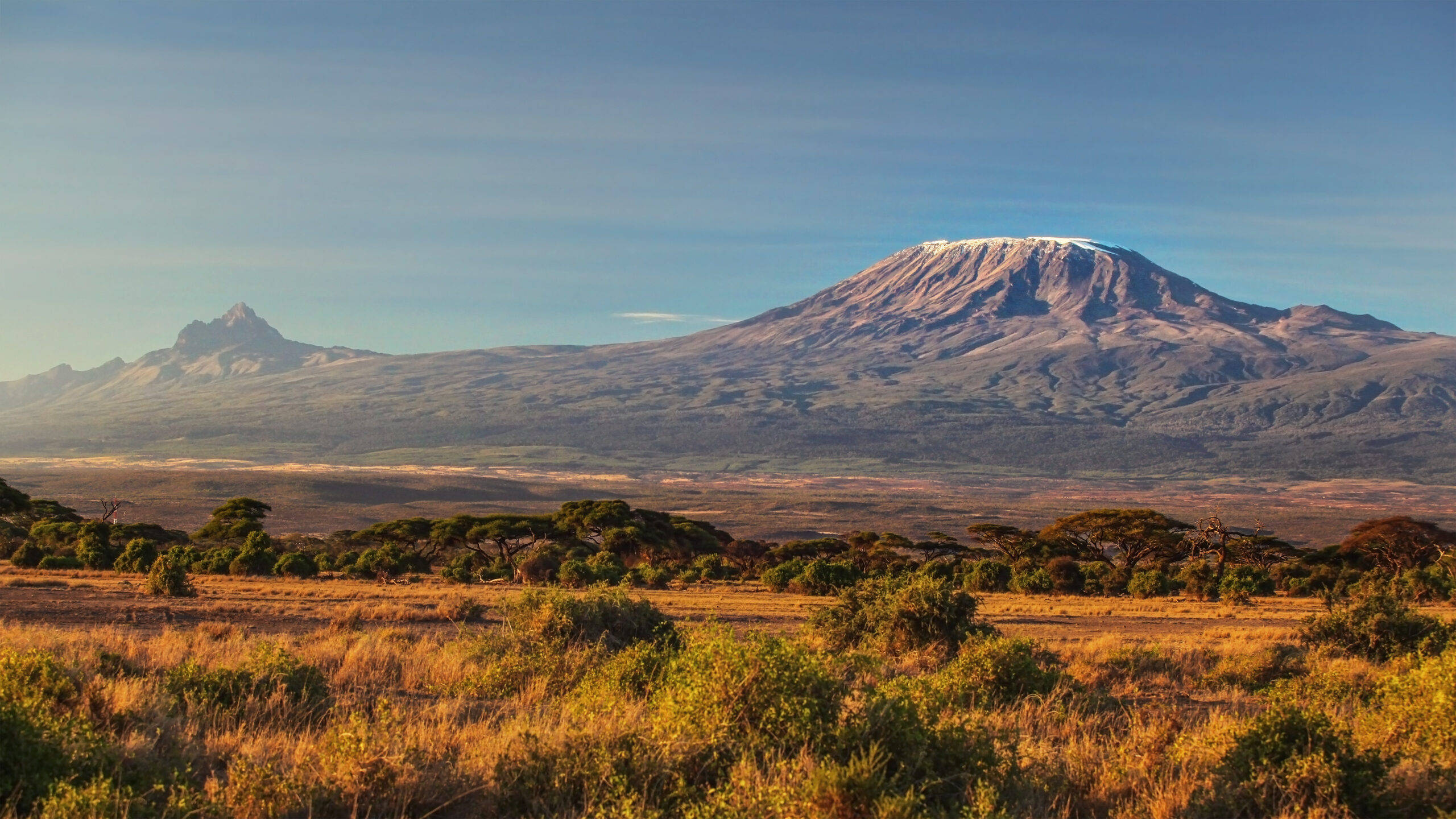
Kilimanjaro stands alone on the Tanzanian plains, a dormant volcano with three cones — Kibo (home to Uhuru Peak, the summit), Mawenzi (5,149 m), and Shira (3,962 m). Because it rises straight from the savanna rather than from a range, it’s the highest free-standing mountain in the world, and the climb passes through five distinct ecological zones in a single ascent: cultivated farmland, montane rainforest, heath and moorland, alpine desert, and the arctic, glaciated summit.
It is the most accessible of the Seven Summits — no ropes, crampons, or technical skills on the standard routes — which is why tens of thousands of trekkers (commonly cited at 35,000-50,000) attempt it each year. But “accessible” is not “easy”: Uhuru Peak sits in the altitude band where acute mountain sickness becomes a genuine danger, and a large share of climbers turn back short of the top. The good news is that success is far more controllable here than on most big peaks — it comes down to route choice, days on the mountain, and pacing.
Find Hotels, Flights & Trips for the World’s Best Hiking Destinations
The Global Summit Guide Travel Shop on Expedia — curated for outdoor adventurers, mountaineers, and serious hikers. Patagonia to the Alps. Nepal to the Rockies. Curated lodging for every region we cover.
Explore Travel Shop on Expedia →The 7 Routes Compared
Seven established routes lead to Uhuru Peak, and the choice matters more than almost any other decision — it sets your acclimatization, your odds, your crowds, and your cost. They’re ordered here by what we’d recommend for most climbers. For the full route-by-route breakdown, see our dedicated Kilimanjaro routes guide.
Lemosho
The route our reviewer summited. Scenic, less crowded, and one of the best acclimatization profiles on the mountain — it crosses the Shira Plateau before joining the southern circuit. The all-round best choice for most first-timers.
Northern Circuit
The longest route and a full circumnavigation of Kibo. Maximum days on the mountain means the best acclimatization and the highest summit success of any route — ideal if you have the time and budget.
Machame (“Whiskey”)
The most popular route — dramatic scenery and a natural climb-high/sleep-low profile. Busier than Lemosho and with more up-and-down, but excellent value, especially as a 7-day itinerary.
Rongai
The only approach from the north, near the Kenyan border. Drier and quieter than the southern routes — a strong choice in the shoulder seasons or to avoid crowds.
Marangu (“Coca-Cola”)
The only hut-based route (dormitory bunks, no tents) and often the cheapest. But it’s the busiest, ascends and descends the same path, and its standard 5-day itinerary has one of the lowest success rates — too little time to acclimatize.
Shira
Similar to Lemosho, but a vehicle drops you high on the Shira Plateau, so you miss the gentle early acclimatization of the forest. Better suited to climbers already acclimatized.
Umbwe
The steepest, most direct, and most demanding route — a fast, hard ascent with little acclimatization built in. Low success and recommended only for experienced, confident-at-altitude trekkers.
Summit Success Rates by Day
Time on the mountain is the single biggest predictor of reaching Uhuru Peak. The pattern is consistent across operators: every extra acclimatization day meaningfully raises your odds. The mountain-wide average is often cited near 65%, but that masks a huge spread:
| Itinerary length | Typical success rate | Why |
|---|---|---|
| 5 days | ~30-50% | Too little time to acclimatize; summit on day 4-5 from low elevation. |
| 6 days | ~45-65% | One extra day helps, but still rushed for most climbers. |
| 7 days | ~70-85% | The point where acclimatization starts working in your favor. |
| 8 days | ~85-90% | The recommended sweet spot — strong odds, manageable cost. |
| 9 days (Northern Circuit) | ~90-95% | Maximum acclimatization; the highest success on the mountain. |
Adding two days to your itinerary costs a few hundred dollars but can raise your summit odds by roughly 25%. On Kilimanjaro, more days — not more fitness — is what gets most people to the top.
Cost & Park Fees (2026)
Kilimanjaro is not a cheap mountain, and the reason is structural: mandatory government park fees, a legally required guide and full support crew, and the logistics of operating for a week in a remote national park. A quality guided package runs $2,000-6,000 per person, with most reputable mid-range climbs at $3,000-5,000. For the full breakdown see our Kilimanjaro cost guide and park-fees guide.
| Cost component | 2026 figure | Notes |
|---|---|---|
| TANAPA park fees | ~$950-1,100 | Conservation ~$70/day + camping ~$50/night + rescue fee, plus 18% VAT. Same for every operator. |
| Guided package | $2,000-6,000 | Route, days, group size, and operator quality. Mid-range $3,000-5,000. |
| Crew tips | $250-350 | Expected and a major part of crew income — budget for the full team. |
| Flights (return) | $700-1,400 | To Kilimanjaro International (JRO); varies by origin and season. |
| Gear, insurance, visa | $300-700 | Rental gear, high-altitude travel insurance, Tanzania visa ($50). |
Mandatory park fees alone are nearly $1,000, so any package much below ~$1,800 is cutting corners somewhere — usually underpaid porters, too few days, old equipment, or thin safety margins. On a mountain where days and support decide your summit, cheap is genuinely dangerous.
Best Time to Climb
Kilimanjaro can be climbed year-round, but two dry windows are far better. Our month-by-month guide has the detail; the short version:
- January to mid-March — warmer, generally clearer, and quieter. Often the most pleasant window.
- June to October — the main dry season: the busiest, driest, and coldest period, with the most stable conditions.
- Avoid late March-May (the long rains) and November (the short rains) — muddy trails, cloud-covered summits, lower success.
Difficulty & Summit Night
On paper Kilimanjaro is a walk — there’s no technical climbing on the standard routes. In practice, three things make it hard: the altitude (Uhuru is nearly 5,900 m, high enough for serious AMS), the summit night, and the cumulative fatigue of consecutive long days. The walking itself is within reach of any fit hiker; the question is whether your body tolerates the thin air.
Summit night is the crux. From high camp (Barafu on the southern routes, around 4,600 m) you typically set off near midnight, climbing steep scree switchbacks in the dark and cold (often -10 to -20°C with wind) for six or seven hours to reach the crater rim at Stella Point or Gilman’s Point around dawn, then another hour along the rim to Uhuru Peak. It is cold, slow, and relentless — and then you still have to descend thousands of feet the same day. Mental resilience matters as much as legs.
Acclimatization & Safety
Acclimatization is the whole game. The body adapts to altitude with time, and Kilimanjaro’s standard itineraries don’t give it much — which is exactly why longer routes succeed more often. The principles that matter: go pole pole (slowly), climb high and sleep low where the route allows, hydrate constantly, and eat even when altitude kills your appetite.
AMS (acute mountain sickness) — headache, nausea, dizziness, poor sleep — is common and manageable if you don’t ascend further while symptomatic. HAPE (fluid in the lungs) and HACE (brain swelling) are rare but life-threatening; the only reliable treatment is immediate descent. Many climbers use acetazolamide (Diamox) prophylactically — discuss it with a doctor. A good guide monitors oxygen saturation and symptoms daily and will turn you around if needed; that judgment is part of what you’re paying for.
Full detail in our acclimatization guide and Kilimanjaro medical guide.
Training & Gear
Training. You don’t need to be an athlete, but you do need a solid aerobic base and the leg endurance for consecutive 5-7 hour days followed by a brutal summit night. Build long hikes with elevation gain and a loaded pack, plus steady cardio, over the months before your climb. Our Kilimanjaro training plan lays out a week-by-week build.
Gear. The mountain crosses five climate zones, so layering is everything — from rainforest humidity to a sub-zero summit night. A proper insulated summit kit, broken-in boots, and a warm sleeping bag are non-negotiable. See the full Kilimanjaro packing list.
Guides, Porters & KPAP
Solo climbing is illegal on Kilimanjaro — every climber must go with a licensed operator. A typical small-group team is large: a lead guide, assistant guides, a cook, and seven to nine porters carrying tents, food, and equipment. That crew is the backbone of your climb and your safety net.
The Kilimanjaro Porters Assistance Project (KPAP) monitors fair treatment of mountain crews — proper wages, fair loads, adequate food and shelter. Budget operators often achieve their low prices by underpaying porters. Booking a KPAP-partner operator is the simplest way to ensure your climb is ethical as well as safe. See our Kilimanjaro operators guide and the porter system explainer.
Summit Day: Reaching Uhuru
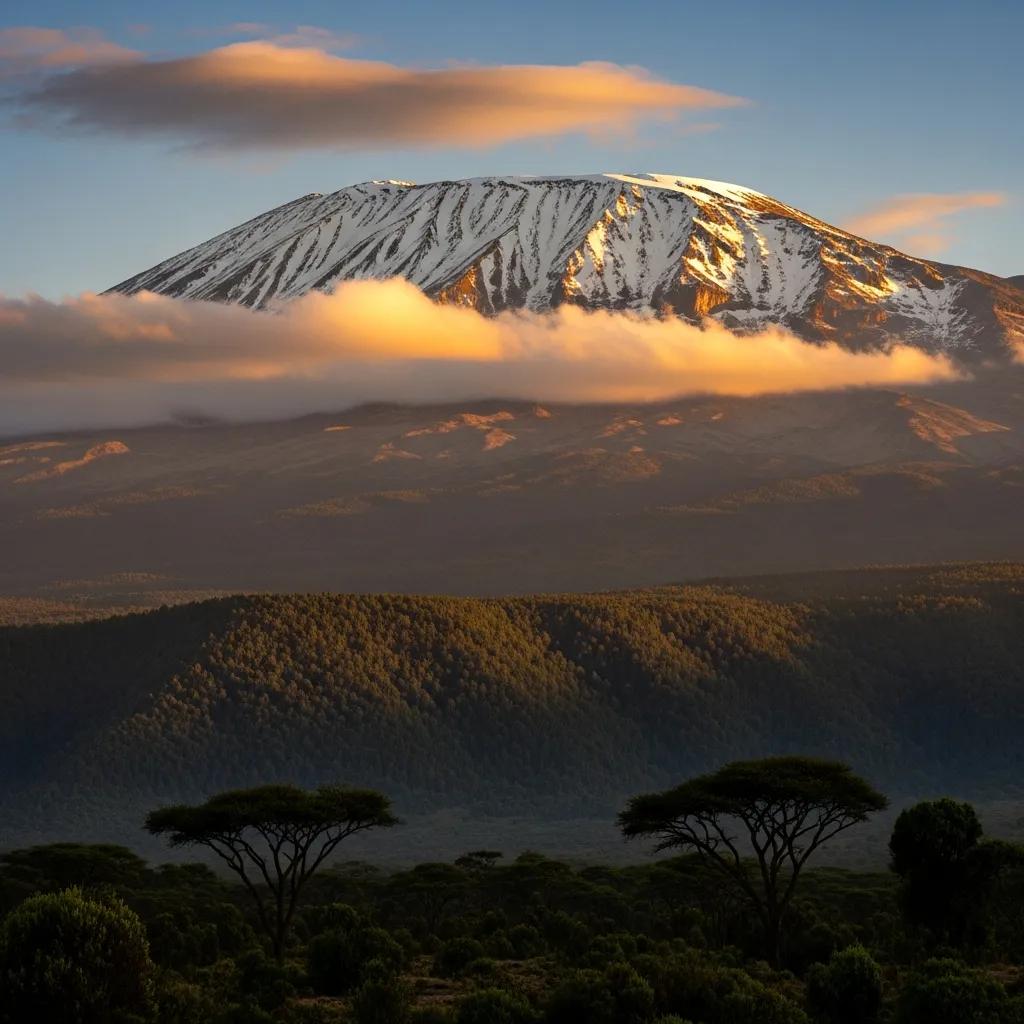
The reward for the cold and the altitude is one of mountaineering’s great summits — standing at the iconic Uhuru Peak sign, 5,895 m above the African plains, with the shrinking equatorial glaciers around you and the curve of the continent below. Most climbers reach the top at or just after sunrise, spend a brief, breathless few minutes there, and begin the long descent before the altitude and sun take their toll.
Kilimanjaro is the classic first big-altitude objective and a natural Seven Summits starting point. For where to go next, see best peaks after Kilimanjaro, the Kilimanjaro progression plan, and comparisons like Kilimanjaro vs Aconcagua, Elbrus vs Kilimanjaro, and Mount Fuji vs Kilimanjaro.
How We Researched This
Our method. This guide combines first-hand experience with cross-referenced data:
- First-hand climb. Safety reviewer Dawson Ludlow summited Uhuru Peak via the 7-day Lemosho route in 2024. The pacing, summit-night, gear, and acclimatization guidance is grounded in that ascent.
- Park fees & permits. Cross-referenced against TANAPA / KINAPA published 2026 tariffs (conservation, camping/hut, rescue fees, plus VAT), validated across multiple current operator quotes.
- Cost & success data. Drawn from current 2026 operator pricing across budget, mid-range, and premium providers, and route-by-route success figures reported by established operators and acclimatization research.
- Safety & medical. Altitude-illness guidance reviewed against UIAA and wilderness-medicine sources; reviewed by our WFA-certified safety editor.
- Last verified June 28, 2026. Park fees are reviewed annually (and expected to rise), so confirm current figures with your operator before booking.
Kilimanjaro FAQ
How high is Mount Kilimanjaro?
Uhuru Peak is 5,895 m (19,341 ft) — the highest point in Africa, the highest free-standing mountain on Earth, and one of the Seven Summits. The mountain has three cones: Kibo (the summit), Mawenzi (5,149 m), and Shira (3,962 m).
Do you need climbing experience to summit Kilimanjaro?
No technical experience is needed — the standard routes are non-technical treks with no ropes or crampons. The challenge is altitude and the long, cold summit night, so you need solid hiking fitness and, ideally, some prior time at altitude.
What is the summit success rate?
It depends on days on the mountain: roughly 30-50% on 5-day climbs, 45-65% on 6-day, 70-85% on 7-day, and 85-95% on 8-9 day routes like Lemosho and the Northern Circuit. Acclimatization time is the biggest factor.
Which route is best?
For most climbers, the 8-day Lemosho or 9-day Northern Circuit — best acclimatization, success, and scenery. Machame (6-7 days) is the popular scenic-value option; Marangu is the cheapest hut route but lowest success; Umbwe is for experienced trekkers only.
How much does it cost?
A quality package is $2,000-6,000 (mid-range $3,000-5,000). Mandatory TANAPA park fees alone are ~$950-1,100, plus $250-350 in crew tips and your flights, gear, and insurance — an all-in trip is usually $4,000-6,500. Below ~$1,800 is a red flag.
When is the best time to climb?
The dry seasons: January to mid-March (warmer, quieter) and June to October (driest, busiest, coldest). Avoid the long rains (late March-May) and short rains (November).
Do you need a guide?
Yes — solo climbing is illegal. Every climber must use a licensed operator and registered guide, with a full support crew. Choose a KPAP-partner operator for ethical, fair crew treatment.
How many days do you need?
Minimum 5-6, but 7-9 is strongly recommended. Every extra day improves acclimatization and summit odds; 8 days is the sweet spot of cost, comfort, and success for most first-timers.
About the Author
Ready for the Roof of Africa?
Pick a route with enough days, train your aerobic base, climb pole pole, and Uhuru Peak is within reach for most determined trekkers.
Compare the 7 routes → See full costs →This peak is one of Africa’s highest and most notable mountains
Africa’s highest peaks span four regions and host some of the most diverse mountaineering objectives in the world. See the complete collection covering Africa’s Triple Crown (the only three 5,000m+ peaks), all 11 major African peaks with elevations and first ascents, regional groupings, volcanic peaks, and a 6-step climbing progression order from Toubkal through Kilimanjaro.
View All Africa’s Highest Peaks →🏔 Part of Africa’s Highest Peaks
One of Africa’s 11 major climbing peaks across 4 regions. See the full collection with Triple Crown, volcanic peaks, and costs.
View All Africa’s Peaks →Mount Kilimanjaro belongs to both the Seven Summits and Africa’s Highest Peaks
As Africa’s highest peak (5,895m) and the world’s tallest free-standing mountain, Kilimanjaro is the headline summit of two iconic mountaineering collections. The Seven Summits requires climbing the highest peak on every continent; Africa’s Highest Peaks covers all 11 major African peaks across 4 regions including the Triple Crown.
Seven Summits → Africa’s Peaks →Kilimanjaro Anchors the East African Rift Collection
Mount Kilimanjaro is the highest peak in Africa (5,895m) and the iconic anchor of the East African Rift system — specifically the Eastern Branch (Gregory Rift) volcanic chain. Generally, climbers who summit Kilimanjaro often pursue the broader collection of major East African peaks, which span 11 mountains across 7 countries from Tanzania to Ethiopia, Uganda, Rwanda, DRC, Kenya, and Cameroon.
Africa’s second-highest peak. Twin technical summits (Batian + Nelion) + Point Lenana trekking summit. Mount Kenya guide →
Africa’s third-highest. Rwenzori range, glaciated. Substantially more difficult than Kilimanjaro. Mount Stanley guide →
Tanzania’s second-highest. Popular 3-4 day Kilimanjaro acclimatization climb via the Momella Route. Mount Meru guide →

Was this helpful?
🏔Related guides
🧭Explore & compare
Global Summit Guide is an independent mountaineering resource founded in 2026. The team combines first-hand trekking and climbing experience with in-depth research and professional health and nutrition review to help climbers choose objectives, prepare properly, and stay safe.
Health, altitude, and nutrition content is reviewed by Taylor Ludlow (Registered Nurse) and Brigg Hoopes (Nutritionist).
What We Don't Know Yet
Mountain information changes quickly. This box explains the limits of what this page can responsibly promise.
- Route conditions, trailhead access, crevasse exposure, stream crossings, and rescue access may vary from published planning guidance.
- Total trip cost can change with flights, lodging, guide pricing, permits, gear rentals, transportation, and exchange rates.
- Gear requirements can change by season, route variation, weather window, personal cold tolerance, and guide-service requirements.
- Fitness and altitude response vary by person; no guide, itinerary, or training plan can guarantee acclimatization or summit success.
Verify current conditions with official land managers, guide services, local forecasts, and current route reports before booking or climbing.
Part of this Global Summit Guide cluster
Explore the complete Mountains guide for more context, routes, planning links, and related resources.
Mountaineering, rock and ice climbing, glacier travel, and high-altitude activity are inherently dangerous and can result in serious injury or death. The information on Global Summit Guide is provided for general informational and educational purposes only and is not a substitute for professional instruction, qualified guiding, proper equipment, or your own judgment and experience.
Route conditions, weather, snowpack, permits, regulations, and hazards change constantly and may differ from what is described here. Details may be incomplete, out of date, or contain errors. Always verify current information with local authorities, certified guides, and official sources before making any decision in the mountains.
Nothing on this site is medical, legal, or financial advice. Our fitness, acclimatization, altitude, and nutrition content is general in nature; consult a qualified physician before beginning any strenuous exercise program or exposing yourself to high altitude.
You are solely responsible for your own safety and decisions. To the fullest extent permitted by law, Global Summit Guide and its team accept no liability for any loss, injury, damage, or expense arising from use of, or reliance on, this information. By using this site you acknowledge these risks and accept these terms.
Some links on this site may be affiliate links. If you buy through them we may earn a small commission at no extra cost to you; this never affects our recommendations.
Global Summit Guide recommendation path
Next Best Mountain to Research
Use these recommendations to continue the right planning path instead of stopping on one page.
Use current permit, weather, route, and operator information before booking or climbing.