Last updated June 9, 2026

Patagonia Packing List: 87+ Item Complete Gear Guide
The most thorough Patagonia packing guide on the internet — covering both Chilean (Torres del Paine, W Trek, O Circuit) and Argentine (El Chaltén) destinations. 14 gear categories with specific specifications, weights, costs, and rationales. Includes layering science, region-specific adjustments, trip-type specific lists, and the critical “what NOT to pack” insights. Field-tested during the Ludlow family’s 2025 Patagonia visit.
This guide is based on first-hand 2025 field testing during the Ludlow family’s Patagonia trip, cross-referenced against gear specifications from manufacturers, current 2026 commercial operator recommendations, and our existing layering system guide. No affiliate partnerships influence recommendations — all gear suggestions reflect independent assessment. Specific brands are mentioned only where they exemplify a category’s specifications, not as endorsements. See full methodology and editorial standards below.
⚡ Quick Answer: The 4 Essential Patagonia Packing Principles
1. Layer for “four seasons in a day”: base layer + mid-layer + waterproof shell + insulation puffy. All four layers. Every trip. No exceptions — even peak summer.
2. Waterproof, not water-resistant: Your shell jacket must be 20,000mm+ hydrostatic head Gore-Tex or equivalent. Water-resistant fails in Patagonian rain.
Find Hotels, Flights & Trips for the World’s Best Hiking Destinations
The Global Summit Guide Travel Shop on Expedia — curated for outdoor adventurers, mountaineers, and serious hikers. Patagonia to the Alps. Nepal to the Rockies. Curated lodging for every region we cover.
Explore Travel Shop on Expedia →3. No cotton: Replace every cotton item with merino wool or synthetic. Cotton kills in cold-wet conditions.
4. Trekking poles are mandatory: Not optional. Required for the brutal descents, scree sections, and wind stability. Plan to use them every day.
What We Actually Packed for Patagonia (January 2025)
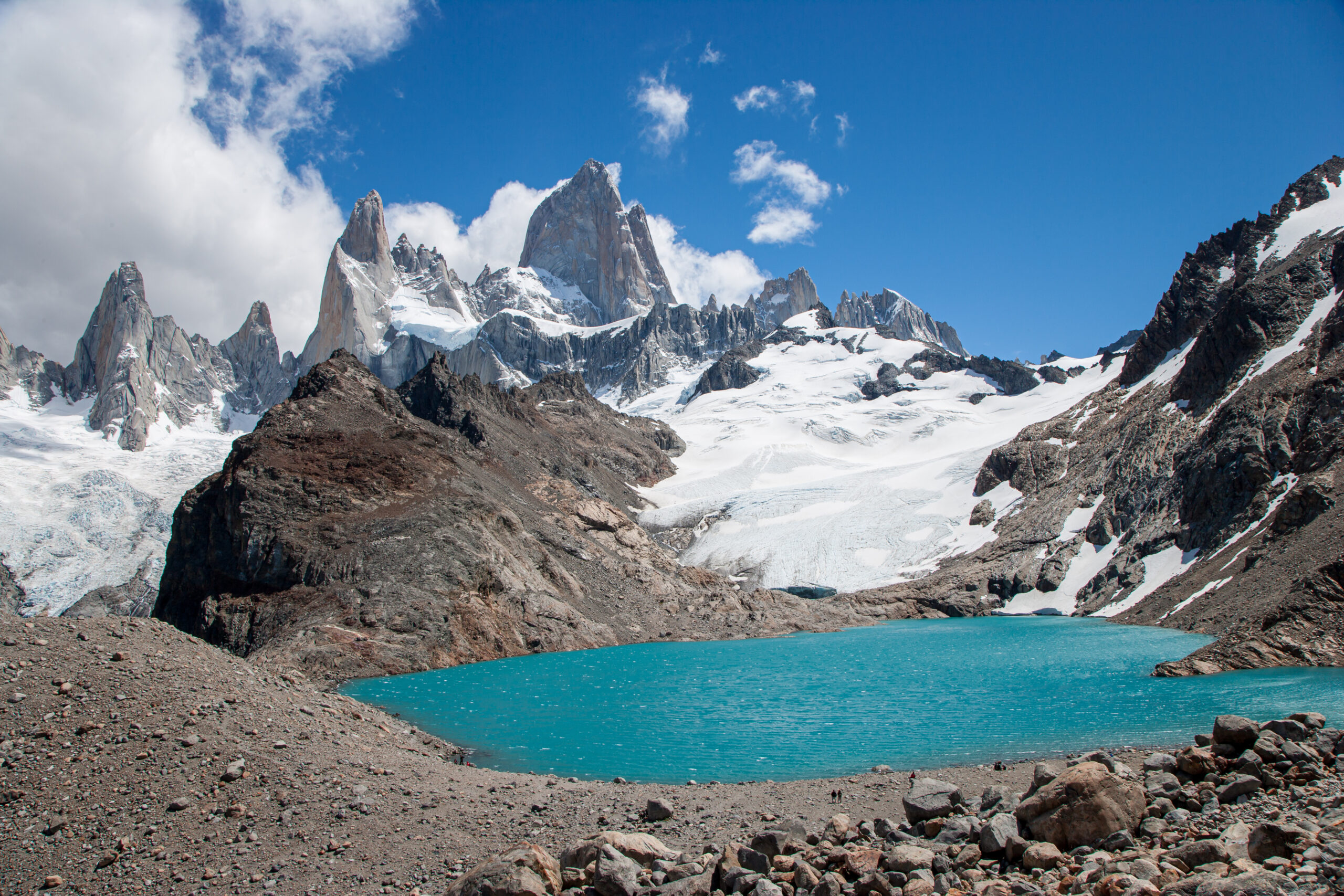
The Ludlow family — Travis, Dawson, and Walker — visited Chilean and Argentine Patagonia in January 2025, covering Torres del Paine (W Trek partial + day hikes), El Chaltén (Laguna de los Tres + Laguna Torre + Loma del Pliegue Tumbado), and Perito Moreno Glacier. Specifically, we packed a refugio-based system (no camping) with daypacks for individual hikes.
Total weight per person ranged from 14.2 kg (Walker) to 17.8 kg (Travis with extra photo gear) for the multi-day trekking portion. Notably, our actual pack weights ran lower than online “ultralight” recommendations suggest — primarily because refugio meals eliminated the need for cooking gear, food (beyond trail snacks), and water beyond daily 2-3L capacity. The recommendations in this guide reflect what we actually used and tested under sustained Patagonian conditions including a 110+ km/h wind day on Loma del Pliegue and a sustained-rain afternoon on the W Trek.
Planning a Trip? Find Lodging on Expedia
Hotels, flights, and vacation packages for the world’s great hiking and mountaineering destinations.
🎒 Patagonia Packing Framework
Patagonia packing requires a 4-layer clothing system plus 10 additional gear categories. First, the core 4-layer clothing system — base, mid, shell, insulation — handles all weather scenarios across the typical 10-25°C summer temperature range. Second, the layer system must work simultaneously: any time you’re hiking in Patagonia, you may need all four layers within an hour as weather changes.
Third, beyond clothing, 10 additional gear categories cover footwear, headwear, hands, backpack, hydration, sleep, technical, electronics, first aid, and personal items. Fourth, trip-type specific adjustments (W Trek vs O Circuit vs day hikes vs hotel-based) shift gear requirements substantially. Fifth, region-specific adjustments (Chilean side wetter, Argentine side drier and windier) fine-tune the layer emphasis.
Patagonia packing is the application of multi-layer cold-wet weather mountain hiking principles to the specific conditions of Chilean and Argentine Patagonia (49°-55° south latitude). Generally, the dominant climate factors are the Southern Patagonian Ice Field, the Andean rain shadow, and the unobstructed westerly winds of the Roaring Forties — producing the famous “cuatro estaciones en un día” (four seasons in a day) weather pattern. Specifically, this means even peak summer (December-February) requires the full cold-wet weather layer system, not just summer hiking clothes. Notably, the specific gear requirements differ meaningfully from other mountain destinations: Patagonia is windier than the Rockies, wetter than the Andes, and colder than most North American hiking destinations at similar latitudes.
Key Takeaways
- 4 essential layers: base + mid + shell + insulation. All four. Every trip.
- Waterproof shell is the most important investment: Gore-Tex 3-layer or equivalent, 20,000mm+ hydrostatic head.
- No cotton: replace cotton with merino wool or synthetic across all items.
- Trekking poles are mandatory: required for descents, scree, and wind stability.
- Hiking boots, not trail runners: B0-B1 rated, ankle support, broken in.
- Refugios need only sleeping bag liner; camping needs full 3-season bag.
- Chilean side prioritizes rain protection; Argentine side prioritizes wind protection.
- Target weight 12-18 kg for refugio-based trekking, 20-25 kg for camping.
- Total gear cost: $800-$2,500 depending on whether starting from scratch or upgrading existing gear.
- UV protection essential: high SPF sunscreen, UV-rated sunglasses, sun hat with neck protection.
The 4 Patagonia Packing Principles
Before diving into the 14 gear categories, understand the four foundational principles that govern every Patagonia packing decision. Generally, these principles emerged from Patagonia’s unique climate combination — extreme southern latitude, the Southern Patagonian Ice Field, the Andean rain shadow, and the unobstructed westerly winds of the Roaring Forties. Specifically, every gear choice should be evaluated against these four principles before adding to your packing list. Notably, the principles apply equally to Chilean (Torres del Paine) and Argentine (El Chaltén) Patagonia.
Principle 1: Layer for “Four Seasons in a Day”
Patagonia’s defining weather characteristic is the “cuatro estaciones en un día” pattern — sun, rain, sleet, and snow all possible within hours regardless of calendar month. Generally, this means even peak January summer requires the full 4-layer system: lightweight base layer, fleece or active insulation mid-layer, waterproof breathable shell, and warm puffy insulation. Specifically, the 4-layer system handles the typical Patagonia temperature range from 4-20°C (39-56°C), with the layers added or removed dynamically as conditions shift during the day. Notably, our 2025 January Ludlow family trip used all four layers within a single 90-minute period on Loma del Pliegue Tumbado — starting in the shell + insulation due to morning cold, stripping to base + mid for the climb, returning to all four layers when wind picked up at the ridge.
Principle 2: Waterproof, Not Water-Resistant
The waterproof shell jacket is the single most important investment for Patagonia. Generally, the threshold between water-resistant (DWR coating) and truly waterproof (membrane construction with 20,000mm+ hydrostatic head) is the difference between a good trip and a miserable one. Specifically, look for Gore-Tex 3-layer construction, eVent membrane, or equivalent modern waterproof breathable technology with at least 20,000mm hydrostatic head and 20,000 g/m²/day breathability. Notably, the lightweight 2.5-layer shells popular for trail running and casual hiking are not sufficient for sustained Patagonian rain — they wet out within 30-90 minutes of steady rain.
Principle 3: No Cotton, Anywhere
The single most common Patagonia packing mistake is bringing cotton. Generally, cotton retains moisture, dries slowly, and provides no insulation when wet — exactly the conditions that cause hypothermia in Patagonia’s frequent rain and wind. Specifically, this means replacing every cotton item: cotton t-shirts (replace with synthetic or merino), cotton underwear (replace with merino or synthetic), cotton socks (replace with merino wool — see our layering systems guide), and most critically cotton denim jeans (replace with quick-dry softshell hiking pants). Notably, even sleepwear should be non-cotton — refugios are notoriously variable in temperature and shared, so merino sleep clothes serve dual purposes.
Principle 4: Trekking Poles Are Mandatory
Trekking poles are not optional for Patagonia. Generally, three specific factors make poles essential: (1) brutal descents like the 400 m vertical loose-scree descent from Laguna de los Tres place enormous strain on knees; (2) the wind, especially on exposed ridges like Loma del Pliegue Tumbado, requires lateral pole anchoring to prevent being knocked off-balance; (3) river crossings and snow patches on shoulder-season trails benefit from pole stability. Specifically, our recommendation is collapsible aluminum or carbon fiber poles with adjustable length — see our complete trekking poles guide for specific model recommendations.

The Complete Master Packing List
The complete Patagonia packing list contains 87+ items across 14 gear categories. Generally, items are classified by importance: Essential (gold border — gear without which the trip should not proceed), Recommended (blue border — strongly suggested but with reasonable substitutes), and Conditional (green border — needed for specific trip types or seasons only). Specifically, the categories below are presented in priority order: layering system first (categories 1-4), then everything else.
1. Base Layers (Top and Bottom)
Merino wool 150-200 g/m² OR synthetic moisture-wicking · 2 tops, 1-2 bottoms
The foundation of the layering system. Wicks moisture away from skin and provides minimal active insulation.
What to pack:
- 2x long-sleeve base layer tops: Merino wool 150-200 g/m² weight (lighter for active days, mid-weight 200 g/m² for camp/sleep). One can be used as a backup if the primary gets wet.
- 1-2x base layer bottoms: Merino or synthetic. Multi-day trips warrant 2 pairs for hygiene; day hikes from a base only need 1 pair.
- 3-4x base layer underwear: Merino or synthetic boxer briefs/sport briefs. Multi-day trips need extras.
Merino vs synthetic: Generally, merino wool is preferred for multi-day trips due to its odor resistance — you can wear the same merino base for 3-5 days without significant smell, critical when laundry isn’t available. Specifically, synthetic base layers (Capilene, Polartec Power Dry) dry slightly faster but accumulate odor much faster. Notably, the Ludlow family used merino exclusively on the 2025 Patagonia trip and could comfortably wear the same base for 4-5 days between washes.
2. Mid-Layer Insulation
Fleece 200-300 weight OR active insulation (synthetic alpha-style) · 1 piece
Active warmth layer for moderate hiking effort. Sits between base and shell.
What to pack:
- 1x fleece pullover or jacket: 200-300 weight (Polartec Classic or equivalent). Lighter weights (100-150) insufficient for sustained cold; heavier weights (400+) too warm during active hiking.
- OR 1x active insulation piece: Modern synthetic alpha-style insulation (Polartec Alpha Direct, Patagonia Nano Air) provides similar warmth at lower weight, with better breathability during active hiking.
Why this matters: Generally, the mid-layer is the layer you’ll wear most often while actively hiking — your “default” outdoor temperature regulation. Specifically, fleece is heavier and bulkier but durable and budget-friendly. Notably, modern active insulation is lighter (200-250g vs 350-450g for equivalent warmth) and more breathable but costs 2-3x more and is less durable.
3. Waterproof Shell Jacket + Pants
Gore-Tex 3-layer or equivalent · 20,000mm+ hydrostatic head · 20,000 g/m²/day breathability
The single most important investment for Patagonia. Difference between good trip and miserable one.
What to pack:
- 1x waterproof breathable shell jacket: 3-layer Gore-Tex Pro, Gore-Tex Performance, eVent, or equivalent. Helmet-compatible adjustable hood with stiff brim, pit zips for ventilation, reinforced shoulders if carrying a pack, full-length water-resistant front zipper, multiple chest pockets accessible while wearing a pack.
- 1x waterproof shell pants: Full-zip side openings (allows putting on over boots), reinforced kick patches, taped seams. Lighter than jacket since they’re typically only worn in actual rain or for wind protection on exposed sections.
Specifications to look for: Generally, the threshold separating “real” waterproof from “splash-resistant” is the 20,000mm hydrostatic head mark. Specifically, anything below 15,000mm will wet out in sustained Patagonian rain. Notably, breathability is equally important — without 15,000+ g/m²/day MVTR (moisture vapor transmission rate), you’ll soak through from sweat even when not raining.
Reference brands meeting these specs: Arc’teryx Beta AR, Patagonia Triolet, Black Diamond Stormline (budget option that meets specs), Outdoor Research Foray (mid-range), Mountain Equipment Saltoro. Notably, the Ludlow family used Arc’teryx Beta SV and Patagonia Triolet for the 2025 trip — both performed flawlessly through sustained 6-hour rain on the W Trek.

4. Insulation Layer (Down or Synthetic Puffy)
700-800 fill down OR synthetic equivalent · 200-350g · For camp/refugio/morning warmth
Warm insulation for static situations: camp, refugio mornings, photo stops, wind/weather emergencies.
What to pack:
- 1x down or synthetic puffy jacket: 700-800 fill down provides best warmth-to-weight ratio at 200-350g total weight. Synthetic alternatives (PrimaLoft Gold, Coreloft, Thinsulate) are slightly heavier (250-400g) but retain insulation when wet — important for the rainy Chilean side.
Down vs synthetic decision: Generally, down is lighter and packs smaller (essential if pack volume is tight). Specifically, synthetic is better if traveling exclusively on the Chilean (wetter) side or if you have any concern about getting your insulation wet. Notably, for the typical Patagonia trip combining Chilean and Argentine sides, down with a water-resistant DWR treatment is the standard recommendation.
Reference specifications: Look for 700+ fill power down, 60-90g fill weight for standard puffy, shell fabric with DWR coating. Notably, “expedition-grade” 850-900 fill down jackets are overkill for Patagonia hiking — those are designed for static high-altitude mountaineering at -20°C and below.
5. Lower Body Layers
Hiking pants (softshell or quick-dry synthetic) + waterproof shell pants
Active hiking pants plus storm protection for legs.
What to pack:
- 2x hiking pants: Quick-dry synthetic or softshell construction. One pair as primary, one as backup/clean. Convertible pants (zip-off legs) are popular but unnecessary — Patagonia rarely warm enough to wear shorts. Standard hiking pants serve better.
- 1x lightweight running/comfort shorts (optional): For refugio evenings, sleeping, or unusually warm days. Synthetic, not cotton.
- (Shell pants covered in Category 3)
Avoid: Cotton denim jeans (#1 mistake), heavy mountaineering pants (overkill), and cargo shorts (legs need protection from wind chill and sun).
6. Footwear & Socks
B0-B1 hiking boots · 3-4 pairs merino mid-weight hiking socks · Gaiters (shoulder season)
Proper footwear prevents injury on Patagonia’s loose rock, scree, and varied terrain.
What to pack:
- 1x B0 or B1 hiking boots: B0 = light hiking boot (e.g., Salomon Quest 4D, Lowa Renegade GTX), B1 = approach/scrambling boot (e.g., La Sportiva Trango Trek, Scarpa Mistral GTX). Mid or high cut for ankle support. Waterproof Gore-Tex or equivalent membrane.
- 3-4 pairs merino wool mid-weight hiking socks: Smartwool Hiker, Darn Tough Mid-Weight, Icebreaker Hike+. Mid-weight (250-350 needles) appropriate for the temperature range. Pack 1 pair per 2-3 hiking days.
- 1 pair gaiters (shoulder season only): Lightweight ankle-height gaiters for snow patches and mud. Black Diamond Apex or equivalent. Not needed for peak summer.
- 1x camp shoes: Lightweight sneakers, Crocs, or sandals for refugio/hotel evenings. Saves wear on hiking boots and allows feet to recover.
Avoid: Heavy mountaineering boots (B2-B3) — these are designed for technical ice climbing, not hiking trails. They cause fatigue and are unnecessary unless climbing Mount Fitz Roy. Also avoid trail runners as primary footwear — insufficient ankle support and sole stiffness for Patagonia’s loose terrain.
Critical: Boots MUST be broken in. Generally, allow minimum 50-100 km of walking in your boots before the Patagonia trip. Specifically, blisters from new boots are the #1 medical issue affecting Patagonia hikers, with one of our 2025 trip companions developing severe blisters on Day 2 from boots worn for only 20 km before the trip.

7. Headwear
Sun hat with neck protection + warm beanie + buff/neck gaiter
Sun protection, warmth, and wind protection for head/neck — three distinct functions.
What to pack:
- 1x sun hat with neck protection: Wide-brimmed sun hat or baseball cap with attached neck cape. Patagonia UV is intense (high southern latitude + ozone thinning) — neck and ear sunburn is the most common skin injury.
- 1x warm beanie: Wool or synthetic, snug fit to stay on in wind. Worn under hood in cold/wet conditions, on its own for warm refugio evenings.
- 1x buff or neck gaiter: Multi-purpose merino or synthetic. Wears as neck protection, face mask in extreme wind, headband, and emergency dust mask. Worth its tiny weight 10x over.
8. Hand Protection
Lightweight liner gloves + warm gloves · Optional waterproof shell mittens
Hands lose heat rapidly in wind. Layered gloves match the body’s layering system.
What to pack:
- 1 pair lightweight liner gloves: Merino or synthetic. Worn alone for cool morning/evening hiking; under heavier gloves in cold conditions.
- 1 pair warm gloves: Polartec fleece or insulated softshell. Warm enough for static photography stops, ridge breaks, refugio evenings.
- 1 pair shell mittens (optional, shoulder season): Waterproof shell over insulated mitten — only needed for shoulder-season trips with snow exposure.
9. Backpack
35-50L day pack (refugio trekking) · 55-70L multi-day pack (camping)
Right-sized pack matched to trip type. Too small = exterior straps; too big = encourages overpacking.
Pack sizing by trip type:
- Day hikes only (El Chaltén base, Torres del Paine day-trips): 25-35L daypack with rain cover. Osprey Talon 33, Deuter Speed Lite 30, Gregory Citro 30. Holds layers, food, water, photography gear for a single day.
- W Trek refugio-based (4-5 day trek with refugios): 35-50L multi-day pack. Osprey Stratos 36, Deuter Aircontact Lite 45, Gregory Zulu 40. Holds 5 days of clothing, layers, food, photography gear — refugio meals eliminate cooking weight.
- O Circuit with camping (8-10 day full self-supported): 55-70L expedition pack. Osprey Atmos AG 65, Deuter Aircontact 65+10, Gregory Baltoro 65. Holds 10 days of food, tent, sleeping bag, cooking gear, full clothing system.
Critical features: Hip belt with proper sizing (carries 80% of weight), top-lid access, side compression straps, rain cover (often integrated), hydration reservoir compatibility, ice axe/pole carry loops.
10. Hydration System
2-3L capacity bladder or bottles · Water filter optional
Stay hydrated in cold-dry-windy conditions where thirst signals lag actual dehydration.
What to pack:
- 2L hydration reservoir (Camelbak, Platypus, Osprey Hydraulics) OR 2x 1L water bottles (Nalgene, lightweight Smartwater bottles).
- 1x backup water bottle: 0.5-1L. Provides redundancy if reservoir tube freezes (rare in summer) or springs leak.
- Water filter (optional): Sawyer Squeeze or Katadyn BeFree for refilling from streams. Not strictly required — Patagonia tap water is excellent and stream water is generally safe to drink untreated, but filter adds safety margin and is mandatory for serious camping.
- Electrolyte tablets: 10-20 tablets total. Important for sweat replacement on long hikes despite cool temperatures.
11. Sleep System (Trip-Type Specific)
Refugios: silk liner only (100-150g) · Camping: 3-season sleeping bag rated -5°C + pad
Refugio vs camping determines sleep gear dramatically. Choose the right tier.
Refugio-based trekking (W Trek standard):
- 1x silk or cotton sleeping bag liner: Silk is lightest (100-150g) and adequate for warm refugios; cotton is warmer (200-300g) but bulkier. Refugios provide bedding and blankets — the liner adds a hygiene layer between you and shared bedding.
- Ear plugs: Refugio dorms can be noisy. 2-3 pairs of foam earplugs.
- Sleep mask: Useful for long summer days when bedrooms aren’t fully dark.
Camping (O Circuit or wilderness):
- 1x sleeping bag rated -5°C / -5°C: 3-season down bag preferred for weight (down 700+ fill at 800-1200g). Synthetic alternative if traveling in heavy rain season.
- 1x sleeping pad: Inflatable insulated pad (Therm-a-Rest NeoAir XLite, Sea to Summit Comfort Plus) with R-value 3.5+. Saves significant weight vs foam pads.
- 1x sleeping bag liner: Adds 5-10°C warmth and protects bag from body oils. Silk preferred.
- 1x compression sack: For bag storage in pack.
12. Technical Gear
Trekking poles (mandatory) · UV-rated sunglasses · Microspikes (shoulder season only)
Specific gear that prevents injury and addresses Patagonian conditions.
What to pack:
- 1 pair trekking poles: Collapsible aluminum or carbon fiber. Z-fold (smaller packed) preferred for travel. Adjustable length to match different hikers. Black Diamond Distance Carbon Z, Leki Micro Vario, Mountainsmith Pinnacle. Plan to use poles every day on every hike.
- 1 pair UV-rated sunglasses: Category 3 or 4 lens darkness. Patagonia sun is intense at high latitude. Wraparound design preferred for wind protection. Julbo Camino, Smith Optics Pivlock, Oakley Flak Jacket.
- 1 pair microspikes (shoulder season only): Kahtoola MICROspikes or equivalent. For October-November or March-April trips when snow/ice may be present on higher trails. Not needed for peak summer (December-February).
- NOT crampons: Full crampons are only needed for technical mountaineering (climbing Mount Fitz Roy or Cerro Torre), not for any hiking trail.
13. Electronics & Photography
Headlamp (essential) + power bank + camera + chargers
Reliable power and lighting in environments with limited or no charging.
What to pack:
- 1x headlamp + spare batteries: Petzl Actik Core (rechargeable + AAA backup), Black Diamond Storm 400, Nitecore NU25. Critical for early sunrise starts and emergency situations.
- 1x 10,000-20,000 mAh power bank: Enough to recharge phone 3-5 times and camera 1-2 times. Refugios have limited shared charging; carry your own power.
- Phone with offline maps: Maps.me, Gaia GPS, or AllTrails Pro downloaded offline. Excellent backup to paper maps.
- Camera: Smartphone cameras now capture exceptional Patagonia images. Dedicated cameras (mirrorless or DSLR with 24-70mm or 18-55mm zoom) for serious photographers.
- Charging cables and adapters: USB-C and Lightning cables, Argentina/Chile plug adapter (Type C and Type I).
- Memory cards: 64-128GB minimum if shooting photos extensively. SD card + microSD card backup.
14. First Aid & Personal Items
Comprehensive first aid kit + sunscreen + toiletries + documents
Self-sufficiency for medical emergencies and personal care in remote areas.
First aid kit contents:
- Blister treatment: Compeed blister patches, moleskin, leukotape (most important — blisters are #1 medical issue)
- Adhesive bandages (various sizes), butterfly closures, sterile gauze
- Antiseptic wipes, antibiotic ointment
- Pain relievers: ibuprofen (200mg), acetaminophen, aspirin (low-dose)
- Anti-diarrheal: Imodium (loperamide)
- Antihistamines: Benadryl, Claritin
- Personal prescriptions in original containers with documentation
- Tweezers, small scissors, safety pins
- Elastic bandage, athletic tape
- Emergency whistle, signal mirror (especially for solo hikers)
Sun protection: SPF 50+ broad-spectrum sunscreen (face + body), SPF 30+ lip balm, sunglasses (covered in Category 12).
Toiletries: Travel toothbrush + small toothpaste, biodegradable soap (Sea to Summit Wilderness Wash), small microfiber towel, 1-2 rolls toilet paper, hand sanitizer (multiple small bottles), wet wipes, deodorant, contact lens supplies if applicable.
Documents: Passport (with copies stored separately), travel insurance documentation with emergency phone numbers, cash in USD and local currency (CLP for Chile, ARS for Argentina), credit cards (notify banks of travel), proof of refugio bookings, return flight information.
Region-Specific Adjustments: Chilean vs Argentine Side
The two sides of Patagonia have meaningfully different gear emphasis due to the Andean rain shadow effect. Generally, Chilean Patagonia (Torres del Paine) is wetter due to its position west of the Andes catching Pacific moisture, while Argentine Patagonia (El Chaltén) is drier but with stronger winds.
| Factor | Chilean Side (Torres del Paine) | Argentine Side (El Chaltén) |
|---|---|---|
| Annual Rainfall | 500-700 mm | 200-400 mm |
| Wind | Strong | Stronger (more exposed) |
| Shell Priority | Waterproof critical | Windproof critical |
| Insulation | Synthetic preferred (wet) | Down acceptable |
| Gaiters | Useful | Less needed |
| Backup Layer | Extra synthetic layer | Extra wind layer |
| Trail Conditions | More mud | More dust |
| CONAF Fees | $49 USD entry | Free entry |
Chilean Side Adjustments (Torres del Paine, W Trek, O Circuit)
For Chilean Patagonia trips, prioritize rain protection:
- Confirm shell jacket meets 20,000mm+ hydrostatic head spec (no compromises on the wetter side)
- Pack synthetic insulation puffy (PrimaLoft Gold or equivalent) rather than down — synthetic retains insulation when wet
- Add waterproof gaiters for muddy trails
- Pack 1 extra base layer (extra rotation if items get wet)
- Add stuff sacks / dry bags for organizing pack contents
- Pack quick-dry trail running gaiters for ankle protection in mud
Argentine Side Adjustments (El Chaltén, Laguna de los Tres)
For Argentine Patagonia trips, prioritize wind protection:
- Shell jacket priority is wind-proofing over absolute waterproofing (still need both)
- Down insulation acceptable (less wet exposure risk)
- Eyewear with side shields for wind/dust protection
- Buff/face protection becomes more important
- Headlamp with extra battery (longer summer daylight but ridge wind can blow caps off — strap backup)
- Camera lens protection (Argentine dust gets everywhere)
Season-Specific Adjustments
Peak summer vs shoulder season requires different gear emphasis. Generally, the layering system stays the same, but weight allocations shift.
Peak Summer (December-February)
- Standard 4-layer system as described
- Lighter weight base layers (150 g/m² merino sufficient)
- Lighter mid-layer (200-weight fleece)
- Sun protection prioritized over cold protection
- NO microspikes needed
- Lighter sleeping bag liner sufficient
Shoulder Season (November, March-April)
- Heavier base layers (200 g/m² merino)
- Heavier mid-layer (300-weight fleece) OR active insulation
- Heavier insulation puffy (heavier down or thicker synthetic)
- Microspikes for higher trails if snow remaining
- Heavier sleeping bag liner if camping
- Extra hand protection (warmer gloves, shell mittens)
- Heavier socks (mid-weight to heavy)
Trip-Type Specific Lists
The packing list adjusts significantly based on whether you’re doing the W Trek (refugio), O Circuit (camping), day hikes from El Chaltén, or a comfortable hotel-based tour. Each requires different gear emphasis.

W Trek Refugio-Based (4-5 days)
The W Trek staying in refugios is the most popular Patagonia multi-day option. Generally, all meals at refugios eliminates cooking and most food weight. Specifically, target pack weight is 12-18 kg.
Add to base list:
- Sleeping bag liner (silk preferred)
- 2-3 days clothing rotation
- Snacks for between refugio meals (energy bars, dried fruit)
- Earplugs (refugio dorms)
Remove from base list: Tent, sleeping bag (use liner only), sleeping pad, cooking gear, stove, fuel, dishes, most food.
O Circuit with Camping (8-10 days)
The full O Circuit including the remote backside requires substantial additional camping gear. Generally, several sections require camping rather than refugios. Specifically, target pack weight is 22-32 kg.
Add to base list:
- 3-season sleeping bag rated -5°C (-7°C for safety margin)
- Sleeping pad (R-value 3.5+)
- 2-person tent (or share 3-person between two)
- Stove (Jetboil or MSR Pocket Rocket 2)
- Fuel canisters (cannot fly with these — buy in Puerto Natales)
- Cooking pot/cup
- Spork, knife
- 5-7 days of dehydrated food (Mountain House, Backpacker’s Pantry, Real Turmat)
- Bear-safe food storage (rope + dry bag for hanging)
- Water filter (mandatory for camping)
El Chaltén Day Hikes Only (3-5 days from village)
El Chaltén-based day hiking is the lightest packing scenario. Generally, return to village base each evening eliminates most overnight requirements. Specifically, target day pack weight is 4-8 kg.
Day pack contents:
- All 4 clothing layers (you may wear or carry depending on weather)
- Lunch + snacks for full-day hike
- 2-3L water
- First aid kit (lightweight day version)
- Headlamp (in case hike runs long)
- Camera
- Sun protection
- Trekking poles
Comfortable Hotel-Based Touring
Some visitors stay in luxury hotels (Hosteria El Pilar, Tierra Patagonia, Explora Patagonia) and only do day excursions. Generally, this scenario allows the lightest packing — essentially day pack only.
Add to base list:
- One nicer outfit for hotel evenings (still synthetic/merino, not cotton)
- Camp shoes or sandals
- Swimsuit (some hotels have hot tubs)
Remove from base list: Most camping gear, multi-day rotation clothing, heavy cooking gear, most first aid (hotels provide basic).
What NOT to Pack
The most valuable advice in this guide may be what to leave at home. Generally, these common mistakes add weight without value and represent the #1 packing errors made by first-time Patagonia visitors.
(1) Cotton anything — t-shirts, jeans, socks. Cotton kills in cold-wet conditions. (2) Heavy mountaineering boots (B2-B3 grade) — overkill for hiking trails, cause fatigue. (3) Umbrellas — useless in horizontal Patagonian wind. (4) Excessive clothing rotation — 7-10 days of clothing is excessive; merino allows 3-4 days between washes. (5) Glass containers — weight penalty and breakage risk; use plastic or aluminum. (6) Formal/dressy clothes — restaurants are casual; one nicer shirt sufficient at most. (7) Trail running shoes as primary footwear — insufficient ankle support for Patagonia’s loose terrain.
Weight & Volume Targets
Target pack weights vary dramatically by trip type. Generally, the targets below represent achievable weight ranges for properly equipped hikers using the gear specifications above.
| Trip Type | Pack Weight Target | Volume Range | What’s Different |
|---|---|---|---|
| Day hikes from base | 4-8 kg | 25-35L | Single-day only |
| W Trek refugios (4-5 days) | 12-18 kg | 35-50L | No cooking, refugio meals |
| O Circuit refugios partial | 14-20 kg | 45-55L | Mixed refugio/camping |
| O Circuit full camping (8-10 days) | 22-32 kg | 55-70L | Self-supported with food |
| Hotel touring | 3-6 kg | 25-35L | Hotel base, day excursions |
Generally, your loaded pack weight should not exceed 20% of your body weight for sustained multi-day comfort. Specifically, a 70 kg hiker should target maximum 14 kg pack weight; a 90 kg hiker can carry up to 18 kg. Notably, Patagonian trails have significant elevation gain (Base Torres = 850 m, Laguna de los Tres = 750 m) — heavy packs amplify fatigue dramatically on these climbs. If your pack exceeds 20% of body weight, prioritize cutting non-essential items.
Where to Buy Patagonia Gear
For the typical international visitor, purchase gear at home before departure — the variety and warranty support is dramatically better than in-country options.
Premium retailers (US): REI, Backcountry, Moosejaw, Patagonia.com (the brand, not the region), Arc’teryx.
Premium retailers (Europe): Cotswold Outdoor, Snow + Rock, Bergfreunde, Alpinetrek, Globetrotter.
In-country gear shops: Puerto Natales has several gear shops (Erratic Rock for rental gear, Fortuna Patagonia) that can fill gaps but selection is limited and prices are 30-50% higher than home country pricing. El Chaltén has a few small gear shops with similar limitations.
Rental options: Gear rental in Puerto Natales and El Chaltén exists but is generally not recommended for sustained multi-day use. Specifically, rental sleeping bags, tents, and stoves are typical, but rental clothing is rare and rental boots create blister risks. Notably, renting only makes sense for one-off camping nights or specific items you can’t justify buying.
Frequently Asked Questions About Patagonia Packing
What do I need to pack for Patagonia?
For a Patagonia hiking trip you need a complete layering system across 14 gear categories: lightweight base layers (merino or synthetic), fleece or active insulation mid-layer, waterproof breathable shell jacket and pants, a down or synthetic puffy jacket, hiking pants, B0-B1 hiking boots with merino socks, sun hat, warm beanie, buff, light and warm gloves, 35-50L day pack or 55-70L multi-day pack, hydration system, sleep system (bag liner for refugios or full sleeping bag for camping), trekking poles, UV-rated sunglasses, headlamp, first aid kit, and basic personal items. Total weight typically runs 15-22 kg for refugio-based multi-day trekking or 25-35 kg for camping the O Circuit.
What kind of jacket do I need for Patagonia?
Patagonia requires a high-performance waterproof breathable shell jacket as your most important investment. Look for a 3-layer Gore-Tex Pro or equivalent membrane with at least 20,000mm hydrostatic head waterproof rating and 20,000 g/m²/day breathability. The jacket should have a helmet-compatible adjustable hood, pit zips for ventilation, and reinforced shoulders if carrying a pack. Lightweight 2.5-layer shells are not sufficient for sustained Patagonian conditions — invest in the heavier 3-layer construction. Pair with a down or synthetic puffy for camp wear and waterproof shell pants for full storm protection.
Do I need hiking boots or running shoes for Patagonia?
Hiking boots are strongly recommended over trail runners. Look for B0 or B1 rated hiking boots — these are lightweight mountaineering boots with sufficient ankle support and stiffness for loose rock and scree common on Patagonian trails. The brutal final climbs to Laguna de los Tres (400 m vertical on scree) and Base Torres are where ankle support and boot stiffness matter most. Heavy mountaineering boots (B2-B3) are overkill — those are for technical ice climbing. Make sure boots are properly broken in before your trip.
Are trekking poles necessary for Patagonia?
Yes — trekking poles are essential, not optional. The brutal final descents on Laguna de los Tres and Base Torres place enormous strain on knees without poles. Loose rock and scree sections benefit dramatically from pole stability. Patagonian winds can knock hikers off-balance on exposed sections where poles provide critical anchoring. Both Z-fold (smaller packed) and telescoping poles work. Carbon fiber is lighter; aluminum is more durable. Plan to use poles every day on every hike.
What sleeping bag do I need for refugios?
For refugio-based trekking (W Trek standard accommodations), you only need a sleeping bag liner — not a full sleeping bag. Refugios provide beds with bedding and blankets; the liner adds a hygiene layer between you and the shared bedding. Silk liners are lightest (100-150g); cotton liners are warmer (200-300g) but bulkier. For camping the O Circuit or wilderness camping, you need a full 3-season sleeping bag rated to approximately -5°C (-5°C) with appropriate sleeping pad.
What is the most common Patagonia packing mistake?
The most common mistake is bringing cotton. Cotton retains moisture, dries slowly, and provides no insulation when wet — exactly the conditions that cause hypothermia in Patagonia’s frequent rain and wind. This includes cotton t-shirts (replace with synthetic or merino), cotton socks (replace with merino), and most importantly cotton denim jeans (replace with quick-dry hiking pants). Other common mistakes: too much gear (overpacking), insufficient rain protection (relying on water-resistant rather than fully waterproof), and inadequate wind protection.
How much should my pack weigh for Patagonia?
Target pack weight depends on trip type. For W Trek refugio-based with all meals included at refugios, target 12-18 kg total. For O Circuit with some camping, target 18-25 kg. For full self-supported camping the O Circuit, target 22-32 kg. The layering system itself accounts for approximately 3-4 kg, with boots and clothing for another 2-3 kg, leaving 6-25 kg for backpack contents depending on accommodation style. The 20% rule applies: your loaded pack shouldn’t exceed 20% of your body weight for sustained comfort.
Do I need crampons for Patagonia?
Crampons are not required for standard Patagonia hiking — but lightweight microspikes can be valuable for shoulder seasons. The W Trek, O Circuit, Base Torres, and El Chaltén day hikes do not cross glaciers and do not require technical mountaineering equipment. Microspikes (lightweight chain-and-spike traction devices, 350-500g) can be useful for early-season (October-November) or late-season (March-April) trips when trail sections may still have snow or ice. Full crampons are only required for technical mountaineering objectives like climbing Mount Fitz Roy or Cerro Torre.
What’s different about packing for the Argentine vs Chilean side?
The Chilean side (Torres del Paine) is wetter, so prioritize better rain protection — waterproof gaiters, fully waterproof rain gear (not water-resistant), synthetic insulation puffy in case down gets wet. The Argentine side (El Chaltén) is drier but windier — prioritize stronger wind protection on the shell layer, eyewear with side shields, headlamp strap backup. Both sides require the full layering system, but the emphasis shifts: rain emphasis Chile, wind emphasis Argentina.
What should I NOT pack for Patagonia?
Avoid these common mistakes. (1) Cotton anything (t-shirts, jeans, socks) — cotton kills in cold-wet conditions. (2) Heavy mountaineering boots (B2-B3 grade) — overkill, cause foot fatigue. (3) Umbrellas — useless in Patagonian wind. (4) Excessive luxury items — laundry is limited; 7-10 days of clothing is excessive (3-4 days worth is plenty with merino). (5) Glass containers — weight penalty and breakage risk. (6) Formal/dressy clothes — restaurants are casual; one nicer shirt at most. (7) Trail runners as primary footwear — insufficient ankle support.
Methodology & Editorial Standards
How This Guide Was Created
1. Primary Source: First-Hand Field Testing
This packing list reflects the Ludlow family’s January 2025 Patagonia trip covering Torres del Paine (W Trek partial + day hikes), El Chaltén (Laguna de los Tres, Laguna Torre, Loma del Pliegue Tumbado day hikes), and Perito Moreno Glacier. Every gear category was tested in actual Patagonian conditions including a 110+ km/h wind day, sustained 6-hour rain on the W Trek, and the brutal scree descent from Laguna de los Tres.
2. Cross-Reference with Existing Gear Authority
Recommendations are cross-referenced against Global Summit Guide’s existing 122+ gear guide articles, including specific deep-dives like layering systems for mountaineering, how to choose hiking boots, best trekking poles 2026, and best sleeping bags 2026.
3. Manufacturer Specifications
Specific gear specifications (hydrostatic head ratings, fill power, fabric weights) reflect current manufacturer published data verified through brand websites including Arc’teryx, Patagonia (the brand), Black Diamond, Petzl, Osprey, Deuter, Gregory, Smartwool, Darn Tough, and equivalent leading manufacturers.
4. Editorial Independence
No affiliate partnerships influence recommendations. Specific brands are mentioned only where they exemplify a category’s specifications, not as endorsements. Generally, equivalent specifications can be found across competing brands at similar price points.
5. Update Cycle
This guide is reviewed quarterly. Specifically, the next scheduled review is September 2026. Notably, gear specifications and current pricing may shift; verify current data directly with manufacturers within 4-8 weeks of trip booking.
6. Author Credentials
Travis Ludlow is the editor of Global Summit Guide. Specifically, Travis has personally tested gear across mountaineering destinations including Patagonia (2025), Mount Rainier, Kilimanjaro, Mexican volcanoes, and Andean peaks. Safety review by Dawson Ludlow (Wilderness First Aid certified). Gear review by Walker Ludlow (extensive Pacific Northwest mountaineering background).
Sources and References
Numbered Source References
This Patagonia packing list synthesizes data from manufacturer specifications, scientific literature on cold-weather hiking, current 2026 commercial operator gear recommendations, and personal field research from the Ludlow family’s 2025 Patagonia visit.
- Global Summit Guide — Layering Systems for Mountaineering · https://globalsummitguide.com/layering-systems-for-mountaineering/ — Detailed 4-layer system explanation referenced throughout this guide.
- Global Summit Guide — Mountaineering Boots Guide · https://globalsummitguide.com/mountaineering-boots-guide-how-to-choose/ — Boot category specifications (B0, B1, B2, B3) referenced for Patagonia hiking recommendations.
- Global Summit Guide — Best Trekking Poles 2026 · https://globalsummitguide.com/best-trekking-poles-in-2026-ranked-for-every-hiker/ — Pole specifications and brand recommendations.
- Global Summit Guide — Best Sleeping Bags 2026 · https://globalsummitguide.com/best-sleeping-bags-for-high-altitude-camping-2026/ — Sleeping bag specifications for camping the O Circuit.
- Global Summit Guide — Microspikes vs Crampons · https://globalsummitguide.com/microspikes-vs-crampons-decision-guide/ — Traction device guidance for shoulder season Patagonia trips.
- Dirección Meteorológica de Chile (DMC) · https://www.meteochile.gob.cl/ — Official Chilean meteorological data for Torres del Paine region weather statistics.
- Servicio Meteorológico Nacional (SMN) Argentina · https://www.smn.gob.ar/ — Official Argentine meteorological data for El Chaltén/Santa Cruz region weather statistics.
- CONAF (Corporación Nacional Forestal Chile) · https://www.conaf.cl/parques/parque-nacional-torres-del-paine/ — Official Torres del Paine National Park gear requirements and trail conditions.
- Gore-Tex Technology Documentation · https://www.gore-tex.com/ — Membrane specifications and waterproof breathable performance data referenced for shell jacket recommendations.
- Internal Global Summit Guide Research — Direct field observations and gear testing from the 2025 Ludlow family Patagonia visit including weight measurements, performance assessments, and comparative analysis of multi-brand gear configurations.
Methodology note. Quarterly review cycle — next review September 2026. Gear specifications and pricing evolve continuously; verify current information directly with manufacturers and retailers within 4-8 weeks of trip booking.
About the Author
Plan Your Patagonia Trip
Pack Smart, Hike Patagonia
The right gear transforms the Patagonia experience from a survival exercise into an unforgettable trip. Generally, invest in the waterproof shell first, then build the rest of the layering system around it. Specifically, our 2025 Ludlow family experience confirmed: proper layering matters more than expensive accessories.
Best Time to Visit Patagonia → Torres del Paine Guide →Was this helpful?
🏔Related gear guides
🧭Explore & compare
Global Summit Guide is an independent mountaineering resource founded in 2026. The team combines first-hand trekking and climbing experience with in-depth research and professional health and nutrition review to help climbers choose objectives, prepare properly, and stay safe.
Health, altitude, and nutrition content is reviewed by Taylor Ludlow (Registered Nurse) and Brigg Hoopes (Nutritionist).
What We Don't Know Yet
Mountain information changes quickly. This box explains the limits of what this page can responsibly promise.
- Weather, snowpack, avalanche risk, road access, and route conditions can change quickly and may be different on your climbing dates.
- Total trip cost can change with flights, lodging, guide pricing, permits, gear rentals, transportation, and exchange rates.
- Gear requirements can change by season, route variation, weather window, personal cold tolerance, and guide-service requirements.
Verify current conditions with official land managers, guide services, local forecasts, and current route reports before booking or climbing.
Mountaineering, rock and ice climbing, glacier travel, and high-altitude activity are inherently dangerous and can result in serious injury or death. The information on Global Summit Guide is provided for general informational and educational purposes only and is not a substitute for professional instruction, qualified guiding, proper equipment, or your own judgment and experience.
Route conditions, weather, snowpack, permits, regulations, and hazards change constantly and may differ from what is described here. Details may be incomplete, out of date, or contain errors. Always verify current information with local authorities, certified guides, and official sources before making any decision in the mountains.
Nothing on this site is medical, legal, or financial advice. Our fitness, acclimatization, altitude, and nutrition content is general in nature; consult a qualified physician before beginning any strenuous exercise program or exposing yourself to high altitude.
You are solely responsible for your own safety and decisions. To the fullest extent permitted by law, Global Summit Guide and its team accept no liability for any loss, injury, damage, or expense arising from use of, or reliance on, this information. By using this site you acknowledge these risks and accept these terms.
Some links on this site may be affiliate links. If you buy through them we may earn a small commission at no extra cost to you; this never affects our recommendations.
Global Summit Guide recommendation path
Next Best Mountain to Research
Use these recommendations to continue the right planning path instead of stopping on one page.
Use current permit, weather, route, and operator information before booking or climbing.