
Last updated September 17, 2026

Mount Sanford Climb Guide: North Ramp, Sheep Glacier & Alaska Expedition Planning
Mount Sanford is a massive glaciated volcano in Wrangell–St. Elias National Park. Its standard north-side expedition is technically straightforward by big-Alaska standards, but the combination of crevasses, an icefall, 16,237-foot altitude, aircraft logistics, severe weather and remote rescue makes it a serious expedition—not an easy walk-up.
Sanford Is a Glacier Expedition With Modest Technical Climbing and Big Consequences.
The standard expedition reaches the lower Sheep Glacier by chartered aircraft, then climbs through crevassed glacier terrain and a route-finding-intensive icefall before gaining the broad north-side ramp. Current St. Elias Alpine Guides programming rates the objective Alaska Grade 2.
The route does not require sustained technical rock or steep ice climbing in normal conditions. What it does require is a team that can travel roped on glaciers, execute crevasse rescue, camp in severe cold, manage altitude, navigate whiteout terrain and remain self-sufficient if weather delays the climb or aircraft pickup.
Mount Sanford Rises East of the Copper River Basin.
The summit sits deep inside the Wrangell–St. Elias mountain system. Glennallen and the Copper River corridor provide the practical western staging side, while the climbing route itself begins in glacier terrain far from roads.
Sheep Glacier to the North Ramp
The current route pattern is simple to describe and serious to execute: land low, move through broken glacier terrain, gain the broad ramp, acclimatize progressively and wait for a safe summit window.
Fly In, Build Camp, Reassess the Glacier
Current guided itineraries use a ski-plane flight to the lower Sheep Glacier. Landing location, snow surface and the exact beginning of the route are condition dependent. Once the aircraft leaves, the team is operating in a remote glacier environment with no fixed camp infrastructure.
The Lower Mountain Holds the Most Complex Route-Finding.
St. Elias Alpine Guides describes giant crevasse fields and a tricky icefall on the approach to the glacial ramp. This is why calling Sanford “non-technical” can be misleading: the route may lack steep climbing pitches, yet it still demands competent rope-team travel, rescue systems and active route selection.
Long, Broad Glacier Travel Replaces Technical Pitches.
Above the lower broken glacier, the mountain opens onto the broad north-side ramp. The terrain is generally less technical, but the vertical scale, wind exposure and altitude increase. Load shuttles or sled-assisted carries may be used depending on snow and team strategy.
Altitude and Weather Become the Main Filters.
The upper climb continues toward Sanford’s broad summit area. A successful summit day depends less on difficult climbing moves than on a stable weather window, firm enough travel conditions, a well-acclimatized team and enough reserve to reverse the entire route.
Wrangell–St. Elias Is a Self-Reliance Environment.
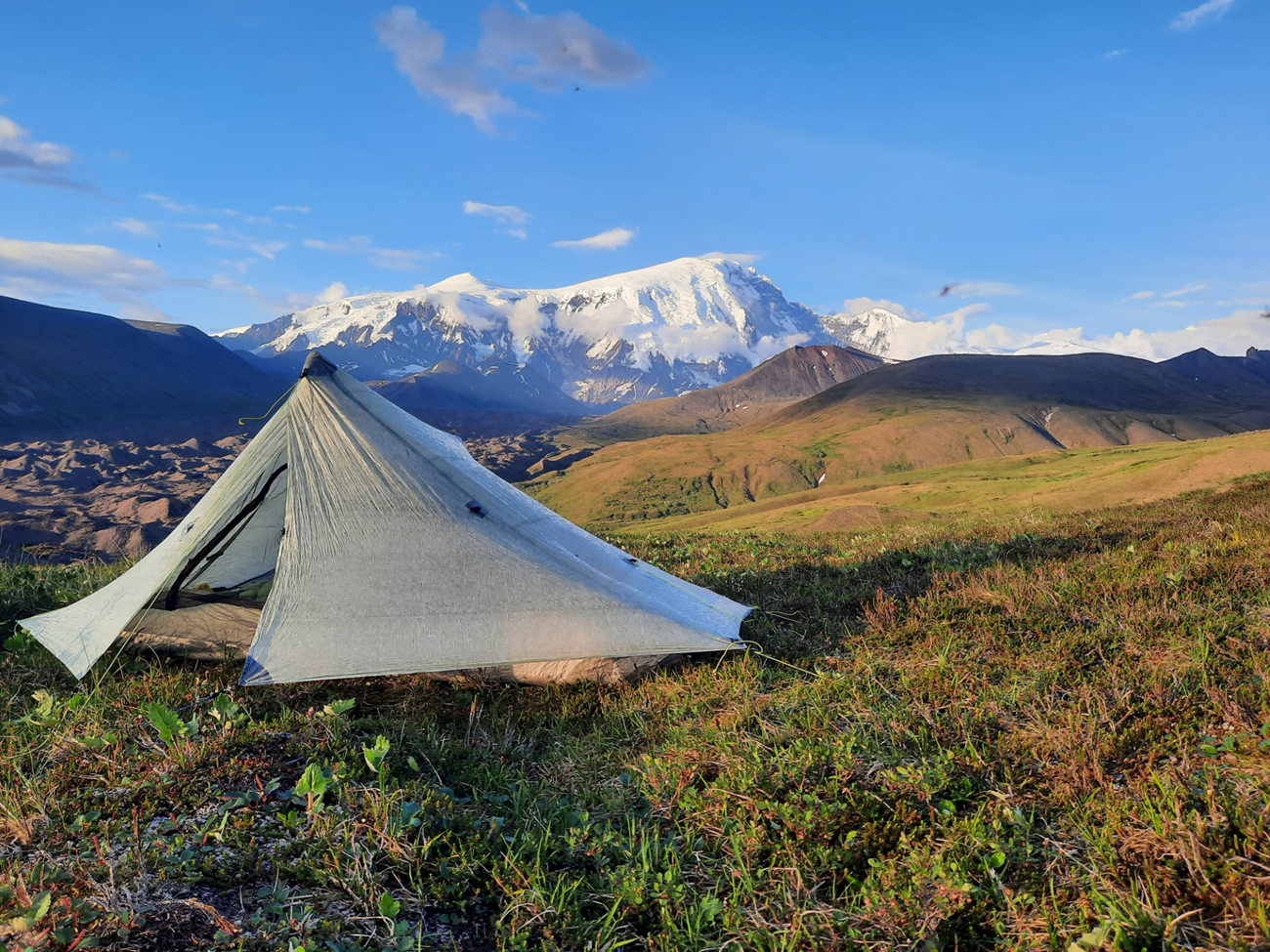
NPS describes this wilderness as immense, rugged and demanding of a high degree of self-reliance. Sanford’s standard route may be technically moderate by Alaska standards, but the team still has to solve weather, glacier travel, camps, communications, rescue and aircraft delays far from road access.
Fly-In Logistics Without the “Only Way In” Myth.
NPS documents multiple remote backcountry access patterns in this part of the park, including a Sanford Uplands route between airstrips. For the summit climb, however, modern expeditions normally use aircraft to reach the Sheep Glacier.
Book Air Access Early
Small-aircraft access is weather sensitive and operator capacity is limited. Confirm payload, skis, duffel limits, fuel restrictions and pickup procedures directly with a current authorized operator.
Build a Flexible Ground Day
Use a pre-flight day for food, fuel, team gear, communication checks and rescue-system review. A weather hold before the flight is normal expedition friction, not a failure.
Carry Delay Margin
The pickup is also weather dependent. Keep extra food and fuel at the landing zone and avoid a tight same-day connection to a commercial flight home.
Plan Around Ten Mountain Days—Then Add Travel and Weather Margin.
Current St. Elias Alpine Guides programming uses a 13-day Alaska itinerary with approximately 10 days on the mountain. Independent teams may move differently, but the structure is useful.
Anchorage + staging
Travel inland, consolidate gear, review glacier systems, confirm aircraft and wait for a flyable weather window.
Fly to Sheep Glacier
Land, establish the first camp, organize ropes/sleds and identify a safe line through the lower glacier.
Move + acclimatize
Progress through crevasse terrain and onto the broad ramp while using carries and camp moves to control altitude gain.
Summit + reverse
Use the best weather window, descend the same system and rebuild margin for the aircraft pickup.
When to Climb Mount Sanford
There is no official NPS “open season” for Sanford. The strongest current signal comes from guide scheduling and the physical tradeoff between cold, snow bridges, glacier breakup and aircraft access.
Primary Current Pattern
Current guided programming centers here. Expect real cold, but generally stronger snow coverage and a spring glacier surface suited to travel and skiing.
Condition Dependent
Long daylight can help, but warming changes snow bridges and lower-glacier travel. Use current pilot, guide and ranger information rather than assuming June is automatically better.
More Glacier Complexity
Warmer conditions can expose more crevasses and degrade snow travel. Private specialist objectives may still occur, but this is not the clearest default window for the standard spring-style expedition.
Specialist Only
Cold, darkness, storms and aircraft limitations become major expedition problems. This is not the normal season for a first Sanford climb.
Skills Matter More Than Technical Grade.
NPS says peaks above 10,000 feet in the park are glaciated and typically require long technical expeditions. Sanford is on the less technical end of that spectrum, not outside it.
Rope-Team Movement
Travel efficiently while maintaining rope spacing, arrest readiness and awareness of changing crevasse patterns.
Crevasse Systems
Every independent team member should understand arrest, anchors, hauling systems and how the plan changes if the rescuer is also loaded with a sled.
Cold-Weather Systems
Tents, stoves, snow melting, fuel planning, insulation and camp placement must remain functional through multi-day weather holds.
Whiteout Discipline
A broad glacier can become featureless. GPS is useful, but route memory, bearings and redundant navigation still matter.
Progressive Acclimatization
Sixteen thousand feet is high enough for serious altitude illness. Camp moves should be paced around symptoms and recovery, not a rigid schedule.
Know When to Wait
Sanford rewards conservative decisions: wait out the icefall, storm or summit wind rather than spending safety margin simply because the route is technically moderate.
Sanford Accidents Are More Likely to Compound Than Arrive Alone.
A crevasse fall, storm or altitude problem becomes more serious because help is remote and aircraft rescue may not be immediately possible.
Glacier + altitude
Crevasses, icefall, cold, wind, whiteout and 16,237-foot elevation.
Remoteness + delay
Weather prevents movement, aircraft pickup or rapid outside assistance.
Self-rescue matters
A problem that is manageable near a road can become an expedition emergency in the Wrangells.
What Changes From a Cascade Glacier Climb?
The exact list should come from the current route conditions and guide or team plan. The key change is redundancy and self-sufficiency over many days.
| System | Core equipment | Why Sanford needs it | Do not assume |
|---|---|---|---|
| Glacier | Harness, rope, prusiks/mechanical progress capture, anchors, crampons, ice axe | Crevasse fields and icefall navigation begin low on the route. | “Moderate grade” means unroped travel is appropriate. |
| Cold | Expedition layering, insulated boots, mitts, face protection, warm sleep system | Spring Alaska temperatures plus wind can make small insulation gaps consequential. | One fixed temperature rating works for every date. |
| Camp | 4-season shelter, stove redundancy, snow-melting capacity, repair kit | Storm delays can keep a team tent-bound and dependent on melted snow. | A light weekend-glacier camp system is enough. |
| Navigation | GPS/offline map, compass, route notes, spare power | Whiteout on broad glacier terrain removes visual references. | A phone with one downloaded track is sufficient redundancy. |
| Communication | Satellite communicator or phone, PLB strategy, external contact plan | No dependable cell coverage and rescue response is weather constrained. | An SOS button replaces a self-rescue plan. |
| Load hauling | Expedition pack; sled if route/snow strategy supports it | Food, fuel and cold-weather equipment create multi-day loads. | A sled will work equally well through every crevasse/icefall condition. |
The Standard North Side Is Broad. The South Face Drops 8,000 Feet in One Mile.
NPS and USGS both highlight Sanford’s extraordinary southern relief. USGS describes the south face as the source of near-continuous rock, snow and ice falls onto the Sanford Glacier. That geology is part of Sanford’s identity—but it is not the standard climbing route.
No General Backcountry Permit—But That Does Not Mean “No Rules.”
Wrangell–St. Elias currently says permits are not required to hike or camp in the backcountry. Commercial operations, ORVs, certain group situations and other special uses are different categories.
No General Backcountry Permit
NPS does not require the normal backpacker or climber to obtain a general backcountry camping permit for a Sanford expedition.
Useful, But Not a Rescue Trigger
You may file an itinerary at a park visitor center. NPS explicitly says rangers will not begin a search simply because you fail to check in; someone must request assistance.
CUA Rules Apply
Guides and air taxis operating commercially in the park require the appropriate NPS commercial authorization. Verify that your operator is current.
Sanford Is an Old Volcano With a Young Mountaineering Story.
Its huge glaciated form was built by volcanic activity, then carved by ice. The mountain has no recorded historical eruption, but its steep south face remains geomorphically active.
~900,000-Year Development
USGS describes a complex volcanic history beginning roughly 900,000 years ago, with activity from multiple centers before the main structure developed.
No Historical Eruption
USGS reports no historical eruptive activity. Apparent “steam” reports in the 1990s were attributed to avalanches, rock/ice fall or weather effects rather than an eruption.
Moore & Washburn · 1938
Terris Moore and Bradford Washburn reached the summit on July 21, 1938. Their expedition approached the easier north side and incorporated skiing.
Use Durable Sources for a Mountain That Changes Every Season.
This page separates durable facts—elevation, history, geography—from seasonal facts such as glacier condition, aircraft access and guide schedules.
Primary references
What to recheck before booking
- Actual Sheep Glacier landing location and aircraft payload.
- Current crevasse and icefall condition.
- Current guide dates and operator authorization.
- Snow surface and ski viability for the specific season.
- Weather model trend and high-elevation wind.
- NPS regulations and clean-climbing requirements.
- Emergency contact and rescue activation plan.
Mount Sanford FAQ
These answers target the main planning questions without pretending a remote glacier route is static from one season to the next.
How high is Mount Sanford?
Mount Sanford is 16,237 ft / 4,949 m. It is one of the six highest major peaks in the United States and one of the tallest volcanoes in the country.
What is the standard route?
The standard modern expedition uses the lower Sheep Glacier and broad north-side glacial ramp. Current St. Elias Alpine Guides programming rates the objective Alaska Grade 2.
Do I need a permit to climb Mount Sanford?
Wrangell–St. Elias does not require a general backcountry permit for hiking or camping, and the park does not list a separate Sanford climbing permit. Always recheck current regulations before departure.
Should I file a backcountry itinerary?
Yes, it is useful, but NPS says a missed itinerary does not automatically initiate a search. Also leave a detailed plan with a trusted outside contact who knows when to request help.
How do climbers reach Mount Sanford?
Standard summit expeditions normally use a chartered ski plane to reach the lower Sheep Glacier. NPS maintains current air-taxi information for Wrangell–St. Elias.
What is the best season?
Late April through May is the clearest current guided-expedition pattern. Later dates depend on snow bridges, glacier breakup, aircraft access, team goals and that year’s conditions.
Is Sanford a good first Alaska expedition?
It can be a good first high-elevation Alaska expedition for climbers who already possess glacier travel, crevasse rescue, crampon/ice-axe and cold-camping skills. It should not be your first glacier climb.
Who made the first ascent?
Terris Moore and Bradford Washburn reached the summit on July 21, 1938 on a north-side ski expedition.
Continue the Alaska Expedition Progression
Use Sanford as one part of a larger progression through Alaska’s high glaciated peaks and the skills that make remote expedition climbing possible.
Do Not Confuse a Straightforward Route With an Easy Expedition.
Mount Sanford’s appeal is exactly that contrast: modest technical climbing on a huge, remote Alaska mountain. The right preparation is not harder climbing—it is better glacier skill, colder camping, stronger logistics and enough patience to wait.
Was this helpful?
🏔Related peaks nearby
🧭Explore & compare
Global Summit Guide is an independent mountaineering resource founded in 2026. The team combines first-hand trekking and climbing experience with in-depth research and professional health and nutrition review to help climbers choose objectives, prepare properly, and stay safe.
Health, altitude, and nutrition content is reviewed by Taylor Ludlow (Registered Nurse) and Brigg Hoopes (Nutritionist).
What We Don't Know Yet
Mountain information changes quickly. This box explains the limits of what this page can responsibly promise.
- Weather, snowpack, avalanche risk, road access, and route conditions can change quickly and may be different on your climbing dates.
- Route conditions, trailhead access, crevasse exposure, stream crossings, and rescue access may vary from published planning guidance.
- Visa, passport, vaccination, border, insurance, and local transportation rules may change before your trip.
Verify current conditions with official land managers, guide services, local forecasts, and current route reports before booking or climbing.
Mountaineering, rock and ice climbing, glacier travel, and high-altitude activity are inherently dangerous and can result in serious injury or death. The information on Global Summit Guide is provided for general informational and educational purposes only and is not a substitute for professional instruction, qualified guiding, proper equipment, or your own judgment and experience.
Route conditions, weather, snowpack, permits, regulations, and hazards change constantly and may differ from what is described here. Details may be incomplete, out of date, or contain errors. Always verify current information with local authorities, certified guides, and official sources before making any decision in the mountains.
Nothing on this site is medical, legal, or financial advice. Our fitness, acclimatization, altitude, and nutrition content is general in nature; consult a qualified physician before beginning any strenuous exercise program or exposing yourself to high altitude.
You are solely responsible for your own safety and decisions. To the fullest extent permitted by law, Global Summit Guide and its team accept no liability for any loss, injury, damage, or expense arising from use of, or reliance on, this information. By using this site you acknowledge these risks and accept these terms.
Some links on this site may be affiliate links. If you buy through them we may earn a small commission at no extra cost to you; this never affects our recommendations.
Global Summit Guide recommendation path
Next Best Mountain to Research
Use these recommendations to continue the right planning path instead of stopping on one page.
Use current permit, weather, route, and operator information before booking or climbing.
Search Flights, Hotels & Rental Cars
Have the mountain or destination picked? Use Expedia to compare the flights, lodging and rental cars that fit your actual trip dates. For mountain travel, consider arriving early enough for delays and adding a buffer night after the climb before a fixed flight home.
Compare current flight, hotel and car options.
Affiliate disclosure: Global Summit Guide may earn a commission if you book through this link, at no additional cost to you.