<
© Adobe Stock · AdobeStock_360778654
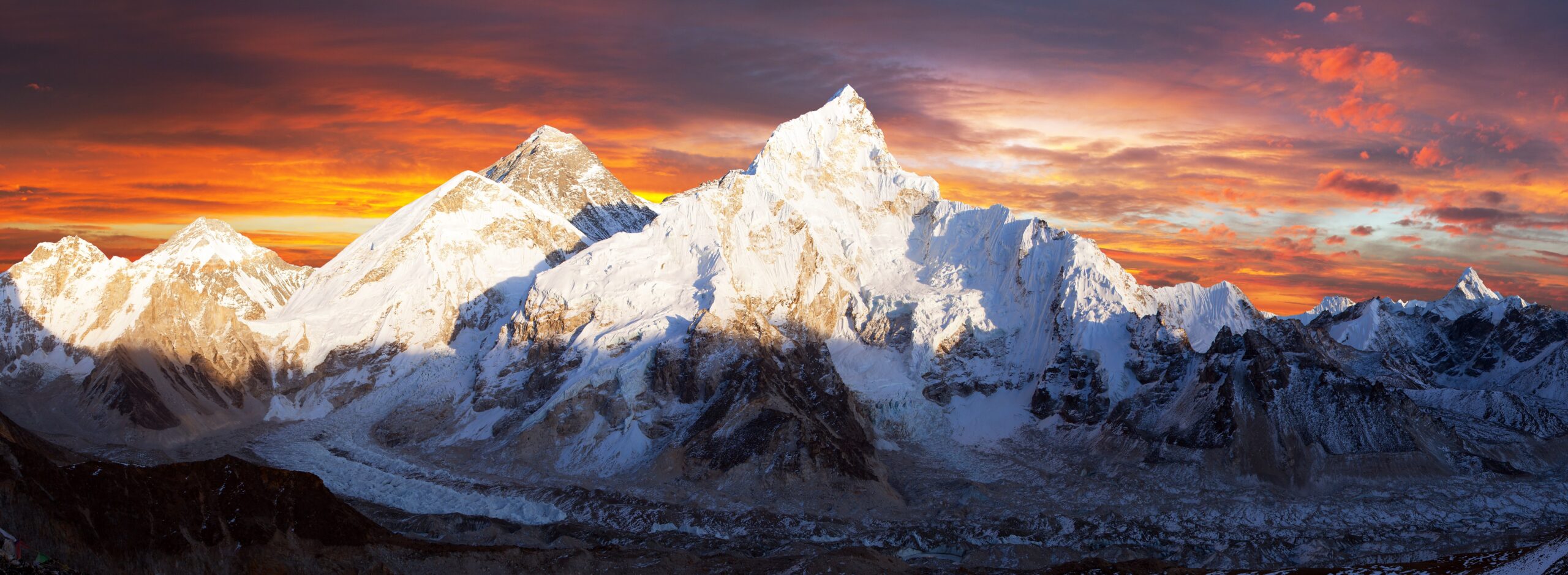
Mount Everest · Nepal · 29,032 ft / 8,849 m · Highest Point on Earth

Everest Training & Nutrition: The 18-Month Expedition Blueprint

No mountain on Earth demands more from the human body. Everest preparation isn’t a training plan — it’s a multi-year progression through increasingly serious peaks, a complete overhaul of your relationship with sustained suffering, and a nutrition strategy built for the most physiologically hostile environment a climber can enter.

Certified Cross Country Coach · Level 1 Review UVU Exercise Science · Outdoor Recreation Review Nepal · Khumbu Region · South Col Route
☝️

Educational Disclaimer — Global Summit Guide. The training and nutrition information on this page is intended for general educational and informational purposes only. It has been developed with input from a Certified Cross Country Coach (Level 1) and a graduate in Exercise Science and Outdoor Recreation from Utah Valley University, but it does not constitute individualized exercise prescription, medical advice, dietetic counseling, or clinical guidance. Everest is an extreme-altitude, high-risk environment. Anyone planning an Everest expedition must work with a licensed physician, a high-altitude medicine specialist, and a professional guide service with documented Himalayan experience before beginning any preparation program. Global Summit Guide and its contributors assume no liability for injury, illness, or loss resulting from information on this page. Training and nutrition science evolves; verify current recommendations with qualified professionals. Content reviewed April 2026.

Everest is not an objective you train for. It is an objective you spend years becoming capable of. The difference between a well-prepared Rainier climber and a ready Everest climber is not a harder version of the same training — it is a fundamentally different athlete, built across multiple Himalayan expeditions, who has learned how their body responds to extreme altitude, prolonged hypoxia, two months of sustained physical and psychological stress, and eating enough calories in the Death Zone to stay alive. This guide builds that athlete from the ground up.

What Everest Actually Demands: The Honest Assessment

Most mountains in this guide can be prepared for in 6–12 months by a fit, motivated adult. Everest is categorically different. The standard is not fitness — it is extensive high-altitude experience accumulated over years. Every reputable guide service on the mountain requires documented evidence of prior 7,000+ meter summits before they will accept a client. The Nepal Ministry of Tourism issues climbing permits regardless of experience, but a permit does not mean you are ready.

29,032 ft
Summit Elevation
At the summit, atmospheric oxygen is approximately 33% of sea level. Even with supplemental oxygen at 2–4 L/min, effective altitude remains above 23,000 ft. The human body cannot acclimatize to this — it deteriorates. The Death Zone is entered above 26,247 ft (8,000m).
55–65 days
Expedition Length
From Kathmandu to return. Three to four acclimatization rotations across 8 weeks. Summit window is typically a narrow 5–10 day period in May. This is not a climb — it is an extended mountaineering expedition requiring sustained physical and psychological output across two months.
16–22 hrs
Summit Day Duration
From Camp IV (South Col, 26,247 ft) to summit and return. In temperatures of −40°C (−40°F) with wind chill, on technical terrain, at near-zero effective oxygen, on legs that have been exhausted for weeks. Summit day on Everest is physiologically unlike any other day in mountaineering.
⚠️
Everest Requires Prior Himalayan Experience — This Is Not Negotiable

The standard pre-Everest resume accepted by reputable guide services includes at minimum: one 6,000m+ peak (Island Peak, Mera Peak), one 7,000m+ peak (Aconcagua at 6,961m is often substituted, though not technically Himalayan), and ideally one 8,000m peak such as Cho Oyu (8,188m) or Manaslu (8,163m) before Everest. Attempting Everest without this experience is not a training problem — it is a decision-making problem. The fitness plan below assumes you are on the correct progression pathway and working toward an Everest summit 3–5 years from your current position.

The Summit Progression Ladder

Every experienced Everest climber and guide service recognizes a standard progression of increasingly serious peaks that builds the specific physiological adaptations, technical skills, and high-altitude experience required to safely attempt Everest. This is not about accumulating peak counts — it is about giving your body and mind documented exposure to conditions that approach, then match, what Everest demands.

19,341 ft
Kilimanjaro
First high-altitude experience. Altitude illness baseline. Non-technical. Year 1.
22,838 ft
Aconcagua
Extreme altitude, multi-week expedition, serious weather. Year 2–3.
20,310 ft
Denali
Glaciated, expedition format, heavy carries, extreme cold. Year 2–3.
26,864 ft
Cho Oyu or Manaslu
8,000m peak. Death Zone exposure. Himalayan systems. Year 3–4.
29,032 ft
Everest
All prior experience converges here. Year 4–6 minimum.

The 18-Month Training Blueprint

The plan below addresses the 18 months of dedicated preparation immediately before your Everest expedition departs. It assumes you have completed the summit progression above or are near its end, have documented high-altitude experience, and have been cleared by a physician including a cardiopulmonary evaluation and high-altitude medicine consultation. If you are earlier in the progression, this plan still applies — begin it before whichever peak you are targeting next.

Everest training differs from other mountains in one critical way: the expedition itself is the hardest training block you will ever do. Your job in the 18 months before departure is not to peak at the airport — it is to arrive at Base Camp with the deepest possible aerobic engine, the most robust posterior-chain strength, and the highest possible body weight entering an expedition that will strip 10–20 lbs from you regardless of how well you eat.

Phase 1 — 18 to 12 Months Out

Foundation: Aerobic Engine & Structural Integrity

Six months of progressive aerobic base-building, structural strength work, and consistent loaded carries. The goal is a rock-solid foundation that can sustain the volume increases ahead without injury. Everest preparation ends careers when the foundation is rushed.

180–240 min/week Zone 2 cardio 3× strength weekly Weekly hike with 25–35 lb pack VO₂ max testing baseline
Phase 2 — 12 to 9 Months Out

Build: Load, Vertical Gain & Expedition Fitness

Increase pack weight to 40–50 lbs. Introduce multi-day expedition simulations — 2–3 consecutive days of loaded hiking that replicate the Everest rotation schedule. Begin mental training practice. Objective peak recommended in this phase if not already completed.

280–350 min/week training load 40–50 lb pack on objectives Multi-day consecutive hike blocks Stair machine 90–120 min sessions
Phase 3 — 9 to 6 Months Out

Peak Load: Maximum Volume & Objective Hikes

The hardest training phase. Peak weekly volume. 50–60 lb pack carries. Major expedition-style objectives. Simulate Everest rotation schedule with 3–5 day backcountry blocks carrying full expedition loads. This is the phase that builds your summit-day reserves.

350–420 min/week peak volume 50–60 lb carries 3–5 day consecutive expedition blocks Objective Himalayan peak (ideal)
Phase 4 — 6 to 3 Months Out

Expedition-Specific: Systems, Skills & Mental Prep

Volume reduces 15–20% from peak while specificity increases. Technical skills review: fixed line ascending, rappelling with a pack, crampon and ice axe systems. Oxygen equipment familiarization. Nutrition and gear finalized. High-altitude medicine pre-screening completed.

Volume down 15–20% from peak Fixed rope and jumar systems practice Oxygen mask fit and function High-altitude medicine consultation
Phase 5 — Final 6 Weeks Pre-Departure

Pre-Expedition Taper: Arrive Strong, Not Empty

Volume drops to 50–60% of peak. Quality maintained on 2–3 key sessions per week. Aggressive carbohydrate loading and caloric surplus in the final 2 weeks — you want to carry maximum glycogen and body mass reserves into the expedition. Final gear shakedown. All medical clearances confirmed.

Volume at 50–60% of peak Caloric surplus final 2 weeks Carb loading final 3 days All medical clearances confirmed
Phase 6 — On Expedition

Base Camp to Summit: The Expedition is the Training

Three to four acclimatization rotations from Base Camp (17,598 ft) through the camps to Camp III (23,500 ft) and back. Each rotation deepens your acclimatization. Rest days at Base Camp include light activity, strength maintenance, and nutrition recovery. Summit window execution is covered in detail below.

Rotation 1: BC → C1 → C2 → BC Rotation 2: BC → C2 → C3 → BC Rest & recovery at BC between rotations Summit bid: BC → C1 → C2 → C3 → C4 → Summit

Phases 1 & 2 in Detail — 18 to 9 Months Out

The foundation and build phases for Everest are structurally similar to the Rainier preparation framework but with significantly higher volume targets, heavier pack weights, and a deliberate emphasis on developing the aerobic efficiency that determines how well you use supplemental oxygen above 8,000 meters. VO₂ max is the single most predictive physiological variable for Everest summit success. The higher your aerobic ceiling, the more efficient your oxygen utilization at extreme altitude. This is built over years, not weeks.

🌿

Phase 1: Foundation — 18 to 12 Months Out

Duration: 24 weeks · Goal: Deep aerobic base, structural strength, movement quality under load
Aerobic Training
180–240 min/week at Zone 2 (conversational pace, 60–70% max HR)
Running, trail running, cycling, rowing — all valid at this phase
Weekly long hike building from 8 to 14 miles by end of phase
Pack weight 25–35 lbs on all hikes from week 4 onward
Stair machine 2×/week, 45–60 min sessions with light pack
Prioritize nose breathing during Zone 2 sessions — builds CO₂ tolerance relevant to altitude
Strength Training
3×/week full-body compound movements
Trap bar or barbell deadlifts 3×5 — heaviest lift in program
Weighted step-ups 4×8/side building to 50% bodyweight
Bulgarian split squats, Nordic curls (eccentric knee protection)
Upper body: pull-ups, rows, overhead press, farmers carries
Core: heavy loaded carries, pallof press, anti-rotation work
Injury prevention: hip flexor mobility, ankle mobility critical for crampon travel
Nutrition Foundation
Protein: 1.8–2.0 g/kg/day — non-negotiable baseline throughout all phases
Carbohydrates: 4–6 g/kg on training days, 3–4 g/kg on rest days
Iron-rich foods daily — altitude training depletes iron stores aggressively
Blood work at baseline and every 6 months: iron, ferritin, hemoglobin, VO₂ max test
Eat to a slight caloric surplus — this is not a weight-loss phase
Begin eating and drinking during every hike — train the gut now for the mountain later
🏗️

Phase 2: Build — 12 to 9 Months Out

Duration: 12 weeks · Goal: Heavy loads, multi-day blocks, expedition-format fitness
Key Training Priorities
Pack weight increases to 40–50 lbs on all objective hikes
280–350 min/week total training volume
Introduce 2–3 consecutive day hiking blocks (mini-expeditions)
Stair machine sessions extend to 90–120 min with 40 lb pack
Objective hike: Attempt Aconcagua, Denali, or equivalent 6,000+m peak this phase if not yet completed
Practice sleeping in uncomfortable conditions — at altitude, sleep quality is deeply compromised
Sample Multi-Day Block
Day 1: 12 mi, 4,000 ft gain, 45 lb pack — strong effort
Day 2: 10 mi, 3,500 ft gain, 45 lb pack — maintain pace
Day 3: 8 mi, 2,500 ft gain, 40 lb pack — recovery pace
Bivouac between days if possible — sleep quality under load exposure matters
Fuel aggressively: 4,000+ kcal on Day 1 and 2
Repeat 2–3 times across Phase 2
Strength & Nutrition
Strength 3×/week, emphasis shifting toward power endurance
Heavier step-ups: 24” box, 60–70% bodyweight added load
Add rucking workouts: 45 lb pack, 4–5 mph, 60–90 min on flat terrain
Increase total caloric intake by 300–500 kcal/day on training days
Practice all expedition food items during long efforts this phase
Blood work check mid-phase: confirm iron and ferritin are adequate

Sample Phase 2 Training Week

DaySession TypeDurationNotes
Monday💪 Heavy Strength — Lower70–80 min Deadlifts 3×5, heavy step-ups 4×8, Bulgarian split squats 3×8/side, Nordic curls.
Tuesday🏃 Zone 2 Run or Trail60–75 min Conversational pace on hilly terrain. Nose-breathe throughout if possible.
Wednesday🧙 Stair Machine With Pack90–120 min 40 lb pack, steady climb pace, no rail-holding. Eat and drink every 30 min while moving.
Thursday💪 Strength — Upper + Core60 min Pull-ups, rows, overhead press, heavy farmer's carries, pallof press.
Friday🏃 Easy Zone 2 + Mobility45 min Easy run or bike. 15 min hip flexor, ankle, and thoracic mobility work after.
Saturday🏔 Objective Hike — Day 1 of Block7–9 hours 12–14 mi, 4,000–5,000 ft, 45 lb pack. Washington: Glacier Peak. Colorado: Quandary, Longs. Eat 4,000+ kcal.
Sunday🏔 Objective Hike — Day 2 of Block5–7 hours 9–11 mi, 3,000–3,500 ft, 45 lb pack. Same trail or adjacent. Maintain 70%+ of Saturday's pace.

Phase 3 in Detail — Peak Load (9 to 6 Months Out)

This is the hardest phase of the entire 18-month plan. Volume is at its peak, pack weight is at expedition levels, and the training blocks are designed to simulate the physiological stress of the Everest rotation schedule as closely as possible at sea level. You will be tired. That is the point. The fatigue adaptation built here is what allows you to keep functioning during the third and fourth week on the mountain when most climbers without adequate preparation begin to deteriorate.

🔥

Phase 3: Peak Load — 9 to 6 Months Out

Duration: 12 weeks · Goal: Maximum training stress, expedition simulation, Death Zone-adjacent experience
Training Priorities
350–420 min/week total training volume
Pack weight 50–60 lbs on all major efforts
4–5 day consecutive expedition blocks monthly
Attempt a Himalayan 7,000+m or 8,000m peak in this window if schedule allows
Night-start hikes 2–3× — simulate midnight summit departures
Track recovery metrics: resting HR, HRV, sleep quality. Overtraining here is a real risk.
Expedition Block Design
Day 1: 14 mi, 5,000 ft, 55 lb pack — maximum effort
Day 2: 12 mi, 4,000 ft, 55 lb pack — sustained effort
Day 3: Rest at camp — eat aggressively, light movement only
Day 4: 12 mi, 4,000 ft, 50 lb pack — recovery push
Day 5: Return — light descent, pack full weight
This mirrors Everest's rotation rhythm: push, push, rest, push, return
Strength & Nutrition
Reduce strength to 2×/week — hiking volume is now primary stressor
Maintain deadlift and step-up work to protect joints under heavy pack
Caloric intake: 4,000–5,000 kcal on expedition block days
Protein: do not drop below 2.0 g/kg/day — muscle is being broken down aggressively
Test and confirm all expedition food — taste, digestibility, packaging, cold performance
If appetite suppresses significantly during hard blocks — this is altitude-adjacent. Train eating through it.

Acclimatization: The Rotation Schedule Explained

Acclimatization on Everest is not passive rest at Base Camp. It is a structured program of ascending and descending that drives the physiological adaptations — increased red blood cell mass, improved buffering capacity, cardiovascular efficiency at altitude — that determine whether you can function at 8,000+ meters. The classic saying on Everest is “climb high, sleep low.” Each rotation takes you progressively higher before returning to Base Camp for recovery. Three to four rotations are standard on the South Col route.

RotationHighest PointElevationPurpose & Key EventsDuration
Rotation 1 Camp II (ABC) 21,300 ft / 6,490m First time through Khumbu Icefall. Establish Camp I and Camp II. Sleep at C1 (19,900 ft) before descending. Identify any early altitude illness signals. This rotation is often the most psychologically intense due to Icefall exposure. 5–7 days up, return to BC
Rest at Base Camp Base Camp only 17,598 ft / 5,364m Full rest, aggressive nutrition recovery, hydration normalization, sleep banking. Duration 5–8 days. Light walking only. Eat as much as you can. Weight maintenance during this window is a key performance indicator. 5–8 days
Rotation 2 Camp III 23,500 ft / 7,162m First night at Camp III. This is the critical acclimatization milestone. Sleeping above 23,000 ft drives the most significant red blood cell and hemoglobin adaptations. Supplemental oxygen introduced by most operators at C3 for sleeping. Monitor for HACE/HAPE symptoms carefully. 7–9 days up, return to BC
Rest at Base Camp Base Camp only 17,598 ft / 5,364m Longer rest window. Some climbers descend to Namche Bazaar (11,286 ft) for a few days — the lower elevation dramatically accelerates recovery. This is the optimal strategy if schedule allows. Continue eating aggressively. Blood oxygen saturation should be monitored daily. 7–10 days
Rotation 3 (optional) Camp III or IV 26,247 ft / 8,000m Some climbers do a third rotation to C3 for additional acclimatization. Some reach Camp IV (South Col) without sleeping. Used to refine oxygen flow rates, test gear in summit-day conditions, and assess team readiness. Guided services vary on whether this rotation is standard or discretionary. 5–7 days, return to BC
Summit Bid Summit: 29,032 ft Death Zone 26,247 ft+ BC → C1 → C2 → C3 → C4 (South Col) over 3–4 days. Summit night departs C4 at 8pm–midnight. Return to C4 following summit, then rapid descent to C2 or BC. Weather window is typically 5–10 days in May; most summits occur May 15–25 historically. 8–10 days total
🕒
The Turn-Around Time: Non-Negotiable on Everest

Most guide services set a firm turn-around time of 12:00–1:00 PM on summit day, regardless of position on the mountain. Weather on Everest deteriorates rapidly in the afternoon. Descent from the Hillary Step and Balcony in deteriorating conditions is where the majority of Everest fatalities occur — most on the descent, not the ascent. Climbers who summited after 2:00 PM have a significantly elevated mortality rate. Discuss and agree on your turn-around time with your guide before leaving Camp IV. The summit will be there next season. An afternoon storm above 8,500 meters may not leave you for next season.


Nutrition: Training Fuel Across 18 Months

Everest nutrition preparation has a dimension no other mountain in this guide requires: you need to arrive at Base Camp with maximum body mass reserves, because the expedition will systematically reduce them regardless of how carefully you eat. Most climbers lose 15–25 lbs across a full Everest expedition. Arriving lean means arriving depleted. This is a mountain where carrying extra body weight into the expedition is a deliberate, evidence-based strategy.

⚖️
Arrive at Base Camp Heavier Than Your Climbing Weight

In the final 4–6 weeks before departure, eat to a sustained caloric surplus of 300–500 kcal/day above maintenance. Do not restrict any macronutrient group. The goal is to maximize glycogen stores, muscle mass, and body fat reserves. Climbers who arrive at Base Camp already lean or at their “ideal” weight frequently reach the summit bid underweight and undernourished. This is not a contradiction of good nutrition science — it is an application of it to an extreme environment.

Training Phase Macronutrient Targets

🍲
Carbohydrates
5–8 g/kg/day

The primary fuel at all intensities encountered during Everest training. Higher than the Rainier target due to the greater total training volume and multi-day expedition blocks. On peak volume days, 8 g/kg is not excessive. Carbohydrate restriction during this training cycle will undermine adaptation.

80 kg (176 lb) climber: 400–640g carbs on hard training days
🥩
Protein
1.8–2.2 g/kg/day

Non-negotiable across all 18 months. Heavy loaded carries at Everest training volume cause significant muscle breakdown. Protein supports repair, immune function, and the hemoglobin mass that determines your altitude performance. Distribute across 4–5 meals; no single protein meal should exceed 40–50g for optimal utilization.

80 kg climber: 145–175g protein daily. Eggs, meat, fish, dairy, legumes.
🥣
Dietary Fat
1.2–1.8 g/kg/day

Slightly higher fat targets than Rainier because of the greater proportion of long, lower-intensity efforts in the Everest training program where fat oxidation contributes more. Critical for the fat-soluble vitamins and hormone function that sustain 18 months of intense training. Omega-3 priority for anti-inflammatory support.

80 kg climber: 95–145g fat daily. Avocado, olive oil, fatty fish, nuts, full-fat dairy.

Death Zone Nutrition: Above 8,000 Meters

Above 8,000 meters (26,247 ft), the human body enters a physiological state it was not designed to sustain. Digestion slows dramatically. Appetite is profoundly suppressed. Nausea is common. The gut’s ability to absorb nutrients — particularly fat — is significantly impaired. Yet the caloric demands of moving at this altitude while maintaining core temperature against extreme cold are enormous. This is the central nutritional paradox of the Death Zone: you need more fuel than anywhere else on Earth, and your body’s ability to use it is at its lowest.

💚
Death Zone Physiology: What Changes Above 8,000 Meters

Fat digestion requires more oxygen than carbohydrate digestion. Above 8,000m with depleted oxygen availability, fat becomes nearly impossible to metabolize efficiently — even if you eat it. This is why Death Zone nutrition is almost entirely liquid carbohydrates and simple sugars. Gastric emptying slows significantly, meaning solid food consumed at Camp IV may still be in your stomach 3–4 hours later, causing nausea during the summit push. Blood flow is shunted from the gut to working muscles, further impairing absorption. Cold reduces palatability — most foods freeze solid above C4. The practical result is that summit day nutrition is primarily warm liquids, gels, and the simplest possible carbohydrate sources.

Camp-by-Camp Nutrition Strategy

LocationElevationCalorie TargetKey Foods & Strategy
Base Camp (rest days) 17,598 ft 3,500–4,500 kcal Full appetite usually present. Cook real meals. Eat aggressively. Rice, pasta, dal, eggs, meat, full-fat dairy. This is your recovery window — caloric density matters. Supplement iron per medical guidance. Avoid alcohol entirely on expedition.
Camp I (19,900 ft) 19,900 ft 2,800–3,500 kcal Appetite beginning to suppress. Hot foods priority: oatmeal, instant noodles, soup. Constant hot tea or broth. Snack continuously rather than eating full meals. Fluid intake minimum 4L/day. Electrolytes in all drinks.
Camp II (21,300 ft) 21,300 ft 2,500–3,000 kcal Mountain House meals, instant noodles, ramen with added fat and protein. Chocolate, nuts, energy bars. Hot drinks every hour awake. Begin shifting meal composition away from fat-heavy foods toward predominantly carbohydrate sources.
Camp III (23,500 ft) 23,500 ft 2,000–2,500 kcal Significant appetite suppression. Force eating. Liquid calories priority: hot chocolate, instant mashed potato, warm Gatorade, congee. Gels and chews for on-move fueling. Solid foods: crackers, bars, soft candy. Avoid heavy, fatty meals before sleeping — HACE risk is highest at C3.
Camp IV / South Col (26,247 ft) 26,247 ft 1,500–2,000 kcal Pre-summit push focus. Hot soup or broth before departure. Energy gels and blocks pre-loaded in chest or sleeve pockets (body heat prevents freezing). Thermos of warm sweet liquid (hot chocolate, sports drink). Caloric intake before departure: 400–600 kcal.
Summit Push (26,247 ft to 29,032 ft) Death Zone 200 kcal every 45–60 min Warm liquid from thermos at Balcony (27,559 ft) and South Summit. Gels and chews in accessible body-heat pockets. Hard candy continuously. Fluid: 3–4L minimum from pre-loaded thermos and melted snow at high camps. Any urge to eat must be acted on immediately — no appetite is not the same as no need.

On-Mountain Food That Works at Extreme Altitude

Works at All Elevations

Reliable High-Camp Foods

Energy gels (GU, Maurten, Clif) — fast carbs, kept warm against body. Maurten gels are preferred by many Everest climbers for palatability at altitude
Energy chews and blocks — Clif Bloks, Gu Chews. Pre-cut for mitten-on consumption. Store in chest pocket
Hard candy and glucose tablets — never freeze, always edible, fast glucose, morale benefit at extreme altitude
Instant oatmeal packets — breakfast at C1 and C2; mix with whole milk powder for caloric density
Hot chocolate and Ovaltine — warm carbs and fluid together; one of the most effective Death Zone nutrition strategies
High Camp and Death Zone Priorities

Camp III and Above Specific

Instant mashed potato with butter — warm, calorie-dense, extremely palatable at altitude when most solid foods become aversive
Ramen noodles — carbs + sodium + hot water + warm broth; one of the most consumed foods by Everest climbers for good physiological reasons
Sports drink powder (Skratch, Nuun Endurance) — mix warm; electrolytes + fluid + carbs simultaneously. Essential for avoiding hyponatremia
Dates and soft dried fruit — do not freeze solid, consistently palatable at altitude, immediate glucose
Peanut butter squeeze packets — use at C2 and below. Limit above C3 where fat digestion is severely impaired
Hydration Priority

Fluid Strategy by Camp

Minimum 4L/day at all elevations — 5–6L on summit day from all sources combined
Insulated thermos carried on summit day — warm liquid is both nutrition and thermal regulation
Electrolytes in every drink above C1 — 500–700 mg sodium per hour minimum. Plain water at altitude risks hyponatremia
Bladder hoses freeze above C3 — use insulated sleeves or wide-mouth insulated bottles stored against the body
Urine color monitoring — dark yellow means dehydrated; at altitude you cannot rely on thirst sensation as a guide
Foods to Eliminate Above Camp II

Avoid in the Death Zone

High-fat foods — hard cheese, salami, nut butter above C3; fat digestion is severely impaired above 8,000m
Protein bars or shakes — high protein increases metabolic demand without providing fast energy; save protein-dense foods for Base Camp recovery
Gas-producing foods — beans, cruciferous vegetables, high-fiber options; GI distress at altitude is incapacitating
Frozen solid foods — test every food item at −30°C before packing. Chocolate bars, some bars, and hard gels become unbreakable at temperature
Caffeine in excess — moderate caffeine (1 cup tea or coffee equivalent) is fine; heavy caffeine increases heart rate and diuresis at altitude where both are already elevated
💧
Supplemental Oxygen & Nutrition: How They Interact

Most commercial Everest climbers use supplemental oxygen above Camp III at flow rates of 2–4 L/min while climbing and 0.5–1 L/min while sleeping. Supplemental oxygen significantly improves digestive function at high altitude because digestion requires oxygen. At 2 L/min, fat digestion becomes more viable above 8,000m than it would be without O₂. This means climbers on supplemental O₂ can metabolize a slightly broader range of foods at Camp IV than the table above suggests for O₂-free scenarios. However, do not rely on this — conservative, predominantly-carbohydrate nutrition remains the safest strategy. Discuss your operator's specific O₂ protocol with your guide and plan your food accordingly.


Phase Benchmarks: Know Where You Stand

Phase 1 Ready (18 mo)
VO₂ max 50+ ml/kg/min · 14 mi, 4,500 ft, 35 lb pack
Aerobic engine baseline. Strong, not elite. If below 45 ml/kg/min, add 3–4 months to Phase 1 before advancing.
Phase 2 Ready (12 mo)
3-day consecutive block · 12-10-8 mi · 45 lb pack · Day 3 at 70% effort
Multi-day fatigue management. Cannot be faked with single-day fitness. If Day 3 is a death march, extend Phase 2.
Phase 3 Ready (9 mo)
5-day expedition block · 50+ lb pack · Himalayan 7,000m+ completed
Peak training stress tolerated. At least one documented high-altitude summit at 7,000m+ on the record.
Phase 4 Ready (6 mo)
Technical systems fluent · O₂ mask fitted · Medical clearance signed
Fitness mostly built. Focus shifts to skills, systems, and logistics confirmation. All medical pre-screening complete.
Pre-Departure (6 weeks)
Caloric surplus maintained · Max body weight · All gear tested
Arrive at Base Camp as heavy as you can be at maintained fitness. Body reserves will be drawn down across the expedition.
Summit Ready (On Mountain)
3 acclimatization rotations complete · Weather window confirmed · O₂ systems checked
The fitness is built. The acclimatization is done. Trust the preparation and trust your guide's weather assessment.

Final Word — From Our Reviewers

Everest Is Earned Before You Ever See Base Camp.

The climbers who stand on the summit of Everest are not simply fitter than everyone else. They are more experienced, more specifically prepared, more honest about their bodies' limitations, and more disciplined about nutrition when nothing about the Death Zone invites eating or drinking. The 18-month plan above builds the physical foundation. The summit progression builds the experiential foundation. No guide, no permit, and no amount of money substitutes for either. Begin the progression. Do the training. Eat to perform. And give yourself the years this mountain actually demands.