
Last updated October 3, 2026
K2 vs Broad Peak: Which Karakoram 8,000er Fits Your Progression?
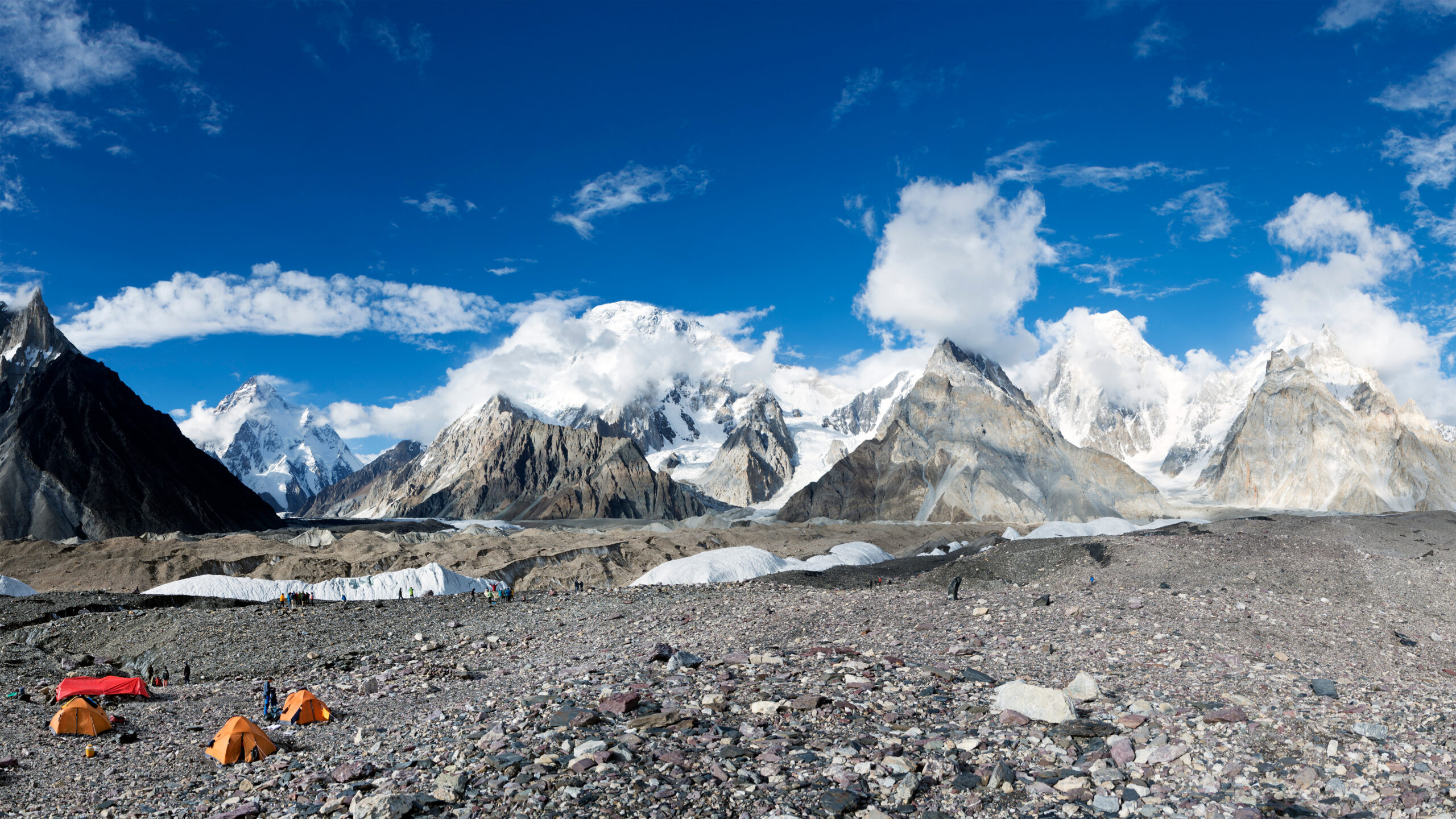
K2 and Broad Peak stand only about 8 km apart, share the legendary Baltoro Glacier approach and rise above the same remote Karakoram expedition environment. That is where the similarity ends. K2 is substantially more technical, higher and more committing on its standard route. Broad Peak remains a serious death-zone expedition, but for an already qualified high-altitude mountaineer it is the more realistic earlier objective of these two.
K2 Is the Harder Mountain. Broad Peak Is the More Logical Earlier Step.
On the standard Pakistan-side routes, the difference is not subtle. K2’s Abruzzi Spur combines steep rock, mixed terrain, snow and ice through House’s Chimney and the Black Pyramid before climbers reach the Shoulder, Bottleneck and final summit terrain above 8,000 metres.
Broad Peak’s West Spur is still a genuine 8,000-metre expedition requiring strong glacier, fixed-line, high-camp and altitude skills. But its normal route is less technically sustained than K2’s, and the summit is about 560 vertical metres lower.
That does not make Broad Peak a beginner mountain. The useful progression question is whether an experienced climber is ready for a first or earlier Karakoram 8,000er—or already has the deeper technical and death-zone résumé required for K2.
K2 vs Broad Peak at a Glance
They share the Karakoram, Pakistan-side access and much of the Baltoro approach. They do not share the same climbing difficulty.
| Factor | K2 | Broad Peak |
|---|---|---|
| Elevation | 8,611 m / 28,251 ft | 8,051 m / 26,414 ft |
| World height rank | #2 | #12 |
| Mountain range | Karakoram | Karakoram |
| Primary climbing side | Pakistan | Pakistan |
| Standard route | Abruzzi Spur / Southeast Ridge | West Spur / West Ridge |
| Route character | Sustained rock, snow, ice and mixed climbing with major technical sections at very high altitude. | Snow, glacier and mixed climbing with fixed-line sections, followed by a long high-altitude summit-ridge finish. |
| Signature upper problem | Bottleneck and traverse beneath hanging ice above 8,000 m. | Foresummit followed by the exposed traverse to the true Main Summit. |
| Technical demand | Very high and sustained | Serious, but less sustained than K2’s standard route |
| Typical expedition scale | About 47–60 days | About 50–55 days; many itineraries use roughly 52 days |
| Primary season | High summer, especially July into early August | June–August, with July central to many expeditions |
| 2026 supported-market guide | Roughly $35,000–$95,000+ | Roughly $27,000–$50,000+ |
| Progression role | Late-stage technical 8,000m objective | Earlier Karakoram 8,000m objective for qualified climbers |
| First ascent | 31 July 1954 | 9 June 1957 |
Expedition length and commercial pricing vary by operator, support model, oxygen strategy, acclimatization plan and season. Use these numbers as comparison ranges rather than quotes.
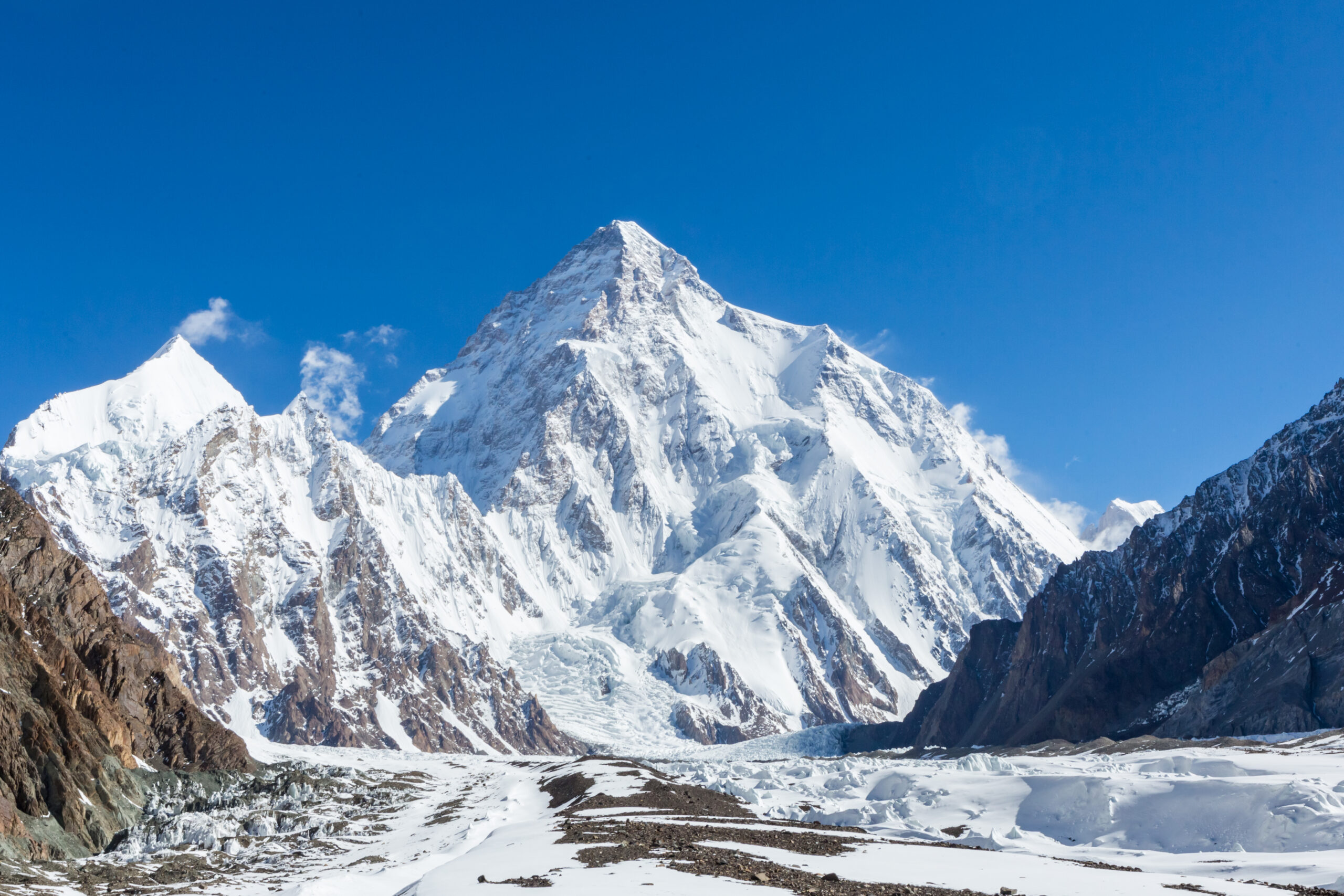
K2 Turns the Technical Difficulty Up Before the Death Zone Begins.
House’s Chimney and the Black Pyramid arrive well below the summit, forcing climbers to manage steep fixed lines, rock and mixed terrain while the altitude steadily reduces strength and decision-making margin. The upper mountain then adds the Shoulder and Bottleneck.
Open the K2 GuideK2 and Broad Peak Share the Baltoro Approach.
Both are normally reached from Pakistan through Skardu and Askole, then by the multi-day approach along the Baltoro Glacier toward Concordia and the upper Godwin-Austen Glacier region.
Expedition staging, permits, supplies, flights and final logistics are normally organized here.
Traditional last settlement before the expedition caravan enters the Baltoro corridor on foot.
The approach passes famous Karakoram towers before reaching the high mountain amphitheater around Concordia.
K2, Broad Peak and the Gasherbrums dominate the upper Karakoram skyline as expedition routes branch toward base camps.
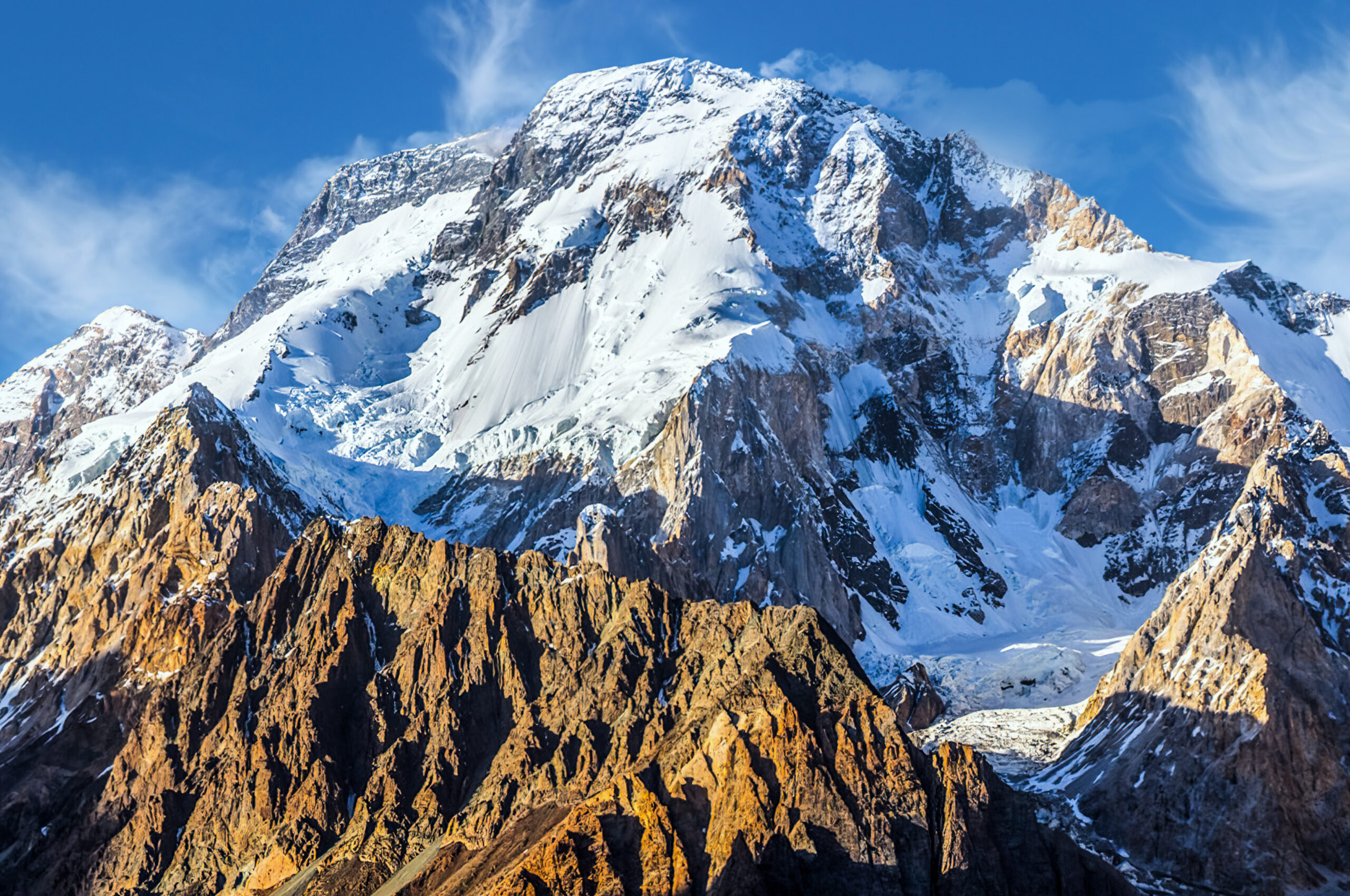
Broad Peak Is the Less Technical Choice—Not an Easy Choice.
Its standard West Spur still requires expedition competence, glacier travel, fixed ropes, high camps and sustained work in the death zone. The defining summit problem is endurance: climbers can reach the Foresummit and still face a long exposed traverse before the true Main Summit.
Open the Broad Peak GuideThe Standard Routes Explain Most of the Difficulty Gap.
Comparing the mountains means comparing the normal routes most supported climbers actually use—not the hardest historical lines ever climbed on either peak.
K2
Broad Peak
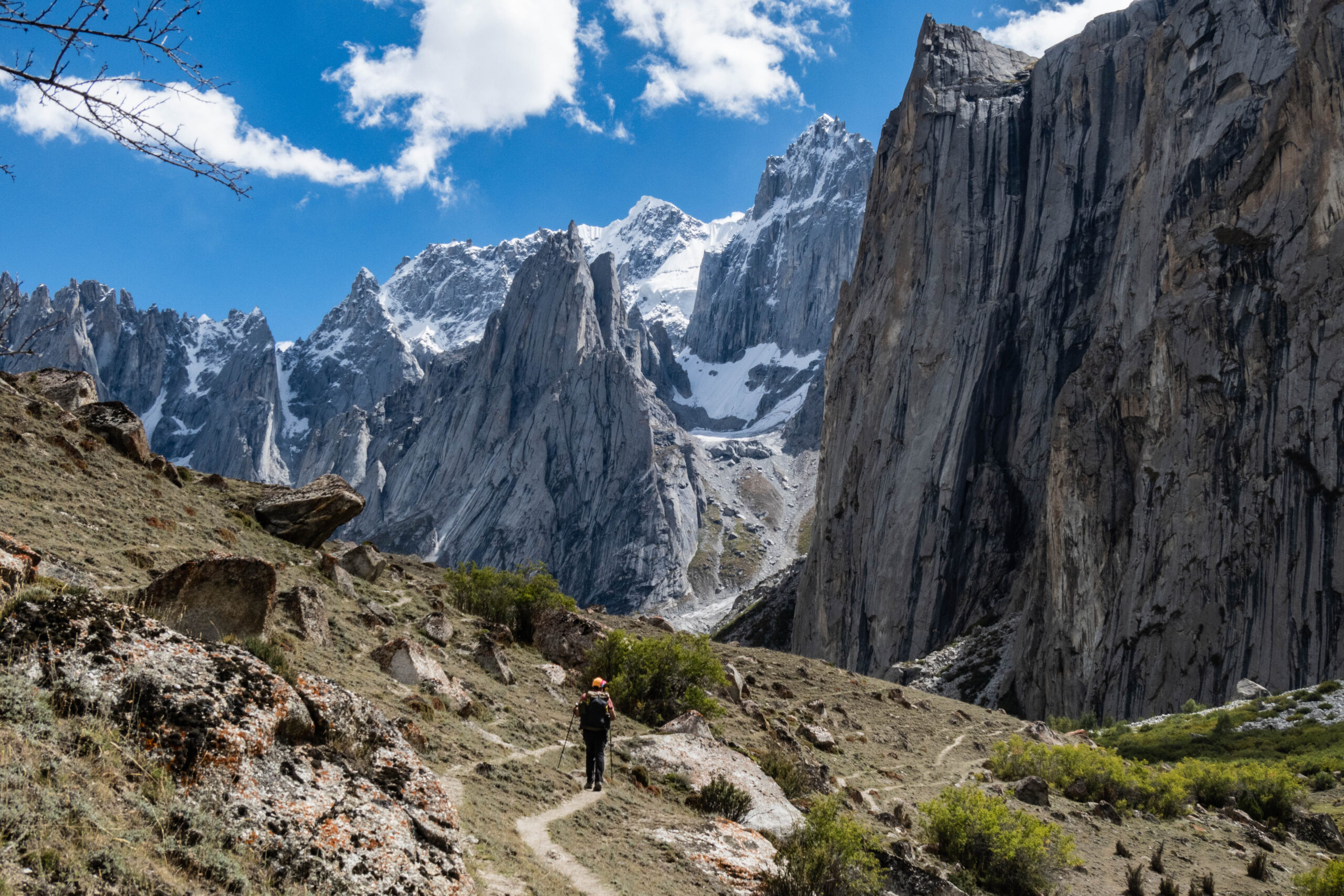
The Karakoram Does Not Give Either Mountain Much Margin.
The remote approach, short summer season, high camps and limited rescue capacity apply to both objectives. Choosing Broad Peak instead of K2 reduces the standard-route technical burden; it does not remove the consequences of an 8,000-metre expedition.
K2 Has the More Sustained Technical Standard Route.
Broad Peak’s reputation as one of the more accessible 8,000-metre objectives should always be read relative to other 8,000ers—not relative to ordinary mountaineering.
Technical Demand Accumulates Up the Mountain.
K2’s problem is the combination of altitude and repeated technical terrain. Climbers do not simply endure thin air until one difficult summit obstacle appears.
- Steep fixed-line movement starts low on the route.
- House’s Chimney adds technical rock and mixed climbing.
- The Black Pyramid creates sustained technical climbing above 6,700 m.
- The upper route still contains the Bottleneck above 8,000 m.
- Technical efficiency matters again during the descent.
Altitude and Endurance Dominate More of the Problem.
Broad Peak still requires competent expedition mountaineering, but the normal route generally contains less sustained technical climbing than K2.
- Glacier and fixed-line competence remain essential.
- Camp systems extend well above 7,000 metres.
- The summit push may be very long.
- The Foresummit can create a dangerous temptation to stop early.
- The ridge to the Main Summit keeps climbers exposed near 8,000 m.
K2 Keeps Climbers Higher for the Hardest Part of the Route.
A 560-metre difference would be modest on a lower mountain. Between 8,051 and 8,611 metres it occurs entirely inside the physiological environment where recovery is extremely limited.
Death-Zone Experience
Broad Peak provides genuine exposure above 8,000 metres while topping out substantially lower than K2.
Higher + More Technical
The mountain combines greater summit elevation with difficult terrain that still demands efficiency when climbers are severely hypoxic.
Altitude Alone Is Not Enough
A successful Broad Peak expedition can add valuable 8,000m experience, but it does not by itself prove readiness for the technical demands of K2.
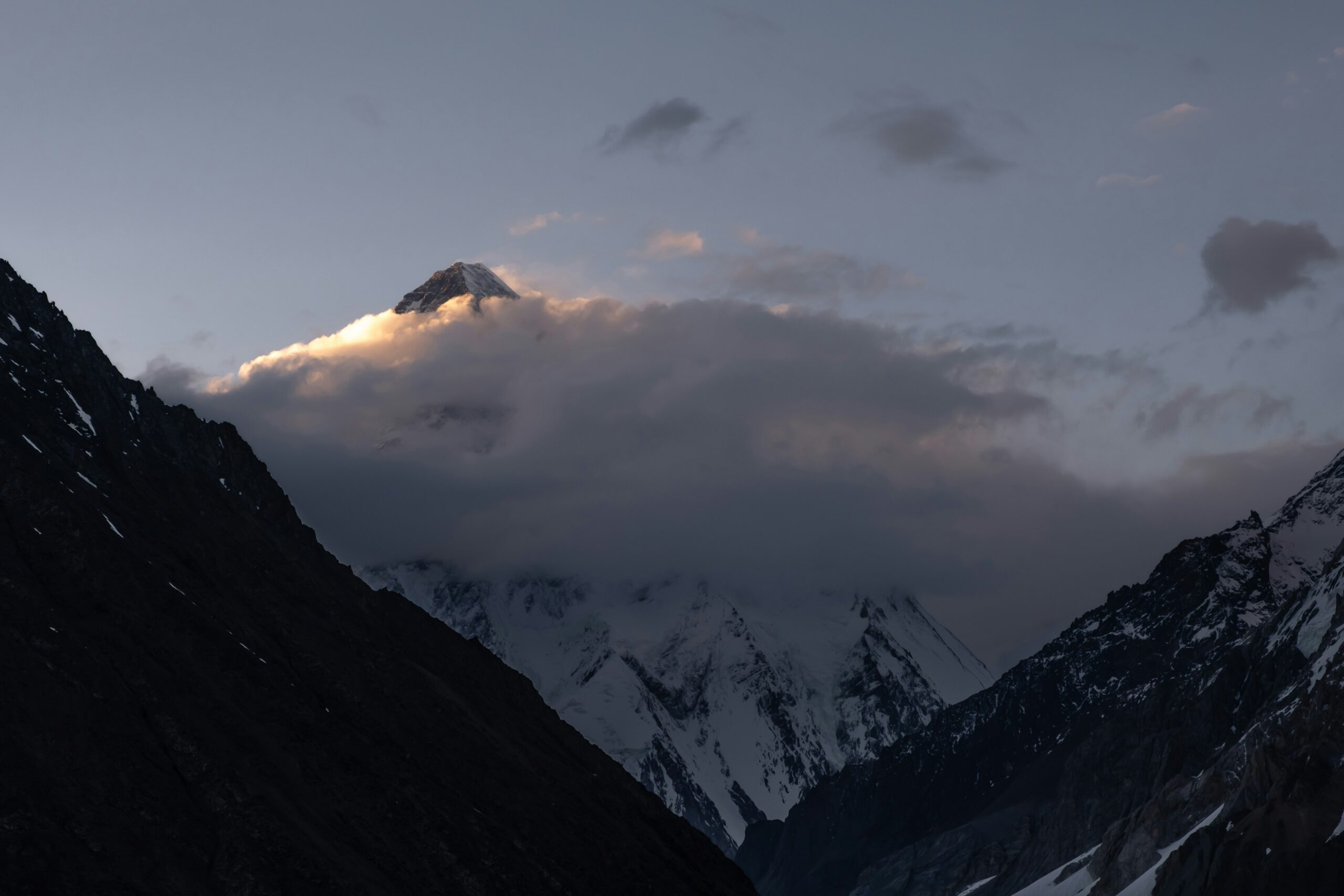
Being Neighbors Does Not Guarantee the Same Summit Window.
Both mountains sit in the high-summer Karakoram weather system, but snowfall, wind, route fixing and upper-mountain conditions can develop differently. A strong season plan still needs enough time to wait rather than force a marginal summit window.
K2 Concentrates More Technical Exposure. Broad Peak Still Has Serious Objective Hazard.
“Broad Peak is easier” should never be translated into “Broad Peak is safe.” Both require the judgment to turn around after weeks of investment when route or weather conditions deteriorate.
| Hazard | K2 | Broad Peak |
|---|---|---|
| Rock / mixed climbing | Major component of the Abruzzi Spur, particularly through House’s Chimney and Black Pyramid. | Present on the normal route, but generally less sustained. |
| Serac exposure | The Bottleneck traverse beneath hanging ice is a defining upper-route hazard. | Snow, ice and avalanche hazards remain part of the expedition, but the normal route does not replicate K2’s Bottleneck problem. |
| Avalanche / snow instability | Condition-dependent throughout the mountain. | Condition-dependent and potentially severe. |
| Summit-ridge issue | Technical upper route and summit descent. | Long continuation from the Foresummit to the true Main Summit. |
| Weather | Short Karakoram windows can stop the entire expedition. | Same regional problem; a lower summit does not create reliable weather. |
| Rescue margin | Very limited high on the mountain. | Very limited high on the mountain. |
| Descent | Highly technical and consequential after the summit. | Long high-altitude descent after the summit-ridge traverse. |
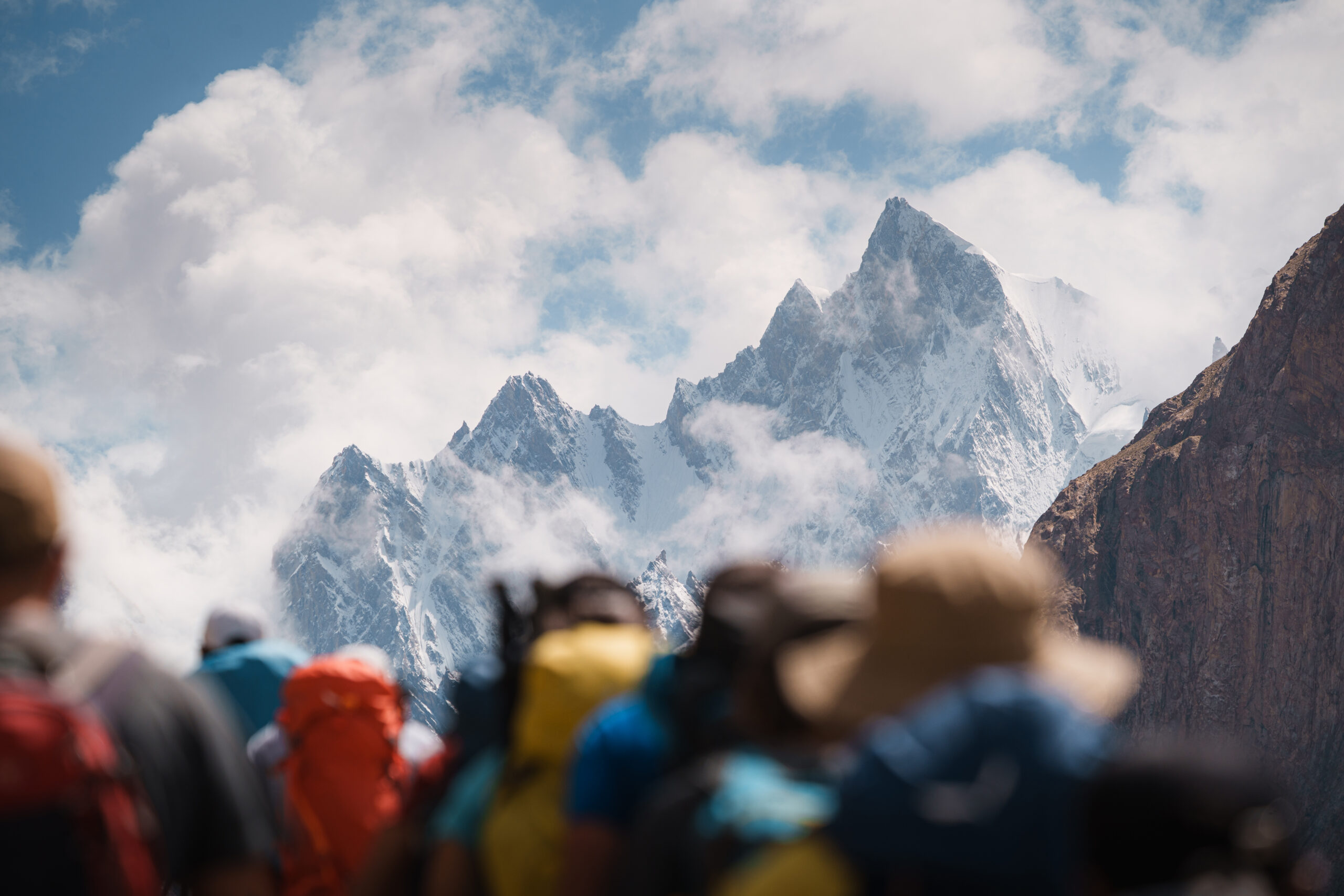
The Approach Is One Reason Broad Peak Can Be Valuable K2 Preparation.
Broad Peak places climbers in the same broad Pakistan logistics system: Islamabad, Skardu, Askole, porter-supported Baltoro approach, Concordia, high-summer Karakoram weather and a remote 8,000-metre expedition environment. The technical climbing above base camp, however, remains a major step below K2.
Both Are Multi-Week Expeditions—Not Quick Summit Trips.
Broad Peak may be the less technical mountain, but its approach, rotations, recovery and weather waits still produce an expedition calendar similar in scale to many major 8,000m objectives.
Roughly 47–60 Days
The calendar must absorb the Baltoro approach, multiple route rotations, acclimatization, high-camp systems, recovery, weather waits, summit cycle and the trek back out.
A shorter commercial itinerary is not automatically better. What matters is whether enough contingency exists for weather and acclimatization.
Roughly 50–55 Days
Many current itineraries are built around approximately 52 days. The climbing route is less technically sustained than K2, but the expedition still includes the full Baltoro approach and a serious acclimatization cycle.
Broad Peak’s lower summit does not turn it into a compressed two- or three-week commercial objective.
K2 Usually Carries the Higher Commercial Expedition Price.
Costs vary dramatically with operator structure, Western guide leadership, Pakistani logistics, oxygen supply, high-altitude support and whether personal equipment and international travel are included.
| Cost Factor | K2 | Broad Peak |
|---|---|---|
| Current supported market | ~$35,000–$95,000+ | ~$27,000–$50,000+ |
| Why K2 trends higher | More demanding route, deeper technical support requirements, high-altitude staffing and premium specialist programs. | Less complex standard route can support a lower commercial price at comparable local-service levels. |
| Shared logistics | Pakistan permits, Skardu staging, Askole access, Baltoro porters, base-camp infrastructure and expedition staff. | Many of the same Pakistan and Baltoro logistics. |
| Outside the advertised fee | International flights, personal equipment, insurance, evacuation coverage, tips, extra lodging, visas and contingency may materially increase total trip cost. | |
Which Should Come First: Broad Peak or K2?
The answer should be based on the climber’s existing résumé, not on which summit carries more prestige.
You Need Genuine 8,000m Karakoram Experience.
- You already have substantial high-altitude expedition experience.
- You are independently competent on fixed lines and glaciers.
- You need to learn how your body performs above 8,000 metres.
- You want experience with Pakistan and Baltoro expedition logistics.
- You are building toward more technical 8,000m objectives later.
- You understand that “more accessible” still means a serious death-zone climb.
The Underlying Skills Are Already Proven.
- You already have serious 8,000m experience.
- You move efficiently on steep fixed ropes while exhausted.
- Your résumé includes sustained rock, snow, ice and mixed terrain.
- You can manage high camps, oxygen systems and descent independently.
- You have demonstrated conservative turnaround judgment on major expeditions.
- K2 is an integration of existing capability rather than a place to learn basic skills.
Broad Peak Is Not a Qualification Certificate for K2.
A successful Broad Peak expedition can demonstrate death-zone tolerance, expedition discipline and Karakoram experience. K2 adds a much deeper technical requirement. Climbers still need the rock, ice, mixed, fixed-line and descent résumé required by the Abruzzi Spur.
K2 and Broad Peak Were First Climbed Only Three Years Apart.
Their first-ascent histories reflect very different expedition stories, but both became defining chapters in post-war high-altitude mountaineering.
K2 First Ascent
Achille Compagnoni and Lino Lacedelli reached the summit as part of the Italian expedition led by Ardito Desio. The successful route followed the Abruzzi Spur, establishing the line that remains the primary modern Pakistan-side route.
Broad Peak First Ascent
Marcus Schmuck, Fritz Wintersteller, Kurt Diemberger and Hermann Buhl reached Broad Peak’s Main Summit during a small Austrian expedition. The climb was completed without supplemental oxygen or high-altitude porters.
How This Comparison Was Checked
The page compares the standard modern routes and current Global Summit Guide planning data rather than extreme historical routes that most expedition climbers will never attempt.
Global Summit Guide K2 Parent
Elevation, modern Abruzzi Spur structure, expedition duration, current commercial-market range and progression framework.
Open K2 Guide →Global Summit Guide Broad Peak Parent
Elevation, West Spur route structure, expedition duration, summit-ridge issue and current commercial-market range.
Open Broad Peak Guide →American Alpine Journal
Historical expedition reports support the long-established Abruzzi route on K2 and west-side normal-route history on Broad Peak.
American Alpine Journal →Frequently Asked Questions
Is K2 harder than Broad Peak?
Which is higher, K2 or Broad Peak?
How close are K2 and Broad Peak?
Can Broad Peak be a first 8,000-metre mountain?
Is Broad Peak good preparation for K2?
What is K2’s standard route?
What is Broad Peak’s standard route?
Which mountain costs more to climb?
Do K2 and Broad Peak have the same climbing season?
Which should I climb first?
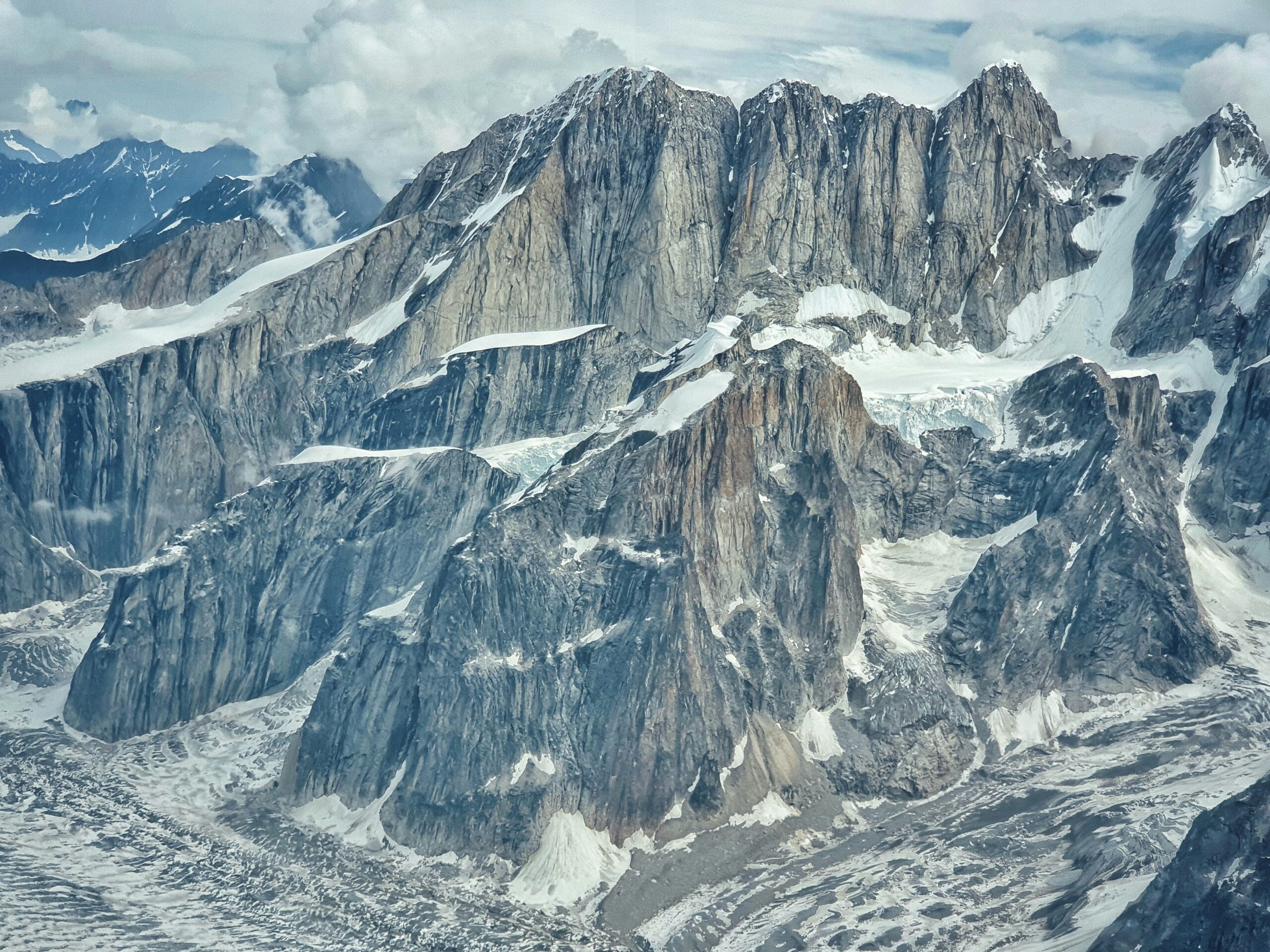
Broad Peak Can Build Experience. K2 Expects You to Arrive With It.
If Broad Peak fills an identifiable gap in your high-altitude résumé, research it as a complete objective—not merely as a K2 warm-up. If K2 is already the target, use the comparison to identify the technical and expedition skills that must already be proven before you arrive on the Baltoro.
Was this helpful?
🏔Related peaks nearby
🧭Explore & compare
Global Summit Guide is an independent mountaineering resource founded in 2026. The team combines first-hand trekking and climbing experience with in-depth research and professional health and nutrition review to help climbers choose objectives, prepare properly, and stay safe.
Health, altitude, and nutrition content is reviewed by Taylor Ludlow (Registered Nurse) and Brigg Hoopes (Nutritionist).
What We Don't Know Yet
Mountain information changes quickly. This box explains the limits of what this page can responsibly promise.
- Total trip cost can change with flights, lodging, guide pricing, permits, gear rentals, transportation, and exchange rates.
- Comparisons simplify complex decisions; the better mountain depends on current conditions, skills, timing, budget, and risk tolerance.
- Visa, passport, vaccination, border, insurance, and local transportation rules may change before your trip.
Verify current conditions with official land managers, guide services, local forecasts, and current route reports before booking or climbing.
Mountaineering, rock and ice climbing, glacier travel, and high-altitude activity are inherently dangerous and can result in serious injury or death. The information on Global Summit Guide is provided for general informational and educational purposes only and is not a substitute for professional instruction, qualified guiding, proper equipment, or your own judgment and experience.
Route conditions, weather, snowpack, permits, regulations, and hazards change constantly and may differ from what is described here. Details may be incomplete, out of date, or contain errors. Always verify current information with local authorities, certified guides, and official sources before making any decision in the mountains.
Nothing on this site is medical, legal, or financial advice. Our fitness, acclimatization, altitude, and nutrition content is general in nature; consult a qualified physician before beginning any strenuous exercise program or exposing yourself to high altitude.
You are solely responsible for your own safety and decisions. To the fullest extent permitted by law, Global Summit Guide and its team accept no liability for any loss, injury, damage, or expense arising from use of, or reliance on, this information. By using this site you acknowledge these risks and accept these terms.
Some links on this site may be affiliate links. If you buy through them we may earn a small commission at no extra cost to you; this never affects our recommendations.
Global Summit Guide recommendation path
Next Best Mountain to Research
Use these recommendations to continue the right planning path instead of stopping on one page.
Use current permit, weather, route, and operator information before booking or climbing.