
Last updated September 16, 2026
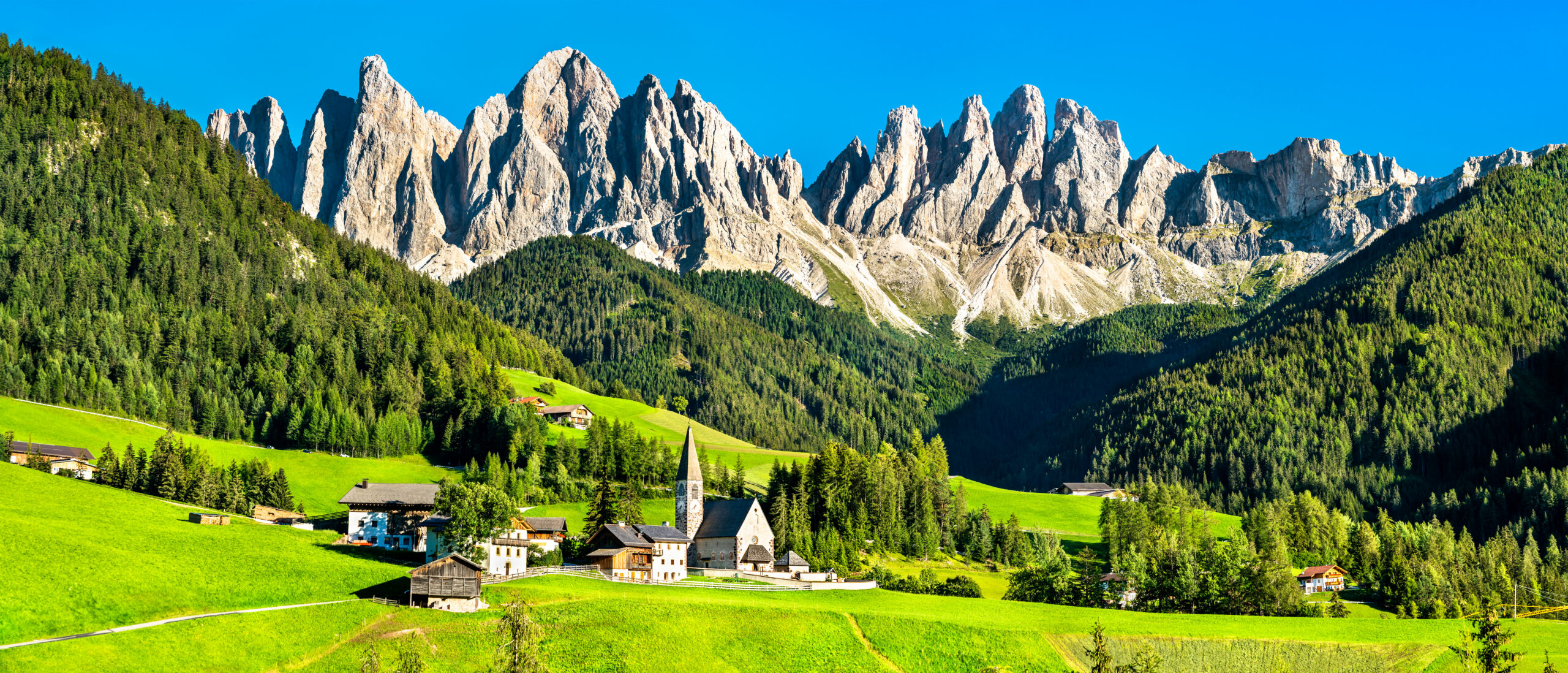
Where to Stay in the Dolomites: Best Towns, Valleys & Hiking Bases
The Dolomites are too spread out for one hotel to serve every famous hike. Choose the base that matches your trail list first—then choose the property. Cortina is strongest for Tre Cime and Lagazuoi; Val Gardena for Seceda and the Odle; Alta Badia for Sella and Fanes; Alpe di Siusi for meadow hiking; Val di Fassa for Marmolada and the central Dolomites; and Dobbiaco/Braies for the northern lakes and Alta Via 1.
Where Should You Stay?
First trip: split the week between Cortina d’Ampezzo and Ortisei/Val Gardena. That gives you the eastern icons—Tre Cime, Cinque Torri, Lagazuoi—plus the western icons—Seceda, the Odle and Alpe di Siusi—without changing hotels every day.
More mountain-focused trip: replace one of those with Alta Badia or Val di Fassa. Alta Via 1: start near Lago di Braies/Dobbiaco, then sleep in rifugi on the route.
Choose Your Dolomites Base
Best Places to Stay in the Dolomites Compared
Choose by trail system and transport, not by whichever hotel appears first in a booking search.
| Base | Best for | Signature hikes / areas | Car? | Typical stay | Main tradeoff |
|---|---|---|---|---|---|
| Cortina d’Ampezzo | Eastern Dolomites icons | Tre Cime, Cinque Torri, Lagazuoi, Sorapis | Helpful; buses can work | 2–4 nights | Popular and expensive |
| Ortisei / Val Gardena | Best all-around lift base | Seceda, Odle, Alpe di Siusi, Puez | Not essential | 3–4 nights | Farther from Tre Cime |
| Alpe di Siusi | Meadows, families, sunrise/sunset | Seiser Alm, Sassolungo, Sciliar | No advantage once on plateau | 1–2 nights | Less convenient for wider touring |
| Alta Badia | Central Dolomites + Ladin villages | Sella, Pralongiá, Fanes, Puez-Odle | Useful but lifts/buses help | 2–4 nights | Spread across several villages |
| Val di Fassa | Marmolada + central/southern Dolomites | Sassolungo, Sella, Catinaccio, Marmolada | Helpful | 2–4 nights | Less convenient for eastern icons |
| Dobbiaco / Lago di Braies | Northern lakes + AV1 start | Braies, Tre Cime north access, Prato Piazza | Optional with planning | 1–2 nights | Less central for western Dolomites |
| Rifugi | Hut-to-hut / high mountain experience | Alta Via 1, Lagazuoi, Fanes, high routes | No | 1–10+ nights | Less privacy and booking flexibility |

Cortina d’Ampezzo
Cortina is the strongest base when your must-do list starts with Tre Cime di Lavaredo, Cinque Torri, Lagazuoi, Croda da Lago or Lago di Sorapis. The town has the broadest hotel/restaurant infrastructure in the eastern Dolomites and direct access to several lift systems.
The tradeoff is price and geography. Cortina is not a smart base for every Seceda or Val Gardena day. Use it for the eastern side, then move west rather than spending the week crossing passes.
- Stay central if you want restaurants and seasonal buses close at hand.
- Stay toward Falzarego only if Lagazuoi/Cinque Torri dominate your trip.
- Do not base here just because Tre Cime is famous if most of your hikes are actually around Val Gardena.
Ortisei & Val Gardena
For many hikers, Ortisei is the easiest place to recommend in the entire Dolomites. The village sits between lift systems that reach Seceda and Alpe di Siusi, while Val Gardena transport connects Ortisei, Santa Cristina and Selva.
The official Val Gardena tourism site explicitly recommends staying in the valley for Seceda because the short distances and public-transport connections simplify the trip. That makes Val Gardena especially strong for travelers who do not want to rent a car.
- Ortisei: best first choice for Seceda + Alpe di Siusi access.
- Santa Cristina: quieter middle-valley compromise.
- Selva: strongest for Sella/Puez access and more mountain-forward itineraries.


Alpe di Siusi / Seiser Alm
Stay on the plateau when the plateau itself is the objective. The advantage is not a shorter drive; it is being on the high meadow before the day visitors arrive and after they leave.
This is the strongest base for families, photographers, lower-exposure walking and travelers who want a slower Dolomites trip. It is less efficient if your week is built around Tre Cime, Marmolada and distant passes.
Best use: add one plateau night to a Val Gardena trip instead of treating Alpe di Siusi as the only base for a full Dolomites week.
Alta Badia: Corvara, Colfosco & San Cassiano
Alta Badia belongs on a “where to stay” page because it fills the gap between Cortina and Val Gardena. Official tourism materials highlight hiking across the Sella, Lagazuoi, Fanes, Puez-Odle and broad meadow plateaus, supported by a substantial summer lift network.
Choose Corvara for central convenience and lifts, Colfosco for immediate access toward the Sella/Puez side, or San Cassiano for a quieter base with strong Fanes/Lagazuoi access.
Choose Alta Badia over Cortina when Sella, Fanes and central Ladin-valley hiking matter more than Tre Cime.

Val di Fassa: Canazei, Campitello & Moena
Val di Fassa is the base the old version underplayed. It matters if your trip leans toward Marmolada, Sassolungo, Sella, Catinaccio or the Trentino side of the range.
Best for Lifts & Big-Mountain Access
Use Canazei when Marmolada, Passo Pordoi, Sella and higher lift-assisted hiking dominate your plan. The 2026 Panorama Pass connects 31 summer lifts across the valley.
Quieter Sella / Sassolungo Base
A good alternative to Canazei when you want fast access toward Col Rodella, Sassolungo and Val Duron with a slightly smaller-town feel.
Best for a Broader Valley Holiday
Choose Moena when the trip mixes hiking with village life and you do not need to be beside the highest central lifts every morning.

Dobbiaco / Toblach & Lago di Braies
Dobbiaco is the more practical base; Lago di Braies is the more atmospheric one. Stay at/near the lake if sunrise, a quiet early walk or the classic Alta Via 1 start is central to the trip. Stay in Dobbiaco if you want transport flexibility and a broader base for northern Dolomites days.
South Tyrol’s official tourism guidance notes that access to the Braies valley can be regulated during busy periods and recommends public transport, walking or cycling where possible. That is another reason to treat lodging location as part of the access plan.

Spend at Least One Night in a Rifugio If the Itinerary Allows It.
A valley hotel gives comfort and flexibility. A rifugio gives you the Dolomites after the lifts stop, when the high trails empty and the mountain becomes the place you are staying rather than the place you commute to.
When to Stay in Rifugi Instead of Valley Hotels
Rifugi are not just cheaper hotels at elevation. They change the shape of the hiking trip.
Use Rifugi as the Route
On a true hut-to-hut itinerary, the lodging sequence determines the walking stages. Book the hut chain before nonrefundable valley hotels.
Add a High Night to a Valley Trip
If you prefer day hikes, one rifugio night around Lagazuoi, Fanes or another logical high point delivers the experience without committing to a full traverse.
Availability Is Route Logic
If a hut is full, change the stage or dates rather than creating an unsafe long day. Use current hut calendars and the site’s dated Dolomites booking watch for seasonal signals.
Should You Rent a Car?
The answer changes by base. A car can improve flexibility, but it can also become a parking problem at the most popular trailheads.
Val Gardena
Official Val Gardena guidance emphasizes public transport between Ortisei, Santa Cristina and Selva, with limited parking around popular access points. Lifts make this the cleanest no-car base.
Cortina / Alta Badia / Val di Fassa
A car widens weather alternatives and makes cross-pass trailheads easier, but seasonal buses and lifts still handle many major routes. Do not assume every famous trailhead welcomes spontaneous parking.
Braies & Tre Cime
High-demand access systems can involve reservations, regulated traffic or seasonal shuttle logic. Check the current official access page before deciding whether the rental car adds convenience.
Best 7-Day and 10-Day Dolomites Stay Plans
Fewer hotel changes usually produce more hiking because they preserve weather flexibility.
3 Nights Cortina + 3 Nights Val Gardena
Add one arrival/departure night as logistics require. Use Cortina for Tre Cime/Lagazuoi, then Val Gardena for Seceda/Alpe di Siusi. This is the cleanest first-time split.
3 Nights Val Gardena + 3 Nights Alta Badia
Better for hikers who care more about Sella, Puez-Odle, Fanes and lift networks than Tre Cime. Less driving, more central mountain time.
Cortina + Val Gardena + One Specialty Base
Use three nights Cortina, three Val Gardena, then choose two to three nights in Alta Badia, Val di Fassa or Braies depending on your final priorities.
Best Dolomites Base by Trip Style
The “best town” changes when the traveler changes.
Cortina + Ortisei
Maximum iconic-hike coverage with two bases.
Ortisei / Val Gardena
Strong lifts, village connections and dense trail options.
Alpe di Siusi
Gentler terrain, meadows and a calmer high-altitude setting.
Alta Badia
Central access to Sella, Fanes, Puez and serious hiking.
Val di Fassa
Best fit for Marmolada, Sella, Sassolungo and Catinaccio.
Rifugi
Build lodging around the walking stages rather than one valley base.
Book the Scarce Piece First
The best booking sequence depends on the trip style.
Rifugi First
Secure the sequence that defines the walking stages before locking flights and valley hotels around it.
Choose Bases Before Hotels
Decide which two or three valleys own your must-do hikes, then compare lodging within those bases.
Protect High-Demand Nights
Plateau hotels, lakeside lodging and popular rifugi have limited inventory. Book those before ordinary valley rooms when dates are fixed.
Compare Hotels After You Choose the Base
Global Summit Guide may earn a commission from qualifying Expedia bookings at no extra cost to you. Base recommendations are editorial and are not ranked by commission.
Build the Hiking Plan Around the Base
This page owns the broad lodging-location decision. These deeper pages own the hikes, peaks and current seasonal details.
How the Base Recommendations Were Built
This rebuild is intentionally location-first. Official tourism sources were used to confirm the trail/lift systems that make each valley a useful hiking base.
- Val Gardena: official Seceda guidance recommends staying in the valley for short distances, public transport and lift access.
- Alta Badia: official hiking and summer-lift materials confirm broad access to Sella, Fanes, Puez-Odle and the valley’s 2026 lift network.
- Val di Fassa: the official 2026 Panorama Pass covers 31 lifts and highlights access toward Sassolungo, Sella, Catinaccio and Marmolada.
- Lago di Braies: official South Tyrol guidance notes that busy-season access can be regulated and recommends public transport, walking or cycling.
- Cortina: official Cortina tourism materials confirm broad summer hiking access via lifts and the eastern-Dolomites trail network.
Where to Stay in the Dolomites Questions
The cleanest answer is almost always to match the hotel base to the hikes rather than choose one central point on a map.
What is the best town to stay in the Dolomites for first-time hikers?
Cortina is the strongest eastern base; Ortisei is the strongest western base. A first-time one-week trip is usually better split between the two than spent in one town.
Is Cortina or Ortisei better for hiking?
Cortina is better for Tre Cime, Cinque Torri, Lagazuoi and Sorapis. Ortisei is better for Seceda, the Odle and easy Alpe di Siusi access. Choose according to your must-do hikes.
Where should I stay without a car?
Ortisei/Val Gardena is the easiest broad recommendation because villages, buses and lift systems work together well. Cortina can also work when seasonal bus timetables match your trailheads.
Is Alta Badia worth using as a base?
Yes. Corvara, Colfosco and San Cassiano give excellent access to Sella, Fanes, Puez-Odle and central Dolomites hiking, with substantial summer lift support.
Where should I stay for Alta Via 1?
Lago di Braies is the classic northern start; Dobbiaco is a practical nearby transport base. Once the trek begins, you normally move between rifugi.
How many bases should I use for a week?
Usually two. Three nights Cortina plus three nights Val Gardena is the classic first trip. Add a third base only when you have roughly 9–10 days or a very specific objective.
Should I stay in a rifugio?
Yes if the trip allows it. One hut night gives you a very different Dolomites experience, and multi-day high routes depend on rifugi for the overnight structure.
Choose the Hikes First. Then Choose the Bed.
The Dolomites become much easier to plan once you stop looking for one “central hotel.” Build the trail list, group the hikes into eastern, western and central systems, then stay close enough to use good weather when it arrives.
Where to Stay – and Hike – in the Dolomites
Basing yourself well is half the Dolomites trip. Pair this with the trails and the wider Alpine hiking below.
Was this helpful?
🏔Related peaks nearby
🧭Explore & compare
Global Summit Guide is an independent mountaineering resource founded in 2026. The team combines first-hand trekking and climbing experience with in-depth research and professional health and nutrition review to help climbers choose objectives, prepare properly, and stay safe.
Health, altitude, and nutrition content is reviewed by Taylor Ludlow (Registered Nurse) and Brigg Hoopes (Nutritionist).
What We Don't Know Yet
Mountain information changes quickly. This box explains the limits of what this page can responsibly promise.
- Visa, passport, vaccination, border, insurance, and local transportation rules may change before your trip.
- Route conditions, snowpack, closures, and weather can change quickly after this page is updated.
- Permit rules, fees, quotas, and reservation windows may change between review cycles.
- Operator availability, pricing, guide ratios, and cancellation terms can change by season.
- Your fitness, altitude response, risk tolerance, and experience level may change what is safe or realistic.
Verify current conditions with official land managers, guide services, local forecasts, and current route reports before booking or climbing.
Mountaineering, rock and ice climbing, glacier travel, and high-altitude activity are inherently dangerous and can result in serious injury or death. The information on Global Summit Guide is provided for general informational and educational purposes only and is not a substitute for professional instruction, qualified guiding, proper equipment, or your own judgment and experience.
Route conditions, weather, snowpack, permits, regulations, and hazards change constantly and may differ from what is described here. Details may be incomplete, out of date, or contain errors. Always verify current information with local authorities, certified guides, and official sources before making any decision in the mountains.
Nothing on this site is medical, legal, or financial advice. Our fitness, acclimatization, altitude, and nutrition content is general in nature; consult a qualified physician before beginning any strenuous exercise program or exposing yourself to high altitude.
You are solely responsible for your own safety and decisions. To the fullest extent permitted by law, Global Summit Guide and its team accept no liability for any loss, injury, damage, or expense arising from use of, or reliance on, this information. By using this site you acknowledge these risks and accept these terms.
Some links on this site may be affiliate links. If you buy through them we may earn a small commission at no extra cost to you; this never affects our recommendations.
Global Summit Guide recommendation path
Next Best Mountain to Research
Use these recommendations to continue the right planning path instead of stopping on one page.
Use current permit, weather, route, and operator information before booking or climbing.
Search Flights, Hotels & Rental Cars
Have the mountain or destination picked? Use Expedia to compare the flights, lodging and rental cars that fit your actual trip dates. For mountain travel, consider arriving early enough for delays and adding a buffer night after the climb before a fixed flight home.
Compare current flight, hotel and car options.
Affiliate disclosure: Global Summit Guide may earn a commission if you book through this link, at no additional cost to you.