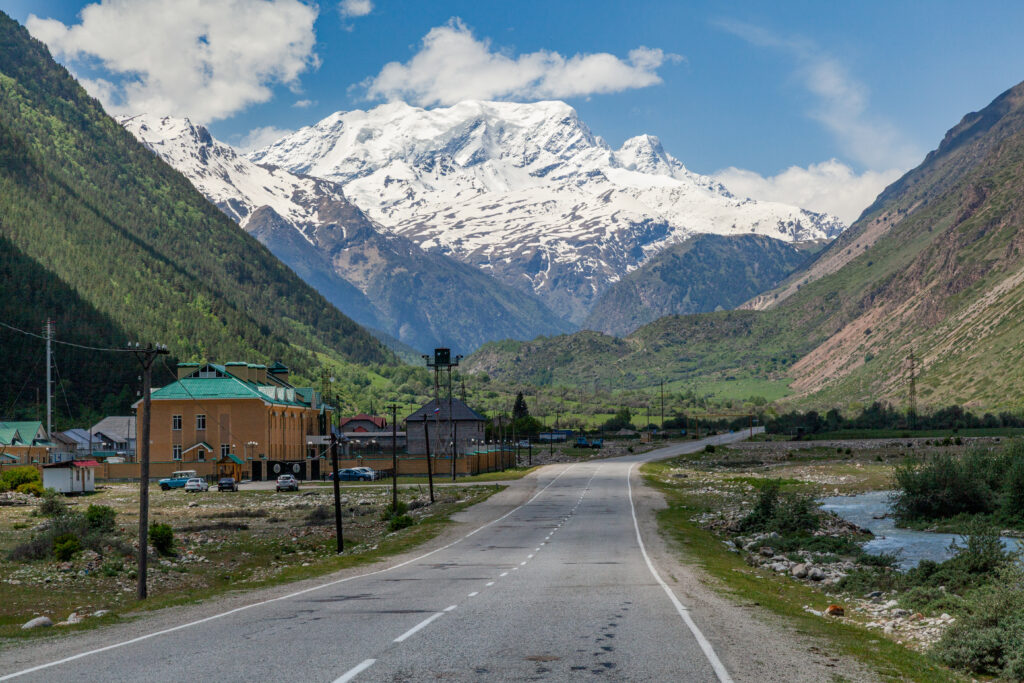
Elbrus North vs South Route: Which Is Better for First-Time Climbers?
The definitive 2026 comparison of Mount Elbrus’s two main climbing routes — the infrastructure-rich South Route via Azau cable car and the wilder North Route from Emanuel Meadow. Both reach the 18,510-foot summit of Europe’s highest peak in the Caucasus Mountains of Russia, but they deliver radically different experiences. This guide answers the question every first-time Elbrus climber asks.
summit
routes
days
success
Mount Elbrus is an extinct twin-peak stratovolcano in the Caucasus Mountains of southern Russia, rising dramatically to 18,510 feet (5,642 m) — making it the highest peak in Europe and one of the Seven Summits. It’s often cited as the “easiest” Seven Summit, though that reputation depends entirely on which route you climb. The two main routes — the South Route and the North Route — reach the same summit but deliver entirely different expeditions. The South Route is a resort-infrastructure experience with cable cars, heated huts, and snowcat support; the North Route is a wilderness expedition with tent camps, long approaches, and serious self-sufficiency. For first-time climbers, the choice matters enormously. This guide walks through both routes in detail and helps you decide which fits your experience, budget, and expectations.
Route data verified against Russian Mountaineering Federation records and Prielbrusie National Park documentation. Cost and infrastructure information confirmed with Pilgrim Tours, Top-Adventure, Russian Mountain Travel, Alpine Ascents International, and Mountain Madness (2026 rates). Success rate statistics drawn from multi-year operator averages and American Alpine Club expedition reports. Technical details cross-checked with the classic Caucasus reference Caucasus: Central and Southern Ranges. Reviewed by practicing Russian mountain guides with 2025 season experience on both routes. Note: Elbrus is in Russia’s Kabardino-Balkaria Republic — current geopolitical conditions may affect travel logistics. Fact-check date: April 19, 2026.
Mount Elbrus: Europe’s Twin-Summit Volcano
Mount Elbrus is an extinct stratovolcano with two summit peaks of nearly equal height — the West Peak at 18,510 ft (5,642 m) is the true summit and the standard climbing objective, while the East Peak at 18,442 ft (5,621 m) is slightly lower. The mountain sits in the Greater Caucasus range in southern Russia, approximately 11 km north of the Georgian border, in the Kabardino-Balkaria Republic.
Key Mount Elbrus facts
- West Peak: 18,510 ft (5,642 m) — standard summit target
- East Peak: 18,442 ft (5,621 m) — secondary summit
- Prominence: 15,554 ft — 10th highest prominent peak in the world
- Type: Extinct stratovolcano (last eruption ~50 AD)
- Location: Caucasus Mountains, Kabardino-Balkaria, Russia
- First ascent: East Peak 1829 (Killar Khashirov, Russian expedition); West Peak 1874 (British expedition led by Florence Crauford Grove)
- Climbing season: Mid-June through mid-September (primary); limited winter ascents
- Glaciated: Yes — crampons and ice axe required
- Annual climbers: ~15,000-25,000 attempts per year (majority on South Route)
- Overall success rate: ~55-65% across all routes and seasons
- Closest airport: Mineralnye Vody (MRV), 3-hour drive to Terskol
Elbrus is frequently cited as the ideal first Seven Summits peak. It delivers authentic high-altitude experience (18,510 ft), glacier travel skills practice, and serious cold-weather mountaineering — all in a manageable 5-9 day expedition at a fraction of the cost of Denali, Everest, or Vinson. Many Seven Summits aspirants climb Elbrus first to build confidence and gauge their response to altitude before committing to harder peaks. See our Seven Summits for beginners guide for the full progression framework.
The Two Routes: Side-by-Side Comparison
Mount Elbrus has two main climbing routes that both reach the same summit but deliver fundamentally different experiences. Choosing the right one matters more than anything else for your Elbrus success.
South Route (Azau/Terskol)
The South Route begins in Terskol village (7,200 ft), a small resort town in the Baksan Valley that serves as the primary base for both skiing and mountaineering. From Terskol, the Azau cable car system lifts climbers through three stages to Garabashi Station at 12,500 ft, where the famous Bochki barrel huts provide heated shelter for acclimatization and summit staging.
This is the route of Russian and international ski resort infrastructure applied to mountaineering. Restaurants in Terskol serve hot meals. Hotels offer real beds and showers. Gear rental shops supply technical equipment. Snowcats transport climbers partway up summit day, cutting 3-4 hours off the ascent. 80% of Elbrus climbers choose this route, and it’s overwhelmingly the right choice for first-time climbers. The summit success rate is 60-70% — considerably higher than the North Route’s 40-50%.
The downsides are crowds and a commercialized atmosphere. July and August see barrel huts booked solid, snowcats running like a conveyor belt, and climbers lined up waiting for chairlifts. If solitude and wilderness character matter more than summit probability, the South Route will disappoint you.
North Route (Emanuel Meadow)
The North Route begins at Emanuel Meadow (8,200 ft), a remote high-altitude meadow reached by 4WD vehicle from the city of Kislovodsk. There are no cable cars, no lifts, no snowcats — all progress happens on foot, carrying full loads with your tent and gear. Base camp is a tent camp at Emanuel Meadow; intermediate and high camps are also tents at progressively higher elevations.
This is traditional expedition mountaineering as it used to be done. Wilderness isolation. Personal self-sufficiency. Longer approaches. More physical demands. The atmosphere at Emanuel Meadow is peaceful — perhaps 20-40 climbers scattered across the meadow rather than the hundreds on the South Route. The view across the meadow of Elbrus’s north face at sunrise is one of the great mountaineering vistas in the world. The North Route sees approximately 20% of all Elbrus climbers and attracts those who want the mountain experience rather than the resort experience.
The trade-offs are real. Summit success rates are 40-50% — significantly lower than the South Route due to the longer approach, greater physical demands, and lack of infrastructure for weather-delay management. Experienced climbers often prefer the North Route, but it’s rarely the right choice for a first-time Elbrus attempt.
Side-by-Side Detailed Comparison
| Attribute | South Route | North Route |
|---|---|---|
| Starting village | Terskol (Baksan Valley) | Kislovodsk → Emanuel Meadow |
| Starting elevation | 7,200 ft | 8,200 ft (Emanuel Meadow) |
| Cable cars / lifts | Yes — Azau system to 12,500 ft | None |
| Base camp | Bochki barrel huts (12,500 ft) | Tent camp at Emanuel Meadow |
| High camp | Pastukhov Rocks or huts | Lenz Rocks (13,500 ft) |
| Snowcat on summit day | Optional ($100-150) | Not available |
| Total duration | 5-7 days | 6-9 days |
| Crowds | Heavy (peak July-August) | Minimal |
| Infrastructure | Ski resort with restaurants/hotels | Wilderness tent camps |
| Cost (with cable/snowcat) | $2,500-$4,500 (guided) | $2,000-$3,800 (guided) |
| Summit success rate | 60-70% | 40-50% |
| Physical demand | Moderate (with infrastructure) | Demanding (no assistance) |
| Best for | First-timers, guided clients | Experienced, self-sufficient climbers |
Pros and Cons of Each Route
South Route
Why South Route Works
- Cable car eliminates 5,000 ft of approach hiking
- Heated barrel huts provide solid shelter
- Snowcat option shortens summit day significantly
- Restaurants and hotels nearby for pre/post climbing
- Strong guide service network available
- Rescue response fastest on South side
- Higher summit success rate (60-70%)
- Gear rentals available in Terskol
- Established route markers and trails
South Route Downsides
- Peak-season crowds (100+ climbers at Bochki huts)
- Resort atmosphere rather than wilderness
- Cable car + snowcat adds $200-$300 in fees
- Barrel huts book solid in July-August
- Less physical achievement (shortcuts available)
- Traffic on Pastukhov Rocks section
- Commercial feel detracts from mountain experience
- Queue lines for cable cars at peak times
North Route
Why North Route Works
- Wilderness character with minimal crowds
- True expedition mountaineering experience
- Longer approach improves acclimatization
- Emanuel Meadow is genuinely spectacular
- Lower base cost (no cable car/snowcat fees)
- More authentic cultural experience
- Full physical accomplishment of entire ascent
- Better for experienced mountaineers wanting challenge
North Route Downsides
- Lower summit success rate (40-50%)
- No infrastructure for weather management
- Heavier packs due to camping gear requirements
- 4WD access to Emanuel Meadow can be difficult
- Longer overall expedition (6-9 days)
- Limited guide services compared to South
- Tent living in potentially bad weather
- Slower rescue response if emergency
- More challenging logistics from Mineralnye Vody
Which Route Should You Choose?
The decision between North and South Elbrus routes depends on specific factors about your experience, goals, and priorities. Here’s a practical framework:
First-Time High-Altitude Climber
South Route is correct. Infrastructure makes success more likely. Lower physical demands. Gear rentals available. Guide services abundant. Focus on altitude acclimatization rather than camping logistics.
Short Time Window (7 days)
South Route fits tight schedules. 5-7 day expedition possible. Cable car and snowcat shortcuts work with limited time. North Route realistically needs 8+ days.
Guided Climber
Most guides operate South Route. More options, better English-speaking availability, established programs. North Route guides rare and expensive.
Experienced Mountaineer
North Route rewards experience. Previous expeditions, self-sufficient teams, strong glacier skills — North delivers the mountain at its best for climbers ready for it.
Wilderness Priority
Solitude and character matter most. North delivers isolation, pristine alpine terrain, and the traditional expedition feel. Worth lower success rate for authentic experience.
Climbing Elbrus Twice
Best approach for repeat climbers. Do South Route first (higher success, learn mountain). Return later for North Route (wilder experience, known territory).
If you’re asking this question because you’re planning your first Elbrus climb, the answer is almost certainly the South Route. The combination of infrastructure, higher success rate, shorter expedition, and guide availability make it the clear choice for most climbers. The North Route is better for experienced alpinists or those who specifically want the wilderness experience. Don’t let the “easier” reputation of the South Route deter you — it’s still an 18,510-foot glaciated peak. Every Seven Summit aspirant should consider Elbrus as their entry point, and almost all should choose the South Route for that entry.
Logistics and Practical Considerations
Getting to Elbrus
- Primary airport: Mineralnye Vody (MRV) — 3 hours drive to Terskol, 2 hours to Kislovodsk.
- International flights: Via Moscow Sheremetyevo (SVO), Istanbul (IST), or charter flights from major European cities.
- Ground transfer: Taxi, private transfer, or guide service pickup. $50-$200 depending on option.
- Russian visa: Required for most nationalities. Apply 4-8 weeks in advance. Some nationalities eligible for e-visa.
- Border zone permit: Required for some areas near North Route. Handled by operator or via application 45 days in advance.
Accommodation
- Terskol (South): Multiple hotels ($40-$100/night), hostels, guesthouses. Book in advance for July-August.
- Kislovodsk (North): Larger city, more accommodation options. Sanatoriums and standard hotels.
- Barrel huts (Bochki): $30-$50/night per bed. Reserved through guide service or directly.
- Camping (North): No fees, just tent your own spot at Emanuel Meadow.
When to climb
- Peak season: July-August (warmest, most reliable weather).
- Shoulder seasons: Mid-June and early September (fewer crowds, slightly colder).
- Winter climbing: December-April requires serious mountaineering skills, rarely attempted by general climbers.
Summit Day: West Peak via Either Route
Both routes converge near the summit area and finish with a similar final push to the West Peak at 18,510 ft. Summit day is typically 10-14 hours total:
- 2:00-4:00 AM: Departure from high camp (Bochki or Pastukhov on South; Lenz Rocks on North).
- First 2-3 hours: Climb to the upper glacier. South Route climbers may take snowcat to 15,400-16,400 ft.
- Traverse phase: Long traverse across upper glacier between the twin peaks. Often windy.
- Final ascent: Steep climb to the saddle between East and West peaks. Then final push to West Peak summit.
- Summit arrival: Typically 10 AM – 2 PM depending on route and conditions.
- Descent: Reverse route. South Route climbers can use snowcat descent option.
- Return to camp: 2:00-6:00 PM typical.
Elbrus weather is notoriously unpredictable. The Caucasus range creates weather patterns that can shift from clear to whiteout in 30 minutes. Summit day requires careful timing — most expeditions depart at 2-4 AM specifically to complete the summit push before afternoon weather deterioration. The single biggest factor in Elbrus summit success is weather patience. Teams willing to wait for good weather windows succeed far more often than those who push through marginal conditions. Budget expedition schedules with 1-2 buffer days for weather delays on either route.
Elbrus Routes FAQ: Your Common Questions Answered
Which is better for first-time climbers on Elbrus, North or South?
The South Route is overwhelmingly better for first-time Elbrus climbers. Approximately 80% of all Elbrus ascents use the South Route. Why: (1) Cable car access to 12,500 ft eliminates 5,000 ft of approach hiking. (2) Barrel huts (Bochki) at 12,500 ft provide solid heated shelter versus camping. (3) Snowcat transport available to 16,400 ft on summit day cuts 3-4 hours off summit day. (4) Strong infrastructure — restaurants, hotels, gear rentals in Terskol village. (5) Most Russian and international guide services operate from South Route with English-speaking options. (6) Established route markings reduce route-finding risk. (7) Rescue response faster. (8) Summit success rate is 60-70% on South Route versus 40-50% on North Route. When North Route might be better: experienced climbers wanting wilder character, photographers prioritizing solitude, budget climbers (cheaper without cable car/snowcat), climbers wanting better acclimatization from longer approach. For first-time Elbrus climbers, the South Route’s combination of infrastructure support, higher success rate, and easier physical demands makes it the clear choice.
How hard is Mount Elbrus to climb?
Mount Elbrus is considered the easiest of the Seven Summits, but it remains an 18,510-foot glaciated volcano requiring proper mountaineering skills. Difficulty factors: (1) Summit elevation 18,510 ft (5,642 m). (2) Non-technical for a glaciated peak — no rock climbing or roped ascents except in adverse conditions. (3) Glacier travel requires crampons and ice axes. (4) Expedition length 5-9 days typical. (5) Weather notoriously fast-changing — sudden storms and whiteouts common. (6) Summit winds routinely exceed 40 mph. (7) Summit temperatures typically -15°F to 5°F in summer. (8) Summit success rate approximately 60-70%. Comparative difficulty: easier than Aconcagua, dramatically easier than Denali, similar to Kilimanjaro but glaciated, much easier than Vinson or Everest. Main challenges: weather unpredictability, altitude effects, cold and wind on summit day, summit day length 10-14 hours, glacier travel skills. Preparation: excellent cardiovascular fitness, crampon use practice, glacier travel basics, cold weather gear, prior altitude experience helpful. For first-time expedition climbers, Elbrus is often recommended as the starting Seven Summits peak.
What is the difference between Elbrus North and South routes?
Elbrus’s North and South routes differ dramatically despite reaching the same summit. South Route (Azau/Terskol): Starting point Terskol village at 7,200 ft. Azau cable car from 7,500 ft to 12,500 ft in three stages. Base camp Bochki barrel huts at 12,500 ft — heated shelters. Snowcat available to Pastukhov Rocks at 15,400 ft. Duration 5-7 days. Infrastructure of restaurants, hotels, shops in Terskol. 80% of all Elbrus climbers. Crowded in summer peak. Cost higher due to cable car fees (~$60), snowcat (~$100-150), barrel huts ($30/night). North Route (Emanuel Meadow): Starting point Emanuel Meadow at 8,200 ft. No cable cars or lifts — all on foot. Tent camps at Emanuel Meadow and Lenz Rocks area at 13,500 ft. No snowcat option. Duration 6-9 days (longer due to approach). Minimal infrastructure. Reached by 4WD from Kislovodsk. 20% of climbers. Quiet wilderness experience. Lower base cost but requires camping gear. Character: South is ski resort infrastructure applied to mountaineering. North is wilderness expedition with tent life. Main decision factor: South better for higher success probability and infrastructure; North better for experienced climbers wanting wilderness character.
How long does it take to climb Mount Elbrus?
Mount Elbrus expeditions typically take 5-9 days depending on route. South Route 7-day itinerary: Day 1 arrive Mineralnye Vody, drive to Terskol (3 hours). Day 2 acclimatization hike near Terskol. Day 3 cable car stages to Mir Station (11,400 ft), acclimatization hike. Day 4 cable car to Bochki barrel huts at 12,500 ft, acclimatization hike to Pastukhov Rocks (15,400 ft). Day 5 rest day. Day 6 summit day — start 1:00-4:00 AM, climb to West Peak (18,510 ft), 10-14 hours round trip. Day 7 descend to Terskol, fly out. North Route 8-day itinerary: Day 1 arrive Mineralnye Vody, drive to Kislovodsk. Day 2 4WD to Emanuel Meadow (8,200 ft), establish base camp. Day 3 acclimatization hikes. Day 4 carry loads to intermediate camp at 12,500 ft. Day 5 move to intermediate camp. Day 6 move to high camp at Lenz Rocks (13,500 ft). Day 7 summit day — 10-16 hours round trip. Day 8 descend and 4WD out. Factors affecting duration: weather delays (add 1-3 days), acclimatization needs, route conditions, fitness. Conservative planning: budget 7-10 days for South Route, 9-12 days for North Route.
How much does it cost to climb Mount Elbrus?
Climbing Mount Elbrus costs $1,500-$3,500 for independent climbers or $2,500-$5,000 for fully guided expeditions, making it the most affordable Seven Summit. No climbing permit required. Border zone permit for North Route areas ($50-$100). National park fees $15-$30. Guided expedition: full-service $2,500-$4,500 South Route, premium $3,500-$5,500, budget Russian operators $1,800-$2,800. International flight to Mineralnye Vody $800-$1,500. Ground transfer $50-$200. South Route specific: cable car ~$60 round trip, snowcat $100-$150, barrel huts $30-$50/night, meals $20-$40/day. North Route specific: 4WD to Emanuel Meadow $200-$400, no cable car or snowcat costs, camping gear required. Gear if buying $1,500-$3,000. Elbrus-specific rentals available in Terskol at reasonable prices. Insurance $100-$300, evacuation insurance $250-$500. Total ranges: budget independent $1,500-$2,500, mid-range guided $3,000-$4,500, premium $4,500-$5,500. Most climbers budget $3,000-$4,000 for complete expedition including international flights — significantly less than Aconcagua ($7,000-$9,000) or Denali ($10,000-$14,000). See our complete mountain climbing costs guide.
When is the best time to climb Mount Elbrus?
Best time to climb Mount Elbrus is mid-June through mid-September, with peak season July and August. Monthly breakdown: May-early June late spring, cold, limited infrastructure, experienced climbers only. Mid-June season begins, snow consolidation complete, barrel huts open. July peak month, warmest, longest daylight, most predictable weather, crowded South Route. August second peak, similar to July slightly cooler. Early September shoulder season, cooler, fewer crowds, often excellent windows. Mid-late September season ending, colder. October-April winter conditions, avalanche terrain, -40°F summit temperatures, not recommended for general climbers. Daily conditions: summit temperature -15°F to 5°F peak season, summit winds 30-50 mph typical and can exceed 80 mph in storms, daylight 16-18 hours June-July. Factors to consider: summer crowds on South Route, Caucasus weather famously unpredictable, glacier conditions vary. Optimal timing: mid-July through end of August for most climbers. Shoulder seasons acceptable for experienced climbers. Weather patience is crucial — schedule buffer days for weather delays.
Do you need a guide to climb Mount Elbrus?
Guides are not legally required to climb Mount Elbrus, but approximately 75-85% of climbers use guide services. Guides strongly recommended for: first Seven Summits expedition, no prior glacier travel, no crampon experience, limited Russian language, no high-altitude climbing above 15,000 ft, solo climbers, short time window. Independent climbing feasible for: multiple expedition peaks completed, strong glacier skills, previous high-altitude experience, Russian language or experienced partner, pre-formed team. Major Elbrus guide services: Alpine Ascents International, Mountain Madness, International Mountain Guides, Pilgrim Tours Russian specialists, Top-Adventure local Russian, Russian Mountain Travel. What guides provide: airport transfers, permit arrangement, hotel accommodations, cable car coordination, barrel hut reservations, group gear, Russian-speaking guides, weather interpretation, emergency response, rescue insurance. Independent requirements: Russian visa, personal mountaineering equipment, glacier travel knowledge, weather forecasting capability, communication equipment. Cost-benefit: guided adds $1,000-$2,000 over independent. For first-time climbers this investment pays back through higher success rates (70-80% guided vs. 45-55% independent), logistics support, language assistance.
What gear do you need to climb Mount Elbrus?
Mount Elbrus requires complete mountaineering gear for a glaciated 18,510 ft peak, less extensive than Denali due to shorter expedition and infrastructure. Footwear: mountaineering boots rated for -40°F, lightweight approach shoes, insulated camp booties for North Route. Clothing layering: merino wool base layer, fleece mid-layer, down jacket, Gore-Tex pants and jacket, softshell pants, balaclava and face mask, 2-3 pairs insulated gloves, expedition mitts. Technical gear: 12-point steel crampons, 60 cm mountaineering ice axe, climbing harness, locking carabiners, prusik cord, mountaineering rope (group gear). Camping gear North Route only: 4-season expedition tent, sleeping bag rated -20°F, inflatable sleeping pad, stove and cooking kit. Safety and navigation: category 4 glacier glasses, goggles, GPS, headlamp, first aid kit with altitude medications, sunscreen SPF 50+. Food and hydration: water bottles, insulated covers, energy bars, expedition food if camping. Other: backpack (40-60L South, 70+L North), trekking poles, passport and permits, cash. Rental options in Terskol: most technical gear available for rent. Crampons $10-15/day, boots $15-25/day, sleeping bag $10-15/day. Rentals reduce gear costs by $1,500-$2,500 for first-time climbers. See our complete mountain gear list.
Authoritative Sources & Further Reading
Content reflects authoritative Elbrus and Caucasus mountaineering sources:
- Russian Mountaineering Federation — Official Elbrus climbing statistics
- Prielbrusie National Park — Park management and permits
- American Alpine Club — Expedition reports and historical data
- Caucasus: Central and Southern Ranges — Classic regional guide
- Pilgrim Tours, Top-Adventure, Russian Mountain Travel — Operator data for 2026 season
- Alpine Ascents International, Mountain Madness — International guide services
- Gismeteo.ru — Russian meteorological service for Elbrus forecasts
- Reference texts: Mountaineering: The Freedom of the Hills, AAC Elbrus expedition archives
Related Guides Across the Hub
Companion guides for expedition mountaineering and Seven Summits planning.
Back to the Master Hub
This guide is one of 71 across 12 thematic clusters on Global Summit Guide. The master hub organizes every guide by experience tier, specific peak, skill area, and region.