
Last updated September 15, 2026
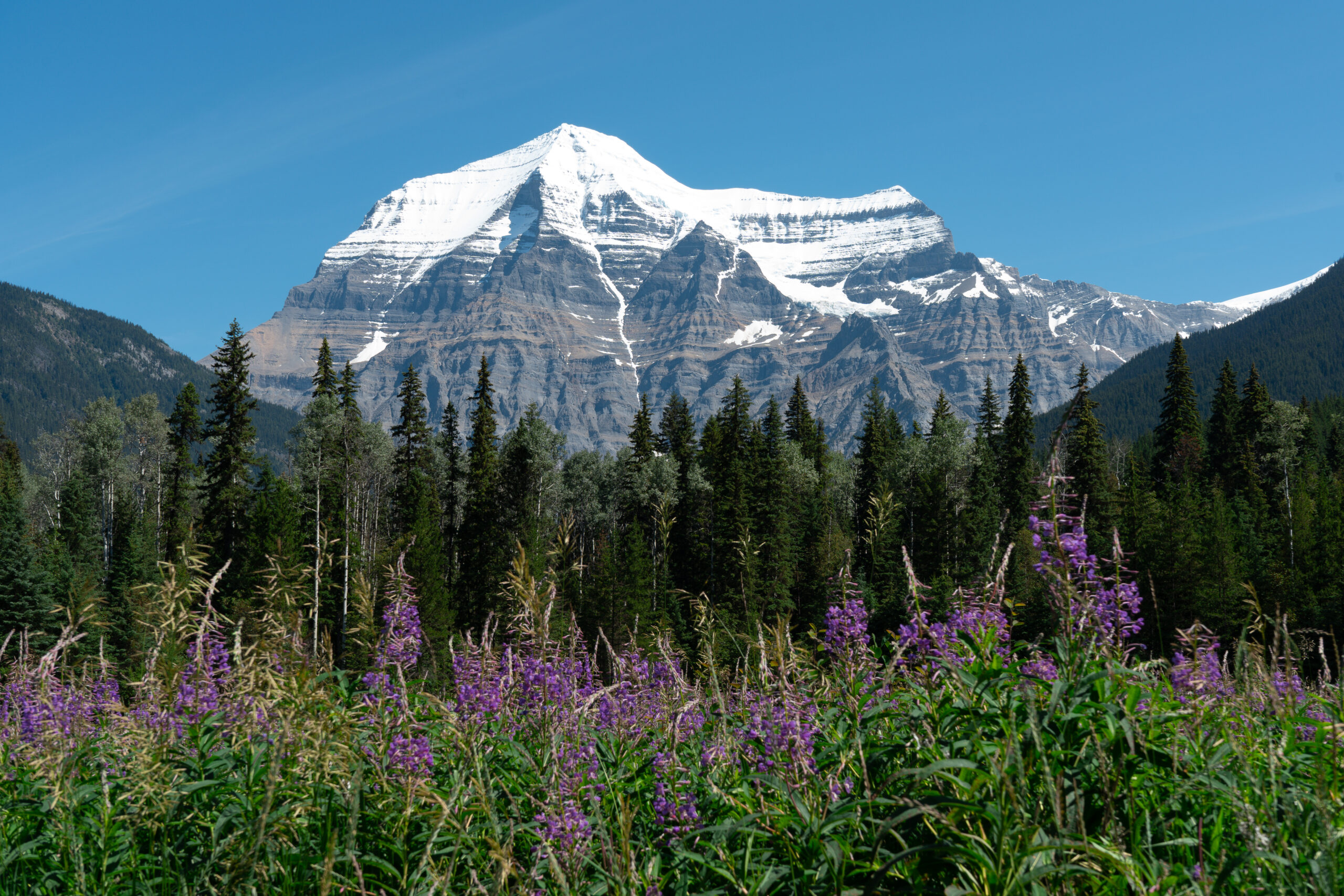
Mount Robson Climbing Guide: Kain Face, Access, Season & Seriousness
Mount Robson is the highest peak in the Canadian Rockies and one of the range’s most committing major summits. The standard objective is the Kain Face, increasingly approached by guided teams via the Patterson Spur. The summit elevation is moderate by global standards; the challenge is not. Expect major relief, steep snow and ice, glacier travel, exposed scrambling, rapidly changing weather and summit days that can exceed 20 hours.
How hard is Mount Robson?
Mount Robson is an advanced technical alpine climb. BC Parks says it should be attempted only by climbers who are fully equipped, well prepared and highly skilled in all aspects of mountaineering.
That assessment matches the current commercial standard. Yamnuska requires prior experience in glacier travel, alpine rock climbing, steep snow and ice, plus excellent fitness, before accepting a climber for its Kain Face program.
The mountain’s difficulty is driven by the whole system: nearly 3,000 metres of relief, unpredictable precipitation and cloud, long technical movement, complex glacier terrain, rock and ice fall, avalanche exposure and a descent that may come after an exceptionally long summit day.
This is not a mountain where a fit hiker adds crampons and “steps up.” Robson makes sense after a substantial progression of glacier, snow, ice, exposed alpine rock and long-duration mountain objectives.
Official BC Parks figure.
Usually paired with Patterson Spur by modern guided teams.
Technical experience is screened before booking.
Weather and snow can close the mountain even to strong teams.
Mount Robson at a glance
This parent page focuses on the decisions that determine whether the mountain belongs in your plan. The dedicated route child owns the deeper historical route catalog.
| Planning field | Working answer | Why it matters |
|---|---|---|
| Elevation | 3,954 m / 12,972 ft | Highest summit in the Canadian Rockies. |
| Location | Mount Robson Provincial Park, British Columbia | Immediately west of Jasper National Park and the Alberta border. |
| Primary route | Kain Face | The most common summit objective and the route around which most current guided planning is built. |
| Modern guided approach | Patterson Spur | South-side progression through exposed scrambling and alpine terrain toward The Dome and the Kain Face. |
| Historic / north access | Berg Lake / Robson Glacier system | Still relevant, but should not be described as the only approach. |
| Typical commercial commitment | At least 5 days | Allows some flexibility for weather and route conditions. |
| Summit-day scale | Potentially 20+ hours | Current guide services explicitly warn of extremely long summit days. |
| Primary climbing window | Mid-July through August | Upper snow needs time to stabilize; late-season storms can end the window. |
| Guided ratio | Up to 1:1 on current major programs | Reflects the seriousness and decision load of the objective. |
| BC Parks registration | Voluntary climber self-registration encouraged | Use the trailhead kiosk and follow current park instructions. |
Kain Face via Patterson Spur
If you are researching your first Mount Robson ascent, this is the route system that deserves most of your attention.
Trail → Patterson Spur → The Dome → Kain Face → upper ridge → summit
Current Yamnuska and Canadian Rockies Alpine Guides programs both treat the Kain Face as the standard Robson objective. A common modern strategy approaches through the south-side Patterson Spur rather than following the entire traditional Berg Lake / Robson Glacier line.
The Patterson Spur uses exposed fourth-class ridges, towers and ledges to gain height while avoiding some of the lower-glacier objective hazard. From the upper spur, teams reach the Robson–Resplendent area and ultimately The Dome, a high camp around 3,150 m in Yamnuska’s current itinerary.
Summit day then reaches the Kain Face, crosses steep snow, ice and potentially mixed ground, continues across an exposed ridge and reaches the broad upper feature known as The Roof before climbing the final mountain.
Robson’s altitude is not the intimidating number. Its relief is.
BC Parks notes that few mountains offer nearly 3,000 metres—about 10,000 feet—of uninterrupted ascent. That enormous vertical scale helps explain why weather, fatigue, descent timing and team efficiency matter so much even though the summit is below 4,000 metres.
Patterson Spur and Berg Lake are not interchangeable logistics
This is one of the most important corrections to the April page.
Patterson Spur
Current Yamnuska planning follows the Berg Lake Trail initially, then leaves the main trail and enters remote terrain beneath Robson’s south face.
- Progresses through exposed ridges, towers and ledges.
- Includes fourth-class terrain and occasional roped sections.
- Can stage around the Robson–Resplendent Col before moving toward The Dome.
- Reduces time spent on some lower-glacier terrain.
- Still demands complex route finding and alpine judgment.
Berg Lake
Berg Lake remains one of the defining landscapes beneath Mount Robson and provides access toward north-side and traditional Kain-route terrain.
- Berg Lake Trail is open again after its multi-year restoration.
- Peak-season overnight camping requires a BC Parks reservation.
- Severe-weather closures and advisories remain important.
- No cell service is available on the backcountry trail.
- BC Parks maintains a permanent treat-or-boil-water advisory.
Robson has much harder objectives—but this parent page should not become the route encyclopedia
The dedicated Mount Robson Routes child owns the full comparison.
| Route system | Character | Who should be researching it? |
|---|---|---|
| Kain Face | Steep snow and ice with a major upper-mountain finish. | Experienced alpinists looking for the standard Robson objective. |
| South Face / Schwartz Ledges | Mixed alpine terrain with substantial objective-hazard concerns. | Experienced Rockies alpinists with route-specific knowledge. |
| Emperor Ridge | Long, highly committing mixed alpine ridge. | Advanced climbers with major multi-day route experience. |
| North Face / Fuhrer Ridge | Serious snow, ice, rock and remote route-finding. | Independent advanced teams familiar with Canadian Rockies conditions. |
| Emperor Face | Elite Grade VI mixed climbing on one of North America’s great alpine faces. | Expert alpinists operating far beyond standard guided Robson intent. |
What should you be able to do before Mount Robson?
Current commercial screening is a much better benchmark than a generic “advanced” label.
Travel as a competent rope-team member
You should understand glacier movement, rope-team systems, crevasse awareness and the basics of rescue—not encounter those systems for the first time on Robson.
Climb sustained steep snow and ice
The Kain Face requires confident cramponing and ice-tool use while maintaining efficiency for a much longer day.
Move through exposed alpine terrain
Patterson Spur includes fourth-class ridges, towers and ledges where comfort with exposure and roped movement matters.
Function late into a technical day
Twenty hours is not just a fitness test. You must continue making sound technical decisions when tired.
Accept that the summit may disappear
Strong climbers still lose Robson attempts to conditions. Flexibility is a required expedition skill.
Be as strong going down as going up
Technical descent after a very long summit day is a central part of the objective, not an afterthought.
The calendar opens a window. Conditions decide whether you can use it.
Robson sits on the western edge of the Rockies and receives substantial moisture from west-moving weather systems.
| Period | Planning value | Main concern |
|---|---|---|
| Late June / early July | Occasional objectives may come into shape. | Upper snow may not yet be sufficiently stabilized for the standard commercial window. |
| Mid-July | Main season begins. | Recent snowfall, glacier bridges and overnight freeze still require current assessment. |
| Late July–mid-August | Core commercial window. | Warm temperatures can expose ice, weaken snow bridges and increase rock or ice hazard. |
| Late August | Can remain excellent in the right year. | Increasing chance of late-season storms and deteriorating upper-mountain conditions. |
| September | Possible in selected seasons. | Shortening season, colder storms and less predictable route condition. |
What changed on the Berg Lake Trail?
The old page still described access as though the pre-restoration reservation system had never changed.
Reopened
BC Parks has reopened the Berg Lake Trail after four years of phased restoration following severe damage. Current advisories still matter because weather-related closures have been common.
BC Parks reservation service
During peak season, overnight campground stays on the Berg Lake Trail require reservations. The old Discover Camping reference should be removed.
Voluntary registration encouraged
BC Parks encourages climbers to use the voluntary self-registration kiosk at the Berg Lake Trailhead.
Treat everything
BC Parks maintains a permanent boil-water advisory for the Berg Lake Trail. Boil, filter or otherwise treat water before use.
Permanent campfire ban
Open campfires are not allowed anywhere along the Berg Lake Trail. Carry an appropriate stove for cooking.
No trail cell service
BC Parks says there is no cell service on the Berg Lake Trail. Carry independent navigation and consider satellite communication.
A realistic five-day Kain Face framework
This is a planning model based on the current Patterson Spur approach—not a guaranteed schedule.
Begin from the Mount Robson area, follow the trail system past Kinney Lake, leave the main trail and move into remote terrain beneath the south face. Depending on strength and conditions, establish a lower camp or continue toward the Robson–Resplendent area.
Climb exposed fourth-class ridges, towers and ledges, using a rope where appropriate, then reach upper glacier terrain and position the team toward The Dome.
Start very early. Cross to the Kain Face, climb sustained snow, ice and mixed terrain, traverse the exposed upper ridge, cross The Roof and continue to the summit if weather, snow, timing and team condition remain acceptable.
Continue descending Patterson Spur, or use the day as weather contingency if the summit attempt needed to move. The descent remains technical and should be treated as a major phase of the climb.
Rejoin the lower trail system and hike out. Commercial programs may use unused time on an alternate objective if Robson is completed early or if weather makes the mountain unreasonable.
Why Mount Robson defeats experienced teams
BC Parks specifically identifies unexpected weather, heavy snowfall, avalanche, icefall and rockfall.
Rapid change
Robson’s position on the western edge of the Rockies exposes it to moisture and fast-changing upper-mountain conditions that can differ dramatically from the highway valley.
Stability matters
Fresh snow can alter avalanche exposure, slow progress and erase an otherwise promising climbing window.
Crevasses & bridges
Glacier lines change by season and year. A track or condition report is not a substitute for field assessment.
Icefall & gargoyles
Large ice features and upper-ridge formations create objective hazards that cannot be controlled by fitness.
Rockfall
Exposed approach and mixed terrain can become increasingly active as temperatures rise.
The descent problem
A 20-hour technical day means the highest-risk decisions may occur after the summit, when energy and attention are lowest.
There is no honest universal Mount Robson price
Current major providers treat Robson as private or custom guiding rather than a mass-market fixed-price product.
| Provider / cost item | Current public model | What to verify |
|---|---|---|
| Yamnuska Mountain Adventures | Private guiding; contact for current quote. | Guide fee, trip duration, transport, food, equipment, park expenses and extra weather days. |
| Canadian Rockies Alpine Guides | Private 1:1 Kain Face guiding. | Current route, included gear, contingency days, transport and conditions policy. |
| BC Parks camping | Depends on route and campground use. | Current reservation requirement, camping fee and any applicable visitor surcharge. |
| Transportation | May sit outside the guiding fee. | Vehicle arrangements for climber and guide, staging in Canmore/Jasper/Valemount and fuel. |
| Helicopter | Route- and operator-dependent. | Whether used at all, landing feasibility, weather cancellation and who pays. |
| Insurance | Separate. | Mountaineering, climbing, medical transport and trip-cancellation exclusions. |
Build the kit around the Kain Face—not around a generic glacier climb
Exact team gear belongs to the route plan and guide. These are the capability categories the climb requires.
Rigid mountaineering boots
Boots must work with technical crampons and remain warm enough for long snow-and-ice days.
Crampons + two tools
Current guided gear lists include crampons, a mountaineering axe and a technical ice tool for Kain Face terrain.
Harness, device & glacier kit
The team needs systems for roped glacier movement, technical climbing and technical descent.
Full waterproof shell
Robson’s wet western-Rockies climate makes waterproof layers fundamental rather than optional emergency gear.
Light alpine bivouac system
Carrying efficiency matters because personal gear shares the pack with food and team equipment.
Satellite capability
There is no dependable cell service in the backcountry. Independent emergency communication is appropriate.
What should come before Mount Robson?
There is no single prerequisite mountain. The goal is to accumulate the right skills under real fatigue and exposure.
Build rope-team competence, crampon movement, crevasse awareness and snow travel on lower-consequence glacier objectives.
Add exposed scrambling and roped alpine rock so fourth-class and easy technical terrain is routine rather than mentally consuming.
Develop efficient front-pointing, ice-tool use and descent systems on sustained moderate snow-and-ice routes.
Combine technical skills with a very long day where route finding, weather decisions and descent occur under fatigue.
Attempt Robson only when the earlier stages are already established skills—not the learning objectives of the trip itself.
Mount Robson climbing questions
Current park advisories and route conditions always outrank a static guide.
How high is Mount Robson?
Mount Robson is 3,954 metres or 12,972 feet and is the highest mountain in the Canadian Rockies.
What is the normal route?
The Kain Face is the most common summit route. Modern guided programs commonly combine it with the Patterson Spur approach from the south. A traditional Berg Lake / north-side approach also exists.
How hard is the Kain Face?
The Kain Face includes sustained steep snow and ice around 50 degrees, but the overall difficulty is much greater than one face angle suggests. Approach climbing, glacier travel, exposure, upper-ridge terrain, weather, descent and extreme day length all contribute.
Can a strong hiker climb Mount Robson?
Not on hiking fitness alone. Current guide services require extensive technical mountaineering experience, including glacier travel, alpine rock and steep snow and ice.
How long does the climb take?
Current commercial Kain Face programs generally require at least five days, partly because the mountain needs weather and condition flexibility.
When should I climb Mount Robson?
The core season is roughly mid-July through August. Current Yamnuska guidance identifies mid-July through the third week of August as the usual optimal period.
Is the Berg Lake Trail open?
Yes. BC Parks reopened it after four years of phased restoration. Check current advisories because trail closures and severe-weather impacts have been common.
Do I need a Berg Lake reservation to climb Robson?
Only if your specific route and overnight itinerary use reservable Berg Lake Trail campgrounds during a period when reservations are required. Patterson Spur planning should be built around the actual route, not automatically treated as a Berg Lake camping trip.
Do I need a climbing permit?
BC Parks currently encourages voluntary climber self-registration at the Berg Lake Trailhead. You must still comply with all current park access, camping and commercial-guiding requirements.
What does a guided Mount Robson climb cost?
Current major providers use private or custom quotes, so there is no defensible universal price. Total the guide fee, transportation, camping, meals, equipment, possible helicopter logistics and insurance.
Use the park for access and active guides for the commercial route model
No static page should overrule a closure, weather decision or current mountain observation.
Mount Robson Park
Official elevation, mountaineering hazard language, voluntary climber registration and park-wide advisories.
Open BC Parks →Berg Lake Trail
Current trail status, restoration, reservations, camping rules, water advisory, communications and visitor guidance.
Open Berg Lake Trail →Yamnuska Mountain Adventures
Patterson Spur itinerary, Kain Face structure, five-day minimum, prerequisites, 1:1 maximum ratio, season and commercial terms.
Open Yamnuska Robson program →Canadian Rockies Alpine Guides
Kain Face description, Patterson Spur approach, technical requirements, guide ratio and summit-day context.
Open CRAG Robson page →Build the Mount Robson plan
This parent owns the complete expedition decision. Use the route child for technical route comparison and the supporting pages below for readiness, glacier systems and Canadian Rockies progression.
Was this helpful?
🏔Related peaks nearby
🧭Explore & compare
Global Summit Guide is an independent mountaineering resource founded in 2026. The team combines first-hand trekking and climbing experience with in-depth research and professional health and nutrition review to help climbers choose objectives, prepare properly, and stay safe.
Health, altitude, and nutrition content is reviewed by Taylor Ludlow (Registered Nurse) and Brigg Hoopes (Nutritionist).
What We Don't Know Yet
Mountain information changes quickly. This box explains the limits of what this page can responsibly promise.
- Route conditions, trailhead access, crevasse exposure, stream crossings, and rescue access may vary from published planning guidance.
- Visa, passport, vaccination, border, insurance, and local transportation rules may change before your trip.
- Route conditions, snowpack, closures, and weather can change quickly after this page is updated.
- Permit rules, fees, quotas, and reservation windows may change between review cycles.
- Operator availability, pricing, guide ratios, and cancellation terms can change by season.
Verify current conditions with official land managers, guide services, local forecasts, and current route reports before booking or climbing.
Mountaineering, rock and ice climbing, glacier travel, and high-altitude activity are inherently dangerous and can result in serious injury or death. The information on Global Summit Guide is provided for general informational and educational purposes only and is not a substitute for professional instruction, qualified guiding, proper equipment, or your own judgment and experience.
Route conditions, weather, snowpack, permits, regulations, and hazards change constantly and may differ from what is described here. Details may be incomplete, out of date, or contain errors. Always verify current information with local authorities, certified guides, and official sources before making any decision in the mountains.
Nothing on this site is medical, legal, or financial advice. Our fitness, acclimatization, altitude, and nutrition content is general in nature; consult a qualified physician before beginning any strenuous exercise program or exposing yourself to high altitude.
You are solely responsible for your own safety and decisions. To the fullest extent permitted by law, Global Summit Guide and its team accept no liability for any loss, injury, damage, or expense arising from use of, or reliance on, this information. By using this site you acknowledge these risks and accept these terms.
Some links on this site may be affiliate links. If you buy through them we may earn a small commission at no extra cost to you; this never affects our recommendations.
Global Summit Guide recommendation path
Next Best Mountain to Research
Use these recommendations to continue the right planning path instead of stopping on one page.
Use current permit, weather, route, and operator information before booking or climbing.
Search Flights, Hotels & Rental Cars
Have the mountain or destination picked? Use Expedia to compare the flights, lodging and rental cars that fit your actual trip dates. For mountain travel, consider arriving early enough for delays and adding a buffer night after the climb before a fixed flight home.
Compare current flight, hotel and car options.
Affiliate disclosure: Global Summit Guide may earn a commission if you book through this link, at no additional cost to you.