<
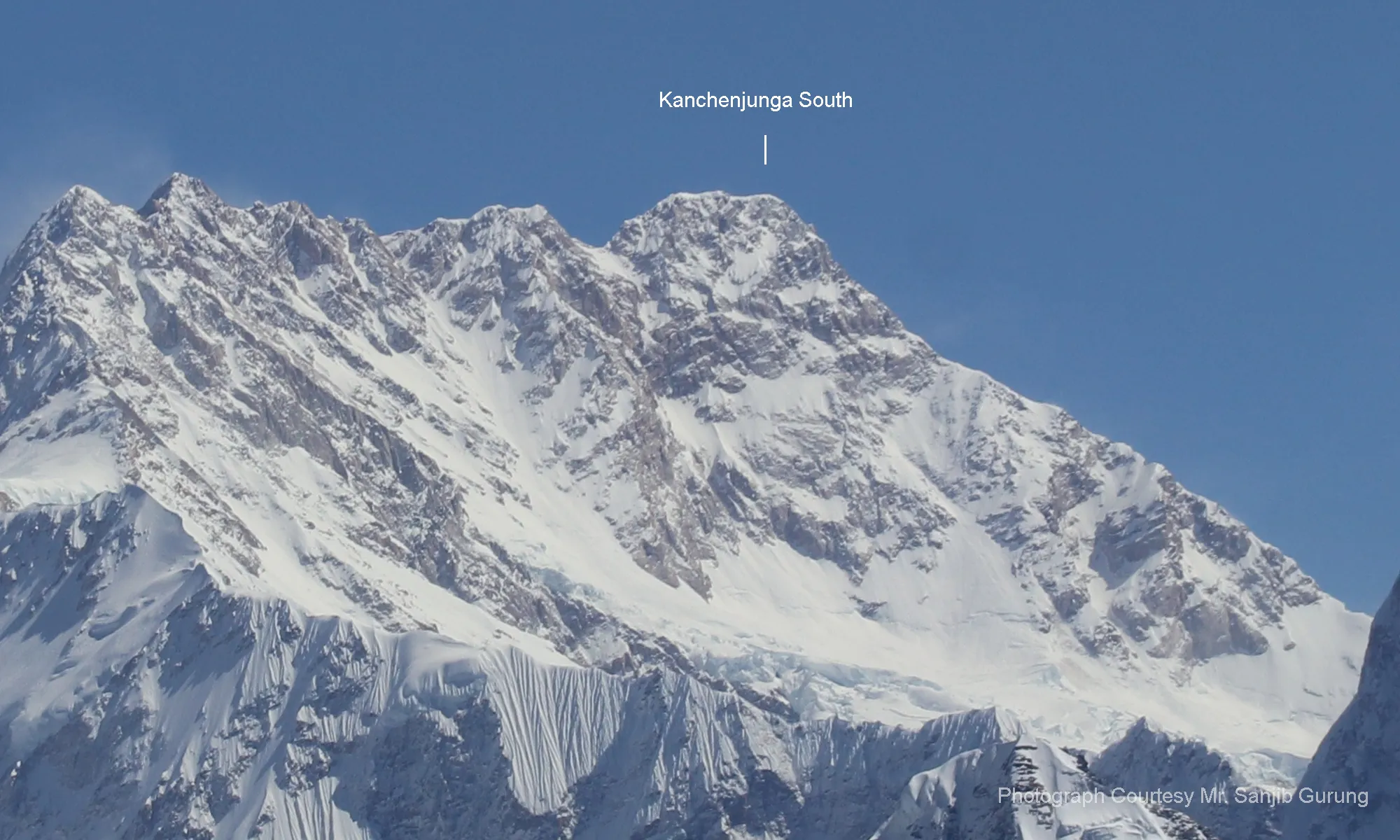
Kanchenjunga South peak against a clear blue sky, showcasing snow-covered slopes and rugged terrain, relevant to high-altitude mountaineering and climbing expeditions.
Iconic Peaks · Five Treasures of the Snow · Updated 2026

Climbing Kangchenjunga: The Sacred Third-Highest Mountain on Earth

At 8,586 meters (28,169 ft), Kangchenjunga is the world’s third-highest mountain and arguably the most sacred. Straddling the Nepal-Sikkim border in the remote eastern Himalaya, Kangchenjunga combines extreme altitude, serious technical climbing, a long and committing approach through the Taplejung region, and a rich cultural tradition rooted in local Buddhist and Lepcha beliefs. The name itself — from Tibetan “Kang-chen-dzö-nga” — means “The Five Treasures of the Great Snow,” referring to the five sacred treasures believed hidden within the massif. This complete guide covers the standard Yalung Face route and alternative lines, the 2026 Nepal permit structure following the September 2025 fee increase to $3,000, the 1955 British first ascent by Joe Brown and George Band (who stopped just below the summit to honor Sikkimese spiritual tradition), expedition costs, essential gear, and a complete recap of the 2025 season featuring summits by Uta Ibrahimi, Nirmal Purja, the Indo-Nepal Army joint expedition, and Allie Pepper.

8,586 m
Summit elevation
(28,169 ft)
$3,000
2026 spring
permit fee
~20-22%
Historical
death rate
~500+
Total summits
since 1955
Mountain Command Center

Kangchenjunga Location & Current Conditions

Live 7-day forecast at Kangchenjunga Base Camp elevation (5,150m) on the Yalung Glacier and interactive terrain map of the Nepal-Sikkim border region.

Kangchenjunga · Nepal/Sikkim Border

27.7025°N, 88.1475°E

Base Camp Weather

Elev: 5,150 m
Loading current conditions…

Kangchenjunga occupies a unique place in Himalayan mountaineering. At 8,586 meters, it is the world’s third-highest mountain, but what makes it distinctive goes far beyond altitude — it is a sacred mountain, deeply venerated by the Lepcha, Bhutia, and Sikkimese peoples who believe five treasures are hidden within its five summits. When British climbers Joe Brown and George Band made the first ascent on May 25, 1955, they honored a promise made to the Chogyal of Sikkim and stopped just below the true summit — establishing a tradition that continues today. The name Kangchenjunga, from Tibetan Kang-chen-dzö-nga, means “The Five Treasures of the Great Snow.” Compared to Everest’s crowded trade route, Kangchenjunga is remote, committing, and rarely climbed — typically seeing 30-60 summits per year against Everest’s 500-600+. The 2025 spring season produced a revealing cross-section of modern Kangchenjunga climbing: Uta Ibrahimi completing her 14th 8,000m peak on May 10, Nirmal Purja summiting without supplemental oxygen on May 18, an Indo-Nepal Army joint expedition reaching the top on May 19-20, Imagine Nepal’s late-season push on May 23, and Allie Pepper’s no-oxygen summit on May 24. This complete guide covers the Yalung Face standard route and alternative lines, the 2026 Nepal permit structure following the September 2025 increase to $3,000 for spring, the 1955 first-ascent tradition and its continuing cultural weight, expedition costs of $40,000-$75,000, and the hard-earned 2025 lessons that shape every future Kangchenjunga expedition.

Kangchenjunga at a Glance

Before diving into routes, logistics, and the 2026 permit structure, here are the essential facts every Kangchenjunga climber should know about the Five Treasures of the Great Snow.

Summit elevation
8,586 m
28,169 ft — 3rd highest on Earth
Mountain range
Kangchenjunga Himal
Eastern Himalaya · Nepal/Sikkim border
Sacred name meaning
Five Treasures
of the Great Snow (Tibetan origin)
Standard route
Yalung Face
Southwest Face · Nepal side
Expedition length
6–8 weeks
Including remote Taplejung trek
2026 spring permit
$3,000
Up from $1,800 (Sep 2025 hike)
Typical total cost
$40K–$75K+
Standard to premium expedition
First ascent
May 25, 1955
Brown & Band, British expedition
First winter ascent
January 11, 1986
Kukuczka & Wielicki, Polish

Why Kangchenjunga Is One of the Most Serious 8,000m Peaks

Kangchenjunga’s reputation as one of the most demanding 8,000m peaks is well-earned. While it lacks K2’s infamous Bottleneck and Annapurna’s avalanche-prone slopes, Kangchenjunga combines remoteness, sustained technical terrain, weather volatility, and extreme altitude in a way that makes it one of the most committing objectives in world mountaineering. Understanding these factors is essential before committing to an expedition.

01

Extreme Remoteness

Unlike Everest, which sits a 30-minute flight from Kathmandu with multiple commercial helicopter rescue options, Kangchenjunga requires a flight from Kathmandu to Bhadrapur in far-eastern Nepal, a long jeep drive to Taplejung, and an 8-10 day trek through the Kanchenjunga Conservation Area to Base Camp. The round-trip approach consumes 3-4 weeks of any expedition. Rescue timelines are dramatically longer than on peaks with better access. Supply chains can break down. And once climbers are above Base Camp, they are effectively beyond most conventional rescue capability — teams must handle emergencies with their own resources.

02

Low Summit Volume & Thin Infrastructure

Kangchenjunga typically sees only 30-60 summits per year — an order of magnitude fewer than Everest’s 500-600+. Fewer commercial operators run Kangchenjunga programs, meaning smaller teams, less cumulative fixed-line infrastructure, and less redundancy when conditions change. In 2025, Nirmal Purja’s rope-fixing team reported using 11,000+ meters of rope in difficult conditions, and climbers waited weeks for the route to become climbable. The thin infrastructure is part of what makes Kangchenjunga feel like a “real” expedition compared to increasingly commercialized peaks — but it also removes the safety margins that less serious climbers depend on.

03

Death Rate Among Highest

Historical Kangchenjunga death rates run approximately 20-22% of ascents — dramatically higher than Everest’s 1-3% and comparable to K2’s 20-25%. Through early 2026, approximately 80+ climbers have died on Kangchenjunga against roughly 500+ successful summits. Unlike K2 where deaths cluster at the Bottleneck serac zone, Kangchenjunga mortality is distributed across the route: summit-day exhaustion combined with long descents, avalanches on the Yalung Face, falls during fixed-line transitions, and altitude illness above 7,500m have all contributed to the toll. The long summit day (often 15-18 hours round trip) and complex descent combine with altitude to make Kangchenjunga one of the most physically punishing 8,000m peaks.

04

Extreme Summit-Day Length

Kangchenjunga summit days are notoriously long — routinely stretching to 15-18 hours round trip from Camp 4 back to Camp 4, with the fastest climbers completing the push in 12-14 hours and slower climbers taking 20+ hours. Compared to Everest summit days (typically 10-14 hours), Kangchenjunga demands significantly more endurance at extreme altitude. The combination of the Great Shelf traverse, the final ridge, and the complex descent back through the same terrain means climbers spend many hours above 8,000m in conditions that aggressively deplete physical reserves. This summit-day length is a consistent theme in 2025 expedition lessons — climbers repeatedly cited underestimating the time required as a source of problems.

05

Weather Volatility & Monsoon Proximity

Kangchenjunga sits far enough east in the Himalaya that monsoon systems arrive earlier and more aggressively than on peaks further west like Dhaulagiri or Annapurna. The summit window is compressed between late April (when conditions stabilize enough for climbing) and late May (when monsoon precipitation begins). Jet stream patterns through April and early May can close the route for extended periods, and warm monsoon moisture arrival in late May can suddenly end the season. Climbers have weeks to acclimatize but only days to summit when the window opens. The 2025 season illustrated this pattern clearly — summit successes clustered between May 10 and May 24, with conditions deteriorating rapidly after.

06

Technical Yalung Face Climbing

The standard route — the Yalung Face via the Southwest side — is technically demanding throughout. Climbers navigate the Lower Icefall, Upper Icefall, and the Gangway below the Great Shelf, all requiring fixed-line work and competent technical climbing. The Great Shelf at 7,500m is a massive sloping ice plateau exposed to avalanches from hanging glaciers above. Above the Shelf, the summit ridge involves mixed snow and rock climbing at extreme altitude. Unlike Everest’s trade route where long sections involve walking, Kangchenjunga demands sustained technical engagement. Climbers must be comfortable with fixed lines, jumar work, glacier travel, crevasse navigation, and steep snow/ice climbing — all at 7,500m+.

07

Avalanche & Icefall Exposure

The Yalung Face is repeatedly described by climbers as the most avalanche-prone 8,000m standard route. Aleister Crowley’s 1905 expedition — the first serious attempt on Kangchenjunga — was ended by a fatal avalanche that killed one climber and three porters. Subsequent expeditions across the decades have experienced avalanche incidents on both the icefalls and the Great Shelf. The hanging glaciers above the Shelf drop seracs periodically. Climbers must accept that objective hazards cannot be fully mitigated by skill or timing — the mountain drops what it drops when it drops it, and Kangchenjunga is actively hostile to complacency about this exposure.

08

Sacred Status Shapes the Culture

Unlike any other 8,000m peak, Kangchenjunga’s climbing culture is deeply shaped by its sacred status to local peoples. The 1955 first ascent was conditional on the climbers not standing on the true summit — a promise Joe Brown and George Band kept, stopping approximately 5-10 feet below the highest point. This tradition has continued into modern climbing, with many climbers symbolically stopping just below the summit. The Sikkim side of the mountain has been closed to climbing entirely since 2000 in respect of local traditions. For climbers coming from peaks where spiritual concerns are peripheral, Kangchenjunga requires genuine engagement with the mountain’s cultural significance — and many climbers find that this dimension adds rather than subtracts from the experience.


Who Can Realistically Climb Kangchenjunga?

Kangchenjunga is not a peak for climbers with minimal 8,000m experience. Unlike Everest, which has developed significant commercial infrastructure that can (somewhat) compensate for gaps in a climber’s preparation, Kangchenjunga requires every climber on the mountain to be genuinely competent and physically capable. Understanding the actual prerequisites helps aspiring Kangchenjunga climbers assess whether the mountain is genuinely within reach or still years of progression away.

Minimum Experience Prerequisites

Reputable Kangchenjunga operators typically require clients to demonstrate the following prior experience before accepting them onto an expedition:

  • Multiple successful 7,000m+ summits — ideally including technical peaks rather than just straightforward walk-ups
  • At least one 8,000m summit — most operators strongly prefer Manaslu, Cho Oyu, or Gasherbrum II before Kangchenjunga. Everest alone is acceptable but not ideal — Kangchenjunga’s technical character differs significantly from Everest’s trade route.
  • Strong fixed-line and jumar competence — Kangchenjunga involves sustained fixed-line work on steep terrain; climbers who struggle with jumars at altitude will not summit
  • Technical ice and mixed climbing ability — comfortable movement on 40-55 degree snow and ice, ability to climb mixed rock-ice sections with crampons
  • Exceptional endurance — 15-18 hour summit days are routine; climbers must be capable of sustained effort at extreme altitude over longer days than Everest requires
  • Cold-weather endurance below -30°C — summit-day temperatures routinely drop below -35°C with wind chill
  • Proven decision-making under fatigue — the long summit day tests mental capacity as much as physical; climbers who deteriorate cognitively at altitude are at elevated risk

Kangchenjunga Is Appropriate For:

Experienced 8,000m climbers progressing through the 14 peaks. Kangchenjunga is often climbed relatively early in 14-8000ers projects by climbers who have completed Manaslu, Cho Oyu, and ideally one or two other technical 8,000m peaks. The ideal Kangchenjunga candidate has proven they can handle extreme altitude and technical terrain together.

Climbers with exceptional aerobic capacity. The long summit day means Kangchenjunga rewards aerobic fitness more than peaks with shorter summit pushes. Climbers who can maintain steady effort for 15-18 hours at extreme altitude have a significant advantage over climbers with equivalent technical skills but less endurance reserve.

Climbers who genuinely value the cultural experience. Kangchenjunga rewards climbers who engage with the mountain’s sacred status and the trekking experience through the Kanchenjunga Conservation Area. The long approach through Ghunsa, Khambachen, and Lhonak is one of the finest Himalayan treks, but climbers focused exclusively on the summit may find the approach frustrating.

Climbers with robust financial buffers. Kangchenjunga expeditions run $40,000-$95,000 all-in, plus the risk of an expensive evacuation that standard insurance may not fully cover. The remote location means any complication is more expensive to resolve than on peaks with better infrastructure.

Kangchenjunga Is Not Appropriate For:

Climbers whose only 8,000m experience is Everest’s trade route. Kangchenjunga’s technical character — sustained Yalung Face climbing, fixed-line work on steeper terrain, complex summit ridge — differs significantly from Everest’s relatively straightforward South Col route. Everest summiters without additional 8,000m experience often underestimate Kangchenjunga’s demands.

Climbers without any 8,000m experience. Jumping from 7,000m peaks directly to Kangchenjunga is risky and typically not accepted by reputable operators. The physiological jump to 8,500m+ is significant, and Kangchenjunga’s long summit day is not the right environment to experience extreme altitude for the first time.

Climbers seeking quick commercial summits. Kangchenjunga does not accommodate compressed timelines well. The approach alone requires 2-3 weeks. Hypoxic pre-acclimatization programs that work on Everest are less effective on Kangchenjunga because the mountain demands more time for logistics and team preparation regardless of individual acclimatization.

Climbers uncomfortable with the sacred summit tradition. Climbers who expect to stand on the exact highest point of Kangchenjunga should understand that doing so is culturally sensitive. Many operators and Sherpa guides respect the tradition of stopping just below the true summit, and climbers who insist on the highest point may create friction within their expedition.

The realistic Kangchenjunga progression

A realistic progression to Kangchenjunga typically spans 6-10 years of serious mountaineering: 2 years building technical skills on alpine and early-Himalayan peaks, 2-3 years on 6,000-7,000m peaks (Ama Dablam, Baruntse, Himlung Himal), one or two 8,000m summits (Manaslu, Cho Oyu, and potentially Everest), and then Kangchenjunga. Climbers who attempt Kangchenjunga as their first or second 8,000m peak are at significantly elevated risk compared to those who have built genuine experience.


Kangchenjunga History: From Freshfield to the Modern Summit Era

Kangchenjunga’s climbing history spans 170+ years — from 19th century European exploration, through failed early attempts, the landmark 1955 British first ascent, the 1986 winter summit, and into the modern era. Understanding this history provides essential context for the mountain’s reputation and the evolving climbing culture around it.

Early Exploration & Freshfield’s Circuit

European knowledge of Kangchenjunga developed slowly through the 19th century. The Schlagintweit brothers — Hermann, Adolf, and Robert — explained the local name in the 1850s as deriving from Tibetan words meaning “the five treasures of the great snow.” In 1899, Douglas Freshfield became the first European to circumnavigate the entire Kangchenjunga massif, producing one of the most famous early accounts of Himalayan exploration. Freshfield’s description of the mountain’s northwest face is still quoted today — he wrote that it “might have been constructed by the Demon of Kangchenjunga for the express purpose of defense against human assault.” His circuit identified several potential routes, including the Yalung Face that would eventually prove successful in 1955.

Crowley’s 1905 Disaster

The first serious attempt on Kangchenjunga came in 1905, led by Aleister Crowley — the British occultist, magician, and controversial figure. Crowley’s expedition attempted the Southwest Face via the Yalung Glacier approach, ironically identifying the route that would succeed 50 years later. The expedition ended in disaster when climber Alexis Pache and three local porters were killed in an avalanche during a disputed descent. One of the surviving team members reportedly insisted that “the demon of Kangchenjunga was propitiated with the sacrifice,” reflecting the mountain’s immediate reputation for objective danger. Crowley ended the expedition. The Yalung Valley was then neglected by climbers for nearly 50 years.

The 1955 British First Ascent

The successful ascent came through the work of the 1954 John Kempe reconnaissance expedition and the 1955 British expedition led by Charles Evans — a highly respected climber who had served as deputy leader on the 1953 British Mount Everest expedition. Evans selected Joe Brown, George Band, Norman Hardie, Tony Streather, and others for the summit push. The expedition approached from Darjeeling in India along the Sikkim border and then through Nepal to the Yalung Valley.

On May 25, 1955, Joe Brown and George Band reached the summit area — but stopped approximately 5-10 feet below the true summit. Charles Evans had traveled to Gangtok before the expedition and met with the Sikkimese authorities to secure permission for the climb. The Chogyal (king) Tashi Namgyal of Sikkim granted permission on the condition that the climbers would not stand on the true summit, respecting local beliefs that the peak was the abode of protecting deities. Brown and Band kept this promise, establishing the tradition that has been honored by many subsequent expeditions.

The following day, May 26, 1955, Norman Hardie and Tony Streather completed the second ascent via essentially the same route, also stopping short of the true summit. The entire team was back at Base Camp by May 28. The expedition succeeded despite the fact that over 9,000 feet of the climbing route was unexplored terrain (compared to only 900 feet of new ground on Everest in 1953), leading some mountaineering historians to consider the Kangchenjunga first ascent as more technically significant than Everest’s.

The enduring summit tradition

The 1955 tradition of stopping just below Kangchenjunga’s true summit has been honored by many subsequent expeditions. The practice reflects genuine respect for local spiritual beliefs and has become one of the most distinctive ethical traditions in Himalayan mountaineering. Modern climbers approaching Kangchenjunga should discuss this tradition with their operator and Sherpa team — while some climbers do stand on the exact highest point, the tradition of stopping below is widely observed. The Indian (Sikkim) side of the mountain was officially closed to climbing in 2000 by the government of India in respect of these traditions, making the Yalung Face from Nepal effectively the only legal approach.

The Long Gap and Second Ascent

After 1955, Kangchenjunga saw no further successful ascents for 18 years. The next summit came in 1973 when Japanese climbers Yutaka Ageta and Takeo Matsuda reached Kangchenjunga West (Yalung Kang, 8,505m) — though Matsuda went missing during descent. The main summit was not climbed again until 1977 by an Indian Army expedition led by Colonel Narendra Kumar, who completed the second ascent of the main peak via the Northeast Spur route. This was considered a significant milestone for Indian mountaineering.

The 1986 Winter Ascent

On January 11, 1986, Polish climbers Jerzy Kukuczka and Krzysztof Wielicki completed the first winter ascent of Kangchenjunga via essentially the same Yalung Face route as the 1955 team. Their ascent was part of the “Polish winter program” that defined 1980s Himalayan mountaineering — Polish climbers completed first winter ascents of Everest, Kangchenjunga, Dhaulagiri, Cho Oyu, Manaslu, Annapurna, and Lhotse during the 1980s. Kukuczka went on to complete all 14 eight-thousanders by 1987, becoming the second person (after Reinhold Messner) to climb all 14. Wielicki later completed all 14 as well.

The Modern Commercial Era

Commercial Kangchenjunga climbing developed slowly through the 1990s and 2000s, but has grown significantly since 2015 as climbers pursuing all 14 8,000m peaks have driven demand for Kangchenjunga logistics. Notable achievements include:

  • 1992: Carlos Carsolio’s solo ascent without supplemental oxygen — the only summit that year
  • 1998: Ginette Harrison became the first woman to climb Kangchenjunga (via the North Face)
  • 2009: Spanish mountaineer Edurne Pasaban reached the summit as her 12th 8,000m peak, becoming the first woman to climb twelve 8,000-meter peaks
  • 2019: Nirmal Purja summited as part of his “Project Possible” all-14-8000ers climb
  • 2025: Multiple significant ascents including Uta Ibrahimi completing her 14th 8,000m peak

Through early 2026, approximately 500+ climbers have reached Kangchenjunga’s summit since the 1955 first ascent — still an order of magnitude fewer than Everest’s thousands of summiters. This rarity preserves Kangchenjunga’s character as a “real” expedition peak rather than a commercialized trade route.


Kangchenjunga’s Climbing Routes: The Yalung Face & Alternative Lines

Kangchenjunga has seen ascents via multiple lines, but only one — the Southwest Face via the Yalung Glacier — is the standard commercial route. Alternative routes exist but are rarely attempted by commercial teams. The Sikkim (Indian) side of the mountain has been closed to climbing since 2000 in respect of the mountain’s sacred status, making the Yalung Face effectively the only legal approach.

RouteCountryBase Camp ElevKey FeaturesShareCharacter
Yalung Face (SW)Nepal5,150 mUpper Icefall, Great Shelf, Gangway, summit ridge~85%+Standard commercial
Northwest FaceNepal~5,200 mTechnical ice climbing, rarely climbed commercially~5-10%Harder alternative
North FaceTibet (closed since 2000)~5,100 mNortheast Spur, Indian Army 1977 routeEffectively 0%Closed to climbing
East Face / SikkimIndia (closed since 2000)Historical Freshfield circuit areaEffectively 0%Sacred/closed
02
Alternative · Technical ice climbing · Rarely commercial

Northwest Face Route

Nepal · Kangchenjunga Glacier approach Harder and less supported than Yalung

The Northwest Face is Kangchenjunga’s most significant alternative route. It approaches the mountain from the Kangchenjunga Glacier northwest of the peak, traversing more technical ice climbing terrain than the Yalung Face. Ginette Harrison’s 1998 first-female-ascent used the Northwest Face, and several notable alpine-style climbs have used this line. However, the Northwest Face is not a standard commercial route and is rarely attempted by guided teams.

The route’s key characteristics include steeper average angle than the Yalung Face, more sustained ice climbing, fewer natural camp sites, and significantly less fixed-line infrastructure in any given season. Climbers attempting the Northwest Face typically do so as part of small alpine-style teams with strong technical climbing experience, not as commercial clients. Rescue support on this line is functionally nonexistent — teams must be self-sufficient.

For practical commercial climbing planning, the Northwest Face is not a realistic option. Climbers interested in alternative Kangchenjunga routes should work with operators who run specialty expeditions and have experience beyond the Yalung Face standard. For most Kangchenjunga expeditions, the Yalung Face is the only practical line and the focus of this guide’s logistics, cost, and gear recommendations.

Route Stats
Base Camp~5,200 m
ApproachKangchenjunga Glacier
Technical characterSustained ice
Commercial useRare
First woman summitGinette Harrison, 1998
Alpine-style historyStrong
03
Historical routes · Sikkim/North closed since 2000

North Face & Sikkim Routes (Closed)

India (Sikkim) & Tibet · Closed to climbing Sacred status, legal closure

The North Face and Northeast Spur routes on Kangchenjunga — which access the mountain from the Sikkim (Indian) side and historically from Tibet — have been closed to climbing since 2000 in respect of the mountain’s sacred status to local Sikkimese peoples. The Indian Army expedition led by Colonel Narendra Kumar made the second ascent of the main peak in 1977 via the Northeast Spur, a climbing achievement that remains historically significant but will likely not be repeated legally.

The closure is meaningful: Kangchenjunga is one of the only major 8,000m peaks where large portions of the mountain are off-limits to climbers for cultural reasons. The Indian government respects local Sikkimese spiritual traditions, and authorities in Sikkim have periodically issued statements requesting that Kangchenjunga not be climbed at all (even from the Nepal side). These requests have not resulted in formal Nepal-side closures, but climbers should understand that their presence on the mountain is genuinely controversial within local communities.

Climbers planning Kangchenjunga expeditions should not consider Sikkim-side or North Face approaches. These routes are legally closed and culturally sensitive. The Yalung Face from Nepal is effectively the only route available, and this guide’s recommendations focus entirely on Nepal-side climbing.

Status
Sikkim sideClosed since 2000
North Face (Tibet)Restricted
NE Spur1977 Indian Army
Sacred basisLocal traditions
Commercial climbingNot available
Modern attemptsNot permitted

2026 Kangchenjunga Permits, Fees & Nepal Regulations

Kangchenjunga climbing permits are administered by the Nepal Department of Tourism with support from the Nepal Mountaineering Association (NMA). The 2026 permit structure reflects the significant fee increase that took effect on September 1, 2025 — part of Nepal’s broader push to raise permit revenue for all 8,000m peaks while funding safety infrastructure and environmental cleanup.

The September 2025 fee increase

Effective September 1, 2025, Nepal raised climbing permit fees for all 8,000m peaks. Kangchenjunga’s spring permit rose from $1,800 to $3,000 per climber — a 67% increase. This followed Everest’s larger increase from $11,000 to $15,000 and applied proportionally to Lhotse, Makalu, Manaslu, Dhaulagiri, and Annapurna I. Nepal cited safety, environmental protection, and overcrowding management as justifications. The new fees are considered final for 2026 — expeditions applying now should budget accordingly.

2026 Kangchenjunga Permit Fees

Foreign climbers:

  • Spring (March-May): $3,000 per climber — the overwhelming majority of Kangchenjunga permits are issued in this category
  • Autumn (September-November): $1,500 per climber — rare attempts
  • Winter (December-February) & Monsoon (June-August): $750 per climber — specialized attempts only

Nepali climbers: Reduced rates proportionally lower than foreign fees, typically NPR 50,000-75,000 for spring ($400-600 equivalent).

Key Regulatory Requirements

Beyond the permit fee, several Nepal regulations govern 8,000m expeditions:

  • Permit validity: 55 days from issuance (reduced from the previous 75-day window as part of the 2025 regulatory changes)
  • Mandatory licensed guide: All 8,000m expeditions must include a licensed, high-altitude-trained guide; Nepal has been enforcing a 1 guide per 2 climbers ratio on peaks above 8,000m since 2025
  • Liaison officer: Nepal government Liaison Officer accompanies each expedition; typical cost $2,500-$5,800 depending on salary tier
  • GPS tracking: Climbers are now required to carry GPS tracking devices per 2025 regulations
  • Biodegradable waste bags: Mandatory for human waste, part of Nepal’s environmental cleanup push
  • Insurance requirements: Climbers must carry insurance with evacuation coverage; staff (Sherpa, porters) must be insured through the expedition operator
  • Conservation Area entry fee: The Kanchenjunga Conservation Area charges a separate entry fee (approximately NPR 2,000-4,000 per person)
  • Environmental deposits: Expeditions must provide environmental/garbage deposits that are refunded upon verified cleanup

Access Logistics

Kangchenjunga access is more complex than most 8,000m peaks due to the mountain’s remote eastern Nepal location:

  • International flight to Kathmandu: Nepal’s main international airport (Tribhuvan International)
  • Domestic flight Kathmandu → Bhadrapur: 45-minute flight to eastern Nepal; weather can cancel flights in monsoon but is generally reliable in spring
  • Bhadrapur → Taplejung: 10-12 hour jeep drive on rough mountain roads to the trailhead at Taplejung (approximately 1,800m)
  • Taplejung → Kangchenjunga Base Camp: 8-10 day trek through the Kanchenjunga Conservation Area via Ghunsa, Khambachen, and Lhonak, gaining 3,350m over the trek

The complete access timeline consumes approximately 12-15 days just getting from Kathmandu to Base Camp — a significant factor in total expedition time. This long approach is part of why Kangchenjunga expeditions typically run 6-8 weeks total.


Kangchenjunga Expedition Costs in 2026

Kangchenjunga expeditions are significantly cheaper than Everest — partly because of lower permit fees, partly because of smaller infrastructure, and partly because of less competitive market dynamics. Understanding the full cost picture helps climbers budget realistically.

Standard Expedition: $28,000–$50,000

A standard commercial Kangchenjunga expedition in 2026 costs $28,000-$50,000 per climber for a full 6-8 week Nepal-side program. This tier includes the $3,000 permit, Liaison Officer fees, Base Camp services with meals and tents, fixed lines and group equipment, basic Sherpa support, essential oxygen supply (4-5 bottles), and logistics management. Operators in this tier are typically Nepali outfitters with established Kangchenjunga experience.

Premium Expedition: $55,000–$75,000

Premium Kangchenjunga operators charge $55,000-$75,000 for enhanced expeditions featuring higher Sherpa-to-client ratios, more oxygen bottles (5-7), Western guides on the expedition, superior Base Camp amenities, enhanced safety protocols with satellite communication arrays, and smaller team sizes. Operators in this tier include Seven Summit Treks, Imagine Nepal, Elite Exped, 8K Expeditions, Madison Mountaineering, and SummitClimb. Most reputable Kangchenjunga commercial climbing happens at this tier.

Luxury/Personal Sherpa: $75,000–$95,000+

The luxury Kangchenjunga tier offers personalized services: private Nepali Sherpa assigned to each client, unlimited oxygen, enhanced base camp facilities with private tents and premium meal service, and enhanced logistics. Some operators also offer combined Kangchenjunga + other 8,000m peak programs for climbers pursuing multiple summits in a single season.

Additional Required Costs Beyond Expedition Fee

  • Personal gear: $5,000-$12,000 (8,000m boots, down suit, technical climbing equipment)
  • International flights to Kathmandu: $1,200-$2,500 round trip
  • Travel insurance with high-altitude coverage: $800-$2,500 (critical — Kangchenjunga evacuation is expensive due to remote location)
  • Pre/post-climb Kathmandu hotels: $300-$800
  • Tips for Sherpa and support staff: $600-$1,500
  • Personal communications (satellite phone rental): $300-$800
  • Supplemental oxygen (if using beyond included): $400-$600 per bottle
  • Conservation area fees & local taxes: $100-$300

Total realistic Kangchenjunga expedition budget for a first-time climber: $40,000-$60,000 (standard), $60,000-$85,000 (premium), $85,000-$110,000+ (luxury).


Kangchenjunga Gear Checklist

Kangchenjunga gear requirements parallel other 8,000m peaks but emphasize extended summit-day endurance, cold-weather robustness, and the self-sufficiency the mountain’s remoteness demands. Every climber should carry more redundant capability than on peaks with better rescue infrastructure.

Death Zone Clothing

  • Full down suit (Himalaya-grade, 800-fill, -40°C rated)
  • Or: expedition parka + down pants combination
  • 2-3 sets base layers (merino wool or synthetic)
  • Heavyweight fleece mid-layer
  • Windproof/water-resistant hardshell jacket and pants
  • Expedition mitts + liner gloves (2+ pairs of mitts)
  • Balaclava + buff for face protection
  • Category 4 glacier sunglasses + goggles for wind

8,000m Boot System

  • 8,000m double/triple boots (La Sportiva Olympus Mons, Scarpa Phantom 8000, Millet Everest)
  • Insulated overboots (if not triple boot)
  • 4-5 pairs heavy-duty socks
  • Sock liners (multiple pairs)
  • Chemical foot warmers (emergency backup)

Technical Climbing Gear

  • Climbing harness (alpine style, rated for extreme conditions)
  • Climbing helmet (fits over balaclava/hood)
  • 12-point steel crampons (Yalung Face mixed terrain demands steel)
  • 70cm ice axe + optional second tool for steeper sections
  • Ascender (jumar) + backup ascender for long fixed-line sections
  • Belay/rappel device (ATC or similar)
  • 8-10 locking carabiners + 6-8 non-locking
  • Prusik cords (3mm, multiple pieces)
  • Personal quickdraws, slings, and anchor materials

Oxygen System

  • Oxygen mask (Summit Oxygen or Topout)
  • Regulator matched to operator’s bottles
  • 4-7 oxygen bottles (varies by operator strategy and summit-day length)
  • Spare mask parts (valves, seals)
  • Backup low-flow regulator

Sleep System

  • Down sleeping bag rated to -40°C
  • Closed-cell foam pad + inflatable pad combination
  • Compression stuff sack
  • Silk or thermal liner for additional warmth at higher camps

Hydration & Nutrition

  • Insulated water bottles (Nalgene with parka sleeves) — hydration bladders freeze
  • Water purification tablets (chlorine dioxide)
  • High-calorie expedition food (6,000-7,000 cal/day summit push)
  • Gels and easy-digest foods for 15-18 hour summit days
  • Electrolyte supplements — Kangchenjunga’s long summit days demand extra hydration support

Self-Rescue & Emergency Kit

  • Personal first aid kit with altitude medications (Diamox, dexamethasone if prescribed)
  • Blister and frostbite prevention supplies
  • Emergency bivy bag or space blanket
  • Headlamp + 4-5 spare battery sets (long summit days need redundant lighting)
  • Satellite messenger (Garmin inReach or similar) — critical given remote rescue timelines
  • GPS device (now mandatory per Nepal 2025 regulations)

Documents & Electronics

  • Nepali tourist visa (typically obtained on arrival)
  • Climbing permit documents
  • Kanchenjunga Conservation Area permit
  • Travel insurance documents (high-altitude + body recovery)
  • Medical certificate
  • Solar charger + cold-resistant power bank
  • Camera (with spare cold-resistant batteries)
  • Watch with altimeter

The Great Shelf: Kangchenjunga’s Defining Feature

No feature defines Kangchenjunga climbing more than the Great Shelf — the massive sloping ice plateau at approximately 7,500m that sits at the heart of the Yalung Face route. Understanding the Shelf is essential to understanding how Kangchenjunga expeditions work.

What the Great Shelf Is

The Great Shelf is a large sloping plateau on the Southwest Face of Kangchenjunga at approximately 7,500 meters elevation, covered by a hanging glacier. It stretches across the upper face at a moderate angle, creating a broad snowfield between the Upper Icefall below and the summit ridge above. The Shelf was identified as the key feature of the route by Douglas Freshfield during his 1899 circuit, confirmed by the 1954 John Kempe reconnaissance, and used by the 1955 British first-ascent expedition as the central logistical zone.

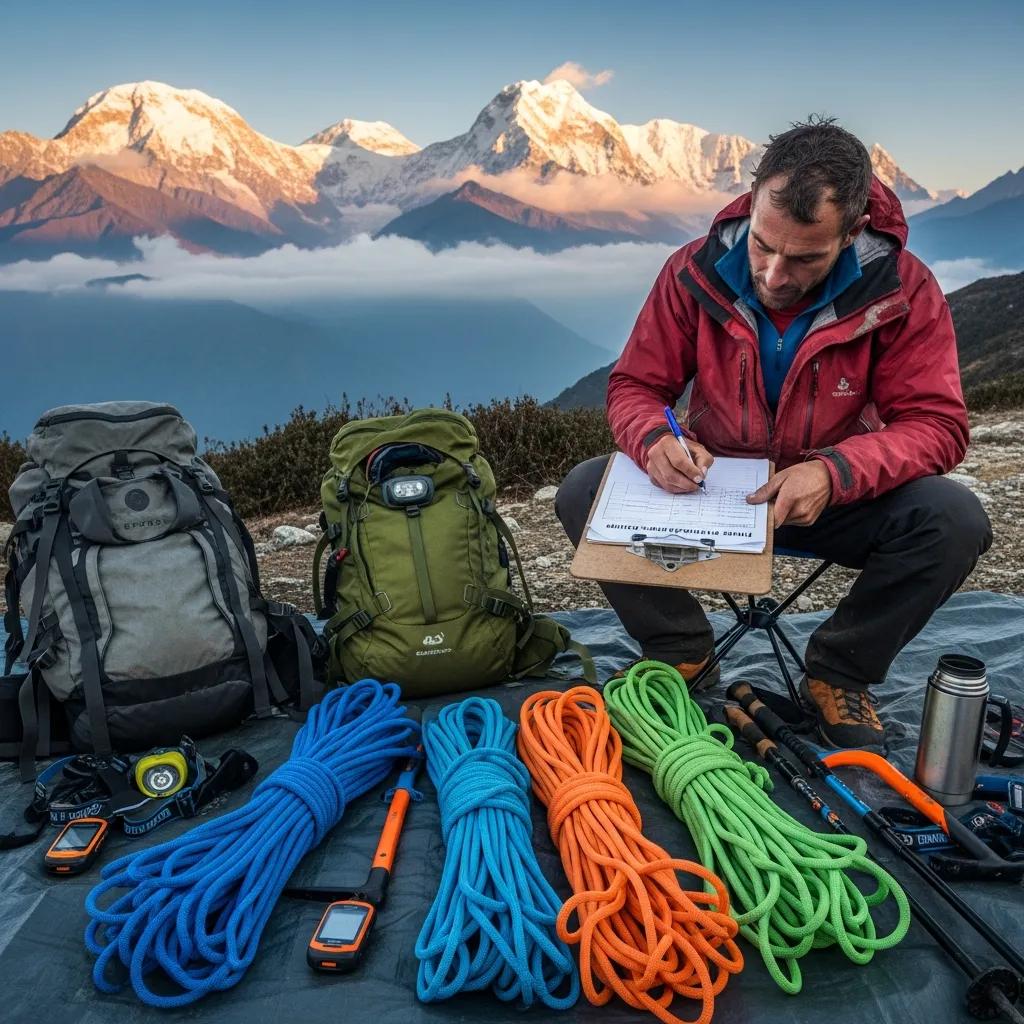
Climber completing a permit application with Kangchenjunga in the background, surrounded by climbing gear including ropes and backpacks, illustrating expedition preparation for high-altitude mountaineering.

Kangchenjunga expedition preparation — permit application with the mountain in view

Role in the Standard Route

The Shelf serves multiple critical functions in the Yalung Face climbing strategy:

  • Acclimatization zone: Climbers spend significant time on the Shelf during acclimatization rotations, developing the physiological tolerance needed for the summit push
  • Camp 3 and 4 location: Typical camp placement puts Camp 3 below the Shelf and Camp 4 on or near the Shelf, making this the route’s logistical anchor
  • Summit-push launch point: Camp 4 on the Shelf is the starting point for summit day, and climbers typically return here after the 15-18 hour round trip
  • Weather observation zone: The Shelf’s exposure to summit-area weather makes it an important location for climbers to assess conditions before committing to summit push

Hazards on the Shelf

The Great Shelf is not a safe zone despite its moderate angle. Key hazards include:

  • Hanging glacier exposure: Seracs above the Shelf can release without warning, similar to K2’s Bottleneck seracs though less concentrated
  • Avalanche risk: The Shelf’s moderate angle combined with heavy snow loading after storms creates avalanche potential
  • Storm exposure: Camps on the Shelf are exposed to summit-area winds and precipitation
  • Crevasse hazards: The Shelf’s glaciated surface contains crevasses, some concealed by snowfall
  • Cold exposure: Spending nights at 7,500m places climbers in the upper death zone for extended periods

Experienced Kangchenjunga climbers treat the Shelf with the same respect as K2’s Bottleneck or Everest’s Khumbu Icefall — a zone requiring careful time management, constant awareness of overhead hazards, and disciplined movement. The 2025 season repeatedly saw weather delays on the Shelf force climbers to retreat from high camps without summit attempts, reinforcing how significantly the Shelf shapes Kangchenjunga expedition outcomes.


Kangchenjunga Safety, Mortality & the Long Summit Day

Kangchenjunga is among the most dangerous 8,000m peaks, with historical death rates running approximately 20-22% of ascents. Understanding the specific dangers — and where most fatalities actually occur — is essential for realistic expedition planning.

Kangchenjunga Mortality Statistics

Through early 2026, approximately 80+ climbers have died on Kangchenjunga against roughly 500+ total successful summits since 1955. The historical death rate of 20-22% of ascents is dramatically higher than Everest’s 1-3% and comparable to K2’s 20-25%. Kangchenjunga mortality patterns:

  • Descent deaths dominate: Like K2 and Annapurna, most Kangchenjunga fatalities occur on descent rather than ascent — climbers exhausted from the 15-18 hour summit round trip are particularly vulnerable
  • Avalanche incidents: The Yalung Face’s avalanche exposure has claimed climbers across multiple expeditions; Crowley’s 1905 disaster remains emblematic
  • High altitude illness: HAPE and HACE account for a significant percentage of non-trauma deaths, especially given Kangchenjunga’s extended time above 7,500m
  • Disappearance incidents: Multiple climbers have disappeared on Kangchenjunga over the decades (Carlos Soria’s team, Benoît Chamoux’s team, others), often with bodies never recovered due to the remote terrain
  • Summit-day exhaustion: The extreme length of Kangchenjunga’s summit day creates conditions where climbers run out of physical and oxygen reserves before reaching safety

Why the Long Summit Day Is So Dangerous

The Kangchenjunga summit day is consistently longer than other 8,000m peaks — routinely 15-18 hours round trip compared to Everest’s 10-14 hour summit days. This extra time above 8,000m creates cumulative risks:

  • Extended death zone exposure: Every additional hour above 8,000m depletes physiological reserves and impairs cognitive function — 15-18 hours is significantly worse than 10-14 hours
  • Oxygen supply management: Longer summit days require more oxygen bottles; climbers who underestimate duration run out of oxygen during descent
  • Hydration and nutrition crises: Water bottles freeze, appetite fails at altitude, and the long day depletes energy reserves that cannot be easily replaced
  • Night descent risk: Climbers who start summit day too late, or move too slowly, end up descending in darkness with diminished headlamp batteries and increased fall risk
  • Weather window expiration: Long summit days mean weather that was stable at departure may have deteriorated significantly by the time climbers return to Camp 4

Safety Principles That Save Lives on Kangchenjunga

Experienced Kangchenjunga climbers consistently emphasize these principles:

  • Plan the descent during ascent planning. Reserve at least 50% of your oxygen, energy, and mental capacity for descent. The summit is not the goal — return to Camp 4 is the goal.
  • Turnaround discipline is absolute. If you’re running slower than planned, if weather deteriorates, or if physical symptoms develop above 8,000m, turn back. The mountain will be there next year.
  • Protect hydration throughout. The long summit day requires more water than most climbers plan for. Insulated bottles, electrolyte supplementation, and drinking every 20-30 minutes are essential.
  • Respect the Great Shelf’s hazards. Don’t camp directly under hanging serac features. Monitor snowfall and temperature for avalanche risk. Move through exposed zones quickly.
  • Build redundant headlamp capacity. Kangchenjunga descents in darkness are more common than climbers expect — carry 4-5 battery sets minimum.
  • Coordinate with rope-fixing teams. On Kangchenjunga, rope fixing is typically done by a dedicated team (Nirmal Purja’s Elite Exped has led this work in recent years). Coordinate your timing with their progress.

When to Climb Kangchenjunga

Kangchenjunga’s climbing calendar is tightly constrained by Himalayan weather patterns and the mountain’s eastern position closer to monsoon systems. The compressed summit window makes timing decisions critical.

Spring (Late April–May): Primary Season

Virtually all successful Kangchenjunga summits occur between late April and late May. The pre-monsoon spring offers the best combination of settled weather, longer daylight, and manageable temperatures at extreme altitude. Climbers typically arrive at Base Camp by mid-to-late April, use late April for acclimatization rotations, and target summit windows opening between May 10 and May 25.

The 2025 season produced multiple summit days across this window: Uta Ibrahimi on May 10, Nirmal Purja’s no-oxygen push on May 18, the Indo-Nepal Army joint expedition reaching the top on May 19-20, Imagine Nepal’s team on May 23, and Allie Pepper’s no-oxygen summit on May 24. This distribution reflects how Kangchenjunga’s spring window tends to produce multiple smaller opportunities rather than one dominant summit day.

Monsoon (June–August): No Climbing

Monsoon season climbing on Kangchenjunga is essentially impossible. Continuous precipitation, catastrophic avalanche risk, and impassable route conditions shut the mountain down from early June through early September. No commercial operators offer monsoon-season Kangchenjunga programs, and independent attempts are vanishingly rare.

Autumn (September–October): Minimal Climbing

Post-monsoon autumn sometimes sees Kangchenjunga attempts, but success rates are low and commercial operations are rare. The monsoon leaves the route heavily snow-loaded, creating dangerous avalanche conditions. Shorter daylight and rapidly cooling temperatures compress the viable climbing window further. Climbers considering autumn Kangchenjunga should work with specialized operators who have specific experience with post-monsoon conditions.

Winter (November–February): Elite Specialized Only

Winter Kangchenjunga has been climbed only once — January 11, 1986 by Jerzy Kukuczka and Krzysztof Wielicki. Subsequent winter attempts have failed or produced serious accidents. Winter conditions bring temperatures below -40°C at altitude, jet stream winds routinely exceeding 150 km/h, limited daylight, and complete absence of commercial infrastructure. Winter Kangchenjunga is not a commercial opportunity — it is reserved for elite mountaineers pursuing specific personal objectives.

Realities of the Summit Window

Climbers must understand Kangchenjunga’s summit window specifics:

  • Window structure: Kangchenjunga tends to produce 2-4 shorter windows (2-3 days each) spread across a 2-week period rather than one dominant window
  • Jet stream patterns: Early-May jet stream typically blocks attempts; windows open as jet stream lifts or diverts
  • Monsoon proximity: Late-May attempts carry growing monsoon risk — climbers must be off the mountain by early June
  • Ready-state required: Climbers must be fully acclimatized before windows open — teams still rotating often miss them
  • Patience dominates: 3-5 weeks at Base Camp waiting is normal; climbers who cannot manage this psychologically fail regardless of physical preparation

Five Notable Kangchenjunga Expeditions from 2025

The 2025 Kangchenjunga season produced a revealing cross-section of modern Himalayan climbing — from large commercial teams to elite no-oxygen attempts and military joint expeditions. Here are five expeditions from 2025 that illustrate the realities of climbing the third-highest mountain.

Uta Ibrahimi’s 14th 8,000er Finish

May 10, 2025Guided High-AltitudeYalung Face
Summit & 14 Peaks Finish

Uta Ibrahimi reached the summit on May 10 and completed all fourteen 8,000-meter peaks — becoming one of an elite group of climbers to achieve this milestone. Her climb reflected the value of returning prepared, moving steadily through the camps, and being ready the moment the route and weather finally aligned. Ibrahimi’s sustained efforts across multiple years of Kangchenjunga attempts demonstrated how this mountain often rewards persistence over raw speed.

Nirmal Purja No-Oxygen Summit

May 18, 2025No OxygenYalung Face
Summit Reached

Nirmal Purja’s Kangchenjunga summit was part of his broader 2025 high-altitude run and stood out for being completed without supplemental oxygen. Purja also led the rope-fixing team for the 2025 season, reporting that he had “never seen the route in such a difficult state” with deep snow, extensive crevasses, and challenging terrain above camp. His team used over 11,000 meters of rope during the season’s fixing efforts. The no-oxygen summit highlighted the mountain’s severe physical demands and the value of technical efficiency high above Camp 3.

Indo-Nepal Joint Military Expedition

May 19–20, 2025Military TeamYalung Face
Summit Reached

The joint Indian and Nepali Army expedition reached the summit in two waves on May 19 and 20. Led by Col. Sarfraz Singh (Indian Army) and Major Gajendra Deuba (Nepal Army), with Seven Summit Treks providing expedition logistics, the climb was flagged off by Indian Defence Minister Rajnath Singh in April 2025 as part of a broader Indo-Nepal bilateral initiative. The expedition emphasized disciplined teamwork, strong Sherpa support, and the ability to move large teams safely through a very long summit day and back down without injury. The Indian Ministry of Defence called the expedition a “milestone in military mountaineering and India–Nepal friendship.”

Imagine Nepal Late-Season Push

May 23, 2025Commercial GuidedYalung Face
Summit Reached

Imagine Nepal reported a successful summit group on May 23. Their ascent reinforced how late-season pushes on Kangchenjunga demand enough patience to wait, enough strength to keep going when the summit day stretches on, and enough reserve for a difficult descent after success. Imagine Nepal has become one of the reliable commercial operators on Kangchenjunga in recent years, building on their broader Himalayan operational experience to deliver consistent results.

Allie Pepper No-Oxygen Summit

May 24, 2025No OxygenYalung Face
Summit Reached

Allie Pepper reached the summit on May 24 after a very long final push in severe cold and wind. Her climb highlighted the emotional and physical discipline needed to stay composed when the route is long, the altitude is extreme, and every step above Camp 4 feels costly. Pepper’s no-oxygen Kangchenjunga summit was a major personal achievement and contributed to the season’s strong showing of oxygen-free ascents that demonstrated the mountain remains approachable for elite climbers willing to accept the added difficulty.

What Climbers Learned on Kangchenjunga in 2025

Beyond individual expedition outcomes, the 2025 season produced several practical lessons that apply across expedition styles and approaches:

Do not underestimate the length of summit day. One of the biggest lessons from 2025 is that Kangchenjunga’s summit push can feel far longer than climbers expect. Many would likely say they would conserve more energy lower on the mountain and begin summit day with more reserve. Climbers who prepared mentally and physically for 15-18 hour summit days fared better than those anticipating Everest-style 10-14 hour pushes.

Save enough strength for the descent. Kangchenjunga punishes climbers who spend everything getting up. The 2025 season reinforced that the descent is not a formality — it is one of the key challenges of the mountain and needs to be planned as carefully as the summit push. Multiple 2025 incidents occurred during descent phase when climbers had depleted their reserves reaching the summit.

Patience matters when the route is not fully ready. Climbers in 2025 had to wait for rope fixing and for the upper route to become usable. Nirmal Purja’s team reported unprecedented difficulty fixing lines in the challenging snow conditions. The lesson is simple: forcing the pace before the mountain is ready rarely ends well on a peak this serious and remote. Teams that waited for the rope-fixing team to complete their work were positioned for safer summit pushes.

Remote mountains reward self-management. Even with strong Sherpa and expedition support, climbers still have to manage hydration, pacing, clothing, nutrition, and decision-making personally. On Kangchenjunga, the mountain feels more remote and less forgiving than many other commercial 8,000ers. Climbers who expected operators to handle every detail — as sometimes happens on Everest — were at a disadvantage compared to climbers who took ownership of their own logistics.

Choose your style honestly. The 2025 season included guided teams, military expeditions, and no-oxygen ascents. What climbers would likely do differently is choose a style that truly matches their experience, rather than letting ambition decide for them. Climbers attempting no-oxygen climbs without the capability typically failed; climbers on guided teams who had the capability for no-oxygen attempts sometimes found themselves constrained by team timelines.

A summit only counts if you come back strong. The clearest lesson from Kangchenjunga in 2025 is that success is never just reaching the top. The best expeditions were the ones that balanced drive with caution and still had enough margin left to descend safely. Multiple 2025 climbers reached the summit area but made turnaround decisions based on remaining energy and weather — these decisions, though disappointing in the moment, represented the mature judgment the mountain demands.


Kangchenjunga Planning Guides

For climbers actively preparing a Kangchenjunga expedition, these detailed planning guides cover routes, costs, timing, gear, and training — the core knowledge required to assemble a successful 6-8 week commitment.


Frequently Asked Questions About Climbing Kangchenjunga

How hard is Kangchenjunga compared to Everest?

Kangchenjunga is significantly harder than Mount Everest in almost every measurable dimension except altitude. At 8,586m, Kangchenjunga is 263 meters shorter than Everest but has a historical death rate of approximately 20-22% of ascents compared to Everest’s 1-3%. Kangchenjunga sees far fewer summits per year (typically 30-60 versus Everest’s 500-600+), demands longer and more remote approach logistics through the Taplejung region, and offers significantly narrower summit windows in a more volatile weather zone. The Yalung Face standard route is more technically demanding than Everest’s South Col route, featuring the long Yalung Glacier approach, the Upper and Lower Icefalls, the Great Shelf traverse at 7,500m, and a summit day that routinely stretches to 15-18 hours round trip. Unlike Everest’s mature commercial infrastructure with established helicopter rescue to 7,200m, Kangchenjunga operates with minimal rescue coverage and relies almost entirely on team self-rescue capability. The mountain’s sacred status also shapes the climbing culture — traditional summit protocols involve stopping just short of the true summit in respect of local beliefs.

How much does it cost to climb Kangchenjunga in 2026?

A commercial Kangchenjunga expedition costs $28,000 to $50,000 in 2026, with premium operators charging $50,000-$75,000. The 2026 Kangchenjunga permit fee for foreign climbers is $3,000 for spring (March-May), up from $1,800 before September 1, 2025 when Nepal raised fees across all 8,000m peaks except Everest in proportional increases. Autumn permits are approximately $1,500, winter permits approximately $750. Beyond the permit, climbers face Nepali Sherpa fees ($8,000-$15,000 per private Sherpa), oxygen systems ($2,500-$5,000 for 4-6 cylinders), domestic flights from Kathmandu to Bhadrapur, jeep transport to Taplejung, the multi-day trek to Base Camp, expedition logistics including fixed-line support and Base Camp operations, insurance with evacuation coverage ($1,500-$4,000), and the mandatory liaison officer. Total realistic Kangchenjunga budget: $40,000-$65,000 standard, $60,000-$95,000 premium. Kangchenjunga is typically 30-40% cheaper than equivalent Everest expeditions.

How long does a Kangchenjunga expedition take?

A complete Kangchenjunga expedition takes 6-8 weeks from arrival in Nepal through final descent. The typical timeline: Days 1-3 arrive Kathmandu, domestic flight to Bhadrapur in eastern Nepal. Days 4-6 jeep transport to Taplejung, the trailhead. Days 7-14 trek through the remote Kanchenjunga Conservation Area via Ghunsa, Khambachen, and Lhonak to Kangchenjunga Base Camp at approximately 5,150m on the Yalung Glacier. Weeks 3-5 acclimatization rotations between Base Camp and higher camps, with Camp 1 at ~6,200m, Camp 2 at ~6,800m, Camp 3 at ~7,250m, and Camp 4 at ~7,550m below the Great Shelf. Weeks 6-7 weather watching for summit windows in early-to-late May. Summit push from Base Camp typically 4-5 days. Descent and return trek 10-14 days. Kangchenjunga’s remote approach alone consumes 2-3 weeks of the expedition, making total timeline longer than equivalent 8,000m peaks with road-accessible Base Camps.

What is the sacred summit tradition on Kangchenjunga?

Kangchenjunga is sacred to the local Lepcha, Bhutia, and Sikkimese peoples, who traditionally believe the mountain is the abode of deities. When Joe Brown and George Band made the first ascent on May 25, 1955, they stopped approximately 5-10 feet below the true summit in respect of a promise made to Tashi Namgyal, the Chogyal (king) of Sikkim. Their team leader Charles Evans had secured Sikkimese permission for the climb only by committing that the climbers would not stand on the highest point. This tradition has continued into modern climbing culture — many climbers still symbolically stop below the true summit, particularly when climbing from the Sikkim-adjacent side. The practice reflects genuine respect for local spiritual beliefs and has become an enduring ethical principle in Himalayan mountaineering. The name Kangchenjunga itself derives from the Tibetan ‘Kang-chen-dzö-nga’ meaning ‘the five treasures of the great snow,’ referring to five sacred treasures (salt, gold, turquoise, sacred scripture, and invincible armor/medicine) believed to be hidden in the mountain and revealed to the devout in times of world crisis. The Indian side of the mountain (in Sikkim) has been closed to climbing since 2000 in respect of these traditions.

Who was the first to climb Kangchenjunga?

British climbers Joe Brown and George Band were the first to reach the top of Kangchenjunga on May 25, 1955, as part of the 1955 British Kangchenjunga expedition led by Charles Evans. They stopped approximately 5-10 feet below the true summit in deference to a promise made to the Chogyal (king) of Sikkim that the sacred peak would remain inviolate. Norman Hardie and Tony Streather completed the second ascent the following day, May 26, following essentially the same route. The 1955 expedition climbed the Southwest Face via the Yalung Glacier — the route that remains the standard line today. At the time, Kangchenjunga was the world’s highest unclimbed peak (Everest having been summited in 1953 and K2 in 1954). The climb was considered in some mountaineering circles as technically more demanding than the first ascent of Everest because over 9,000 feet of the route was unexplored terrain versus only 900 feet of new ground on Everest. The first winter ascent came 31 years later on January 11, 1986 by Polish climbers Jerzy Kukuczka and Krzysztof Wielicki.

Can a beginner climb Kangchenjunga?

Absolutely not. Kangchenjunga is one of the most serious and physically demanding 8,000-meter peaks, with a historical death rate of approximately 20-22% of ascents. It is not appropriate for any climber without extensive prior high-altitude and technical mountaineering experience. Minimum recommended prerequisites: multiple successful 7,000m+ summits, at least one other 8,000m peak (typically Manaslu or Cho Oyu before Kangchenjunga), strong fixed-line and jumar competence, solid technical ice and mixed terrain skills, exceptional endurance for long summit days exceeding 15 hours, cold-weather tolerance below -30°C, and mature high-altitude decision-making. Most successful Kangchenjunga climbers have 8-12+ years of serious mountaineering experience. The mountain’s remoteness makes it less forgiving of errors than 8,000m peaks with better infrastructure — there is no quick helicopter rescue from the upper camps, and logistics breakdowns have bigger consequences. Climbers attempting Kangchenjunga without adequate preparation face significantly higher mortality risk than on Everest or most other commercial 8,000m peaks.

What is the Great Shelf on Kangchenjunga?

The Great Shelf is a large sloping ice plateau on Kangchenjunga’s Southwest Face at approximately 7,500m elevation, covered by a hanging glacier. It is the defining feature of the Yalung Face standard route and one of the most recognizable geological features on any 8,000m peak. The Great Shelf stretches across the Southwest Face at a moderate angle, creating a broad snowfield that climbers must traverse between the Upper Icefall below and the final summit slopes above. Camps 3 and 4 are typically positioned on or near the Great Shelf, making this the critical acclimatization zone before summit pushes. The 1955 first-ascent expedition established camps both below and on the Shelf, pioneering the route that subsequent expeditions have followed. While not as technically demanding as the icefalls below, the Great Shelf is still a serious feature at extreme altitude, exposed to avalanches from the hanging glaciers above and to weather systems moving over the summit. Climbers spend significant time on the Shelf during acclimatization rotations, making it both a logistical anchor of the route and a location where many expeditions have experienced setbacks.

When is the best time to climb Kangchenjunga?

Late April through May is overwhelmingly the best time to climb Kangchenjunga. The pre-monsoon spring season offers the best combination of settled weather, longer daylight, and manageable temperatures at extreme altitude. Summit windows typically open between May 10 and May 25 based on jet stream patterns, with most successful expeditions timing attempts for mid-to-late May. The 2025 season produced multiple summit days across May 10-24, including Uta Ibrahimi (May 10), Nirmal Purja no-oxygen (May 18), the Indo-Nepal Army joint expedition (May 19-20), Imagine Nepal (May 23), and Allie Pepper no-oxygen (May 24). Autumn attempts (September-October) are rare and face rapidly deteriorating post-monsoon weather. Winter Kangchenjunga has been climbed only once — January 11, 1986 by Jerzy Kukuczka and Krzysztof Wielicki — and is considered extreme specialized mountaineering. Monsoon season (June-August) climbing is impossible due to continuous precipitation and extreme avalanche risk. Climbers should arrive at Base Camp by mid-April to allow full acclimatization rotations before the late-May summit windows open.

Why is Kangchenjunga called the Five Treasures of the Snow?

The name Kangchenjunga derives from the Tibetan ‘Kang-chen-dzö-nga,’ which translates to ‘The Five Treasures of the Great Snow.’ The five treasures refer to five sacred items that local Buddhist traditions believe are hidden within the mountain: salt, gold, turquoise and precious stones, sacred scriptures, and invincible armor (or medicine, depending on the tradition). According to local Lhopo and Sikkimese beliefs, these treasures are concealed within the five peaks of the Kangchenjunga massif and reveal themselves only to the devout when the world is in peril. The ‘five’ refers to the mountain’s five named summits — the main peak at 8,586m, Kangchenjunga West (also called Yalung Kang) at 8,505m, Kangchenjunga Central at 8,473m, Kangchenjunga South at 8,476m, and a fifth smaller peak. This gives Kangchenjunga the unusual distinction of being a mountain with multiple peaks above 8,400m — a characteristic shared by no other 8,000m massif. The sacred status of the mountain has shaped its climbing history, including the 1955 first-ascent tradition of stopping just below the true summit, and the permanent closure of the Sikkim (Indian) side to climbing since 2000.

Which Kangchenjunga route is the standard commercial route?

The Southwest Face via the Yalung Glacier (also called the Yalung Face route or simply the standard route) is the overwhelming standard route on Kangchenjunga, used by approximately 75%+ of all successful summits. The route was pioneered by the 1955 British expedition led by Charles Evans and climbed to the top by Joe Brown and George Band on May 25, 1955. The route begins on the Yalung Glacier approach, climbs the 3,000m Yalung Face featuring the Lower Icefall, Upper Icefall, and Gangway, crosses the Great Shelf at approximately 7,500m, and follows the summit ridge for the final push. Four camps are typically established above Base Camp on the standard route. Other climbed lines include the Northwest Face route (used in some expeditions), the North Face approach from Tibet (rarely attempted), and the Northeast Spur from Sikkim — though the Sikkim side has been closed to climbing since 2000 in respect of the mountain’s sacred status to local peoples. For practical commercial climbing planning, the Yalung Face is the only realistic option and is the focus of all major guided Kangchenjunga programs.


Research Your Kangchenjunga Expedition

Before Kangchenjunga, Build the 8,000m Foundation

Kangchenjunga demands prior 8,000m experience — most successful climbers have completed Manaslu, Cho Oyu, or Everest first. Explore our guides to the 14 eight-thousanders, understand the technical progression, and use our planning tools to build your personal path toward the Five Treasures of the Great Snow.

14 Eight-Thousanders →
Kanchenjunga South peak against a clear blue sky, showcasing snow-covered slopes and rugged terrain, relevant to high-altitude mountaineering and climbing expeditions.