Best Mountaineering Crampons (2026): 8 Picks by Terrain and Boot Fit
The best crampon is the one that locks to your boots and matches the steepest ground you actually climb. For general mountaineering, a 12-point steel model does almost everything. For glaciers and ski approaches, a lighter 10-point or hybrid saves weight. For sustained steep ice, you want vertical front points. Below, eight editorial picks, a full comparison table, and a boot-compatibility guide so you never buy the wrong binding.
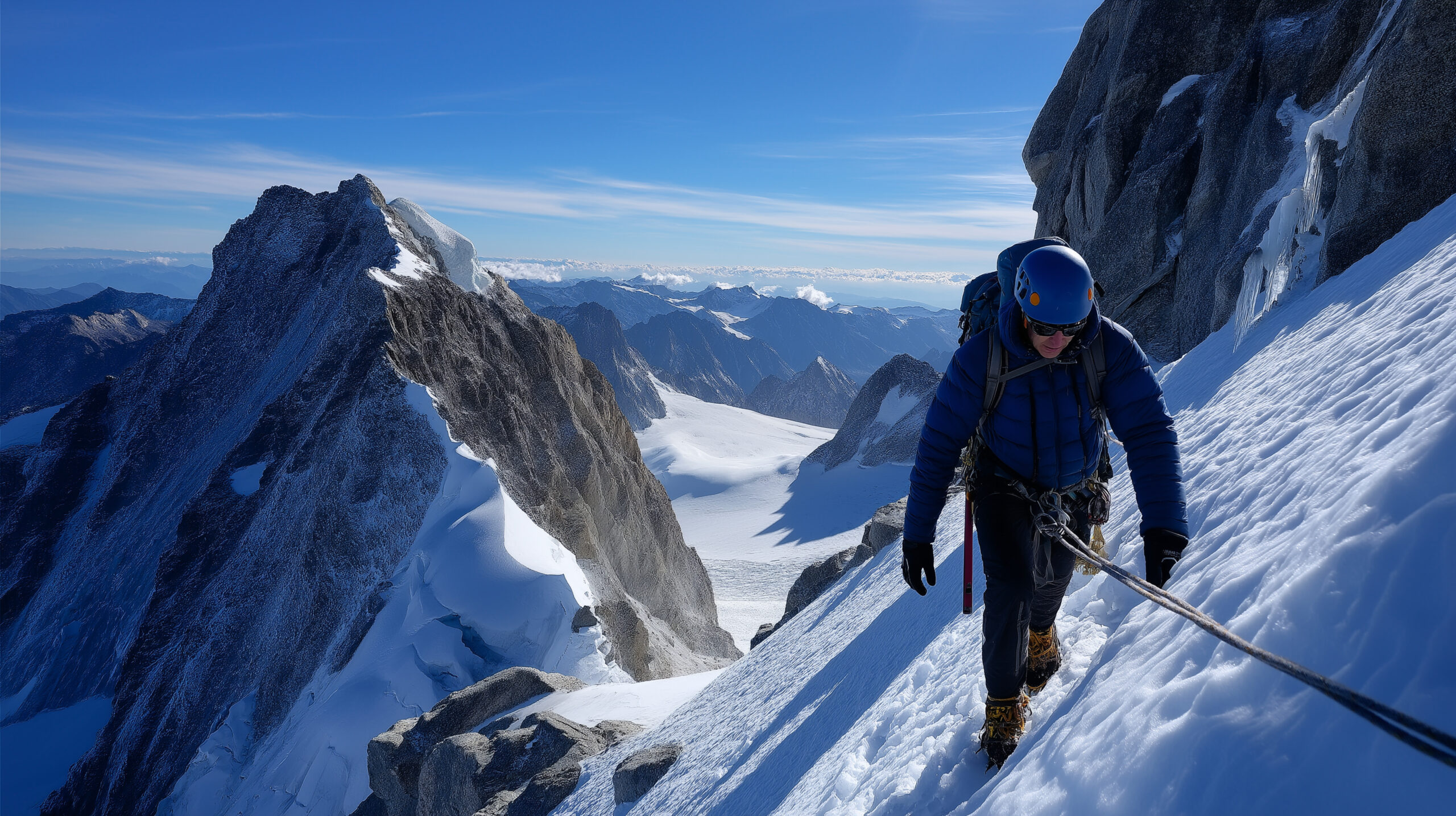
Our Best Crampon Picks
There is no single winner across walking, glacier travel, ski touring and vertical ice. These awards are about use cases and boot compatibility, not lab scores or paid placement. Not sure which binding your boots take? Jump to boot compatibility first.
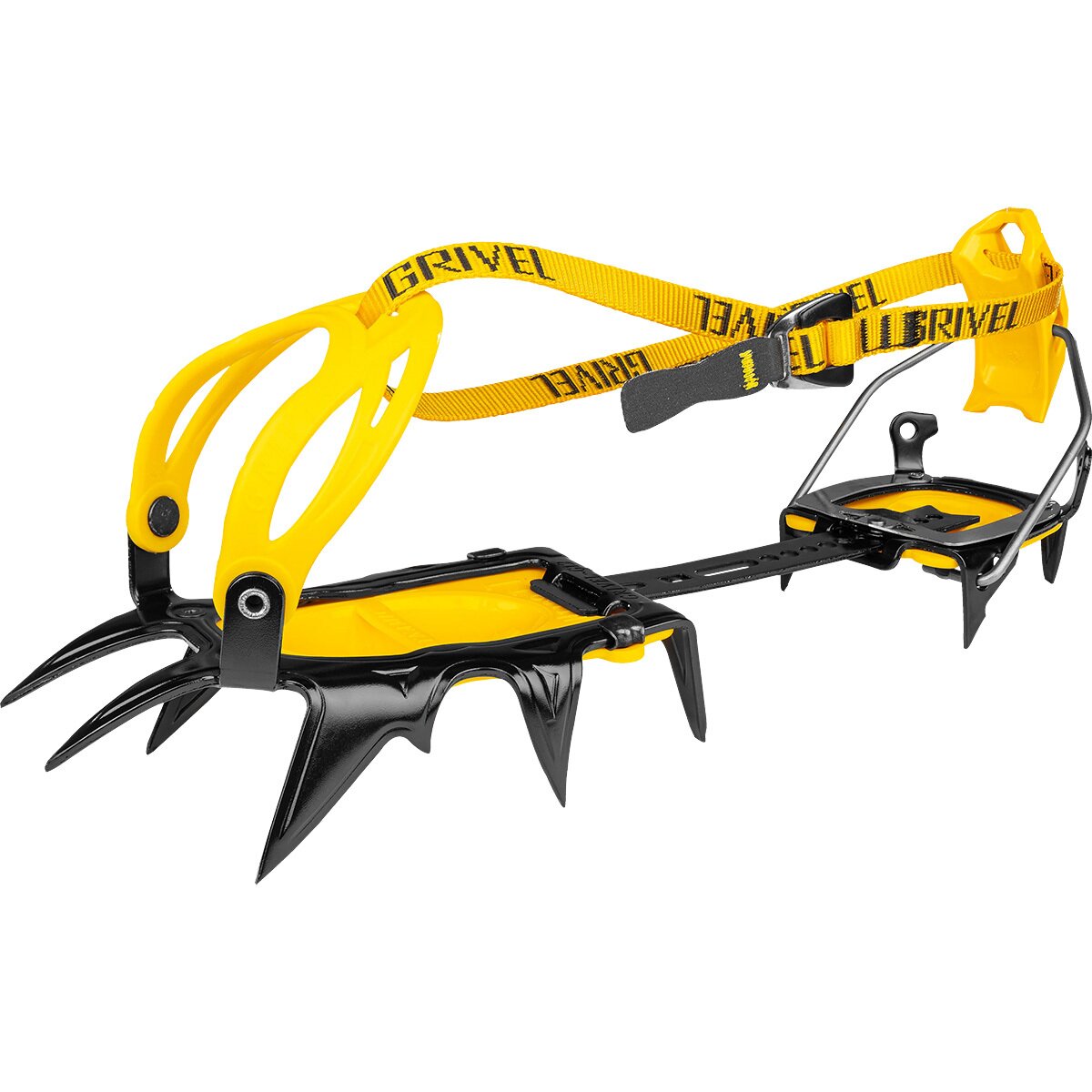 Grivel G12All-round 12-point steel for classic alpine climbing and glaciers.Read the reviewCheck price at Backcountry
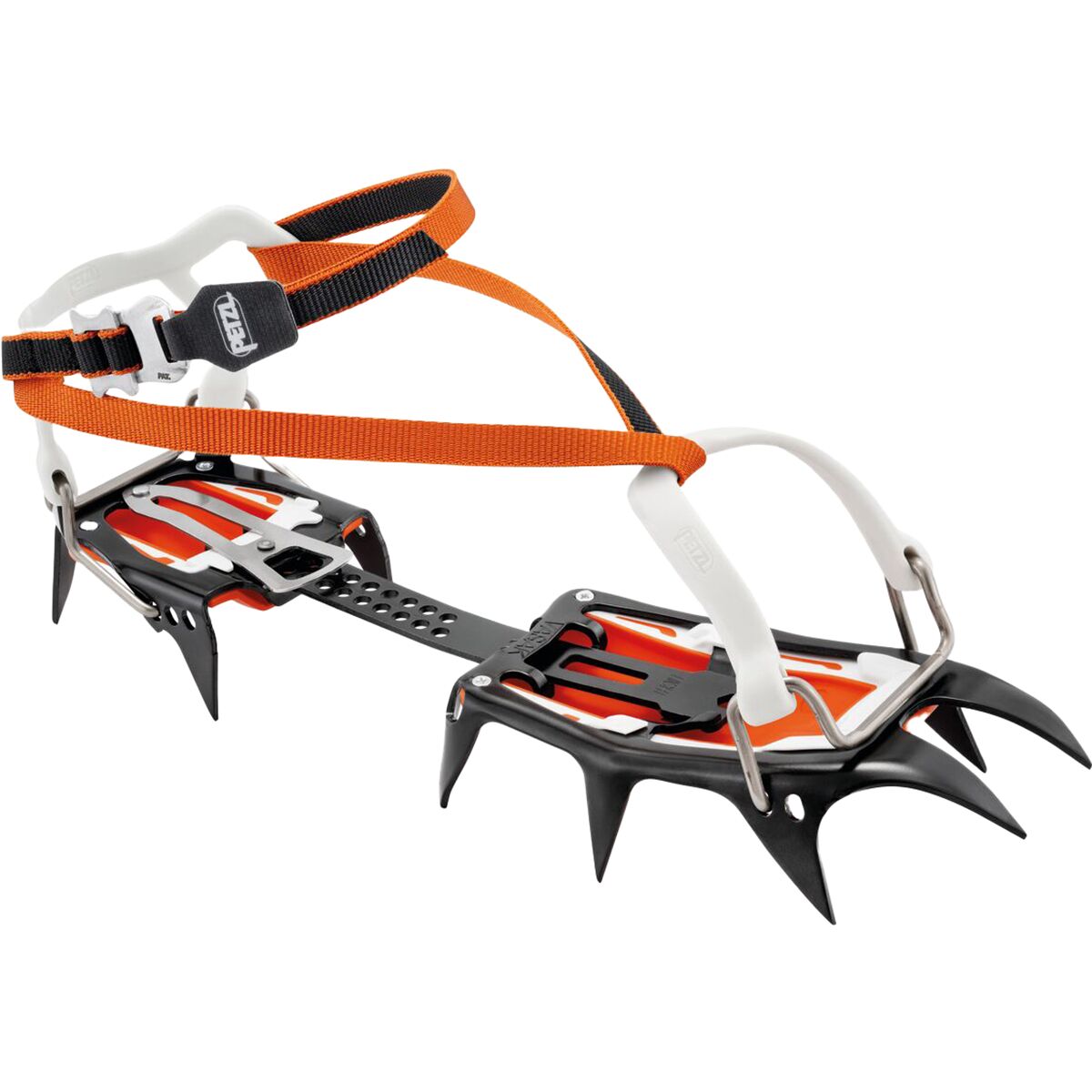 Petzl VasakVersatile bindings fit the widest range of mountaineering boots.Read the reviewCheck price at Backcountry
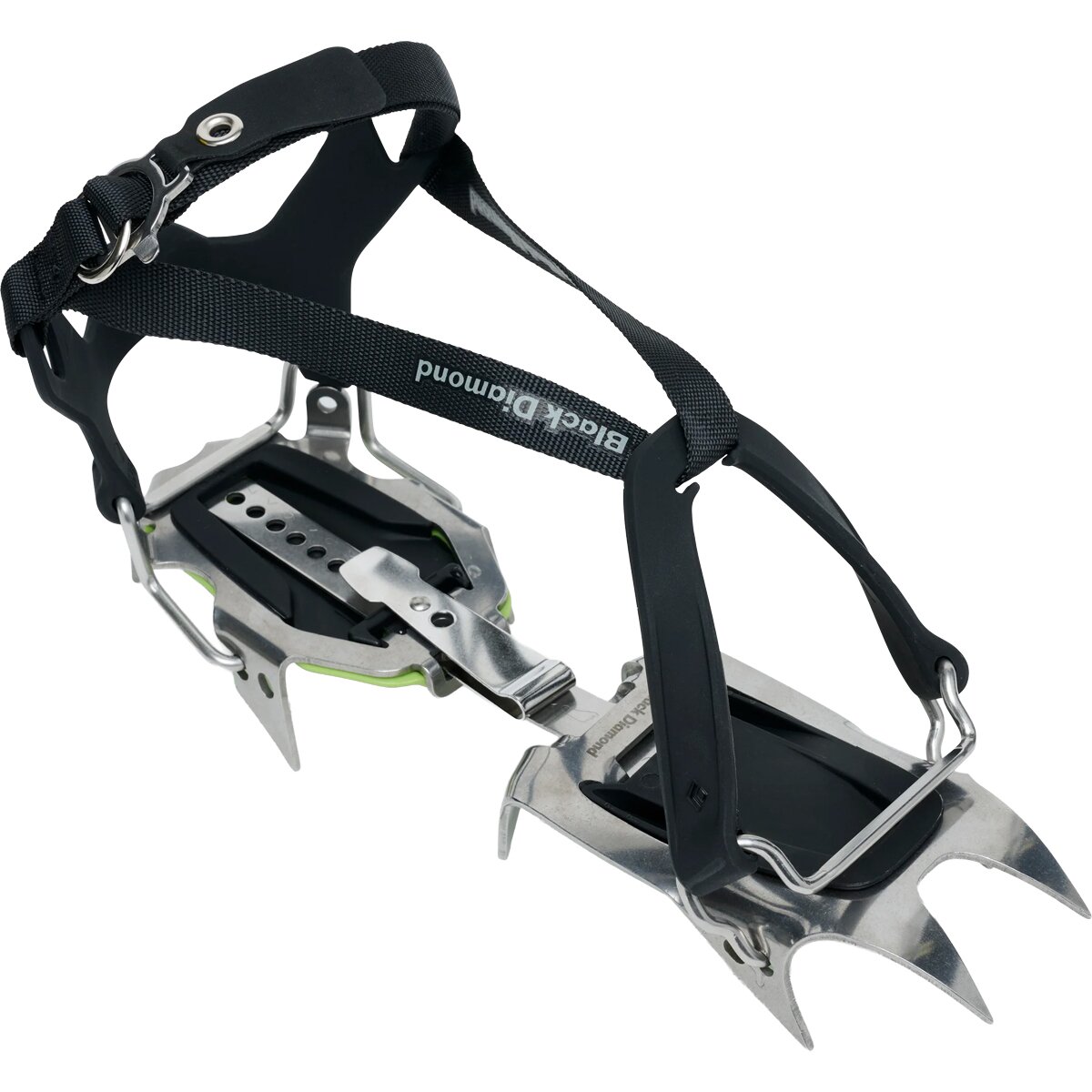 Black Diamond ContactFlexible strap-on (C1) that fits almost any stiff boot.Read the reviewCheck price at Backcountry
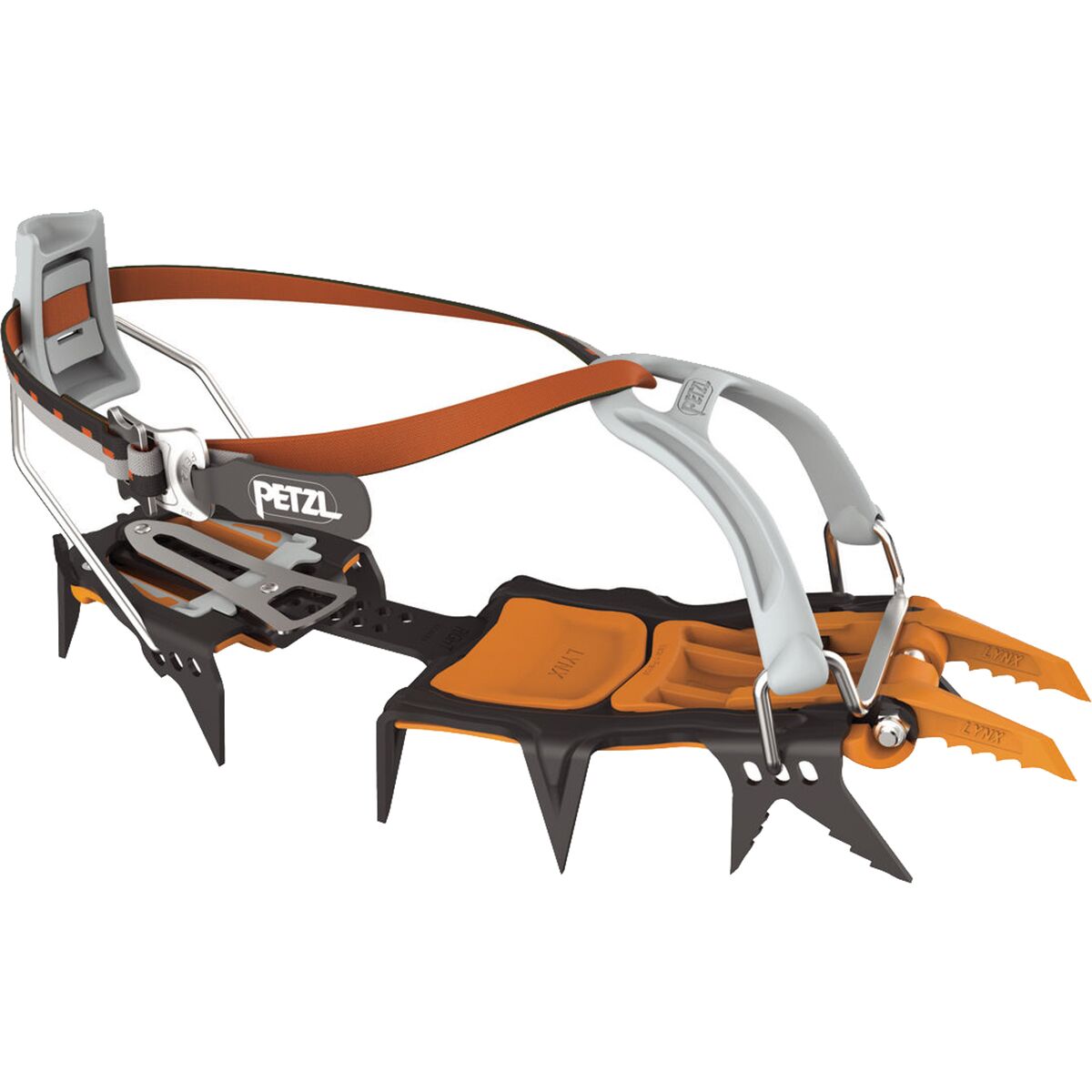 Petzl LynxModular mono or dual front points for steep ice and mixed.Read the reviewCheck price at Backcountry
Crampon Comparison Chart
Binding type must match your boot (see boot compatibility). Weights are per pair and approximate; confirm current specs and any listed availability at the retailer.
| Crampon | Best for | Points | Front points | Binding (boot) | Material | Weight (approx) | Price | |
|---|---|---|---|---|---|---|---|---|
| Grivel G12 | All-round alpine | 12 | Horizontal | New-Matic C2 / Cramp-O-Matic C3 | Steel | Approx. 980 g | $220.00* | Check price at Backcountry |
| Petzl Vasak | Widest boot fit | 12 | Horizontal | FlexLock C1 / LeverLock C2 | Steel | Approx. 960 g | $209.95* | Check price at Backcountry |
| Black Diamond Sabretooth | Durable all-round | 12 | Horizontal | Clip (C2) / Pro (C3) | Steel | Approx. 940 g | $229.95* | Check price at Backcountry |
| Grivel G10 | Glacier & walking value | 10 | Horizontal | New-Classic C1 / New-Matic C2 | Steel | Approx. 800 g | $176.00* | Check price at Backcountry |
| Black Diamond Contact | Beginners / universal | 10 | Horizontal | Strap C1 | Steel | Approx. 810 g | $189.95* | Check price at Backcountry |
| Petzl Irvis Hybrid | Ski mountaineering | 10 | Horizontal | LeverLock C2 | Alu body / steel front | Approx. 600 g | Not in feed | No verified listing |
| Petzl Lynx | Technical ice & mixed | 12-14 | Mono or dual (vertical) | LeverLock C3 | Steel | Approx. 1050 g | $304.95* | Check price at Backcountry |
| Petzl Leopard LLF | Lightweight ski / glacier | 10 | Horizontal | LeverLock FIL; welted boots | Aluminum | Approx. 330 g | $209.95* | Check price at Backcountry |
$ = budget $$ = mid $$$ = premium. Aluminum crampons (Irvis Hybrid, Leopard) are for snow and glaciers, not rock or hard ice, where they wear quickly.
* Catalog prices and availability are from the supplied Backcountry affiliate feed, checked November 2026. Prices can change. Only verified matching catalog products receive shopping links. Grivel G12 Evo and G10 Evo are the listed current variants.
The 8 Crampons, Reviewed
1. Grivel G12
The G12 is the default answer for general mountaineering for good reason: it climbs moderate ice, crosses glaciers, and handles alpine ridges without complaint, and it comes in both New-Matic (C2, for a heel welt) and Cramp-O-Matic (C3, for fully welted boots). Dual horizontal front points give stability on snow and low-angle ice. If you own one pair of crampons for Rainier, the Alps, or an entry 6,000 m peak, this is it.
- Does nearly everything in the alpine well
- Two binding versions for B2 or B3 boots
- Durable steel; easy to service
- Overkill for pure glacier walking
- Heavier than aluminum options
- Not ideal for sustained vertical ice
2. Petzl Vasak
If your boots are on the flexible side, the Vasak is the safe buy. With the FlexLock binding it runs as a C1 and fits boots without a toe welt; with LeverLock it steps up to C2. Performance is close to the G12 for walking and moderate climbing, so the deciding factor is usually which binding your boots accept. A great first all-round steel crampon.
- Binding options fit the widest range of boots
- Confident on snow and moderate ice
- Well-sized anti-balling plates
- Not a steep-ice tool
- Mid-pack weight
- Front-point length not adjustable
3. Black Diamond Sabretooth
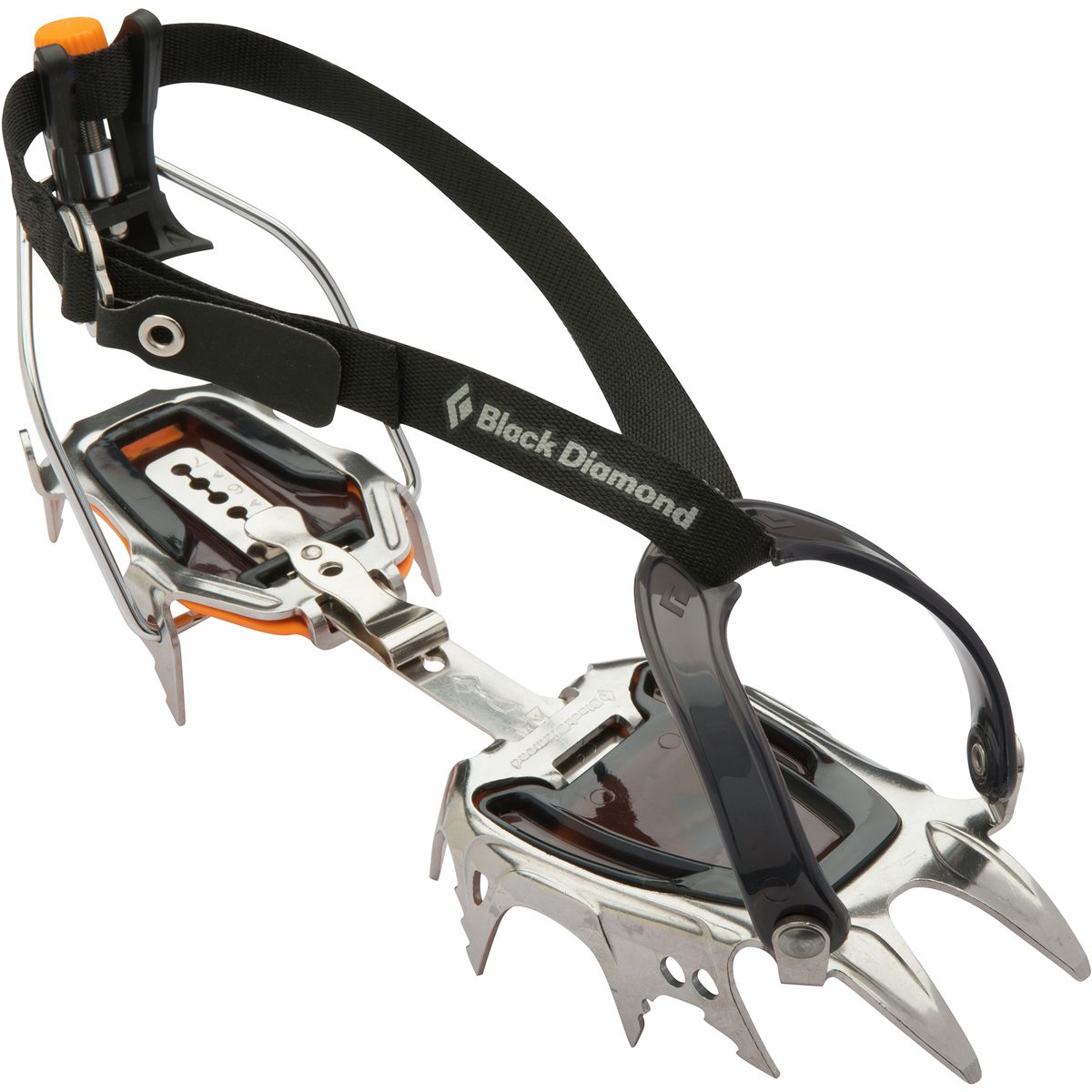
A tried-and-true alpine workhorse. Horizontal front points and a stiff frame make it stable on snow and glacier, and the Clip (C2) and Pro (C3) binding versions cover most technical boots. Riders who find the G12 slightly soft underfoot often prefer the Sabretooth’s platform. A dependable one-quiver crampon for North American and alpine objectives.
- Stiff, stable platform
- Clip and Pro binding versions
- Proven durability
- Not built for vertical ice
- Requires a welted boot for the Pro version
- Heavier end of all-round
4. Grivel G10
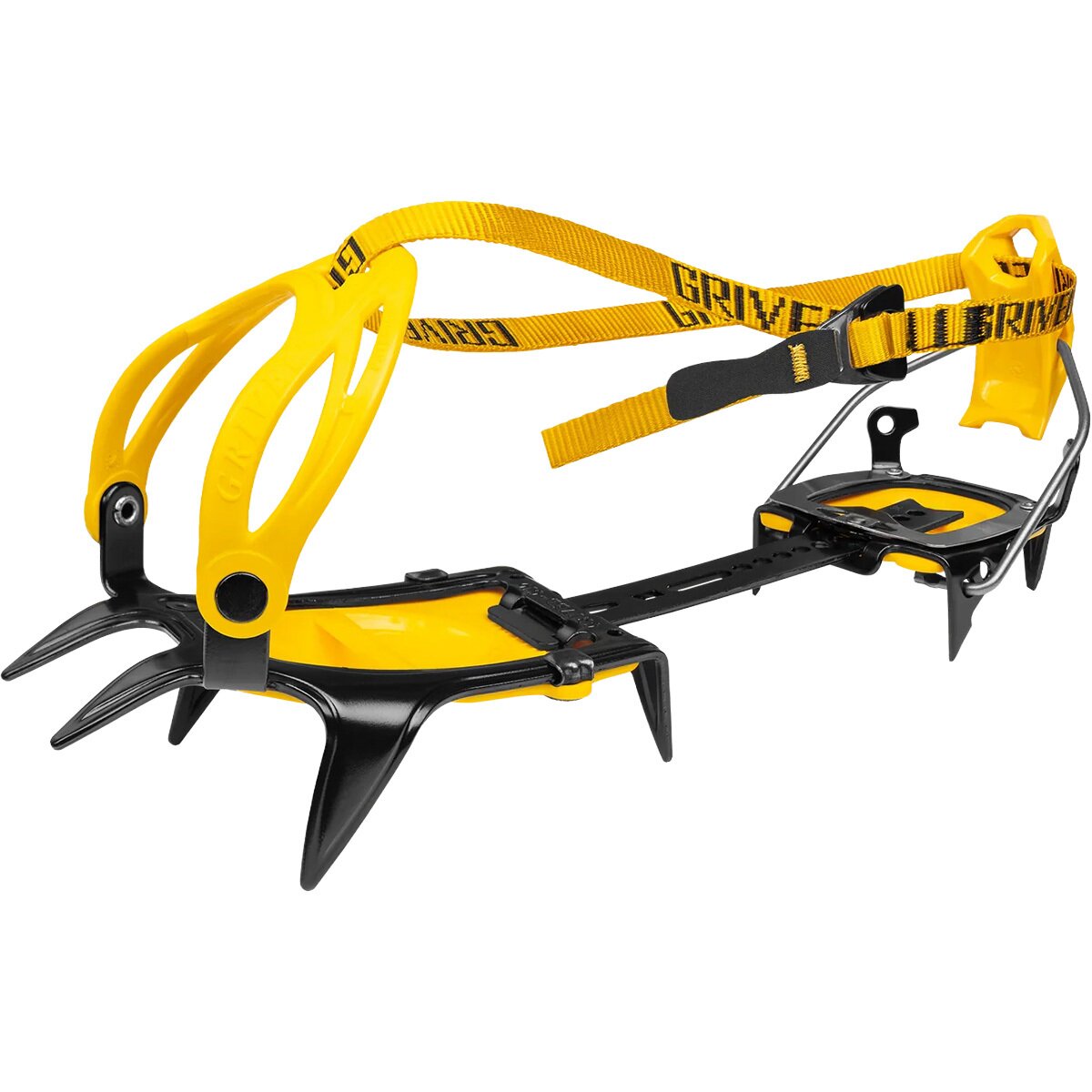
For glacier travel, snow slopes, and non-technical summits, 10 points is plenty, and the G10 delivers that for less money and weight than a 12-point. The New-Classic strap version fits flexible boots (C1), while New-Matic suits welted ones (C2). An ideal first crampon for trekking peaks, Kilimanjaro-style snow, and spring snow lines.
- Affordable and light for steel
- Plenty of grip for non-technical ground
- Strap version fits almost any stiff boot
- Not enough for steep ice
- No front-point adjustment
- Strap version slower to put on
5. Black Diamond Contact
The simplest way into crampons. The flexible strap binding (C1) fits nearly any reasonably stiff boot, including semi-stiff hiking boots, so you are not forced to buy mountaineering boots on day one. Horizontal points handle snow and glacier travel well. When you progress to steep ice, you will outgrow it, but as a first pair for glacier courses and snow scrambles it is hard to beat on value.
- Fits the widest range of boots
- Budget-friendly entry point
- Simple, forgiving to fit
- Strap system slower in the cold
- Not for technical terrain
- Less precise than step-in bindings
6. Petzl Irvis Hybrid
No verified matching Backcountry affiliate listing in the supplied catalog. This is an editorial recommendation only.

The hybrid trick: steel front points for bite where it matters, an aluminum rear to cut weight for the skin track. For ski-mountaineering and glacier approaches where you carry crampons far more than you wear them, the weight saving is real. Keep them off rock and hard water ice, where aluminum wears fast. A smart specialist, not a one-quiver crampon.
- Much lighter than full steel
- Steel front points still bite
- Packs small for ski touring
- Aluminum rear wears on rock
- Needs a welted/compatible boot
- Not for technical ice
7. Petzl Lynx
When the ground gets vertical, the Lynx is the tool. Front points convert between mono and dual, and are adjustable for length, so the same pair handles steep water ice, mixed, and hard alpine. It demands a fully welted B3 boot and is more crampon than a glacier walker needs, but for ice climbers and technical alpinists it is a precise, configurable platform.
- Mono/dual convertible front points
- Adjustable for length and terrain
- Precise on steep ice and mixed
- Needs a rigid B3 boot
- Heaviest and priciest here
- Overkill for glacier travel
8. Petzl Leopard LLF
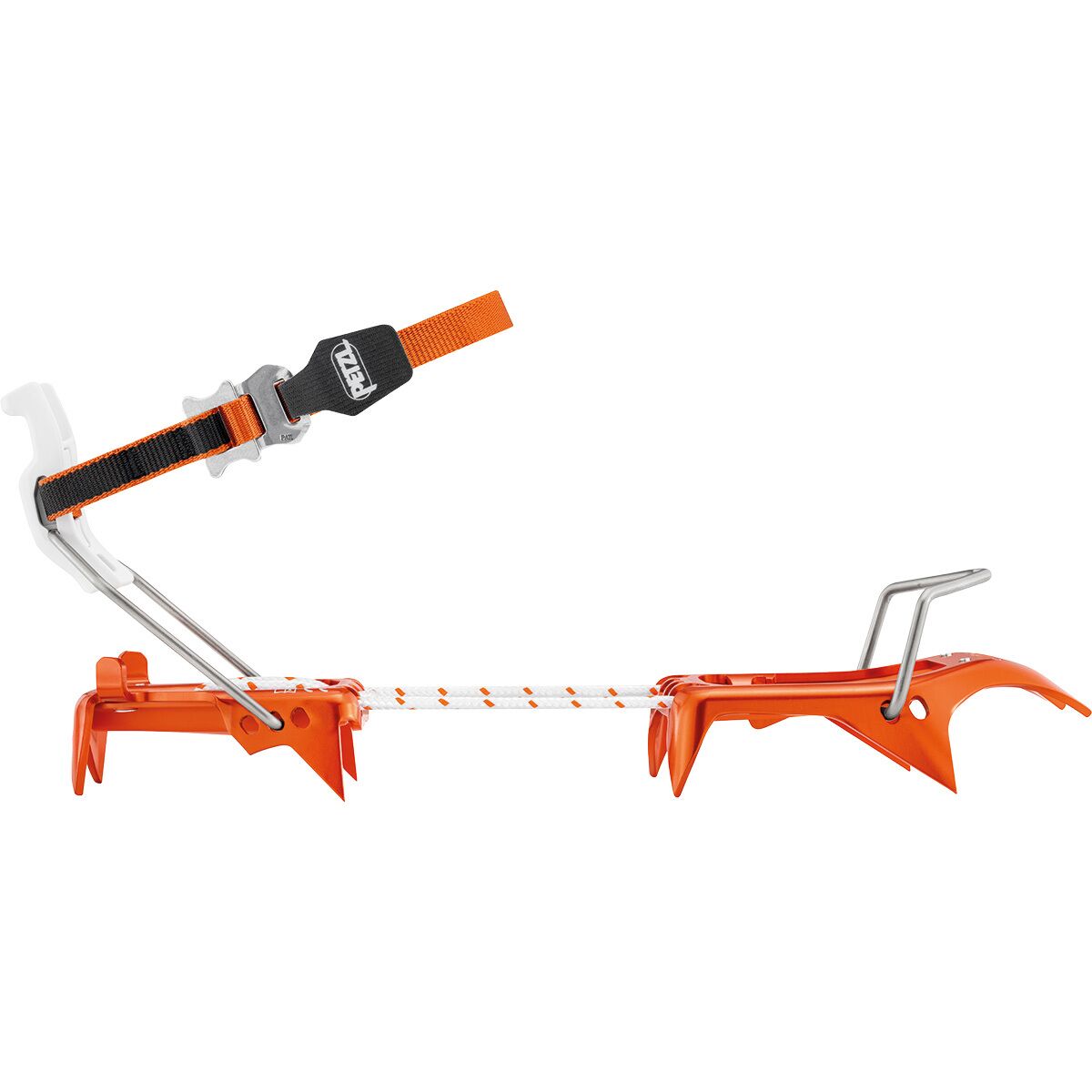
At roughly a third of a steel pair’s weight and packing almost flat, the all-aluminum Leopard is the ski-tourer’s and fast-and-light glacier traveller’s friend. The LLF LeverLock FIL binding requires compatible ski or mountaineering boots with suitable toe and heel welts. Check manufacturer fit guidance before purchase. The trade-off is strict: snow and glacier only. Use them on rock or hard ice and the points round off fast. For the right job, nothing on this list carries easier.
- Exceptionally light and packable
- Great for ski touring and glacier travel
- Compact LLF binding for compatible welted boots
- Snow/glacier only; wears on rock
- Less stable on hard ice
- Aluminum points need care
Boot Compatibility (C1 / C2 / C3)
Crampons are rated C1 to C3 and boots B1 to B3. The crampon must match or be more flexible than the boot allows. Buy the wrong binding and it will not stay on. This is the single most common crampon buying mistake, so check it before anything else.
C1 – Flexible (strap)
Strap-on bindings that fit B1, B2 and B3 boots, including stiffer hiking boots. No welts required. Best for glacier travel, snow slopes and beginners.
On this list: BD Contact, Grivel G10 (New-Classic), Petzl Vasak (FlexLock).
C2 – Hybrid (heel clip)
A heel lever plus toe strap. Needs a B2 or B3 boot with a heel welt. Faster and more secure than straps for general mountaineering and moderate ice.
On this list: Grivel G12 (New-Matic), BD Sabretooth (Clip), Petzl Vasak (LeverLock), Petzl Irvis Hybrid.
C3 – Step-in (automatic)
Toe bail plus heel lever. Requires a fully welted, rigid B3 boot. The most secure and precise, for technical ice and hard alpine.
On this list: Petzl Lynx, Grivel G12 (Cramp-O-Matic), BD Sabretooth (Pro).
Petzl Leopard LLF uses a LeverLock FIL binding for compatible welted boots; confirm fit with the exact boot model.Steel, Stainless or Aluminum?
Material decides durability and weight, and it decides where you can safely use the crampon. Match it to your terrain, not just your pack weight.
Steel
The default. Tough, grips hard ice, survives rock and mixed. Heavier, but the right choice for any serious ice or all-round use. All six all-round picks here are steel.
Stainless steel
Steel’s durability with less snow sticking (balling) and no rust. A premium upgrade on some models; worth it in wet, sticky snow conditions.
Aluminum
Dramatically lighter for ski touring and glacier travel. Snow and soft glacier only. Points dull quickly on rock or hard water ice, so never your ice-climbing crampon.
Our Editorial Method
These editorial selections compare manufacturer specifications, binding standards and intended terrain. We have not independently field tested every model listed. We prioritize boot compatibility and real-world terrain fit over spec-sheet point counts.
We do not rank by commission. Some shopping links may support our independent publication at no extra cost to you, and paid placements, when present, are labeled separately. Specs and prices are checked at publication and reviewed each season; weights listed are approximate per pair.
- Boot compatibility (C1/C2/C3) and fit security
- Terrain match: walking, glacier, ski, technical ice
- Durability and ease of field servicing
- Weight relative to intended use
- Anti-balling performance in wet snow
- Value for the climber it is meant for
Crampon FAQ
Do I need 10 or 12 points?
For glacier travel, snow slopes and non-technical summits, 10 points is plenty and saves weight. Choose 12 points for general mountaineering that includes moderate ice and steeper alpine ground. The extra points, including front points, give bite when you kick into harder surfaces.
How do I know if my boots are crampon-compatible?
Check your boot’s rating. B1 boots take C1 (strap) crampons only. B2 boots have a heel welt and take C1 or C2. B3 boots are fully rigid with toe and heel welts and take any crampon, including C3 step-ins. Matching the number is the safest rule.
Steel or aluminum crampons?
Steel for anything involving rock, mixed ground or hard ice, and for all-round use. Aluminum only for snow and glacier travel where saving weight matters most, such as ski mountaineering. Aluminum points wear out fast on rock and hard ice.
What are anti-balling plates?
They are plastic plates under the crampon that stop wet snow from packing into a dangerous ball underfoot, which can cause you to lose your points’ grip. Most quality modern crampons include them; make sure yours are fitted and in good condition.
Mono or dual front points?
Dual points are more stable on snow and general alpine terrain, so they suit most climbers. Mono points are more precise on technical water ice and mixed climbing. Convertible crampons like the Petzl Lynx let you switch between the two.
Can I use crampons with regular hiking boots?
Only flexible C1 strap-on crampons can fit stiffer hiking boots, and even then the boot must be rigid enough to hold them securely. Soft trail shoes are not compatible. For regular winter trail traction, use microspikes instead, not crampons.
Related Gear & Guides
We may earn a commission if you buy through these links, at no extra cost to you. Affiliate disclosure
Mountaineering Crampon Comparison Table
Click any column heading to sort. Weights are manufacturer-listed per pair and may change with binding or anti-balling configuration. Prices are published manufacturer US list prices observed on November 4, 2026, not live retailer quotes. No numerical rating is assigned without comparable independent testing.
| Model | Award | Weight | Key spec | US list price | Best use | More |
|---|---|---|---|---|---|---|
| Grivel G12 LT | Best overall | 861 g | 12 steel points | $220 | All-round alpine climbing | Review |
| Grivel G10 LT | Best value for glacier travel | 757-800 g | 10 steel points | $176 | Moderate glaciers and snow | Review |
| Petzl VASAK | Best classic mountaineering alternative | 845-895 g | 12 steel points | $209.95 | Glaciers, couloirs, alpine snow | Review |
| Black Diamond Sabretooth | Best for mixed alpine routes | 890-910 g | Stainless steel; horizontal front points | Price unavailable | General alpine and moderate ice | Review |
| Petzl LEOPARD | Best ultralight snow approach | 385-445 g | 10 aluminum points | $209.95 | Ski touring and snow approaches | Review |
| Petzl IRVIS HYBRID | Best hybrid for ski mountaineering | 540-570 g | 10 points; steel front / aluminum rear | $239.95 | Ski touring and glacier approaches | Review |
| Petzl LYNX | Best for technical ice | 935-965 g | 14 steel points; modular front | $304.95 | Steep ice and mixed terrain | Review |
| Grivel G20+ LT | Best specialist mono-point | 821 g | Steel; replaceable mono-point | $275 | Steep ice and mixed climbing | Review |
Price is a reference value, not a verified real-time offer. Binding variants and anti-balling equipment change published weights. For Sabretooth, no US manufacturer price was confirmed.
Detailed Crampon Reviews: Pros, Cons, and Who Should Buy
Selections reflect product geometry, manufacturer documentation, compatibility and intended terrain. This is not a claim that every model was independently field tested.
1. Grivel G12 LT
Weight: 861 g per pair
Best single-pair choice when classic mountaineering, snow couloirs and occasional rock all matter. Best use: All-round alpine climbing. Binding: Multiple binding variants.
Durable 12-point steel construction and four available binding systems.
Heavier than hybrid and aluminum snow-only options.
2. Grivel G10 LT
Weight: 757-800 g per pair
Budget-oriented choice for compatible boots on nontechnical glacier objectives. Best use: Moderate glaciers and snow. Binding: New-Classic / New-Matic.
Affordable steel traction with anti-balling plates and clear glacier-walking focus.
Less suitable for sustained technical ice than 12-point or vertical-point tools.
3. Petzl VASAK
Weight: 845-895 g per pair
An excellent alternative to the G12 LT, especially for those using Petzl modular parts. Best use: Glaciers, couloirs, alpine snow. Binding: Flexlock / Leverlock Universal.
Wide horizontal front points, modular parts and more than one binding option.
Not designed for steep technical ice precision.
4. Black Diamond Sabretooth
Weight: 890-910 g per pair
Consider this when a route transitions regularly between snow walking and steeper alpine sections. Best use: General alpine and moderate ice. Binding: Clip / Pro.
Balanced walking geometry with effective technical secondary points.
Boot variant and fitting need careful attention; not ultralight.
5. Petzl LEOPARD
Weight: 385-445 g per pair
Choose when snow travel is the main job and minimizing pack weight matters. Best use: Ski touring and snow approaches. Binding: Leverlock FIL / Flexlock.
Very low carried weight and compact flexible connector.
Aluminum points wear quickly on rock and are not a technical mixed-climbing solution.
6. Petzl IRVIS HYBRID
Weight: 540-570 g per pair
A focused answer for ski and glacier approaches requiring more front-point durability than all-aluminum designs. Best use: Ski touring and glacier approaches. Binding: Leverlock Universal.
Durable steel front-point bite with a compact lighter rear and CORD-TEC link.
Rear aluminum section is less tolerant of repeated rock contact.
7. Petzl LYNX
Weight: 935-965 g per pair
For climbers who genuinely need modular vertical or mono-point front configurations. Best use: Steep ice and mixed terrain. Binding: Leverlock Universal.
Replaceable, configurable front points for technical ice and mixed routes.
Weight, price and configuration complexity are needless for ordinary glacier walking.
8. Grivel G20+ LT
Weight: 821 g per pair
Purpose-built for experienced technical climbers using compatible rigid boots. Best use: Steep ice and mixed climbing. Binding: Cramp-O-Matic Evo.
Focused mono-point precision and replaceable point options.
Specialist tool, unsuitable as a general purpose first crampon.
We may earn a commission if you buy through these links, at no extra cost to you. Affiliate disclosure
Check the Boot Before You Choose the Crampon
A strap-on basket can fit more boot styles, but the boot still must offer adequate support for the terrain. A hybrid system needs an appropriate heel welt. Fully automatic bindings need the exact toe and heel geometry specified by the manufacturer. Retail B1/B2/B3 and C1/C2/C3 labels are shorthand, not a substitute for a real fit test.
Fit each pair to the exact boot; check heel lever tension, toe seating, center-bar adjustment, side-to-side movement and anti-balling plates. Walk on safe terrain before committing to a climb.

Steel, Aluminum or Hybrid?
Steel
Best all-round default for regular alpine use, hard ice, and incidental rock. Usually heavier but durable.
Aluminum
Very light for snow-dominant approaches and ski touring. Not appropriate for repeated rock abrasion or technical mixed routes.
Hybrid
Steel front traction and aluminum rear weight savings, with limitations on repeated rocky travel.

10 points vs 12 points
Ten-point models excel when walking on moderate snow and glacier terrain. Twelve-point steel models usually bring broader traction and useful secondary points as the terrain steepens. For technical ice, front-point shape matters more than the raw point count.
Horizontal vs vertical front points
Horizontal points are practical for classic snow climbing. Vertical dual-point and mono-point formats are designed for precise placements on steeper ice and mixed terrain. Specialized geometry is not necessarily better for glacier walking.
Five Checks That Matter More Than a Star Rating
1. Boot fit
Confirm toe welt, heel welt, sole support and the exact maker’s approved binding.
2. Primary terrain
Separate glacier hiking from ice climbing and mixed terrain.
3. Anti-balling
Look for compatible, intact anti-snow plates and inspect them regularly.
4. Weight basis
Check whether published weight includes bindings and anti-balling plates.
5. Replaceable parts
Look for availability of center bars, straps, bails and front points.
Test, Inspect and Maintain Your Crampons
After fitting the crampons, check for unwanted lengthwise and lateral movement, securely seated bails, and the correct center-bar position. Recheck after travel. Inspect worn points, cracked frames, binding straps and anti-balling plates before a mountain outing.
Dry equipment after use, remove grit and salt, and follow the maker’s sharpening directions. Avoid overheating metal with an aggressive grinder. Training, rope systems and route assessment remain essential on glaciated and steep terrain.

How We Chose These Crampons
This guide compares current manufacturer-published specifications, binding styles, materials, point geometry, intended terrain and known trade-offs. We checked official Petzl, Grivel and Black Diamond documentation on November 4, 2026. This is research-based editorial analysis, not a controlled comparative field test of all eight products. We do not publish fabricated stars, durability scores or personal-use claims.
Manufacturer list prices are snapshots rather than live price feeds. Recheck every quarter and after product-version changes. Affiliate partnerships do not determine the award categories. If GSG publishes original testing photos and a defined scoring protocol later, this methodology and the ratings column can be updated accordingly.
Source specifications: Grivel US crampons, Petzl crampons, Black Diamond Sabretooth. For permission and attribution requests, see GSG media resources.
Mountaineering Crampon FAQs
What crampons are best for beginner mountaineers?
For many classic snow and glacier objectives, start by fitting a steel 10- or 12-point crampon to your actual mountain boot. Terrain and training determine the appropriate choice.
Can I wear automatic crampons with hiking boots?
Not unless the specific boot has the required rigid structure and compatible toe and heel welts. Always follow the boot and crampon manufacturers’ fit instructions.
Are aluminum crampons safe on rock?
Aluminum points wear much faster than steel against rock. They are primarily designed for snow-focused travel; inspect points frequently and follow the product’s stated intended use.
Are 12-point crampons always better than 10-point models?
No. A 10-point model can be a better solution for lower-angle glacier travel and a 12-point steel platform can be more versatile as terrain steepens.
How often should I replace crampons?
There is no single replacement interval for every user. Inspect points, cracks, bindings, straps and anti-balling components regularly and follow each manufacturer’s inspection and retirement guidance.
Build a Complete Snow and Ice System
Crampons are one part of the kit. Compare compatible boots, ice axes, helmets and safety planning before committing to a glacier route.