
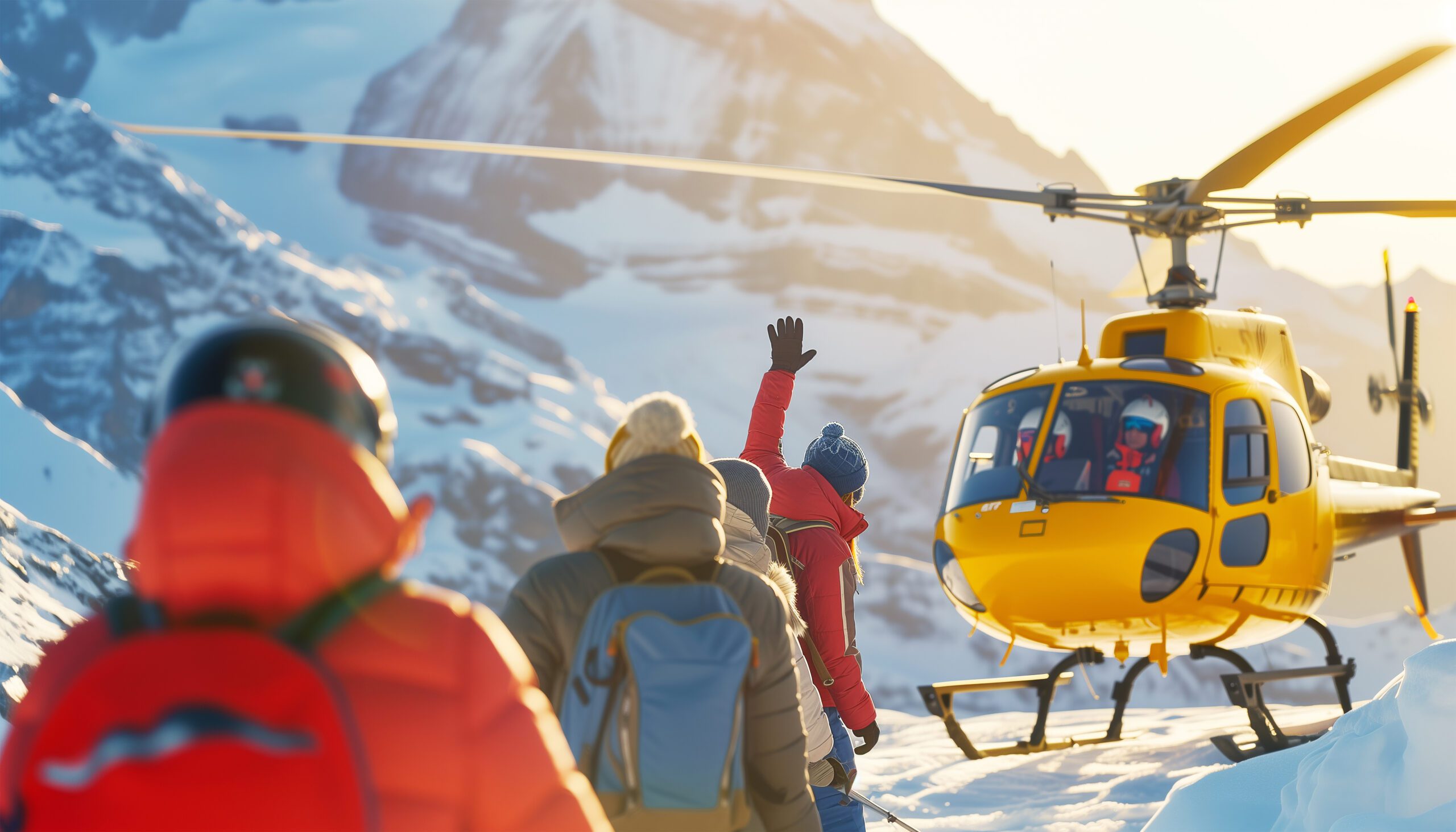
Mountain Climbing Insurance 2026: What You Actually Need + Costs
Standard travel insurance won’t cover you above a rope or a certain altitude — and a helicopter rescue can cost more than a car. This guide cuts through it: the four coverage types that actually matter, six providers compared with real 2026 prices and altitude caps, genuine rescue costs by destination, and exactly which policy fits your climb.
Rescue first, medical second, and buy it before you go. The coverage climbers actually need is emergency evacuation (a mountain helicopter rescue runs US$5,000–200,000+), high-altitude medical treatment, trip protection, and gear — and it must have no altitude exclusion for your objective. Standard travel insurance almost always excludes mountaineering, so a dedicated policy from a provider like Global Rescue, Ripcord or the American Alpine Club is essential.
Rescue first. Medical second. Buy before you go.
What you need: emergency evacuation with no altitude cap below your objective, high-altitude medical cover, and — for expensive expeditions — trip cancellation. Gear cover is a nice-to-have, not the priority.
Why it’s non-negotiable: a mountain helicopter rescue costs from about US$5,000 (Kilimanjaro) to over US$200,000 (high on Everest). One evacuation without cover can be financially ruinous.
The rule most people miss: standard travel insurance excludes mountaineering, and coverage must be in force before you travel. The right provider depends almost entirely on your altitude and how remote you’ll be.
The four coverage types every climber needs
Insurance for climbers is really four different protections — and the order of priority matters.
1. Emergency evacuation & rescue
The most important by far. Covers helicopter rescue and evacuation to a hospital — the cost that can run into six figures. Must have no altitude cap below your objective.
2. High-altitude medical
Treatment and repatriation for altitude illness, injury or frostbite, including care abroad that your home health insurance won’t touch.
3. Trip cancellation / protection
Recovers the sunk cost of an expensive expedition if you must cancel or abandon — most valuable on $10,000+ trips.
4. Gear & baggage
Replaces lost or damaged equipment. Genuinely useful, but the lowest priority — never trade rescue cover for it.
Why standard travel insurance fails climbers
The exclusion clause most climbers never read until a claim is denied.
Almost every standard travel-insurance policy contains a “hazardous activities” exclusion that voids coverage for mountaineering, climbing with ropes, or travel above a set altitude — often as low as 4,000–5,000 metres, and sometimes any climbing at all. That means the policy you already have for flights and hotels will very likely deny an alpine rescue or altitude-illness claim outright. This is why a dedicated climbing or mountaineering policy — or a rescue membership like Global Rescue or the American Alpine Club’s benefit — isn’t an upgrade; it’s the actual coverage. The single most important question to ask any provider is the specific altitude cap and whether roped/glaciated climbing is included for your route.
The six providers compared
Real 2026 pricing, altitude caps and who each is best for.
| Provider | Annual cost | Altitude | What it covers | Best for |
|---|---|---|---|---|
| AAC Rescue Benefit | ~$80 | Below 5,000 m | $7,500 transport + $5,000 medical | Rock, scrambling, moderate alpine |
| Global Rescue | $749 | Unlimited | Worldwide rescue + medical evac | Serious & 7,000 m+ expeditions |
| Ripcord by Redpoint | ~$375 | No standard cap | Combined travel + rescue + trip protection | Trekking peaks, mid-range |
| Garmin InReach SAR | $39.95–999.95 | 5,000 m cap (std) | Device-linked rescue coordination | InReach owners below 5,000 m |
| Overwatch & Rescue | $80 | No exclusions | Rescue + evac, any sat communicator | Budget unlimited altitude |
| SafetyWing Adventure | Add-on | Up to 6,000 m | Health + sports (nomadic style) | Long-term travelers |
Real helicopter rescue costs by destination
The number that makes the case for insurance — actual evacuation costs by mountain.
| Destination | Rescue cost (USD) | Notes |
|---|---|---|
| Kilimanjaro | $5,000–15,000 | Varies by altitude and complexity |
| Aconcagua | $10,000–30,000 | Military heli often free; private medical evac adds cost |
| Denali | $20,000–50,000+ | NPS operations; extreme high-altitude flying |
| Mont Blanc / Matterhorn | $10,000–40,000 | Air Zermatt private; PGHM government |
| Pakistan (K2 / Broad Peak) | $10,000–50,000 | Army helicopters; very limited availability |
| Nepal trekking | $5,000–15,000 | Standard Everest Base Camp trek rescue |
| Nepal high-altitude climbing | $15,000–50,000 | Above Camp 1 on Everest / 8000ers |
| Everest above 7,500 m | $50,000–200,000+ | Limited certified pilots; oxygen requirements |
Which policy for your climb
Match the provider to your altitude and remoteness — the single biggest factor in what you need.
| Your climbing | Typical fit | Why |
|---|---|---|
| Rock climbing only | AAC Rescue Benefit (~$80) | Rarely remote or high enough to need unlimited cover; $7,500 handles most scenarios |
| Hiking + scrambling below 4,000 m | AAC (~$80) or Garmin SAR Basic ($39.95) | Low-altitude rescue is rarely expensive; minimal cost suffices |
| Alpine 4000ers (Alps, Pacific NW) | AAC + Ripcord upgrade or Ripcord (~$375) | More remote terrain and heli scenarios; the upgrade adds transport cover |
| Himalayan trekking peaks (5,000–6,500 m) | Ripcord (~$375) or Global Rescue ($749) | Above standard altitude caps; choose trip protection vs pure rescue |
| 7,000 m+ expeditions | Global Rescue ($749) + expedition rider | Needs unlimited altitude and proven high-altitude coordination |
| 8,000 m (Everest, Cho Oyu, K2) | Global Rescue + rider + trip cancellation | $85,000+ expedition cost justifies the full stack |
| Garmin InReach owner below 5,000 m | Garmin SAR Basic ($39.95) or High Risk ($299.95) | Cheapest device-linked option; not for higher mountaineering |
| Budget adventure climber | Overwatch & Rescue ($80) or AAC + InReach Basic | Unlimited altitude at $80 if you trust the newer provider |
Typical insurance budgets by peak
What to actually set aside, by objective.
| Objective | Total insurance budget | Typical build |
|---|---|---|
| Kilimanjaro | $150–500 | AAC or Ripcord annual; heli-evac rider |
| Aconcagua | $400–1,000 | Ripcord or Global Rescue annual |
| Everest / 8000ers | $1,500–3,000 | Global Rescue $749 + rider $300–1,200 + trip cancellation $500–1,500 |
These budgets fold into the wider trip cost — see how insurance sits alongside permits, guiding and gear in the complete mountain climbing cost guide.
The claim rules that decide payouts
Coverage only pays if you follow the rules — these are the ones that catch climbers out.
Buying the policy is only half of it; claims are denied on procedure as often as on coverage. The rules that matter most: the “contact first” rule — most rescue providers require you (or your team) to contact their coordination centre before arranging an evacuation, or the claim can be void; buying before departure, since coverage bought mid-trip may not apply; declaring your actual objective and altitude honestly, because an undisclosed higher climb voids the policy; and understanding pre-existing condition terms. In 2025, Garmin’s InReach SAR plans also changed, so InReach owners should re-check what their device plan actually covers versus a separate rescue membership.
Climbing insurance FAQ
Direct answers on coverage, providers, rescue costs and the rules.
Do I really need mountain climbing insurance?
For any climb above roughly 4,000 m, any remote backcountry objective, or any climb needing technical equipment, climbing-specific insurance is essential – the question is which kind and how much, not whether. Most standard travel policies explicitly exclude mountaineering: altitudes above 4,000-6,000 m, any use of ropes, crampons, or ice axes, anything defined as an expedition, and backcountry skiing. A helicopter evacuation from Denali, Aconcagua, or Kilimanjaro can run tens of thousands of dollars, and from Everest can exceed $200,000, so the coverage gap is the risk.
What are the four types of coverage a climber needs?
Search and rescue (helicopter and ground extraction from remote terrain – the single most expensive risk); emergency medical and medical evacuation (the hospital bill plus transport home, or repatriation); trip cancellation and interruption (protects the non-refundable expedition cost); and baggage or gear. If budget forces a priority order, most climbers rank them rescue first, emergency medical second, trip cancellation third, baggage last.
What is the best mountain climbing insurance for 2026?
It depends on your climbing profile. Below 5,000 m for rock, scrambling, or moderate alpine, the American Alpine Club Rescue Benefit (~$80/yr = $7,500 rescue) is strong value. For Himalayan trekking peaks (5,000-6,500 m), Ripcord by Redpoint (~$375/yr) adds trip protection. For 7,000 m-plus expeditions, Global Rescue ($749/yr, unlimited altitude) is the established choice. Garmin InReach SAR suits device owners below 5,000 m, and Overwatch x Rescue ($80/yr, no altitude exclusions) is a newer budget option. This is general information, not a recommendation of any specific policy.
Does standard travel insurance cover mountaineering?
Usually not. Most standard travel policies explicitly exclude altitude above 4,000-6,000 m, any activity using ropes, crampons, or ice axes, anything defined as an expedition, and adventure sports. Many climbers discover the exclusion only when a claim is denied. Read the exact policy wording, and confirm your specific altitude, equipment, route grade, and location are named as covered before you rely on it.
How much does a helicopter rescue from a mountain cost?
Documented 2026 ranges: Kilimanjaro roughly $5,000-15,000; Aconcagua $10,000-30,000; Denali $20,000-50,000+; the European Alps $5,000-40,000; Nepal trekking $5,000-15,000; Nepal high-altitude climbing $15,000-50,000; and Everest above 7,500 m from $50,000 to over $200,000 because of limited certified pilots, fuel staging, and oxygen requirements. Ground rescue alone can still run $5,000-20,000.
What is the 'contact first' rule?
Most rescue policies require you to contact the provider before initiating a rescue, and failing to do so can void coverage. In an emergency you reach the provider directly by satellite phone or messenger; they coordinate the rescue with local authorities and pay the rescue agencies directly. If you or your guides arrange a rescue independently first, the provider may decline to pay. Program provider numbers into your satellite device and brief your team before the climb.
What changed with Garmin InReach SAR plans in 2025?
Garmin added altitude caps in 2025. The SAR High Risk plan ($299.95/yr), previously unlimited, is now capped at 5,000 m, and a new SAR High Altitude plan ($999.95/yr) fills the gap with no altitude cap. That High Altitude plan now costs more than Global Rescue's $749/yr, which also covers unlimited altitude, so InReach owners heading above 5,000 m should compare carefully.
When do I have to buy mountaineering insurance?
Before you leave, and usually before the climb begins – policies will not usually cover incidents once travel has started. Buy during planning, ideally 2-4 weeks before departure, to allow documentation review. Trip cancellation in particular often has to be purchased within about 14-21 days of your first trip deposit, and many expedition operators verify your insurance before accepting a booking.
Will my regular health insurance cover climbing accidents abroad?
Rarely. US health plans typically cover in-network US providers only, so foreign hospital care and evacuation usually are not covered, and even international plans often exclude high-risk activities including mountaineering. Most climbers keep their regular health insurance for care back home and add a climbing-specific rescue and evacuation policy for the mountain itself.
Methodology & disclosures
Provider prices, altitude caps and coverage details are compiled from provider documentation; rescue-cost ranges from published evacuation-cost reporting and operator information. Figures are indicative and change frequently. This guide is research-based general information, not insurance advice — coverage terms, exclusions and limits vary by policy and country, so always confirm the specifics with the provider before purchasing.
Reviewed each season; last updated July 28, 2026. Prices, altitude caps and plan terms (including Garmin InReach SAR plans) change — verify current details before you buy.
Get covered before you go
Match the provider to your altitude, confirm the cap and activity wording in writing, save the 24-hour coordination number, and buy before you travel. The policy is a rounding error against a rescue — the only expensive mistake is not having one.
Compare High-Altitude Cover See Full Trip Costs