
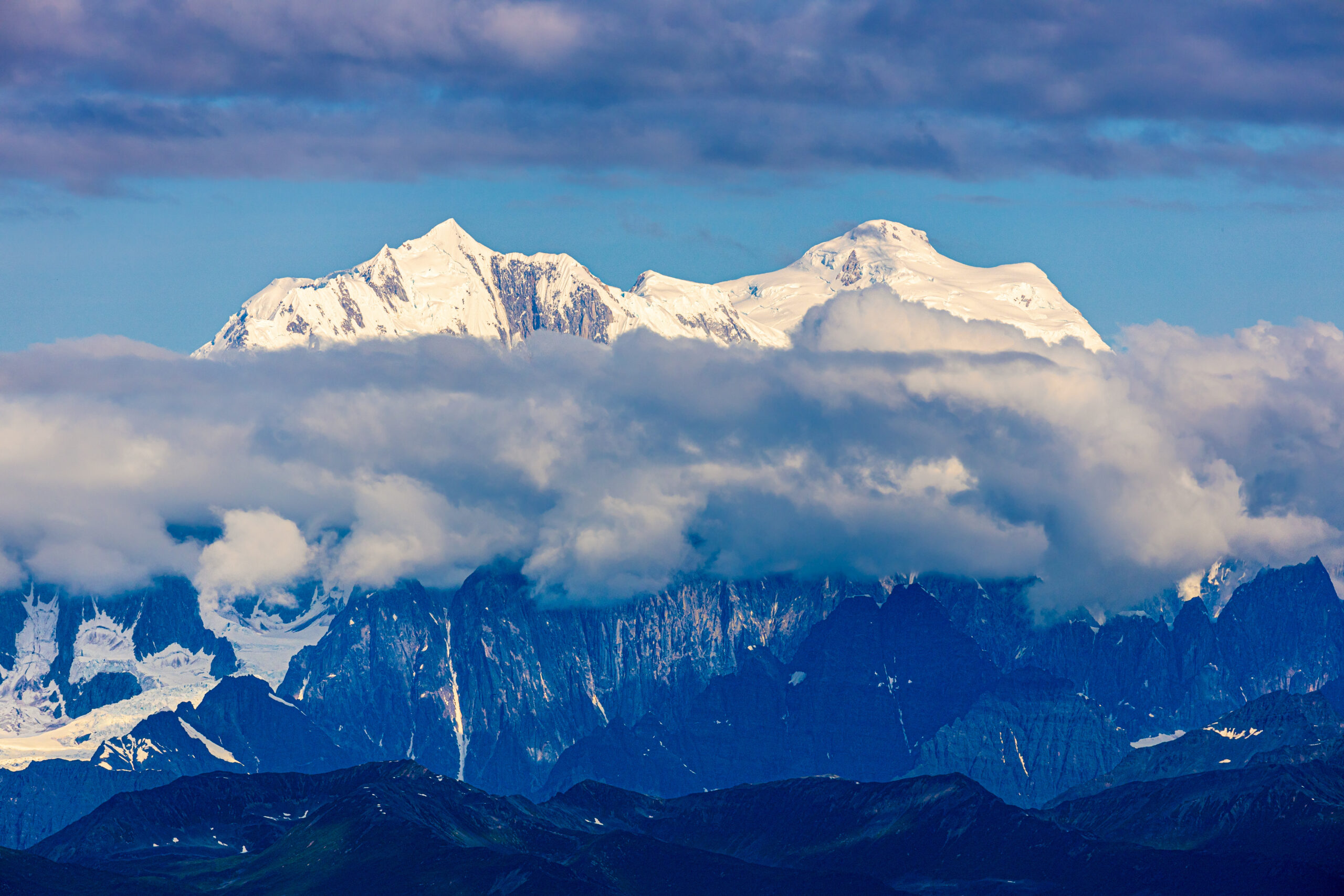
Mount Hunter: Denali’s Child, and the hardest of the three
Begguya is the smallest of the Alaska Range’s big three, and the hardest. This expedition update covers why it is the most technical 14,000-foot climb in North America, the West Ridge and the Moonflower Buttress, the permit distinction from Denali and Foraker, and an honest readiness view. Heights in feet (metres).
Updated 27 July 2026 · Compiled by Travis Ludlow · Safety review by Dawson Ludlow · Medical review by Taylor Ludlow, RN
Single-mountain expedition update, compiled from National Park Service registration rules, operator route information, and published alpine records. Our team has not climbed Mount Hunter; the only first-hand summit anyone on our team claims is Kilimanjaro. This is a planning briefing for experienced alpinists, not a how-to and not a substitute for training or a guide.
The technical test of the range, not the tallest.
Hunter is lower than Denali and Foraker, yet it is widely called the most difficult 14,000-foot climb in North America. The standard West Ridge is a long, corniced, Alaska Grade 4 climb; the north face’s Moonflower Buttress is a world-class mixed testpiece. Fewer than 40 percent of attempts on the peak succeed. It stages from the same Kahiltna Glacier as Denali, but it asks for technical skill the West Buttress never does.
- Standard route: the West Ridge, Alaska Grade 4.
- Signature hard route: the Moonflower Buttress.
- Success: under 40 percent of attempts.
- Permit: the Denali and Foraker special fee does not apply.
- Name: Begguya, Denali’s Child, in Dena’ina.
On this page
What climbing Hunter involves
A technical alpine climb staged from a familiar glacier, but with none of the trade-route support that makes its taller neighbour approachable.
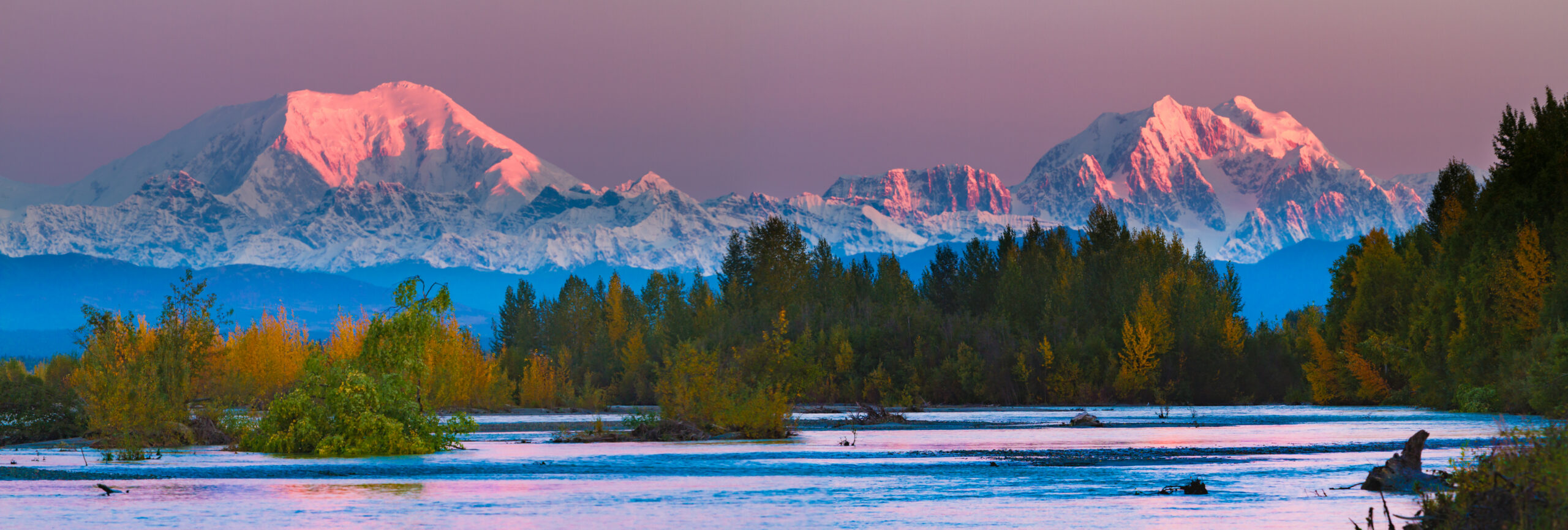
Mount Hunter rises about 8 miles south of Denali, towering some 7,000 feet above the Kahiltna Glacier, the longest in the Alaska Range at 44 miles. Climbers fly in by ski-plane from Talkeetna to the same glacier base camp used for Denali and Foraker, and from there the resemblance ends. Where Denali’s West Buttress is a walk-up by alpine standards, Hunter’s standard West Ridge is a sustained, corniced Alaska Grade 4 climbed on snow and ice throughout, with a mixed step low down and huge cornices high on the crest.
The peak has two summits, a north top at 14,573 ft, which is the true and higher one, and a south top at 13,966 ft, joined by a long corniced ridge. Because Hunter is lower than its neighbours, the upper mountain is not as brutally cold as Denali’s high camps, but that is scant comfort: the difficulty here is technical and sustained, not a matter of altitude. Fewer than 40 percent of the small number who attempt it each year reach the top. For the full route detail, camps, and gear, see our Mount Hunter climb guide.
Are you ready for Hunter?
Hunter is not a peak to grow into. Read these as prerequisites, and if any is a stretch, build toward it on smaller objectives first.
Steep Ice and Mixed
You must be fluent on steep alpine ice and mixed ground, not only glacier walking. The West Ridge is Alaska Grade 4; the Moonflower is far above that.
Evidence: prior AI3-plus and mixed routes.Cold, Storms, Self-Rescue
Prior Alaska Range or comparable big-range experience: crevassed glaciers, storm days pinned at camp, and self-sufficiency far from any help.
Evidence: prior expeditions in a big range.Read the Ridge
The West Ridge traverses enormous cornices with huge exposure. Knowing where it is safe to walk is a survival skill, not a detail.
Evidence: sound decisions on corniced terrain.No Trade-Route Support
Unlike Denali’s West Buttress, Hunter has no fixed lines, ranger camps, or crowds to follow. Your team solves every problem itself.
Evidence: an independent expedition record.| Requirement | Baseline | Why it matters |
|---|---|---|
| Technical grade | Fluent to Alaska Grade 4 (AI3, ~5.8) | The route is sustained steep snow, ice and mixed, not a walk. |
| Alaska Range record | Prior range or comparable big-alpine experience | Weather, glaciers and remoteness punish the underprepared. |
| Cornice judgment | Comfortable on heavily corniced ridges | The West Ridge crest is exposed and cornice-laden. |
| Self-sufficiency | Full independent expedition capability | No trade-route infrastructure or crowds to follow. |
| Fitness and load | Strong for 12 to 14 days under load | The approach and ridge demand endurance with weight. |
| Turnaround discipline | Willing to retreat from technical ground | Reversing the ridge is as serious as climbing it. |
The self-selection trap
Hunter’s low success rate is not softened by an inexperienced crowd dragging the average down. The field is small and expert, and it still turns back more often than not. If strong alpinists fail here regularly, an honest look at your own record matters more than ambition.
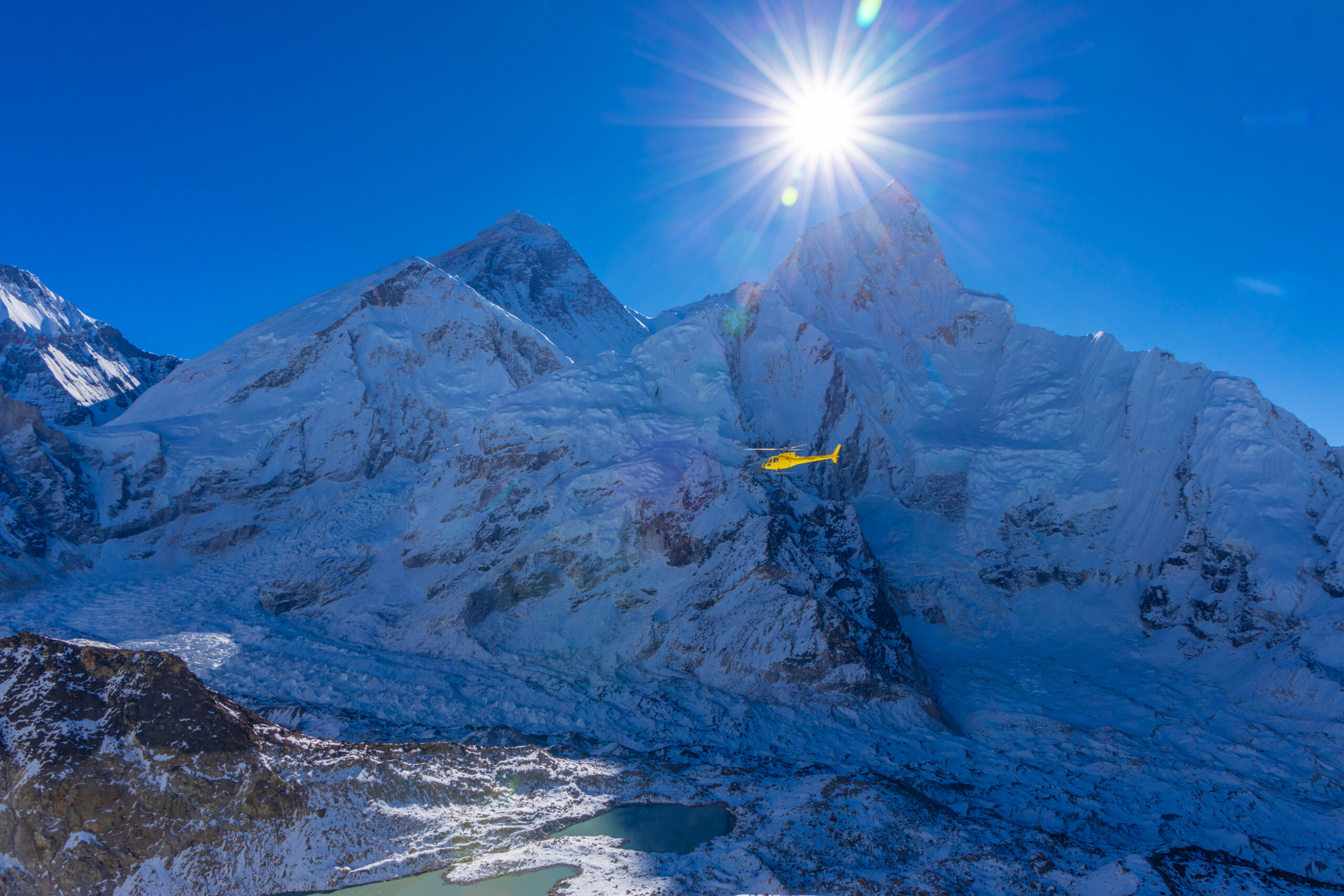
Rescue is limited, and self-rescue is the plan
Deep in the Alaska Range, help is distant and weather-dependent. Bush planes fly only when conditions allow, and a rescue can be days away. On Hunter your team is the first and often the only responder, which is why self-sufficiency is a prerequisite, not a virtue.
The West Ridge and the Moonflower
Two very different climbs share the mountain: a serious guided ridge, and one of the continent’s hardest mixed walls.
West Ridge
The standard and original line, first climbed in 1954 by Fred Beckey, Heinrich Harrer, and Henry Meybohm. It is a long ridge on snow and ice throughout, with a mixed step low down at the rabbit ears and enormous cornices high on the crest.
- Alaska Grade 4 (AI3, around 5.8 rock)
- Sustained snow, ice and one mixed step
- Huge, exposed cornice traverses
- One of the 50 Classic Climbs; 12 to 14 days guided
Moonflower Buttress
A route on the north face, first climbed by Bibler and Klewin in 1983, and one of the hardest mixed climbs in North America. It is far above the West Ridge in difficulty and is a personal objective for elite alpinists, not a guided trip.
- Sustained vertical ice, mixed and rock
- Among the hardest mixed lines on the continent
- The nearby Mini Moonflower is used as training
- An elite testpiece, rarely guided
| Factor | West Ridge | Moonflower Buttress |
|---|---|---|
| Aspect | South-west and west ridge | North face |
| Grade | Alaska Grade 4 (AI3, ~5.8) | Among the hardest mixed climbs in North America |
| Style | Long ridge, snow and ice, one mixed step | Sustained vertical ice, mixed and rock |
| First ascent | 1954: Beckey, Harrer, Meybohm | 1983: Bibler and Klewin |
| Who it suits | Strong alpinists ready for Grade 4 | Elite technical alpinists only |
| Guided? | Occasionally, 12 to 14 days | Rarely; a personal objective |
The West Ridge, section by section
An overview of the standard line, from the glacier to the north summit and back. For the full detail, see the climb guide.
Kahiltna Base ~7,200 ft
Ski-plane base camp, shared with Denali and Foraker traffic.
Toe of the West Ridge
Gain the ridge from the glacier; the Northwest Basin variation is shorter but harder.
The Rabbit Ears
A rock feature low on the ridge with a mixed climbing step.
The Corniced Crest
Enormous cornices; teams stay off the crest, usually to the south.
The Plateau
A broad glacier plateau links the terrain toward the summits.
North Summit 14,573 ft
The true, higher summit and the objective of the climb.
South Summit 13,966 ft
Joined to the north by a long corniced ridge.
Reverse the Ridge
The corniced ridge must be down-climbed; the descent stays committing.
The Northwest Basin variation
In stable snow, many parties gain the ridge by the Northwest Basin, which is shorter and more direct than the toe of the ridge, but also harder. The choice depends on conditions, and it is one your guide or team makes on the ground.
A Hunter expedition timeline
A guided West Ridge attempt runs about 12 to 14 days on the mountain, weather permitting, plus travel and contingency.
Talkeetna, briefing and flight
Ranger check-in, gear and food sorting, weather, and the ski-plane charter to the Kahiltna.
Fly to the Kahiltna Glacier
Land near 7,200 ft, build base camp, and wait out weather if the planes cannot fly.
Acclimatize and prepare
Shorter climbs, skills, and load carries; the lower summit means less extreme cold than Denali.
Gain the West Ridge
Climb from the glacier onto the ridge, or take the steeper Northwest Basin variation.
Climb the corniced ridge
Sustained snow and ice, the mixed step at the rabbit ears, and the long cornice traverses.
Summit push to the north top
Move over the plateau to the true north summit and turn around without lingering.
Descend the ridge
Reverse the technical ground carefully; the descent remains the serious half of the climb.
Fly out
Return to base camp and wait for the ski-plane window back to Talkeetna.
Cost and the permit distinction
Hunter costs less than Denali to guide and skips the special mountaineering fee, but the barrier here was never the paperwork.
| Component | Figure | Note |
|---|---|---|
| Guided West Ridge | ~$10,000-$15,000+ | 12 to 14 days; far fewer operators than Denali. |
| Ski-plane charter | Included or ~$700-$900 | Talkeetna to the Kahiltna Glacier, weather permitting. |
| Park registration | No special fee | The Denali and Foraker mountaineering fee does not apply to Hunter. |
| Personal gear | $5,000-$10,000+ | Technical alpine kit and a serious ice and mixed rack. |
| Insurance | Policy-dependent | Verify activity, altitude, evacuation and repatriation cover. |
The Denali and Foraker fee does not apply
The National Park Service requires climbers on Denali and Foraker to register at least 60 days in advance and pay a special mountaineering fee. Those rules apply to those two peaks only. Hunter climbers register as backcountry climbers flying into the range and fly with an authorized air-taxi concessionaire, but they skip the 60-day pre-registration and the fee. Confirm the current requirements with Denali National Park before you plan.
Choosing a Hunter operator
Only a handful of operators guide Hunter, and the right questions separate a serious team from an optimistic brochure.
Specific to This Peak
Ask how many times the guide has climbed Hunter itself, not just the range.
Grade Matched to You
A good operator matches the West Ridge to your real record, or turns you away.
Small Rope Teams
Technical terrain needs tight ratios and strong rope-team management.
Bush-Plane Delays
Ask how weather delays to and from the glacier are handled and costed.
Willing to Say No
The best sign is an operator who screens hard and declines the underqualified.
Limited, Self-First
Understand that rescue is limited and self-rescue is the expectation.
How to choose an expedition operator covers the vetting in full, and the operator directory is a place to start the search.
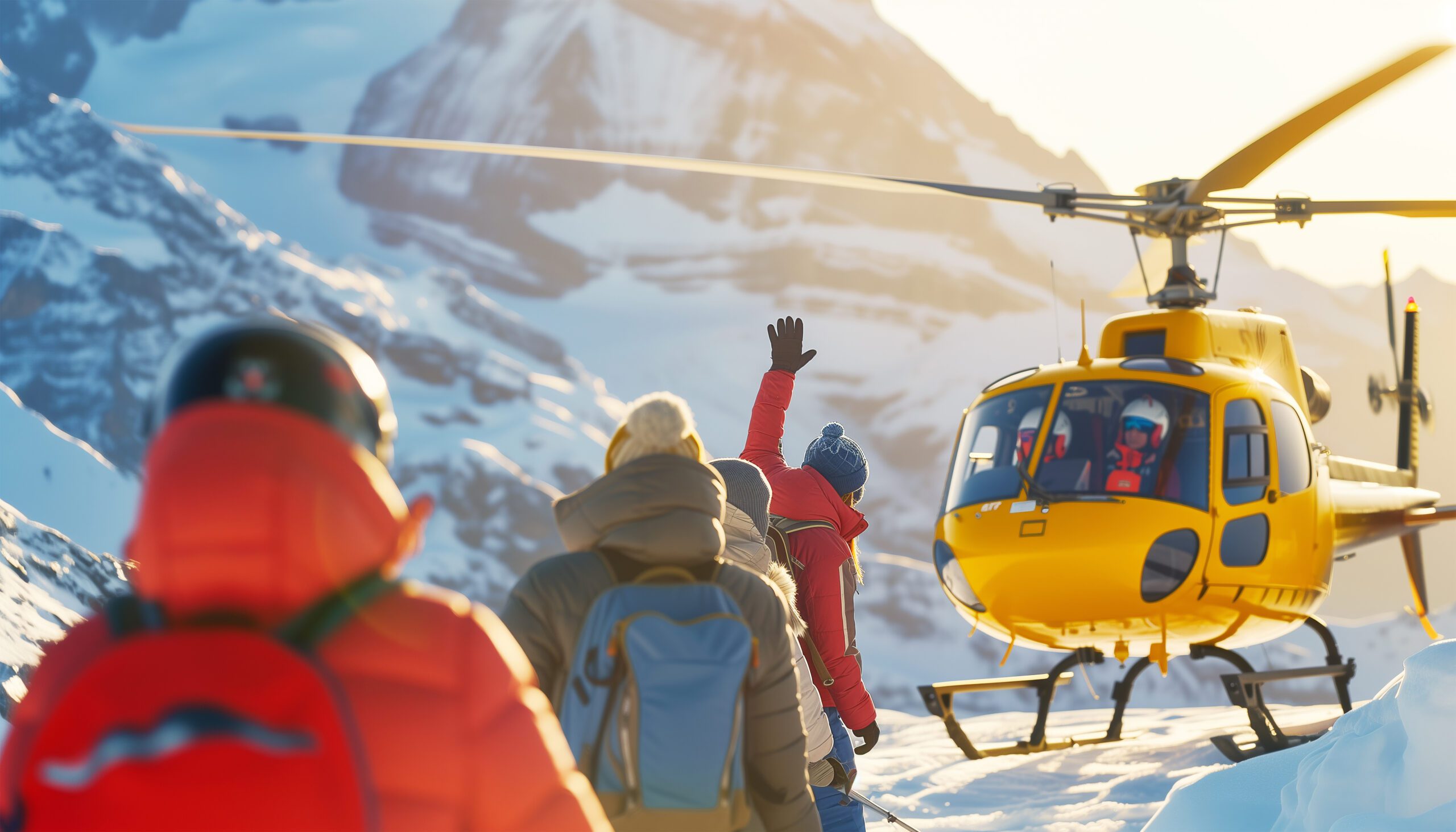
Weather runs the whole trip
From the flight in to the summit window and the flight out, Alaska Range weather decides everything. Teams routinely wait days for a break, and a plan that does not build in patience is a plan to fail. Read the sky, and set your turnaround before you leave camp.
Difficulty and success, read honestly
Use the statistics as a mirror, not a dare. They describe an elite objective with a stubbornly low success rate.
| Statistic | What it measures | How to use it |
|---|---|---|
| Under 40% success | Share of attempts reaching the top | The hardest 14er in North America; treat it as elite. |
| Few annual attempts | A small, self-selected field | Most climbers here are experienced alpinists. |
| Alaska Grade 4 | The West Ridge technical grade | Sustained, not a single crux; the whole ridge tests you. |
| Two summits | North (main) and South | The higher north summit is the true objective. |
Season and weather
Hunter is a spring and early-summer climb, on the same calendar as Denali and Foraker, and always at the mercy of the sky.
Season Opens
Cold, more stable snow, and fewer teams on the glacier.
Prime
The core of the Alaska Range climbing window.
Late Season
Warmer, with more objective hazard as the snow thaws.
The Deciding Factor
Storms and bush-plane delays shape every single trip.
Extreme
Rare, elite ascents only, in brutal cold and dark.
Denali’s Child, and the family of three
The Dena’ina names for these peaks tell a family story, and Hunter is the youngest and fiercest of them.
In Dena’ina, Denali is the high one, the great parent of the range. Foraker is Sultana, often rendered as Denali’s Wife. Hunter is Begguya, Denali’s Child. The three stand together above the Kahiltna, and the naming captures something true about them: the child is the smallest, but it is also the most difficult to climb, steeper and more technical than either elder. We cover its neighbours in our Denali and Foraker updates.
The English name is an accident of history. It was transferred from a nearby peak that an early climber named after a relative who helped fund his travels, and it stuck to this mountain by mistake. Begguya is the older name, and the more fitting one for a peak so bound up with its towering parent.
A short history of climbing Hunter
From a corniced first ascent to a north-face testpiece, Hunter’s story is one of technical ambition.
The West Ridge was first climbed in 1954 by Fred Beckey, Heinrich Harrer, and Henry Meybohm, following a corniced line proposed a year earlier by the great range surveyor Bradford Washburn. It remains the standard route and a coveted objective, listed among the 50 Classic Climbs of North America. Even today, gaining the higher north summit is hard by any route and turns back most who try.
In 1983, Mugs Stump’s era of hard alpine climbing found its Hunter landmark when Todd Bibler and Doug Klewin climbed the north face’s Moonflower Buttress, a route that became one of the most respected mixed climbs on the continent. The peak has since drawn elite alpinists to its steep faces, while the West Ridge continues to test strong mountaineers as the mountain’s classic line.
The Alaska cluster
Hunter sits in a tight family of Alaska Range updates and the skills that support a Kahiltna expedition.
Denali
The high one, 20,310 ft, the range’s giant and the standard West Buttress trade route.
Read the update ->SultanaMount Foraker
Denali’s Wife, 17,400 ft, a serious and quiet second peak on the Sultana Ridge.
Read the update ->The neighbourMount Huntington
A small, steep, and beautiful technical peak near Hunter on the Ruth side.
Read the update ->SkillsCrevasse rescue basics
The glacier-travel and rescue skills every Kahiltna climber needs.
Learn the skill ->Mount Hunter climb guide
The full West Ridge route, camps, gear and cost detail.
->Mountaineering fitness standards
Whether your strength and endurance are ready for the ridge.
->Avalanche awareness for climbers
Reading snow and slope hazard in the Alaska Range.
->How to choose an expedition operator
Vetting the small field of teams that guide Hunter.
->Mountaineering insurance above 6000m
Evacuation and rescue cover for a remote range.
->Mountain weather for climbers
Reading the forecasts that decide flights and summit days.
->Back to the full Expedition Updates dashboard for every mountain we track.
Where Hunter fits
The range, the continent’s hardest 14er, and the Seven Summits peak next door.
The big three
Denali, Foraker and Hunter – the parent, the wife and the child of the range.
Explore the range ->North AmericaThe hardest 14er
Where Hunter sits among the continent’s most technical objectives.
See the guide ->Seven SummitsDenali in context
Hunter shares the Kahiltna with the Seven Summits contender, Denali.
Open the collection ->Mount Hunter FAQ
The questions climbers ask most about the difficulty, the name, the permit, and the season.
Why is Mount Hunter called the hardest 14er in North America?
Because difficulty is about terrain, not height. Hunter is the third-highest peak in the Alaska Range, lower than Denali and Foraker, but its routes are steeper and more technical than either. The standard West Ridge is a long, corniced, Alaska Grade 4 climb of sustained snow and ice with a mixed step, and fewer than 40 percent of attempts on the peak succeed. Alpinists widely regard it as the most difficult 14,000-foot climb on the continent.
What does Begguya mean?
Begguya is the Dena’ina name for the mountain and means Denali’s Child. It fits a family of three: Denali, the high one, the parent of the range; Foraker, called Sultana or Denali’s Wife; and Hunter, Begguya, the child. The English name Hunter came from a historical mix-up, transferred from a nearby peak that an early climber named after a relative, so Begguya is the older and truer name.
How hard is the West Ridge?
The West Ridge is rated Alaska Grade 4, with crux difficulties around 5.8 on rock and AI3 on ice, but the grade understates it because the challenge is sustained rather than a single crux. It is a long corniced ridge climbed on snow and ice throughout, with a mixed step low down at a rock feature known as the rabbit ears, and huge cornices higher up where teams stay off the crest. Guided ascents run about 12 to 14 days, and it is one of the 50 Classic Climbs of North America.
What is the Moonflower Buttress?
The Moonflower Buttress is a route on Hunter’s north face, first climbed by Bibler and Klewin in 1983, and it is one of the hardest mixed climbs in North America. It is far more difficult than the West Ridge, a sustained wall of vertical ice, mixed ground, and rock that draws elite alpinists as a personal testpiece rather than a guided objective. A shorter nearby route, the Mini Moonflower, is used as training.
Do you need a permit, or the Denali and Foraker fee?
You do not pay the special Denali and Foraker mountaineering fee on Hunter. The National Park Service requires climbers on Denali and Foraker to register at least 60 days in advance and pay that fee, but those rules apply only to those two peaks. Hunter climbers register as backcountry climbers flying into the range, fly with an authorized air-taxi concessionaire, and follow park rules, but they skip the 60-day pre-registration and the special fee. Confirm the current requirements with Denali National Park before you plan around them.
What is the success rate on Mount Hunter?
Fewer than 40 percent of attempts on Mount Hunter reach the summit, and only a small number of climbers attempt it in a given year. The field is self-selected and experienced, which makes the low success rate all the more telling: even strong alpinists turn back often. Treat the number as confirmation that this is an elite objective, not a peak to grow into.
When is the climbing season?
April to June, the Alaska Range spring and early-summer window, the same season as Denali and Foraker. Because Hunter is lower, the upper mountain is not as brutally cold as Denali’s high camps, but the weather is still fierce and unpredictable, and bush-plane flights to and from the glacier depend entirely on it. Late April through May is the core of the season.
What experience do you need for Mount Hunter?
Fluency on steep alpine ice and mixed ground to at least Alaska Grade 4, prior experience in the Alaska Range or a comparable big-alpine setting, sound judgment on heavily corniced ridges, and full self-sufficiency. Unlike Denali’s West Buttress, Hunter has no fixed lines, ranger camps, or crowds to follow, so your team must solve everything itself. It is not a first big mountain.
How high is Mount Hunter and where is it?
Mount Hunter is 14,573 ft (4,442 m) at its north summit, the main top, with a lower south summit at 13,966 ft (4,257 m) joined to it by a long corniced ridge. It stands in the Alaska Range in Denali National Park and Preserve, about 8 miles south of Denali, rising some 7,000 feet above the 44-mile Kahiltna Glacier, the longest glacier in the range.
How we built this update
What this page is based on, who reviewed it, and what we do not claim to know.
Sources
- National Park Service, Denali National Park backcountry climbing registration and mountaineering fee rules.
- Operator and guide-service route information for the West Ridge and the Northwest Basin variation.
- Published alpine records for the first ascent and the Moonflower Buttress.
- Alaska Mountaineering School and range guidebooks for grade, success rate, and character.
- Our own Mount Hunter climb guide for the detailed route and cost.
Review and standards
Compiled by Travis Ludlow and reviewed for safety by Dawson Ludlow, our Climbing and Mountaineering Lead (Wilderness First Aid), whose highest first-hand summit is Kilimanjaro. Health and medical points were reviewed by Taylor Ludlow, RN. We do not fabricate summit experience, quotes, or credentials, and we say plainly when we are reporting rather than recounting.
What we do not claim to know
Conditions on Hunter change from year to year and within a season, and no web page can substitute for current route reports and a guide’s judgment. In particular:
- Success rates and attempt numbers are approximate and vary by source and year.
- Park registration rules and fees change; confirm the current requirements with Denali National Park.
- Guided pricing shifts with operators, dates, and fuel; treat figures as a planning range.
- Our team has not climbed Mount Hunter, so we report official rules and published records, not personal experience.

Global Summit Guide research
We compile mountain updates from official rules and published expedition records, review them for safety and medical accuracy, and refresh them each season. We are transparent about what we have and have not climbed, and Mount Hunter is a research-based briefing, not a personal account.
About our team and standards ->Hunter rewards the prepared, and only them.
Start with the full route in our Mount Hunter climb guide, weigh yourself against our fitness standards, and read the neighbours in the Denali and Foraker updates. Expeditions stage through Anchorage and Talkeetna, so for flights and lodging there, browse travel on Expedia.
Disclosure: the Expedia link above is a sponsored affiliate link, and we may earn a commission at no extra cost to you. It is the only affiliate link on this page; our route, permit, and safety guidance is independent.