
Complete Mountaineering Training Guide: Couch to Summit
The complete 12-month program for high-altitude climbing — aerobic base development, strength training, climbing-specific endurance, altitude preparation, and mental conditioning. Evidence-based framework drawn from Training for the New Alpinism, Uphill Athlete methodology, and applied across major mountaineering objectives from Mount Rainier to Everest.
This pillar guide synthesizes training methodology from Uphill Athlete (the coaching service co-founded by Steve House and Scott Johnston, authors of the genre-standard Training for the New Alpinism), Mark Twight’s Gym Jones approach, peer-reviewed exercise physiology research on aerobic training and altitude preparation, and the American College of Sports Medicine (ACSM) training guidelines. No affiliate partnerships influence recommendations. Specific program and book mentions are illustrative references, not endorsements. See full methodology and editorial standards below.
📑 On This Page
- What Is Mountaineering Training?
- The 4 Components of Mountaineering Fitness
- 1. Aerobic Base (Zone 1-2)
- 2. Strength Training
- 3. Climbing-Specific Endurance
- 4. Altitude + Mental Preparation
- Heart Rate Zones Explained
- The 12-Month Progression
- Established Training Programs
- Pre-Expedition Taper
- Common Training Mistakes
- Training for Specific Objectives
- The Training Cluster (10 Posts)
- FAQ
- Methodology + Sources
⚡ Quick Answer: Mountaineering Training
Four components: (1) Aerobic base / Zone 2 cardio (70-80% of training time) · (2) Strength training (compound lifts, 2-3 sessions/week) · (3) Climbing-specific endurance (loaded carries, hill repeats) · (4) Altitude prep + mental conditioning.
Timeline: 12 months for couch-to-summit progression to high-altitude objectives (Aconcagua, Denali, 8,000m peaks). 6-9 months for moderate peaks (Kilimanjaro, Rainier).
Methodology: Steve House + Scott Johnston’s Training for the New Alpinism (Uphill Athlete) is the genre-standard reference. Weekly time: Builds from 8-12 hours (months 1-3) to 14-18 hours (peak phase) before tapering. Key principle: “Big base, small peak” — extensive aerobic development is the foundation.
How This Pillar Was Built — Applied Training Experience
This pillar guide draws on personal training application across multiple mountaineering objectives including Mount Kilimanjaro (Tanzania, 5,895m), Pico de Orizaba (Mexico, 5,636m), Iztaccíhuatl (Mexico, 5,230m), and Rainier-class Pacific Northwest peaks. Specifically, the training framework presented here represents what was actually executed and refined across multiple expedition preparations rather than theoretical prescription.
Notably, this is a pillar post — designed to anchor the broader Training cluster on Global Summit Guide. Each of the major training topics will receive dedicated deep-dive coverage in supporting posts (see the cluster structure below). Where supporting posts exist, this pillar links to them; where they’re still in development, the pillar provides the foundational treatment that the deep-dive will expand upon.
🏋️ The Mountaineering Training Framework
Effective mountaineering training rests on three core principles that distinguish it from general fitness training. First, specificity: train how you’ll perform — long aerobic sessions, loaded carries, and progressive elevation gain mimic the actual demands of expedition climbing more than gym strength training alone. Second, periodization: structure training in distinct phases (base, build, peak, taper) rather than constant intensity, allowing physiological adaptation and recovery.
Third, “big base, small peak”: spend 70-80% of training time at low intensity (Zone 1-2 cardio) to develop aerobic capacity, then layer specific work and intensity on top of that foundation. Fourth, recovery as training: sleep, nutrition, and rest days are not interruptions to training — they are when adaptation actually occurs. Fifth, progressive overload: each training cycle should be modestly harder than the previous one, whether through more time, more load, more vertical, or more frequency.
Mountaineering training is the structured 6-12 month physical and mental preparation required to safely perform at altitude on a specific climbing objective. Generally, the training develops four physiological components — aerobic capacity, strength, climbing-specific endurance, and altitude tolerance — combined with mental preparation for sustained effort under fatigue and adverse conditions. Specifically, the modern standard for mountaineering training derives from Steve House and Scott Johnston’s Training for the New Alpinism (2014) which emphasizes large aerobic base development, periodized progression, and individualized programming based on the specific objective. Notably, mountaineering training is distinguished from general fitness training by its emphasis on extended low-intensity work (Zone 1-2 cardio comprising 70-80% of training time), load-carrying capacity (rather than pure strength), and the integration of expedition-specific elements like multi-day fatigue resistance and recovery-on-the-mountain.
Key Takeaways
- 4 components: aerobic base, strength, climbing-specific endurance, altitude prep + mental.
- 70-80% of training time in Zone 1-2 — extensive aerobic base is the foundation.
- 12-month timeline for couch-to-summit to high-altitude objectives.
- 14-18 hours per week at peak training phase.
- 2-3 strength sessions per week — compound lifts, progressive overload.
- Loaded carries are critical — bridge gym fitness to mountain performance.
- “Big base, small peak” — Steve House / Scott Johnston methodology.
- Periodization in 4 phases: base, build, peak, taper.
- Pre-expedition taper is essential — reduce volume 60% in final 4 weeks.
- Mental preparation matters — visualize, build suffering tolerance, decision-making.
📊 Mountaineering Training Quick Facts
- Training Timeline
- 12 months typical
- Compressed Timeline
- 6-9 months (fit start)
- Peak Weekly Hours
- 14-18 hours
- Zone 2 Allocation
- 70-80% of time
- Strength Sessions
- 2-3 per week
- Recovery Days
- 1-2 per week
- Resting HR Target
- < 60 bpm trained
- Pack Load Target
- 35-50 lbs
- Vertical/Week Peak
- 3,000-6,000 ft
- Long Day Duration
- 6-10 hours
- Genre Standard Book
- Training for the New Alpinism
- Coaching Service
- Uphill Athlete
- Alt. Approach
- Gym Jones (Mark Twight)
- Heart Rate Zones
- 5-zone model
- Aerobic Base Phase
- Months 1-3
- Specific Phase
- Months 6-9
- Peak Phase
- Months 9-11
- Taper Phase
- Month 12
- Sleep Target
- 8-9 hours nightly
- Calorie Surplus
- Peak phase 200-500
✓ Editorial Trust Signals
- First-hand: Multi-peak training application
- Independent: No affiliate sponsorship
- Cross-referenced: Uphill Athlete, ACSM, peer-reviewed
- Last verified: June 9, 2026
- Review cycle: Quarterly
- Safety review: Dawson Ludlow (WFA)
- Methodology: Training for the New Alpinism
- 700+ source pages: Cross-linked
What Is Mountaineering Training?
Mountaineering training is the structured 6-12 month physical and mental preparation required to perform safely at altitude on a specific climbing objective. Generally, the training develops four physiological components — aerobic capacity, strength, climbing-specific endurance, and altitude tolerance — combined with mental conditioning for sustained effort under fatigue. Specifically, mountaineering training is distinguished from general fitness training by three characteristics: extensive low-intensity work (70-80% of time in Zone 1-2 cardio), load-carrying emphasis (loaded carries with 25-50 pound packs), and integration of expedition-specific elements like multi-day fatigue resistance.
The modern standard for mountaineering training derives from Steve House and Scott Johnston’s Training for the New Alpinism (2014), now considered the genre-defining reference. Generally, the methodology emphasizes the “big base, small peak” principle — extensive aerobic development as the foundation, with specific work and intensity layered on top. Specifically, House and Johnston founded Uphill Athlete, a coaching service that applies the methodology with individualized programming. Notably, an alternative framework comes from Mark Twight via Gym Jones and his books Extreme Alpinism and Kiss or Kill — emphasizing higher-intensity protocols suited to short-route alpinism.
The 4 Components of Mountaineering Fitness
Mountaineering fitness combines four distinct physiological components, each requiring specific training protocols. Generally, the components are not interchangeable — strong cardio cannot compensate for weak strength, and gym strength cannot replace loaded-carry capacity. Specifically, the four components and their typical training allocation:
| Component | % of Training Time | Primary Methods | Frequency |
|---|---|---|---|
| 1. Aerobic Base (Zone 1-2) | ~70% | Long slow distance hiking, running, cycling, rowing | 4-6 sessions/week |
| 2. Strength Training | ~12% | Compound lifts (squats, deadlifts, presses) | 2-3 sessions/week |
| 3. Climbing-Specific Endurance | ~12% | Loaded carries, stair climbing, hill repeats | 1-3 sessions/week |
| 4. Altitude Prep + Mental | ~6% | Altitude camps, visualization, stress practice | Ongoing/periodic |
Component 1: Aerobic Base (Zone 1-2 Cardio)
Aerobic Base Development
The single most important component — extensive low-intensity training builds the foundation everything else rests on.
Aerobic base training develops the physiological foundation of mountaineering fitness: mitochondrial density, capillary networks, fat oxidation efficiency, and the cardiovascular capacity to sustain effort for hours at moderate intensity. Generally, this is achieved through long-duration, low-intensity sessions in Zone 1-2 heart rate (60-75% of maximum heart rate). Specifically, the science is unambiguous: extensive aerobic base development is the single most evidence-supported training modality for endurance performance.
Session structure: Aerobic base sessions are typically 60-180 minutes long. Generally, the climber maintains a pace that allows continuous nasal breathing and conversation — if you can’t comfortably speak in full sentences, you’re going too hard. Specifically, beginning climbers often find Zone 2 surprisingly slow at first; this is normal and indicates the need for aerobic development.
- Modalities: Hiking, walking, running, cycling, rowing, swimming, elliptical, ski touring
- Heart rate target: Zone 1 (50-60% max HR) for recovery sessions, Zone 2 (60-75% max HR) for primary aerobic development
- Session duration: 60-180 minutes (3+ hours on long weekend days)
- Weekly frequency: 4-6 sessions per week
- Weekly volume: 6-15 hours total Zone 1-2 time depending on phase
Dedicated deep-dive coming: “Zone 2 Training for Mountaineers: The Complete Aerobic Base Guide.”
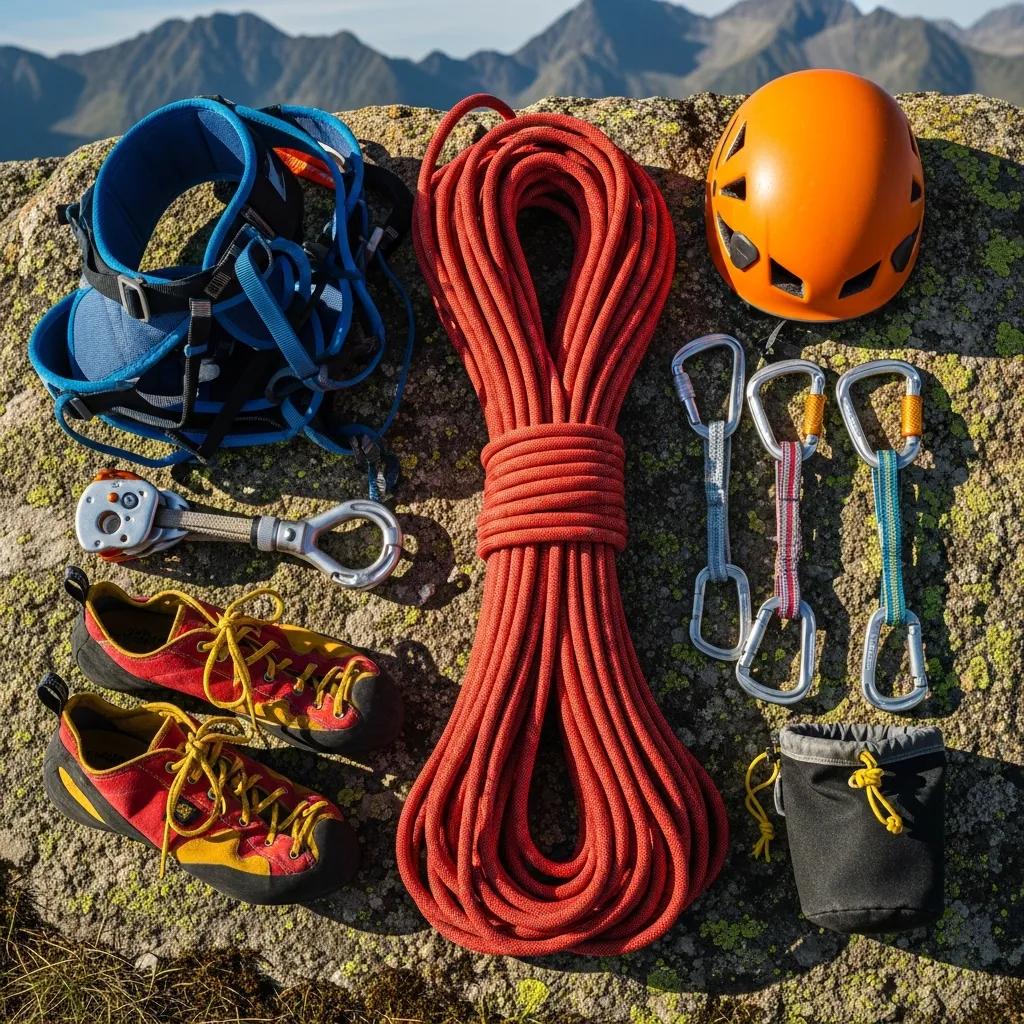
Component 2: Strength Training
Strength Training for Mountaineers
Compound lifts emphasizing legs, posterior chain, and core build the tissue resilience that load-carrying demands.
Strength training in a mountaineering context is fundamentally different from bodybuilding or general fitness gym work. Generally, the goal is not maximum strength or muscle mass — it is tissue resilience and the strength-to-bodyweight ratio that supports load carrying without injury over multi-week expeditions. Specifically, the program centers on compound lifts that work multiple muscle groups simultaneously and emphasize the muscles most stressed by climbing: legs, posterior chain, and core.
Core lifts: The five most important lifts for mountaineers, in priority order:
- Back squats: Overall leg strength foundation. Sets of 5-12 reps at progressive loads.
- Romanian deadlifts: Posterior chain (hamstrings, glutes, lower back) — directly applicable to load carrying.
- Bulgarian split squats: Single-leg strength critical for uneven terrain and step-ups.
- Conventional deadlifts: Total-body strength and grip; lower frequency than other lifts.
- Overhead presses: Shoulder stability for pack carrying and ice axe work.
Supplementary work: Pull-ups (back), planks and anti-rotation work (core stability), step-ups with weight (mountain-specific). Generally, sessions take 45-75 minutes including warm-up.
Dedicated deep-dive coming: “Strength Training for Climbers: The Foundation Lifts.”
Component 3: Climbing-Specific Endurance
Climbing-Specific Endurance (Loaded Carries)
Loaded carries are the secret weapon — they bridge gym fitness to mountain performance.
Climbing-specific endurance training translates gym fitness and aerobic base into actual mountain performance. Generally, the centerpiece of this training is the loaded carry — hiking or walking with a pack weighted to expedition load (25-50 pounds typical). Specifically, loaded carries develop multiple capacities simultaneously: aerobic endurance under load, postural muscles for pack management, foot and ankle resilience for varied terrain, mental tolerance for sustained discomfort.
Loaded carry progression: Start with 20 pounds over 1-2 hours of varied terrain. Specifically, progress by adding 5 pounds every 2-3 weeks while extending duration to 4-6 hours by mid-training cycle. Notably, the goal is to have completed multiple 4-6 hour loaded sessions before any expedition over 5,000m.
- Loaded hikes: 25-50 lb pack over varied terrain, 2-6+ hours
- Stair climbing: With or without weight, 30-60 min sessions; excellent vertical-equivalent training
- Hill repeats: Short steep hills with progressive loads, 30-45 min sessions
- Treadmill incline: 12-15% incline at walking pace, 60-90 min sessions
- Sandbag carries: Unusual loads that train stabilizers
If you can only do one type of mountaineering-specific training, choose loaded uphill hiking. Generally, this single activity develops aerobic capacity, leg strength, core stability, foot resilience, mental tolerance, and pack-management skill simultaneously. Specifically, weekend loaded hikes of 4-8 hours with progressive load are the most expedition-specific training available to anyone with access to even modest hills. Notably, climbers without hill access can simulate this with stair climbing or treadmill incline — both are highly effective substitutes.
Dedicated deep-dive coming: “Loaded Carries: The Mountaineer’s Secret Weapon.”
Component 4: Altitude + Mental Preparation
Altitude Preparation and Mental Conditioning
The integration layer — pre-altitude exposure and mental rehearsal tie physical preparation to performance.
The fourth component integrates the prior three with the expedition environment. Generally, this includes pre-expedition altitude exposure where feasible, mental rehearsal of expedition scenarios, stress inoculation through progressively challenging training days, and decision-making practice under fatigue. Specifically, the mental component is often undertrained — climbers focus heavily on physical preparation while skipping the mental rehearsal that makes hard training transferable to expedition performance.
Altitude preparation strategies:
- Pre-altitude camps: 2-4 weeks at 2,500-4,000m in the months before expedition (most effective)
- Weekend altitude trips: Sleeping at altitude on training weekends
- Hypoxic tents/altitude rooms: Limited evidence — peer-reviewed studies show modest benefits at best
- Iron stores optimization: Adequate ferritin levels support red blood cell adaptation
- Hydration habits: Practice aggressive hydration during training
Mental preparation methods:
- Visualization: Mental rehearsal of summit day, descent, and emergency scenarios
- Suffering tolerance: Progressive exposure to discomfort during long training sessions
- Decision practice: Make pace/route/turnaround decisions during fatigued training
- Group dynamics: Practice climbing partner communication during training
- Process focus: Train attention on present-moment execution rather than outcome
Dedicated deep-dives coming: “How to Train for Altitude Without Mountains” + “Mental Toughness Training for High Altitude.”
Heart Rate Zones Explained
Mountaineering training uses a 5-zone heart rate model based on percentage of maximum heart rate. Generally, the zones correspond to different physiological adaptations and training purposes. Specifically, knowing your zones requires either lab testing (most accurate) or a field test (sufficient for most purposes). Notably, the simplest field test is: warm up 15 minutes, then run/hike all-out for 20 minutes — your average heart rate during the all-out section approximates your lactate threshold (top of Zone 3).
| Zone | % Max HR | Subjective Effort | Purpose | Time Allocation |
|---|---|---|---|---|
| Zone 1 | 50-60% | Very easy, can chat | Active recovery | 5-15% |
| Zone 2 | 60-75% | Easy, conversational | Aerobic base (workhorse) | 65-75% |
| Zone 3 | 75-85% | Moderate, broken sentences | Tempo (used sparingly) | 5-10% |
| Zone 4 | 85-92% | Hard, short responses | Threshold / lactate | 3-8% |
| Zone 5 | 92-100% | Max, no talking | VO2 max (rare) | 0-3% |
Modern endurance training research strongly supports polarized training: spend 80%+ of time at low intensity (Zone 1-2) and 10-20% at high intensity (Zone 4-5), with minimal time in the “moderate” Zone 3. Generally, this approach produces better adaptations than spending most time at moderate intensity. Specifically, mountaineering training follows this principle — long easy sessions plus occasional high-intensity intervals, with little time in the middle zones.
Dedicated deep-dive coming: “Heart Rate Zones for Mountaineering: Complete Guide.”
The 12-Month Progression: Couch to Summit
The standard mountaineering training framework progresses through four phases over 12 months. Generally, the progression is non-negotiable for high-altitude objectives — climbers who compress the timeline routinely underperform or fail to summit. Specifically, the four phases and their typical durations:
| Phase | Months | Focus | Weekly Hours | Key Metric |
|---|---|---|---|---|
| Phase 1: Base | 1-3 | Aerobic foundation, beginning strength | 8-12 | Zone 2 ease at increasing pace |
| Phase 2: Build | 3-6 | Volume increase, strength progression, intro loaded carries | 10-14 | Loaded carry duration |
| Phase 3: Specific | 6-9 | Mountain-specific training, vertical gain, technique | 12-15 | Vertical feet per week |
| Phase 4a: Peak | 9-11 | Maximum training load, back-to-back long days | 14-18 | Multi-day fatigue resistance |
| Phase 4b: Taper | 11-12 | Volume reduction, maintain intensity, recover | 8-12 declining | Sleep, recovery markers |
Phase 1: Aerobic Base (Months 1-3)
The base phase establishes the aerobic foundation that everything else builds upon. Generally, this is the most important phase and the one climbers most often shortcut. Specifically, base phase focuses almost exclusively on Zone 1-2 cardio with progressive volume increase from approximately 6 hours weekly to 10 hours weekly over three months.
- Cardio: 5-6 sessions per week of 60-90 minutes Zone 1-2 (one session 2+ hours)
- Strength: 2x per week, bodyweight progressions then add weights, focus on form
- Specific: Minimal — establish baseline with one loaded hike at 20 lbs every 2-3 weeks
- Recovery: 1-2 full rest days per week, prioritize sleep
Phase 2: Build (Months 3-6)
The build phase integrates strength with endurance and introduces meaningful loaded carries. Generally, training volume increases moderately (10-14 hours weekly) while intensity remains controlled. Specifically, this is when one anaerobic threshold session per week is added to build the upper end of aerobic capacity.
- Cardio: 5-6 sessions per week, longer Zone 2 sessions (90-150 min), one 3+ hour weekend session
- Strength: 2-3x per week with compound lifts at 70-85% intensity
- Specific: 1-2 loaded carries weekly progressing from 25 to 35 lbs
- Threshold: One Zone 3-4 session per week (intervals or steady tempo)
Phase 3: Mountain-Specific (Months 6-9)
The specific phase transitions to mountain-relevant training. Generally, the work becomes increasingly expedition-like with weekend loaded hikes, stair climbing or treadmill incline sessions, and ideally 1-2 mountain weekends per month. Specifically, vertical gain becomes a primary training metric — target 3,000-5,000 vertical feet weekly during this phase.
- Cardio: Major weekend hike (5-6+ hours) plus weekday Zone 2 maintenance
- Strength: 2x per week, transitioning to mountain-specific work (step-ups, lunges, carries)
- Specific: 2-3 sessions weekly with 35-50 lb loads on varied terrain
- Threshold: 1-2 sessions weekly, longer intervals (8-20 min)
- Mountain time: Real mountain days every 2-4 weeks
Phase 4a: Peak (Months 9-11)
The peak phase pushes maximum training load with back-to-back weekend days simulating expedition fatigue. Generally, this is the riskiest phase — overtraining can occur if recovery is not aggressive. Specifically, weekly training time reaches 14-18 hours with one or two recovery days mandatory.
- Cardio: Long weekend days (6-10 hours), back-to-back when possible
- Strength: Reduce to 1-2 maintenance sessions; preserve adaptations without adding new stress
- Specific: Heaviest loads of training cycle (45-50+ lbs), longest durations
- Recovery: Critical — track resting HR, sleep quality, mood
Phase 4b: Pre-Expedition Taper (Month 12)
The taper phase reduces training stress to allow full recovery before the expedition. Generally, the principle is “rest more, intensity stays the same” — preserve fitness while eliminating accumulated fatigue. Specifically, the standard taper curve:
| Week | Volume vs Peak | Intensity | Focus |
|---|---|---|---|
| 4 weeks before | ~80% | Maintain | Last hard sessions, then begin reducing |
| 3 weeks before | ~60% | Maintain | Reduce duration, keep intensity |
| 2 weeks before | ~40% | Maintain on key sessions | Short quality sessions only |
| 1 week before | ~25% | Easy | Movement only, prioritize sleep |
| 2-3 days before | Rest | Rest | Final packing, mental preparation |
Established Training Programs
Several established programs apply mountaineering training principles in different ways. Generally, the choice depends on objective type, available time, and athlete preference. Specifically, the major programs:
| Program | Origin | Best For | Cost |
|---|---|---|---|
| Training for the New Alpinism | Steve House + Scott Johnston (2014) | Multi-month expedition prep, big peaks | $25-40 book + DIY |
| Uphill Athlete coaching | House + Johnston | Individualized programs, accountability | $200-500/month |
| Gym Jones | Mark Twight | High-intensity alpinism, short routes | Coaching cost varies |
| Climbing the Seven Summits | Mike Hamill (2012) | Standard Seven Summits prep | Book + guided service |
| NOLS / RMI training | Guide service programs | Climbers using specific guide for expedition | Often included |
Training for the New Alpinism (House + Johnston)
The genre-standard reference. Generally, the methodology emphasizes large aerobic base (70-80% Zone 1-2 time), periodization, and individualization. Specifically, House and Johnston’s framework forms the foundation for most modern mountaineering training programs and is the basis for the Uphill Athlete coaching service. Notably, the book is dense and technical — readers should expect to study it rather than skim it.
Gym Jones (Mark Twight)
An alternative approach emphasizing higher intensity protocols. Generally, Gym Jones-style training works well for short-route alpinism and athletes coming from CrossFit or military backgrounds. Specifically, the program features metabolic conditioning workouts, complex movement patterns, and lower aerobic base emphasis than the House/Johnston approach. Notably, Gym Jones is less appropriate for multi-week expedition objectives where pure endurance dominates.
Climbing the Seven Summits (Mike Hamill)
Mike Hamill’s book combines training framework with route-specific expedition guidance. Generally, the book is most useful for climbers planning to use Hamill’s guide service (Climbing the Seven Summits) or similar full-service expeditions. Specifically, Hamill provides a more accessible introduction than House/Johnston while covering Seven Summits objectives in detail.
Uphill Athlete (External) →The Pre-Expedition Taper in Detail
The pre-expedition taper is often misunderstood and underexecuted. Generally, climbers fear losing fitness during the taper and consequently train too hard in the final weeks, arriving at the expedition over-fatigued. Specifically, the science is clear: tapering preserves nearly all hard-earned fitness while eliminating accumulated training fatigue. Notably, well-tapered athletes routinely outperform their training-cycle averages.
The most common taper mistake is continuing high training volume in the final 1-2 weeks before departure. Generally, climbers feel “not ready” and double down on training, often executing maximum-effort sessions in the final 7 days. Specifically, this leaves them undercut by accumulated fatigue at the start of the expedition — when they most need full recovery and sleep. Notably, even modest under-tapering (skipping the final week’s volume reduction) measurably reduces summit success rates in studies of guided expeditions.
Common Training Mistakes
(1) Skipping the aerobic base phase — Eager climbers jump to intensity work without building the foundation; this caps long-term progress. (2) Training too hard during Zone 2 sessions — Most “easy” runs are actually Zone 3; this prevents aerobic adaptation. (3) Inadequate loaded carries — Loaded carry training cannot start in the final 2 months; tissue resilience requires months to develop. (4) Strength training only / cardio only — Both components are essential; one cannot compensate for the other. (5) Insufficient recovery — Training does not produce adaptation; recovery from training does. (6) Over-training in the final weeks — Taper mistakes routinely sabotage otherwise good preparation. (7) Ignoring sleep quality — Sleep is the most important recovery modality; 8-9 hours nightly is non-negotiable in peak phase. (8) Wrong specificity — Training for an Aconcagua climb requires different work than training for an alpine rock route. (9) Skipping mental preparation — Physical training alone does not prepare climbers for expedition-condition decisions. (10) Single-modality training — Only running, only stairs, only cycling — variety reduces injury risk and improves overall fitness.
Training for Specific Objectives
Mountaineering training varies by objective. Generally, the framework above applies to all high-altitude objectives but emphasis shifts based on the specific peak. Specifically, here’s how training adapts to common objectives covered on Global Summit Guide:
| Objective | Timeline | Emphasis | Progression Plan |
|---|---|---|---|
| Mount Kilimanjaro | 6-9 months | Aerobic base, hiking volume | Kilimanjaro Plan |
| Mount Rainier | 9-12 months | Aerobic base + glacier skills | Rainier Plan |
| Mount Elbrus | 9-12 months | Aerobic + altitude prep | Elbrus Plan |
| Mont Blanc | 9-12 months | Aerobic + technique | Mont Blanc Plan |
| Pico de Orizaba | 9-12 months | Aerobic + glacier skills | Orizaba Plan |
| Aconcagua | 12-18 months | Aerobic base + extreme altitude | Aconcagua Plan |
| Denali | 12-18 months | Heavy load carrying + extreme cold | Denali Plan |
| Everest / 8,000m peaks | 18-24+ months | Extended periodization, multi-expedition prep | Multiple progressions |

The Training Cluster — 10 Supporting Posts
This pillar post is the anchor of the Training cluster on Global Summit Guide. Generally, each of the major training topics will receive dedicated deep-dive coverage in supporting posts. Specifically, the cluster includes:
| Cluster Role | Post Title | Status |
|---|---|---|
| PILLAR | Complete Mountaineering Training Guide: Couch to Summit (this post) | Published |
| Support 1 | Zone 2 Training for Mountaineers: The Complete Aerobic Base Guide | Coming soon |
| Support 2 | Strength Training for Climbers: The Foundation Lifts | Coming soon |
| Support 3 | Loaded Carries: The Mountaineer’s Secret Weapon | Coming soon |
| Support 4 | How to Train for Altitude Without Mountains | Coming soon |
| Support 5 | Periodization for Expedition Climbers | Coming soon |
| Support 6 | Recovery and Sleep for Mountaineers | Coming soon |
| Support 7 | Mental Toughness Training for High Altitude | Coming soon |
| Support 8 | Nutrition for Mountaineering Training | Coming soon |
| Support 9 | Heart Rate Zones for Mountaineering: Complete Guide | Coming soon |
| Support 10 | Pre-Expedition Taper: The Final 4 Weeks | Coming soon |
Frequently Asked Questions About Mountaineering Training
How long does it take to train for high-altitude mountaineering?
Complete training for high-altitude mountaineering objectives like Aconcagua (6,961m), Denali (6,190m), or 8,000-meter peaks typically requires 12-18 months for climbers starting from baseline fitness. Specifically, 6-9 months for moderate objectives like Mount Kilimanjaro (5,895m) or Mount Rainier (4,392m). The 12-month framework is the most common — the first 3 months build aerobic base, months 3-6 develop strength and integrate endurance, months 6-9 focus on mountain-specific training, and months 9-12 peak preparation plus pre-expedition taper.
What is the most important training for mountaineering?
Aerobic base training (Zone 1-2 cardio at 60-75% maximum heart rate) is widely considered the most important single component of mountaineering training, requiring approximately 70-80% of total training time. Aerobic capacity determines how long a climber can sustain effort at altitude, how quickly they recover between exertions, and how efficiently they utilize fat versus glycogen. Steve House and Scott Johnston’s Training for the New Alpinism emphasizes “big base, small peak” — extensive aerobic development is the foundation that everything else builds upon.
Do I need to train at altitude before a high-altitude climb?
Pre-expedition altitude training is beneficial when feasible but not strictly required. Climbers who can spend 2-4 weeks at moderate altitude (2,500-4,000m) in the months before their expedition typically acclimatize faster on the actual climb. However, most climbers do not have access to extensive pre-altitude training and acclimatize on-expedition through proper schedule progression. Hypoxic tent or altitude room training has limited and contested evidence — most peer-reviewed studies show modest benefits at best, far less than actual altitude exposure.
How much should I train per week for mountaineering?
Weekly training time varies by phase and objective. The progression is: months 1-3 (8-12 hours), months 3-6 (10-14 hours), months 6-9 (12-15 hours), months 9-11 peak (14-18 hours), month 12 taper (8-12 hours decreasing weekly). The breakdown typically allocates 70-80% to aerobic base (Zone 1-2 cardio), 10-15% to strength training, 5-10% to specific training (loaded carries, hill repeats), and 5-10% to anaerobic threshold or interval work. This is substantial — 12-18 hours per week of training is comparable to amateur endurance athletes.
What strength training is best for mountaineering?
Compound lifts emphasizing the legs, posterior chain, and core are the foundation of strength training for mountaineering. The key lifts include: back squats and front squats (overall leg strength), Romanian deadlifts (posterior chain), conventional deadlifts (total body), Bulgarian split squats (single-leg strength), overhead presses (shoulder stability), pull-ups (back), and planks plus anti-rotation work for the core. Generally, 2-3 sessions per week with progressive overload using rep ranges of 5-12 builds the tissue resilience needed for load-carrying at altitude.
What heart rate zones should I train in for mountaineering?
Mountaineering training uses a five-zone heart rate model. Zone 1 (50-60% max HR) is active recovery — easy walking, light yoga. Zone 2 (60-75% max HR) is the aerobic base zone — the workhorse of mountaineering training where 70-80% of weekly time should be spent. Zone 3 (75-85% max HR) is tempo work — moderate-pace running or hiking, used sparingly. Zone 4 (85-92% max HR) is threshold/lactate work — short intervals 1-2 times per week. Zone 5 (92-100% max HR) is VO2 max work — rare, reserved for advanced training phases. Most successful programs spend 80%+ of time in Zones 1-2.
Can I train for mountaineering without mountains?
Yes, much of mountaineering training can be completed without mountain access. Specifically, aerobic base training works on any terrain (treadmill, road, bike, rower); strength training requires only a gym; loaded carries can be done on local hills, parking structures, or even staircase climbing. However, mountain time is essential for mental preparation, real-world skill application, and authentic terrain experience — climbers should plan 2-4 mountain weekends during the training cycle even if technical skills already exist.
What is the Training for the New Alpinism approach?
Training for the New Alpinism, written by Steve House and Scott Johnston in 2014, is the genre-standard mountaineering training reference. The methodology emphasizes large aerobic base (70-80% of training in Zone 1-2), specific endurance progression, periodization with distinct base/build/peak/taper phases, and individualized programming based on the climber’s specific objective. The authors founded Uphill Athlete, a coaching service that applies the methodology with individualized programming. The book and methodology have become the de facto standard reference for serious mountaineering training.
How do I know if I’m overtraining for mountaineering?
Overtraining indicators include: elevated resting heart rate (5-10+ beats above baseline for multiple days), persistent fatigue that does not respond to a rest day, declining performance in routine workouts, sleep disturbances, mood changes including irritability or depression, frequent minor illnesses, and loss of motivation to train. The most reliable single indicator is morning resting heart rate measured daily — sustained elevation suggests overreaching or overtraining. The response is reduced volume (not zero training) for 5-10 days followed by gradual return.
When should I start training for a high-altitude expedition?
Begin formal training 12 months before the expedition departure date for high-altitude objectives. This allows time for the four progression phases: aerobic base (months 1-3), strength and endurance integration (months 3-6), mountain-specific training (months 6-9), and peak plus taper (months 9-12). Climbers with existing strong fitness can compress this to 8-9 months but starting from baseline fitness requires the full 12 months. The most successful expedition outcomes correlate strongly with adequate preparation time — undertrained climbers are substantially more likely to fail to summit or experience medical issues.
Methodology & Editorial Standards
How This Pillar Was Built
1. Primary Source: Applied Training Methodology
This pillar guide draws on personal training application across multiple mountaineering objectives including Mount Kilimanjaro (Tanzania), Pico de Orizaba (Mexico, 5,636m), Iztaccíhuatl (Mexico, 5,230m), and Rainier-class Pacific Northwest peaks. The training framework presented represents what was actually executed rather than theoretical prescription.
2. Methodology Cross-Reference
The 4-component framework and progression structure were validated against published methodology from Uphill Athlete (Steve House and Scott Johnston), Mark Twight’s Gym Jones approach, Mike Hamill’s Climbing the Seven Summits, and peer-reviewed exercise physiology research on aerobic training, periodization, and altitude preparation.
3. Internal Cross-Reference
This pillar is cross-referenced against Global Summit Guide’s existing progression plans for major mountaineering objectives (Kilimanjaro, Rainier, Mont Blanc, Elbrus, Orizaba, Aconcagua, Denali) plus the Essential Mountaineering Skills pillar and gear hub.
4. Editorial Independence
No affiliate partnerships influence recommendations. References to Uphill Athlete, Training for the New Alpinism, Gym Jones, and other programs are illustrative of methodologies, not endorsements. The article generates revenue only through Google AdSense display ads when applicable.
5. Update Cycle
This pillar is reviewed quarterly. Next scheduled review: September 2026. Supporting deep-dive posts will be added approximately monthly across the coming 12 months — each addition will update this pillar with internal links to the new supporting content.
Sources and References
Numbered Source References
This mountaineering training pillar synthesizes data from authoritative training methodology sources combined with applied field experience.
- Training for the New Alpinism by Steve House and Scott Johnston (Patagonia Books, 2014) — Genre-standard mountaineering training reference.
- Uphill Athlete · https://uphillathlete.com/ — Coaching service applying the House/Johnston methodology.
- Extreme Alpinism and Kiss or Kill by Mark Twight — Alternative high-intensity approach via Gym Jones.
- Climbing the Seven Summits by Mike Hamill (Mountaineers Books, 2012) — Seven Summits training framework.
- American College of Sports Medicine (ACSM) · https://www.acsm.org/ — Exercise physiology and training guidelines.
- Journal of Applied Physiology — Peer-reviewed research on aerobic training, periodization, and altitude adaptation.
- High Altitude Medicine & Biology journal — Peer-reviewed altitude physiology research.
- National Strength and Conditioning Association (NSCA) · Strength training methodology and progression.
- American Mountain Guides Association (AMGA) · https://amga.com/ — Professional mountain guide standards.
- Global Summit Guide internal research — Cross-referenced from existing progression plans plus personal training application across multiple expeditions.
Methodology note. Quarterly review cycle — next review September 2026. Exercise physiology research and training methodologies continue to evolve; verify current best practices with the cited organizations and recent peer-reviewed literature within 12 months of major expedition objectives.
About the Author
Continue Your Training Journey
Start Your Training Journey
The 12-month mountaineering training program is well-defined, evidence-based, and used by generations of climbers to prepare for high-altitude objectives. Generally, the path starts simply: build aerobic base, add strength, integrate loaded carries, prepare for altitude. Specifically, the framework works whether you’re targeting Kilimanjaro in 9 months or Everest in 24 months — the components and progression structure remain consistent.
Start with Kilimanjaro Plan → Essential Skills Pillar →