How much does Aconcagua cost? Full 2026 cost breakdown including permits, guides, and gear
Aconcagua at 6,961 meters (22,837 ft) is the highest peak in the Americas and the highest mountain outside Asia. It’s also one of the most accessible peaks at this altitude — no technical climbing on the standard route, well-developed commercial infrastructure, and relatively straightforward logistics. The cost is the part that surprises most first-time climbers. A complete Aconcagua expedition typically runs $5,000 to $15,000 depending on trip style, with permits alone costing $800-$1,200 and guide services running $4,000-$8,000. This guide breaks down every cost category honestly, with three full trip-tier budgets and the specific permit and operator details you actually need. For broader context see our Aconcagua permits master guide.
What you’ll actually spend on Aconcagua in 2026
Why Aconcagua costs what it does the honest breakdown
Aconcagua is more expensive than it looks for a non-technical climb because it has a specific cost structure that’s different from peaks like Kilimanjaro or Mount Whitney:
- The permit alone is expensive. The Aconcagua climbing permit runs $800-$1,200 — more than most other major mountain permits worldwide. By comparison, Kilimanjaro park fees are $800-$1,200 (similar), Mount Whitney permits cost $15, and Mount Hood is free.
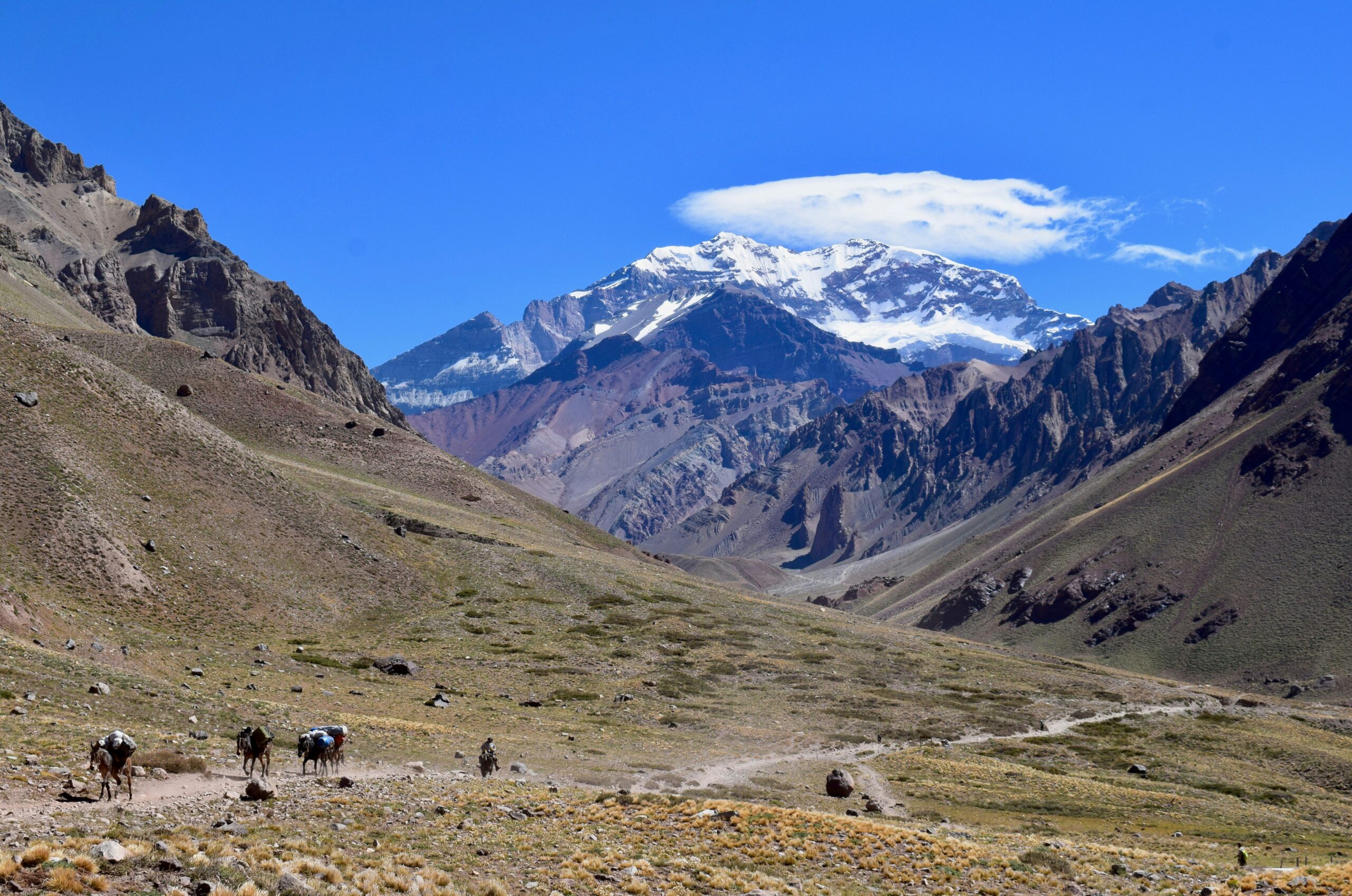
- Mule transport adds up. Getting your gear, food, and equipment to base camp at Plaza de Mulas (4,300 m) requires hiring mules. Costs run $200-$500 per climber depending on weight.
- Long expedition duration. Aconcagua takes 18-22 days. Guide services charge per day, so the per-day rate of $200-$400 compounds quickly.
- Remote location. Mendoza, Argentina is the gateway city. International flights to Mendoza (or Buenos Aires + connection) often cost $1,500-$3,500.
- The dollar/peso exchange rate volatility. Argentine inflation makes pricing in local currency unstable. Operators quote in USD to manage this, but it produces variable pricing year to year.
The good news: Aconcagua remains a fraction of the cost of Denali ($8,000-$15,000) or Everest ($45,000-$100,000+) at similar elevation tiers. The full comparison framework is in our Aconcagua vs Denali comparison from our round 2 cluster work.
The Aconcagua climbing permit what it costs and when to buy
The Aconcagua climbing permit is the single most important cost item to understand because it’s mandatory, non-refundable, and varies meaningfully by season. The permit is issued by the Parque Provincial Aconcagua (Mendoza Province authority) and is the legal requirement to enter the park and attempt the climb.
| Permit type | Price (USD, approximate) | What it covers |
|---|---|---|
| Short trek (3 days) | $100-$200 | Confluencia trek only — no ascent above base camp |
| Long trek (7 days) | $300-$450 | Trek to Plaza de Mulas only — no summit attempt |
| Ascent peak season (Dec 15 – Jan 31) | $1,000-$1,200 | Full summit attempt permit, peak prices |
| Ascent shoulder season (Nov 15 – Dec 14, Feb 1 – Feb 20) | $800-$1,000 | Full summit attempt permit, reduced prices |
| Ascent early/late season (Nov, late Feb-early Mar) | $700-$900 | Lowest pricing tier, weather-dependent climbing |
| Average ascent permit cost | ~$900-$1,000 | For typical December-January climbing window |
The permit must be purchased in person in Mendoza — you cannot buy it online or have an operator buy it for you remotely. The permit office is at the Subsecretaría de Turismo de Mendoza (turismo provincial office) in central Mendoza. Bring your passport. Permits are issued for specific date ranges and are non-extendable. If weather delays your expedition past your permit window, you need to purchase a new permit at the current rate. Allow a half-day for permit processing — bureaucracy in Mendoza is real.
The permit revenue funds the Parque Provincial Aconcagua’s mountain rescue services, the medical post at Plaza de Mulas, environmental management of the park, and ranger services. Despite occasional grumbling about the cost, the permit revenue legitimately funds the infrastructure that climbers depend on.
Guide service costs what each tier actually buys
Guide service is the largest cost component of an Aconcagua trip. The three tiers below represent what climbers actually pay across the range of available operators:
Tier 1 — Budget Local-Guide Expedition
The budget tier. Booked directly with Mendoza-based Argentine operators like Inka Expeditions, Aconcagua Expeditions, or Pampa Linda. The guide service typically includes Mendoza hotel transfers, base camp accommodation, all meals on the mountain, mule transport for group gear, and Argentine guides on the climb. Permits are sometimes included, sometimes not — verify before booking.
What you get:
- Spanish-speaking Argentine guides (English usually available)
- Plaza de Mulas base camp services (meal tent, dome, shower facilities)
- Mule transport for group gear to base camp
- 3 meals daily on the mountain
- High camps (Camp Canada, Nido de Cóndores, Berlin)
- Group safety equipment
What you provide: All personal climbing gear, sleeping bag, international flights, the permit itself (in most cases), travel insurance, tips. Group ratio is typically larger (1 guide per 4-6 climbers vs 1 per 2-3 on premium tiers).
Tier 2 — Standard International-Operator Expedition
The standard tier. Booked through international operators like Mountain Madness, IMG (International Mountain Guides), Alpine Ascents International, RMI Expeditions, or Mountain Trip. These operators partner with local Argentine staff but add their own American/European trip leadership and more standardized support quality.
What you get:
- English-speaking American or European trip leader + Argentine assistant guides
- Better guide-to-climber ratios (1:3 to 1:5)
- More established safety protocols and decision-making frameworks
- Pre-trip preparation materials and conditioning guidance
- Permit purchase coordinated by operator (you still pay the permit fee, often added to invoice)
- Travel insurance often required and verified
- Stronger logistics infrastructure
What you provide: All personal climbing gear, international flights, tips. Group ratios are smaller, guides are more experienced, and the overall expedition is more managed.
Tier 3 — Premium / Luxury Expedition
The premium tier. Top-tier operators like Alpine Ascents International, IMG private expeditions, or boutique operators like Madison Mountaineering, Furtenbach Adventures, and Climbing the Seven Summits. These trips offer maximum support, smallest guide ratios, and amenities not available in lower tiers.
What you get:
- Smallest guide-to-climber ratios (1:2 to 1:3)
- Single tents on the mountain (not shared)
- Private rooms in Mendoza pre and post climb
- Premium base camp accommodations
- Emergency oxygen often included
- Pre-acclimatization options on adjacent peaks
- Helicopter standby for evacuation
- Premium gear rental options
Best for: Climbers seeking maximum comfort, those building toward the Seven Summits, or climbers who want the highest possible success probability. The premium tier typically has summit success rates 10-15 percentage points higher than budget operators due to smaller groups and more flexibility.
Full expedition budget every line item
Here’s what a complete Aconcagua trip actually costs, line by line, for each tier:
| Cost item | Budget tier | Standard tier | Premium tier |
|---|---|---|---|
| Aconcagua climbing permit | $800-$1,000 | $800-$1,000 | $1,000-$1,200 |
| Guide service (18-22 days) | $3,500-$5,000 | $5,500-$8,000 | $8,000-$11,000 |
| Mule transport (gear to BC) | $200-$300 | Included | Included |
| International flights (round trip) | $1,500-$2,500 | $1,500-$2,500 | $2,500-$3,500 |
| Mendoza hotel (pre/post 3-5 nights) | $150-$300 | Included partial | Included full |
| Personal gear (if buying) | $1,500-$3,000 | $1,500-$3,000 | $2,000-$4,000 |
| Travel/rescue insurance | $300-$500 | $400-$600 | $400-$800 |
| Tips for guides/porters | $300-$500 | $400-$700 | $500-$1,000 |
| Visa fee (if applicable) | $0-$160 | $0-$160 | $0-$160 |
| Argentina exit tax/airport fees | $50-$100 | $50-$100 | $50-$100 |
| Personal extras (snacks, gear shopping) | $200-$400 | $200-$400 | $200-$400 |
| TOTAL TYPICAL COST | $5,000-$7,500 | $7,500-$11,000 | $11,000-$15,000+ |
Personal climbing gear. Aconcagua requires legitimate high-altitude mountaineering equipment: a -40°F sleeping bag ($500-$900), high-altitude boots ($600-$900), down parka ($500-$800), proper layering system ($600-$1,200), crampons ($150-$250), ice axe ($75-$150), and supporting gear. A first-time mountaineer who needs to buy everything will spend $2,500-$4,000 on gear alone. This is typically NOT included in the operator quote and is the single biggest “hidden cost” first-time climbers encounter.
Hidden costs and gotchas what catches climbers off guard
Beyond the obvious line items, several costs frequently surprise first-time Aconcagua climbers:
- Helicopter evacuation if needed: $5,000-$15,000 if not covered by insurance. The mountain has good rescue infrastructure but emergency evacuations are expensive and not always covered by basic policies. The full insurance framework is in our mountain climbing insurance decision framework.
- Permit replacement if expedition extends: $400-$800 if weather forces an extension beyond your permit window. Build buffer days into your trip.
- Additional mule trips: $50-$150 per extra mule transport if you bring more gear than expected.
- Mendoza extras: wine country tours, asado dinners, post-climb celebration meals — Mendoza is one of South America’s best food and wine destinations. Budget $300-$500 for non-climbing extras.
- Gear repair or replacement on the mountain: a torn jacket or broken boot at base camp can require expensive emergency purchases. Spare parts and backup gear add cost but reduce risk.
- Currency exchange losses: Argentine peso volatility means in-country purchases may cost more or less than expected depending on the day. Some operators offer “blue dollar” payment options to mitigate this.
- Tips for unstated roles: beyond your main guide, mule drivers, base camp cooks, and porter teams expect tips. Budget for the full team, not just the lead guide.
- Acclimatization trip extensions: some climbers add a pre-acclimatization climb on lower Andean peaks like Cerro Vallecitos. Adds $1,500-$3,000 to total trip cost but improves Aconcagua success rate meaningfully.
How to save money on Aconcagua legitimate cost reductions
If you’re budget-conscious, several strategies can meaningfully reduce Aconcagua costs without compromising safety:
- Book directly with a Mendoza-based operator instead of a US/European operator. Saves $2,000-$4,000 but requires more self-organization.
- Climb in shoulder season (late November or late February). Lower permit prices, often cheaper flights, but more variable weather. Save $300-$600.
- Rent gear in Mendoza for first-time climbers buying nothing. Mendoza outfitters rent quality high-altitude gear at $200-$500 for the full trip vs $2,500-$4,000 to buy new. Reduces cost dramatically for one-time climbers.
- Use frequent flyer miles or credit card points for international flights. Aconcagua flights via Buenos Aires or Santiago are often easier to book with miles than Asian or African destinations.
- Bring your own food supplements: high-altitude appetite issues mean climbers often want familiar snacks. Bring these from home rather than buying in Mendoza ($100 saved over the trip).
- Travel in a group of 4-8 to qualify for group rates with operators. Most operators offer 5-15% discounts for full groups booking together.
- Avoid Christmas/New Year peak window. Late December to early January has the highest prices across permits, flights, and operators. Climbing in early December or mid-January saves meaningfully.
- Self-guide with a private Argentine guide if you have prior 6,000-meter experience. Private guide arrangements can run $4,000-$6,000 for a 1:1 ratio at the budget tier, lower than group expedition pricing.
Cost vs other major peaks honest comparison
| Peak | Elevation | Typical total cost (guided) |
|---|---|---|
| Mount Whitney | 4,421 m | $200-$500 (no guide needed) |
| Mount Kilimanjaro | 5,895 m | $3,500-$7,000 |
| Aconcagua | 6,961 m | $5,000-$15,000 |
| Denali | 6,190 m | $8,000-$15,000 |
| Cho Oyu | 8,188 m | $25,000-$40,000 |
| Everest (South Col) | 8,849 m | $45,000-$100,000+ |
| K2 | 8,611 m | $40,000-$80,000 |
Aconcagua is one of the best value-per-meter major peaks in the world. The cost per 1,000 meters of elevation gained ($720-$2,150) is dramatically lower than Everest ($5,000-$11,300/km) or K2 ($4,600-$9,300/km). For climbers building toward the Seven Summits or developing serious altitude experience, Aconcagua is the standard “first big mountain” partly because of this cost efficiency. The full Seven Summits cost framework is in our seven summits cost guide.
Payment timing and cancellation policies what to expect
Aconcagua expedition payment typically follows this structure:
| Stage | Payment | Cancellation policy |
|---|---|---|
| Booking (12+ months out) | 10-25% deposit | Usually refundable minus fees |
| 6 months before departure | 50% total paid | Partial refund window typically closes |
| 90 days before | 75% total paid | Most operators have 50-75% cancellation fees |
| 60 days before | 100% paid | Most cancellations non-refundable from this point |
| 30 days before | Final payment due | 100% non-refundable |
Cancellation policies vary significantly between operators. Some operators offer flexible rebooking to future seasons without penalty; others charge full cancellation fees from 60 days out. Trip cancellation insurance is essential if you have meaningful risk of needing to cancel (job uncertainty, family commitments, medical conditions). The full insurance framework is in our mountain climbing insurance guide.
Who should climb Aconcagua at each tier honest fit assessment
Budget tier ($5K-$7.5K) fits you if…
- You have prior 5,000-6,000 meter mountaineering experience
- You’re comfortable with Spanish-speaking environments and basic logistics self-organization
- You prefer larger group expeditions and aren’t focused on premium amenities
- You’re an experienced mountaineer testing cost discipline on a major peak
Standard tier ($7.5K-$11K) fits you if…
- This is your first major altitude expedition above 5,000 meters
- You want English-speaking trip leadership and standardized safety protocols
- You value moderate guide ratios and consistent service quality
- You’re building toward the Seven Summits and want a quality reference experience
Premium tier ($11K-$15K+) fits you if…
- You want the highest possible summit success probability
- You value comfort and minimal compromise on the expedition
- You’re an experienced climber doing Aconcagua as part of a Seven Summits project
- You have specific time constraints requiring maximum operator flexibility
- Cost is meaningfully less of a concern than success and experience quality
The complete Aconcagua framework
Full permit detail, fees, season-by-season weather guide, and the broader Aconcagua climbing context.
Master guide →The bottom line on Aconcagua costs
A complete Aconcagua expedition costs $5,000 to $15,000 depending on trip style — significantly more than Kilimanjaro but a fraction of Denali, Everest, or K2 at comparable elevations. The permit alone costs $800-$1,200, guide services run $4,000-$11,000+ depending on tier, and international flights, gear, and ancillary costs add another $2,500-$5,000. Three tier options serve different climbers: budget self-organized trips with local Argentine guides at $5K-$7.5K for experienced mountaineers, standard international-operator expeditions at $7.5K-$11K for typical first-time major peak climbers, and premium luxury expeditions at $11K-$15K+ for climbers prioritizing comfort and success probability. The permit must be purchased in person in Mendoza before climbing — plan a half-day in the city for this process. Aconcagua provides the best value-per-meter among major non-Asian peaks, making it the standard “first big mountain” for climbers building toward the Seven Summits or developing serious high-altitude experience. The full permit and fees detail is in our Aconcagua permits master guide, with the broader peak comparison in our Aconcagua vs Denali analysis and Seven Summits cost context in our Seven Summits cost guide.
Frequently asked questions
How much does it cost to climb Aconcagua?
Climbing Aconcagua costs between 5,000 and 15,000 USD total depending on the trip style and guide service. Budget self-organized trips with a local Argentine guide cost 5,000 to 7,500 USD including the permit. Mid-range guided expeditions with an international operator cost 7,500 to 11,000 USD. Premium luxury expeditions with experienced North American or European operators cost 11,000 to 15,000 USD. The biggest single cost component is the guide service (3,500 to 8,000 USD), followed by international flights (1,500 to 3,500 USD) and the climbing permit (800 to 1,200 USD depending on season). The Aconcagua climbing permit is mandatory and changes year to year – check the Parque Provincial Aconcagua website for current rates.
How much is the Aconcagua climbing permit?
The Aconcagua climbing permit costs approximately 800 to 1,200 USD for the standard high-season summit attempt, with rates varying by season and Argentine peso exchange rate. The Parque Provincial Aconcagua issues permits in different categories: a short trek-only permit at approximately 100 to 200 USD, the ascent permit at 800 to 1,200 USD, and special winter permits at premium rates. Permits must be purchased in person in Mendoza before climbing – typically at the Aconcagua Provincial Park office. The permit is non-transferable and non-refundable except for documented emergencies. Permit prices are higher in peak season (mid-December to mid-February) and lower in shoulder seasons.
How long does it take to climb Aconcagua?
A typical Aconcagua expedition takes 18 to 22 days from arrival in Mendoza to departure. The standard structure is: 2-3 days in Mendoza for permit processing and acclimatization, 3-4 days approach hike to Plaza de Mulas base camp at 4,300 m, 7-10 days of acclimatization rotations and high camps, 1-2 days for summit attempt, and 2-3 days for descent. Adding international flight time and buffer days brings the total trip to 21-25 days for most climbers. Expedition durations are longer than they need to be because acclimatization on Aconcagua is critical – climbers who rush typically fail. The 18-22 day window represents the realistic minimum for a reasonable success probability.
Do you need a guide to climb Aconcagua?
You technically do not need a guide to climb Aconcagua, but most climbers use one. Approximately 85 percent of Aconcagua climbers use guided services for at least the high camps and summit attempt. Self-guided climbers must arrange their own logistics including mule transport for gear, base camp services, food, weather forecasting, and emergency communication. Self-guided climbing requires significant prior high-altitude experience (ideally another 6,000+ meter peak) and full mountaineering skill in glacier travel, navigation, and altitude management. The cost savings of self-guided climbing (typically 2,000-4,000 USD compared to guided) are offset by significantly higher logistical complexity and lower success rates.
What is the cheapest way to climb Aconcagua?
The cheapest way to climb Aconcagua is to organize the trip yourself through a local Argentine guide service in Mendoza, typically costing 4,500 to 6,500 USD total including the permit. This approach involves booking guide services, base camp facilities, and mule transport directly through Mendoza-based operators rather than international expedition companies. The savings come from avoiding the markup that international operators apply. The trade-offs are: more pre-trip logistical work, potential language barriers, less standardized service quality, and typically smaller support teams. For experienced climbers comfortable with self-organization, the local-guide approach can produce a quality experience at significantly lower cost than international operator packages.
What does a guided Aconcagua expedition include?
A standard guided Aconcagua expedition typically includes: international expedition leader and Argentine assistant guides, all in-country transport from Mendoza, hotel nights in Mendoza pre and post climb, mule transport of group gear and food to Plaza de Mulas, all meals on the mountain, camping equipment except personal sleeping bag, group safety equipment, satellite communications, base camp medical care, and the climbing permit (sometimes). Standard exclusions are: international flights to Mendoza, personal climbing gear, the climbing permit itself in many operators, travel insurance, optional tips, and personal extras. Premium operators include additional services like private rooms in Mendoza, single tents on the mountain, and emergency oxygen. Read the inclusions list carefully when comparing operators.
When is the best time to climb Aconcagua?
The Aconcagua climbing season runs from mid-November to early March, with mid-December through late January being the peak window. Most expeditions are scheduled in this window for the most stable weather and the highest summit success rates. Early season (November) and late season (February-March) climbing is possible but typically has more variable conditions. The full season-by-season weather framework is available in our Aconcagua best time guide. Most international guided expeditions schedule departures for early December through early February to maximize the weather window.
How Much Does Aconcagua Cost? The Full Breakdown
Cost is one piece of an Aconcagua expedition. See the full guide, the permits and the comparisons below.