
Last updated September 7, 2026
Vinson Massif Cost Guide 2026 — Real Antarctica Expedition Pricing from $45,000 to $115,000, ALE Flights, Alpine Ascents $55,500, Shikhar $54,800, Adventure Consultants Combo $114,500, Full Breakdown
The complete 2026 cost guide for climbing Mount Vinson (4,892 m / 16,050 ft). Mount Vinson is the highest peak on the Antarctic continent and the most logistically demanding of the Seven Summits. Generally, Vinson expeditions cost $45,000-$65,000 because Antarctica requires specialized aviation logistics that no other peak demands. This is the so-called “Antarctic Tax.” Specifically, this guide delivers verified 2026 operator pricing. Examples include Alpine Ascents International at $55,500, Shikhar Travels at $54,800, RMI Expeditions, Elite Exped (the Nimsdai Purja and Mingma David Sherpa team), Adventure Consultants, and others. Notably, every climber must pay Antarctic Logistics & Expeditions (ALE) — the master operator that runs the Union Glacier airstrip and the Ilyushin 76 jet flight from Punta Arenas, Chile. Combination packages like Adventure Consultants Vinson plus South Pole reach $114,500.
Mount Vinson sits 1,200 km from the South Pole in West Antarctica’s Sentinel Range, making it the most logistically demanding of the Seven Summits. Generally, the cost to climb Vinson is not high because the mountain is especially technical. The cost is high because Antarctica is one of the most logistically difficult places on Earth to operate. Specifically, every drop of fuel, every calorie of food, and every piece of gear must be flown in on specialized heavy-lift aircraft. Notably, there is no road access, no local infrastructure, and no commercial flights. The only access is the Ilyushin 76 jet operated by Antarctic Logistics & Expeditions (ALE) flying from Punta Arenas, Chile to the Union Glacier airstrip in interior Antarctica.
This guide answers the real cost questions Vinson climbers ask. What does the typical 2026 expedition actually cost across major operators? Why does the “Antarctic Tax” push Vinson into the highest-cost tier of the Seven Summits? Notably, we’ll cover several concrete details. First, complete 2026 operator price comparison across Alpine Ascents International ($55,500), Shikhar Travels ($54,800), Adventure Consultants, RMI, Elite Exped, and IMG. Then full cost component breakdown showing what the ALE flight alone represents. Also West Face route deep dive from Base Camp (7,000 ft) through Low Camp (9,000 ft) to High Camp (12,400 ft) and summit. Plus season planning for the November-January austral summer window. Plus hidden and extra costs climbers commonly underestimate. Finally, the 5 common mistakes that turn $55,000 expeditions into $80,000+ trips.
Why Vinson Is So Expensive — The Antarctic Tax
Vinson is expensive because nearly everything about the climb depends on specialized logistics no other mountain demands. Generally, Antarctica does not have a broad tourist infrastructure feeding the mountain. Specifically, operators must move people, food, fuel, camp systems, and staff into a highly remote environment with narrow seasonal access. Notably, the Vinson expedition price is not just paying for a guided climb. Climbers pay for a temporary operating system built in one of the least forgiving places in the world.

The ALE Master Logistics
Antarctic Logistics & Expeditions (ALE) is the master operator that makes Vinson climbing possible. Generally, ALE operates the only commercial airstrip in interior Antarctica — the Union Glacier blue-ice runway. Specifically, every Vinson climber flies on the ALE Ilyushin 76 heavy-lift jet from Punta Arenas, Chile to Union Glacier — a 4.5-hour flight across the Drake Passage. Climbers then transfer to a Twin Otter ski plane for the final leg to Vinson Base Camp on the Branscomb Glacier. Notably, this means every operator — Alpine Ascents, RMI, Adventure Consultants, Elite Exped — must pay ALE’s logistics fees regardless of their guide service quality. The ALE flight alone accounts for the bulk of expedition cost.
What Drives the $45,000-$65,000 Range
The cost range across operators reflects differences in guide-to-climber ratios, included services, and operator overhead. Generally, the price differences reflect what’s bundled into the package rather than fundamental cost variations on the mountain. Specifically, several factors drive the spread:
- ALE flight bulk cost — uniform across all operators, accounting for $25,000-$35,000 of the expedition price depending on group share
- Guide-to-climber ratio — 1:1 ratios cost more than 1:3 ratios but provide better safety margin
- Western vs Asian operator overhead — Western operators carry higher business overhead
- Equipment included — some operators bundle sleeping bags, parkas, and tents while others charge separately
- Pre-trip support level — comprehensive medical screening, gear consultation, and training plans add cost
- Itinerary inclusions — Punta Arenas hotel nights and welcome dinners vary by operator
The “Antarctic Tax” is not negotiable. Generally, climbers cannot meaningfully reduce Vinson costs by selecting cheaper operators because the ALE logistics flow through every package. Specifically, the standard $45,000-$65,000 range reflects baseline Antarctic operating costs that no operator can avoid. Notably, expeditions priced significantly below $45,000 often cut corners on safety margin, guide experience, or weather contingency time. Climbers should verify what’s included rather than chase the lowest sticker price. The expedition that costs $50,000 with strong logistics typically delivers better summit odds than the $42,000 budget option.
Vinson Massif At a Glance
| Specification | Value | Context |
|---|---|---|
| Elevation | 4,892 m / 16,050 ft | Highest peak in Antarctica |
| Location | 78°35’S, 85°25’W | Sentinel Range, Ellsworth Mountains, West Antarctica |
| Distance from South Pole | 1,200 km | Drives the “Antarctic Tax” logistics |
| Massif dimensions | 21 km long × 13 km wide | The Vinson Massif overall |
| First climbed | December 18, 1966 | 10 Americans led by Nicholas Clinch |
| Technical difficulty | PD+/AD- (IFAS) | Moderate alpine; fixed ropes on steepest sections |
| Summit success rate | 97-98% | Alpine Ascents: 100% team success 15+ years |
| Standard route | West Face / Branscomb Glacier | Normal Route since 2006 fixed rope era |
| Climbing days | 5-9 days plus weather contingency | Total expedition 18-22 days |
| 2026 cost range | $45,000-$65,000 (standard) | $100,000+ for combination programs |
| Best season | November-January | Austral summer; 24-hour daylight |
| Temperature range | -15°C to -40°C | Typical -15 to -20; -40 at High Camp |
| Departure city | Punta Arenas, Chile | ALE Ilyushin 76 flight to Union Glacier |
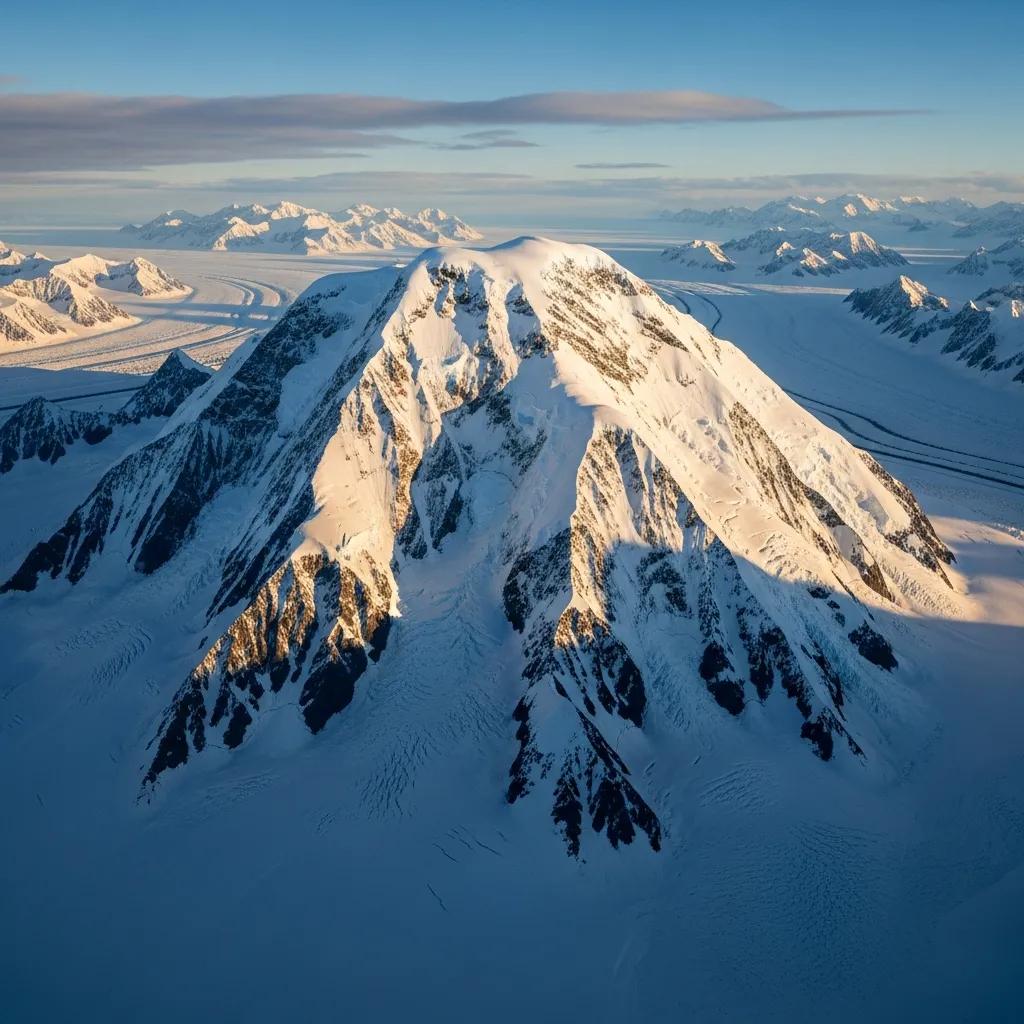
Complete 2026 Cost Component Breakdown
The Vinson Massif expedition price breaks down into several distinct cost components. Generally, climbers should understand where their money goes to evaluate operator pricing fairly. Specifically, the breakdown reveals why the “Antarctic Tax” produces $45,000-$65,000 base costs regardless of operator choice.
| Cost Component | 2026 Range | Notes |
|---|---|---|
| ALE Ilyushin 76 flight (Punta Arenas ↔ Union Glacier) | $25,000-$35,000 | Bulk of expedition cost; uniform across operators |
| Twin Otter transfer (Union Glacier ↔ Vinson Base Camp) | $3,500-$5,500 | Final leg to mountain; ski plane operations |
| Guide fees and Sherpa support | $8,000-$15,000 | Varies by ratio (1:1 most expensive, 1:3 cheapest) |
| Base camp logistics and operations | $3,000-$5,000 | Heated dining tent, communications, waste systems |
| Food, fuel, expedition consumables | $2,000-$4,000 | All food flown in from Punta Arenas |
| Group climbing gear (ropes, tents, stoves) | $1,500-$3,000 | Shared expedition equipment |
| Operator overhead and profit margin | $3,000-$8,000 | Western operators carry more overhead |
| Welcome dinner and Punta Arenas support | $200-$500 | Pre-expedition team meeting |
| TOTAL EXPEDITION (climb-only) | $45,000-$65,000 | Standard 2026 range |
What’s NOT included in the expedition price. Generally, the advertised expedition price excludes several major cost categories climbers must budget for separately. Specifically, climbers should add several cost categories. First, international airfare to Punta Arenas ($1,500-$3,000). Then extreme cold weather personal gear ($3,000-$8,000). Also evacuation insurance with high-altitude rescue coverage ($500-$1,500). Plus Punta Arenas hotel costs ($300-$800). Plus satellite phone rental ($200-$400). Finally, weather contingency budget ($2,000-$5,000). Notably, total all-in cost for a Vinson trip typically runs $8,000-$15,000 above the advertised expedition price.
2026 Operator Comparison Table
The major Vinson Massif operators offer different price points and service levels for 2026 expeditions. Generally, climbers should evaluate operators on safety record, guide experience, and what’s actually included rather than purely on price. Specifically, the operator landscape spans Western providers (Alpine Ascents, Adventure Consultants, RMI), Asian providers (Shikhar Travels, Elite Exped), and specialty boutique providers.
| Operator | 2026 Price | Duration | Notes |
|---|---|---|---|
| Alpine Ascents International (USA) | $55,500 | ~22 days | 100% team success 15+ years; veteran guides Ben Jones, Jangbu Sherpa; 30 years guiding Vinson |
| Shikhar Travels (India) | $54,800 | 20 days | India’s only IMF-registered international mountaineering operator; includes all Antarctic flights, meals, group gear |
| Adventure Consultants (NZ) | ~$55,000-$60,000 | ~20 days | Highly experienced operator; Vinson+South Pole Combo $114,500 |
| RMI Expeditions (USA) | $50,000-$55,000 | ~18-22 days | Long-running Vinson program; comprehensive pre-trip support |
| Elite Exped | Premium (contact) | ~20 days | Led by Nimsdai Purja and Mingma David Sherpa; flawless logistics reputation |
| International Mountain Guides (IMG) | ~$52,000-$58,000 | ~22 days | Strong Seven Summits program; experienced guide pool |
| Mountain Professionals | ~$52,000-$57,000 | ~20 days | Boutique operator; smaller group sizes |
| Climbing the Seven Summits | ~$50,000-$55,000 | ~20 days | Specializes in Seven Summits progression |
Combination Packages
Several operators offer combination programs that pair Vinson with South Pole expeditions or extended Antarctic climbing. Generally, these packages provide deeper Antarctic experience at significantly higher costs. Specifically, the major combination options include several distinct programs:
| Combination Program | 2026 Price | Duration |
|---|---|---|
| Alpine Ascents — Vinson + Ski The Last Degree | $100,000 | ~30 days |
| Alpine Ascents — Ski The Last Degree only | $80,700 | ~16 days |
| Adventure Consultants — Vinson + South Pole Combo | $114,500 | 30-31 days |
| Climb Antarctica Extension (8 extra days) | Add ~$20,000-$30,000 | +8 days |
Operator Selection Decision Framework
Climbers selecting a Vinson operator should evaluate several factors beyond price. Generally, the wrong choice can compromise summit odds, safety margin, or comfort during a $50,000+ expedition. Specifically, the decision factors break down by climber profile:
| Climber Profile | Recommended Tier | Reasoning |
|---|---|---|
| First Antarctic expedition, want maximum support | Alpine Ascents International or RMI | Veteran guide staff; 100% team success records; comprehensive pre-trip support |
| Seven Summits completer wanting elite team | Elite Exped or Adventure Consultants | Nimsdai Purja team for premium logistics; AC’s Combo programs |
| Experienced expedition climber, cost-conscious | Shikhar Travels or RMI | Lower price with strong logistics; established programs |
| Want smaller group sizes | Mountain Professionals or boutique providers | Boutique operators offer 4-6 climber teams vs 8-12 |
| Combining with South Pole goal | Adventure Consultants or Alpine Ascents | Both offer integrated Vinson + South Pole programs |
Why operator quality matters more on Vinson than other Seven Summits. Generally, Vinson’s extreme remoteness eliminates the safety nets available on other mountains. Specifically, there are no nearby villages, no helicopter rescue (Twin Otter only when weather permits), no local hospitals, and no commercial flights. Notably, a weak operator on Mount Kilimanjaro produces an unpleasant trip; a weak operator on Vinson can produce a dangerous one. Climbers should prioritize: documented summit success rate (95%+), experienced lead guides with multiple Vinson seasons, strong communication systems, comprehensive medical training, and proven weather decision protocols. The $5,000-$10,000 premium for a top-tier operator becomes irrelevant the moment something goes wrong at -40°C and 12,400 ft.
West Face Route — The Standard Climbing Line
The West Face route from the Branscomb Glacier is the standard climbing line on Mount Vinson. Generally, this route has been the Normal Route since the 1966 first ascent and remains the only commercially climbed line. Specifically, the route progresses through three established camps with fixed ropes on the steepest section. Notably, the route is graded PD+ to AD- on the IFAS scale — moderate alpine difficulty featuring glacier travel, fixed-rope ascending, and a summit ridge with short steep snow/ice sections.
Camp-by-Camp Progression
| Camp | Elevation | Location | Distance/Gain |
|---|---|---|---|
| Vinson Base Camp | 7,000 ft / 2,133 m | Lower Branscomb Glacier, west side of Ellsworth Mountains | Twin Otter landing from Union Glacier |
| Low Camp | 9,000 ft / 2,750 m | Up the Branscomb Glacier, sheltered by west face | 6 miles up Branscomb, 2,000 ft gain |
| High Camp | 12,400 ft / 3,779 m | Goodge Col between Vinson and Shinn | 3,400 ft gain via headwall and fixed rope |
| Summit | 16,050 ft / 4,892 m | Vinson summit ridge, rocky pyramid | 1,112 m / 3,650 ft gain from High Camp |
Base Camp at 7,000 ft
Vinson Base Camp sits on the lower part of the Branscomb Glacier at 7,000 ft elevation. Generally, climbers arrive by Twin Otter ski plane from Union Glacier — typically a 1-hour flight in good weather. Specifically, ALE maintains a heated base camp tent that serves as dining and relaxation area for guided guests plus an operations center for mountain logistics. Notably, base camp facilities include simple open-air toilets with privacy walls — the famous “loo with a view” looking out over the Nimitz Glacier. All solid waste returns to Punta Arenas, Chile (via Union Glacier) for proper disposal. There are no shower facilities at Vinson Base Camp.
Low Camp at 9,000 ft
Low Camp pitches at 2,750 m / 9,000 ft sheltered by the broad, snowy west face. Generally, climbers ascend the Branscomb Glacier for 6 miles from Base Camp carrying loads in backpacks and pulling sleds. Specifically, the time from Base Camp to Low Camp varies considerably — fit teams can do it in 2-4 hours while heavier groups take 6-8 hours. Notably, climbers review glacier camping and travel techniques at Low Camp including knots, rigging, anchors, and crevasse rescue. The total gear weight ranges around 20 kg per climber split between backpack (30%) and sled (70%) for the lower glacier work.
High Camp at 12,400 ft
High Camp sits at the Goodge Col between Mount Vinson and Mount Shinn at 12,400 ft / 3,779 m elevation. Generally, climbers ascend to the foot of a large headwall from Low Camp and then up the headwall on moderate snow slopes to the col. Specifically, since 2006, a fixed rope to High Camp has been set up each season — running up the left-hand side of the west face. Notably, the fixed rope replaced the older route that headed north from Low Camp because seracs falling from neighboring Mount Shinn made the original headwall approach unsafe. Climbers need jumar competence and fixed-rope ascending skills for the High Camp approach. Temperatures at High Camp can drop to -40°C when the sun moves behind the mountain.
Summit Day Details
Summit day from High Camp covers 1,112 m of elevation gain over 9-12 hours round trip. Generally, climbers head southeast up a broad, flat valley (cwm) with sub-peaks on either side. Specifically, the summit lies roughly 7 km horizontally to the southeast of High Camp. Notably, most of the route follows the gently sloping valley but features one steep ice/snow section before reaching the rocky summit pyramid. The final summit pyramid can be approached from either eastern or western sides. The eastern (left) ridge is less steep and generally preferred for ascent. The west ridge sometimes serves as descent route. Many teams traverse the summit ascending from the right and descending from the left.
| Summit Day Stage | Distance/Time | Terrain |
|---|---|---|
| High Camp departure | Hour 0 | Tent breakdown, gear check, rope team setup |
| Vinson summit valley | 3-4 hours | Gently sloping cwm, broad flat traverse |
| Steep snow/ice section | 1-2 hours | Short steeper section before summit pyramid |
| Summit pyramid ridge | 30-60 min | Rocky exposed ridge, east or west route |
| Summit (16,050 ft) | 5-7 hours total ascent | Views: Mount Tyree, Gardner, Epperly, Shinn |
| Descent to High Camp | 3-5 hours | Same route reversed |
| Total round trip | 9-12 hours | Weather and fitness dependent |
Difficulty Grade Analysis
Mount Vinson rates PD+/AD- on the IFAS (International French Adjectival System) scale. Generally, this puts Vinson at moderate alpine difficulty — easier than Mount Everest or Aconcagua technically but considerably more demanding logistically. Specifically, the technical demands break down as follows:
| Skill Required | Where Used | Skill Level |
|---|---|---|
| Roped glacier travel | All glacier sections, crevasse zones | Competent — basic prusik and crevasse rescue |
| Crampon and ice axe technique | Entire route above Base Camp | Intermediate — slope walking, basic self-arrest |
| Jumar ascending on fixed rope | Headwall to High Camp | Competent — must be able to ascend confidently |
| Sled-pulling and load management | Lower Branscomb Glacier work | Basic — operators teach techniques |
| Cold weather endurance | All sections, especially High Camp | Critical — -40°C tolerance with proper gear |
| Multi-day camp life | 5-9 climbing days plus contingency | Intermediate — winter camping experience helpful |
Why Vinson feels both easier and harder than expected. Generally, climbers consistently report that Vinson feels “incredibly easy when it is warm and sunny” but “lethal” when weather turns. Specifically, the technical difficulty is genuinely moderate — the route is climbable for fit mountaineers with prior glacier travel experience. Notably, the difficulty comes from the cold, the remoteness, and the weather windows. A warm sunny day on Vinson at -10°C feels almost benign; the same route at -35°C with 30 mph wind becomes a serious survival situation. Climbers should prepare for the worst conditions because they can develop quickly even during prime season.
Season & Weather Planning
The Vinson Massif climbing season runs November through January during the austral summer. Generally, this short window provides the only viable climbing conditions because of 24-hour daylight, relatively stable weather, and ALE’s operational schedule. Specifically, the seasonal options break down across three distinct sub-windows:
| Window | Conditions | Trade-offs |
|---|---|---|
| Early Season (November) | Cold but stabilizing weather; longest daylight building | Higher chance of storms; some operators don’t start until late November |
| Prime Season (December) | Most stable weather; warmest temperatures (-15°C to -20°C typical) | Highest demand; book 12-18 months ahead |
| Late Season (January) | Stable weather window continues; daylight starting to decrease | Last reliable climbing window before season closes |
| February onward | ALE operations winding down; weather deteriorating | Not viable for climbing |
| March – October | Winter darkness; storms; extreme cold | No climbing possible |
The 24-Hour Daylight Advantage
Vinson’s austral summer climbing season features 24-hour daylight throughout the prime November-January window. Generally, this eliminates the alpine start pressure climbers experience on other Seven Summits. Specifically, climbers gain several benefits from 24-hour daylight. First, schedule summit attempts during the best weather windows regardless of time of day. Then use afternoon climbing when temperatures are warmest. Also take rest days at any camp without losing climbing days. Finally, adjust pace to individual energy levels. Notably, the 24-hour daylight makes Vinson surprisingly accessible despite its remote location — climbers don’t fight darkness like they do on Denali or Everest.
Weather Contingency Time
Climbers should plan significant weather contingency into Vinson trips. Generally, ALE flight delays of 1-2 weeks are common because of the Drake Passage weather and Union Glacier conditions. Specifically, climbers should budget at least 2 extra weeks beyond planned expedition end date. Notably, both inbound and outbound flights can delay. Climbers might wait extra time in Punta Arenas before flying to Antarctica. Or climbers might wait extra time at Union Glacier waiting for the flight home. The 18-22 day “expedition” can easily become 25-30 days from departure to home arrival.
Hidden & Extra Costs
The advertised Vinson expedition price covers the mountain logistics but excludes several major cost categories. Generally, climbers should budget $8,000-$15,000 above the expedition price to cover these additional expenses. Specifically, the hidden cost categories include several distinct items climbers commonly underestimate:
| Hidden Cost | 2026 Range | Notes |
|---|---|---|
| International airfare to Punta Arenas | $1,500-$3,000 | Round-trip from major US or European hub via Santiago |
| Extreme cold weather personal gear | $3,000-$8,000 | Down suit, -40°F insulated boots, expedition mittens, base layers, sleeping bag |
| Evacuation insurance (required) | $500-$1,500 | Required by ALE; must include high-altitude rescue coverage |
| Punta Arenas hotel (pre/post expedition) | $300-$800 | 2-4 nights typical; some operators bundle this |
| Satellite phone rental | $200-$400 | Available through Remote Satellite Systems International |
| Weather contingency budget | $2,000-$5,000 | Extra hotel nights, food, transport for delays |
| Visa fees (Chile) | $0-$160 | Tourist visa required for some nationalities |
| Pre-trip training and altitude prep | $500-$2,000 | Mountaineering courses, altitude tents, fitness programs |
| TOTAL HIDDEN COSTS | $8,000-$20,000+ | Add to expedition price |
Extreme Cold Weather Gear Breakdown
Vinson’s extreme cold weather gear requirements drive the $3,000-$8,000 personal equipment cost. Generally, climbers need professional-grade expedition equipment rated for -40°C conditions. Specifically, the gear list includes several critical items:
- 8000m down suit — required for High Camp and summit day; $800-$2,500 (e.g., The North Face Himalayan Suit, Mountain Hardwear Absolute Zero)
- -40°F insulated double boots — Scarpa Phantom 8000, La Sportiva Olympus Mons, or similar; $700-$1,200
- Expedition mittens — Outdoor Research Alti Mitts or similar; $200-$350
- -40°F sleeping bag — down expedition bag; $700-$1,200
- Down parka separate from suit — Camp puffy for base camp life; $400-$700
- Three layers of base layers — synthetic and merino; $300-$500
- Insulated pants and bib system — synthetic insulation; $400-$700
- Glacier glasses and ski goggles — both required; $200-$400
- Personal climbing hardware — harness, helmet, jumar, ice axe; $300-$600
- Crampons — 12-point step-in compatible with double boots; $200-$300
Don’t economize on cold weather gear. Generally, the temptation to save money on personal gear is the most expensive mistake climbers make on Vinson. Specifically, cold injuries (frostbite, hypothermia) can end expeditions, require costly evacuations, or produce permanent damage. Notably, climbers should buy gear rated for conditions worse than expected. The gear that “feels too warm” in Punta Arenas at +10°C is exactly what works at -40°C on Vinson summit day. Renting gear is acceptable for items used only on Vinson but climbers should own and test their personal-fit items (boots, suit, sleeping bag) before the expedition begins.
5 Common Mistakes That Inflate Vinson Costs
Vinson climbers consistently make several predictable mistakes that drive trip costs from advertised $55,000 to $80,000+ total. Generally, awareness of these patterns helps climbers budget accurately and avoid expensive surprises. Specifically, the mistakes fall into 5 distinct categories.
Mistake 1: Underestimating Gear Cost
Climbers frequently budget $1,500-$2,000 for personal gear when they actually need $3,000-$8,000. Generally, the gap comes from owning hiking gear (rated for +20°F conditions) versus needing expedition gear (rated for -40°F conditions). Specifically, climbers should follow several gear strategies. First, budget $4,000-$5,000 minimum for personal gear. Then spread purchases over 6-12 months to avoid budget shock. Also test all gear on cold-weather trips before Vinson. Finally, consider rentals only for items used on Vinson alone. Notably, the “I already have gear” assumption is the most common cost trap.
Mistake 2: Skipping Adequate Insurance
Climbers sometimes book inadequate insurance to save $500-$1,000 in premiums. Generally, this becomes the most expensive decision possible on Vinson. Specifically, climbers need several insurance components. First, high-altitude rescue coverage to 5,000+ m elevation. Then helicopter and Twin Otter evacuation coverage. Also medical coverage for hospital admission in Punta Arenas or Santiago. Finally, trip cancellation coverage for weather delays. Notably, ALE requires insurance documentation at permit application — climbers should verify coverage meets ALE specifications before booking. An evacuation from Vinson can cost $50,000-$150,000 if insurance doesn’t cover it.
Mistake 3: Picking the Cheapest Operator
Climbers sometimes choose the cheapest operator to save $3,000-$5,000. Generally, this strategy can backfire because weak logistics produce lower summit rates and more weather delays. Specifically, climbers should evaluate operators on documented summit success rate (95%+), guide-to-climber ratio (1:1 to 1:3 acceptable), weather contingency policy, communication systems, and emergency response capability. Notably, a top operator’s $55,000 expedition with 97% summit success delivers better value than a budget $48,000 expedition with 75% summit success.
Mistake 4: No Contingency Budget
Climbers commonly plan finances right to the edge of advertised expedition cost. Generally, weather delays of 1-2 weeks produce unexpected $2,000-$5,000 in extra hotel, food, and transport costs. Specifically, climbers should plan several financial buffers. First, maintain $3,000-$5,000 contingency reserves separate from expedition payment. Then plan for 2+ extra weeks beyond advertised expedition end date. Also verify trip insurance covers weather-related delays. Finally, have credit card capacity for unexpected expenses. Notably, the Antarctic flight schedule depends entirely on weather — climbers cannot control delays.
Mistake 5: Booking Too Late
Climbers sometimes try to book Vinson 4-6 months ahead and find premium operators sold out. Generally, the best Vinson programs book 12-18 months in advance for December dates. Specifically, climbers should follow several booking steps. First, contact preferred operators 12-18 months ahead. Then place deposits early to secure prime December slots. Also accept that late November or January dates may be available later. Finally, prepare for higher prices if booking late season. Notably, late booking can force climbers into less optimal weather windows or weaker operators.
Frequently Asked Questions About Vinson Massif Costs
How much does it cost to climb Vinson Massif?
Vinson Massif expeditions in 2026 cost $45,000-$65,000 for the standard climb-only package. This price range reflects the “Antarctic Tax” — the specialized aviation logistics required to operate in the most remote climbing destination on Earth. Verified 2026 operator pricing shows Alpine Ascents International at $55,500, Shikhar Travels (India) at $54,800, Adventure Consultants at approximately $55,000-$60,000, and RMI Expeditions at $50,000-$55,000. Combination packages cost considerably more: Alpine Ascents Vinson plus Ski The Last Degree runs $100,000 while Adventure Consultants Vinson plus South Pole Combo costs $114,500. The expedition price typically covers ALE flight from Punta Arenas, all camp logistics, guide fees, food, and group climbing gear. It excludes international airfare, personal gear, and travel insurance with high-altitude rescue coverage.
Why is Vinson Massif so expensive?
Vinson Massif costs $45,000-$65,000 because Antarctica requires specialized aviation logistics that no other Seven Summits peak demands. The mountain sits 1,200 km from the South Pole with no road access, no local infrastructure, and no commercial flights. Every climber must fly from Punta Arenas, Chile on an Ilyushin 76 heavy-lift jet operated by Antarctic Logistics & Expeditions (ALE) to Union Glacier camp. From there, climbers transfer to a Twin Otter ski plane for the final leg to Vinson Base Camp on the Branscomb Glacier. ALE operates the only commercial airstrip in interior Antarctica and runs the master logistics for every Vinson expedition — meaning every operator pays ALE’s fees regardless of provider. The ALE flight itself accounts for the bulk of expedition cost. Additional cost drivers include extreme cold weather requirements ($3,000-$8,000 in personal gear), required high-altitude evacuation insurance, and weather contingency margins because flight delays of 1-2 weeks are common.
What does the Vinson expedition price include?
Standard Vinson Massif expedition packages typically include several core services. The inclusions cover several core services. First, Antarctic flights from Punta Arenas to Union Glacier and back. Then Twin Otter transfer from Union Glacier to Vinson Base Camp and return. Also all meals and accommodation on the mountain. Plus guide services and Sherpa support. Also group climbing gear including fixed ropes and tents. Plus base camp operations and waste management systems. Finally, a welcome dinner in Punta Arenas. What’s NOT included covers several major categories. First, international airfare to Punta Arenas ($1,500-$3,000). Then personal extreme cold weather gear ($3,000-$8,000). Also evacuation insurance with high-altitude rescue coverage ($500-$1,500). Plus Punta Arenas hotel costs ($300-$800). Plus satellite phone rental ($200-$400). Finally, contingency budget for weather delays ($2,000-$5,000). Climbers should budget $8,000-$15,000 above the advertised expedition price for these surrounding costs.
How difficult is Vinson Massif?
Vinson Massif is rated PD+/AD- on the IFAS scale — moderate technical difficulty by alpine climbing standards. Mount Vinson is considered less technically demanding than Mount Everest, Aconcagua, or Denali. The standard West Face route involves glacier travel from Base Camp at 7,000 ft to Low Camp at 9,000 ft — 6 miles up the Branscomb Glacier. Then climbers ascend to High Camp at 12,400 ft at the Goodge Col between Vinson and Shinn. Since 2006, a fixed rope to High Camp has been set up each season. Summit day from High Camp covers 1,112 m of gain over 9-12 hours. The route runs through a gentle Vinson summit valley plus a short steep snow/ice section leading to the rocky summit ridge. Summit success rate is approximately 97-98% in favorable weather — Alpine Ascents International reports 100% team success over 15+ consecutive years. Climbers should have prior glacier travel experience, crampon and ice axe competence, and ability to ascend fixed ropes with jumars.
When is the best time to climb Vinson Massif?
The Vinson Massif climbing season runs November through January during the austral summer. December and January provide the most reliable weather windows with 24-hour daylight and temperatures typically between -15°C and -20°C on the lower mountain. Temperatures can drop to -40°C at High Camp when the sun moves behind the mountain — even during the prime season. Climbers should plan for weather contingency days because Antarctic weather changes rapidly and flight delays of 1-2 weeks are common. Most operators schedule trips for late November through early January with built-in contingency time. The 24-hour daylight during this window allows flexible summit attempt timing — climbers don’t need to start before dawn as they would on other big mountains. Climbers should budget an extra two weeks beyond the planned expedition end date because Antarctic flight delays remain unpredictable regardless of operator quality.
Can you climb Vinson cheaply?
Vinson cannot be climbed cheaply in any meaningful sense. The “Antarctic Tax” — the cost of ALE’s aviation logistics through Punta Arenas to Union Glacier — flows through every operator’s package. The cheapest legitimate Vinson expedition runs around $45,000-$48,000 from established Asian operators like Shikhar Travels or budget Western operators. Anything significantly below $45,000 typically indicates cut corners on guide experience, safety margin, or weather contingency time. Climbers can manage Vinson costs intelligently through several strategies. First, book 12-18 months ahead to secure prime December slots at standard rates. Then choose December over January to maximize weather windows and reduce contingency cost risk. Also buy gear gradually over 6-12 months to spread the $4,000-$8,000 equipment expense. Plus select Asian operators like Shikhar for verified $54,800 pricing versus $55,500+ from Western providers. Finally, verify all included services rather than chasing lowest sticker prices. The truly cheapest Vinson approach is making it work the first time — failed expeditions cost the full price with no summit.
How does Vinson compare to other Seven Summits costs?
Vinson is the most expensive Seven Summits peak excluding Everest. The 2026 Seven Summits cost ranking from most to least expensive starts with Mount Everest ($45,000-$230,000 depending on operator and oxygen use). Then Mount Vinson ($45,000-$65,000). Then Carstensz Pyramid ($14,000-$22,000). Then Denali ($8,000-$15,000). Then Aconcagua ($4,500-$8,500). Then Mount Kilimanjaro ($2,500-$6,500). Finally Mount Elbrus ($1,500-$3,500). Vinson’s high cost relative to its technical difficulty surprises many climbers. The mountain is much easier to climb than Aconcagua or Denali but costs 5-10x more because of Antarctic logistics. The cost difference comes entirely from the “Antarctic Tax” — there is no way to access Vinson except through ALE’s aviation network. Seven Summits aspirants typically save Vinson for last because of its cost and the prestige of completing on Antarctica.
What’s the summit success rate on Vinson?
Vinson Massif has approximately 97-98% summit success rate in favorable weather conditions. The high success rate reflects several factors. The route is technically moderate and well-established. Fixed ropes are set each season since 2006 making the headwall to High Camp safer. Veteran guides know the mountain and weather patterns thoroughly. Climbers self-select for capability before booking $50,000+ expeditions. Alpine Ascents International specifically reports 100% team success over 15+ consecutive years on Mount Vinson — one of the most impressive records in commercial mountaineering. Summit failures typically result from several causes. First, severe weather with unstable winds or storms preventing summit day. Then AMS or cold injuries at High Camp. Also individual fitness limitations during the 9-12 hour summit day. Finally, flight delays cutting expedition timing short. Climbers booking with established Western operators (Alpine Ascents, RMI, Adventure Consultants) can reasonably expect 95%+ summit chances given adequate preparation and weather.
Do I need to acclimatize before Vinson?
Vinson does not require extensive prior altitude acclimatization. Mount Vinson summit at 4,892 m / 16,050 ft sits below the altitudes that typically demand pre-acclimatization. Generally, climbers with good fitness can ascend Vinson without prior 5,000m+ exposure. However, climbers benefit significantly from prior altitude experience for several reasons. First, the summit day at 16,050 ft demands sustained effort and altitude tolerance. Then High Camp at 12,400 ft becomes uncomfortable for unacclimatized climbers. Also AMS symptoms can appear above 12,000 ft for some individuals. Climbers should consider doing one or two altitude trips before Vinson. Mount Rainier (14,411 ft), Aconcagua (22,841 ft), or Pico de Orizaba (18,491 ft) all serve as appropriate pre-Vinson altitude exposure. Top operators include 1-2 acclimatization days at Base Camp and Low Camp to help climbers adapt before the High Camp push. Climbers without prior altitude experience above 12,000 ft should add altitude tent training or pre-trip altitude exposure to maximize summit odds.
What about flight delays from Punta Arenas?
Flight delays of 1-2 weeks are common on Vinson trips because of Antarctic weather. The ALE Ilyushin 76 flight from Punta Arenas to Union Glacier requires very specific weather conditions. The Drake Passage must be calm enough for the jet. The Union Glacier blue-ice runway must be cleared of recent snow. Wind speeds must be within operational limits. Visibility must allow safe approach to the airstrip. Climbers can experience delays at multiple points. First, 1-7 days in Punta Arenas waiting for inbound flight, the most common delay. Then 1-3 days at Base Camp waiting for Twin Otter conditions. Also 1-7 days at Union Glacier waiting for outbound flight to Punta Arenas. Plus occasionally delays of 10+ days in extreme weather years. Climbers should budget extra hotel nights, food costs, and potential changed international flights. Travel insurance should cover weather-related delays. Climbers should never schedule critical commitments within 2 weeks of advertised expedition return dates because the dates remain weather-dependent regardless of operator quality.
Vinson Massif Planning Resources
Sources & Further Reading
- Alpine Ascents International (alpineascents.com/climbs/mount-vinson) — Verified 2026 pricing ($55,500), 100% team success record, complete itinerary
- Shikhar Travels (shikhar.com/vinson-massif-expedition-sti572) — Verified 2026 pricing ($54,800), India’s IMF-registered international operator
- Adventure Consultants (adventureconsultants.com/expeditions/seven-summits/vinson) — Combination Vinson+South Pole Combo $114,500 for 30-31 days
- Antarctic Logistics & Expeditions ALE (antarctic-logistics.com/camp/vinson-base-camp) — Master logistics operator running Union Glacier airstrip and Base Camp facilities
- RMI Expeditions (rmiguides.com/vinson-massif) — Long-running Vinson program with satellite phone and communication protocols
- Explorersweb Vinson Climber’s Guide (explorersweb.com/mount-vinson-a-climbers-guide) — Detailed route data from Damien Gildea including 97-98% success rate
- The Armchair Mountaineer (armchairmountaineer.com/mount-vinson) — First ascent details (1966, Nicholas Clinch); route description
- The Brie Adventure (thebrieadventure.com/single-post/climbing-vinson-massif-antarctica) — Recent climber trip report with Elite Exped (Nimsdai Purja team)
- Marvel Treks Mount Vinson Expedition Guide (marveltreks.com/mount-vinson-expedition-complete-guide) — “Antarctic Tax” pricing analysis $55,000-$62,000 range
- Mountain IQ Mount Vinson Guide (mountainiq.com/guides/mount-vinson) — Summit day details, 9-12 hour round trip, weather considerations
- Expeditions Unlimited Mount Vinson page — Confirms 1,112 m summit day gain, summit pyramid route options
- Summit Climb Mount Vinson (summitclimb.de/en/tours/expeditions/polar/mount-vinson) — PD+/AD- IFAS difficulty rating, technical skill requirements
Last updated: May 25, 2026. Next scheduled update: November 2026 (verify 2026-2027 season operator pricing, current ALE logistics fees, and post-season summit reports).
Plan Your Vinson Massif Expedition
Vinson Massif sits at the highest cost tier of the Seven Summits because of the “Antarctic Tax” — the specialized ALE aviation logistics that flow through every operator’s package. Generally, climbers should budget $45,000-$65,000 for the expedition itself plus $8,000-$15,000 for surrounding costs (gear, insurance, airfare, contingency). Notably, the key cost decisions involve three areas. First, operator selection — Alpine Ascents at $55,500 versus Shikhar at $54,800 versus combination programs at $114,500. Then gear strategy — own versus rent extreme cold weather equipment. Finally, timing — December prime season versus November/January shoulder.
See All Seven Summits Costs →Vinson: Cost & the Full Guide
Cost is one piece of a Vinson expedition. See the full guide and the Antarctic peaks below.
Was this helpful?
🏔Related cost guides
🧭Explore & compare
Global Summit Guide is an independent mountaineering resource founded in 2026. The team combines first-hand trekking and climbing experience with in-depth research and professional health and nutrition review to help climbers choose objectives, prepare properly, and stay safe.
Health, altitude, and nutrition content is reviewed by Taylor Ludlow (Registered Nurse) and Brigg Hoopes (Nutritionist).
What We Don't Know Yet
Mountain information changes quickly. This box explains the limits of what this page can responsibly promise.
- Total trip cost can change with flights, lodging, guide pricing, permits, gear rentals, transportation, and exchange rates.
- Route conditions, snowpack, closures, and weather can change quickly after this page is updated.
- Permit rules, fees, quotas, and reservation windows may change between review cycles.
- Operator availability, pricing, guide ratios, and cancellation terms can change by season.
- Your fitness, altitude response, risk tolerance, and experience level may change what is safe or realistic.
Verify current conditions with official land managers, guide services, local forecasts, and current route reports before booking or climbing.
Mountaineering, rock and ice climbing, glacier travel, and high-altitude activity are inherently dangerous and can result in serious injury or death. The information on Global Summit Guide is provided for general informational and educational purposes only and is not a substitute for professional instruction, qualified guiding, proper equipment, or your own judgment and experience.
Route conditions, weather, snowpack, permits, regulations, and hazards change constantly and may differ from what is described here. Details may be incomplete, out of date, or contain errors. Always verify current information with local authorities, certified guides, and official sources before making any decision in the mountains.
Nothing on this site is medical, legal, or financial advice. Our fitness, acclimatization, altitude, and nutrition content is general in nature; consult a qualified physician before beginning any strenuous exercise program or exposing yourself to high altitude.
You are solely responsible for your own safety and decisions. To the fullest extent permitted by law, Global Summit Guide and its team accept no liability for any loss, injury, damage, or expense arising from use of, or reliance on, this information. By using this site you acknowledge these risks and accept these terms.
Some links on this site may be affiliate links. If you buy through them we may earn a small commission at no extra cost to you; this never affects our recommendations.
Global Summit Guide recommendation path
Next Best Mountain to Research
Use these recommendations to continue the right planning path instead of stopping on one page.
Use current permit, weather, route, and operator information before booking or climbing.
Search Flights, Hotels & Rental Cars
Have the mountain or destination picked? Use Expedia to compare the flights, lodging and rental cars that fit your actual trip dates. For mountain travel, consider arriving early enough for delays and adding a buffer night after the climb before a fixed flight home.
Compare current flight, hotel and car options.
Affiliate disclosure: Global Summit Guide may earn a commission if you book through this link, at no additional cost to you.