
Mount Blackburn gear list: the complete equipment guide for the 14-21 day northwest ridge expedition
Mount Blackburn is an Alaskan expedition peak in the full sense of the term: 14-21 days on the mountain, a ski-plane basecamp at 7,000 ft on the Nabesna Icefield, no road access, no commercial infrastructure beyond the air taxi service, and weather severe enough that 50% or more of expedition time is regularly spent waiting out storms. The gear list reflects this commitment. Where the Bernese Alps 4,000ers run a hut-supported single overnight kit, and where Denali has an established Kahiltna basecamp with daily air service, Mount Blackburn demands a fully self-supported expedition. Every kilogram, every fuel canister, every spare battery has to be flown in by ski-plane and dragged up the mountain on a sled.
This guide covers every category of personal and group equipment for the standard Northwest Ridge route from the Nabesna Icefield basecamp. We open with the boots (the most failure-prone item on expedition climbs), then move through climbing hardware, the sleeping system (which dictates the entire pack weight calculation), the full Alaskan layering system, expedition camp gear including the four-season tent and stove system, the sled-hauling configuration that defines Alaskan expedition style, electronics and communications, and finally ski-plane luggage logistics. We close with a section on what NOT to bring — because the gear list for Mount Blackburn is long enough already, and bringing unnecessary equipment is the most common gear mistake among climbers transitioning from shorter Alpine or Cascade objectives.
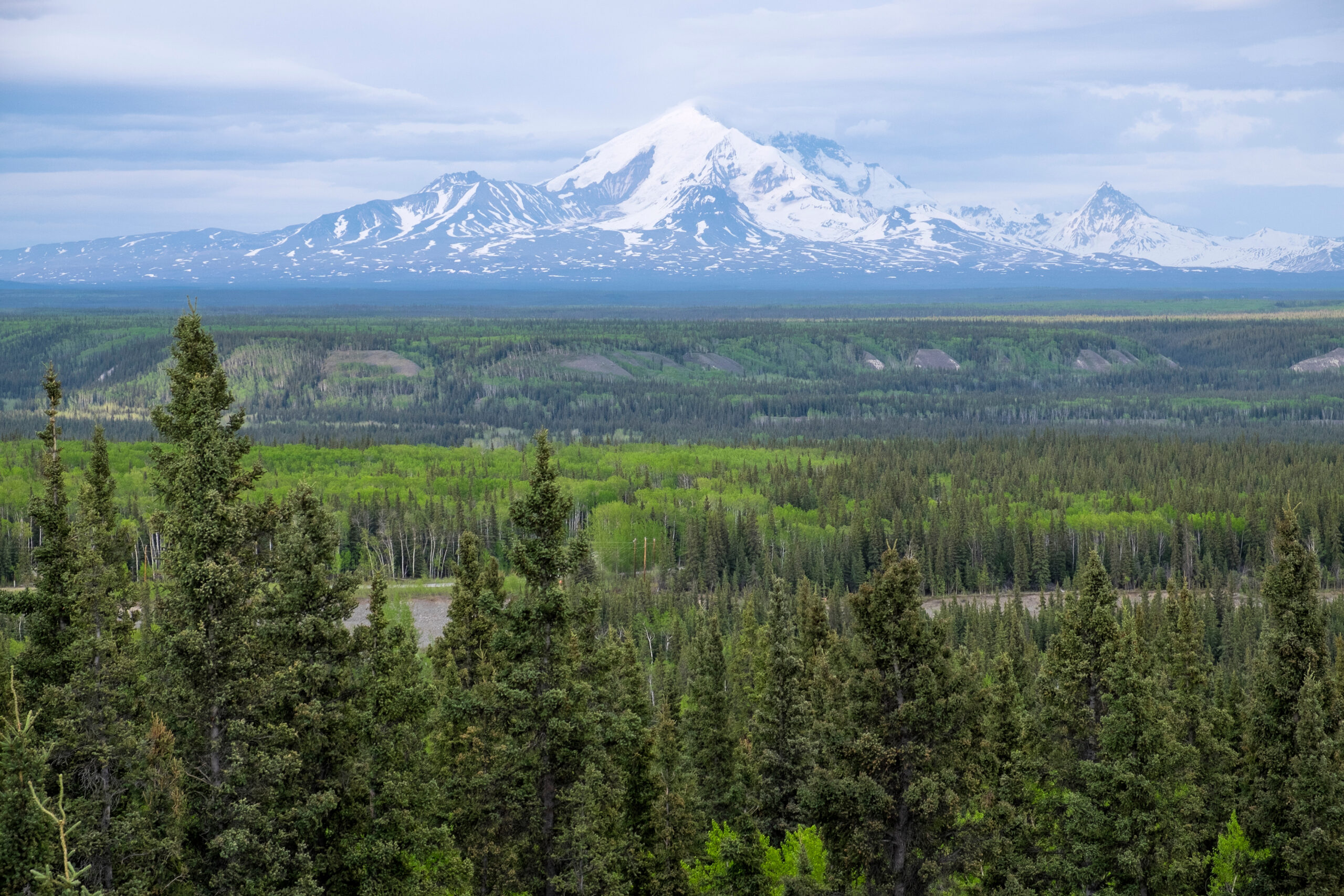
The full gear list at a glance
The summary table below is split across personal climbing gear and the expedition camp system. Group gear (ropes, group hardware, tents, stoves) is typically shared between rope teams of 2-4 climbers, and is detailed in its own section below. Costs vary substantially — a first-time Mount Blackburn climber’s complete kit can run $4,000-7,000 to acquire plus expedition food and fuel costs.
| Item | Spec | Priority | Notes |
|---|---|---|---|
| Double mountaineering boots | 6,000m / B3+ double | Essential | La Sportiva G2 Evo, Scarpa Phantom 6000 |
| Crampons | 12-point fully automatic | Essential | Petzl Sarken or Vasak, Grivel G12 |
| Ice axe (technical) | 50-55 cm technical alpine | Essential | Petzl Sum’tec |
| Ice axe (general) | 60-70 cm classic alpine | Essential | For glacier travel + self-arrest |
| Expedition harness | Adjustable, sled-tow compatible | Essential | Black Diamond Couloir or Petzl Altitude |
| Helmet | UIAA-rated | Essential | Petzl Sirocco, Black Diamond Vapor |
| Sleeping bag | -29 °C / -20 °F comfort | Essential | WM Puma, FF Snowbunting EX |
| Vapor barrier liner | For sleeping bag | Strong | Prevents down moisture buildup |
| Sleeping pad (primary) | Inflatable, R-value 6+ | Essential | Therm-a-Rest NeoAir XTherm |
| Sleeping pad (backup) | Closed-cell foam | Essential | Therm-a-Rest Z-Lite Sol |
| Base layers | 2 sets merino or synthetic | Essential | One climbing, one sleeping |
| Mid layer fleece | 200-weight | Essential | Patagonia R2 or R3 |
| Softshell jacket | Wind-resistant climbing layer | Essential | Mammut Aenergy, Arc’teryx Gamma |
| Hardshell jacket | 3-layer waterproof, helmet hood | Essential | Arc’teryx Alpha SV, Patagonia Pluma |
| Hardshell pants | Full-side zip | Essential | Arc’teryx Alpha SV pants |
| Insulated pants | Synthetic, full-side zip | Essential | For high camps and storm days |
| Expedition down parka | 800-fill down, 400-500 g fill | Essential | Mountain Hardwear Absolute Zero |
| Mittens (over-mitts) | Synthetic insulated | Essential | OR Alti Mitts |
| Insulated gloves | Warm climbing pair | Essential | Mountain Equipment Couloir |
| Liner gloves | 2 pairs | Essential | For dexterity tasks |
| Balaclava + buff | Wind protection | Essential | Multiple buffs recommended |
| Glacier sunglasses | Category 4, side shields | Essential | + spare pair |
| Ski goggles | For storm climbing | Essential | Smith I/O, Anon M4 |
| Headlamp | 300+ lumens + 2 spare battery sets | Essential | Petzl Actik Core + backup unit |
| Expedition pack | 90-100 L | Essential | Mountain Hardwear AMG, Hyperlite 4400 |
| Sled (pulk) | Plastic expedition | Essential | Paris Expedition or rental |
| Sled rigid pole rigging | Aluminum or wood | Essential | Prevents heel-strike on downhills |
| Hauling harness | Padded chest harness | Essential | Or harness extender |
| Sat phone or InReach | Required for communication | Essential | Garmin InReach Mini 2 |
| Personal first aid kit | With altitude meds | Essential | Diamox, dex, ibuprofen |
This is a Denali-class expedition, not an Alpine 4,000er
Climbers transitioning to Mount Blackburn from European 4,000ers (Mont Blanc, Weisshorn, Aletschhorn) routinely underestimate the equipment commitment. Mount Blackburn is closer to Denali in expedition character than to Mont Blanc. The 14-21 day timeline means everything must be redundant — two headlamps not one, two sleeping pads, two pairs of liner gloves, backup gas cartridges. The Gulf of Alaska weather means the kit must handle multi-day storm cycles at high camps without resupply. The ski-plane access means there is no easy resupply or rescue option. Pack the kit you would pack for Denali, then add sled-hauling gear.
1. Double mountaineering boots (6,000m / B3+ double)
True double boots — single B2/B3 boots are NOT adequate
EssentialMount Blackburn’s combination of -20 to -40 °C summit temperatures, 14-21 day expedition duration, and the slow ascent rate of expedition climbing all demand the warmth of a true double boot with removable inner liner. The inner liner dries in the sleeping bag overnight, which is critical on multi-week expeditions where moisture accumulation is the primary cold-injury risk. Single B2 or B3 boots — including the excellent Trango Tower, Scarpa Mont Blanc Pro, or Nepal Cube that work well in the Alps — are not adequate for the temperature exposure on Mount Blackburn.
Recommended models
- La Sportiva G2 Evo — modern lightweight double boot with integrated gaiter; the most-used boot on Alaskan and 6,000m expeditions in recent years
- Scarpa Phantom 6000 — slightly heavier, very warm, excellent durability on long expeditions
- La Sportiva Olympus Mons Cube — true 8,000m boot, overkill for Blackburn but works for combined trip plans (Denali + Blackburn the same year)
- Scarpa Phantom 8000 — similar 8,000m option, expensive but indestructible
Overboots — optional but useful
For extreme cold or summit-day conditions, removable overboots (Forty Below K2 Superlight, Outdoor Research Brooks Range) add a third insulation layer over the double boot. Overboots are most useful for higher 8,000m peaks but some Mount Blackburn climbers use them for the upper ridge in cold years.
Break-in is critical
Double boots must be well broken-in before the expedition — minimum 80-100 km of training hiking, plus several glacier days if possible. A poorly-fitted double boot on a 14-21 day expedition produces severe blisters that can end the trip. Buy the boots at least 4-6 months before departure and spend serious time in them.
2. Climbing hardware
Personal hardware + group rack
EssentialCrampons
Fully automatic 12-point crampons matched to the double boot. Petzl Sarken (more technical front points, good for the upper ridge), Petzl Vasak (all-round), or Grivel G12 New-Classic. Anti-balling plates essential — wet glacier conditions on the upper Nabesna can ball significantly. Adjust to your double boots before the expedition with the inner liner in place. Carry crampon repair parts (spare bolts, allen key, replacement straps).
Ice axes — bring two
Mount Blackburn calls for two ice axes: a 50-55 cm technical alpine axe (Petzl Sum’tec, Black Diamond Raven Pro) for the steeper sections of the upper ridge, and a 60-70 cm general-purpose alpine axe (Petzl Glacier or Black Diamond Raven) for glacier travel and self-arrest on the lower mountain. The longer axe doubles as a probing tool for crevasse detection on the lower glacier. Single-axe configurations are not adequate — the long sections of self-arrest-relevant terrain and the rope-team configuration both favor the second axe.
Expedition harness
An adjustable expedition-rated climbing harness with at least four gear loops, a haul loop, and compatibility with a sled-towing setup. Black Diamond Couloir (190 g, no gear loops — needs gear loop add-on for Blackburn) or Petzl Altitude (255 g, three gear loops, designed for expeditions) are the standard choices. The harness must fit over expedition pants and the down parka — verify before the trip.
Helmet
UIAA-rated alpine climbing helmet with hood compatibility. Petzl Sirocco (160 g), Black Diamond Vapor (199 g), or Mammut Wall Rider. Verify fit over a warm hat and a hardshell hood — you will wear all three on summit day.
Group ropes & rack
Group gear typically organized by rope team of 2-4 climbers:
- Two 60 m glacier ropes per rope team — typically 8.5-9.0 mm diameter dynamic single ropes (not half ropes, given the long pitches)
- 6-8× 13 cm ice screws per rope team for crevasse rescue and bergschrund anchors
- 4-6 snow pickets for snow anchor construction on the upper ridge
- 2 deadmen / snow flukes for soft-snow anchors
- 8-10 slings (mix of 60 cm and 120 cm dyneema)
- 12+ locking carabiners across the rope team
- 2 pulleys for crevasse rescue 3:1 systems (Petzl Pro Traxion or Micro Traxion)
- Personal: 2 prusik loops (6 mm cord, 1.5 m each), belay device with guide mode (Petzl Reverso 4 or BD ATC Guide)
Crevasse rescue practice
Personal crevasse rescue competence is mandatory. Practice ascending a fixed rope with two prusiks, building a 3:1 hauling system from snow anchor, and crossing crevasses on a probed bridge — within 6 months of the expedition. The lower Nabesna and upper glacier crossings present genuine fall risk, and rope team rescue may need to occur in storm conditions with cold-stiff fingers.
3. The sleeping system (expedition-rated)
Sleeping bag + vapor barrier + dual pads
EssentialThe sleeping system is the single most important gear category on Mount Blackburn — sleeping cold for 14-21 nights breaks expeditions. The system must handle high-camp temperatures down to -40 °C with a safety margin, must handle multi-day storm cycles at elevation, and must be configured to dry boots and gloves overnight.
Sleeping bag — comfort to -29 °C / -20 °F
An expedition-rated sleeping bag with comfort temperature of -29 °C (-20 °F) or warmer. The standard choices:
- Western Mountaineering Puma -25 °F (-32 °C comfort, 850-fill down, ~1,000 g fill weight) — the gold-standard expedition bag
- Feathered Friends Snowbunting EX -30 °F (-34 °C comfort, 900-fill down) — slightly warmer, similar weight
- Mountain Hardwear Phantom -20F (-29 °C comfort, 850-fill down) — slightly lighter, less hood loft
- Marmot Col -20F (-29 °C comfort, 800-fill down) — heavier but more affordable
Vapor barrier liner (VBL)
A vapor-barrier liner is strongly recommended for Mount Blackburn’s 14-21 day duration. Moisture from perspiration accumulates in down insulation over multi-week expeditions, progressively destroying the loft. A VBL (Stephenson’s Warmlite, RBH Designs, or DIY plastic) traps moisture against the body inside the bag, preserving the down. The trade-off is that VBLs feel clammy and require dry sleeping clothing.
Sleeping pads — bring two
Two pads are essential for Alaska expeditions: an inflatable pad with R-value 6+ as the primary insulation (Therm-a-Rest NeoAir XTherm, R-value 7.3), and a closed-cell foam pad as backup against punctures and for camp seating (Therm-a-Rest Z-Lite Sol, R-value 2.0). The two pads stacked give R-value 9+, which is needed for the cold glacier and high-camp surfaces. Punctures in the inflatable pad on a 14-21 day expedition are common — the foam backup is the insurance policy.
Sleep clothing
Dedicated dry sleep clothing extends the sleeping bag’s effective rating significantly: a clean dry merino base layer set, dry socks, a warm hat, a buff for face protection. Sleep clothing stays in the sleeping bag at all times and is never worn outside the tent.
4. The Alaskan layering system
Six-layer system + expedition down parka
EssentialThe Mount Blackburn climber needs a layering system that handles temperatures from +5 °C in basecamp sun to -40 °C in storm conditions at high camp. The 6-layer system below is the standard configuration for Alaskan expeditions.
Base layers — two sets
Two complete sets of base layer top and bottom: one for climbing (worn daily), one kept dry for sleeping. Merino has the comfort and odor advantage on multi-week expeditions; synthetic dries faster. Smartwool Merino 250, Icebreaker 200 Oasis, or Patagonia Capilene Thermal Weight.
Mid layer fleece
A 200-weight fleece or active insulating mid-layer. Patagonia R2 Fleece or Mountain Hardwear Polartec 200. This is the working layer worn during the climb and during storm cycles.
Softshell jacket
A wind-resistant softshell jacket as the standard climbing layer for fair-weather days. Mammut Aenergy, Arc’teryx Gamma MX, or Patagonia R2 TechFace Hoody. Pit zips and a wind-resistant front are key features.
Hardshell jacket
3-layer waterproof Gore-Tex Pro (or equivalent) shell with helmet-compatible hood, pit zips, and extended length for sled-hauling protection. Arc’teryx Alpha SV, Patagonia Pluma, or Mountain Hardwear Exposure 2. The Gulf of Alaska weather demands true waterproof construction — water-resistant softshells are inadequate.
Insulated pants
Synthetic insulated pants with full-side zips for crampon-on application. Patagonia DAS Pants, Mountain Hardwear Compressor Pants, or Rab Photon Pants. Worn over base layers and climbing pants at high camps and in storm conditions.
Hardshell pants
Full-side-zip waterproof pants with reinforced ankles. Arc’teryx Alpha SV Pants or Patagonia Powslayer Pants. The full-side-zip configuration allows pants-on application over double boots and crampons.
Expedition down parka
A true expedition-weight down parka with 400-500 g of 800+ fill down. Mountain Hardwear Absolute Zero, Rab Neutrino Pro, Feathered Friends Khumbu, or Mountain Equipment K7. This is the layer for storm-bound days at high camp, summit day on the upper ridge, and rest stops in cold conditions. The hood must be helmet-compatible.
Mittens and gloves — bring multiple pairs
- Expedition over-mitts — Outdoor Research Alti Mitts or Black Diamond Mercury Mitts. The warmest hand protection, used for high camps and summit day in cold
- Insulated climbing gloves — Mountain Equipment Couloir or Black Diamond Guide Glove. The working glove for most climbing
- Liner gloves × 2-3 pairs — Lightweight for camp tasks, glove changes, and dexterity work. Bring multiple pairs as they wear and get wet
- Spare warm glove pair — sealed in a dry bag for emergencies
Head and face protection
Two warm hats (one climbing, one sleep), one balaclava for full face cover in wind, two buffs for variable face coverage, glacier sunglasses (Category 4) plus a backup pair, ski goggles (Smith I/O or Anon M4) for storm-climbing and high-wind summit-day conditions.
5. Expedition camp gear
Tent, stove, fuel, cook system
EssentialFour-season tent
Mount Blackburn requires a true four-season expedition tent rated for high winds and heavy snow loading. The standard choices are 3-4 person tents shared between rope teams: Hilleberg Keron 3 GT, Mountain Hardwear Trango 2, The North Face VE 25, or Mountain Hardwear EV2/EV3. The tent must withstand sustained 60+ mph winds, must have a vestibule for cooking and gear storage, and must use color-coded poles compatible with frozen-finger operation.
Stove system — white gas with redundancy
White-gas (Coleman fuel) stoves are the standard for Alaskan expeditions due to performance at temperature and the lack of fuel-canister availability in remote locations. Standard configuration: two MSR XGK EX stoves per rope team (one primary, one backup), with 2-3 fuel bottles per climber for the 14-21 day expedition. Approximately 1-1.5 L of white gas per climber per day, including melting snow for water. Ski-plane fuel restrictions may apply — verify with the air operator.
Cook system
Large-capacity pot (3-4 L) for snow melting and group cooking, smaller pot (1.5-2 L) for boiling and individual meals, lids for both, pot grips, large insulated mugs, large insulated water bottles (Nalgene 1.5 L) plus a thermos for hot drinks on the climb. Each climber: personal bowl/cup, spoon, fork, knife. Plenty of dish towels for the constant snow-melting drip.
Snow shovels and saws
One snow shovel per climber for camp construction (digging tent platforms, building wind walls, snow cave construction for emergency shelter). A snow saw (Black Diamond Bullet or similar) for snow-block construction is highly recommended for high-camp wind walls.
Food — 14-21 days
Approximately 1.0-1.4 kg of food per person per day for the expedition duration. The food system is the largest weight category in the pack — a 14-day expedition for two climbers = 28-39 kg of food alone. Mix of dehydrated dinners (Mountain House, Peak Refuel, AlpineAire), oatmeal/granola for breakfasts, energy bars and gels for daytime climbing, dried fruit and nuts, hot drinks (cocoa, instant coffee, tea), tortillas and hard cheeses for high-camp meals. Pack food in waterproof bags grouped by day to streamline daily access.
6. Sled (pulk) and hauling system
The expedition sled — defining Alaska feature
EssentialThe expedition sled (or “pulk”) is the defining feature of Alaskan expedition style and is essential for Mount Blackburn. The standard configuration is one sled per climber, towed in line behind the climber’s pack with a chest harness or harness extender. The sled allows climbers to haul 25-35 kg of gear, food, fuel, and group equipment beyond what fits in the expedition pack.
Sled selection
- Paris Expedition Sled — the standard lightweight plastic sled, used by most commercial expeditions. Affordable, light, and easily repaired or replaced
- Mountainsmith Sled — more durable polyethylene construction, slightly heavier
- Custom-built sleds — some climbers build sleds from molded plastic toboggans with added rigging
Rigid pole rigging — critical
The sled must have rigid aluminum or wood pole rigging between the climber and the sled — typically two aluminum poles or wood dowels with a length of 1.2-1.5 m. The rigid rigging prevents the sled from sliding into the climber’s heels on downhill sections and prevents the sled from swinging sideways on traverses. Rope-only rigging (which works for short flat hauls) is inadequate for Mount Blackburn’s terrain.
Hauling harness
A padded chest harness for sled hauling, or a harness extender that attaches the sled rigging to the climbing harness. Skinny Skis Hauling Harness, Granite Gear Pulk Harness, or a custom padded webbing harness. The hauling harness must integrate with the climbing harness for crevasse rescue scenarios.
Sled rental
Sleds and hauling rigging are commonly rented from Anchorage or McCarthy outfitters rather than purchased and shipped. Rental rates run approximately $100-200 for the full expedition. Verify rental availability before flying to Alaska — peak season can stretch supply.
7. Electronics and communications
Satellite comms + headlamps + chargers
EssentialSatellite communications — mandatory
There is no mobile signal in the Wrangell Mountains. Satellite communication is essential for weather updates, pickup coordination, and emergency response:
- Garmin InReach Mini 2 — the standard for 2-way text communication, GPS tracking, and SOS button. Subscription required (~$15-65/month depending on tier)
- Iridium 9555 or 9575 satellite phone — for voice communication when text is inadequate. Rental from $100-200 per expedition
- Solar charger (Goal Zero Nomad 10 or similar) for keeping electronics charged across the expedition
Headlamps
One primary rechargeable headlamp (Petzl Actik Core, Black Diamond Spot 400) plus a backup headlamp (smaller, battery-powered for redundancy), plus two spare battery sets for both. The 14-21 day duration and the storm-bound dark nights at high camp consume battery faster than expected. AAA batteries are the standard backup format. Headlamp loss or failure is the most common avoidable electronics failure on Alaskan expeditions.
Navigation
The Northwest Ridge has a recognizable line in clear weather but becomes navigationally complex in storm conditions. A GPS unit (Garmin GPSMAP 67 or eTrex) with the route loaded as a waypoint sequence is the standard backup. Topographic maps (USGS 1:63,360 quads for Mount Blackburn area) printed and waterproofed. Compass calibrated for the local magnetic declination.
Camera and personal electronics
Small camera or smartphone in a cold-resistant case. Lithium batteries underperform in cold — keep them in inner pockets close to the body. Action cameras (GoPro) are common for summit-day documentation but the battery life in cold conditions is limited to 20-30 minutes per charge.
8. Pack and ski-plane logistics
90-100 L expedition pack + ski-plane weight limits
EssentialExpedition pack
A 90-100 liter expedition pack with sled-hauling compatibility, ice axe loops, rope strap, and crampon attachment. Mountain Hardwear AMG 105, Hyperlite Mountain Gear Prism / 4400, Osprey Argon 110, or Mystery Ranch Big Mountain 105 are standard. The pack must accommodate full upper-mountain loads when sleds are left at lower camps, including the full sleeping system and expedition parka.
Ski-plane weight allowance
Standard ski-plane weight allowance from McCarthy Air Service or Wrangell Mountain Air is 100-150 kg per climber including all personal gear, group equipment share, fuel, and food. Weight is calculated total per group. Heavy items (fuel, food, group gear) can be staged on the icefield basecamp in cargo flights separately if budget allows. Verify exact weight allowance with the operator before packing — overweight cargo can mean a separate flight at significant additional cost.
Duffel bags for ski-plane transport
2-3 heavy-duty duffel bags per climber for transporting gear between Anchorage / McCarthy and the ski-plane. Patagonia Black Hole Duffel 100 L, The North Face Base Camp Duffel XL, or similar. Bags should be water-resistant and have backpack-style straps for hut/airport portage.
Basecamp gear caching
Some equipment is cached at basecamp during the climb: extra fuel, basecamp-only food, extra clothing, contingency supplies. A tarpaulin or basecamp tent is useful for organizing the cache. Cached items should be weighted down or buried in snow against high winds and the occasional curious wildlife.
9. Personal items and health
First aid, medications, personal care
EssentialPersonal first aid kit
- Altitude medication — Diamox (acetazolamide) 125-250 mg twice daily prophylactic; dexamethasone 4-8 mg for emergency HACE treatment; nifedipine 30 mg for HAPE treatment (prescription required for all)
- Pain relief — ibuprofen 400 mg, paracetamol/acetaminophen, aspirin
- Antibiotics — azithromycin or ciprofloxacin (prescription) for serious infections
- Wound care — sterile pads, Compeed, Leukotape, climbing tape, antiseptic wipes
- Other — antihistamines, electrolyte tablets, oral rehydration salts, antidiarrheal medication, personal prescriptions
Personal care
Toothbrush, toothpaste, baby wipes for body cleaning, sunscreen SPF 50+ for face (refilled from group bottle), lip balm with SPF, hand sanitizer. The 14-21 day duration means hygiene matters more than on shorter trips — bacterial cross-contamination of group cooking gear has ended multiple Alaskan expeditions.
Documents and insurance
Passport (US climbers — drivers license adequate within Alaska), Wrangell-St. Elias National Park ranger station check-in (recommended though not required), comprehensive expedition travel insurance with medical evacuation coverage (Global Rescue, Ripcord Travel Protection, or similar — the helicopter rescue option from the Wrangells is limited and expensive). Total insurance cost typically $300-500 for a 21-day expedition.
Bear protection
SummitPost confirms: “Firearms are allowed for defense as grizzlies are common within the park.” Bear protection on the icefield basecamp is rarely needed (grizzlies don’t typically venture far onto high glaciers) but the approach and basecamp areas can have bear activity. Bear spray is a less-lethal alternative. Local Alaska climbers typically carry a .357 magnum or .44 magnum revolver; non-Alaskan climbers should consult the air operator and ranger station before flying with firearms into the park.
What to NOT bring
The Mount Blackburn gear list is long enough already, and several items appear on shorter Alpine gear lists but are not useful on a full Alaskan expedition:
- Single B2 or B3 mountaineering boots — inadequate warmth for the multi-week duration
- Lightweight summer sleeping bag (-5 to -10 °C) — far too warm for the high-camp temperatures; bring the expedition bag instead
- Single mid-layer fleece — bring layers, not just a single warm garment
- Cotton anything — no cotton T-shirts, cotton socks, cotton hats. Cotton kills on extended cold-weather expeditions
- Hut slippers / camp shoes — there is no hut on Mount Blackburn; boots stay on or socks-only inside tent
- Climbing rack of cams and nuts — there is no rock climbing on the Northwest Ridge; ice screws and snow anchors only
- Rappel device beyond a tubular belay device — the route has no fixed-rope rappels
- Extensive electronics for entertainment — books on Kindle work for storm days, but laptops, large speakers, etc. are unnecessary weight
- Excess summit-day clothing variations — pick one configuration and stick with it
- Helmet lights / lanterns for camp — the headlamp doubles for tent illumination
The packing principle on Mount Blackburn is: “redundant, durable, and expedition-rated”. Every kilogram of unnecessary gear is a kilogram dragged for 9,400 vertical feet over 14-21 days. Every item that fails in a storm at high camp is unrecoverable until expedition end. The kit list is long because the expedition is long — but ruthless trimming of nice-to-haves is essential.
The final pre-departure check
The week before you fly to Anchorage, conduct the full kit assembly and verification:
- Double boots have been worn for 80+ km of training and are fully broken-in
- Crampons fit the double boots with the inner liner inserted
- Two headlamps and two complete spare battery sets are packed
- Satellite communication device (InReach or sat phone) is activated and tested
- Expedition sleeping bag, vapor barrier liner, and two sleeping pads are packed
- Expedition tent, stove system, and 14-21 days of fuel are organized for ski-plane weight check
- Sled, hauling rigging, and harness extender are confirmed rented or owned
- Wrangell Mountain Air or McCarthy Air Service flight booking is confirmed including pickup window
- Ranger station check-in is planned for the day before flight to basecamp
- Travel insurance with medical evacuation coverage is in place and policy number saved
- Personal medications (Diamox, dexamethasone, nifedipine) are in carry-on, not checked
- Crevasse rescue practice has been conducted within the past 6 months
- Group food has been packed and weighed for the ski-plane allowance
- Cash USD for tips, hut fees, and incidentals
Mount Blackburn is one of the great quiet objectives in American mountaineering — and the gear list reflects the seriousness of the commitment. The combination of double boots, expedition sleeping system, multi-day fuel load, sled-hauling rigging, satellite communications, and Gulf-of-Alaska-grade weather protection puts the kit closer to Denali than to Alpine 4,000ers. Pack the kit you would pack for Denali, double-check the redundancy items, then go climb the fifth-highest peak in the United States.
Other parts of the Mount Blackburn guide
Gear is one of six topics covered in the full Mount Blackburn climbing guide. Each sub-guide goes deep on one aspect of the climb.
Routes Guide
The NW Ridge from Nabesna Icefield, the SE Ridge from Kennicott Glacier, and the historic 1912 Keen East Face line — the three documented routes.
Gear List
The complete equipment list for the 14-21 day NW Ridge expedition — double boots, full glacier kit, ski-plane logistics, and the gear for Gulf of Alaska weather.
Permits & Logistics
Coming soon — Wrangell Mountain Air booking, McCarthy/Chitina access, ranger check-in, and the expedition cost breakdown.
Training Plan
Coming soon — fitness and skills preparation for a 14-21 day Alaskan expedition with 8,000+ vertical feet of climbing.
Weather & Best Season
Coming soon — Gulf of Alaska weather patterns, the May-June window, and managing multi-week storm cycles.
Difficulty & Safety
Coming soon — the AK Grade 3 reality, crevasse hazard management, grizzly defense at basecamp, and helicopter rescue limitations.
Mount Blackburn gear — frequently asked questions
What gear do I need to climb Mount Blackburn?
Mount Blackburn requires full Alaskan expedition equipment for the 14-21 day Northwest Ridge climb. The essential personal gear includes: double 6,000-meter mountaineering boots, fully automatic 12-point crampons, two ice axes (one technical, one general-purpose), expedition harness, UIAA-rated helmet, expedition sleeping bag rated to -29 °C / -20 °F comfort, R-value 6+ sleeping pad, full Alaskan layering system from base layers through expedition down parka, double-walled mittens plus three pairs of gloves, four-season expedition tent (typically shared), white-gas stove with extra fuel, 14-21 days of expedition food, expedition sled with hauling harness, and a 90-100 L expedition pack. Group gear includes 60-meter glacier ropes, ice screws, snow pickets, deadmen, and crevasse rescue equipment. Total equipment cost for a first-time Mount Blackburn climber typically runs $4,000-7,000 plus rentals.
What boots are required for Mount Blackburn?
Mount Blackburn requires double-boot construction (B3 or higher) suitable for Alaskan and 6,000-meter peaks. The standard choices are the La Sportiva G2 Evo, Scarpa Phantom 6000, La Sportiva Olympus Mons, or similar double boots with removable inner liners that can be dried in the sleeping bag overnight. Single B2 or B3 boots are inadequate — Mount Blackburn’s combination of -20 to -40 °C summit temperatures, 14-21 day expedition duration, and the slow ascent rate of expedition climbing all favor the warmth of true double boots. Overboots may be added for extreme cold conditions on the upper mountain. Boots must be well-broken-in and verified compatible with fully automatic crampons before the expedition.
What sleeping bag do I need for Mount Blackburn?
An expedition-rated sleeping bag with comfort temperature of -29 °C (-20 °F) or warmer is essential for Mount Blackburn. The standard choices are the Western Mountaineering Puma -25 °F (-32 °C comfort), Feathered Friends Snowbunting EX (-30 °F / -34 °C), Mountain Hardwear Phantom -20F, or Marmot Col -20F. These bags use approximately 700-900 g of 850+ fill down or equivalent synthetic insulation. A vapor-barrier liner is strongly recommended for the longer expedition duration to prevent moisture buildup in the down. Sleep-in clothing (dry base layers, dry socks, hat) extends the effective comfort rating significantly. The bag combined with sleep clothing should keep you comfortable at -29 °C and survivable to -40 °C.
Do I need an expedition sled for Mount Blackburn?
Yes — an expedition sled (or “pulk”) is essential for Mount Blackburn for hauling gear between the basecamp at 7,000 ft and the higher camps. The standard configuration is one sled per climber, towed in line behind the pack with a hauling harness attached to the climbing harness. The sled allows climbers to haul 25-35 kg of gear, food, fuel, and group equipment beyond what fits in the expedition pack. Standard sleds for Alaskan expeditions include the Paris Expedition Sled (lightweight plastic with cord rigging) or more durable polyethylene sleds. Sleds should have an external aluminum or wood pole rigging that holds the load away from the climber’s heels and prevents the sled from sliding into the climber on downhill sections. Sleds are often rented from commercial outfitters in Anchorage or McCarthy.
How heavy is the pack for Mount Blackburn?
Total carry weight for Mount Blackburn typically runs 50-70 kg per climber, divided between the expedition pack (25-35 kg) and the towed sled (25-35 kg). The expedition pack contains daily essentials and high-priority items: personal climbing hardware, water, food for the day, summit-day clothing, first aid, and electronics. The sled carries bulk items: tent, sleeping system, fuel, multi-day food, group cooking equipment, extra clothing, and shared group gear. The 90-100 L expedition pack capacity is needed for the upper-mountain pushes where sleds may need to be left at lower camps and full loads carried in the pack. Total weight management is the central planning challenge of a Mount Blackburn expedition — every kilogram in the basecamp pile is a kilogram dragged for 9,400 vertical feet.
What does the ski-plane charter include?
Ski-plane charter for Mount Blackburn from McCarthy or Chitina typically includes: round-trip flight between the airstrip and the Nabesna Icefield basecamp (one-way for the drop-off, separate flight for the pickup), pilot and aircraft (typically a Cessna 185 or Beaver on skis), and standard weight allowance of approximately 100-150 kg per climber including personal gear, group equipment share, fuel, and food. Additional fuel for stoves is sometimes carried separately. The ski-plane charter does NOT include: equipment rental, group gear, food, satellite communications, climbing permits (none required), or medical evacuation. Costs typically run $1,500-3,000 per person round-trip depending on group size, weight, and the specific operator (Wrangell Mountain Air, McCarthy Air Service, etc.). Weather delays of 1-3 days at both ends are normal and not refundable.