
Last updated September 18, 2026
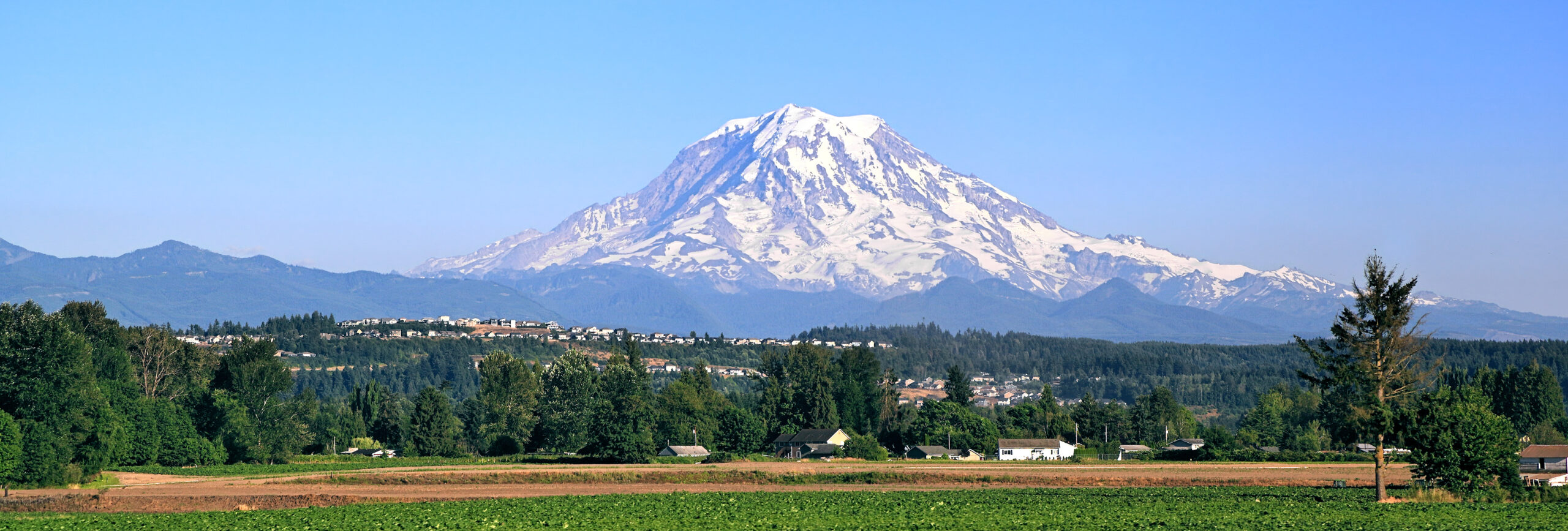
Mount Rainier Progression Plan: Skills, Readiness Gates & Prerequisite Climbs
The best question is not “Which mountain must I climb before Rainier?” It is “Which capabilities still need proof?” A strong progression builds four things separately: mountain endurance, snow competence, glacier/rope-team systems, and decision-making under real alpine conditions. Mount Baker is an excellent bridge—but it is not the only valid one.
What Should You Do Before Climbing Mount Rainier?
Build toward Rainier in four layers: first prove mountain endurance, then learn snow travel, then learn and practice glacier/rope systems, then complete an application climb where those systems are used before Rainier.
A practical sequence might be long mountain hikes → snow-skills instruction → Mount Baker or equivalent glaciated climb → Mount Rainier. But the mountain name is less important than whether each readiness gate is actually met.
A Practical Four-Stage Path to Mount Rainier
Move forward because you pass the gate—not because the calendar says it is time.
| Stage | Main objective | Useful examples | Readiness test |
|---|---|---|---|
| 1 · Mountain endurance | Long uphill days, pack carry, pacing | Major day hikes, 4,000–6,000 ft gain days, back-to-back mountain days | You finish with controlled pacing rather than survival-mode fatigue |
| 2 · Snow skills | Movement on snow, traction, ice-axe familiarity, cold systems | Qualified snow-skills course + appropriate practice terrain | Basic snow movement is practiced, not theoretical |
| 3 · Glacier systems | Roped glacier travel and rescue systems | Instructional Mount Baker climb or equivalent glacier course/climb | Your role in a rope team is understood and practiced |
| 4 · Application climb | Combine endurance + systems in real alpine conditions | Baker, guided Cascade glacier climb, or equivalent progression objective | You can execute the systems under fatigue and changing conditions |
| Rainier | Apply everything to a larger glaciated volcano | DC, Emmons or another route matched to experience | Route, team and support model fit your actual competence |
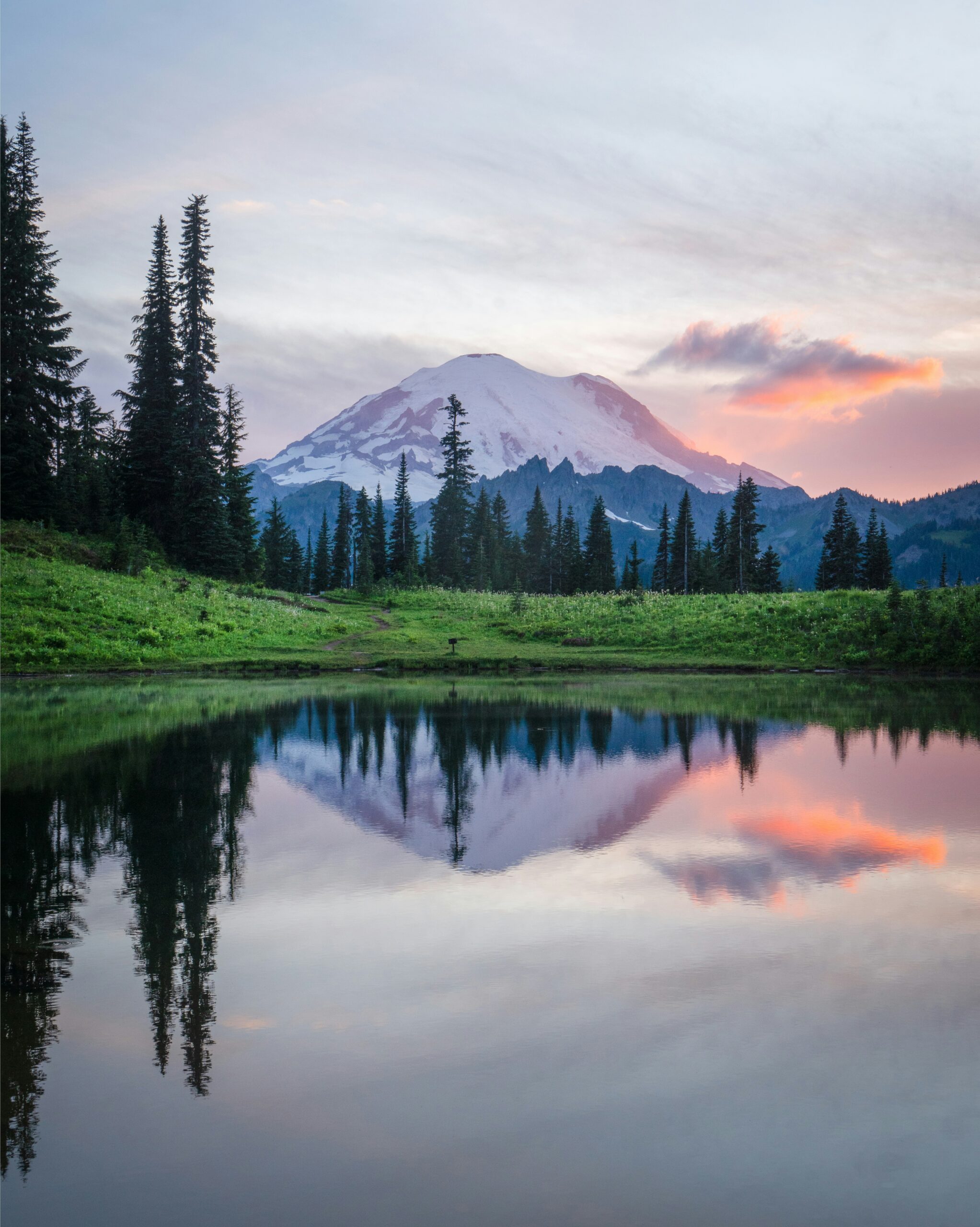
Rainier Is Not Just a Taller Hike.
NPS describes every summit route as requiring more than 9,000 feet of vertical gain, more than 10 miles of travel, excellent fitness and technical glacier-travel rope skills. That combination is why fitness and technical readiness must be built separately.
Rainier Readiness Is More Than Fitness
Mountain Endurance
You need sustained uphill movement under load, efficient pacing, fueling and enough durability to keep moving when the day becomes long.
Proof matters more than gym numbers.Snow & Traction Competence
Crampon movement, ice-axe use and snow travel should be learned through qualified instruction and practiced before the summit climb.
Equipment ownership is not competence.Rope-Team Systems
Independent teams need practiced glacier travel, crevasse-response systems and communication—not just an understanding of the concepts.
Guided climbers should still understand their role.Decision-Making Under Fatigue
Route finding, turnaround discipline, weather interpretation and team communication become harder when cold, altitude and fatigue accumulate.
The application climb tests this.Do You Need to Climb Mount Baker Before Rainier?
No—but Baker is one of the best preparation climbs in the Pacific Northwest. The reason is not that it is a checkbox. A well-designed Baker climb can expose you to glaciated terrain, roped travel, snow camping, early alpine starts, cold management and sustained summit-day effort in a lower-stakes progression environment.
| What Baker can test | Why it matters for Rainier |
|---|---|
| Rope-team movement | You experience real spacing, pacing and communication on a glacier |
| Snow camping | You learn how your gear and sleep systems function in alpine conditions |
| Pre-dawn summit start | You test movement, fueling and layering when tired and cold |
| Glacier hazard awareness | You begin to understand why route choice changes with conditions |
| Team systems | You learn whether communication and roles work under stress |
Equivalent experience can come from another glaciated climb, a professional mountaineering course, repeated rope-team practice and a suitable Cascade objective. The key is equivalent capability, not a mandatory peak name.
Where Camp Muir Fits in the Progression
A hike to Camp Muir is useful because it tests sustained climbing, pack carry, movement on the Muir Snowfield and how you respond to roughly 10,000-foot altitude. But it should be interpreted correctly.
Fitness + pacing
Can you climb steadily for hours with enough reserve to descend well?
Altitude response
How do you feel and function around 10,000 feet during a hard uphill day?
Glacier competence
Reaching Camp Muir does not demonstrate crevasse-rescue or rope-team skill.
Summit readiness
Rainier above high camp adds glacier hazard, night travel and a much larger continuous objective.
Your Target Route Should Match Your Experience.
The Disappointment Cleaver, Emmons-Winthrop, Kautz and Liberty Ridge are not interchangeable objectives. Build your progression toward the actual route and support model you intend to use.
Guided vs Independent Rainier Progression
| Readiness area | Guided climb | Independent climb |
|---|---|---|
| Fitness | High | High |
| Snow movement | Must learn/apply guide instruction | Must already be practiced |
| Glacier travel | Guide manages route/team system | Team must manage system itself |
| Crevasse response | Guide team leads response | Team must possess practiced capability |
| Navigation | Guide leads route finding | Team owns navigation and route decisions |
| Turnaround decisions | Guide makes operational decisions | Team must make them independently |
A guided climb is not a shortcut around fitness. It is a different support model that allows experienced guides to carry much of the route-finding, glacier-system and decision-making responsibility while the client still needs sufficient physical capacity and the ability to learn and execute instructions.
Progress Toward the Rainier Route You Actually Want
Disappointment Cleaver
Common choice for guided and independent teams; still a serious glacier climb with major vertical gain.
See DC route →Longer glacier routeEmmons-Winthrop
A different approach and camp system that rewards stronger independent glacier competence.
See Emmons route →Technical step upKautz Glacier
Requires a more advanced progression than a standard first Rainier route.
See Kautz route →Parent guideMount Rainier Climbing Guide
Compare route, permit, season and logistics before selecting the progression target.
Open Rainier guide →Example 6–12 Month Rainier Progression
This is a planning example, not a required schedule.
| Window | Focus | Proof point |
|---|---|---|
| Months 1–3 | Mountain endurance, pack carry, uphill volume | Long days are repeatable without excessive recovery debt |
| Months 3–5 | Snow travel instruction + practice | Movement systems become familiar rather than novel |
| Months 4–7 | Glacier course / Mount Baker or equivalent | Roped glacier movement is practiced in real terrain |
| Months 6–9 | Application climb + Camp Muir benchmark | Fitness, systems and judgment work together |
| Months 8–12 | Rainier-specific route, weather, gear and permit planning | No major capability remains untested |
If one gate fails, extend the progression. There is no SEO-friendly calendar that can substitute for actual readiness.
Practice the Team You Intend to Climb With.
Independent Rainier readiness includes the group, not just the strongest individual. Rope systems, pace, communication and decisions have to work as a team.
Rainier Registration & Permit Reality
NPS requires a permit for glacier travel or climbing above the normal high camps. The 2026 climbing registration fee is $82 per person per climb. During the high-use summer period, wilderness-permit requirements also apply, and the park retains walk-up capacity as well as reservation capacity.
Do not let permit complexity drive your progression page. Use the dedicated permit guide for the current registration process, camp reservation rules and fees; this page should remain the readiness owner.
Build the Rest of the Rainier Plan
Mount Rainier Training Plan
Use the fitness page for workouts and physical preparation rather than duplicating that here.
Train for Rainier →GearMount Rainier Gear List
Match equipment to route, season, guide program and team system.
Build gear list →WeatherRainier Weather & Best Season
Understand why route condition and season can change the readiness bar.
Check season →Next stepRainier to Denali Progression
Rainier is not the final preparation for Denali; additional cold, expedition and glacier experience is required.
See next progression →Deep recoveryMountaineering Fitness Standards
Use performance benchmarks as supporting evidence—not as a single pass/fail Rainier test.
Check standards →Deep recoveryAltitude Acclimatization Explained
Separate acclimatization strategy from technical readiness.
Understand altitude →Deep recoveryMountain Weather
Build the forecast-reading layer that progression climbs should practice.
Read weather →JourneyMy Climb Plan
Save your current stage, next readiness gate and Rainier target date.
Build My Rainier Plan →How This Progression Is Built
This framework combines current NPS descriptions of Rainier’s physical and technical demands with the practical progression logic used across mountaineering instruction: isolate skills, learn them in lower-consequence environments, then integrate them before the larger objective.
What we are not claiming: there is no controlled NPS study proving that every climber who follows this exact four-stage sequence has a specific summit-success advantage. Historical summit statistics are not used here as proof of causation. The framework is a planning recommendation based on capability progression.
What is current: NPS currently describes Rainier summit routes as requiring more than 9,000 feet of vertical gain, more than 10 miles of travel, excellent physical conditioning and technical glacier-travel rope skills. The 2026 climbing fee is $82 per person per climb.
Mount Rainier Progression FAQ
What should I climb before Mount Rainier?
Use mountains that prove the capability you still lack. A common path is long hiking objectives, snow-skills instruction, Mount Baker or equivalent glacier experience, then Rainier.
Do I have to climb Mount Baker first?
No. Baker is a strong bridge, but equivalent glacier instruction and experience can fill the same role.
Is Camp Muir enough preparation?
No. It is useful for fitness and altitude benchmarking but does not prove glacier-travel or crevasse-response competence.
Can a beginner climb Rainier with a guide?
Some guide programs accept very fit climbers with limited technical experience and provide instruction, but the physical requirements remain substantial.
What changes for an independent climb?
The team must own glacier systems, route finding, crevasse response, hazard assessment, navigation and turnaround decisions.
How fit should I be?
You should be comfortable with long uphill days, sustained load carry and repeated mountain effort. Exact benchmarks vary by route and support model.
Do I need a climbing permit?
Yes for glacier travel or climbing above normal high camps. The 2026 climbing registration fee is $82 per person per climb.
Do Not Collect Peaks. Collect Capabilities.
The right climb before Rainier is the one that exposes the weakness you still need to solve. When endurance, snow, glacier systems and alpine judgment all hold up together, Rainier becomes the next logical objective instead of a leap.
What Does Each Prerequisite Actually Prove Before Rainier?
Do not collect prerequisite peaks just to complete a list. Choose the objective that tests the capability you still cannot prove. Rainier combines endurance, snow travel, glacier systems and decision-making, so no single smaller climb automatically proves all four.
| Preparation objective | Endurance | Snow / crampons | Glacier rope systems | Alpine judgment | Best use before Rainier |
|---|---|---|---|---|---|
| Long mountain day · 4,000–6,000 ft gain | Strong | No | No | Partial | Prove pacing, fueling, pack carry and descent durability before adding technical systems. |
| Camp Muir day | Strong | Partial | No | Partial | Useful final fitness / altitude benchmark, but not proof of glacier competence. |
| Mount Shasta · Avalanche Gulch or similar | Strong | Strong | Usually no | Partial | Good snow, crampon, axe, cold-start and long-day test; add real glacier instruction separately. |
| Professional glacier course | Varies | Strong | Strong | Partial | Best when your technical gap is rope travel, crevasse response and glacier communication. |
| Mount Baker · instructional glacier climb | Strong | Strong | Strong | Strong | One of the cleanest bridge objectives because it integrates glacier systems with a real summit day. |
| Equivalent Cascade glacier climb | Strong | Strong | Strong | Strong | Works if the climb genuinely includes the rope-team, glacier and decision systems your Rainier route will demand. |
The progression question is “what is still unproven?”
If endurance is weak, another glacier course will not solve the main problem. If rope-team systems are weak, another big non-glaciated hike will not solve it either. Pick the next climb because it closes a readiness gap.
Your First Rainier Route Changes the Preparation Bar
The same four readiness gates remain useful, but the amount of prior independent execution should increase as route complexity and technical commitment rise.
Disappointment Cleaver
Still a major glaciated climb, but commonly used by guided teams and often the most logical first Rainier objective.
- Prioritize endurance and efficient crampon movement.
- Guided climbers can learn more of the rope system within the program.
- Independent teams must already own glacier travel and rescue roles.
Emmons-Winthrop
A longer approach and different camp system make it a stronger test of independent glacier travel and expedition-style pacing.
- Add more loaded vertical and back-to-back mountain days.
- Practice navigation and rope-team communication with your actual team.
- Use a glacier application climb where your team—not an instructor—executes the systems.
Kautz Glacier
Build beyond a basic first-glacier progression. The preparation should include stronger snow / ice technique, steeper terrain judgment and more technical descent competence.
- Do not treat a standard Baker progression as the final technical proof by itself.
- Add route-relevant steep snow / ice instruction and application.
- Match guide support or independent experience to the exact Kautz objective.
Use Five Checks Before Calling the Progression Complete
NPS says every Rainier summit route requires more than 9,000 feet of vertical gain, more than 10 miles of travel, excellent conditioning and technical glacier-travel rope skills. The final decision should therefore combine performance, technical competence and current mountain conditions—not just the calendar.
Fitness readiness can stay constant while route readiness changes overnight.
A climber can be fully prepared physically and technically while the route itself becomes a poor choice because of heat, crevasse development, bridge deterioration, smoke, storm cycles or late-season access. The progression ends with a current-condition check, not simply the last training climb.
Separate Progression From Permit Administration
Do not let permit deadlines create artificial readiness. A reservation is not proof that the team should climb.
Current NPS planning points
NPS currently lists the 2026 climbing fee at $82 per person per climb. Climbers or skiers on glaciers, summit attempts and travel above the normal high camps require the climbing fee and registration. During the summer season, teams register through the park’s climbing / wilderness permit system rather than treating a paid fee as automatic permission to climb.
NPS also continues to describe Rainier as a serious glaciated objective requiring excellent conditioning and technical glacier-travel rope skills. That makes the permit date a planning constraint—not a readiness benchmark.
Questions That Matter After the Basic Four Gates
These questions focus on the final transition from “prepared in theory” to “ready for this route, with this team, in these conditions.”
How many prerequisite climbs do I need before Rainier?
There is no required number. One well-designed progression can be better than several unrelated peaks. The useful question is whether endurance, snow skills, glacier systems and alpine decision-making have each been learned and tested.
Is Mount Shasta useful before Rainier?
Yes for long uphill effort, crampons, ice-axe movement, cold starts and snow travel on routes such as Avalanche Gulch. It does not automatically replace roped glacier instruction, so add that separately if glacier systems remain a gap.
When should I move from instruction to an application climb?
Move forward when the basic systems no longer feel novel. The application climb should require you to execute the skills while tired, cold and moving as part of a real team rather than only practicing them in isolation.
What should change if I plan to climb Rainier independently?
Your team should complete at least one realistic glacier application where the actual partners practice rope spacing, communication, navigation, crevasse response and turnaround decisions together.
Can late-season conditions invalidate a good progression?
Yes. Fitness and skills can be adequate while the current route is no longer a sensible objective for that team. Check current route briefs, weather and late-season condition reports before treating the progression as complete.
Training, Glacier Skills, Route Conditions & Final Prep
Use the core Rainier and progression pages for the main planning path. The recovery links below close the final gap between being broadly prepared and being ready to leave for the mountain.
Was this helpful?
🏔Progression guides
🧭Explore & compare
Global Summit Guide is an independent mountaineering resource founded in 2026. The team combines first-hand trekking and climbing experience with in-depth research and professional health and nutrition review to help climbers choose objectives, prepare properly, and stay safe.
Health, altitude, and nutrition content is reviewed by Taylor Ludlow (Registered Nurse) and Brigg Hoopes (Nutritionist).
What We Don't Know Yet
Mountain information changes quickly. This box explains the limits of what this page can responsibly promise.
- Visa, passport, vaccination, border, insurance, and local transportation rules may change before your trip.
- Route conditions, snowpack, closures, and weather can change quickly after this page is updated.
- Permit rules, fees, quotas, and reservation windows may change between review cycles.
- Operator availability, pricing, guide ratios, and cancellation terms can change by season.
- Your fitness, altitude response, risk tolerance, and experience level may change what is safe or realistic.
Verify current conditions with official land managers, guide services, local forecasts, and current route reports before booking or climbing.
Mountaineering, rock and ice climbing, glacier travel, and high-altitude activity are inherently dangerous and can result in serious injury or death. The information on Global Summit Guide is provided for general informational and educational purposes only and is not a substitute for professional instruction, qualified guiding, proper equipment, or your own judgment and experience.
Route conditions, weather, snowpack, permits, regulations, and hazards change constantly and may differ from what is described here. Details may be incomplete, out of date, or contain errors. Always verify current information with local authorities, certified guides, and official sources before making any decision in the mountains.
Nothing on this site is medical, legal, or financial advice. Our fitness, acclimatization, altitude, and nutrition content is general in nature; consult a qualified physician before beginning any strenuous exercise program or exposing yourself to high altitude.
You are solely responsible for your own safety and decisions. To the fullest extent permitted by law, Global Summit Guide and its team accept no liability for any loss, injury, damage, or expense arising from use of, or reliance on, this information. By using this site you acknowledge these risks and accept these terms.
Some links on this site may be affiliate links. If you buy through them we may earn a small commission at no extra cost to you; this never affects our recommendations.
Global Summit Guide recommendation path
Next Best Mountain to Research
Use these recommendations to continue the right planning path instead of stopping on one page.
Use current permit, weather, route, and operator information before booking or climbing.
Explore Travel Options for Your Destination
Once your mountain, dates and route are taking shape, compare flights, hotels and other travel options that fit the trip.
Affiliate link. We may earn a commission at no additional cost to you.