
K2 Base Camp Trek Guide: Route, Itinerary, Cost & Planning
For most trekkers, the best first choice is the classic K2 Base Camp out-and-back route through Askole, Paiju, Baltoro Glacier and Concordia. Choose Gondogoro La only if you specifically want the harder traverse and have the experience, operator support and conditions for snow, ice and fixed-rope travel.
What Is the K2 Base Camp Trek Really Like?
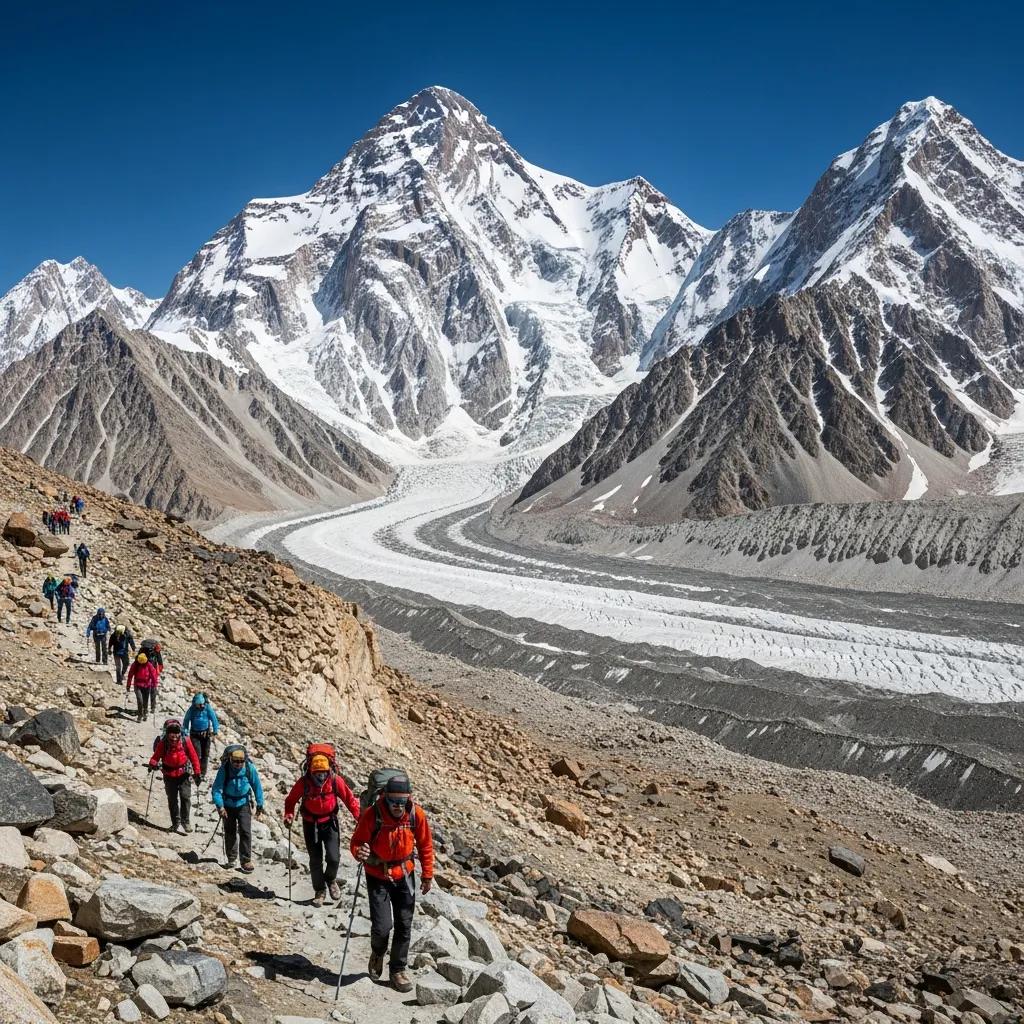
The K2 Base Camp trek is a remote, strenuous, high-altitude camping journey through Pakistan’s Karakoram. The traditional approach runs from Skardu toward Askole, then follows the Braldu Valley to Paiju, crosses the Baltoro Glacier to Concordia, and continues toward Broad Peak and K2 Base Camp.
It is not a technical ascent of K2. The challenge is the combination of rough moraine, glacier travel, repeated 6–9 hour days, nights in tents, altitude around 5,000 metres, weather exposure and limited bailout options.
Classic K2 Base Camp or Gondogoro La?
| Option | Typical format | Technical demand | Best for |
|---|---|---|---|
| Classic out-and-back | Askole → Baltoro → Concordia → K2 BC → return same way | Strenuous trekking | Most first-time K2 trekkers |
| Gondogoro La traverse | K2 BC → Ali Camp → Gondogoro La → Hushe | Snow/ice, fixed ropes, crampon/axe competence depending conditions | Experienced trekkers wanting a harder circuit |
| Concordia-focused trip | Reach Concordia, with K2 BC side trip when conditions/time allow | Strenuous trekking | Trekkers prioritizing scenery and schedule flexibility |
My default recommendation: choose the classic out-and-back unless the pass itself is one of your trip goals. The classic route already gives you the Baltoro Glacier, Concordia, Broad Peak and K2 Base Camp without turning the trip into a semi-technical high pass crossing.
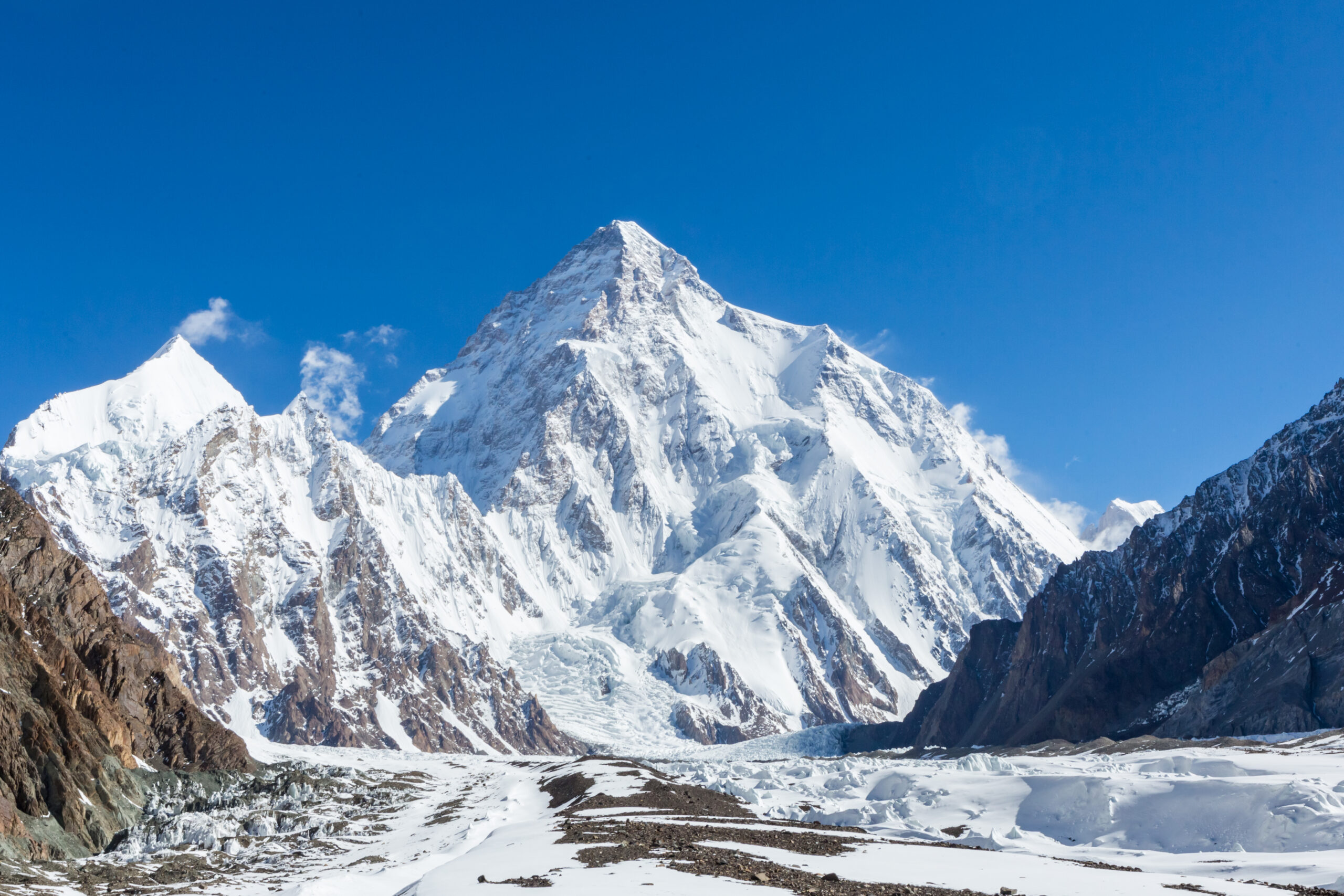
The Route Gets Wilder as You Get Higher.
Unlike a teahouse trek, the Baltoro journey becomes more remote each day. Camps, porters, food systems, toilets and weather margin are part of the expedition—not side details.
Example 20–22 Day K2 Base Camp Itinerary
Exact camps vary by operator, conditions and acclimatization needs.
| Day | Typical stage | What matters |
|---|---|---|
| 1–2 | Islamabad | Arrival, briefing, permit/logistics check |
| 3 | Islamabad → Skardu | Fly when operating; road contingency if weather disrupts flights |
| 4–5 | Skardu | Gear, acclimatization, final supplies, jeep logistics |
| 6 | Skardu → Askole / trail gateway | Long 4WD access day |
| 7 | Askole → Jhola / Korofon zone | Hot lower valley, first camp |
| 8 | Jhola → Paiju | Long day toward the Baltoro |
| 9 | Paiju rest/acclimatization | Useful before committing to glacier days |
| 10 | Paiju → Khoburtse | Enter Baltoro Glacier terrain |
| 11 | Khoburtse → Urdukas | Strong views, rough moraine |
| 12 | Urdukas → Goro II | More sustained glacier travel |
| 13 | Goro II → Concordia | Major scenic milestone |
| 14 | Concordia rest / weather | Acclimatization and flexibility |
| 15 | Concordia → Broad Peak BC / K2 BC zone | Closer K2 access |
| 16 | K2 Base Camp visit | Trip high point; weather dependent |
| 17–20 | Return via Baltoro | Reverse route toward Askole |
| 21–22 | Skardu / Islamabad buffer | Weather and transport margin |
Best Time to Trek to K2 Base Camp
| Window | What to expect | Verdict |
|---|---|---|
| Mid-June | Early season, more snow/ice uncertainty, cooler nights | Possible but less forgiving |
| July | Peak trekking and expedition season | Best overall month |
| August | Still strong, warmer lower valleys, weather can vary | Excellent option |
| Early September | Quieter, colder nights, shorter window | Good with margin |
| Outside main season | Snow and pass access become bigger issues | Specialist planning only |
The broad trekking window is usually mid-June through mid-September, with July the most popular month. For Gondogoro La, the weather and snow state of the pass matter even more than the calendar.
Islamabad → Skardu → Askole
The trek is not just the Baltoro Glacier. Access is part of the trip. International teams generally assemble in Islamabad, then travel to Skardu, the main gateway to the Karakoram. From Skardu, a long jeep journey continues toward Askole, the traditional final village before the wilderness approach.
Islamabad
International arrival, briefing, permits and contingency days.
Skardu
Final major town for hotels, equipment checks, supplies and porter/crew logistics.
Askole
Traditional trekking gateway before the Braldu and Baltoro wilderness.
Baltoro Glacier
Once you enter the glacier system, camps and logistics become fully expedition-style.
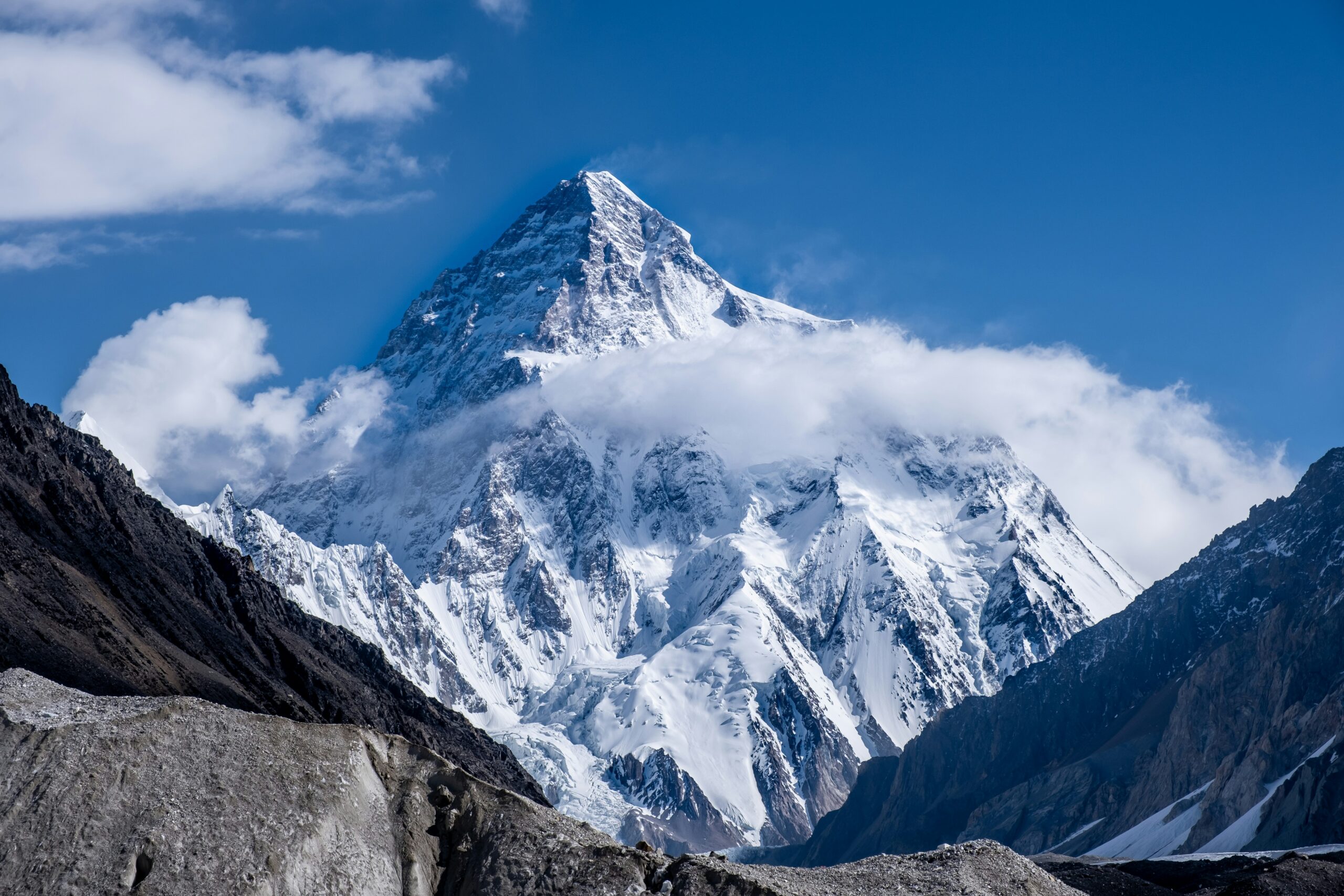
Concordia Is More Than a Camp.
It is the junction of major glaciers and one of the great high-mountain viewpoints of the Karakoram. For many trekkers, Concordia is as memorable as the final visit to K2 Base Camp.
How Much Does the K2 Base Camp Trek Cost?
There is no single “correct” price because operators bundle very different levels of leadership, hotels, porterage, domestic travel, insurance and contingency support.
| Package style | 2026 planning range | What to check |
|---|---|---|
| Pakistan-based group departure | ~US$1,800–$3,000 | Permits, hotels, domestic flight/road, porter weight, tips, insurance |
| Gondogoro La group | Often modestly higher | Pass crew, fixed-rope support, rescue arrangements |
| Premium Western-led program | Can exceed US$9,000 | Western leader, small group, hotels, flights, support and contingencies |
For 2026, Pakistan-based operators advertise Base Camp departures around the high-$1,000s to high-$2,000s, while Adventure Consultants lists a 22-day program from US$9,500. The lesson is not that one is “right”; it is that the inclusion list matters as much as the sticker price.
Domestic flights
Is Islamabad–Skardu included, and what happens if the flight is cancelled?
Porter allowance
How much personal gear can be carried, and what counts as excess?
Hotels + meals
Which nights and meals are included before and after the trek?
Rescue + insurance
What is operator support versus what must your own policy cover?
How High Does the K2 Base Camp Trek Go?
K2 Base Camp is around 5,150 metres / 16,900 feet, and Concordia sits lower at roughly 4,600 metres. The important point is not just the maximum altitude—it is that you spend multiple nights high while continuing to move across rough glacier terrain.
Camping, Food & Porter Support
K2 Base Camp is a camping expedition. There is no continuous teahouse network like the Everest Base Camp route in Nepal. Most guided groups use trekking crews, cooks, porters, sleeping tents, dining tents and toilet systems.
| System | What to verify before booking |
|---|---|
| Sleeping tent | Shared vs single supplement, tent quality, sleeping-mat inclusion |
| Porterage | Personal weight allowance and duffel limit |
| Meals | Trail meals, snacks, dietary accommodation, water treatment |
| Toilets | Toilet tent and waste-management practices |
| Power | Charging availability, solar backup, power bank strategy |
| Communications | Satellite device / emergency communication carried by team |
What Changes if You Cross Gondogoro La?
Gondogoro La turns the trip from a difficult trek into a much more committing high-pass journey. Instead of returning down the Baltoro, the traverse crosses toward the Hushe Valley.
Snow + ice
The crossing can require crampons, ice axe and fixed-rope movement depending on conditions.
Very early start
Operators commonly use a midnight or pre-dawn start for the pass.
Pass can close
Your itinerary needs a fallback plan if snow or weather makes the pass unsafe.
Experienced trekkers
Choose it because you want the traverse, not because you dislike retracing the Baltoro.
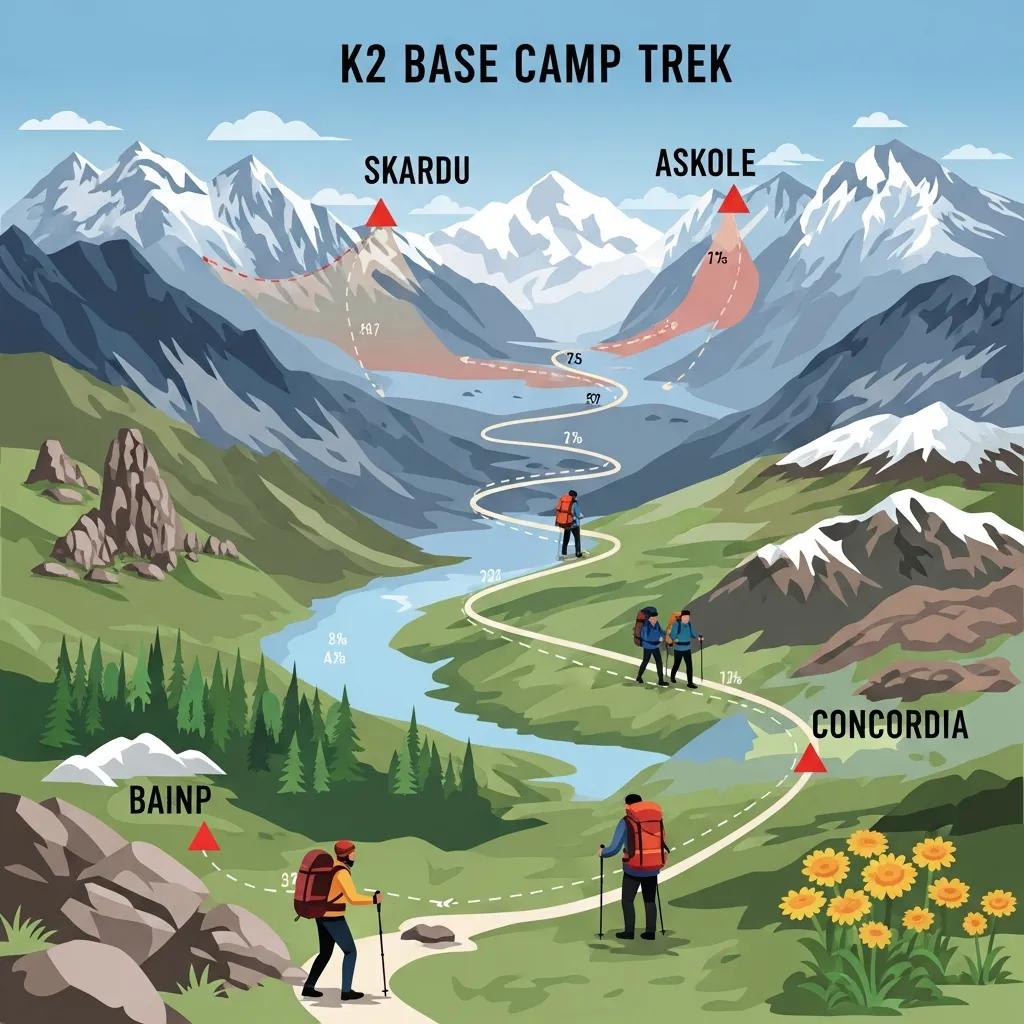
The Trek Is a Chain of Logistics, Not One Long Trail.
International arrival, Skardu weather, jeep access, porter organization, glacier camps, acclimatization and return transport all affect whether the itinerary works.
How Fit Do You Need to Be?
You do not need climbing fitness, but you do need expedition trekking durability: repeated 6–9 hour days, rough footing, pack carry, long descents, cold mornings and enough reserve to keep functioning after a poor night in a tent.
Long uphill days
Train for duration and sustained climbing rather than short intense workouts alone.
Back-to-back effort
The trek is cumulative; one strong day is not enough.
Rough-footing tolerance
Moraine and glacier surfaces require more concentration than smooth trails.
Camping resilience
Sleep, appetite and recovery become performance factors at altitude.
Before You Book
| Question | What a good answer should clarify |
|---|---|
| Classic or Gondogoro La? | Your exact route and fallback plan |
| How many buffer days? | Skardu flight and weather disruption strategy |
| Who arranges permits? | Operator responsibility and documents needed from you |
| What is included? | Hotels, domestic flights, jeeps, meals, porters, tips, permits |
| What insurance is required? | High-altitude trekking and evacuation terms |
| What is the porter allowance? | Duffel weight and personal carry expectations |
| What happens if the pass closes? | Essential for Gondogoro La itineraries |
| What is the group size? | Pace, leadership, camp logistics and support ratio |
K2 Base Camp vs Everest Base Camp
| Factor | K2 Base Camp | Everest Base Camp |
|---|---|---|
| Accommodation | Camping expedition | Teahouses/lodges |
| Trail surface | Rough moraine + glacier | More developed trekking trail |
| Remoteness | Very high | High but more infrastructure |
| Logistics | Operator/porter/camp system | Much easier village-based support |
| Altitude | ~5,150 m K2 BC | 5,364 m EBC |
| Best fit | Experienced trekker wanting expedition-style wilderness | First major Himalayan trek for many hikers |
Continue Planning
K2 Climbing Guide
Use this only if your interest extends beyond trekking to the mountain itself.
Explore K2 → WeatherMountain Weather
Build a forecast routine for Skardu, Baltoro and high-camp weather decisions.
Read weather → AltitudeAltitude Acclimatization
Understand why staged ascent matters above 4,000 metres.
Plan acclimatization → Altitude safetyAltitude Sickness Guide
Know symptoms that require rest, descent or medical evaluation.
Read altitude safety → ToolHiking Trip Budget Calculator
Estimate flights, operator, hotels, insurance, tips and gear.
Build budget → Deep recoveryTrip Planning
Turn the trek into a complete Pakistan travel plan.
Plan trip → Deep recoveryTop Non-Technical Treks
Compare K2 Base Camp with other major high-altitude objectives.
Compare treks → JourneyMy Climb Plan
Save your target route, season, operator and preparation steps.
Build my K2 trek →How This Guide Was Built
Route and gateway descriptions were cross-checked against the Gilgit-Baltistan tourism department’s K2 access description, which identifies Skardu as the gateway and the traditional route through Askole, Paiju, Urdukas, Goro and Concordia before Broad Peak and K2 Base Camp.
Season framing was cross-checked against current trekking guidance that places the general window from mid-June to mid-September, with July the most popular month. Cost ranges were built from multiple 2026 operator listings rather than a single quote.
Removed from the previous version: unsupported universal “success rate” claims, definitive statements calling Baltoro the world’s longest non-polar glacier, and broad climbing content that does not belong on a trek-planning page.
K2 Base Camp Trek FAQ
How long is the K2 Base Camp trek?
Most international itineraries run about 20–22 days door to door, including Islamabad, Skardu, acclimatization and weather margin.
What is the best time to go?
Mid-June to mid-September is the main window; July is generally the most popular month and July–August is the strongest overall period.
How hard is it?
Strenuous rather than technical: rough glacier terrain, long days, altitude, camping and remoteness create the difficulty.
Do I need a guide?
Foreign trekkers normally use a licensed Pakistani operator/guide because permits and regulated-zone logistics are part of the trip.
How much does it cost?
Many Pakistan-based 2026 group trips list around US$1,800–$3,000, while premium Western-led programs can exceed US$9,000.
Is Gondogoro La included?
Only on specific traverse itineraries. The classic K2 Base Camp trek can return via the Baltoro without crossing the pass.
Where does the trek start?
International itineraries typically begin in Islamabad, continue to Skardu, then travel by jeep toward Askole.
Is it harder than Everest Base Camp?
For many trekkers, yes, because K2 Base Camp is more remote, uses camping and involves rougher glacier and moraine terrain.
Choose the Route Before You Choose the Operator.
Decide whether you want classic K2 Base Camp or the Gondogoro La traverse first. Then compare operators by the exact itinerary, inclusions, porter system, buffer days and contingency plan—not by price alone.
The K2 Base Camp Trek & the World’s Great Walks
The trek up the Baltoro Glacier to the foot of K2 is one of the great long-distance walks on Earth – kin to the pilgrimage routes and iconic treks that draw walkers across the world. Explore them below.
The trek itself is only half the plan. Permits, registration, Skardu transport and the return route matter too.
The classic K2 Base Camp trek remains the best default for most trekkers: Skardu to Askole, then Paiju, the Baltoro Glacier, Concordia, Broad Peak Base Camp and K2 Base Camp before returning the same way. The harder Gondogoro La traverse is a separate decision because it adds steep snow, crampon travel, fixed ropes and objective hazard.
For 2026–27 planning, the biggest gap is not another itinerary table. It is understanding what must be arranged before the trek starts: a reputable registered operator, the correct trekking permissions, foreign-national registration, transport contingency and insurance that remains valid for the permitted route.
Where is K2 Base Camp?
The trek begins far southwest of K2 and progressively enters the Karakoram through the Braldu and Baltoro systems. Skardu is the regional gateway; Askole is the traditional final village before the wilderness trek.
What foreign trekkers should verify before paying the balance
The important distinction is between what the operator normally handles and what you still need to confirm has actually been completed.
Use a reputable registered company.
Gilgit-Baltistan maintains a registered-tour-operator system, and current Tourism Department guidance discourages unauthorized expedition travel. Ask for the operator’s current registration or licence details rather than relying only on a website.
Make the operator own the permit process.
Official GB Tourism guidance says permits and fees are normally handled by the tour operator. Ask what documents they need from you and the date the application will be submitted.
Gilgit-Baltistan has an additional registration step.
Current UK guidance says all foreign nationals must register with local authorities while visiting Gilgit-Baltistan. Your operator should explain when and where that happens.
Permit status can affect coverage.
UK guidance explicitly warns that insurance validity may be affected if you do not have the correct permits. Confirm altitude, trekking, evacuation, political disruption and route coverage in writing.
Do not build the trip around one mountain flight.
Skardu flight schedules can change at short notice. A good itinerary protects international connections with buffer days and has a realistic road contingency.
This is not a good independent-trek experiment.
Official GB Tourism recommends group travel because of remoteness and weather, while UK guidance advises reputable agencies, established routes and not trekking alone.
The return route changes the technical category of the trip
Gilgit-Baltistan Tourism’s own Gondogoro Pass description is much stronger than calling it simply “the scenic harder option.”
| Decision | Classic out-and-back | Gondogoro La traverse |
|---|---|---|
| Return | Reverse Baltoro route toward Askole | Cross pass and descend toward Hushe |
| Technical category | Strenuous high-altitude trekking | High-pass snow/ice travel with technical systems |
| Official pass elevation | Not applicable | 5,585 m per GB Tourism |
| Slope / terrain | Moraine, glacier surface, rough trail | Official description notes snow slopes up to ~50° |
| Equipment | Normal expedition-trekking equipment | Crampons; fixed-rope sections may be required |
| Objective hazard | Altitude, weather, glacier/moraine travel | Add avalanche and rockfall exposure on steep pass terrain |
| Best first choice | Most trekkers | Experienced teams |
What does a fully supported K2 Base Camp trek cost now?
The existing guide correctly shows that local Pakistan-based and premium Western-led programs are different products. A current 2027 listing confirms that gap remains large.
| Example | Published trip | Published price | What it demonstrates |
|---|---|---|---|
| Adventure Consultants | 22 days · K2 Base Camp + Gondogoro La | US$9,500 for 7+ people; US$10,500 for 5–6 | Premium Western-led/support model remains far above local group-market pricing. |
| Gilgit-Baltistan Tourism | K2 trek destination guidance | No universal package price | Official duration guidance is roughly 14–20 days depending on route; operator inclusions drive the final trip price. |
The trek can be ready while the access chain is not
Page-one K2 Base Camp content should explain not just the beautiful glacier route but the real operational weak points before and after it.
Build at least one meaningful buffer into the return.
UK travel guidance says Gilgit and Skardu flight schedules may be unreliable and can change at short notice. A road fallback is much slower, and weather can also affect mountain roads. Avoid a same-day Skardu-to-international-flight connection.
Do not assume every Islamabad–Skardu road option is equally advisable.
Current UK guidance advises against all travel on part of the Karakoram Highway between Mansehra and Chilas. Your operator’s flight-cancellation plan should specify the actual route they intend to use and reflect current travel advice.
Local advice matters once you leave major towns.
Gilgit-Baltistan’s remote mountain terrain is difficult to police. Current UK guidance recommends local security advice, reputable trekking agencies, established routes and group travel.
Insurance is not the same as immediate rescue access.
Weather, terrain and communications can delay assistance. Ask what emergency communication the team carries, who makes an evacuation decision, and what costs must be authorized through your insurer.
K2 Base Camp permits, route choice & current logistics
These answers extend the main guide with the current regulatory and transport questions that most affect booking.
Do foreign trekkers need a permit for the K2 Base Camp trek?
Gilgit-Baltistan Tourism says permits and fees are normally handled by the tour operator. UK travel guidance also says foreign nationals must register with local authorities in Gilgit-Baltistan and that trekking or mountaineering permits may be required, with processing potentially taking up to two months.
Should I book classic K2 Base Camp or Gondogoro La?
The classic out-and-back route is the better default for most first-time trekkers. Gondogoro La adds steep snow and ice, crampon use, fixed ropes and avalanche or rockfall exposure, so choose it because you specifically want the harder traverse and have the appropriate support and experience.
How high is Gondogoro La?
The Gilgit-Baltistan Tourism Department lists Gondogoro Pass at 5,585 metres. Its official description notes steep snow slopes up to about 50 degrees, crampon use and sections that may require fixed ropes.
How much does a premium K2 Base Camp trek cost?
Adventure Consultants currently lists its July 2027 K2 Base Camp trek from US$9,500 per person for seven or more participants and US$10,500 for groups of five or six. Lower-cost Pakistan-based group products can differ substantially in leadership, hotels, flights, porter systems, route and contingencies.
What should I know about travel to Gilgit-Baltistan?
Skardu flights can change at short notice, mountain roads can be affected by weather, and remote areas are difficult to police. Foreign nationals must register locally. Current UK advice recommends reputable trekking agencies, established routes and group travel rather than trekking alone.
How long should I allow for the K2 Base Camp trek?
Gilgit-Baltistan Tourism describes the destination as roughly 14–20 days depending on route. International itineraries commonly expand to around 20–22 days after Islamabad, Skardu, acclimatization and transport buffers are added.
K2, altitude, weather, budget & comparable treks
The main article owns the trek itinerary. These pages deepen the mountain, acclimatization, weather, budget and comparison decisions without duplicating them inside one guide.