Manaslu 2026: Route Open, 480 Climbers Prepare to Summit
The autumn Manaslu season has moved from setup to summit phase. A nine-member rope-fixing team reached the 8,163-meter summit late on September 17, opening the route after an avalanche above Camp III briefly delayed the work. Nepal has issued a record 480 permits, and commercial teams are now positioning for the first summit window.
Route opened Sept. 17480 permits issued2 deaths reported this autumnSummit pushes beginning
8,163 mManaslu summit elevation
480Autumn 2026 climbing permits reported Sept. 18
$3,000Autumn climbing royalty per permit
$1.44MReported Manaslu permit royalties
Sept. 17Summit route opened by rope-fixing team
Current status · September 18, 2026
Manaslu’s Fixed Route Is Open to the Summit
Nine rope-fixing climbers reached Manaslu’s summit at about 9:25 p.m. on September 17, completing the autumn fixed line. The route opening came after a September 16 avalanche above Camp III forced the fixing team to turn back and buried sections of rope. No injuries were reported from that avalanche.
The Department of Tourism count has reached 480 foreign climbers—354 men and 126 women—with reported permit revenue of US$1.44 million. Teams have been completing acclimatization rotations and moving equipment higher. With the summit line now open, commercial summit pushes can begin.
What changed since the season opened
The page began as a late-August preview. The mountain is now in active summit mode, and the most important numbers have changed materially.
480Permits now issued, up from early-season estimates around 300.
9Rope-fixing climbers reached the summit to open the route.
2Deaths reported on Manaslu so far this autumn.
~Sept. 25Current expedition reporting points to an early summit window before a possible weather change.
Manaslu Rises Above Samagaun in Nepal’s Gorkha District
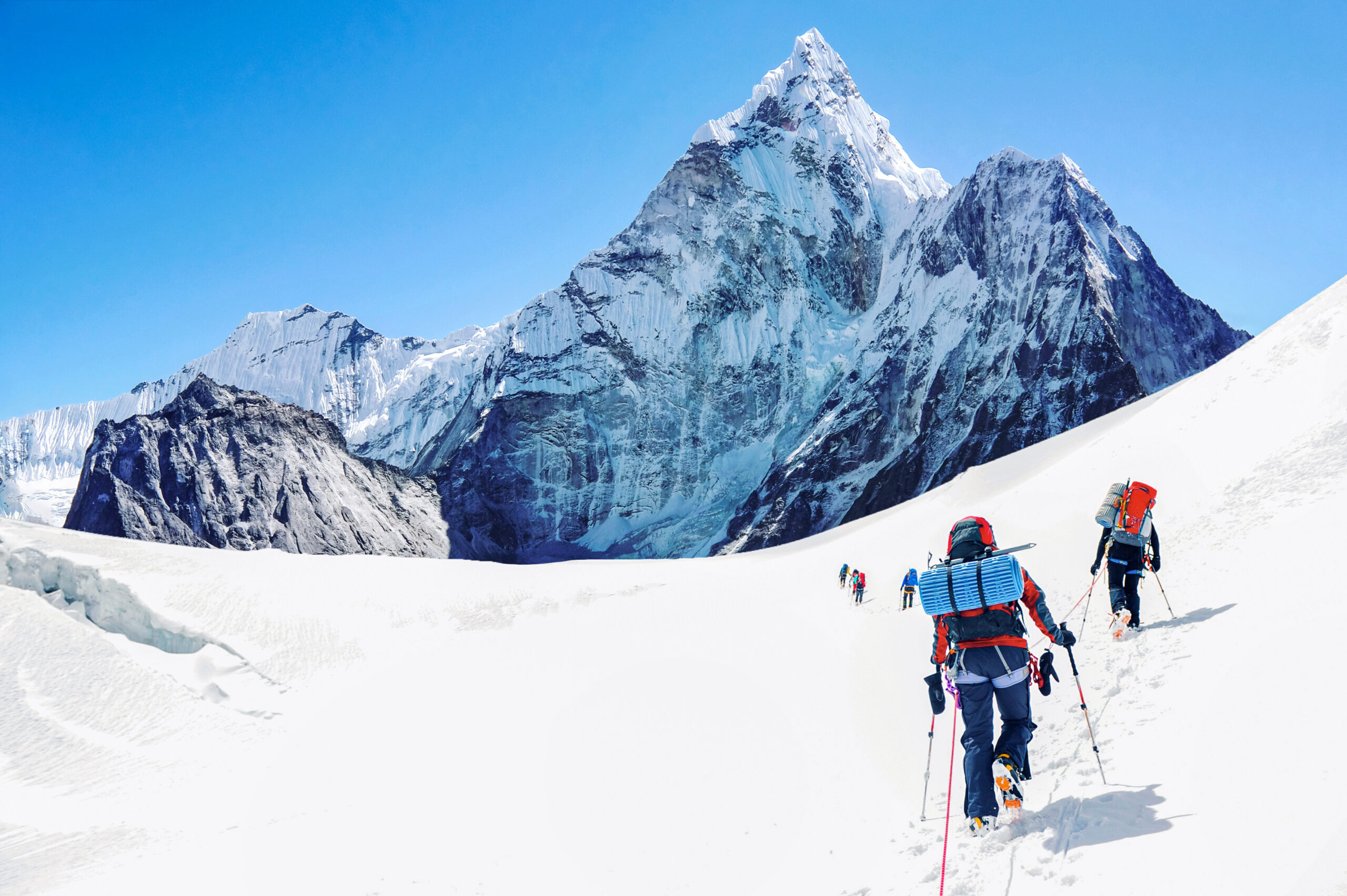
The standard commercial expedition approaches through the Manaslu Conservation Area and establishes base camp above Samagaun before moving onto the Northeast Face.
Interactive orientation map
Samagaun · Manaslu Base Camp · 8,163 m Summit
Regional context only; not a climbing-navigation map.
Camp positions and the fixed climbing line change with glacier conditions and seasonal route work.
The route is open
The 2026 Season Has Entered the Part That Matters Most.
Rope fixing is complete to the summit. From this point forward, the story shifts to weather windows, congestion, avalanche conditions, true-summit decisions and how many teams can move safely through the upper mountain.
02 · Season timeline
How Autumn 2026 Reached Summit Phase
The chronology matters because the route-opening date determines when commercial summit traffic can realistically begin.
Late August
Operators moved staff and logistics toward base camp as Nepal’s autumn season opened.
September 10
The EOAN rope-fixing team completed the route through Camp III, allowing acclimatization rotations and higher-camp carries.
September 16
An avalanche above Camp III interrupted fixing work and buried sections of rope. The fixing team retreated; no injuries were reported.
September 17
Nine rope-fixing climbers reached the 8,163 m summit at about 9:25 p.m., opening the route to the top.
September 18
Government and expedition reporting put the Manaslu permit total at a record 480, with summit teams preparing to move higher.
Next
Watch the first commercial summit wave, crowding at the upper camps, route condition after the avalanche, and whether the early weather window holds.
03 · What to watch next
Five Signals Will Define the Rest of the 2026 Season
A live season should track the decisions that change summit viability, not just count permits.
Weather
First Summit Window
Current expedition reporting expects teams to move aggressively before a possible weather change around September 25. The exact usable window still depends on wind, snowfall and route recovery.
Congestion
480 Climbers + Guides
The permit record means the route can become crowded even before counting high-altitude workers. Bottlenecks matter most on fixed lines, transitions and the true-summit ridge.
Snow
Post-Avalanche Stability
The September 16 avalanche is a reminder that route opening does not mean objective hazard is gone. Snow loading above Camp III remains a core season variable.
Summit standard
Fore-Summit vs True Summit
Teams should be clear about whether the genuine summit ridge remains the objective when crowding or cornice conditions deteriorate.
Medical
Acclimatization & Health
The first reported client death occurred during an acclimatization descent, emphasizing that risk is present before summit day.
Operations
Camp & Rope Flow
Watch whether operators stagger summit waves or compress too many teams into the same early weather opportunity.
High-camp movement is now the central operational story as acclimatized teams position for summit pushes. Image via Wikimedia Commons; see the source file for license and attribution.
04 · Standard route
The Northeast Face Is Moderate by 8,000-Meter Standards—But Not Benign
The commercial route follows glacier and steep snow from a relatively low base camp through four high camps to the final summit ridge.
Stage
Approx. elevation
Main terrain
2026 relevance
Base Camp
~4,700 m
Expedition base above Samagaun
Large season population; climbers cycle between base and Camps I–II during rotations.
Camp I
~5,500 m
Crevassed glacier
Roped glacier travel begins in earnest.
Camp II
~6,300 m
Glacier basin / serac exposure
Major acclimatization turnaround point for many teams.
Camp III
~6,800–7,300 m
Snow slopes and avalanche exposure
The Sept. 16 avalanche occurred above this zone during rope fixing.
Camp IV
~7,450 m
High snow camp
Launch point for the summit push.
True Summit
8,163 m
Corniced, exposed final ridge
Route fixed to summit Sept. 17; final ridge remains the defining summit-quality question.
The modern standard is the genuine 8,163-meter top beyond the fore-summit. That distinction becomes especially important in a crowded season, because the final ridge is narrow, corniced and much more exposed than the broad snow slopes below.
05 · True summit
The 2026 Summit Count Should Be Read More Carefully Than Old Records
For decades, many climbers stopped at a fore-summit just below the actual top. Modern photographic review and the 2021 true-summit push changed the standard.
Fore-summit
Historically Claimed as the Top
The rounded high point below the genuine summit was often treated as sufficient because the remaining ridge is far more exposed and can be corniced.
True summit
The Modern Standard
Teams serious about a verified Manaslu ascent should confirm that the operator intends to reach the true summit when conditions allow—and also respects a turnaround when the final ridge is unsafe.
A true-summit objective should not become summit fever.
The correct standard is not “reach the true summit at any cost.” It is “do not mislabel a fore-summit as the true summit, and do not cross the final ridge when current conditions make it unreasonable.”
06 · Permits & crowding
480 Permits Make Autumn 2026 a Record-Scale Manaslu Season
The current Department of Tourism figure is materially above both the early-season expectation and last year’s reported total.
Permit snapshot
As of September 18, Nepal has issued 480 Manaslu climbing permits: 354 to men and 126 to women. At the current US$3,000 autumn royalty, the government reported US$1.44 million in Manaslu climbing royalties.
Everest Chronicle reported that the total is more than 100 above last year’s 374 permits. A similar number of climbing guides and high-altitude workers may be on the mountain, so the practical upper-route population is much larger than the permit count alone.
Permit count is not the same as summit-day crowding.
The real congestion question is how many climbers move into Camps III and IV at the same time and how operators stagger the weather window. A record season can still operate reasonably if teams are distributed; a short weather window can compress hundreds of people into the same fixed-line system.
The defining hazard remains above the camps
The Route Can Be Fixed and Still Be Avalanche-Exposed.
The September 16 slide above Camp III caused no reported injuries, but it interrupted the fixing effort and buried rope. That is exactly why Manaslu’s “approachable 8,000er” reputation should never be confused with low objective risk.
07 · Risk picture
Autumn Stability Helps—but Avalanche and Serac Hazard Define Manaslu
The mountain’s technical climbing is moderate compared with many 8,000ers. Its objective-hazard profile is the more important reason for caution.
Snow
Avalanche Loading
Fresh or wind-loaded snow above Camps II–III can change the route quickly, even when the fixed line is established.
Ice
Serac Exposure
Glacier movement creates hazards that a strong climber cannot simply out-train or out-climb.
Altitude
Full Death-Zone Summit
At 8,163 m, the final day is still an extreme-altitude undertaking despite the route’s commercial reputation.
Crowding
Fixed-Line Bottlenecks
Delayed movement at transitions can increase cold exposure and push climbers later into the summit day.
Weather
Window Compression
A short favorable period can concentrate many teams on the same upper route.
Summit ridge
Cornice & Exposure
The genuine summit finish is more serious than the mountain’s broad lower snow slopes suggest.
08 · Reported deaths
Two Deaths Have Been Reported This Autumn
Current-season reporting should distinguish known facts from preliminary explanations, especially when causes remain under investigation.
Base Camp
Tashi Sherpa, 20
A high-altitude worker from Sankhuwasabha was found dead inside a tent at Manaslu Base Camp earlier in the season. Reporting says the circumstances are under investigation; this page does not assign a cause.
September 17 · ~6,000 m
Lau Wee Seng, 50
The Singaporean climber died while descending from Camp II during an acclimatization rotation after reportedly feeling unwell. Early reports mentioned a possible heart attack, but the cause had not been officially established.
These incidents are part of the season record, not a reason to invent a live “death rate.”
A meaningful seasonal fatality rate would need a clearly defined denominator and completed-season exposure data. During an active expedition season, report the incidents themselves and keep the methodology honest.
Manaslu’s autumn season is a mix of favorable post-monsoon timing and serious high-altitude objective hazard. Image via Wikimedia Commons; see the source file for license and attribution.
09 · Evergreen planning
What the 2026 Season Teaches Future Manaslu Climbers
The page remains useful after autumn by separating one season’s status from the recurring planning decisions that matter every year.
Operator
Ask About True-Summit Policy
Confirm whether the operator targets the actual summit and what conditions cause a fore-summit or lower turnaround.
Support
Ask About Crowd Management
Guide ratio matters, but so does when your team plans to enter the summit wave and how many support staff can turn with clients.
Hazard
Ask About Avalanche Decisions
Manaslu is a poor place for an operator culture that treats fixed ropes as proof that the mountain is safe.
Oxygen
Understand the Actual System
Most commercial clients use supplementary oxygen. Ask about bottles, flow rates, backup and who manages the system.
Insurance
Check 8,000 m Coverage
Verify high-altitude mountaineering, helicopter evacuation, regional exclusions and operator requirements in writing.
Progression
Treat Manaslu as a Step, Not a Shortcut
Its popularity as a first 8,000er does not eliminate the need for high-altitude, glacier, fixed-line and expedition experience.
More than an expedition corridor
Manaslu Is a Sacred, Lived Landscape.
The mountain’s climbing history is inseparable from the villages and religious communities below it. Future expeditions should treat local culture, staff welfare and environmental impact as part of expedition quality—not background scenery.
10 · Frequently asked questions
Manaslu Autumn 2026 FAQ
These answers reflect the season status checked September 18, 2026.
Is the Manaslu 2026 summit route open?
Yes. A nine-member rope-fixing team reached the 8,163-meter summit late on September 17, completing the fixed route for autumn 2026 summit attempts.
How many climbers have permits for Manaslu in autumn 2026?
The Department of Tourism count reported on September 18 is 480 permits: 354 men and 126 women. That is a record-scale autumn season for Manaslu.
How much is the autumn Manaslu permit?
The current autumn climbing royalty is US$3,000 per climber. With 480 permits, reported Manaslu royalty revenue reached US$1.44 million.
Was there an avalanche on Manaslu in September 2026?
Yes. An avalanche above Camp III on September 16 interrupted rope fixing and buried sections of rope. No injuries or damage were reported from that event.
Have there been deaths on Manaslu this autumn?
Yes. Two deaths had been reported by September 18: high-altitude worker Tashi Sherpa at Base Camp and Singaporean climber Lau Wee Seng during an acclimatization descent from Camp II. Official cause details were not complete in both cases.
When will the first large summit pushes happen?
With the route now open, teams are preparing to move higher. Current expedition reporting points to early summit pushes before a possible weather change around September 25, but the usable window remains condition-dependent.
What is the difference between Manaslu’s fore-summit and true summit?
The fore-summit is a rounded high point below the actual 8,163-meter top. The true summit lies beyond on a more exposed, corniced ridge and is the modern standard for a verified Manaslu ascent.
Is Manaslu a good first 8,000er?
It is commonly used as a first 8,000-meter expedition because the standard route is relatively moderate and commercial support is strong. That does not make it easy or low-risk: avalanche, serac exposure, extreme altitude and the true-summit ridge remain serious hazards.
11 · Sources
Current Season Facts Are Dated and Kept Separate From Evergreen Route Facts
A live season changes quickly. The status numbers on this page are tied to September 18 reporting and should be rechecked as summit activity progresses.
Permit totals, summit counts, weather windows, accidents and route status can change daily during an active 8,000-meter season. Use the dated snapshot here for context and confirm immediate conditions with the Department of Tourism and your expedition operator before making operational decisions.
About this season guide
Global Summit Guide
This is a research-based season tracker. Global Summit Guide has not climbed Manaslu and does not present current expedition reporting as first-hand field observation. Dated news is separated from established route, permit and historical context.
Continue the Manaslu planning path
Manaslu: Route, Success, Cost, Season & Expedition Readiness
Use this page for the live autumn 2026 season. Move into the evergreen Manaslu and expedition-planning pages below for route, cost, operator, insurance and altitude decisions that remain useful after the season ends.
The Route Is Open. The Next Story Is How the Mountain Handles 480 Climbers.
Watch the first summit wave, snow stability above Camp III, crowd movement into Camp IV and whether teams maintain disciplined true-summit and turnaround standards as the weather window tightens.
8,188 m (26,864 ft) · Nepal-Tibet border · Sixth-highest on Earth
Cho Oyu: the easiest 8000er, when Tibet is open
The Turquoise Goddess is the most accessible and safest of the fourteen 8,000-metre peaks, and the classic first 8000er by the gentle Northwest Ridge from Tibet. But its whole appeal rests on Chinese access, which has closed for most recent seasons. This update covers the route, the access problem, the emerging Nepal side, and an honest readiness view. Heights in metres (feet).
Research-based updateSafety and medical reviewReviewed each Himalayan seasonOur team has not climbed Cho Oyu
Jump to the Cho Oyu planning resources and Himalaya updates linked on this page.
Updated 27 July 2026 · Compiled by Travis Ludlow · Safety review by Dawson Ludlow · Medical review by Taylor Ludlow, RN
8,188 mSummit (26,864 ft)
6thHighest on Earth
~1.3%Fatality – lowest 8000er
NW RidgeStandard route (Tibet)
Apr-May / Sep-OctSeasons
1954First ascent, no oxygen
By Travis Ludlow, Founder & Head of Research · Safety: Dawson Ludlow · Medical: Taylor Ludlow, RN
Expedition update · ~11 min read
Single-mountain expedition update, compiled from China Tibet Mountaineering Association access reporting, operator route and pricing information, and published expedition records. Our team has not climbed Cho Oyu; the only first-hand summit anyone on our team claims is Kilimanjaro. This is a planning briefing for experienced climbers, not a how-to and not a substitute for training or a guide.
The most forgiving 8000er – if you can get to it.
Cho Oyu earns its reputation: a drive-to base camp, gentle snow slopes, one fixed-roped serac band, the lowest fatality rate of the 8000ers, and the highest success rates in open seasons. It is the classic first 8,000-metre peak and a common step toward Everest. The catch is access. It is climbed almost entirely from Tibet, and China has closed that side to foreign teams for most seasons since the pandemic.
Standard route: Northwest Ridge, from Tibet.
Safest 8000er: fatality around 1.3 percent.
Success: 50 to 90 percent in open seasons.
The catch: Tibet access, closed most recent springs.
The gentlest 8,000-metre climb there is, staged from a road-head, with a single technical obstacle and one large caveat.
Cho Oyu, the Turquoise Goddess, is the sixth-highest mountain on Earth at 8,188 m, standing on the Nepal-Tibet border about 20 km west of Everest. Its normal route, the Northwest Ridge from the Tibetan side, is the most accessible way up any 8000er: a vehicle reaches Chinese base camp near 4,900 m, advanced base sits at about 5,650 m, and above that the climb is mostly gentle snow near 30 degrees. The one real obstacle is a fixed-roped serac and ice-cliff band near 6,600 m.
That gentleness, and the lowest fatality rate of the fourteen 8000ers, make Cho Oyu the classic first 8,000-metre peak and a common rehearsal for Everest. But the word easy is relative. This is still a death-zone climb of 30 to 40 days, in temperatures of -15 to -30 C, where the gentle slopes hide real objective danger and people still die. And the whole proposition depends on Chinese access to Tibet, which is where the current story lies. For the full route, permit, and cost detail, see our Cho Oyu climb guide.
The current story
The Tibet access problem
Cho Oyu’s reputation as the easy 8000er assumes you can reach the easy side. Lately, often, you cannot.
Almost every commercial Cho Oyu ascent uses the Northwest Ridge from Tibet, which means a permit from the China Tibet Mountaineering Association. Since the pandemic, China has kept the Tibetan side closed to foreign commercial expeditions for most seasons, with occasional exceptions such as spring 2023. Spring 2025 was formally closed, along with neighbouring Shishapangma. Autumn has more often opened than spring, but the decision is made by Chinese authorities and can change from one season to the next.
The closures have two practical effects. First, climbers pursuing the fourteen 8000ers, or a first 8000er, increasingly pivot to Manaslu in Nepal as the accessible alternative. Second, Nepali teams have worked since 2022 to open a commercial route on the Nepal side of Cho Oyu, and a few expeditions have fixed ropes and summited that way. That Nepal-side line is far harder than the Tibetan trade route and is not yet an established commercial option. The single most important planning question for Cho Oyu is therefore not when, but whether: confirm current access with your operator before committing.
Verify access first
Do not book flights or gear around Cho Oyu until an operator confirms Tibet access for your specific season. Build in a backup objective, and understand the cost consequences if China closes the peak late.
Gentle is not the same as safe
Cho Oyu is the safest 8000er by the numbers, but the numbers still record deaths. A serac band that has killed climbers, heavy snow loading after storms, and the simple arithmetic of the death zone all remain. The easy reputation is exactly what makes it easy to push too far.
Honest self-assessment
Are you ready for Cho Oyu?
It is the most forgiving 8000er, not a beginner’s mountain. These are the prerequisites operators expect.
Altitude record
Proven Above 6,000 m
Operators expect prior high-altitude experience. Cho Oyu is a first 8000er, not a first big mountain, and the death zone is unforgiving of gaps.
Evidence: a solid 6,000 m-plus record.Fixed-rope skill
Up And Down, Alone
You must move confidently up and down fixed ropes and manage yourself between camps. The route is roped, but no one climbs it for you.
Evidence: efficient ascender and rappel work.Self-sufficiency
Care For Yourself High
Eat, drink, manage oxygen, and solve small problems at 7,000 m and above. Guides cannot do everything for a hypoxic client.
Evidence: prior self-reliance at altitude.Access realism
Plan For Closures
The single biggest variable is whether Tibet is open. Build flexibility, and a backup objective, into the plan from the start.
Evidence: a plan that survives a closure.
Requirement
Baseline
Why it matters
Altitude experience
Prior success above 6,000 m
The death zone punishes anyone who has not tested it lower first.
Fixed-rope competence
Fluent ascender and rappel work
The route is fixed but demands reliable movement while hypoxic.
Self-care
Independent between camps
Guides support, but cannot perform every task for a hypoxic client.
Fitness
Strong for a 30 to 40 day trip
The expedition is long, cold, and cumulative even on gentle ground.
Access flexibility
A plan that survives a closure
Tibet access can vanish for a season; a backup protects the trip.
Turnaround discipline
Willing to descend
An easy reputation makes it easy to push too far in bad conditions.
One mountain, two very different climbs, separated by a border and a wide gap in difficulty.
The trade route
Northwest Ridge – from Tibet
The normal route and the reason for Cho Oyu’s reputation. A drive-to base camp, an advanced base at 5,650 m, and mostly gentle snow slopes near 30 degrees, with one fixed-roped serac band near 6,600 m as the only technical obstacle. It depends entirely on Chinese access to the Tibetan side.
Gentle snow, around 30 degrees
One fixed-roped serac and ice-cliff band
Drive-to base camp on the Tibetan side
Needs Tibet open; closed most recent springs
Best fit: a first 8000er for experienced high-altitude climbers.The hard alternative
The Nepal Side
A very different mountain. The Nepal side is technical, rarely climbed, and success is uncommon. Because Tibet keeps closing, Nepali teams have worked since 2022 to fix a commercial route from Nepal, and a few have summited that way, but it remains an expert undertaking rather than a trade route.
Technical and rarely climbed
An emerging, not established, commercial line
Fixed and summited by a few recent teams
An expert objective, not the easy 8000er
Best fit: expert alpinists, or when Tibet is closed.
Factor
Northwest Ridge (Tibet)
The Nepal side
Character
Gentle snow, one serac band
Technical and sustained
Access
Drive-to base camp; needs China open
From Nepal; no Chinese permit needed
Difficulty
The easiest 8000er
An expert undertaking
Status
Closed most recent springs
Emerging, not established
Who it suits
A first 8000er, when open
Expert alpinists, or when Tibet is shut
The Cho Oyu climb guide covers the Northwest Ridge camps, permit, and gear in full.
Route profile
The Northwest Ridge, camp by camp
An overview of the Tibetan trade route, from the road-head to the broad summit plateau. For the full detail, see the climb guide.
Drive-in
Chinese Base Camp ~4,900 m
Reached by vehicle on the Tibetan side, a rare luxury among 8000ers.
The real start
Advanced Base Camp ~5,650 m
A short walk up the moraine; the working base for the climb.
Camp 1 ~6,400 m
Onto The Mountain
Above ABC the route gains the lower slopes toward the serac band.
The one crux
Serac Band ~6,600 m
A fixed-roped ice cliff, the only technical obstacle on the normal route.
Camp 2 ~7,100 m
Gentle Snow
Broad, moderate slopes near 30 degrees lead higher up the ridge.
Camp 3 ~7,450 m
Last Camp
The high camp for the summit push in cold, thin air.
Summit plateau
The Broad Top
A wide summit plateau, deceptively flat, marks the true summit at 8,188 m.
Descent
Reverse The Ropes
Retrace the fixed lines; most incidents happen tired, on the way down.
The one obstacle
On a route this gentle, the serac and ice-cliff band near 6,600 m is the single place that demands real care. It is fixed with ropes, but timing and exposure through it are what a good team manages closely.
How a trip runs
A Cho Oyu expedition timeline
A commercial Cho Oyu expedition runs about 30 to 40 days, most of it acclimatization and waiting rather than climbing.
1
Kathmandu and permits
Gather in Kathmandu, complete Tibet visa and Chinese permit formalities, and check gear.
2
Cross into Tibet
Travel to the Tibetan plateau and the drive-to Chinese base camp near 4,900 m.
3
Establish ABC
Move up the moraine to Advanced Base Camp at about 5,650 m, the real start.
4
Acclimatization rotations
Climb to Camps 1 and 2, sleep high, and descend to recover across several rounds.
5
Cross the serac band
Pass the fixed-roped ice cliff near 6,600 m, the route’s one real obstacle.
6
Wait for a window
Rest at base and watch the forecast for a settled summit period.
7
Summit push
Move through the high camps and up the gentle plateau to the summit, then descend.
8
Exit to Kathmandu
Clear the mountain and return across Tibet to Kathmandu.
Money
Cost and operators
Cho Oyu is the affordable 8000er, and the most operator-rich after Everest, but tier choice matters more here than route choice.
Component
Figure
Note
Operator fee
~$20,000-$45,000
Premium Western to budget Nepali; the tier affects success rate.
All-in trip cost
~$35,000-$65,000
Adds travel, insurance, gear, and tips; still far below Everest.
Chinese permit and logistics
Included by operator
The CTMA permit and Tibet logistics are handled by the operator.
Insurance
Often $90,000+ cover required
High-altitude rescue and evacuation cover is mandatory.
Duration
About 30 to 40 days
A full expedition, long even on relatively gentle terrain.
A low fatality rate is a statistic, not a guarantee. Above 7,000 m the margins are thin, rescue is slow and weather-bound, and the descent, tired and hypoxic, is when most incidents happen. Treat Cho Oyu with the respect any death-zone peak demands.
The numbers
Safety and success, honestly
Cho Oyu’s figures are the friendliest of the 8000ers, but only when you read what is inside them.
Statistic
What it measures
How to use it
~1.3% fatality
Lowest of the 8000ers
The safest 8000er, but not a safe mountain.
50-90% success (open)
In good seasons
Among the highest 8000er success rates when Tibet is open.
~35% headline
Includes closed seasons
Long-run figures fold in the permit closures; read the denominator.
The serac band
The recurring killer
Gentle slopes, but the ice cliff and post-storm snow are real hazards.
Our summit success rates analysis explains why the headline rate is lower than what open-season operators report.
Timing
Season and conditions
Cho Oyu has two seasons, but access matters more than the calendar in deciding when you can actually go.
Spring (Apr-May)
One Window
Climbed when open, though Tibet has often stayed shut in recent springs.
Autumn (Sep-Oct)
The Classic Season
The traditional Cho Oyu season, and more often open in recent years.
Access
The Real Variable
Whether Tibet is open matters more than the month you choose.
Cold
-15 to -30 C
Thin, cold air makes even routine tasks a serious effort up high.
Storms
Snow Loading
Heavy precipitation raises avalanche risk on the accumulation slopes.
Live wind and weather for Cho Oyu. Source: Windy.com. For how to read a mountain forecast, see our weather guide.Cho Oyu, on the Nepal-Tibet border about 20 km west of Everest. Map: OpenStreetMap contributors.
History
A short history of Cho Oyu
From a lightweight 1954 first ascent to the most-climbed 8000er after Everest.
Cho Oyu was first climbed on 19 October 1954 by Herbert Tichy, Sepp Joechler, and Pasang Dawa Lama, on a small, lightweight Austrian expedition and without supplemental oxygen. It was one of the earliest 8,000-metre summits, and unusual for its style at a time when the great peaks were being climbed by large siege expeditions. That lightweight ascent set the tone for a mountain that would become known for accessibility rather than extremity.
Since then Cho Oyu has become the most-climbed 8000er after Everest, with thousands of ascents, most by the Tibetan Northwest Ridge in autumn. Its role as the standard first 8000er is well established, which is why the recent Chinese access closures matter so much: they have disrupted the single most common on-ramp to 8,000-metre climbing, and pushed both climbers and Nepali operators to look for alternatives.
Keep planning
The Himalaya cluster
Cho Oyu sits among the 8000er updates, the alternatives when it closes, and the skills a first 8000er demands.
The questions climbers ask most about the difficulty, the access, the cost, and the season.
How high is Cho Oyu, and where is it?
Cho Oyu is 8,188 m (26,864 ft), the sixth-highest mountain on Earth. It sits on the Nepal-Tibet border about 20 km west of Everest, in the Mahalangur Himalaya. Its Tibetan name, Cho Oyu, is usually translated as Turquoise Goddess. Almost all commercial ascents climb the Northwest Ridge from the Tibetan side.
Why is Cho Oyu called the easiest 8000er?
Because its normal route asks less of a climber than any other 8,000-metre peak. The Northwest Ridge from Tibet is a mostly gentle snow climb of around 30 degrees, with a drive-to base camp and only one serious obstacle, a fixed-roped serac and ice-cliff band near 6,600 m. It has the lowest fatality rate of the fourteen 8000ers, around 1.3 to 1.4 percent, and the highest success rate. It is the classic first 8000er and a common step toward Everest. Easiest, though, is relative: it is still a death-zone peak.
Is Cho Oyu open right now?
That is the central question, and it changes. Cho Oyu is climbed almost entirely from Tibet, and China has kept the Tibetan side closed to foreign commercial expeditions for most seasons since the pandemic, with occasional exceptions such as spring 2023. Spring 2025 was formally closed. Autumn seasons have sometimes opened. Because access is set by the China Tibet Mountaineering Association and can change season to season, verify the current status with an operator before you plan around it.
Can you climb Cho Oyu from Nepal?
Yes, but it is a very different and much harder climb. The Nepal side is technical and rarely done, and success is uncommon. Because Tibet access keeps closing, Nepali teams have worked since 2022 to establish a viable commercial route from the Nepal side, and a few expeditions have fixed ropes and summited that way. For now, though, the Nepal side is an expert undertaking, not the accessible trade route that made Cho Oyu famous.
What is the success rate on Cho Oyu?
In open seasons with strong operators, summit rates commonly run 50 to 90 percent, among the highest of any 8000er. Headline long-run figures are lower, near 35 percent, because they fold in seasons disrupted or closed by Chinese permit decisions. Operator tier matters: premium teams report higher rates than budget ones. See our summit success rates analysis for how these numbers are built.
How much does a Cho Oyu expedition cost?
Operator fees in 2026 commonly run about $20,000 to $45,000, with all-in trip costs often $35,000 to $65,000 once travel, insurance, gear, and tips are included. It is far cheaper than Everest, which is part of its appeal as a first 8000er. Costs include the Chinese permit and Tibet logistics handled by the operator. A trip runs about 30 to 40 days.
When is the season?
Both spring (April to May) and autumn (September to October) are climbed, and autumn has long been the classic Cho Oyu season. Access, though, is the bigger variable than the calendar: in recent years the Tibetan side has more often opened in autumn than spring, but this is set by Chinese authorities and must be checked for the year you intend to climb.
Do you need supplemental oxygen or prior experience?
Cho Oyu is often climbed with supplemental oxygen on the commercial route, though a fit, experienced minority climb it without. It was first climbed in 1954 without oxygen. Either way, it is not a first big mountain: operators expect prior experience above 6,000 m, competence moving up and down fixed ropes, and the self-sufficiency to look after yourself between camps in the death zone.
Is Cho Oyu actually safe?
It is the safest of the 8000ers by fatality rate, but safe is the wrong word for any 8,000-metre peak. Its gentle slopes hide real objective danger: a serac zone that has killed climbers, and heavy snow accumulation that raises avalanche risk after storms. People die on Cho Oyu. Treat it as the most forgiving 8000er, not a guaranteed one.
Transparency
How we built this update
What this page is based on, who reviewed it, and what we do not claim to know.
Sources
China Tibet Mountaineering Association access decisions and current-season reporting.
Operator route, itinerary, and 2026 pricing information for the Northwest Ridge.
Published expedition records for the 1954 first ascent and Nepal-side attempts.
Fatality and success-rate datasets for the fourteen 8000ers.
Our own Cho Oyu climb guide and operators comparison for the detail.
Review and standards
Compiled by Travis Ludlow and reviewed for safety by Dawson Ludlow, our Climbing and Mountaineering Lead (Wilderness First Aid), whose highest first-hand summit is Kilimanjaro. Health and medical points were reviewed by Taylor Ludlow, RN. We do not fabricate summit experience, quotes, or credentials, and we say plainly when we are reporting rather than recounting.
What we do not claim to know
Access and conditions on Cho Oyu change, and no web page can replace a current operator confirmation and forecast. In particular:
Tibet access is set season by season by Chinese authorities; confirm it before planning.
The Nepal-side route is developing; its status and difficulty may change year to year.
Success and fatality figures vary by source, season, and how open seasons are counted.
Our team has not climbed Cho Oyu, so we report official access, records, and operator data, not personal experience.
Global Summit Guide research
We compile mountain updates from official access decisions, operator data, and published records, review them for safety and medical accuracy, and refresh them each season. We are transparent about what we have and have not climbed, and Cho Oyu is a research-based briefing, not a personal account.
Disclosure: the Expedia link above is a sponsored affiliate link, and we may earn a commission at no extra cost to you. It is the only affiliate link on this page; our route, access, and safety guidance is independent.
Makalu is 8,485 m (27,838 ft), the fifth-highest mountain on earth. Its four-sided pyramid, 19 km from Everest, is one of the hardest of the 8000ers to climb.
Expedition Updates · Himalaya
Makalu expedition update
The fifth-highest mountain in the world, and one of the hardest. This page tracks why Makalu is a technical 8000er, the permit-and-difficulty mismatch, the French Couloir, the wild Barun approach, and a go or no-go checklist. A single-mountain page in our Expedition Updates directory. Elevations in metres (feet).
By Travis Ludlow, Founder & Head of Research · Safety review: Dawson Ludlow
Updated Jul 27, 2026 · Reviewed before each Himalayan season · ~9 min read
Single-mountain expedition update. Built from Nepal Department of Tourism permit rules, the 2025 fee revision, and operator-published expedition records, with sources named below. Reviewed for safety by Dawson Ludlow, Climbing & Mountaineering Lead (Wilderness First Aid). Our team has not climbed Makalu. This is a planning briefing for experienced high-altitude climbers, not a how-to.
Current statusTechnical 8000er8,485 m (27,838 ft)
Fifth by height, near the top for difficulty.
Makalu is the world’s fifth-highest mountain, a clean four-sided pyramid 19 km from Everest, but its rank undersells it. Where Everest, Cho Oyu, and Manaslu are fixed-line climbs within reach of well-supported commercial teams, Makalu is a technical mountain, with a summit pyramid that demands real rock and ice climbing above 8,400 m and a summit rate near 30 percent.
Its permit tells the opposite story: at around $3,000 for spring, a fifth of Everest’s $15,000, it looks like a bargain. It is not. On Makalu the barrier is not the price, it is the climbing. For the full route and cost detail, see our Makalu climb guide.
8,485 m
Summit (27,838 ft)
Fifth-highest in the world, 19 km from Everest.
~30%
Summit success
One of the hardest of the 8000ers.
Spring
Main season
And autumn; permit around $3,000.
Makalu stands in the Mahalangur Himalaya, on the Nepal and China border in Makalu-Barun National Park, an isolated giant whose name comes from a Sanskrit word for the great black one. It was first climbed in 1955 by a French team on which every member reached the summit, and it has stayed a climber’s mountain ever since, far from the commercial crowds. This page owns the current picture and the honest difficulty. For the Northwest Ridge route detail, camps, gear, and cost breakdown, see our Makalu climb guide.
A spring and autumn 8000er, for experienced teams.
Makalu is climbed in spring, from April to May, and in a shorter autumn window in September and October, the same seasons as the other Himalayan 8000ers. It sees a small number of serious expeditions rather than the crowds of Everest, and in any given season the mountain may host only a handful of teams. Summit pushes hinge on catching a calm, clear weather window on an exposed, wind-scoured summit, and the short list of successful climbers each year reflects how often the mountain simply does not allow it.
Fifth-highest, one of the hardest
Why the height rank misleads.
Height is the headline, but it is a poor guide to difficulty among the 8000ers. Makalu is far harder than Everest, Cho Oyu, or Manaslu, not because it is taller, it is not, but because its normal route keeps a genuine technical challenge to the very top. The upper mountain is a steep pyramid of rock and ice, graded around III to IV, climbed at an altitude where every move is slow and the margin for error is thin. That is why its summit rate sits near 30 percent while the commercial giants run far higher, and why Makalu is grouped with the hardest 8000ers rather than the accessible ones.
The permit and difficulty mismatch
Cheap to permit, hard to climb.
Makalu against Everest, to show how permit price and rank hide the real difficulty. Figures for spring; confirm current permit costs.
Aspect
Makalu
Everest
Height rank
Fifth in the world
First in the world
Spring permit
Around $3,000 (2025 revision)
$15,000
Summit success
Roughly 30%
Much higher, heavily supported
Summit terrain
Technical: the French Couloir, Grade III to IV
Fixed-line snow and ice
Crowds
Remote and uncommercial
Heavily commercial
Typical climber
Experienced 8000er mountaineers
A broad commercial range
Under Nepal’s 2025 fee revision, the spring permit for Makalu is around $3,000, up from $1,800, and still a fraction of Everest’s $15,000. A climber comparing only the permit might conclude Makalu is the easier, cheaper option. The opposite is true. Everest’s higher price buys a fixed-line trade route and heavy commercial support; Makalu’s lower price comes with a technical summit, a remote approach, and far thinner infrastructure. Read the low permit as a warning, not an invitation.
The French Couloir and summit pyramid
Where the climb is won or lost.
⚠ The crux is at the very top, at the worst possible altitude
The final barrier on the normal route is the French Couloir, a steep gully on the summit pyramid named for the 1955 first-ascent team, leading to a narrow, exposed summit ridge. It is real technical climbing at over 8,400 m, in extreme cold and wind, where a body is already failing from lack of oxygen. Many attempts end here, turned back by the difficulty, the weather, or the clock.
This is what separates Makalu from the fixed-line 8000ers: the hardest climbing comes last, when climbers have least to give. It demands technical skill that carries over to the summit, not just endurance. Brush up on the systems in our fixed lines and jumars guide, though Makalu asks for more than a trade-route skill set. This page is educational and is not a substitute for experience.
The wild Barun approach
One of the last uncrowded expeditions in Nepal.
Reaching Makalu is an expedition in itself. Base camp lies at the end of an 18 to 22 day trek through the Barun valley in Makalu-Barun National Park, one of the most isolated and unspoiled corners of Nepal, with camping, high passes, dense forest, and almost none of the lodges or crowds of the Everest and Annapurna trails. For many climbers the wildness of the approach is a large part of the appeal, a throwback to how Himalayan expeditions once felt. It also means self-sufficiency and time, well before the climbing begins.
Who should attempt it
An experienced climber’s 8000er.
Makalu is not a first 8000er. It is usually climbed by mountaineers who have already succeeded on peaks such as Manaslu, Cho Oyu, Lhotse, or Everest, and it is widely used as Everest preparation and as an early objective in a fourteen-eight-thousanders project, because its technical terrain and extreme altitude build directly transferable skills. Arriving without that background is how climbers end up turning around low on the mountain, or worse. Weigh your experience honestly against our fitness standards, plan acclimatization with our acclimatization guide, and see where Makalu sits among the giants in our Nepal peaks gateway.
Weather and timing
A live look at the Mahalangur.
Makalu’s summit is high enough to sit in the jet stream outside the short seasonal windows, and even in spring a summit push depends on a break in the wind. The live map below shows current conditions for the massif; a real attempt relies on expedition forecasting for every move above base camp.
Live wind and weather for Makalu. Source: Windy.com. For how to read a mountain forecast, see our weather guide.Makalu, in the Mahalangur Himalaya on the Nepal-China border, 19 km southeast of Everest. Map: OpenStreetMap contributors.
Go or no-go checklist
Work through these before you commit.
Before you go
Bring 8000er experience – Makalu expects a technical and high-altitude background, not a first attempt at extreme altitude.
Respect the summit pyramid – the French Couloir is real technical climbing above 8,400 m, and it decides most attempts.
Do not be lured by the permit – the low fee reflects demand, not difficulty; budget the full $25,000 to $45,000 expedition.
Plan for the approach – the Barun trek is 18 to 22 days of remote, self-sufficient travel before the climb.
Carry proper cover – helicopter evacuation and high-altitude rescue insurance are essential and often required.
Wait for the window – the summit is exposed to the jet stream; patience beats ambition.
Himalaya expedition updates
Makalu’s neighbours across the range, each with its own update page. Back to the full Expedition Updates dashboard.
The questions climbers ask most about the difficulty, the permit, and the approach.
How hard is Makalu compared to other 8000ers?
It is one of the hardest. Despite ranking fifth by height, Makalu is far more technical than the fixed-line commercial 8000ers such as Everest, Cho Oyu, or Manaslu. The summit pyramid involves real rock and ice climbing, around Grade III to IV, through the French Couloir and along an exposed summit ridge above 8,400 m, and summit success rates sit near 30 percent. It is usually attempted only by climbers who have already succeeded on easier 8000ers.
What is the French Couloir on Makalu?
The French Couloir is the steep, technical gully on Makalu’s summit pyramid, named after the 1955 French team that made the first ascent. It leads to a narrow, exposed summit ridge and is the crux of the normal route, demanding real technical climbing at extreme altitude in fierce cold and wind. It is the single feature that makes Makalu so much harder than its taller, more commercial neighbours, and it is where most summit attempts are decided.
How much does the Makalu permit cost?
Nepal’s climbing royalty for Makalu falls in the other-8000ers tier, around $3,000 for the spring season under the 2025 fee revision, up from $1,800, and a fraction of Everest’s $15,000. But the low permit price is misleading. The barrier to Makalu is not the cost, it is the difficulty, and a cheap permit does not make it an easier mountain. Fees change, so confirm the current figure with the Department of Tourism or your operator.
How much does a Makalu expedition cost?
A full guided Makalu expedition runs roughly $25,000 to $45,000, less than Everest but still a major undertaking, reflecting the remote approach, the technical support required, and the long duration on the mountain. Far fewer operators run Makalu than Everest, and the expeditions tend to be smaller and more serious. Our Makalu climb guide breaks the costs down in detail.
What is the approach to Makalu like?
Wild and remote. Makalu base camp is reached by an 18 to 22 day trek through the Barun valley in Makalu-Barun National Park, one of Nepal’s most isolated and unspoiled regions, a long way from the lodges and crowds of Everest or Annapurna. It is a genuine wilderness expedition rather than a teahouse trek, with camping, high passes, and minimal services, which is part of the mountain’s appeal to experienced climbers.
When is the Makalu climbing season?
Spring, from April to May, is the main climbing season, with a shorter autumn window in September and October. The seasons match the other Himalayan 8000ers, and summit pushes still depend on catching a calm, clear weather window on an exposed, wind-blasted summit. Winter ascents have been made, but they are an extreme undertaking reserved for elite alpinists.
Who should attempt Makalu?
Experienced high-altitude climbers, typically after peaks such as Manaslu, Cho Oyu, Lhotse, or Everest. Makalu is widely used as Everest preparation and as an early objective in a fourteen-eight-thousanders project, because its technical terrain and extreme altitude build skills that transfer directly to harder peaks. It is emphatically not a first 8000er, and arriving without a technical and high-altitude background is a recipe for turning back or worse.
How high is Makalu and where is it?
Makalu is 8,485 m (27,838 ft), the fifth-highest mountain in the world, in the Mahalangur Himalaya on the border of Nepal and China, 19 km southeast of Everest. It is a striking, isolated four-sided pyramid, first climbed in 1955 by a French team on which, remarkably, every member reached the summit, one of the most successful first ascents of any 8000er.
📋 How this update is built
This page is compiled by Travis Ludlow, Founder and Head of Research at Global Summit Guide, from Nepal Department of Tourism permit rules, the 2025 fee revision, and operator-published expedition records, with sources named below. It was reviewed for safety by Dawson Ludlow, our Climbing and Mountaineering Lead (Wilderness First Aid), whose highest first-hand summit is Kilimanjaro.
Our team has not climbed Makalu, so we report official rules and expedition records rather than personal experience, and we review this page before each Himalayan season. Permit fees and rules change, so confirm the current royalty and requirements with the Department of Tourism or your operator before planning around them.
Lhotse is 8,516 m (27,940 ft), the fourth-highest mountain on earth. It shares Everest’s route to Camp 3, then breaks off into the Lhotse Couloir.
Expedition Updates · Himalaya
Lhotse expedition update
The 8000er next door to Everest, at a fraction of the permit. This page tracks the spring season, the 2026 Nepal permit, the shared Everest route, the Lhotse Couloir crux, full expedition cost, and a go or no-go checklist. A single-mountain page in our Expedition Updates directory. Elevations in metres (feet).
By Travis Ludlow, Founder & Head of Research · Safety review: Dawson Ludlow
Updated Jul 27, 2026 · Reviewed before each spring season · ~9 min read
Single-mountain expedition update. Built from Nepal Department of Tourism royalty rules, reporting on the 2025 permit revision, and operator-published logistics, with sources named below. Reviewed for safety by Dawson Ludlow, Climbing & Mountaineering Lead (Wilderness First Aid). Our team has not climbed Lhotse. This is a planning briefing, not a booking recommendation.
Current statusSpring season8,516 m (27,940 ft)
Everest’s neighbour, at one-fifth the permit, but not an easy Everest.
Lhotse shares Everest’s line through the Khumbu Icefall, the Western Cwm, and up the Lhotse Face to around Camp 3 and Camp 4, in the same spring season, before the routes split. You climb a genuine 8000er with far less crowding high on the mountain.
The 2026 spring permit is $3,000 per person, against $15,000 for Everest. That gap is the draw. The honest caveat is that Lhotse is still a full death-zone expedition, and its summit crux, the steep Lhotse Couloir, is a serious climb in its own right.
8,516 m
Summit (27,940 ft)
The fourth-highest mountain on earth, south of Everest.
$3,000
Spring permit
One-fifth of Everest’s $15,000 royalty for 2026.
Apr to May
Prime season
Spring, on the same rhythm as Everest.
Lhotse sits immediately south of Everest, joined to it by the South Col, and for much of the climb the two mountains are the same route. That connection is the key to understanding Lhotse: it offers a true Himalayan 8000er in Everest’s shadow, sharing its approach and its season but not its price or its crowds. This page owns the current picture, the season, the permit and rules, the cost, and the route. For the full history, the deeper route detail, and gear, see our Lhotse climb guide and its best-time-to-climb breakdown.
Lhotse is a spring mountain, climbed in April and May, with summit pushes timed to the settled weather windows that usually open in May. Because it shares the route, the whole Lhotse season moves in step with Everest: the same teams fix the same lines through the Khumbu Icefall, the same forecasts govern the summit windows, and Base Camp is the shared Everest Base Camp. Autumn attempts happen but are uncommon, and winter or monsoon climbs are rare and far more serious.
The Everest connection
Why Lhotse is best understood as Everest’s neighbour.
From Base Camp, the Lhotse route is the Everest route: up through the Khumbu Icefall, along the Western Cwm, and up the Lhotse Face toward the high camps. The two only part company high on the mountain, where Everest climbers traverse toward the South Col and southeast ridge, and Lhotse climbers head into the couloir that splits the face to the summit. This shared line is why combined Everest and Lhotse expeditions exist, with strong climbers attempting both within a day or two.
The comparison that matters: same icefall, same cwm, same season, same objective hazards up to the high camps, but a $3,000 permit against Everest’s $15,000, and a fraction of the summit-ridge traffic. That is the honest case for Lhotse. The equally honest caveat is that everything dangerous about the shared route applies to Lhotse too, and the couloir adds its own difficulty on top.
The 2026 permit and Nepal rules
Higher than it was, but still far below Everest.
Nepal revised its climbing royalties effective September 1, 2025, the first change in a decade. For Lhotse and the other 8000m peaks, the spring fee rose from $1,800 to $3,000 per person, with lower rates in the quieter seasons. Everest rose further, to $15,000 in spring, which is what opened the price gap that now defines Lhotse’s appeal.
Lhotse climbing royalty by season, 2026, per person. Confirm current rates with your operator, who arranges the permit.
Season
Lhotse royalty
Notes
Spring (Mar to May)
$3,000 per person
Up from $1,800. The main Lhotse season, shared with Everest.
Autumn (Sep to Nov)
$1,500 per person
Up from $900. A quieter, less common window.
Winter and monsoon
$750 per person
Up from $450. Rarely attempted.
Garbage deposit
$3,000, refundable
Standard for 8000m peaks, returned when waste is brought out.
Everest, spring, for comparison
$15,000
Five times the Lhotse spring fee.
New rules to know for 2026. Permit validity was cut from 75 to 55 days, and Nepal no longer allows solo or fully independent alpine-style attempts, so you must climb through a registered operator with support. Expeditions must carry out human waste in biodegradable bags, and death-repatriation insurance and higher cover for high-altitude workers are now required. Your operator handles most of this; vet them with our how to choose an operator guide, and confirm your own cover in our mountaineering insurance guide.
Full expedition cost
Cheaper than Everest, still a major commitment.
The permit is only a small slice of the total. A guided Lhotse expedition typically runs in the region of $20,000 to $35,000 or more, depending on the operator, the level of support, oxygen, and Sherpa ratios. That sits well below a comparable Everest expedition, which commonly runs $45,000 to $65,000 or higher, and the lower permit is one reason, but the bulk of the cost on either mountain is logistics, staff, oxygen, and time. Budget for international flights to Kathmandu, the flight to Lukla, gear, and tips on top.
The route and the Lhotse Couloir
Shared hazards below, a distinct crux above.
High on Lhotse, the route enters the couloir that splits the face to the summit. It is a steep snow and ice gully, narrowing near the top, with a short, exposed final section.
The normal route
From Everest Base Camp the climb follows the Khumbu Icefall, the Western Cwm, and the Lhotse Face through the high camps, the same ground as Everest. Above the high camps it enters the Lhotse Couloir, a steep snow and ice gully of roughly 40 to 50 degrees that leads to the summit, narrowing toward the top with a short, exposed final section. Fixed lines are in place in season, and supplemental oxygen is standard. The climbing is not extreme in isolation, but it is sustained, at extreme altitude, with the same objective hazards as Everest on the shared lower route. See fixed lines and jumars explained for the techniques.
Altitude and the death zone
Above 8,000 m, the environment is the hazard.
⚠ A full 8000m expedition, not a discount Everest
Lhotse’s summit is deep in the death zone above 8,000 m, where the body deteriorates and clear thinking is hard. The shared lower route carries the Khumbu Icefall, one of the most dangerous stretches in Himalayan climbing, and the couloir adds steep, exposed climbing at altitude. The lower permit does not make it a lower risk.
It expects prior high-altitude experience, strong acclimatization, and disciplined turnaround judgment. Read our acclimatization guide and check your base against our fitness standards. This page is educational and is not medical advice.
Weather and timing
The same windows that govern Everest.
Lhotse lives and dies by the spring jet stream, exactly as Everest does. For most of April the winds are too high on the summit, and teams acclimatize and wait; the climbable windows open when the jet lifts, usually in May, and everyone moves at once. The live map below shows current conditions for the massif; rely on your expedition’s forecasting for the actual summit call.
Live wind and weather for Lhotse and the Everest massif. Source: Windy.com. For how to read a mountain forecast, see our weather guide.Lhotse, on the Nepal and Tibet border immediately south of Everest, in the Khumbu Himalaya. Map: OpenStreetMap contributors.
Go or no-go checklist
Work through these before you commit.
Before you book
Have the 8000m base – prior high-altitude experience and strong acclimatization are expected, not optional.
Budget the whole expedition – the $3,000 permit is minor next to logistics, oxygen, staff, flights, and tips.
Choose a registered operator – solo and independent attempts are no longer allowed; vet the team’s Icefall and oxygen protocols.
Confirm the required insurance – death-repatriation cover is now mandatory; check the fine print.
Respect the couloir – the steep, exposed summit gully is a real crux at extreme altitude.
Decide on Everest-plus-Lhotse honestly – the combined climb is only for the strongest, most acclimatized climbers.
The questions climbers ask most about the permit, the Everest link, and the climb.
How much is the Lhotse climbing permit in 2026?
The spring royalty is $3,000 per person, up from $1,800 after Nepal’s revision that took effect on September 1, 2025. Autumn is $1,500 and the winter and monsoon rate is $750. On top of that, expeditions post a refundable garbage deposit of $3,000 for an 8000m peak. For comparison, the spring Everest royalty is now $15,000, five times the Lhotse fee, which is a large part of why Lhotse draws climbers who want a Himalayan 8000er without the Everest price tag.
Why climb Lhotse instead of Everest?
Because for much of the climb they are the same mountain. Lhotse shares Everest’s approach through the Khumbu Icefall, the Western Cwm, and up the Lhotse Face to around Camp 3 and Camp 4, in the same spring season, before the two routes split. You get a genuine 8000m Himalayan expedition at roughly a fifth of the Everest permit and with far less crowding high on the mountain. What you do not get is an easy Everest, because Lhotse is still a full death-zone climb with its own steep summit crux.
Can you climb Everest and Lhotse together?
Yes, and combined Everest and Lhotse expeditions are a well-established option. Because the routes share the same line to the South Col area, climbers can attempt both within a day or two, going up the southeast ridge for Everest and into the Lhotse Couloir for Lhotse. It is a serious undertaking that only strong, acclimatized climbers should consider, but it is far more efficient than two separate trips.
How hard and technical is Lhotse?
Lhotse carries the same objective hazards as Everest on the shared lower route, the Khumbu Icefall and the death zone above 8,000 m, where supplemental oxygen is standard. Its distinct crux is the Lhotse Couloir, a steep snow and ice gully of roughly 40 to 50 degrees leading to the summit, narrowing near the top with a short, exposed final section. It is a demanding climb that expects prior high-altitude experience.
When is the Lhotse climbing season?
Spring, essentially April and May, matching Everest, with the summit pushes timed to the calm weather windows that usually open in May. The whole mountain runs on the same rhythm as Everest because they share the route. Autumn attempts happen but are uncommon, and winter or monsoon climbs are rare and far more dangerous.
What are the 2026 Nepal climbing rules?
Alongside the higher royalties, Nepal cut permit validity from 75 to 55 days, and it no longer allows solo or fully independent alpine-style attempts, so climbers must go through a registered operator with support. Expeditions must carry out human waste in biodegradable bags, and rules now require death-repatriation insurance and higher cover for high-altitude workers. Your operator handles most of the paperwork, but the requirements are stricter than they were a couple of years ago.
How much does a full Lhotse expedition cost?
A guided Lhotse expedition typically runs in the region of $20,000 to $35,000 or more, depending on the operator, the level of support, oxygen, and Sherpa ratios. That is well below a comparable Everest expedition, which commonly runs $45,000 to $65,000 or higher, but it is still a major financial commitment, and the permit is only a small slice of the total.
How high is Lhotse and where is it?
Lhotse is 8,516 m (27,940 ft), the fourth-highest mountain on earth, on the border of Nepal and Tibet immediately south of Everest and connected to it by the South Col. It was first climbed in 1956 by a Swiss team, and its main summit sits above two lower subsidiary tops, Lhotse Middle and Lhotse Shar.
📋 How this update is built
This page is compiled by Travis Ludlow, Founder and Head of Research at Global Summit Guide, from Nepal Department of Tourism royalty rules, reporting on the 2025 permit revision, and operator-published logistics, with sources named below. It was reviewed for safety by Dawson Ludlow, our Climbing and Mountaineering Lead (Wilderness First Aid), whose highest first-hand summit is Kilimanjaro.
Our team has not climbed Lhotse, so we report official rules and operator logistics rather than personal experience, and we review this page before each spring season. Permit rates and rules change, so treat every figure here as a starting point and confirm current costs and requirements with your operator and the Department of Tourism before committing.
Person byline (Travis Ludlow, Founder & Head of Research)
+ Dawson (safety) review. Parent pillar: /expedition-updates/. Breadcrumb depth 4.
Units: METRES-primary (feet parens) – Himalaya. MAP + WEATHER: OSM + Windy (live single-mountain data page).
Schema 4 (Article + BreadcrumbList[depth 4] + FAQPage + ItemList). Revenue = AdSense +
ONE disclosed Expedia affiliate link + operator internal links.
Prefix eve. SQUARE corners. No filler, no em/en dashes. Style cloned from the mountain-navigation pillar. CLUSTER MESH: links back to the pillar (/expedition-updates/) + all 12 Himalaya siblings (region cluster).
ORPHAN LINKS (owner requested 2-3; real live slugs via site search – swap if a GSC list differs):
– best-mountains-to-climb-before-the-seven-summits
– beginner-climbing-guide-first-summit-training-plan
– nepal-trekking-peaks-the-gateway IMAGES (real AdobeStock, owner-provided):
– Hero: AdobeStock_360778654-scaled.jpeg
– Inline: AdobeStock_123289367-scaled.jpeg
– Inline: AdobeStock_1888071831-scaled.jpeg
OWNER: og:image = AdobeStock_360778654. Captions neutral on location. SEO TITLE: Mount Everest Expedition Update 2026: Season, Routes, Permits & Conditions
META: A grounded Everest expedition update – current season status, the 2026 spring recap, routes and conditions, weather windows, the new $15,000 permit rules, and safety.
CATEGORY: Expedition Updates
TAGS: Everest, Himalaya, 8000ers, Nepal, expedition updates, climbing season, South Col route, altitude
============================================================ –> {
“@context”: “https://schema.org”,
“@type”: “Article”,
“headline”: “Mount Everest Expedition Update: Season Status, Routes, Permits and Conditions”,
“description”: “A grounded expedition update for Mount Everest (8,849 m): current season status, the 2026 spring recap, routes and conditions, weather windows, the new permit rules, and safety, with sources named.”,
“author”: {
“@type”: “Person”,
“name”: “Travis Ludlow”,
“jobTitle”: “Founder & Head of Research”,
“url”: “https://globalsummitguide.com/about/”
},
“reviewedBy”: [
{
“@type”: “Person”,
“name”: “Dawson Ludlow”,
“jobTitle”: “Climbing & Mountaineering Lead”
}
],
“publisher”: {
“@type”: “Organization”,
“name”: “Global Summit Guide”,
“url”: “https://globalsummitguide.com/”,
“logo”: {
“@type”: “ImageObject”,
“url”: “https://globalsummitguide.com/wp-content/uploads/2026/02/global-logo-new-2.png”
}
},
“datePublished”: “2026-07-21”,
“dateModified”: “2026-07-21”,
“mainEntityOfPage”: “https://globalsummitguide.com/expedition-updates/everest/”,
“articleSection”: “Expedition Updates”,
“image”: [
“https://globalsummitguide.com/wp-content/uploads/2026/04/AdobeStock_360778654-scaled.jpeg”
],
“keywords”: [
“Everest expedition update”,
“Everest season 2026”,
“Everest permit fee”,
“South Col route”,
“Everest weather window”,
“climbing Everest”
]
} {
“@context”: “https://schema.org”,
“@type”: “BreadcrumbList”,
“itemListElement”: [
{
“@type”: “ListItem”,
“position”: 1,
“name”: “Home”,
“item”: “https://globalsummitguide.com/”
},
{
“@type”: “ListItem”,
“position”: 2,
“name”: “Trip Planning”,
“item”: “https://globalsummitguide.com/trip-planning/”
},
{
“@type”: “ListItem”,
“position”: 3,
“name”: “Expedition Updates”,
“item”: “https://globalsummitguide.com/expedition-updates/”
},
{
“@type”: “ListItem”,
“position”: 4,
“name”: “Everest”
}
]
} {
“@context”: “https://schema.org”,
“@type”: “ItemList”,
“name”: “Everest expedition update – what this page tracks”,
“itemListElement”: [
{
“@type”: “ListItem”,
“position”: 1,
“name”: “Current status and next window”
},
{
“@type”: “ListItem”,
“position”: 2,
“name”: “The 2026 spring season”
},
{
“@type”: “ListItem”,
“position”: 3,
“name”: “Routes and conditions”
},
{
“@type”: “ListItem”,
“position”: 4,
“name”: “Weather and summit windows”
},
{
“@type”: “ListItem”,
“position”: 5,
“name”: “Permits and access”
},
{
“@type”: “ListItem”,
“position”: 6,
“name”: “Safety and rescue”
},
{
“@type”: “ListItem”,
“position”: 7,
“name”: “Everest by the numbers”
}
]
} {
“@context”: “https://schema.org”,
“@type”: “FAQPage”,
“mainEntity”: [
{
“@type”: “Question”,
“name”: “When is the best time to climb Everest?”,
“acceptedAnswer”: {
“@type”: “Answer”,
“text”: “Spring pre-monsoon (April to May) is the main season, when the jet stream lifts to open summit windows. Roughly 80 percent of the 2026 summits fell between May 17 and 26, a normal pattern. A smaller autumn window (September to November) exists. July is the monsoon, so the mountain is off-season.”
}
},
{
“@type”: “Question”,
“name”: “How much does an Everest permit cost now?”,
“acceptedAnswer”: {
“@type”: “Answer”,
“text”: “Since September 1, 2025, Nepal’s royalty for a foreign climber on the standard south route is $15,000 in spring, up from $11,000. Autumn is $7,500 and winter or monsoon is $3,750. Permits are valid for 55 days. With logistics, a full expedition runs from about $45,000 to over $200,000.”
}
},
{
“@type”: “Question”,
“name”: “Can you climb Everest from the Tibet side in 2026?”,
“acceptedAnswer”: {
“@type”: “Answer”,
“text”: “For the 2026 season China closed its side of Everest to foreign climbers, so nearly all foreign expeditions used the Nepal South Col route. Access on the Tibet side changes year to year, so confirm the current position with your operator and the authorities before planning around it.”
}
},
{
“@type”: “Question”,
“name”: “How high is Everest and where is it?”,
“acceptedAnswer”: {
“@type”: “Answer”,
“text”: “Everest is 8,849 m (29,032 ft), on the Nepal to Tibet border at the head of the Khumbu. The summit and the upper camps sit in the death zone above 8,000 m, where the body cannot acclimatize and time without oxygen is limited.”
}
},
{
“@type”: “Question”,
“name”: “How dangerous was the 2026 spring season?”,
“acceptedAnswer”: {
“@type”: “Answer”,
“text”: “Season chroniclers recorded around five fatalities in spring 2026, with a sixth unconfirmed as the season closed, within a normal range for the mountain. Reported causes included a fall on the Lhotse Face and illness during descent. As on most 8000ers, the descent after the summit is the highest-risk phase.”
}
},
{
“@type”: “Question”,
“name”: “What is the current status of Everest?”,
“acceptedAnswer”: {
“@type”: “Answer”,
“text”: “As of July the mountain is off-season under the monsoon, and the spring 2026 season has closed. The next window is a minor autumn season, then the main spring 2027 season. Check this page and the linked sources for the latest before planning.”
}
}
]
} @import url(‘https://fonts.googleapis.com/css2?family=Outfit:wght@300;400;500;600;700&family=DM+Serif+Display:ital@0;1&display=swap’); .eve-page{font-family:’Outfit’,sans-serif;color:#122a44;line-height:1.68;margin:0 auto;padding:0}
.eve-page *{box-sizing:border-box}
.eve-page h1,.eve-page h2,.eve-page h3,.eve-page h4{font-family:’DM Serif Display’,serif;font-weight:400;color:#091a2d;line-height:1.16}
.eve-page p{font-size:1.02rem;margin:0 0 1.08em}
.eve-page a{color:#245c8e;text-decoration:none;border-bottom:1px solid #b9cad9}
.eve-page a:hover{color:#c8812d;border-bottom-color:#c8812d} .eve-hero{overflow:hidden;background:#081826;color:#fff;margin-bottom:18px}
.eve-hero-img{position:relative}
.eve-hero-img img{width:100%;height:360px;object-fit:cover;display:block}
.eve-hero-img .cap{position:absolute;bottom:0;left:0;right:0;background:linear-gradient(transparent,rgba(8,24,38,.85));color:#dfeaf3;font-size:.72rem;font-style:italic;padding:22px 16px 8px}
.eve-hero-copy{padding:32px 40px;background:linear-gradient(135deg,#081826,#102e49 55%,#1c4a6e)}
.eve-kicker{font-size:.82rem;color:#e3a249;text-transform:uppercase;letter-spacing:1.8px;font-weight:700;margin-bottom:10px}
.eve-hero h1{color:#fff!important;font-size:1.95rem;margin:0 0 13px}
.eve-hero h1 em{color:#e3a249;font-style:italic}
.eve-hero p{color:#edf5fb;font-size:1.02rem;max-width:960px;margin:0} .eve-figure{margin:24px 0;overflow:hidden;border:1px solid #dfe6ec}
.eve-figure img{width:100%;height:auto;display:block}
.eve-figure figcaption{font-size:.82rem;color:#5e6b78;padding:10px 15px;background:#f7f9fb;font-style:italic} .eve-embed{margin:22px 0;border:1px solid #dfe6ec;background:#f7f9fb}
.eve-embed iframe{width:100%;height:400px;border:0;display:block}
.eve-embed figcaption{font-size:.82rem;color:#5e6b78;padding:10px 15px;font-style:italic} .eve-byline{background:#f7f3e9;border:1px solid #e4d5af;padding:15px 20px;margin:18px 0}
.eve-byline-top{display:flex;justify-content:space-between;gap:12px;flex-wrap:wrap}
.eve-author{font-weight:700;color:#0a1c30}
.eve-author a{border-bottom:none}
.eve-meta{font-size:.82rem;color:#74684e}
.eve-credentials{border-top:1px solid #e4d5af;margin-top:8px;padding-top:8px;font-size:.84rem;color:#5e543e;font-style:italic}
.eve-credentials strong{color:#0a1c30;font-style:normal} .eve-verdict{background:linear-gradient(135deg,#0d2e3a,#15607a);color:#fff;border:4px solid #d58a32;padding:26px 32px;margin:24px 0;box-shadow:0 8px 24px rgba(13,46,58,.28)}
.eve-verdict h2{color:#fff!important;margin:0 0 12px!important;font-size:1.3rem!important}
.eve-verdict p{color:#e9f3f6;margin-bottom:8px}
.eve-verdict p:last-child{margin-bottom:0}
.eve-verdict strong{color:#ffd683}
.eve-verdict a{color:#ffe4b0;border-bottom-color:#d58a32}
.eve-verdict a:hover{color:#fff}
.eve-tag{display:inline-block;background:#d58a32;color:#20130a;padding:4px 11px;text-transform:uppercase;letter-spacing:.6px;font-size:.76rem;font-weight:700;margin:0 6px 6px 0} .eve-stack{display:grid;grid-template-columns:repeat(3,1fr);gap:11px;margin:22px 0}
.eve-layer{background:#091a2d;border:1px solid #d58a32;padding:16px 14px;color:#fff}
.eve-layer .n{font-family:’DM Serif Display’,serif;color:#e6a750;font-size:1.35rem;line-height:1.05}
.eve-layer h4{color:#fff!important;font-size:1rem;margin:6px 0 4px}
.eve-layer p{font-size:.8rem;color:#c9d7e2;margin:0} .eve-info{padding:16px 20px;margin:20px 0;font-size:.94rem;background:#e7f0f8;border-left:5px solid #245c8e}
.eve-info strong{color:#091a2d} .eve-danger{background:#f7ddd7;border:2px solid #a63e32;border-left:7px solid #a63e32;padding:18px 22px;margin:22px 0}
.eve-danger strong{display:block;margin-bottom:5px;color:#7a2018;font-size:1.03rem}
.eve-danger p{margin:0;font-size:.93rem;color:#5c2a22} .eve-toc{background:#f7f3e9;border:1px solid #e4d5af;padding:19px 24px;margin:23px 0}
.eve-toc strong{font-family:’DM Serif Display’,serif;font-size:1.1rem;color:#091a2d}
.eve-toc ol{columns:2;column-gap:30px;padding-left:22px;margin:10px 0 0}
.eve-toc li{font-size:.9rem;margin-bottom:5px} .eve-section{background:linear-gradient(135deg,#102e49,#1c4a6e);border-left:8px solid #d58a32;color:#fff;padding:24px 30px;margin:36px 0 20px;box-shadow:0 6px 18px rgba(18,42,68,.24)}
.eve-section h2{color:#e6a750!important;font-size:1.5rem!important;margin:0 0 6px!important}
.eve-section h2 em{color:#ffd683;font-style:italic}
.eve-section p{color:#edf5fb;margin:0;font-size:.95rem}
.eve-content h3{font-size:1.2rem;margin:22px 0 8px;color:#091a2d} .eve-card{background:#f7f9fb;border:1px solid #dfe6ec;border-left:6px solid #245c8e;padding:16px 20px;margin:13px 0}
.eve-card h3{margin:0 0 6px;font-size:1.08rem}
.eve-card p{font-size:.94rem;margin:0} .eve-table{width:100%;border-collapse:collapse;margin:18px 0;font-size:.92rem}
.eve-table caption{text-align:left;font-size:.82rem;color:#5e6b78;font-style:italic;margin-bottom:6px}
.eve-table th{background:#102e49;color:#fff;text-align:left;padding:10px 14px;font-weight:600;font-family:’Outfit’,sans-serif}
.eve-table td{padding:9px 14px;border-bottom:1px solid #e4d5af}
.eve-table tbody tr:nth-child(odd){background:#f7f3e9} .eve-check{background:#eef4ee;border:1px solid #cfe0cf;padding:18px 22px;margin:20px 0}
.eve-check h3{margin:0 0 8px}
.eve-check ul{margin:0;padding-left:20px}
.eve-check li{font-size:.93rem;margin-bottom:6px}
.eve-check li strong{color:#2e6b3e} .eve-cluster{background:#f7f3e9;border:1px solid #e4d5af;border-left:6px solid #d58a32;padding:20px 24px;margin:26px 0}
.eve-cluster h3{margin:0 0 3px;font-size:1.2rem;color:#091a2d}
.eve-cluster .sub{font-size:.85rem;color:#5e6b78;margin:0 0 13px}
.eve-cluster-grid{display:grid;grid-template-columns:1fr 1fr;gap:10px}
.eve-cluster-grid a{display:block;background:#fff;border:1px solid #e4d5af;padding:12px 15px;color:#091a2d;font-weight:600;font-size:.95rem}
.eve-cluster-grid a:hover{border-color:#d58a32;color:#b06a15}
.eve-cluster-grid a span{display:block;font-weight:400;font-size:.82rem;color:#5e6b78;margin-top:3px} .eve-cta{background:linear-gradient(135deg,#102e49,#1c4a6e);border-left:8px solid #d58a32;color:#fff;padding:24px 30px;margin:28px 0;box-shadow:0 6px 18px rgba(18,42,68,.24)}
.eve-cta h2{color:#e6a750!important;font-size:1.5rem!important;margin:0 0 8px!important}
.eve-cta p{color:#edf5fb;margin:0 0 10px}
.eve-cta a{color:#ffe4b0;border-bottom-color:#d58a32}
.eve-cta a:hover{color:#fff}
.eve-disclose{font-size:.78rem;color:#9db6cd;margin:0} .eve-eeat{background:#f1f5f8;border:1px solid #cbd9e5;border-left:5px solid #245c8e;padding:19px 22px;margin:22px 0}
.eve-eeat h3{margin:0 0 8px;font-size:1.08rem}
.eve-eeat p{font-size:.9rem;margin:0} .eve-sources{background:#f7f3e9;border:1px solid #e4d5af;padding:19px 24px;margin:22px 0}
.eve-sources h3{margin:0 0 8px;font-size:1.08rem}
.eve-sources ul{margin:0;padding-left:20px}
.eve-sources li{font-size:.87rem;margin-bottom:6px;color:#4a5b6d} .eve-faq{background:#f7f3e9;margin-bottom:10px;padding:14px 18px}
.eve-faq h3{font-size:1.05rem;margin:0 0 7px}
.eve-faq p{font-size:.93rem;margin:0} .eve-related{background:#f7f3e9;padding:22px 24px;margin:26px 0}
.eve-related h3{margin:0 0 10px}
.eve-related ul{columns:2;column-gap:26px;padding-left:20px;margin:0}
.eve-related li{margin-bottom:8px;font-size:.92rem} @media(max-width:820px){
.eve-hero-img img{height:210px}
.eve-hero-copy{padding:22px 20px}
.eve-hero h1{font-size:1.4rem}
.eve-stack,.eve-cluster-grid{grid-template-columns:1fr}
.eve-toc ol,.eve-related ul{columns:1}
.eve-section,.eve-cta{padding:20px}
.eve-embed iframe{height:320px}
}
Everest is 8,849 m (29,032 ft), the highest point on earth, on the Nepal to Tibet border. This page tracks its season, and links to live weather below.
Expedition Updates · Himalaya
Mount Everest expedition update
Where Everest stands this season, plus routes, weather windows, the new permit rules, and what the 2026 spring season told us. A single-mountain page in our Expedition Updates directory. Elevations in metres (feet).
By Travis Ludlow, Founder & Head of Research · Safety review: Dawson Ludlow
Updated Jul 21, 2026 · Season status refreshed monthly · ~10 min read
Single-mountain expedition update. Figures are grounded in Nepal Department of Tourism data, the Himalayan Database, and season reporting, with sources named below. Reviewed for safety by Dawson Ludlow, Climbing & Mountaineering Lead (Wilderness First Aid). Seasonal status is a planning signal, not a live safety clearance; confirm conditions with your operator before committing.
Current statusOff-season8,849 m (29,032 ft)
Off-season now. The spring 2026 season has closed.
July is the monsoon in the Nepal Himalaya, so Everest is off-season and quiet. The main climbing window is spring (April to May); a smaller autumn window runs September to November. The next real opportunity is a minor autumn 2026 season, then the main spring 2027 season.
Spring 2026 was, by the reckoning of season chroniclers, a fairly normal year despite early delays and erratic winds. The detail is below, and live weather sits further down the page.
8,849 m
Summit (29,032 ft)
The highest point on earth, in the death zone above 8,000 m.
Apr to May
Main season
Spring pre-monsoon, when the jet stream lifts off the summit.
South Col
Standard route
The Nepal side line; the Tibet North Ridge was closed to foreigners in 2026.
Everest sits on the border of Nepal and Tibet at the head of the Khumbu, and it is the most watched mountain on earth each spring. This page is the update view: where the mountain is in its calendar right now, what the last season showed, and the practical rules that changed. For the full background guide to routes, history, and preparation, see our Everest guide, and for the wider picture across ranges, the Expedition Updates dashboard.
Where the mountain is today, and when the next real climbing window opens.
Right now Everest is out of season. The summer monsoon brings heavy snow and unstable conditions to the Nepal Himalaya, and no commercial expeditions run on the standard route in July. The mountain reopens in stages: a modest autumn window (September to November), which sees far fewer climbers than spring, and then the main event, the spring pre-monsoon season (April to May), when the great majority of ascents happen. If you are planning, spring 2027 is the season to build toward, with autumn 2026 an option for those who want a quieter mountain and can accept a lower success rate.
Planning horizon. Most operators open spring bookings a year or more ahead, and Nepal now caps permit validity at 55 days, so build your acclimatization and travel schedule around a late-April arrival for a mid-to-late-May summit push. Start with altitude acclimatization and fitness standards.
The 2026 spring season
The most recent completed season, and what it tells planners.
The 2026 spring season closed as what independent chroniclers called a fairly normal year, even though the headlines were dramatic. It opened with a problem in the Khumbu Icefall, where a large, unstable serac blocked the route below Camp I and held up operations for weeks while the icefall doctors reworked the line. Winds were awkward through much of May, with an erratic jet stream that kept the summit forecast shifting. Once a window opened, the crowds moved fast: around 1,000 summits were recorded for the season, with roughly 80 percent of them falling between May 17 and 26, and one day alone seeing well over 250 people top out. Those totals are preliminary, and the Himalayan Database publishes the definitive figures later in the year.
Two access stories shaped the season. Nepal’s higher permit fee, in force since September 2025, took effect for a full season for the first time, and permit numbers held steady while revenue set a record. On the other side of the mountain, China closed the Tibet approach to foreign climbers, which pushed nearly all foreign expeditions onto the Nepal South Col route. A rapid-ascent method using xenon gas to speed acclimatization also drew scrutiny after a small team completed the climb in a matter of days.
Mount Everest, at the head of the Khumbu on the Nepal to Tibet border. Map: OpenStreetMap contributors.
Routes and conditions
The two standard lines, and where each stood this year.
South Col, Southeast Ridge (Nepal)
The standard commercial route and the line of the 1953 first ascent. It climbs through the Khumbu Icefall, the Western Cwm, and the Lhotse Face to the South Col at about 7,900 m (25,900 ft), then up past the Balcony and the Hillary Step to the summit. In 2026 this carried nearly all foreign traffic. The Icefall serac early in the season was the main conditions story.
North Ridge, Northeast Ridge (Tibet)
The other standard line, from the Tibetan side via the North Col and the ridge above. It avoids the Khumbu Icefall but is colder and more exposed to wind. For the 2026 season China closed this side to foreign climbers, so plan around the Nepal route and confirm the Tibet position before counting on it.
Weather and summit windows
How the window works, plus a live forecast for the summit area.
Everest’s season is dictated by the jet stream. Through winter, jet-stream winds scour the summit at speeds no climber can survive. In spring, as the monsoon approaches from the south, that wind lifts away for short spells, opening the summit windows teams wait for at high camp. Those windows are brief and often bunched, which is why the 2026 summits clustered so tightly in the second half of May. The live map below shows current wind and conditions for the summit area; treat it as a starting point and rely on a dedicated expedition forecast for any real decision.
Live wind and weather for the Everest summit area. Source: Windy.com. For how to read it, see our mountain-weather guide.
For a fuller explanation of jet-stream timing, pressure, and reading a mountain forecast, see mountain weather for climbers.
Permits and access
The rules changed in 2025. Here is what a foreign climber pays and needs now.
Nepal raised its Everest royalty on September 1, 2025, the first increase since 2015. For a foreign climber on the standard south route, the spring fee rose from $11,000 to $15,000 per person, with the other seasons increased in step. The royalty is the government fee only; it is separate from operator, Sherpa, oxygen, and logistics costs, which bring a full expedition to roughly $45,000 at the budget end and well over $200,000 for a luxury service.
Nepal Everest royalty, foreign climber, standard south route, per person (from Sep 1, 2025).
Season
Royalty
Spring (Mar to May) – main season
$15,000
Autumn (Sep to Nov)
$7,500
Winter (Dec to Feb)
$3,750
Monsoon (Jun to Aug)
$3,750
What else changed
Permit validity cut to 55 days – down from 75, so plan a tighter schedule.
Guide mandate above 8,000 m – a licensed guide is required, at a ratio of one per two climbers.
Waste rules – climbers must carry out their own waste, with biodegradable bags checked at base camp.
Tibet side – closed to foreign climbers for the 2026 season; confirm the current position before planning that route.
Safety and rescue
What the 2026 season showed about where the risk really sits.
Season chroniclers recorded around five fatalities on Everest in spring 2026, with a sixth unconfirmed as the season closed, within a normal range for a busy year. Reported causes included a fall on the Lhotse Face below Camp 3 and illness striking a climber during the descent after a successful summit. That pattern is the enduring lesson of the mountain: the descent, when climbers are exhausted, low on oxygen, and past their summit goal, is the highest-risk phase, and most trouble happens on the way down rather than up.
⚠ The death zone is not a place to improvise
Everything above 8,000 m sits in the death zone, where the body cannot acclimatize and every hour without supplemental oxygen erodes judgment and strength. Turn-around times, oxygen planning, and a guide who will enforce both matter more than summit fever. This page is not medical advice; build your altitude plan with our acclimatization guide and a physician.
Summit windows on Everest are brief and often bunched, which concentrates traffic on a handful of days each May.
Everest by the numbers
The context behind a single season, from grounded records.
1953
First ascent
Tenzing Norgay and Edmund Hillary, May 29, via the South Col.
9,800+
Ascents from Nepal
Total summits from the Nepal side since 1953, per the Department of Tourism.
~1,000
Summits in 2026
Preliminary spring total; the Himalayan Database confirms figures later.
The Everest massif sits among the highest peaks on earth, several of which share its approaches and seasons.
Everest update FAQ
The questions planners ask most about timing, cost, and conditions.
When is the best time to climb Everest?
Spring pre-monsoon (April to May) is the main season, when the jet stream lifts to open summit windows. Roughly 80 percent of the 2026 summits fell between May 17 and 26, a normal pattern. A smaller autumn window (September to November) exists. July is the monsoon, so the mountain is off-season.
How much does an Everest permit cost now?
Since September 1, 2025, Nepal’s royalty for a foreign climber on the standard south route is $15,000 in spring, up from $11,000. Autumn is $7,500 and winter or monsoon is $3,750. Permits are valid for 55 days. With logistics, a full expedition runs from about $45,000 to over $200,000.
Can you climb Everest from the Tibet side in 2026?
For the 2026 season China closed its side of Everest to foreign climbers, so nearly all foreign expeditions used the Nepal South Col route. Access on the Tibet side changes year to year, so confirm the current position with your operator and the authorities before planning around it.
How high is Everest and where is it?
Everest is 8,849 m (29,032 ft), on the Nepal to Tibet border at the head of the Khumbu. The summit and the upper camps sit in the death zone above 8,000 m, where the body cannot acclimatize and time without oxygen is limited.
How dangerous was the 2026 spring season?
Season chroniclers recorded around five fatalities in spring 2026, with a sixth unconfirmed as the season closed, within a normal range for the mountain. Reported causes included a fall on the Lhotse Face and illness during descent. As on most 8000ers, the descent after the summit is the highest-risk phase.
What is the current status of Everest?
As of July the mountain is off-season under the monsoon, and the spring 2026 season has closed. The next window is a minor autumn season, then the main spring 2027 season. Check this page and the linked sources for the latest before planning.
📋 How this update is built
This page is compiled by Travis Ludlow, Founder and Head of Research at Global Summit Guide, from Nepal Department of Tourism figures, the Himalayan Database, and independent season reporting, with sources named below. It was reviewed for safety by Dawson Ludlow, our Climbing & Mountaineering Lead (Wilderness First Aid), whose highest first-hand summit is Kilimanjaro. Where our team has no first-hand experience of Everest, we report the cited records rather than personal anecdote, and we mark preliminary figures as preliminary.
Sources and further reading
Nepal Department of Tourism, Mountaineering Section – climbing permits, royalty rates, and regulations.
The Himalayan Database – the definitive record of Everest ascents and fatalities, published after each season.
Kathmandu Post – reporting on the 2025 royalty revision and 2026 permit figures.
Alan Arnette – independent Everest season coverage and by-the-numbers analysis for 2026.
Sagarmatha Pollution Control Committee – Khumbu waste management and season operations.
We report published figures and named sources rather than posting unverified live conditions.
{
“@context”: “https://schema.org”,
“@type”: “Article”,
“headline”: “How Much Do Sherpas Get Paid in 2026? What Everest Guides Actually Earn This Season”,
“description”: “A 2026 snapshot of Sherpa pay: this season’s base wages, summit bonuses, tips, insurance minimums, and the $15,000 Everest permit – plus where every dollar of an expedition fee actually goes.”,
“author”: {
“@type”: “Person”,
“name”: “Travis Ludlow”,
“jobTitle”: “Founder & Head of Research, Global Summit Guide”,
“url”: “https://globalsummitguide.com/about/”
},
“publisher”: {
“@type”: “Organization”,
“name”: “Global Summit Guide”,
“url”: “https://globalsummitguide.com/”,
“logo”: { “@type”: “ImageObject”, “url”: “https://globalsummitguide.com/wp-content/uploads/2026/02/global-logo-new-2.png” }
},
“datePublished”: “2026-07-11”,
“dateModified”: “2026-07-11”,
“mainEntityOfPage”: “https://globalsummitguide.com/sherpa-pay-2026/”,
“articleSection”: “Climbing News”
} {
“@context”: “https://schema.org”,
“@type”: “ItemList”,
“name”: “Sherpa Pay 2026 at a Glance”,
“itemListElement”: [
{ “@type”: “ListItem”, “position”: 1, “name”: “A personal climbing Sherpa’s base is roughly $2,500-$4,500 per expedition in 2026” },
{ “@type”: “ListItem”, “position”: 2, “name”: “Summit bonuses run about $1,500-$3,500, with tips adding more” },
{ “@type”: “ListItem”, “position”: 3, “name”: “An elite Khumbu Sherpa can clear $10,000+ in a single season, far more across a full year” }
]
} {
“@context”: “https://schema.org”,
“@type”: “FAQPage”,
“mainEntity”: [
{
“@type”: “Question”,
“name”: “How much do Sherpas get paid in 2026?”,
“acceptedAnswer”: { “@type”: “Answer”, “text”: “In 2026, a personal climbing Sherpa on Everest typically earns a base of roughly $2,500-$4,500 for the expedition, plus a summit bonus of about $1,500-$3,500 and a share of client tips. An experienced Khumbu Sherpa can clear $10,000 or more in a single season, and considerably more across a full year of expeditions once tips are counted. Support roles – base-camp crew and porters – earn less. For the full breakdown of where every dollar of an expedition fee goes, see our Sherpa Wage Economy analysis.” }
},
{
“@type”: “Question”,
“name”: “What is the difference between base salary and total season pay?”,
“acceptedAnswer”: { “@type”: “Answer”, “text”: “Base salary is the guaranteed wage for the expedition, roughly $2,500-$4,500 for a veteran climbing Sherpa in 2026. Total season pay adds summit bonuses, load or performance bonuses, and tips, which together can double or more the take-home figure. Because tips and summit bonuses are conditional, actual earnings vary a lot by year, client, and how the season goes.” }
},
{
“@type”: “Question”,
“name”: “How big is the summit bonus in 2026?”,
“acceptedAnswer”: { “@type”: “Answer”, “text”: “The standard Everest summit bonus in 2026 is roughly $1,500-$3,500 when a Sherpa’s client reaches the top. Elite lead Sherpas who fix ropes and manage the route command the higher end. Bonuses are a major part of why the summit-day incentive is so strong – and part of why turnaround discipline matters so much.” }
},
{
“@type”: “Question”,
“name”: “Do tips really make a difference to Sherpa pay?”,
“acceptedAnswer”: { “@type”: “Answer”, “text”: “Yes. Tips are the part of compensation climbers control directly, and they are real income, not a courtesy. Standard practice adds several thousand dollars per climber to the Sherpa team at the base-camp tipping ceremony. Across a full year of expeditions, tip income alone can reach $25,000-$40,000 for a busy senior Sherpa. Our Sherpa Wage Economy breakdown covers how tipping fits the wider pay structure.” }
},
{
“@type”: “Question”,
“name”: “How does Sherpa pay compare to Western guides?”,
“acceptedAnswer”: { “@type”: “Answer”, “text”: “There is a large gap. While an elite Sherpa might earn around $10,000 in a season, a Western lead guide from a US or European operator can earn $30,000-$50,000 for the same roughly two months – despite the Sherpas doing more trips through the most dangerous terrain. The gap has narrowed since 2014 as Sherpa labor has grown to 32-38 percent of the operator fee, but it remains substantial.” }
},
{
“@type”: “Question”,
“name”: “Is Sherpa pay enough, given the risk?”,
“acceptedAnswer”: { “@type”: “Answer”, “text”: “It is high pay by Nepali standards and a vital source of household income in the Khumbu, but low for the risk involved – Sherpa climbing is among the most dangerous jobs in the world. Post-2014 reforms raised wages and insurance minimums (now $15,000-$20,000 of mandatory cover, with many operators paying more), but the debate over fair compensation is ongoing. See our death rates by mountain analysis for the risk context.” }
}
]
} {
“@context”: “https://schema.org”,
“@type”: “BreadcrumbList”,
“itemListElement”: [
{ “@type”: “ListItem”, “position”: 1, “name”: “Home”, “item”: “https://globalsummitguide.com/” },
{ “@type”: “ListItem”, “position”: 2, “name”: “Climbing News” },
{ “@type”: “ListItem”, “position”: 3, “name”: “Sherpa Pay 2026” }
]
} @import url(‘https://fonts.googleapis.com/css2?family=Outfit:wght@300;400;500;600;700&family=DM+Serif+Display:ital@0;1&display=swap’); .shpa-page { font-family: ‘Outfit’, sans-serif; color: #122a44; line-height: 1.65; margin: 0 auto; padding: 0; }
.shpa-page h1, .shpa-page h2, .shpa-page h3, .shpa-page h4 { font-family: ‘DM Serif Display’, serif; font-weight: 400; color: #0a1929; line-height: 1.15; }
.shpa-page p { font-size: 1.02rem; margin-bottom: 1.1em; }
.shpa-page a { color: #2e5986; text-decoration: none; border-bottom: 1px solid #c8d4e0; }
.shpa-page a:hover { color: #d4913a; border-bottom-color: #d4913a; } .shpa-hero { position: relative; padding: 0; color: #f5e4c8; overflow: hidden; background: #0a1929; border-radius: 12px; margin-bottom: 0; }
.shpa-hero-image { width: 100%; height: auto; display: block; max-width: 100%; }
.shpa-hero-text { padding: 40px 36px; background: linear-gradient(135deg, rgba(10,25,41,0.90), rgba(46,89,134,0.80)); }
.shpa-hero-tag { font-size: 0.84rem; color: #d4913a; text-transform: uppercase; letter-spacing: 2px; font-weight: 700; margin-bottom: 14px; }
.shpa-hero h1 { color: #f5e4c8 !important; font-size: 2.05rem; line-height: 1.1; margin: 0 0 16px; }
.shpa-hero h1 em { color: #d4913a; font-style: italic; }
.shpa-hero p { color: #f5e4c8; font-size: 1.06rem; line-height: 1.5; margin: 0; } .shpa-byline { background: #f8f4ec; padding: 14px 22px; font-size: 0.85rem; color: #5a4f30; border: 1px solid #e8d8ad; border-radius: 8px; margin: 18px 0; }
.shpa-byline-top { display: flex; justify-content: space-between; flex-wrap: wrap; gap: 10px; align-items: center; margin-bottom: 8px; }
.shpa-byline-author { font-weight: 600; color: #0a1929; font-size: 0.94rem; }
.shpa-byline-author a { color: #2e5986; border-bottom: none; }
.shpa-byline-meta { color: #7a6f50; font-size: 0.82rem; }
.shpa-byline-credentials { font-size: 0.82rem; color: #5a4f30; line-height: 1.45; padding-top: 6px; border-top: 1px solid #e8d8ad; font-style: italic; }
.shpa-byline-credentials strong { color: #0a1929; font-style: normal; } /* Quick answer (blue) */
.shpa-answer { background: linear-gradient(135deg, #14395e 0%, #2e5986 100%); color: #fff; padding: 30px 36px; margin: 26px 0; border-radius: 14px; box-shadow: 0 8px 24px rgba(20,57,94,0.35); border: 4px solid #d4913a; }
.shpa-answer h2 { margin: 0 0 14px !important; font-size: 1.5rem !important; color: #fff !important; padding-bottom: 0 !important; border-bottom: none !important; }
.shpa-answer p { margin: 0 0 12px; font-size: 1.06rem; color: #fff; line-height: 1.55; }
.shpa-answer p:last-child { margin-bottom: 0; }
.shpa-answer strong { color: #ffe6a3; font-weight: 700; }
.shpa-answer em { color: #ffe6a3; font-style: italic; }
.shpa-answer .shpa-answer-tag { display: inline-block; background: #d4913a; color: #0a1929; padding: 4px 12px; border-radius: 4px; font-size: 0.78rem; font-weight: 700; text-transform: uppercase; letter-spacing: 0.6px; margin-bottom: 12px; }
.shpa-answer a { color: #ffe6a3; border-bottom: 1px solid rgba(255,230,163,0.5); }
.shpa-answer a:hover { color: #fff; border-bottom-color: #fff; } .shpa-stat-grid { display: grid; grid-template-columns: repeat(4, 1fr); gap: 12px; padding: 22px; background: linear-gradient(135deg, #0a1929 0%, #122a44 100%); color: #f5e4c8; border-radius: 10px; margin: 22px 0; }
.shpa-stat { background: #1a3354; border: 1px solid #d4913a; border-radius: 8px; padding: 14px 12px; text-align: center; }
.shpa-stat-num { font-family: ‘DM Serif Display’, serif; font-size: 1.3rem; color: #d4913a; line-height: 1; margin-bottom: 4px; }
.shpa-stat-label { font-size: 0.7rem; color: #f5e4c8; text-transform: uppercase; letter-spacing: 0.5px; } .shpa-toc { background: #f8f4ec; border: 1px solid #e8d8ad; border-radius: 10px; padding: 18px 24px; margin: 22px 0; }
.shpa-toc .shpa-toc-label { margin: 0 0 12px; font-size: 1.08rem; font-weight: 700; color: #0a1929; font-family: ‘DM Serif Display’, serif; }
.shpa-toc ol { margin: 0; padding-left: 22px; columns: 2; column-gap: 28px; font-size: 0.92rem; }
.shpa-toc li { margin-bottom: 5px; line-height: 1.4; } .shpa-inline-image { margin: 32px 0; border-radius: 10px; overflow: hidden; box-shadow: 0 4px 14px rgba(212,200,168,0.5); }
.shpa-inline-image img { width: 100%; height: auto; display: block; max-width: 100%; }
.shpa-inline-image figcaption { padding: 14px 22px; background: #f8f4ec; font-size: 0.88rem; color: #5a4f30; font-style: italic; line-height: 1.5; }
.shpa-inline-image figcaption strong { color: #0a1929; font-style: normal; } .shpa-section-header { background: linear-gradient(135deg, #122a44 0%, #2e5986 100%); color: #f5e4c8; padding: 28px 34px; margin: 40px 0 24px; border-radius: 12px; border-left: 8px solid #d4913a; box-shadow: 0 6px 18px rgba(18,42,68,0.4); }
.shpa-section-header h2 { color: #d4913a !important; font-size: 1.8rem !important; margin: 0 0 6px !important; padding: 0 !important; border: none !important; }
.shpa-section-header h2 em { color: #fdd47a; font-style: italic; }
.shpa-section-header p { color: #f5e4c8; font-size: 0.96rem; margin: 0; line-height: 1.5; } .shpa-content { padding: 24px 0 0; }
.shpa-content h2 { font-size: 1.9rem; margin-top: 48px; margin-bottom: 18px; padding-bottom: 11px; border-bottom: 2px solid #d4913a; }
.shpa-content h2:first-of-type { margin-top: 0; }
.shpa-content h2 em { color: #d4913a; font-style: italic; }
.shpa-content h3 { font-size: 1.34rem; margin-top: 28px; margin-bottom: 12px; color: #0a1929; } .shpa-callout-info { background: #e8f0f7; border-left: 5px solid #2e5986; padding: 16px 22px; border-radius: 6px; margin: 20px 0; font-size: 0.95rem; color: #0a1929; }
.shpa-callout-info .shpa-callout-title { font-weight: 700; color: #2e5986; font-size: 0.98rem; margin-bottom: 6px; display: block; }
.shpa-callout-warning { background: #fdf3e8; border-left: 5px solid #b86a15; padding: 16px 22px; border-radius: 6px; margin: 20px 0; font-size: 0.95rem; color: #0a1929; }
.shpa-callout-warning .shpa-callout-warning-title { font-weight: 700; color: #b86a15; font-size: 0.98rem; margin-bottom: 6px; display: block; }
.shpa-callout-danger { background: #fbe5e2; border-left: 5px solid #a83a2b; padding: 16px 22px; border-radius: 6px; margin: 20px 0; font-size: 0.95rem; color: #0a1929; }
.shpa-callout-danger .shpa-callout-danger-title { font-weight: 700; color: #a83a2b; font-size: 0.98rem; margin-bottom: 6px; display: block; }
.shpa-pillar { background: #e8f0d8; border-left: 5px solid #5a8a2e; padding: 18px 22px; border-radius: 6px; margin: 22px 0; font-size: 0.95rem; color: #0a1929; }
.shpa-pillar .shpa-pillar-title { font-weight: 700; color: #4a7a1e; font-size: 0.98rem; margin-bottom: 6px; display: block; }
.shpa-pillar ul { margin: 8px 0 0; padding-left: 20px; }
.shpa-pillar li { margin-bottom: 5px; } .shpa-table-wrap { overflow-x: auto; margin: 18px 0; }
.shpa-cmp { width: 100%; border-collapse: collapse; font-size: .86rem; background: #fff; border: 1px solid #e5d9bd; border-radius: 12px; overflow: hidden; min-width: 640px; }
.shpa-cmp th { background: #0a1929; color: #f5e4c8; text-align: left; padding: 11px 12px; font-family: ‘Outfit’, sans-serif; font-weight: 700; font-size: .75rem; }
.shpa-cmp td { padding: 10px 12px; border-top: 1px solid #efe6cf; color: #3a4a5a; line-height: 1.4; vertical-align: top; }
.shpa-cmp td.shpa-role { font-weight: 700; color: #0a1929; background: #faf6ec; white-space: nowrap; }
.shpa-cmp td.shpa-h { color: #b86a15; font-weight: 600; white-space: nowrap; }
.shpa-cmp tr:nth-child(even) td { background: #fbf8f0; }
.shpa-cmp tr:nth-child(even) td.shpa-role { background: #f5efe1; }
.shpa-mini { width: 100%; border-collapse: collapse; font-size: .85rem; background: #fff; border: 1px solid #e5d9bd; border-radius: 10px; overflow: hidden; margin: 12px 0; }
.shpa-mini td { padding: 8px 12px; border-top: 1px solid #efe6cf; color: #3a4a5a; line-height: 1.35; }
.shpa-mini td:first-child { font-weight: 700; color: #0a1929; background: #faf6ec; white-space: nowrap; }
.shpa-mini tr:first-child td { border-top: none; } .shpa-faq-item { background: #f8f4ec; border-radius: 8px; margin-bottom: 11px; }
.shpa-faq-item summary { padding: 14px 20px; cursor: pointer; font-family: ‘DM Serif Display’, serif; font-size: 1.04rem; color: #0a1929; list-style: none; }
.shpa-faq-item summary::-webkit-details-marker { display: none; }
.shpa-faq-item summary::after { content: ‘+’; float: right; color: #d4913a; font-size: 1.4rem; line-height: 0.8; }
.shpa-faq-item[open] summary::after { content: ‘-‘; }
.shpa-faq-item div { padding: 0 20px 16px; font-size: 0.93rem; color: #0a1929; } .shpa-methodology { background: #f8f4ec; border: 2px solid #2e5986; padding: 22px 26px; border-radius: 10px; margin: 26px 0; }
.shpa-methodology h3 { margin: 0 0 12px; font-size: 1.18rem; color: #2e5986; }
.shpa-methodology p { font-size: 0.92rem; line-height: 1.55; margin: 0 0 8px; color: #0a1929; } .shpa-author-bio { background: linear-gradient(135deg, #f8f4ec 0%, #fbf7ef 100%); border: 2px solid #d4913a; padding: 26px 30px; border-radius: 12px; margin: 32px 0 18px; display: flex; gap: 22px; align-items: flex-start; }
.shpa-author-bio-image { flex-shrink: 0; width: 100px; height: 100px; border-radius: 50%; background: #d4913a url(‘https://globalsummitguide.com/wp-content/uploads/2026/03/561db5f8-15bb-43d8-9eba-251a8c35f89f.jpg’) center/cover; border: 3px solid #d4913a; }
.shpa-author-bio-content { flex: 1; }
.shpa-author-bio h3 { margin: 0 0 4px; font-size: 1.26rem; color: #0a1929; }
.shpa-author-bio .shpa-author-title { font-size: 0.9rem; color: #b86a15; font-weight: 700; margin-bottom: 11px; font-style: italic; }
.shpa-author-bio p { margin: 0 0 9px; font-size: 0.92rem; line-height: 1.55; color: #0a1929; } .shpa-related { background: #f8f4ec; padding: 22px; border-radius: 10px; margin: 22px 0; }
.shpa-related h3 { margin-top: 0; margin-bottom: 13px; color: #0a1929; font-size: 1.1rem; }
.shpa-related h3.shpa-related-sub { margin-top: 18px; } .shpa-final-cta { background: linear-gradient(135deg, #122a44 0%, #1e3a5f 100%); color: #f5e4c8; padding: 36px 30px; border-radius: 14px; margin: 32px 0 0; text-align: center; border: 3px solid #d4913a; box-shadow: 0 8px 22px rgba(18,42,68,0.4); }
.shpa-final-cta h3 { color: #d4913a; margin: 0 0 12px; font-size: 1.6rem; }
.shpa-final-cta > p { color: #f5e4c8; font-size: 1.02rem; margin: 0 auto 22px; max-width: 620px; line-height: 1.55; }
.shpa-cta-button { display: inline-block; background: transparent; color: #f5e4c8 !important; padding: 13px 24px; border-radius: 6px; font-weight: 600; border: 2px solid #d4913a !important; margin: 0 5px 8px; text-decoration: none !important; transition: all 0.15s; }
.shpa-cta-button:hover { background: #d4913a; color: #0a1929 !important; } @media (max-width: 768px) {
.shpa-page { padding: 0 4px; }
.shpa-stat-grid { grid-template-columns: repeat(2, 1fr); }
.shpa-toc ol { columns: 1; }
.shpa-hero-text { padding: 28px 18px; }
.shpa-hero h1 { font-size: 1.5rem; }
.shpa-hero p { font-size: 0.96rem; }
.shpa-byline, .shpa-answer, .shpa-section-header { padding: 18px 20px; }
.shpa-answer h2 { font-size: 1.3rem !important; }
.shpa-section-header h2 { font-size: 1.5rem !important; }
.shpa-final-cta { padding: 26px 20px; }
.shpa-final-cta h3 { font-size: 1.35rem; }
.shpa-author-bio { flex-direction: column; align-items: center; text-align: center; }
.shpa-content h2 { font-size: 1.55rem; }
.shpa-content h3 { font-size: 1.2rem; }
.shpa-cmp { font-size: 0.78rem; }
}
🇳🇵 Everest · Sherpa Economy · 2026 Snapshot
How Much Do Sherpas Get Paid in 2026? What Everest Guides Actually Earn This Season
The people who fix the ropes, carry the loads, and cross the Khumbu Icefall dozens of times a season are the engine of every Everest expedition. Here’s what they earn in 2026 — base wages, summit bonuses, tips, and what changed this year — with the full economics linked throughout.
Published July 11, 2026 · Last verified: July 11, 2026 · Reading time 8 minutes
Editorial approach: RESEARCH-BASED & CURRENT-SEASON. Compiled from operator disclosures, Nepal Department of Tourism data, and published Sherpa-community wage benchmarks, cross-checked against our in-depth Sherpa Wage Economy analysis. This is a 2026 snapshot — for the full cash path of an expedition, we link to the pillar throughout.
💰 The 2026 answer, fast
In 2026, a personal climbing Sherpa on Everest earns a base of roughly $2,500–$4,500 for the expedition, plus a summit bonus of about $1,500–$3,500 and a share of client tips. Put together, an experienced Khumbu Sherpa can clear $10,000 or more in a single season, and considerably more across a full year once tips are counted. Base-camp crew and porters earn less; elite rope-fixing sirdars earn the top of the range.
That’s the headline. Where every dollar of a $90,000 expedition actually goes — and why Sherpa labour has grown to 32–38% of the operator fee — is mapped in our Sherpa Wage Economy breakdown.
📌 This is the 2026 snapshot — the pillar is the deep diveThis page answers “what do Sherpas earn this year” and covers what changed in 2026. For the full economics — the ten payment categories, the post-2014 reform, the operator-margin shift, and the year-round income picture — our Sherpa Wage Economy analysis is the definitive reference, and everything below links back to it.
New this season: a higher permit, tighter rules, and a labour share that keeps climbing.
The single biggest recent shift reached the government line, not the Sherpa line: Nepal raised the standard spring Everest permit to $15,000 per foreign climber (up from $11,000), the first increase in roughly a decade. That doesn’t go to Sherpas directly, but it reshapes the total cost climbers budget — the wider picture is in our Everest permits and fees guide.
On the labour side, the 2026 season continues a decade-long trend: Sherpa-related pay has grown to roughly 32–38% of the operator fee, up from about 22% before 2014. Alongside that, Nepal has been tightening the rules around high-altitude workers — moves toward stricter guide-to-climber ratios, mandatory medical certificates for staff, and a push for lead guides to be Nepali nationals. Insurance minimums, raised sharply after the 2014 disaster, now sit at $15,000–$20,000 of mandatory life cover per climbing Sherpa, with many operators voluntarily providing more.
The number that matters when you bookWages and insurance are one of the clearest signals of an ethical operator. Climbing Sherpas should earn several thousand dollars for the season plus bonuses, and carry at least $15,000–$20,000 of life insurance. Our operator comparison walks through exactly how to check an operator’s staffing model, wages, and cover before you pay a deposit.
The 2026 pay snapshot
Representative ranges by role — a summary, not the full methodology.
Pay varies widely by role, experience, summit count, and certification. These are representative 2026 ranges for the Nepal side; the detailed derivation lives on the wage-economy pillar.
Role
Base (per expedition)
Bonuses
Typical 2026 season take
Base-camp crew / porters
$500–$1,000
Minimal
Lower; seasonal support work
High-altitude porter (load carrier)
$1,500–$3,000
Per-load / carry bonuses
Varies with number of carries
Personal climbing Sherpa
$2,500–$4,500
$1,500–$3,500 summit + tips
Several thousand up to ~$10K
Elite / sirdar / rope-fixer (IFMGA, 10+ summits)
Top of range
Highest bonuses + largest tips
$10,000+ in a season
For the most experienced Sherpas, the full-year figure is what really matters. A senior climber working multiple expeditions across the year — Everest in spring, plus other Nepalese peaks — can see tip income alone of $25,000–$40,000, on top of wages and bonuses. That’s high by Nepali standards and is a major reason competition for the best Sherpas has driven base wages up so quickly since 2014.
Paid by the season, not the year. A Sherpa’s earning window is a short, intense sprint — roughly eight to ten weeks in spring to make what has to support a family for twelve months. It’s why summit bonuses and tips matter so much, and why the incentive to push on summit day is so strong.
How the pay is built
Three moving parts: base, bonus, and the tip climbers control.
Sherpa compensation isn’t a single flat rate — it stacks up from three pieces:
Base wage
The guaranteed pay for the expedition. Steady, but the smaller part of a good season.
Bonuses
Summit bonuses (~$1,500–$3,500) plus load or performance bonuses. Conditional — they depend on the season going well.
Tips
The part climbers control directly, paid at the base-camp tipping ceremony. Real income, often several thousand per climber to the team.
Because two of the three pieces are conditional, take-home pay swings hard from year to year. That’s exactly why the “how much do Sherpas make” question has no single answer — and why our pillar maps the full cash path of a representative expedition rather than quoting one figure. If you’re budgeting your own climb, the tipping line is covered in our full Everest cost breakdown.
The most dangerous job on the mountain
High pay for Nepal — low pay for the risk.
Here’s the context the salary numbers can’t show on their own. While a Western climber crosses the Khumbu Icefall a handful of times, the Sherpas supporting them cross it again and again — fixing ropes, stocking camps, ferrying oxygen. Sherpa climbing is consistently ranked among the most dangerous jobs in the world, and the 2014 Icefall avalanche that killed sixteen Nepali workers is what triggered the wage and insurance reforms still shaping pay today.
So the honest read on 2026 pay is two-sided: it’s genuinely high income by Nepali standards and a pillar of the Khumbu economy, yet low for the risk carried. For the hard numbers behind the risk, see our death rates by mountain analysis and the Everest death map.
The pay gap in one lineAn elite Sherpa might earn around $10,000 in a season. A Western lead guide from a US or European operator can earn $30,000–$50,000 for the same two months — while doing fewer trips through the most dangerous terrain. The gap has narrowed since 2014, but it hasn’t closed.
Sherpa pay beyond Everest
The same labour, different mountains and different rules.
“Sherpa pay” is really shorthand for high-altitude expedition labour, and it looks different from range to range. Right now, during the live Karakoram season, Pakistani high-altitude porters are doing the same brutal work on K2 and Broad Peak — often for less than Nepali Sherpas, and with porter welfare a recurring issue. You can follow that season in our K2 2026 tracker, with the labour and operator detail in the full K2 climb guide.
Elsewhere the frameworks differ: on Kilimanjaro, the Kilimanjaro Porters Assistance Project sets minimum wage and tipping standards; on Denali, the US National Park Service concessionaire system standardises guide wages. The common thread — and the thing worth checking before you book any peak — is how the operator treats its local staff. That’s the fourth of the eight criteria in our operator comparison.
K2, Everest, Denali and the rest are all in our database of 500+ mountains — compare the peaks and the expeditions that run on them.
Frequently asked questions
How much do Sherpas get paid in 2026?
A personal climbing Sherpa on Everest earns roughly $2,500–$4,500 base for the expedition, plus a $1,500–$3,500 summit bonus and a share of tips. An experienced Khumbu Sherpa can clear $10,000+ in a season, and more across a full year. The full breakdown is in our Sherpa Wage Economy analysis.
Base salary vs total season pay — what’s the difference?
Base is the guaranteed wage (~$2,500–$4,500 for a veteran). Total season pay adds bonuses and tips, which can double the take-home. Because bonuses and tips are conditional, actual earnings vary a lot year to year.
How big is the summit bonus in 2026?
Around $1,500–$3,500 when a Sherpa’s client summits, with elite rope-fixers at the higher end. It’s a major part of the total and a strong summit-day incentive.
Do tips really matter?
Yes — tips are real income, not a courtesy, paid at the base-camp tipping ceremony. Across a full year, tip income alone can reach $25,000–$40,000 for a busy senior Sherpa. See how it fits the wider structure in our wage-economy breakdown.
How does it compare to Western guides?
There’s a large gap: ~$10,000 for an elite Sherpa vs $30,000–$50,000 for a Western lead guide in the same season. It has narrowed since 2014 as Sherpa labour grew to 32–38% of the operator fee, but remains substantial.
Is it enough, given the risk?
It’s high pay for Nepal but low for the danger — Sherpa climbing is among the world’s most hazardous jobs. Post-2014 reforms raised wages and insurance ($15,000–$20,000 minimum), but the fair-pay debate continues. See our death rates by mountain for context.
How we compiled this
This 2026 snapshot draws on operator disclosures, Nepal Department of Tourism data, and published Sherpa-community wage benchmarks, cross-checked against our own Sherpa Wage Economy analysis. Figures are representative ranges, not fixed rates — real pay depends on role, experience, operator, summit success, and tips, all of which vary by season.
Permit fees, insurance minimums, and staffing rules change from year to year. For the current requirements, consult the Nepal Department of Tourism and your operator; for the full economics, our pillar is the definitive reference.
Travis Ludlow
Founder & Head of Research, Global Summit Guide
Travis leads research at Global Summit Guide, where the team tracks the economics and logistics of the world’s major expeditions and maintains guides to more than 500 peaks. This is a current-season snapshot of Sherpa pay; for the full cash path of an Everest expedition, it defers to our in-depth Sherpa Wage Economy analysis.
Sherpa pay is one line in a much bigger ledger. See exactly how a $90,000 Everest expedition splits into ten payment categories — and how much reaches the people doing the most dangerous work.