
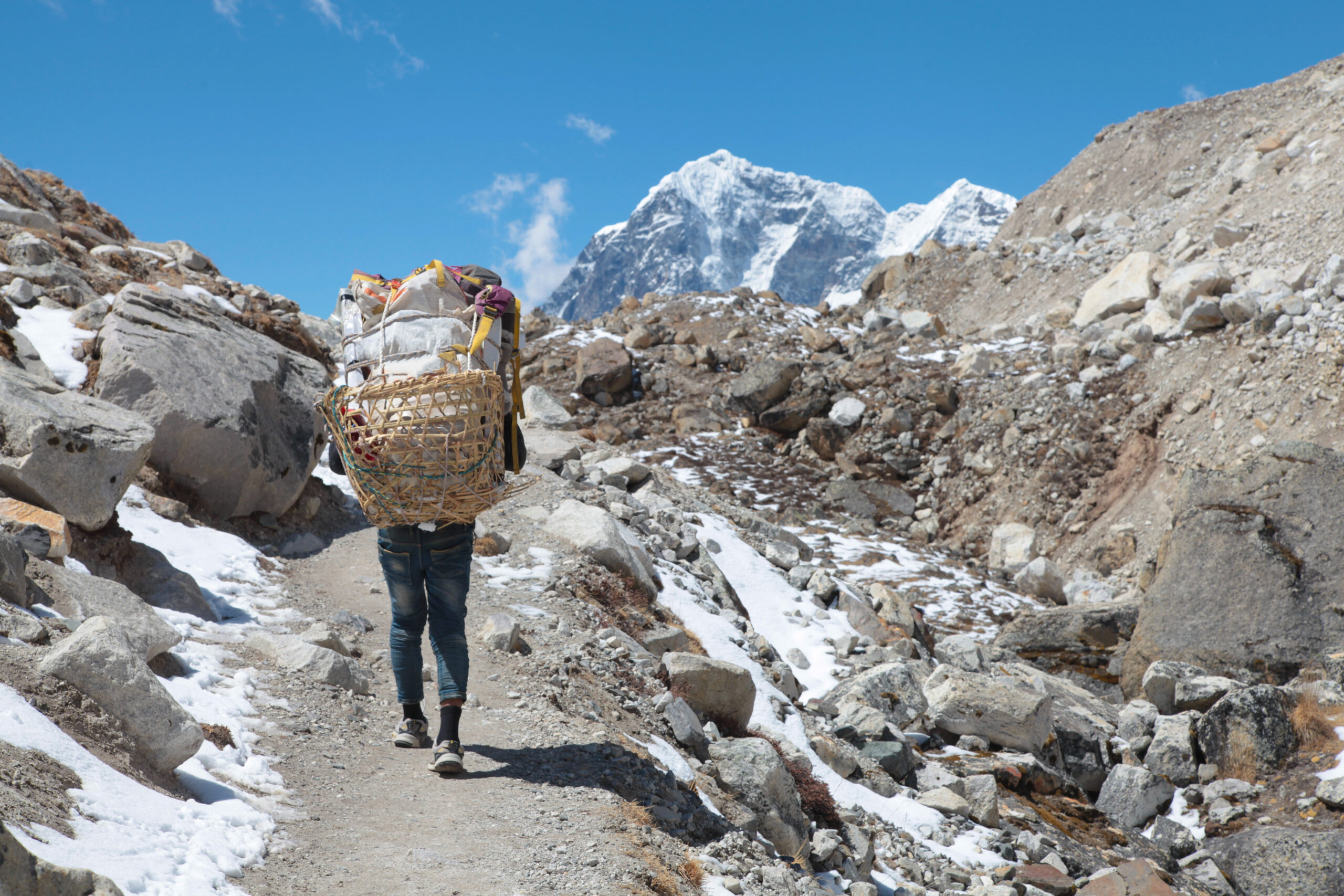
How Much Do Sherpas Get Paid on Everest? 2026 Wages, Bonuses & Insurance
Experienced Everest climbing guides are commonly reported around $4,000–$10,000 in total expedition earnings, but that is not a universal Sherpa salary. Nepal separately sets a regulatory daily rate of NPR 1,200 for a mountain guide or climbing Sherpa/high-altitude worker. Total compensation can also include high-camp work, summit bonuses, tips, equipment and insurance.
About $4,000–$10,000 per Everest Expedition Is a Useful Reported Range—Not One Official Salary.
Public reporting places many experienced or certified Everest climbing guides within a broad range of roughly $4,000–$10,000 in expedition or season earnings. Certification, summit record, client responsibility, high-camp duties, bonuses and tips can move the total materially.
Nepal’s current mountaineering rules separately list NPR 1,500/day for an expedition sirdar, NPR 1,200/day for a mountain guide or climbing Sherpa/high-altitude worker, and NPR 1,000/day for a Base Camp worker. Those are regulatory daily rates; they do not describe the worker’s complete Everest compensation.
A current named example helps show the difference: Alpine Ascents publishes a $1,500 summit bonus per climber for Sherpa guides, with staff tips separate. That is one company’s policy, not an Everest-wide rule.
What the Public Numbers Actually Mean
Private employment contracts are not published across the industry, so a useful guide has to distinguish public regulations from reported earnings and named company policies.
| Figure | Best-supported meaning | Confidence | Boundary |
|---|---|---|---|
| NPR 1,500 / 1,200 / 1,000 per day | Regulatory rates for sirdar, mountain guide / high-altitude worker, and Base Camp worker | High | Daily schedule only; not complete expedition income |
| $4,000–$10,000 | Broad reported expedition/season earnings range for experienced or certified Everest guides | Medium | Not an official salary table; contracts vary |
| $1,500 summit bonus | Published Alpine Ascents example per climber for Sherpa guides | High | Named operator policy only |
| NPR 2,000,000 insurance | Minimum insured sum for sirdars, mountain guides and high-altitude workers | High | Insurance protection, not cash wages |
| NPR 1,500,000 insurance | Minimum insured sum for Base Camp workers | High | Does not reveal take-home pay |
| Fixed % of client fee | Not supportable from public package prices alone | Unsupported | Would require complete payroll and cost allocation |
Nepal’s Current Expedition-Staff Daily Rates
The Mountaineering Sixth Amendment raised the listed rates sharply. These figures are strong public anchors, but Everest compensation normally contains additional contract-specific elements.
| Expedition role | Current listed rate | What may sit outside the rate |
|---|---|---|
| Expedition sirdar | NPR 1,500/day | Management premium, summit bonus, tips, equipment, insurance, private benefits |
| Mountain guide | NPR 1,200/day | Personal-guide premium, summit bonus, carries, tips, equipment |
| Climbing Sherpa / high-altitude worker | NPR 1,200/day | High-camp assignments, load payments, bonuses, tips, equipment |
| Base Camp worker | NPR 1,000/day | Tips, allowances, equipment and employer benefits |
| Local worker above 3,700 m to Base Camp | NPR 1,000/day | Load, trip duration, insurance and operator allowances |
| Local worker below 3,700 m | NPR 800/day | Load, trek contract, tips and benefits |
These rates explain why NPR 1,200/day and a reported $4K–$10K expedition total are not contradictory. A long Everest contract can include high-altitude assignments, carries, bonuses, tips and experience premiums. A shortened season can reduce the total.
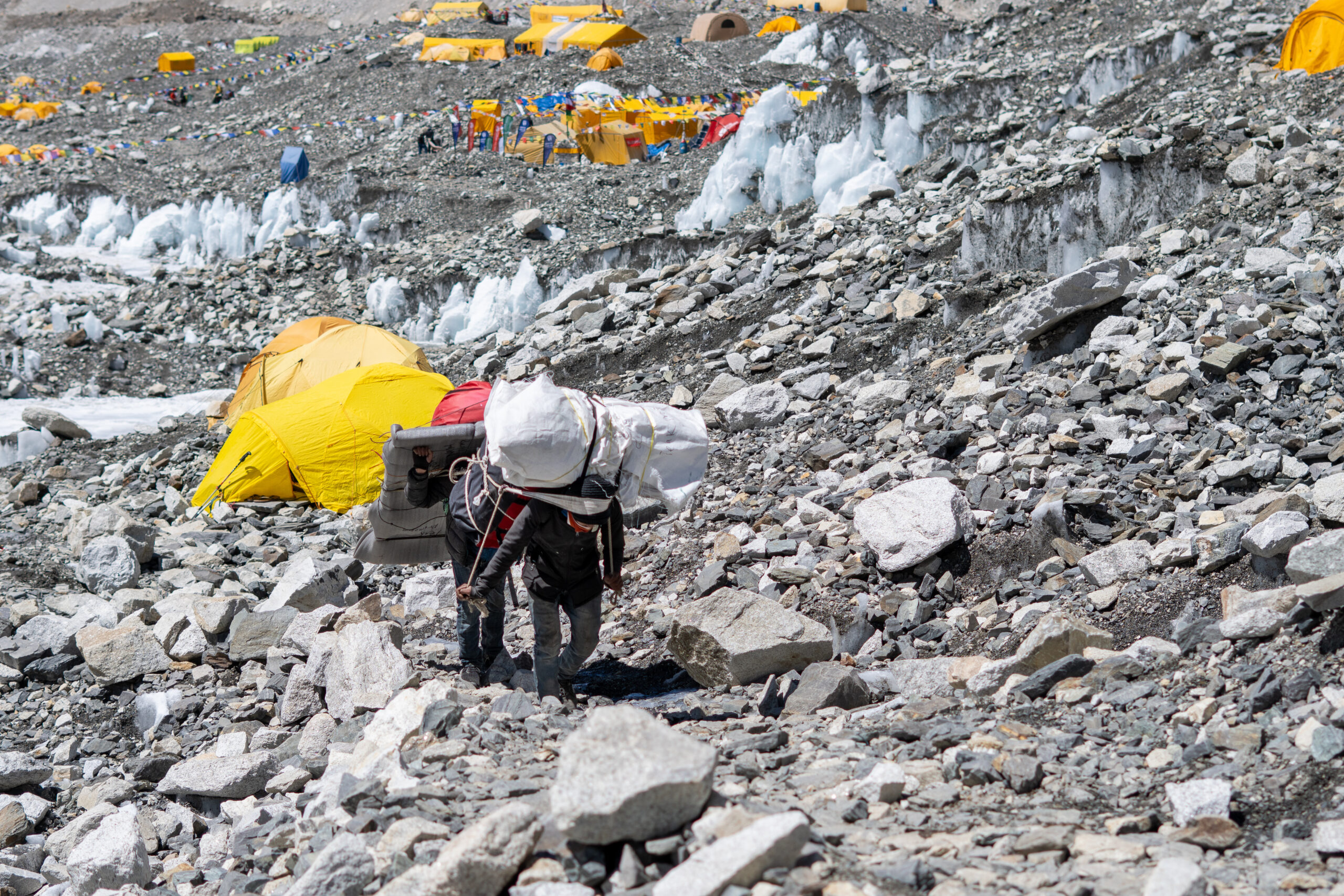
Everest Compensation Reflects Repeated Exposure, Camp Work and Logistics.
High-altitude workers move freight, establish camps, carry oxygen, support route systems and make repeated rotations through hazardous terrain. A summit bonus is only one line in a much larger compensation structure.
Everest Pay by Role
A personal summit guide, expedition sirdar, Icefall Doctor, Base Camp cook and trekking porter do different work under different pay systems.
| Role | What is publicly supportable | Why compensation varies |
|---|---|---|
| Climbing guide / high-altitude worker | NPR 1,200/day regulatory rate; experienced-guide expedition earnings publicly reported in the broad $4K–$10K range | Experience, certification, carries, client responsibility, summit outcome, tips, employer |
| Personal climbing guide | May receive guaranteed compensation plus a summit bonus and direct client tip | One-to-one responsibility, summit record, oxygen plan, high-camp support |
| Expedition sirdar | NPR 1,500/day regulatory rate | Team size, staffing, logistics, management role, private contract |
| Icefall Doctor | Specialist route-building role is well documented; exact individual contract pay is not consistently public | Separate seasonal assignment and route-system contracting |
| Base Camp cook / staff | NPR 1,000/day Base Camp rate | Role, season length, employer, tip pool, benefits |
| Trekking porter | Normally paid by day, load or trek contract | Route, load, duration, season and employer |
How an Everest Worker’s Total Pay Can Be Built
Two workers with the same regulatory rate can finish the season with different economic outcomes.
What is promised regardless of summit outcome?
Operators rarely publish every worker’s private contract. The guaranteed amount is the foundation of the package.
Are carries paid separately?
Some contracts pay additional amounts for load carries, high-camp assignments or other altitude-specific work; others bundle them.
What event triggers the payment?
The amount, payer and trigger should be clear before the expedition starts.
Pooled, direct or both?
Some teams pool staff gratuities, some use direct personal-guide tips, and some combine the two.
Who buys the down suit and boots?
Personal high-altitude equipment is expensive. Employer-supplied gear changes the economic value of the contract.
Protection, not take-home pay
The insured amount matters to the worker and family, but it should never be added to salary.
What happens when the route never opens?
A contract should explain what remains payable after weather, injury, closure or client withdrawal.
Veteran responsibility can command more
Senior personal guides and sirdars may negotiate higher compensation based on experience and responsibility.
Everest Summit Bonuses & Tips
“Bonus” only means something when the payer, amount and trigger are defined.
| Payment | Typical payer | What to clarify |
|---|---|---|
| Guaranteed wage | Operator | What is guaranteed by role and when is it paid? |
| Summit bonus | Client or operator, depending on package | Is it separate? What exact event triggers it? |
| High-camp / load pay | Operator | Paid by carry/altitude or bundled? |
| Team tip | Clients | Is it pooled and which staff share? |
| Personal-guide tip | Individual client | Expected in addition to the team pool? |
| Shared-route contribution | Expedition / operator system | How are specialist route workers compensated? |
Insurance, Equipment & the Worst-Day Contract
NPR 2,000,000 Minimum Insured Sum
The updated minimum applies to expedition sirdars, mountain guides and high-altitude workers. Ask whether additional medical, evacuation, disability or family benefits are provided.
NPR 1,500,000 Minimum Insured Sum
Coverage still needs context: which workers are covered, for what period and under what exclusions.
Who Pays for High-Altitude Gear?
Boots, down suits, gloves and goggles can materially change take-home value if a worker must replace them from wages.
What Remains Payable?
Weather, route closure, injury or client withdrawal can end a season without a summit. A strong contract explains what guaranteed compensation remains.
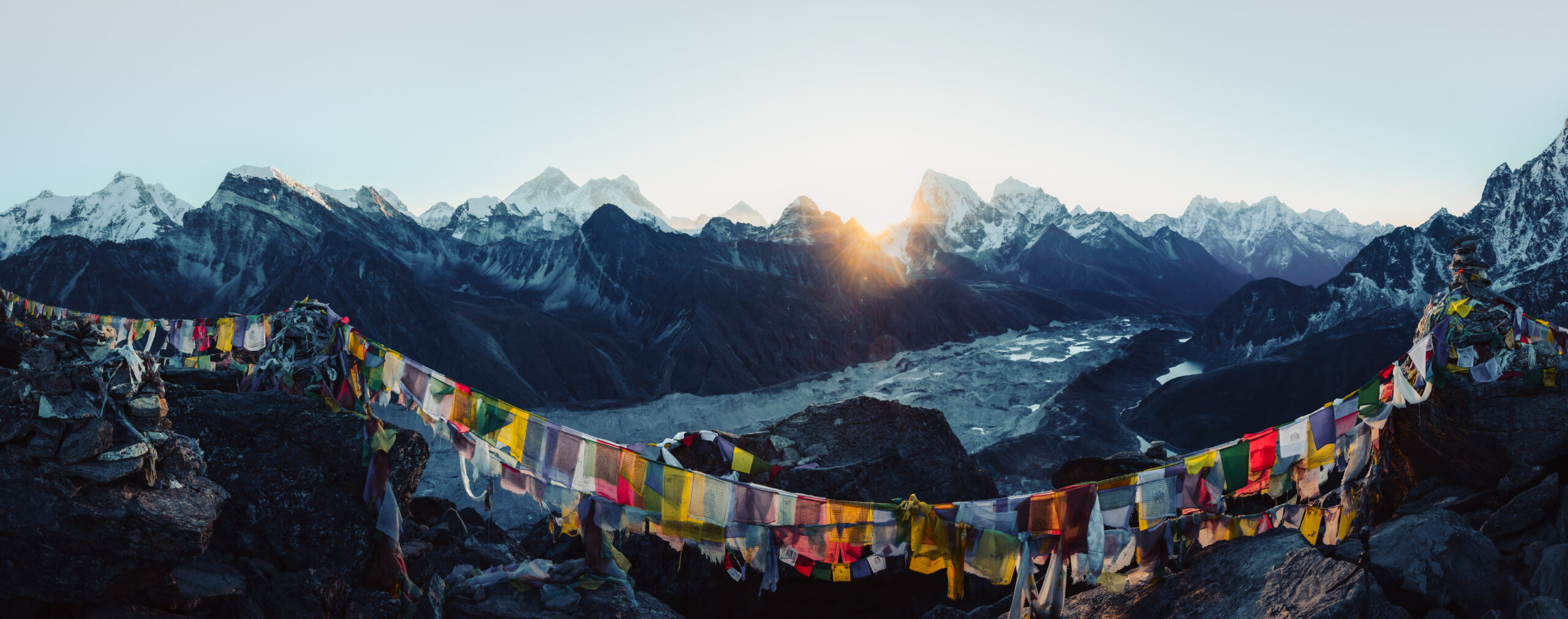
When the Khumbu Icefall Route Was Blocked, Sherpa Route Workers Reopened It.
Reuters reported that 19 Sherpa climbers crossed the difficult section and reopened access toward Camp I after a large serac had blocked the route for roughly two weeks in April 2026. Route construction and repeated Icefall exposure happen before most clients move high on the mountain.
Where the Rest of an Everest Expedition Price Goes
A $40,000, $80,000 or $150,000 package cannot be reverse-engineered into one worker’s salary without the operator’s full staffing and cost model.
| Client-price component | Why it matters |
|---|---|
| Nepal government royalty | The spring normal-route permit alone is $15,000 per foreign climber. |
| Supplemental oxygen | Cylinders, masks, regulators, transport, caches and staff oxygen. |
| High-altitude labor | Guides, sirdars, carries, camp construction, summit support and route work. |
| Base Camp labor | Cooks, communications, medical support and camp operations. |
| Shared route systems | Icefall route, upper-mountain fixing and shared expedition charges. |
| Transport & logistics | Domestic flights, cargo, porters, hotels, freight and trek support. |
| Insurance & equipment | Worker coverage, allowances and operator-owned systems. |
| Guiding, administration & overhead | Lead guides, offices, planning, forecasting, liability and profit. |
16 Questions to Ask an Everest Operator
A lower expedition price is not automatically exploitative, and a premium price does not automatically prove good worker protection. Ask what the contract actually provides.
1–4. Guaranteed Compensation
- What is guaranteed for each guide and worker role?
- Is the summit bonus separate?
- What exact event earns the bonus?
- Are high-camp carries paid separately?
5–6. Gratuity Structure
- Is the team tip pooled, and who participates?
- Is a direct personal-guide tip expected too?
7–8. Gear Costs
- Are boots, down suits and personal gear supplied?
- Are any equipment costs deducted from wages?
9–12. Insurance & Cancellation
- What life and accident coverage is carried?
- What medical/disability support exists?
- What is paid if the route never opens?
- What happens if the client leaves early?
13–15. Guide Ratio & Exposure
- What is the client-to-guide ratio above Base Camp?
- How many Icefall/high-camp rotations are expected?
- Who pays shared route-fixing charges?
16. Put It in Writing
Will the operator document its pay, bonus, equipment, insurance and cancellation policies before you pay a nonrefundable deposit?
Sources for Everest Pay & Worker Protection
Government rates, named operator policies and reported earnings are kept separate because they answer different questions.
Republica — Mountaineering Sixth Amendment
Reports the current NPR 1,500 / 1,200 / 1,000 daily rates.
Open source →Seven Summit Treks — 2025 Amendment Summary
Publishes the updated minimum insured sums for high-altitude and Base Camp roles.
Open source →Alpine Ascents — Everest Price Schedule
Currently publishes a $1,500 summit bonus per climber for Sherpa guides, with staff tips separate.
Open source →Reuters — Khumbu Icefall Reopening
Reports the 19 Sherpa climbers who crossed the blocked Icefall section and reopened the route toward Camp I.
Open source →Alan Arnette — Everest Costs 2026
Discusses current Nepali guide pay, certification and the move from roughly $4K–$5K toward earnings up to $10K for certified guides.
Open source →Nepal Department of Tourism
Use the department for current mountaineering regulations and permit context.
Open department →Continue With the Everest Guides
Complete Everest Guide
Routes, readiness, season, cost and the broader expedition framework.
Open Everest → RolesWhat High-Altitude Workers Do
Role-by-role duties without turning every labor question into a salary claim.
Open duties guide → Client economicsEverest Cost & Permits
See the client-side expedition budget and current permit structure.
Open cost guide → Operator choiceEverest Operators
Compare service, leadership, staffing, support and price.
Compare operators → Service structureWestern-Led vs Nepalese Operator
Compare ownership, leadership and staffing models.
Compare models → RiskKhumbu Icefall Risk
Understand the hazard environment route workers repeatedly enter.
Open risk analysis →Frequently Asked Questions
How much do Sherpas get paid on Everest?
There is no universal official total-season salary. Public reporting places many experienced or certified Everest climbing guides around $4,000–$10,000 in total expedition earnings, with role, experience, duties, tips and summit bonuses affecting the final amount.
Is $4,000–$10,000 a Sherpa base salary?
No. It is best treated as a broad reported expedition or season earnings range. Guaranteed wage, high-camp work, carries, summit bonuses, tips, equipment and benefits can be separate or combined.
What is Nepal’s official daily pay rate for Everest workers?
The Mountaineering Sixth Amendment lists NPR 1,500 per day for an expedition sirdar, NPR 1,200 per day for a mountain guide or climbing Sherpa/high-altitude worker, and NPR 1,000 per day for a Base Camp worker.
How much is an Everest Sherpa summit bonus?
There is no universal amount. Alpine Ascents currently publishes a $1,500 summit bonus per climber for Sherpa guides. Other companies may use different bonus amounts and triggers.
Do Everest Sherpas receive tips?
Tips are common, but the system varies. Some teams use pooled staff gratuities, some expect a direct personal-guide tip, and some use both. Ask whether tips are separate from the summit bonus.
How much insurance is required for Everest workers?
The updated minimum insured sum is NPR 2,000,000 for expedition sirdars, mountain guides and high-altitude workers and NPR 1,500,000 for Base Camp workers. These are insurance values, not wages.
Are all Everest high-altitude workers ethnically Sherpa?
No. Sherpa is an ethnic identity, although climbing Sherpa is also used as an industry job label. High-altitude workers on Everest can come from several Nepali communities.
What should I ask an Everest operator about worker pay?
Ask about guaranteed compensation, summit-bonus rules, carry pay, tip policy, equipment, insurance, cancellation pay, guide ratios and worker protections before paying a nonrefundable deposit.
Everest Sherpa Pay Is More Than One Salary Number.
The public evidence supports current regulatory daily rates, a broad reported earnings range for experienced guides, named operator bonus examples and minimum insurance levels. What it does not support is one universal salary or a fixed percentage of every client’s expedition fee. For climbers choosing an operator, the best question is not simply “what does the trip cost?” but “how are the people carrying the risk paid and protected?”
Which company you book with decides how much of your money reaches the climbing team — and the safety margin you get for it. Compare Everest expedition operators and what each price tier actually delivers.