
Volcano Climbing Basics: Essential Safety Tips, Gear Checklist & Optimal Climbing Seasons
By Travis Ludlow, Global Summit Guide
Volcano climbing offers rare scenery and a technical experience, but it carries real hazards. This guide summarises what you need to know: safety practices, essential kit, and when to climb. Use the checklists and timing guidance to plan a safer, more predictable trip. Before you commit to dates, double-check local rules, permit windows and available rescue services; small administrative steps before departure often prevent large problems on the mountain.
Volcano Climbing Basics
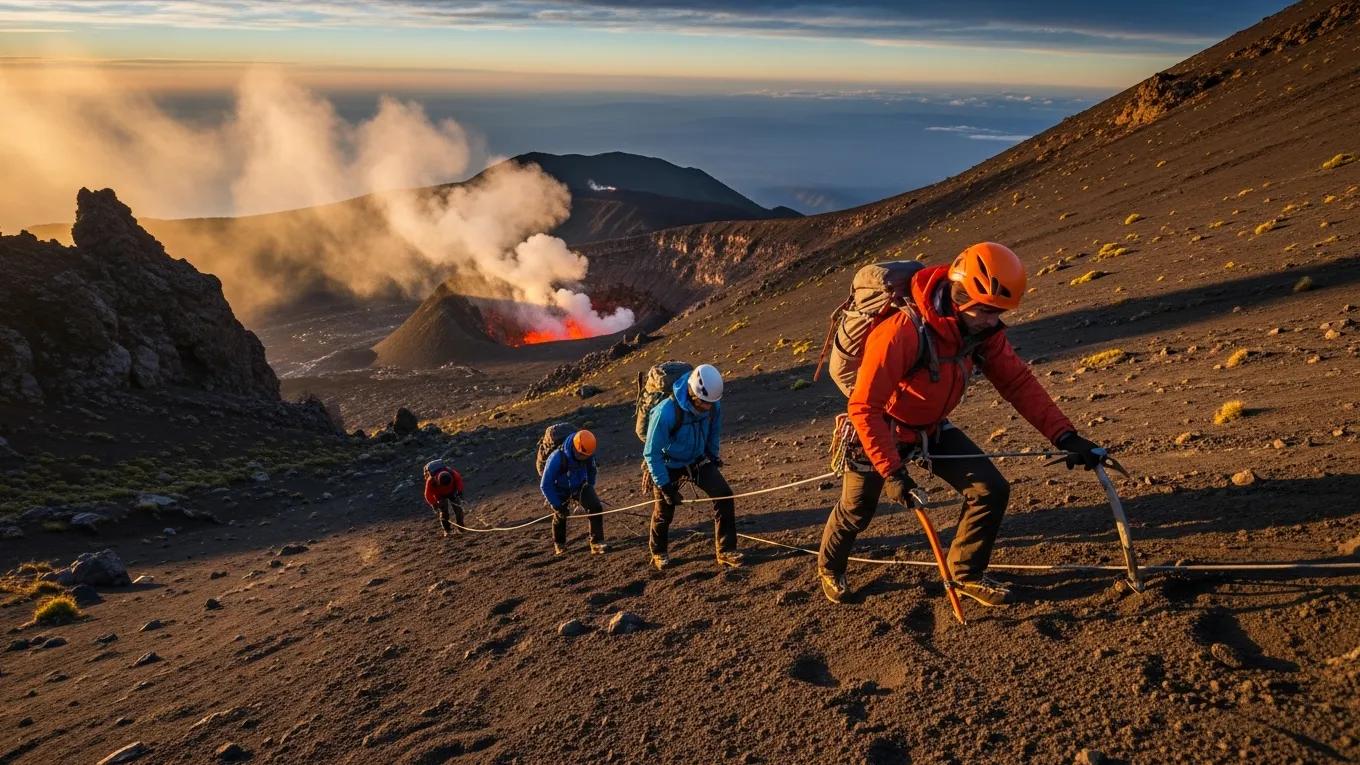
Volcano climbing means ascending volcanic peaks with widely varying terrain and risk. Know the volcano’s recent activity, surface conditions (ash, lava, scree) and route technicality before you go. Proper preparation—route research, weather checks and gear selection—lets you manage the known hazards and reduce surprise risks. Reconnaissance is practical: study topographic maps, read recent trip reports, check official advisories and, if possible, speak with local rangers or guides who know seasonal quirks. Consider simple reconnaissance hikes close to base elevation to test boots, pack weight and team pacing before attempting a summit push.
Essential Safety Tips:
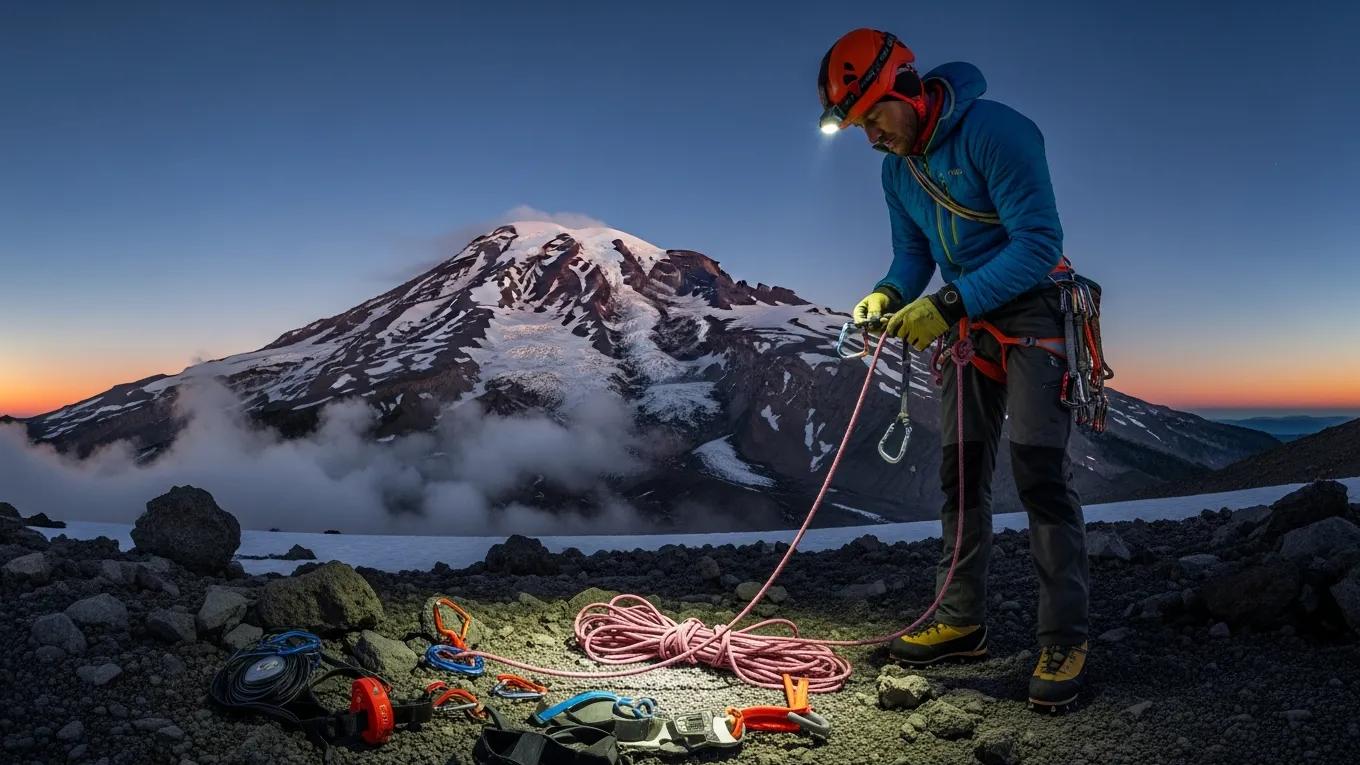
Safety is non-negotiable. Use the following practical measures to reduce risk on the mountain:
- Acclimatization: Gradually acclimatize to higher altitudes to prevent altitude sickness, which can severely impact your health.
- Hydration: Maintain proper hydration levels, as climbing can lead to dehydration, especially in high-altitude environments.
- Emergency Preparedness: Always have a plan for emergencies, including knowledge of evacuation routes and access to communication devices.
- Protective Equipment: Wear a helmet where rockfall is possible and carry a dust/respiratory mask for ash exposure or heavy fumes; eye protection is useful in windy conditions with abrasive ash.
- Weather Windows & Turn-Around Times: Set conservative turn-around times and respect weather windows; a disciplined turnaround decision saves lives.
- Briefing & Decision Points: Before the climb, brief your group on critical decision points (e.g., gear thresholds, too-windy limits) and who makes the final call in an emergency.
- Buddy Checks: Regularly check teammates for signs of hypothermia, dehydration, fatigue or AMS (acute mountain sickness) and swap responsibilities as needed.
Apply these measures consistently. Also monitor the volcano’s current activity and brief your team on escape routes and decision points before the climb. Habitual pre-start checks (weather, radios, spare batteries, permit) and simple contingency plans for delayed return or injury make informal rescues more feasible and faster.
Gear Checklist:
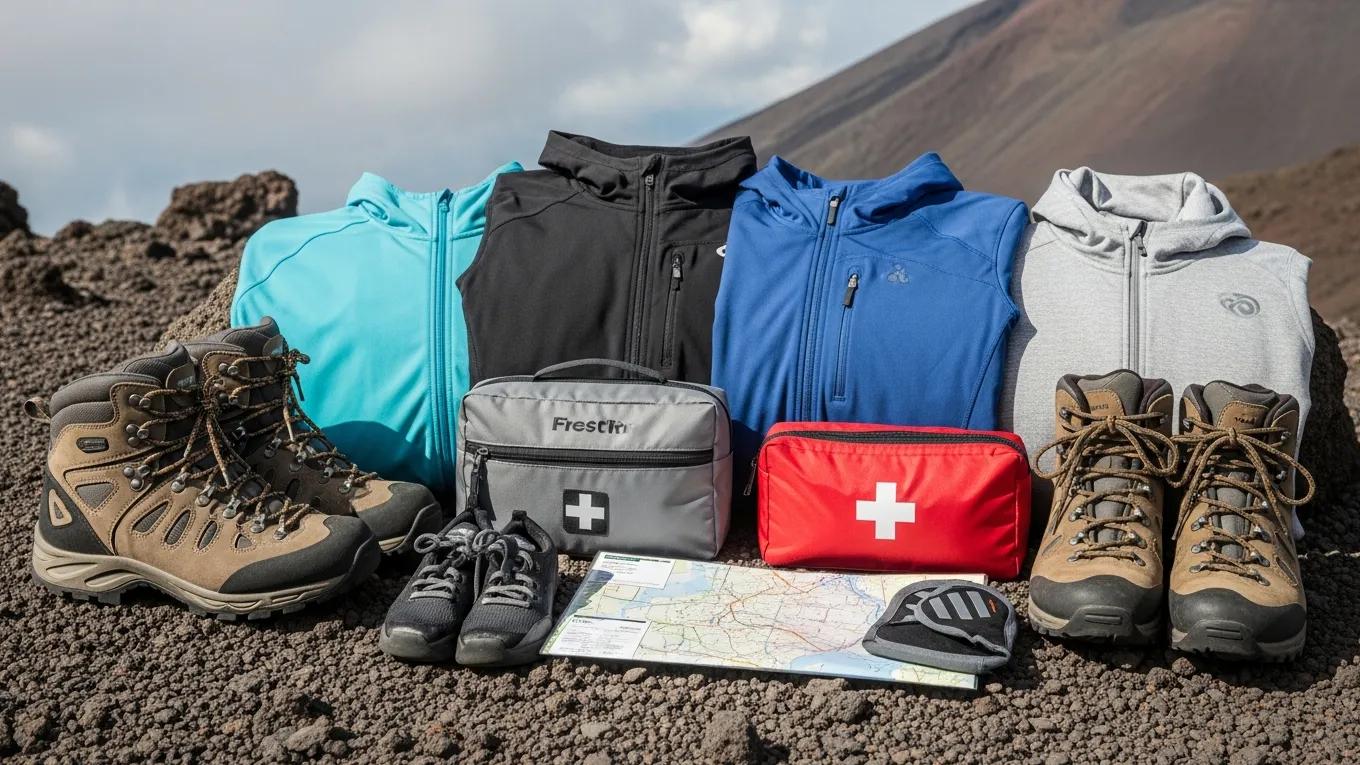
Right gear reduces risk and keeps you mobile. Use layered clothing, solid footwear and basic safety kit tailored to the route and season.
- Clothing Layers: Dress in moisture-wicking base layers, insulating mid-layers, and waterproof outer layers to adapt to changing weather conditions.
- Footwear Requirements: Invest in sturdy, waterproof hiking boots with good ankle support to navigate rocky and uneven terrain.
- Safety Equipment: Carry a first aid kit, a map, a compass, and a multi-tool for emergencies.
- Headlamp & Spare Batteries: Essential for early starts, late descents or sudden delays.
- Trekking Poles: Help with balance on scree and steep slopes and reduce fatigue on long descents.
- Sunglasses & Sun Protection: High-altitude sun exposure is stronger; include SPF lip balm and sunscreen.
- Respiratory Protection: A close-fitting dust mask (e.g., N95-equivalent) can reduce inhalation of ash or dust in windy conditions.
- Portable Power: Keep a charged power bank and cables for GPS, phone or emergency beacon.
Use the table and list to build a pack that matches the route’s exposure, duration and altitude. Test gear on shorter hikes before your climb. Pack smart: place frequently used items (map, first aid, headlamp, water) near the top or in accessible pockets and distribute weight so the load feels stable when you move across uneven ground. If you hire a guide or join an organized trip, confirm group kit responsibilities to avoid duplication and ensure essential items are carried.
Which Volcanic Hazards Pose the Greatest Risks to Climbers?
Climbers should be aware of several volcanic hazards that can pose significant risks:
- Lava Flows: These can occur unexpectedly and can be extremely dangerous.
- Gas Emissions: Volcanic gases can be toxic and may lead to respiratory issues.
- Rockfalls: Loose rocks can fall from the volcano’s slopes, posing a risk to climbers below.
Know the hazard profile for your objective and plan mitigations: safe distances for gas, route choices to avoid unstable slopes and contingency plans for sudden flows or rockfall. Be alert to precursor signals such as fresh steaming, new fumaroles or sudden increases in gas smell; if you are unsure about current conditions, delay or cancel the climb. Where lahars (mudflows) are possible, avoid low gullies and river channels during and after heavy rain. For further insights, refer to the mountain weather for climbers.
A clear grasp of volcanic hazards and their potential for catastrophic events is the foundation of any effective risk assessment for climbers.
Understanding Volcanic Hazards & Risk Assessment
This chapter reviews the physical characteristics of a wide range of volcanic hazards pertinent to assessments of vulnerability and risk with respect to humans, buildings, lifelines, and other infrastructure. When deaths related indirectly to eruptions are excluded, the record of fatalities from eruptions is dominated by a few catastrophic events that produced numerous deaths as a result of pyroclastic flows, lahars, or tsunamis.
Volcanic hazards risk assessment, RJ Blong, 1996
What Strategies and Equipment Mitigate Volcano Climbing Risks?
To enhance safety during volcano climbing, climbers should employ specific strategies and utilize appropriate equipment:
- Use of GPS Devices: GPS devices can help navigate challenging terrains and keep track of the climbing route.
- Communication Tools: Carrying a satellite phone or radio can ensure communication in case of emergencies.
- Group Climbing: Climbing in groups can provide support and increase safety through shared resources and knowledge.
These strategies and equipment can significantly reduce the risks associated with volcano climbing, allowing climbers to focus on the adventure. In addition to hardware, invest time in practical skills: navigation with map and compass, basic wilderness first aid, and familiarisation with your chosen GPS interface. Practice using communication devices before you leave and agree how and when they will be used during the trip.
New technologies like real-time climber tracking are being developed to strengthen disaster prevention and response.
Real-Time Climber Tracking for Volcanic Disaster Prevention
We carry out experiments to grasp the movement of climbers as well as an experiment to share the disaster situation with related organizations in real time, at Nasudake in 2020 and Ontakesan in 2022. In the experiments, small beacons are distributed to many climbers, and their movements are detected by receivers installed on mountain trails in advance. We build an online viewer to visualize the monitoring results on a web map in real time, and share them with the related organizations, and exchange opinions with them about the use of the acquired data for disaster prevention. Based on the results of the experiments, we consider how to solve problems related to volcanic disaster prevention during not only disasters but also normal times, such as updating drills and revising evacuation plans.
Consideration for Solving Problems Related to Volcanic Disaster Prevention by Real-Time Grasping of Climber Movement, 2023
Optimal Climbing Seasons:
Timing your ascent reduces weather-related risk and improves conditions on the route. Choose windows with stable weather and lower hazard probability for the specific volcano. Seasonal windows vary with latitude and elevation, so a popular local season does not necessarily apply to every route on a given mountain.
When Are the Best Times and Seasons to Climb Volcanoes Safely?
Generally, the optimal climbing seasons for volcanoes are during the dry months when weather conditions are more stable. For many regions, this typically falls between late spring and early fall. Climbers should research the specific volcano they plan to ascend to determine the best time for their expedition. Also consider how elevation changes microclimates: summit conditions may remain winter-like while lower slopes are temperate.
How Do Seasonal Weather Patterns Affect Volcano Climbing Conditions?
Seasonal weather patterns can significantly impact climbing conditions. For instance, heavy rainfall can lead to mudslides, while snow can create hazardous icy conditions. Understanding these patterns helps climbers prepare adequately for their ascent. Keep in mind that short storms can create rapidly deteriorating visibility and rapidly change slope stability, so carry weatherproof layers and plan shorter daily gains during volatile seasons.
Which Months Offer Optimal Climbing Windows for Popular Volcanoes?
Many popular volcanoes have specific months that are considered ideal for climbing. For example, climbing Mount Kilimanjaro is best from January to March and June to October, while Mount Fuji is most accessible from July to September. Researching these windows can help climbers plan their trips effectively. If your objective is less-travelled, check local guide operator calendars and park advisories for up-to-date closures or seasonal access limitations.
How Do Climbing Routes and Permit Requirements Influence Volcano Expedition Planning?
Different volcanoes have various climbing routes, each with its own level of difficulty. Some routes may require permits, which can influence expedition planning. Climbers should familiarize themselves with the specific requirements for the volcano they intend to climb, including any necessary permits and regulations. In many areas, permits are used to limit numbers and protect sensitive terrain; secure permits early and carry physical or digital proof while on the trail.
What Are the Common Climbing Routes and Their Difficulty Levels?
Common climbing routes vary in difficulty, from beginner-friendly paths to challenging ascents requiring technical skills. For instance, the Inca Trail to the summit of Cotopaxi is a popular route that offers stunning views but requires a moderate level of fitness. Understanding the difficulty levels of different routes is crucial for selecting the right climb. Look for route descriptions that note altitude gain per day, expected terrain type (scree, snow, volcanic rock) and recommended experience level.
How and Where Can Climbers Obtain Necessary Permits?
Permits for climbing volcanoes can often be obtained through local authorities or national parks. It is essential for climbers to secure these permits in advance to avoid any last-minute issues. Checking the specific requirements for each volcano is vital for a smooth climbing experience. When available, buy permits from official portals or authorised visitor centres and confirm whether guides are mandatory; if hiring a guide, confirm they are licensed and insured.
What Emergency Procedures and Rescue Protocols Should Volcano Climbers Know?
Climbers should be familiar with emergency procedures and rescue protocols in case of an incident. This includes knowing how to signal for help, the location of the nearest medical facilities, and the steps to take in case of an evacuation. Being prepared can make a significant difference in emergency situations. Know the local emergency numbers, planned evacuation assembly points and whether helicopter extraction is available for the area you are visiting.
How to Recognize and Respond to Volcano Eruption Hazards During a Climb?
Recognizing signs of volcanic activity, such as increased gas emissions or seismic activity, is crucial for climbers. If any signs of an eruption are detected, climbers should follow established evacuation routes and protocols to ensure their safety. Practice rapid retreat drills with your team so everyone knows where to go and how to move quickly while carrying pack and emergency kit.
What Are the Recommended Rescue and Evacuation Procedures?
In the event of an emergency, climbers should follow the established rescue and evacuation procedures outlined by local authorities. This may include moving to designated safe zones and awaiting further instructions from rescue teams. Keep in mind that evacuations may require moving crosswind from ash plumes and avoiding natural channels that can funnel pyroclastic flows or lahars.
Which Volcanoes Are Considered the Best and Safest to Climb Globally?
Some volcanoes are renowned for their safety and accessibility for climbers. For example, Mount St. Helens in the United States offers well-maintained trails and clear safety guidelines. Researching and selecting safer volcanoes can enhance the climbing experience. Prioritise objectives with established trail maintenance, clear signposting and reliable park support for visitors when possible.
What Criteria Define the Best Volcanoes for Climbing?
The best volcanoes for climbing are often defined by their accessibility, established routes, and safety records. Climbers should consider these factors when planning their expeditions to ensure a rewarding experience. Other helpful criteria include the availability of guided services, rescue infrastructure, and solid trip reports from recent seasons.
What Are Examples of Popular Volcanoes with Established Climbing Routes?
Popular volcanoes with established climbing routes include Mount Kilimanjaro, Mount Fuji, and Mount St. Helens. These volcanoes offer a range of climbing experiences suitable for different skill levels. When selecting an objective, compare route length, total elevation gain and the presence of technical sections to match your skill set.
How Can Climbers Monitor Volcanic Activity and Stay Updated on Safety Alerts?
Climbers should utilize resources such as geological surveys and local news outlets to monitor volcanic activity. Staying informed about any changes in volcanic conditions is essential for safety. Subscribe to official alert feeds, follow park ranger accounts where available, and set reminders to check conditions in the week leading up to travel.
What Resources Provide Real-Time Volcanic Activity and Eruption Data?
Several online platforms provide real-time data on volcanic activity, including the United States Geological Survey (USGS) and the Global Volcanism Program. These resources can help climbers stay updated on potential hazards. Local universities and national geological agencies often maintain more detailed advisories specific to particular volcanoes, so combine global feeds with regional information.
How to Integrate Volcanic Alerts into Climbing Trip Planning?
Incorporating volcanic alerts into trip planning involves regularly checking for updates and adjusting plans accordingly. This proactive approach can help climbers avoid dangerous situations. Build flexibility into travel plans and keep alternate objectives so that a sudden advisory does not force a hazardous decision on summit day.
What Are the Latest Safety Protocols and Best Practices in Volcano Climbing?
Staying informed about the latest safety protocols and best practices is crucial for climbers. This includes understanding the current guidelines from local authorities and adhering to established safety measures. Practical best practices include conservative pacing, prioritising team safety over summit success, and maintaining effective group communication throughout the climb.
Which Organizations and Research Inform Current Volcano Climbing Safety Standards?
Organizations such as the International Association of Volcanology and Chemistry of the Earth’s Interior (IAVCEI) provide valuable research and guidelines for safe climbing practices. Engaging with these resources can enhance climbers’ knowledge and safety. Local park services, mountain rescue organisations and university geological departments are additional sources of applied guidance and region-specific advice.
How Have Recent Case Studies Influenced Climbing Safety Recommendations?
Recent case studies on volcanic eruptions and climbing incidents have led to updated safety recommendations. Analyzing these cases helps climbers understand potential risks and improve their preparedness. Operators and agencies now emphasise pre-trip briefings, stricter permit controls, and better on-trail monitoring in high-use volcanic areas.
Tragic incidents have shown why safety protocols and risk mitigation must continually improve for people visiting volcanic areas.
Ensuring Volcano Visitor Safety & Risk Mitigation
Based on the growing popularity of active and dormant volcanic destinations, it is crucial for all stakeholders involved (monitoring agencies, emergency services, local authorities) to do everything in their power to ensure that visitors in active volcanic areas are as safe as possible. An unfortunate reminder that there is much room for improvement was the tragic event from December 2019 in New Zealand, when the active volcano Whakaari (White Island) erupted, resulting in the death of 22 volcano tourists including tour guides who were present on the island at the time of the eruption. As vast numbers of volcanic environments and their distinct geodiversity are used for a wide range of outdoor activities worldwide, the implementation of suitable safety measures for volcano tourists, especially in active environments, is more than ever of unquestionable importance with no time to lose.
Volcano tourism and visitor safety: still playing with fire? a 10-year update, 2022
Frequently Asked Questions
What should I do if I encounter a volcanic eruption while climbing?
If you detect increased gas, ash, or seismic signs of an eruption, stay calm and move away from the volcano along pre-identified evacuation routes. Head crosswind from plumes, avoid gullies that channel pyroclastic flows or lahars, and seek higher ground if instructed. Notify your group and local authorities via your communication device and follow their directions. As you retreat, protect your airway and eyes where possible, move deliberately to the closest safe zone and account for every team member at pre-arranged checkpoints.
How can I prepare for altitude sickness when climbing a volcano?
Acclimatise slowly: spend days at intermediate elevations and limit nightly gains. Stay well hydrated, eat enough carbohydrates and avoid alcohol. If you develop persistent headache, nausea or dizziness, descend immediately and seek medical help. Consider carrying altitude medication if advised by a medical professional and practise conservative pacing during the ascent. For detailed information on climbing techniques, refer to expert mountaineering guide.
What are the best practices for climbing in a group?
Agree roles and communication signals before you start. Keep the group together at a pace that suits the slowest member. Share navigation and safety gear, perform regular status checks, and decide go/no‑go points in advance. Establish a simple lost-person protocol (e.g., wait times, whistle signals) and run through it before departure so everyone understands the plan.
How do I choose the right climbing route for my skill level?
Match route difficulty to your fitness and technical ability. Check route descriptions, elevation gain, surface type and objective hazards. When in doubt, pick a well-marked, lower-exposure route and build experience progressively. Read recent trip reports to verify that trail conditions match published descriptions; conditions on volcanic slopes can change seasonally.
What should I include in my emergency kit for volcano climbing?
Pack a compact first aid kit, whistle, headlamp with spare batteries, multi-tool, and a map. Add non-perishable food, water purification tablets, thermal blanket and a portable charger or satellite communicator. Keep the kit accessible and practice using items before the trip. Store small repair items (duct tape, cord) and a basic splint in case of limb injury; a lightweight shelter or tarp can be valuable during unexpected waits.
How can I stay informed about volcanic activity before my climb?
Check updates from the USGS or your country’s geological agency, follow local park authorities and monitor local media. Join local climbing groups or contact ranger stations for recent route and hazard reports. Set a schedule to re-check activity alerts in the 72 hours leading up to departure and again the morning of your planned ascent.
What are the environmental considerations when climbing a volcano?
Follow Leave No Trace: stay on marked trails, carry out waste and avoid disturbing wildlife. Respect cultural sites and local rules set by indigenous groups or authorities to protect both the environment and local communities. Use existing campsites where provided and avoid creating new fire rings or disturbances; fragile volcanic soils and vegetation recover slowly from trampling.
Conclusion
Volcano climbing is rewarding but requires disciplined planning and risk management. Use the safety tips, gear checklist and season guidance here to build a clear plan, monitor volcanic activity, and prepare emergency procedures. With the right preparation you reduce risk and increase the chance of a safe, successful ascent. Prioritise conservative decision-making, practice essential skills in safer environments and keep safety conversations part of every stage of your trip.
Related posts:
 Vinson Massif: Complete Guide to Climbing Antarctica’s Highest Peak
 10 Best Mountains to Climb for Beginners
 Patagonia Hiking: Guide to Trekking in Torres del Paine
 How Long Does It Take to Climb Kilimanjaro? Route-by-Route
 Kilimanjaro Climbing Guide: Routes, Costs, & Difficulty
 Mountain Weather: How to Read Forecasts and Stay Safe
Leave a Reply