
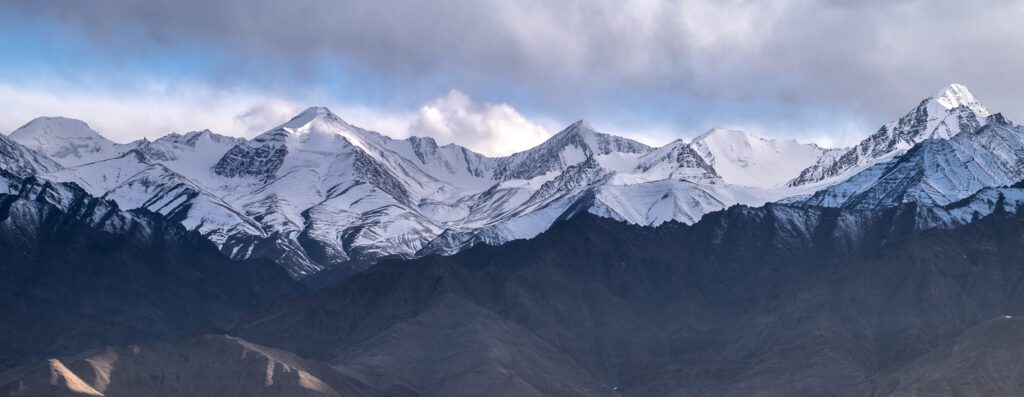
Stok Kangri Closure 2026: Ladakh Trekking Peak Effectively Closed Since 2020
Stok Kangri (6,153m / 20,187 ft) — historically the highest and most popular trekking peak in India’s Ladakh region — has been effectively closed to commercial expeditions since 2020. The closure framework began with the All Ladakh Tour Operators Association (ALTOA) December 2019 announcement of a 2020-2023 closure period, subsequently formalized through the LAHDC (Ladakh Autonomous Hill Development Council) institutional order framework, and has been extended indefinitely with no confirmation of 2026 reopening framework. The closure framework reasons include: over-tourism environmental damage (uncontrolled influx of trekkers across peak season July-September), glacier depletion (Stok glacier serves as the main water source for Stok village; J&K and Ladakh glaciers have receded ~25% over the past 60 years), water supply contamination (trekking groups contaminating water supply in the village below Stok Kangri basecamp), and waste accumulation framework (irresponsible waste disposal across base camp framework). For 2026 climbers seeking Indian Himalaya 6,000m+ commercial framework alternatives: Kang Yatse 2 (6,250m, Markha Valley), Mentok Kangri 2 (Tso Moriri framework), Dzo Jongo Ri East (6,218m, Markha Valley), Yunam Peak (Lahaul & Spiti framework), and Friendship Peak (5,289m / 17,348 ft, Manali framework) provide structurally appropriate Indian Himalaya commercial framework alternatives. This page documents the closure framework rather than providing operator comparison framework — Stok Kangri is structurally closed to commercial expedition framework as of 2026.
(20,187 ft)
since 2020
receding past 60 years
commercial alternatives
Stok Kangri occupies a structurally distinctive position in the 2026 Indian Himalaya commercial mountaineering landscape: historically the highest and most popular trekking peak in Ladakh (6,153m / 20,187 ft) but effectively closed to commercial expeditions since 2020 following the All Ladakh Tour Operators Association December 2019 announcement and subsequent LAHDC (Ladakh Autonomous Hill Development Council) institutional order framework. This page documents the closure framework rather than providing operator comparison framework — unlike other Wave 3 peaks with active commercial operator fields, Stok Kangri is structurally closed to commercial expedition framework as of 2026 with no confirmation of reopening framework. The closure framework matters structurally because Stok Kangri was historically the most accessible 6,000m+ trekking peak commercial framework in Ladakh — providing relatively cheap fixed tent camp framework infrastructure, IMF-listed trekking peak permit framework available in Leh or at base camp framework, and short-duration commercial framework engagement (typically 8-9 day expedition framework). The 2026 Indian Himalaya commercial framework for climbers seeking comparable high-altitude commercial framework experience requires alternative peak engagement framework — Kang Yatse 2 (6,250m, Markha Valley framework), Mentok Kangri 2 (Tso Moriri framework), Dzo Jongo Ri East (6,218m, Markha Valley framework), Yunam Peak (Lahaul & Spiti framework), and Friendship Peak (5,289m, Manali framework) provide structurally appropriate Indian Himalaya commercial framework alternatives.
Stok Kangri (6,153m / 20,187 ft) has been effectively closed to commercial trekking and climbing expeditions since 2020. The All Ladakh Tour Operators Association (ALTOA) announced the closure in December 2019 with original closure period of 2020-2023, subsequently formalized through LAHDC (Ladakh Autonomous Hill Development Council) institutional order framework, and has been extended indefinitely with no confirmation of 2026 reopening framework. Climbers seeking Indian Himalaya 6,000m+ commercial framework experience should consider alternative Ladakh trekking peak commercial framework alternatives (Kang Yatse 2, Mentok Kangri 2, Dzo Jongo Ri East) or broader Indian Himalaya commercial framework alternatives (Yunam Peak, Friendship Peak). This page does NOT provide commercial operator framework recommendations for Stok Kangri because no commercial operators legitimately operate Stok Kangri commercial framework as of 2026 per LAHDC institutional regulatory framework. Climbers should NOT engage commercial framework offerings that purport to operate Stok Kangri commercial framework — such engagement framework would violate LAHDC institutional regulatory framework and may contribute to continued environmental degradation framework that the closure framework was implemented to address.
The structural distinction of the Stok Kangri closure framework is the Stok glacier framework as the main water source for Stok village. Unlike many peak closures that prioritize peak environment alone, the Stok Kangri closure framework explicitly prioritizes downstream water supply protection framework for Stok village residents. The framework matters structurally: Stok glacier is a north-east oriented debris-free glacier resembling others in the northern Zanskar region — research from the Wadia Institute of Himalayan Geology has documented unique glacial characteristics framework. Trekking groups contaminating water supply — KE Adventure Travel framing: “due to the impact of trekking groups contaminating the water supply in the village below Stok Kangri basecamp, the local authorities have decided to close Stok Kangri for the time being, giving the land and water time to recover.” Glacier depletion framework — studies reveal concerning trend with glaciers in J&K and Ladakh receding by 25% over the past 60 years; Ladakh home to nearly 5,000 glaciers facing climate change framework impact. Local temperature rise — 1-5°C local temperature rise documented in the region. Stok village downstream water supply framework structurally prioritizes Stok village resident water supply over commercial expedition framework engagement — institutional commercial framework verification through Stok Village Committee + LAHDC + All Ladakh Tour Operators Association multi-institutional framework engagement.
This closure documentation was assembled from publicly available LAHDC (Ladakh Autonomous Hill Development Council) institutional regulatory framework references, All Ladakh Tour Operators Association (ALTOA) announcement framework references, Wadia Institute of Himalayan Geology research framework references, Wikipedia Stok Kangri reference framework, KE Adventure Travel framework references, Ju-Leh Adventure framework references, Project Himalaya framework references, Bikat Adventures Stok Kangri alternatives framework references, Ascent Descent Adventures Stok Kangri trek ban framework references, Holidify framework references, Adventure Pulse Stok Kangri framework references, Trek The Himalayas framework references, Wanderon Stok Kangri framework references, and standard Indian Himalaya commercial reference material. The closure framework status is current as of April 2026 — climbers should verify current closure framework status directly with LAHDC or Indian Mountaineering Foundation (IMF) institutional framework before commercial framework planning. Twice-yearly review cycle. Next scheduled review: September 2026.
The Closure Framework
Closure timeline framework
The Stok Kangri closure framework follows specific institutional regulatory framework timeline:
- December 2019 — All Ladakh Tour Operators Association (ALTOA) announcement — original closure announcement with 2020-2023 period framework
- 2020 — Effective closure begins — commercial expeditions to Stok Kangri ceased per ALTOA institutional framework
- 2020-2023 — Original closure period — three-year closure framework intended to give the region a chance to recuperate per ALTOA framework
- 2023-2024 — Closure extended — initial closure period extended due to continued environmental concerns and water supply protection framework
- 2024 — LAHDC institutional formalization framework — LAHDC (Ladakh Autonomous Hill Development Council) issued formal institutional order framework: “Due to the depletion of the Stok mountain glaciers and the environmental issue, we order the temporary closure with immediate effect of all kinds of expeditions to Stok Kangri carried out by travel agencies, Army, Air Force, and paramilitary forces”
- 2025 — No confirmation of reopening — operator framework references confirm continued closure framework
- 2026 — Continued closure framework — no confirmation of 2026 reopening framework per institutional regulatory framework references
Institutional framework
The Stok Kangri closure framework operates through multi-institutional regulatory framework engagement:
- All Ladakh Tour Operators Association (ALTOA) — original December 2019 closure announcement framework; subsequently met with Stok village members to discuss continued closure framework
- LAHDC (Ladakh Autonomous Hill Development Council) — formal institutional order framework prohibiting all expeditions including commercial travel agencies, Army, Air Force, and paramilitary forces
- Stok Village Committee framework — village-level institutional framework with direct community framework engagement on closure framework continuation
- Wildlife department framework — Hemis National Park institutional framework supporting closure framework (Stok Kangri located in Hemis National Park)
- Indian Mountaineering Foundation (IMF) framework — IMF previously administered Stok Kangri trekking peak permit framework; permit framework no longer issued for Stok Kangri commercial framework engagement
- Government framework — national-level institutional regulatory framework supporting closure framework continuation
Closure framework reasons
The Stok Kangri closure framework reasons include multiple structural environmental framework concerns:
- Over-tourism environmental damage — uncontrolled influx of trekkers across peak season July-September; “literally thousands of climbers a season” per Project Himalaya framework reference
- Stok glacier depletion framework — Stok glacier serves as the main water source for Stok village; J&K and Ladakh glaciers have receded ~25% over the past 60 years
- Water supply contamination framework — trekking groups contaminating water supply in the village below Stok Kangri basecamp; primary concern driving closure framework
- Waste accumulation framework — irresponsible waste disposal across base camp framework; tetra packs, cans, and human waste accumulation in glacier framework area
- Local temperature rise — 1-5°C local temperature rise documented in the region contributing to glacier depletion framework
- Climate change framework — broader climate change framework impact on Ladakh’s nearly 5,000 glaciers; El Niño event impact framework on Himalayas (less rainfall and snowfall, droughts, water shortages, crop failures)
- Drinking water supply framework — Stok village downstream water supply protection framework primary institutional framework concern
- Ecosystem framework — broader Ladakh’s fragile ecosystem framework with delicate ecosystem framework concerns supporting closure framework
Stok Kangri at a Glance
| Peak elevation | 6,153m (20,187 ft) — verified by GPS readings 11 satellites July 2007 joint Nepalese-US expedition framework |
| Mountain range | Highest mountain in Stok Range of Zanskar Mountains (Trans-Himalayan framework) |
| Region | Ladakh region of north India (formerly part of Jammu and Kashmir) |
| Park designation | Hemis National Park |
| Trailhead | Stok village (3,610m / 11,844 ft) — 12 km southwest of trailhead |
| Distance from Leh | 15 km southwest of Leh (Ladakh capital) |
| Closure status (April 2026) | EFFECTIVELY CLOSED — no commercial expedition framework |
| Closure announcement | December 2019 (All Ladakh Tour Operators Association) |
| Original closure period | 2020-2023 (extended indefinitely) |
| Institutional framework | ALTOA + LAHDC + Stok Village Committee + Wildlife Department + IMF + Government |
| Primary closure reason | Stok glacier depletion + water supply protection for Stok village |
| Historical commercial framework | Most popular Ladakh trekking peak; only IMF-listed Ladakh trekking peak framework |
| Historical optimal season | July-September (non-technical period framework) |
| Historical permit framework | Indian Mountaineering Foundation (IMF) — Leh or base camp issuance framework |
| First official winter ascent | March 2002 (British team led by Ross Cooper, age 20 — youngest IMF expedition leader recorded) |
| Ladakh glacier framework | ~5,000 glaciers across Ladakh; ~25% receding past 60 years |
| 2026 reopening framework | No confirmation of 2026 reopening framework |
Alternative Indian Himalaya 6,000m+ Commercial Framework Alternatives
For climbers seeking Indian Himalaya high-altitude commercial framework experience comparable to historical Stok Kangri commercial framework engagement, multiple alternative peak commercial framework options provide structurally appropriate alternatives. Each alternative peak commercial framework has different commercial framework structure, accessibility framework, and commercial framework engagement framework — climbers should evaluate each alternative against personal commercial framework objectives framework.
Kang Yatse 2 (Markha Valley)
Kang Yatse 2 is widely considered the leading alternative to Stok Kangri commercial framework. The towering, throne-shaped peak at the head of the Markha Valley in Ladakh has two summits — Kang Yatse 1 is a difficult and technical expedition that should not be confused with the relatively easier trek to Kang Yatse 2’s peak. The Kang Yatse 2 framework takes climbers through the cultural trail of Markha Valley (a must-do experience in itself) passing through quaint villages, Mani stones inscribed with Buddhist prayers, and monasteries — providing opportunity to meet the warm people of this valley framework. After trekking through the valley, the trail takes climbers to the vast meadows at Nimaling before beginning summit push framework. Note: Project Himalaya documented Kang Yatse 2 as “more dangerous than you might expect” with safety framework concerns observed at locally guided team framework engagement (appalling ropework framework, slipping framework, more crevasses than expected) — climbers should evaluate operator framework safety framework specifically. Best season framework: July-October.
Dzo Jongo Ri East (Markha Valley)
Dzo Jongo Ri East is the easiest 6,000m+ alternative for climbers seeking the simplest commercial framework path to a 6,000m+ Indian Himalaya summit framework. Operator framing: “If you just want to get to 6000+m/20,000+ft the easiest way possible then Dzo Jongo Ri East is the best peak for this. It is easier climbing than Stok Kangri or Kang Yatse II.” The framework goes through Markha Valley with a day for peak scramble — suitable for both seasoned trekkers and as introductory trek-climb framework. The framework is structurally appropriate for climbers prioritizing accessibility framework over technical commercial framework challenge framework. The Project Himalaya framework has documented seven successful expeditions on Dzo Jongo Ri East — surprisingly satisfying alternative commercial framework engagement framework.
Mentok Kangri 2 (Tso Moriri framework)
Mentok Kangri 2 is a non-technical high-altitude trek alternative on the western side of Tso Moriri, a famous tourist attraction in Ladakh. The Mentok Kangri massif provides structurally distinctive Tso Moriri framework alternative — different geographic framework from Markha Valley alternatives. Note: Mentok Kangri 1 is a difficult technical expedition while Mentok Kangri 2 remains a non-technical high-altitude trek framework. The framework is easier than Kang Yatse 2 or Dzo Jongo Ri East but a small section before the summit makes climbers walk on loose rocks (huge granite ones!). “Mentok” is a Tibetan word derived from a wildflower native to this region — cultural framework heritage framing. The framework is structurally appropriate for climbers seeking Tso Moriri framework alternative with non-technical commercial framework engagement.
Yunam Peak (Lahaul & Spiti framework)
Yunam Peak is a trekkable peak that starts from a point close to Baralacha La Pass on the Manali-Leh highway. The framework is structurally distinctive off-beat alternative due to its location in Lahaul & Spiti district in Himachal Pradesh and relative obscurity — climbers will probably not encounter many trekkers on this route framework. The framework provides Indian Himalaya commercial framework alternative outside the Ladakh framework geographic concentration — supporting climbers seeking less-frequented commercial framework engagement framework. The framework is structurally appropriate for climbers prioritizing remote commercial framework engagement and off-beat commercial framework alternative.
Friendship Peak (Manali framework)
Friendship Peak is an immensely well-known trekking peak (17,348 ft) located near Manali in Himachal Pradesh — the only entry on this alternatives list that isn’t a member of the “twenty-thousand” club but still significant elevation framework. The trail takes climbers through Pir Panjal range passing through beautiful alpine meadows, dense forests, and multiple water streams. The framework is structurally appropriate for climbers seeking Indian Himalaya high-altitude commercial framework experience without 6,000m+ elevation framework requirement — non-technical climb framework with itinerary specifically designed for accessibility framework. The Manali framework provides Himachal Pradesh framework geographic alternative outside Ladakh framework concentration.
Lungser Kangri (Changthang Valley framework)
Lungser Kangri is a less-frequented trail framework — off-beat option for climbers preferring to stay away from the crowds. Even though the summit push is not technical, there are some steep ascents involved that test physical stamina and endurance framework. Once on top, climbers are treated to panoramic views of Karakoram Range, Zanskar Range, Kang Yatse 1 & 2, Stok Kangri (visible from neighboring framework), and some of the peaks of the Changthang Valley framework. The trail also goes through Markha Valley framework. Best season framework: July to October. The framework is structurally appropriate for climbers prioritizing crowd-averse commercial framework engagement and Changthang Valley framework geographic alternative.
Historical Context: Why Stok Kangri Mattered Commercially
Original commercial framework appeal
Before the 2020 closure framework, Stok Kangri occupied structurally distinctive position in the Indian Himalaya commercial framework. The historical commercial framework appeal:
- Most popular trekking peak in Ladakh — historically attracting the highest commercial framework engagement of any Ladakh peak
- Only IMF-listed Ladakh trekking peak framework — Indian Mountaineering Foundation specifically designated Stok Kangri as a trekking peak (vs technical expedition peak framework)
- Permit framework accessibility — IMF permit framework available in Leh or even at base camp framework with minor penalty (one of the most accessible Indian Himalaya permit frameworks)
- Cost-effective commercial framework — relatively cheap fixed tent camp framework infrastructure historically available, making expeditions comparatively low in costs
- Short-duration commercial framework engagement — typically 8-9 day expedition framework from Leh to summit and back (vs longer Indian Himalaya alternatives)
- Quick Leh accessibility — could be reached very quickly from Leh framework (15 km southwest of Leh framework with Stok village as trailhead framework)
- Ideal entry-level peak — Stok Kangri was an “ideal entry-level peak, easily conquerable by not so technical climbers” per operator framework framing
- Non-technical July-September framework — peak considered non-technical during July-September window (with appropriate physical fitness, equipment, and acclimatization framework)
- Twenty-thousand-foot framework — at 6,153m / 20,187 ft, Stok Kangri was a structurally distinctive 6,000m+ peak commercial framework
- Karakoram, Zanskar, Indus Valley views framework — summit framework provided panoramic views of Karakoram Range to north, Zanskar Range to south, and Indus Valley below
Original commercial framework structure
The historical Stok Kangri commercial framework typically included structurally consistent itinerary framework:
- Day 1 — Arrival at Leh; acclimatization framework
- Day 2-3 — Acclimatization in Leh; visit Hemis, Shey, Thikshey monasteries framework
- Day 4 — Drive to Stok village; trek to Manikarmo / Changma (4,000-4,600m)
- Day 5 — Trek to Base Camp (4,950-5,020m)
- Day 6 — Acclimatization day at Base Camp; short walk to Advanced Base Camp framework
- Day 7 — Summit attempt (6,153m) and return to Base Camp; midnight to 2am alpine start framework; 9-12 hour summit framework day
- Day 8-9 — Trek back to Stok village; drive back to Leh framework
Original commercial framework challenges
Despite the “non-technical” framing, the historical Stok Kangri commercial framework involved structural challenges that contributed to commercial framework engagement framework concerns:
- Difficulty often underestimated — high altitude (6,000m+) made Stok Kangri an enduring challenge despite “non-technical” framing
- Long summit push — 9-12 hour summit day with steep terrain and weather unpredictability framework
- Acclimatization framework requirements — proper acclimatization framework essential before and during ascent framework
- Crowded summit framework — Stok Kangri was overcrowded and steep at top to point where ropes should be used but mostly weren’t (Project Himalaya framing)
- Crampons and ice axes required — technical equipment required for ascent despite “non-technical” framing
- Narrow ridges with significant drops framework — dangerous terrain framework
- Altitude sickness (AMS) framework — risk framework with neglecting acclimatization
- Extreme cold and strong winds framework — high-altitude weather framework challenges
- Snow cover framework — late July 2007 expedition encountered snow cover for 85% of final 4-hour, 4 km, 900m climb framework
The first official winter ascent framework
The first official winter ascent of Stok Kangri was made by a British team in March 2002, led by Ross Cooper with Chris Hall, Paul Janlid, Mykl White, and Caroline Williams. At the age of 20 years, Ross Cooper was the youngest expedition leader recorded by the IMF — institutional framework distinction framework. The winter ascent framework demonstrated that Stok Kangri becomes “quite technical during the height of winter” — even more challenging than the standard July-September commercial framework window framework.
Hope for Reopening Framework
While the Stok Kangri closure framework has been extended indefinitely, the institutional framework structure suggests potential future reopening framework with revised framework structure. The hopeful reopening framework considerations:
- Original closure framework was time-bounded — initial 2020-2023 closure period framework demonstrated institutional framework intent for temporary rather than permanent closure framework
- ALTOA discussion framework — All Ladakh Tour Operators Association has met with Stok village members to discuss continued framework: “We have proposed them to close it for a year and then operate for 2 years” — institutional framework structure for revised framework engagement framework
- Potential revised framework — Gesar Travel framing: “We hope that there will be some access restrictions in the form of a maximum number of expeditions per year when reopening the mountain and / or only expeditions with trained teams will be allowed”
- Sustainable tourism framework — institutional framework focus on sustainable tourism practices framework for potential reopening framework
- Some private groups have climbed — per Guided Peaks framing: “In the last couple of years some private groups have climbed the mountain. So it is hypothetically possible, just not with organised groups” — limited individual framework activity framework outside commercial framework
- Future bucket list framework — operator framing: “we can always hope for its return” — Indian Himalaya commercial framework optimism for eventual reopening framework
Climbers should NOT plan 2026 commercial framework engagement based on hopeful reopening framework — confirmed closure framework remains structural commercial framework reality as of April 2026. Climbers should monitor LAHDC institutional regulatory framework references and All Ladakh Tour Operators Association framework references for verified reopening framework announcements before considering future commercial framework planning framework.
Frequently Asked Questions About Stok Kangri Closure
Is Stok Kangri open for climbing in 2026?
No — Stok Kangri is effectively closed to commercial expeditions as of 2026. The closure framework began with the All Ladakh Tour Operators Association (ALTOA) December 2019 announcement of original 2020-2023 closure period framework, was subsequently formalized through LAHDC (Ladakh Autonomous Hill Development Council) institutional order framework, and has been extended indefinitely with no confirmation of 2026 reopening framework. The LAHDC institutional order framework explicitly prohibits “all kinds of expeditions to Stok Kangri carried out by travel agencies, Army, Air Force, and paramilitary forces.” Climbers should NOT engage commercial framework offerings purporting to operate Stok Kangri commercial framework — such engagement would violate LAHDC institutional regulatory framework and may contribute to continued environmental degradation framework that the closure was implemented to address. For Indian Himalaya 6,000m+ commercial framework alternatives: consider Kang Yatse 2 (6,250m, Markha Valley), Mentok Kangri 2 (Tso Moriri framework), Dzo Jongo Ri East (6,218m, Markha Valley), Yunam Peak (Lahaul & Spiti), and Friendship Peak (5,289m, Manali) as structurally appropriate alternatives framework.
Why was Stok Kangri closed?
The Stok Kangri closure framework reasons include multiple structural environmental framework concerns. Primary closure framework reasons: Stok glacier depletion framework — Stok glacier serves as the main water source for Stok village; J&K and Ladakh glaciers have receded ~25% over past 60 years. Water supply contamination framework — trekking groups contaminating water supply in the village below Stok Kangri basecamp; primary concern driving closure framework. Over-tourism environmental damage — uncontrolled influx of trekkers across peak season July-September; “literally thousands of climbers a season” per Project Himalaya framing. Waste accumulation framework — irresponsible waste disposal across base camp framework; tetra packs, cans, and human waste accumulation in glacier framework area. Local temperature rise — 1-5°C local temperature rise documented contributing to glacier depletion framework. Climate change framework — broader climate change framework impact on Ladakh’s nearly 5,000 glaciers; El Niño event impact framework. The institutional framework explicitly prioritizes Stok village downstream water supply protection framework over commercial expedition framework engagement — Stok Village Committee + LAHDC + ALTOA multi-institutional framework engagement.
When will Stok Kangri reopen?
No confirmation of Stok Kangri reopening framework as of April 2026. Original closure framework period of 2020-2023 has been extended indefinitely with no institutional framework confirmation of specific reopening framework date. Hopeful reopening framework considerations: ALTOA has discussed potential framework with Stok village members; Gesar Travel framing suggests potential revised framework with “some access restrictions in the form of a maximum number of expeditions per year when reopening the mountain and / or only expeditions with trained teams will be allowed.” Climbers should NOT plan 2026 commercial framework engagement based on hopeful reopening framework — confirmed closure framework remains structural commercial framework reality. Climbers should monitor LAHDC institutional regulatory framework references and All Ladakh Tour Operators Association framework references for verified reopening framework announcements before considering future commercial framework planning. Even if reopening framework occurs, anticipated revised framework structure (limited expeditions per year, trained teams only) would provide structurally different commercial framework engagement than historical Stok Kangri commercial framework.
What are the best Stok Kangri alternatives in Ladakh?
For climbers seeking comparable Indian Himalaya 6,000m+ commercial framework engagement, multiple alternative peak commercial framework options provide structurally appropriate alternatives. Kang Yatse 2 (6,250m, Markha Valley) — widely considered the leading Stok Kangri alternative with cultural Markha Valley framework engagement (note: Project Himalaya documented safety framework concerns at locally guided team framework engagement). Dzo Jongo Ri East (6,218m, Markha Valley) — easiest 6,000m+ alternative; “easier climbing than Stok Kangri or Kang Yatse II” per Project Himalaya framing with seven successful expeditions documented. Mentok Kangri 2 (Tso Moriri framework) — non-technical high-altitude trek alternative on western side of Tso Moriri (note: Mentok Kangri 1 is technical expedition framework — different from Mentok Kangri 2 trekking framework). Yunam Peak (Lahaul & Spiti framework) — off-beat alternative starting near Baralacha La Pass on Manali-Leh highway; less-frequented commercial framework engagement. Friendship Peak (5,289m, Manali framework) — lower-altitude (17,348 ft) Himachal Pradesh alternative through Pir Panjal range. Lungser Kangri (Changthang Valley framework) — off-beat alternative for crowd-averse climbers with views of Karakoram, Zanskar, Kang Yatse 1 & 2, and Stok Kangri framework. Each alternative has different commercial framework structure, accessibility framework, and commercial framework engagement framework — climbers should evaluate against personal commercial framework objectives.
Can I climb Stok Kangri privately or independently?
The LAHDC institutional order framework explicitly prohibits “all kinds of expeditions to Stok Kangri” — including commercial travel agencies, Army, Air Force, and paramilitary forces. Per Guided Peaks framing: “In the last couple of years some private groups have climbed the mountain. So it is hypothetically possible, just not with organised groups.” However, climbers should NOT plan independent or private framework engagement on Stok Kangri because: Institutional regulatory framework violation — independent or private framework engagement would violate LAHDC institutional regulatory framework framework. Environmental concerns framework continuation — independent framework engagement would continue contributing to environmental degradation that the closure framework was implemented to address. Stok village water supply framework — independent framework engagement would continue affecting Stok village downstream water supply protection framework. Permit framework unavailability — Indian Mountaineering Foundation (IMF) no longer issues Stok Kangri permits framework. Local community framework opposition — Stok Village Committee institutional framework directly opposes commercial framework engagement on Stok Kangri. Climbers should respect the institutional regulatory framework and Stok village community framework wishes by engaging alternative Indian Himalaya commercial framework options framework rather than attempting independent or private framework engagement on Stok Kangri.
What was Stok Kangri’s commercial framework history?
Before the 2020 closure framework, Stok Kangri was historically the most popular trekking peak in Ladakh and the only IMF-listed Ladakh trekking peak framework. The historical commercial framework appeal: Permit framework accessibility — IMF permit framework available in Leh or even at base camp framework with minor penalty. Cost-effective commercial framework — relatively cheap fixed tent camp framework infrastructure historically available. Short-duration commercial framework engagement — typically 8-9 day expedition framework from Leh to summit and back. Quick Leh accessibility — 15 km southwest of Leh framework. Ideal entry-level peak — “ideal entry-level peak, easily conquerable by not so technical climbers” per operator framework framing. Non-technical July-September framework — peak considered non-technical during July-September window. Twenty-thousand-foot framework — at 6,153m / 20,187 ft, Stok Kangri was a structurally distinctive 6,000m+ peak commercial framework. Karakoram, Zanskar, Indus Valley views framework — summit panoramic views. The first official winter ascent was made by British team in March 2002 led by Ross Cooper (age 20 — youngest expedition leader recorded by IMF). The closure framework reflects institutional framework recognition that historical commercial framework engagement structure was not sustainable framework given environmental and water supply framework concerns.
Stok Kangri is structurally closed to commercial expedition framework as of 2026 — Ladakh’s historically most popular trekking peak (6,153m / 20,187 ft) has been effectively closed since 2020 following the All Ladakh Tour Operators Association December 2019 announcement and subsequent LAHDC (Ladakh Autonomous Hill Development Council) institutional order framework with no confirmation of 2026 reopening framework. The closure framework reasons are structurally important — Stok glacier depletion framework (Stok glacier serves as the main water source for Stok village; J&K and Ladakh glaciers have receded ~25% over past 60 years), water supply contamination framework (trekking groups contaminating water supply below Stok Kangri basecamp), over-tourism environmental damage framework (uncontrolled influx of trekkers across peak season July-September), and waste accumulation framework. The institutional framework involves multi-institutional regulatory framework engagement: ALTOA (All Ladakh Tour Operators Association) + LAHDC (Ladakh Autonomous Hill Development Council) + Stok Village Committee + Wildlife Department + Indian Mountaineering Foundation (IMF) + Government framework. For climbers seeking Indian Himalaya 6,000m+ commercial framework alternatives: Kang Yatse 2 (6,250m, Markha Valley) is widely considered the leading alternative with cultural Markha Valley framework engagement; Dzo Jongo Ri East (6,218m, Markha Valley) is the easiest 6,000m+ alternative (“easier climbing than Stok Kangri or Kang Yatse II”); Mentok Kangri 2 (Tso Moriri framework) provides non-technical high-altitude trek alternative on western side of Tso Moriri; Yunam Peak (Lahaul & Spiti framework) provides off-beat alternative on Manali-Leh highway; Friendship Peak (5,289m, Manali framework) provides lower-altitude Himachal Pradesh alternative through Pir Panjal range; Lungser Kangri (Changthang Valley framework) provides off-beat alternative for crowd-averse climbers. Climbers should NOT engage commercial framework offerings purporting to operate Stok Kangri commercial framework — such engagement framework would violate LAHDC institutional regulatory framework and may contribute to continued environmental degradation framework that the closure framework was implemented to address. Climbers should NOT plan 2026 commercial framework engagement based on hopeful reopening framework — confirmed closure framework remains structural commercial framework reality. Even if reopening framework occurs, anticipated revised framework structure (limited expeditions per year, trained teams only) would provide structurally different commercial framework engagement than historical Stok Kangri commercial framework. The Stok Kangri closure framework represents structurally important institutional framework precedent for prioritizing downstream water supply protection framework over commercial expedition framework engagement — model framework that may inform similar institutional framework engagement for other glacier-dependent commercial framework destinations across the Himalayan framework framework.
Sources and Verification
This closure documentation was assembled from publicly available LAHDC (Ladakh Autonomous Hill Development Council) institutional regulatory framework references, All Ladakh Tour Operators Association (ALTOA) announcement framework references, Wadia Institute of Himalayan Geology research framework references, Wikipedia Stok Kangri reference framework, KE Adventure Travel framework references, Ju-Leh Adventure framework references, Project Himalaya framework references, Bikat Adventures Stok Kangri alternatives framework references, Ascent Descent Adventures Stok Kangri trek ban framework references, Holidify framework references, Adventure Pulse Stok Kangri framework references, Trek The Himalayas framework references, Wanderon Stok Kangri framework references, Gesar Travel Stok Kangri closure framework references, Guided Peaks framework references, and standard Indian Himalaya commercial reference material. The closure framework status is current as of April 2026 — climbers should verify current closure framework status directly with LAHDC or Indian Mountaineering Foundation (IMF) institutional framework before commercial framework planning. The All Ladakh Tour Operators Association (ALTOA) December 2019 closure announcement, original 2020-2023 closure period framework, LAHDC institutional formalization framework, and continued indefinite closure framework are documented in institutional regulatory framework references. Twice-yearly review cycle. Next scheduled review: September 2026.
- Wikipedia Stok Kangri — General reference framework with closure framework documentation.
- US Forest Service Mt. Hood Climbing Permit framework — Comparable institutional permit framework reference (parallel to Indian Mountaineering Foundation framework structure).
Fact-checked April 29, 2026 · Next scheduled review: September 2026
Indian Himalaya and Trekking Peak Operator Resources
Explore Trekking Peak Commercial Framework Alternatives
Stok Kangri is structurally closed to commercial expedition framework as of 2026. For Indian Himalaya 6,000m+ commercial framework experience, consider Kang Yatse 2, Dzo Jongo Ri East, or Mentok Kangri 2 (Ladakh framework alternatives) or explore Nepal trekking peak alternatives — Mera Peak (6,476m), Island Peak (6,189m), and Ama Dablam (6,812m) provide structurally appropriate Himalaya commercial framework alternatives with active commercial operator framework portfolios.